

Wires and Cables
Overhead Insulated Cable
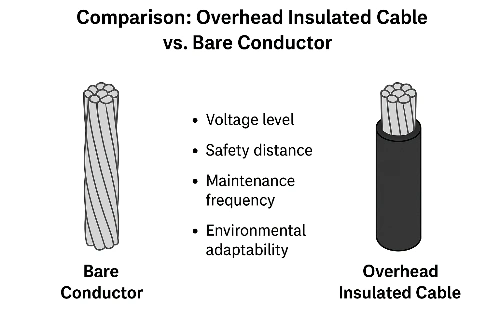
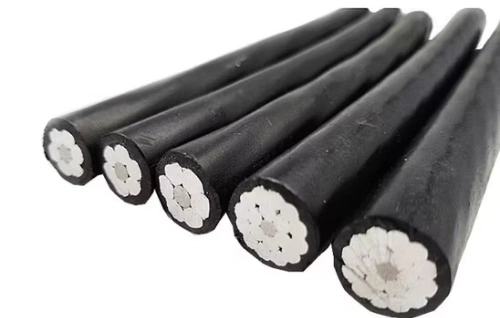
Enhance aerial power distribution with robust Overhead Insulated Cables. Designed for safety and reliability in overhead line applications, these cables provide a secure alternative to bare conductors, particularly in areas prone to tree contact or requiring improved safety clearances. Our Overhead Insulated Cable features durable XLPE or HDPE insulation over high-strength aluminum conductors, offering excellent weather resistance, UV stability, and reduced short-circuit risks. Ideal for aerial bundled cable (ABC) systems, they improve grid reliability by minimizing outages from external factors, making them perfect for urban, suburban, and rural power distribution.
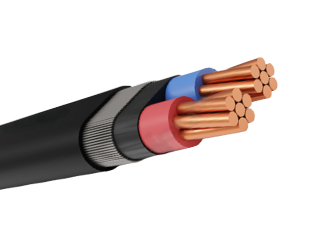
0.6/1kV Aluminum LV Concentric Service Cable with Pilot Communication Cores
The 0.6/1kV Aluminum LV Concentric Service Cable with Pilot Communication Cores is a smart-ready low-voltage cable designed for modern house service connections and secondary distribution. It features compact stranded AA8000 aluminum alloy phase conductors, XLPE insulation, a concentrically arranged aluminum alloy neutral, and two insulated pilot communication cores for remote metering, load management, or fault signaling. The entire assembly is protected by a durable black polyethylene sheath. This design combines excellent electrical performance, high mechanical strength, and communication functionality in one cable, reducing installation costs and enabling smart grid applications. Rated 0.6/1kV, the cable offers superior flexibility and corrosion resistance. It undergoes rigorous quality testing from raw materials to finished product, ensuring consistent conductivity, reliable pilot signal transmission, and long-term durability in aerial or underground environments.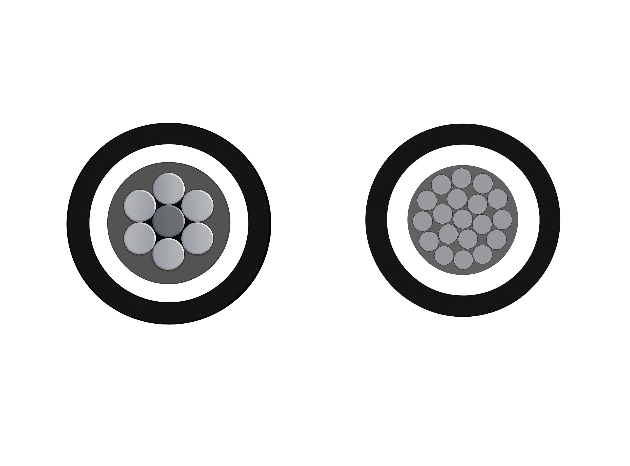
2-Layer 15kV ACSR/AAC Tree Wire - Covered Overhead Distribution Cable
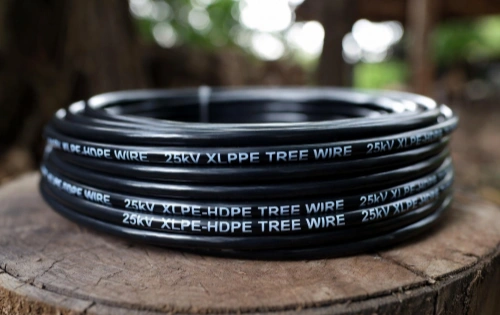
The 2-Layer 15kV ACSR/AAC Tree Wire is a covered overhead conductor designed for reliable medium-voltage distribution in areas with heavy tree contact. It features concentrically stranded ACSR or AAC conductors with a dual-layer covering of track-resistant high-density polyethylene (HDPE) or cross-linked polyethylene (XLPE). The inner layer provides insulation while the outer layer offers superior tracking and weathering resistance. This construction significantly reduces the risk of faults caused by tree limbs, minimizes wildfire ignition potential, and allows closer spacing to vegetation. Suitable for both spacer cable systems and conventional overhead lines, the 2-Layer 15kV ACSR/AAC Tree Wire meets ICEA S-121-733 and related ASTM standards. It undergoes rigorous quality testing from raw materials to finished product, ensuring excellent dielectric strength, mechanical robustness, and long-term performance in challenging environments.
15kV 3-Layer AAAC/ACSR/AAC Tree Wire - Triple Layer Covered Conductor
The 3-Layer 15kV AAAC/ACSR/AAC Tree Wire is a specialized covered overhead conductor developed for distribution lines in areas with dense vegetation. It uses concentrically stranded AAAC, ACSR, or AAC conductors protected by a triple-layer system of track-resistant HDPE or XLPE. The multi-layer covering delivers exceptional tracking resistance, abrasion protection, and weatherability while greatly reducing the risk of electrical faults from tree limb contact and helping minimize wildfire ignition potential. This advanced design allows closer spacing to vegetation and lowers vegetation management costs. Suitable for conventional overhead or spacer cable systems, the 3-Layer 15kV AAAC/ACSR/AAC Tree Wire offers a cost-effective solution for improving line reliability. It complies with ICEA and ASTM standards and undergoes extensive quality testing to ensure long-term performance and safety.
3-Layer 35kV AAC/AAAC/ACSR Tree Wire - Covered Overhead MV Cable
The 3-Layer 35kV AAC/AAAC/ACSR Tree Wire is an advanced covered medium-voltage overhead conductor engineered for reliable performance in areas with dense vegetation. It features a concentrically stranded AAC, AAAC, or ACSR conductor protected by a triple-layer system of track-resistant high-density polyethylene (HDPE) or cross-linked polyethylene (XLPE). The multi-layer covering provides exceptional tracking resistance, abrasion protection, and weatherability while significantly reducing the risk of electrical faults caused by tree limb contact and minimizing wildfire ignition potential. This design allows closer spacing to vegetation and lowers vegetation management costs. Suitable for both conventional overhead lines and spacer cable systems, the 3-Layer 35kV AAC/AAAC/ACSR Tree Wire meets ICEA S-121-733 and related ASTM standards. It undergoes rigorous quality testing from raw materials to finished product, ensuring excellent dielectric strength, mechanical robustness, and long-term durability in challenging environments.
25kV 3-Layer AAAC/ACSR/AAC Tree Wire - Triple Layer Covered MV Conductor
The 3-Layer 25kV AAAC/ACSR/AAC Tree Wire is a specialized covered medium-voltage overhead conductor developed for distribution lines in areas with dense vegetation. It uses concentrically stranded AAAC, ACSR, or AAC conductors protected by a triple-layer system of track-resistant HDPE or XLPE. The multi-layer covering delivers exceptional tracking resistance, abrasion protection, and weatherability while greatly reducing the risk of electrical faults from tree limb contact and helping minimize wildfire ignition potential. This advanced design allows closer spacing to vegetation and lowers vegetation management costs. Suitable for conventional overhead or spacer cable systems, the 3-Layer 25kV AAAC/ACSR/AAC Tree Wire offers a cost-effective solution for improving line reliability. It complies with ICEA and ASTM standards and undergoes extensive quality testing to ensure long-term performance and safety.
3-Layer 46kV Tree Wire - Covered Overhead MV Cable
The 3-Layer 46kV AAAC/ACSR/AAC Tree Wire is a premium covered medium-voltage overhead conductor designed for reliable performance in heavily vegetated environments. It features a concentrically stranded AAAC, ACSR, or AAC conductor protected by a robust triple-layer system of track-resistant high-density polyethylene (HDPE) or cross-linked polyethylene (XLPE). The multi-layer covering delivers exceptional tracking resistance, abrasion protection, and weatherability while significantly reducing the risk of electrical faults from tree limb contact and minimizing wildfire ignition potential. This advanced design allows closer spacing to vegetation and lowers vegetation management costs. Suitable for both conventional overhead lines and spacer cable systems, the 3-Layer 46kV AAAC/ACSR/AAC Tree Wire meets ICEA S-121-733 and related ASTM standards. It undergoes rigorous quality testing from raw materials to finished product, ensuring excellent dielectric strength, mechanical robustness, and long-term durability in demanding high-voltage applications.In-Depth Analysis
Overhead Insulated Cable are built to deliver high efficiency, reliable performance, and advanced safety, helping businesses reduce energy costs while ensuring stable power supply. With future-ready adaptability for renewable energy and smart grid applications, they provide a sustainable and innovative solution for today’s and tomorrow’s power needs.
Comparative Analysis of Efficiency and Loss
Compared to the industry average, NPC Overhead Insulated Cable exhibit lower losses and higher efficiency across the entire load range.
Load Efficiency Comparison(%)
No-load Loss Comparison(W)

High Conductivity Design
High-purity oxygen-free copper or high-quality aluminum conductors are used with smooth surface and low resistance to ensure efficient power transmission and reduce energy loss.
Improved Conductivity
+20%
Reduced Energy Loss
-15%

Insulation Protection System
Use flame-retardant, wear-resistant and corrosion-resistant polymer insulation materials to meet the safe operation requirements in different environments.
Withstand Voltage Level
≥1kV
Flame Retardant Grade
VW-1 / IEC 60332-3

Weather-Resistant & Durable Technology
The outer sheath is made of UV-resistant, heat-resistant, and oil-resistant materials, making it suitable for high and low temperatures, humidity, and long-term outdoor use.
Service Life
≥ 25 Years
Operating Temperature Range
-40°C to +90°C

Safe Flame Retardant System
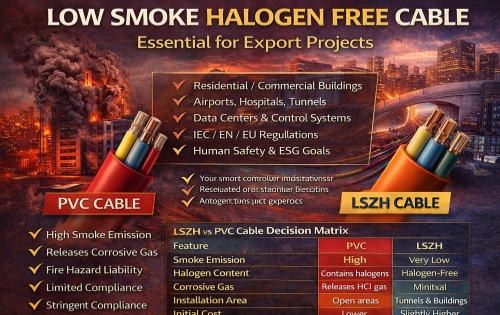
The multi-layered flame-retardant structure effectively slows the spread of flames and releases low-smoke, halogen-free gases during combustion, reducing secondary hazards.
Flame Retardant Performance
IEC 60332 / UL 1581 Qualified
Smoke Density
Low Smoke ≤50%

Easy Installation & Maintenance
The flexible core and flex-resistant outer sheath provide a small bend radius and high installation efficiency. Color coding and length markings reduce installation and maintenance costs.
Bend Radius
≤6D
Installation Efficiency Improvement
+30%

Intelligent Monitoring
An optional remote monitoring system is available to monitor operating status, temperature, load and other parameters in real time, and supports fault warning and remote diagnosis.
Data Collection Frequency
one times a minute
Fault Warning Accuracy
98%
Environmental Adaptability Analysis
NPC Overhead Insulated Cable have been rigorously tested and can operate stably under various harsh environmental conditions.
Temperature Range
-40℃ ~ +55℃
Can work normally in extreme high and low temperature environments

Humidity Adaptation
0 ~ 100% RH
Including condensation environment, no frost requirement

Weather Resistance Grade
UV/IEC 60811-501
The outer sheath has excellent UV resistance and aging resistance

Chemical Corrosion Resistance
Oil / Acid / Alkali
Resistant to oil, acid, alkali and some chemical corrosion environments
Why Choose Us
With 30 years of expertise, global certifications, and advanced manufacturing technology, NPC Electric delivers reliable, high-performance overhead insulated cable trusted by industries worldwide.
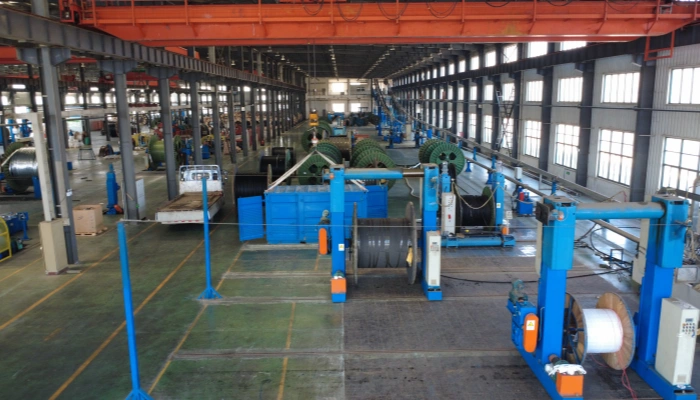
Overhead Insulated Cable Manufacturer
NPC Electric is a leading overhead insulated cable manufacturer, specializing in the production of high-quality insulated power cables for overhead power lines and electricity distribution systems. Our overhead insulated cables are designed to provide safety, reliability, and long-term performance in outdoor installations, especially in high voltage and high-current applications. These cables offer excellent corrosion resistance and mechanical strength, ensuring minimal maintenance and increased durability. Made from premium materials and manufactured to international standards, NPC Electric’s insulated cables are perfect for urban, rural, and industrial networks. Our commitment to quality and innovation guarantees the reliable energy delivery and sustainable power distribution you need for any infrastructure project.
Overhead Insulated Cable Benefits
Overhead insulated cables offer several key benefits for power transmission networks. The primary advantage of insulated power cables is their enhanced safety, as they reduce the risk of electrical accidents by providing protection against accidental contact with live wires. These high voltage insulated cables also minimize the impact of environmental factors such as wind, rain, or snow on the transmission network. Corrosion-resistant cables are ideal for coastal areas or regions with high humidity, ensuring longevity and reducing maintenance costs. Additionally, insulated cables improve energy efficiency by minimizing losses and reducing the need for costly repairs. In renewable energy applications, such as solar and wind power systems, overhead insulated cables ensure safe and efficient energy delivery across vast areas.
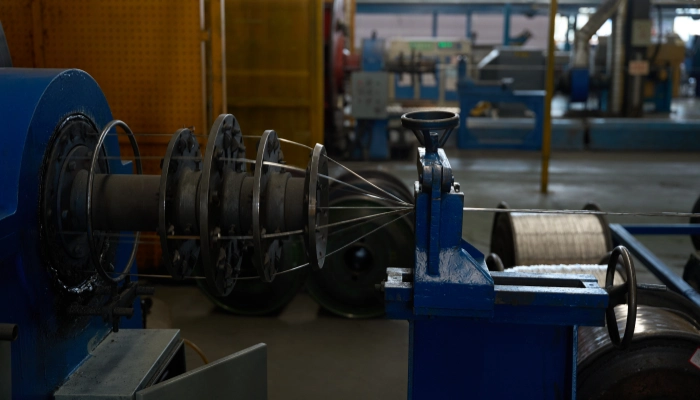
Overhead Insulated Cable Installation
Overhead insulated cable installation requires careful planning and adherence to safety standards. NPC Electric ensures that our insulated power cables are installed following precise installation procedures, which include proper tensioning, securing to support structures, and maintaining safety clearances in overhead power lines. The high voltage cable installation process is designed to minimize risks and ensure long-term reliability. Once installed, insulated cables require regular maintenance to ensure optimal performance. This includes periodic inspections for damage, corrosion, and insulation wear, as well as testing for voltage endurance and mechanical integrity. NPC Electric’s cable maintenance services guarantee that power transmission networks continue to operate safely, efficiently, and with minimal downtime, ensuring reliable power delivery for urban, rural, and industrial installations.
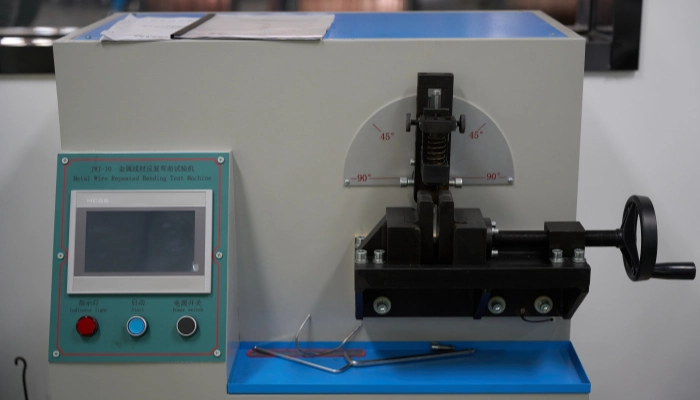
Testing and Certification
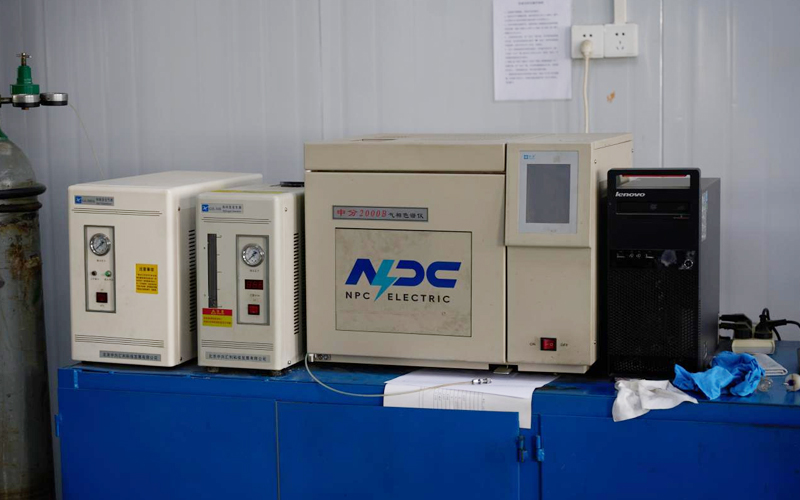
At NPC Electric, every overhead insulated cable undergoes rigorous testing and certification to ensure optimal performance and safety. Our insulated power cables are tested for high voltage endurance, insulation resistance, and mechanical strength to meet IEC and ANSI standards. We conduct comprehensive quality control checks, including dielectric testing, temperature rise testing, and corrosion resistance evaluation to guarantee the durability of our high voltage cables in demanding environments. Each insulated cable is certified to meet international safety standards, ensuring reliable performance in overhead power lines, electricity distribution systems, and renewable energy projects. NPC Electric’s commitment to quality testing and certification ensures long-term, safe power transmission and minimal maintenance requirements.
Product Show
Explore the detailed design and practical application scenarios of overhead insulated cables
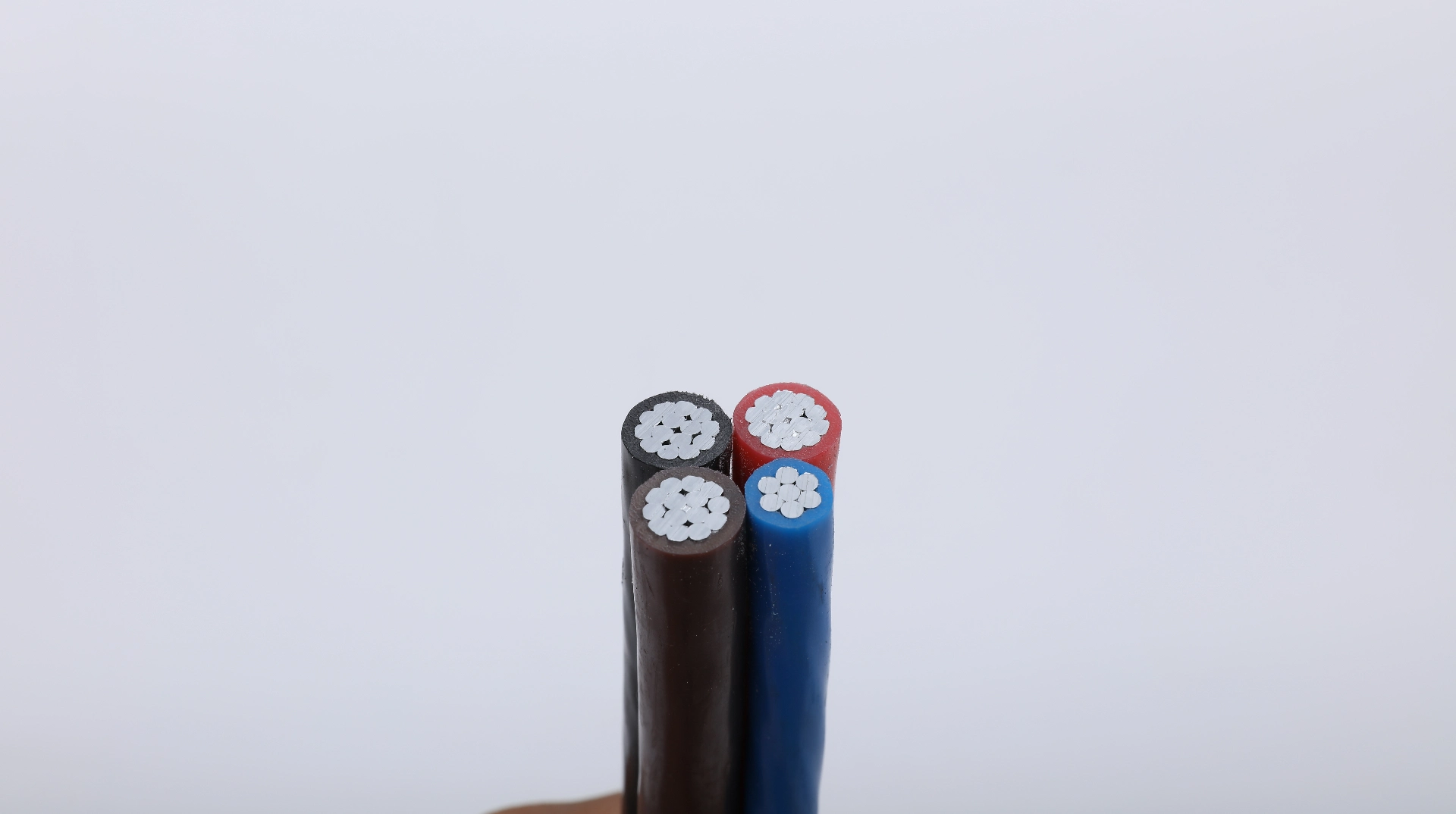
Overhead Insulated Cable
overhead cable have colors
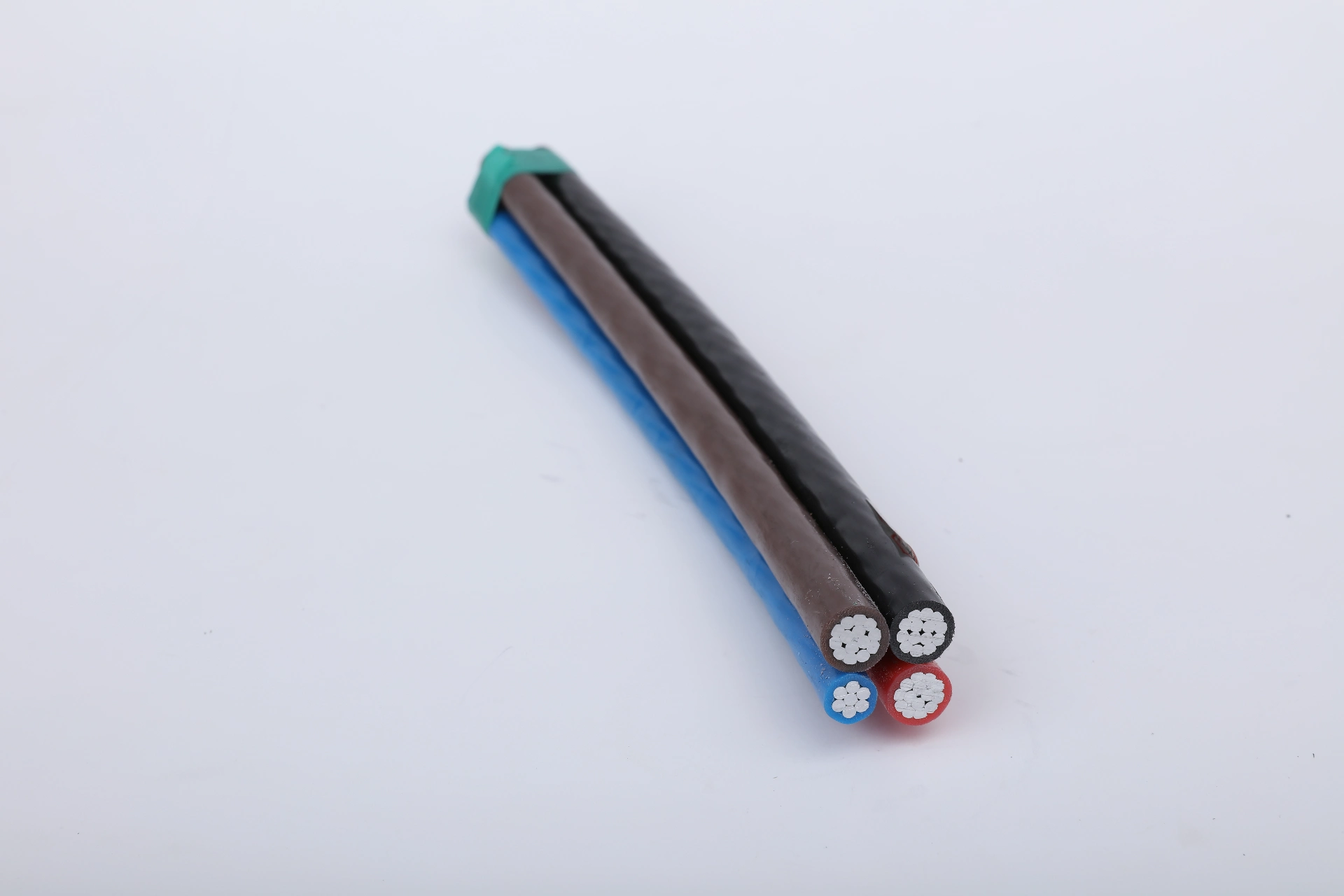
Overhead Insulated Cable Color
overhead cable four colors
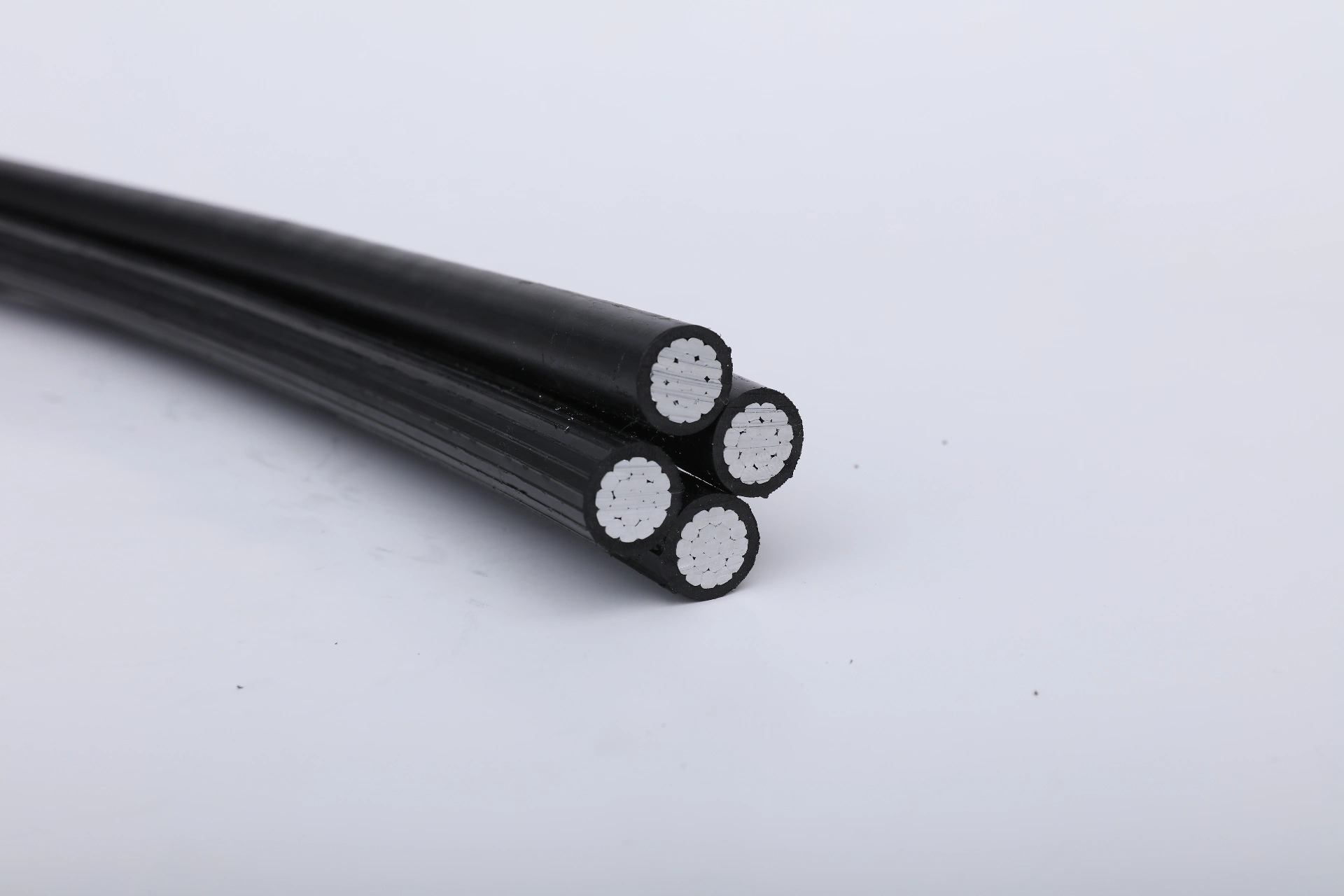
Aerial Bundled Cable
abc cable design cores
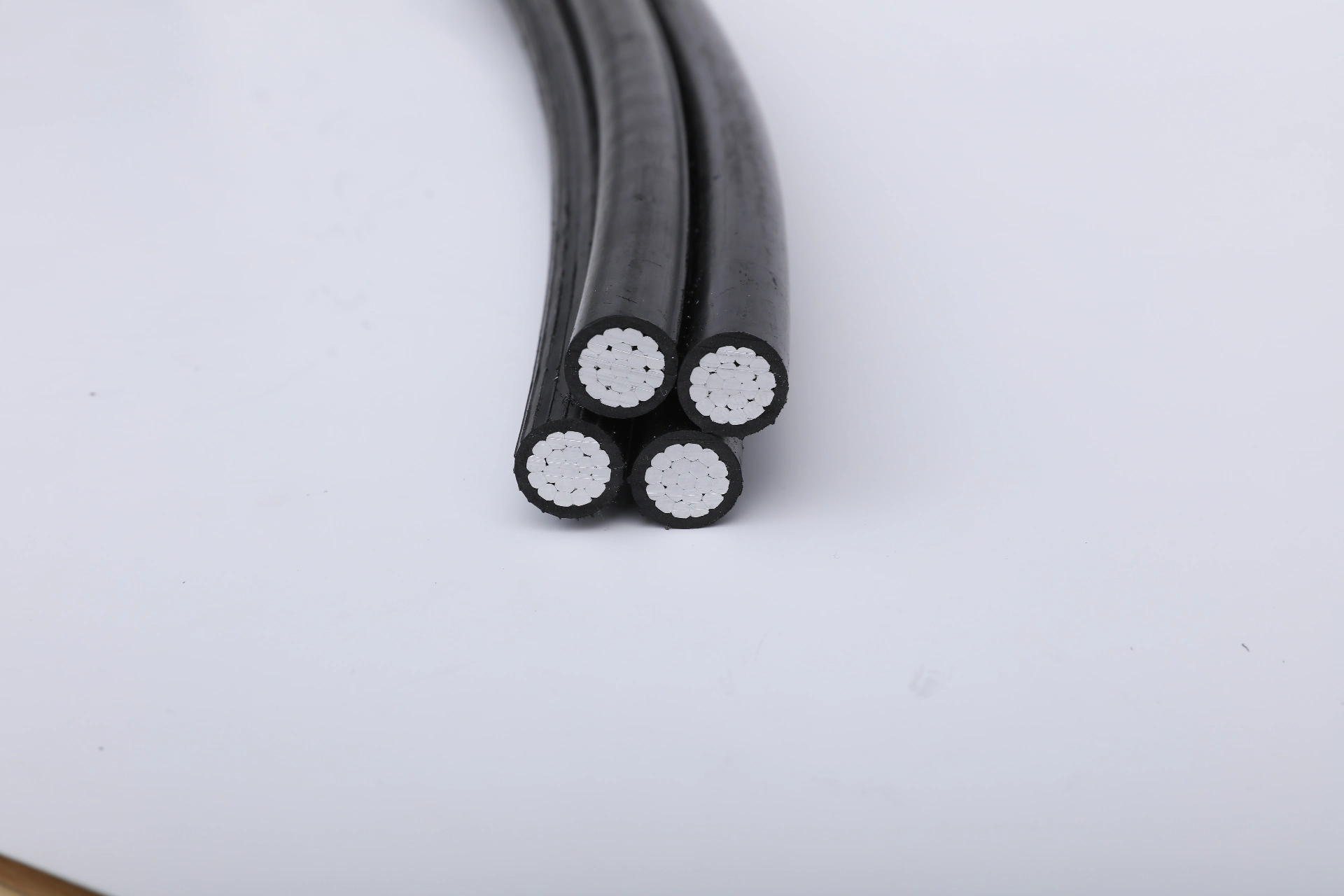
Aerial Bundled Cable Core
abc cable font view cores
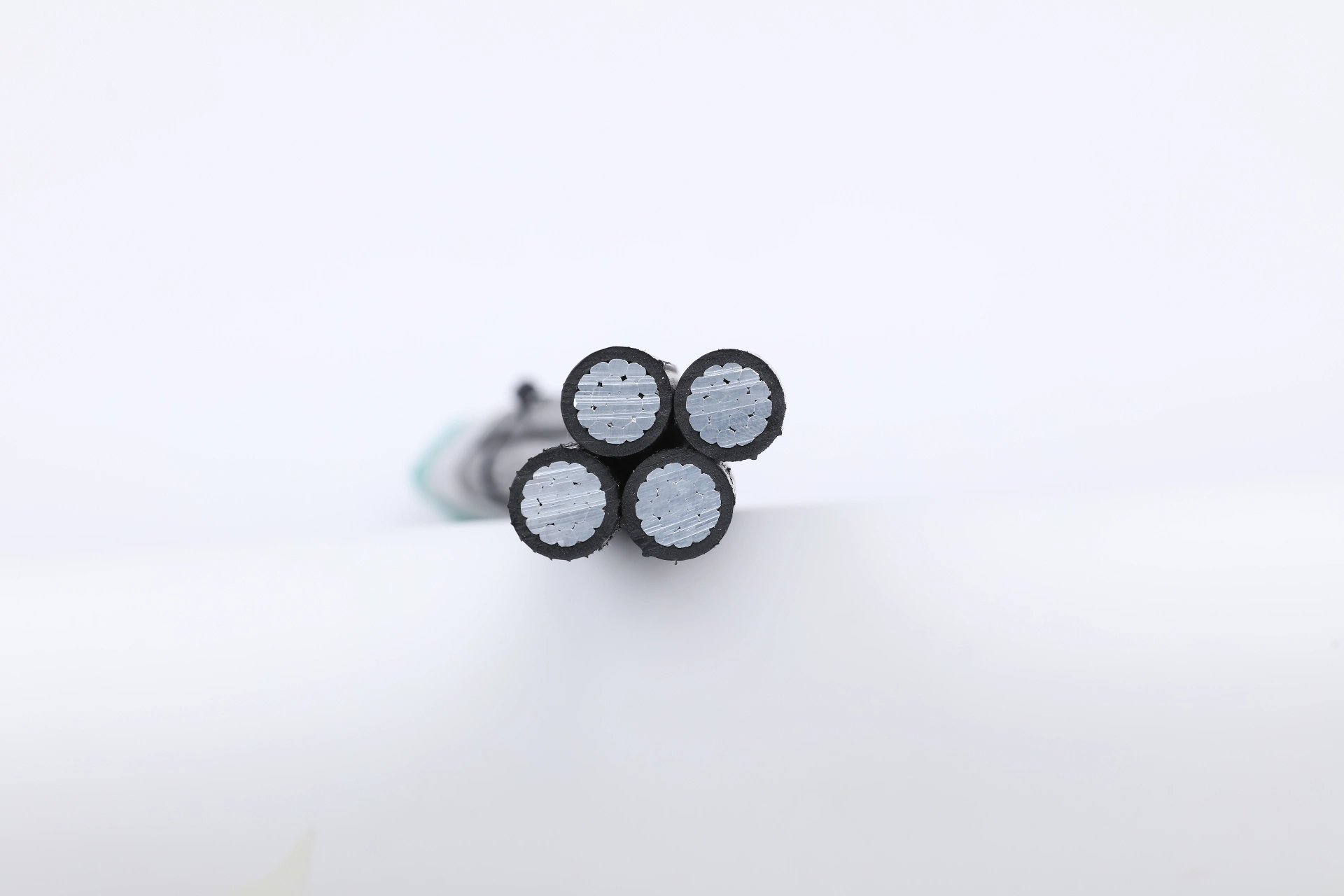
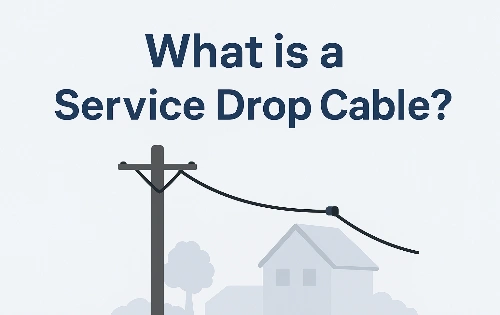
Service Drop Cable
service drop cable cores design
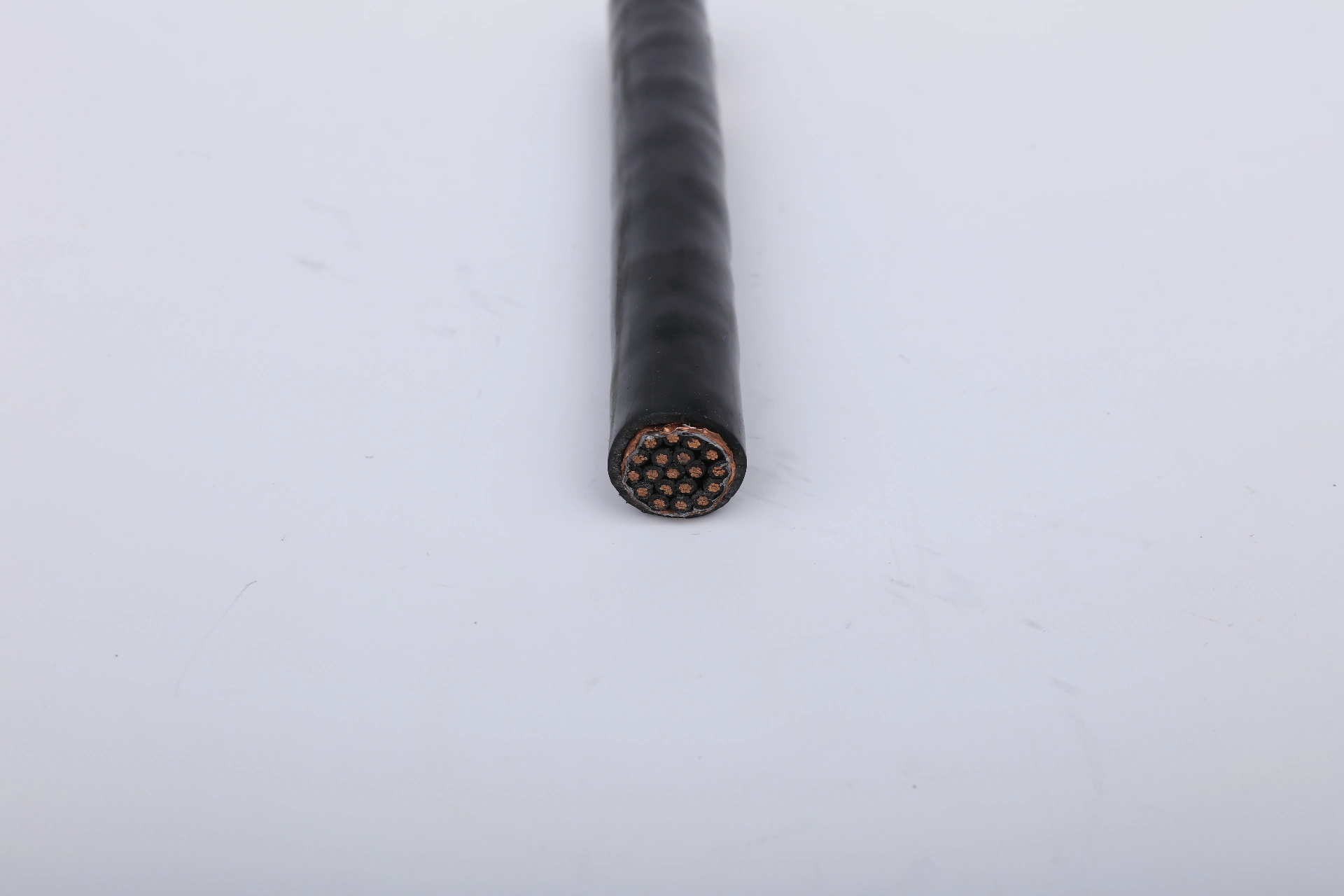
Control Cables
control cables product show
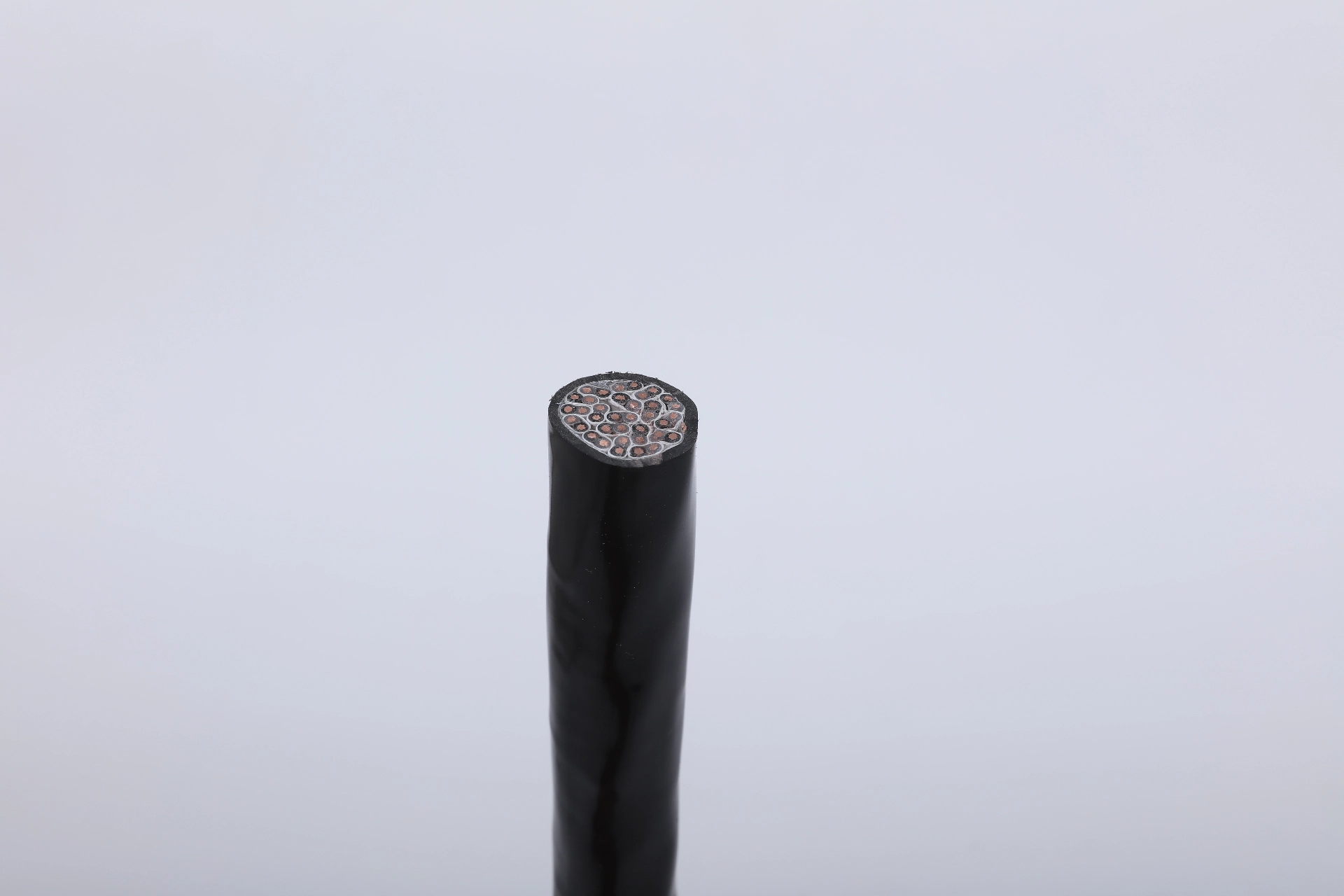
Control Cables Structure
control cables structure design
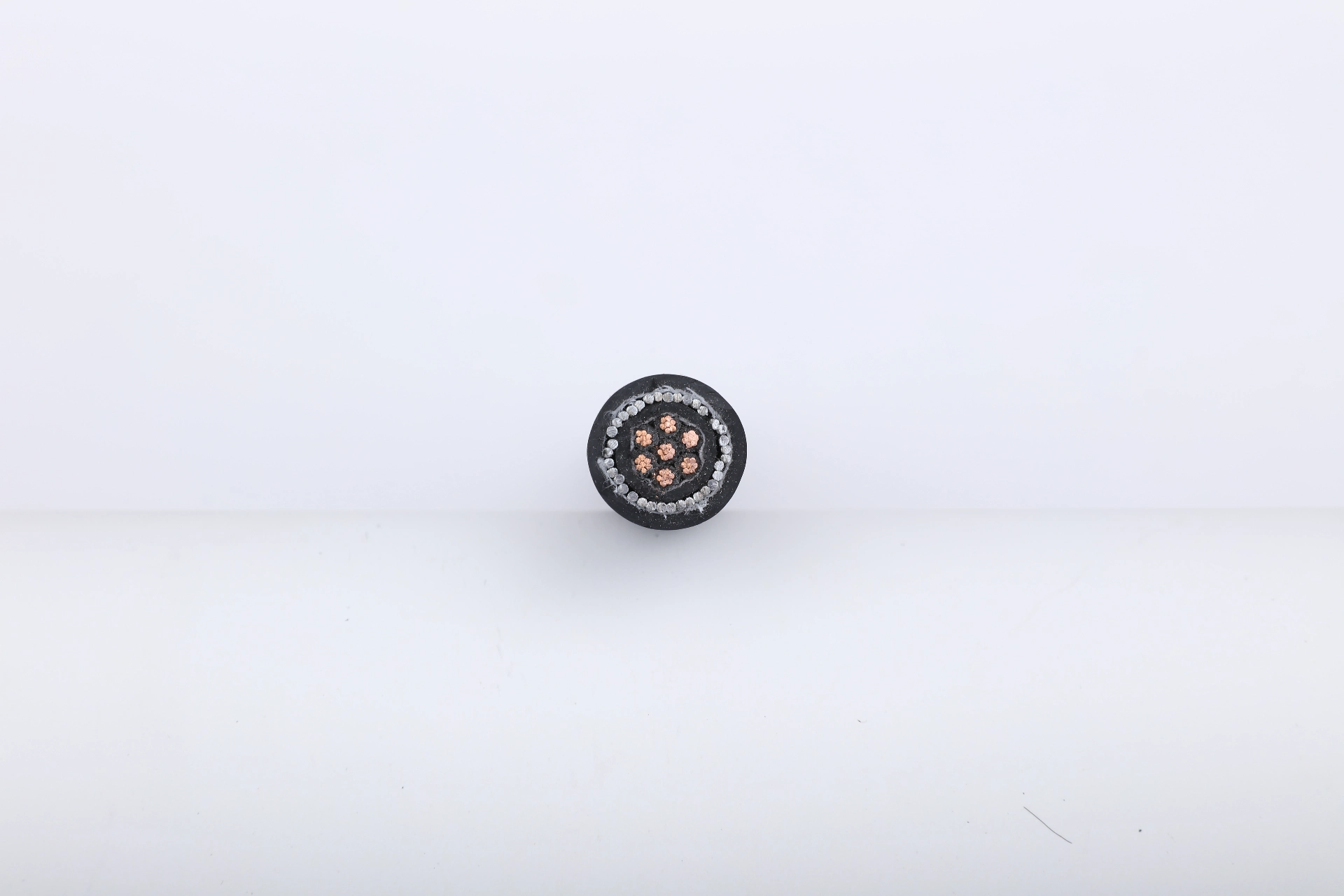
Overhead Insulated SWA Cable
swa cable cores design
Testing and Certification
Tested with precision and certified to meet international standards as
well as strict industry requirements.
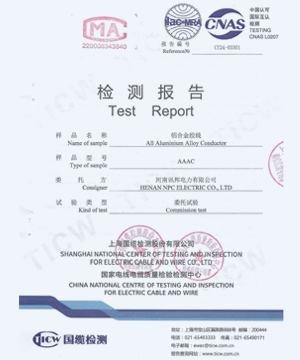
Bare Cable Test Report
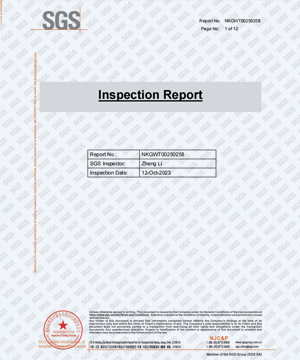
SGS Inspection Report
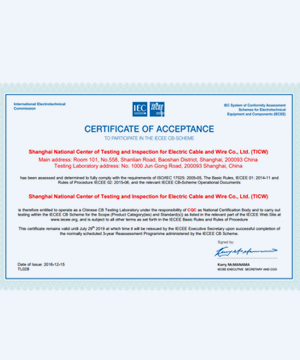
Certificate of Acceptance
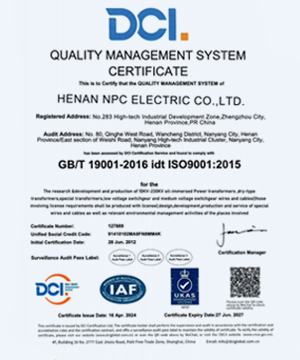
ISO Quality Certificate
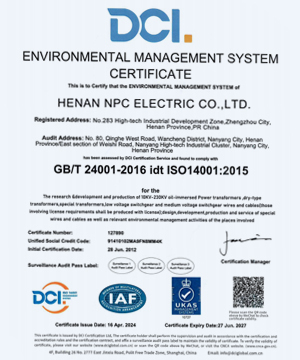
ISO Environmental Certificate
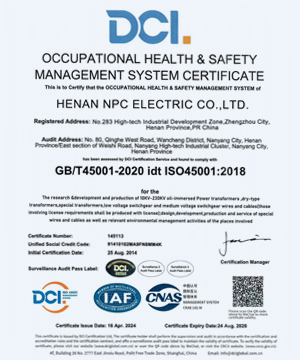
ISO Occupational Certificate
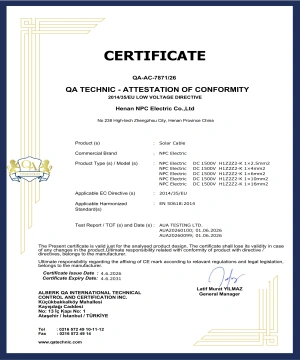
Solar Calbe- QA TECHNIC
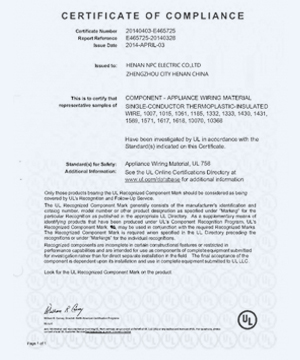
UL Product Certificate
Project Cases
NPC wires and cables have been successfully applied in many projects and have been highly praised by customers.
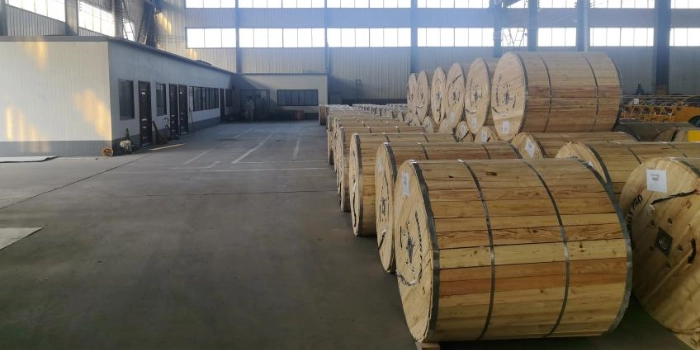
Peru Solar PV Project
CompletedNPC Electric Delivers Medium-Voltage Cables for Peru Solar PV Project
Country:Peru
Model:HEPRZ1(AS) 1x630 mm² 19/33kV x 6km
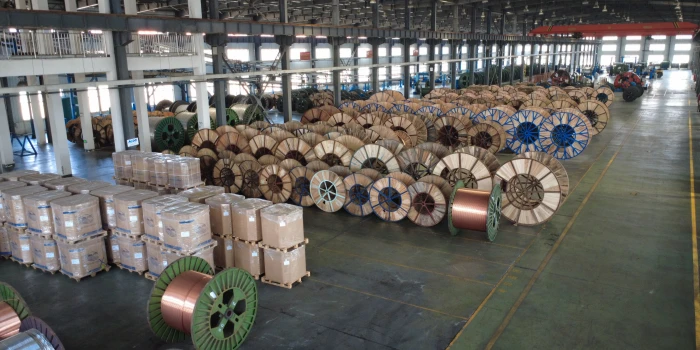
Chile El Project
CompletedReliable 19/33kV MV cables ensuring safe, stable, and efficient power transmission for critical projects.
Country:Chile
Model:19/33kV MV Power Cables x 5km
Dominican Edenorte Project
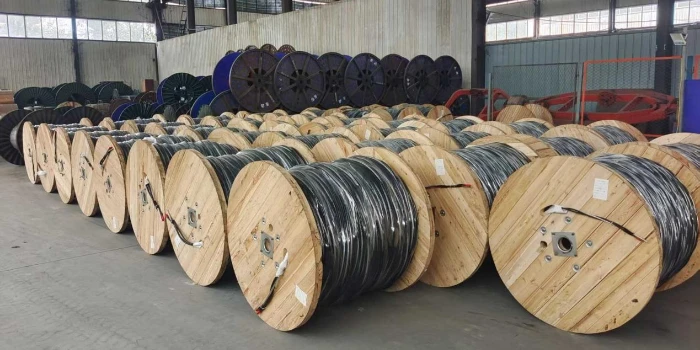
CompletedProvide outdoor power solutions for urban main road reconstruction projects to adapt to complex environments.
Country:Dominican
Model:NPC AAAC Cable & Triplex Cable x 10km
Related Articles
Understand the product's characteristics, structure, and applications.
Technical Advantages
● 30+ years of manufacturing experience
● ISO and UL certified production
● Customized cable and transformer solutions

FAQ From Customers
-
What is the structure of an overhead insulated cable?
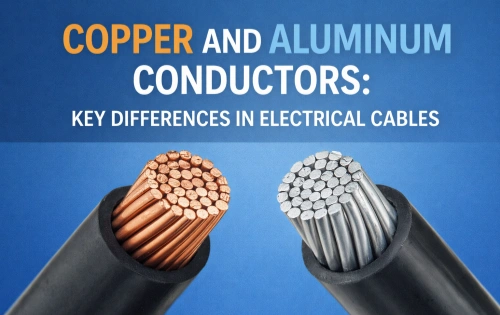
Overhead insulated cables typically consist of a conductor, insulation layer, and an optional outer sheath. The conductor is usually made from aluminum or copper, providing excellent electrical conductivity. The insulation layer, made from materials like cross-linked polyethylene (XLPE) or PVC, protects the conductor and prevents accidental contact with live wires. An optional outer sheath is added for additional mechanical protection and durability, particularly in harsh environmental conditions. -
What materials are used for the insulation of overhead insulated cables?
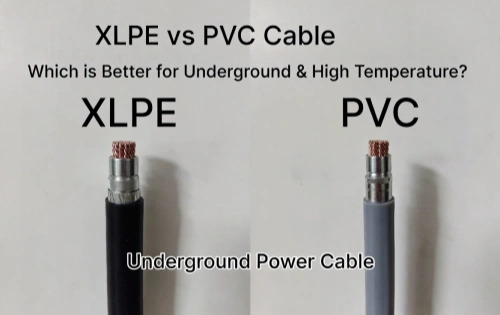
The insulation of overhead insulated cables is typically made from cross-linked polyethylene (XLPE), which offers superior thermal stability, electrical insulation properties, and resistance to environmental factors. Alternatively, PVC (polyvinyl chloride) can be used for lower voltage applications. These materials help prevent electrical hazards by ensuring that the conductor remains safely insulated, especially in outdoor and exposed environments such as overhead power lines. -
How are overhead insulated cables manufactured?
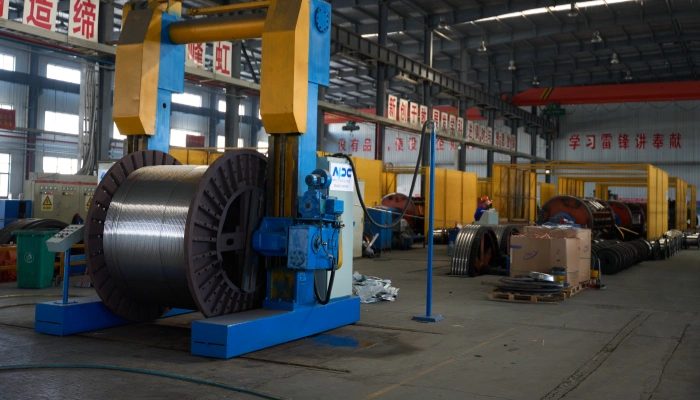
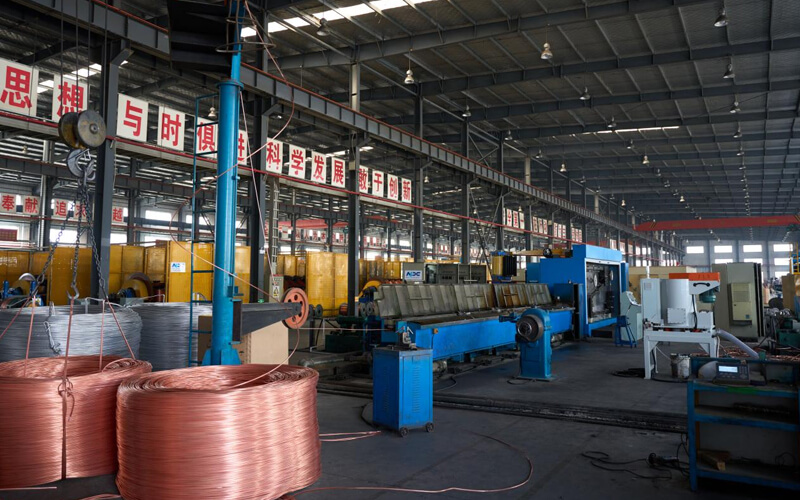
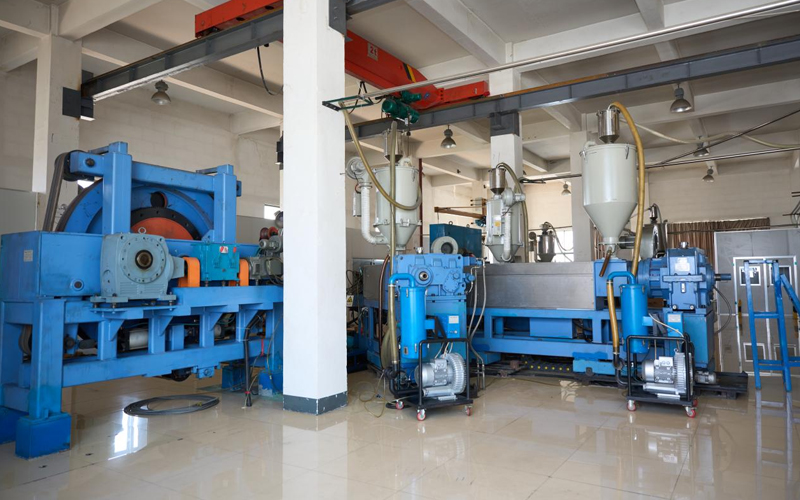
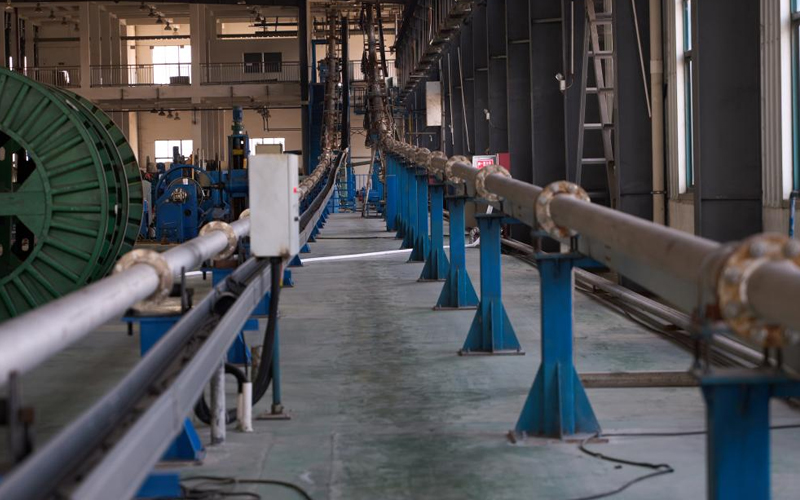
The manufacturing process of overhead insulated cables begins with the conductor preparation, which involves drawing aluminum or copper to the desired size. The insulation layer is then applied using extrusion technology, ensuring uniform thickness and durability. For high voltage cables, the insulation is cross-linked to improve performance at elevated temperatures and resist electrical stress. The outer sheath is then added, providing protection against physical damage and environmental conditions. The entire process follows stringent quality control and testing procedures to ensure reliability and compliance with international standards such as IEC and ANSI. -
What makes overhead insulated cables suitable for high voltage applications?
Overhead insulated cables are suitable for high voltage applications due to their specialized insulation materials such as cross-linked polyethylene (XLPE), which provides excellent electrical strength and thermal stability. These materials prevent the risk of electrical leakage and offer protection against high voltage surges. The cables' mechanical strength and weather-resistant outer sheath ensure long-term durability and performance, even in extreme environments. Additionally, the insulated layers prevent external damage from wind, moisture, and physical contact, making them ideal for high-voltage power transmission. -
How do overhead insulated cables protect against environmental factors?
Overhead insulated cables are designed to withstand environmental challenges such as moisture, extreme temperatures, UV radiation, and mechanical stress. The insulation material, typically XLPE or PVC, offers excellent resistance to corrosion and weathering, ensuring long-lasting performance even in harsh climates. The outer sheath further protects the cable from abrasion, chemical exposure, and physical damage, ensuring that the cables maintain their integrity and electrical safety during their service life.
Welcome your inquiry
Honesty, Integrity, Frugality, Activeness and Passion