
Steel Wire Armoured Cable (SWA): Types, Applications, Installation and Standards Explained
2026-06-12
Introduction to Armoured Cable and SWA Cable
Armoured cable plays a critical role in modern electrical systems, delivering both reliable power transmission and essential mechanical protection. SWA Cable (Steel Wire Armoured Cable) ranks among the most widely specified power cables due to its galvanised steel wire armour layer, which guards internal conductors against physical damage, ground pressure, moisture, and other stresses common in harsh environments.
From a working electrical contractor’s viewpoint, SWA cables solve practical site challenges: they reduce fault risks in underground or exposed runs, support high-load circuits, and integrate effectively with circuit breakers and protective devices. The armour provides superior tensile strength, allowing the cable to endure pulling forces during installation and minor ground movement post-burial. Contemporary designs frequently use cross-linked XLPE insulation, resulting in high-performance steel wire armoured XLPE cable variants that operate continuously at 90°C with excellent thermal stability.
Typical SWA Cable operates at low voltage (600/1000V) and suits mains distribution, sub-mains, and control circuits. Its black outer sheath resists UV and chemicals, while the armour can serve as a Circuit Protective Conductor (CPC) when correctly earthed—simplifying electrical installations and boosting electrical safety.
Construction of SWA Cable
A well-engineered SWA Cable comprises multiple precisely layered components, each contributing to overall performance and longevity.
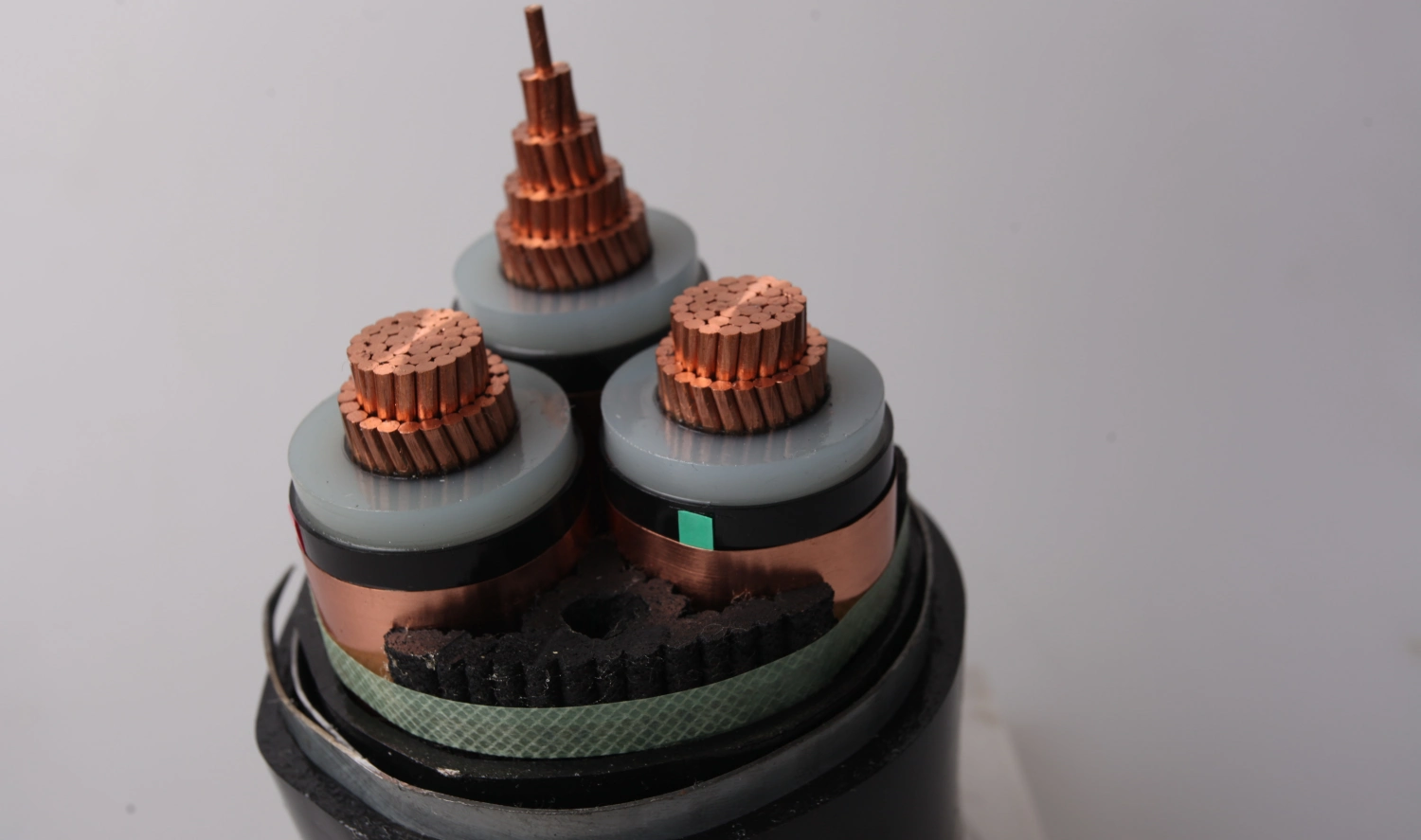
Conductors: Stranded plain annealed copper (Class 2 per BS EN 60228) delivers flexibility and low resistance. Aluminium conductors appear in certain cost- or weight-sensitive variants.
Insulation: Modern steel wire armoured XLPE cable employs cross-linked polyethene (XLPE), offering superior short-circuit withstand, lower dielectric losses, and higher temperature tolerance compared with traditional PVC.
Bedding: A PVC or LSZH compound fills spaces around the insulated cores, creating a smooth base for the armour and preventing internal abrasion.
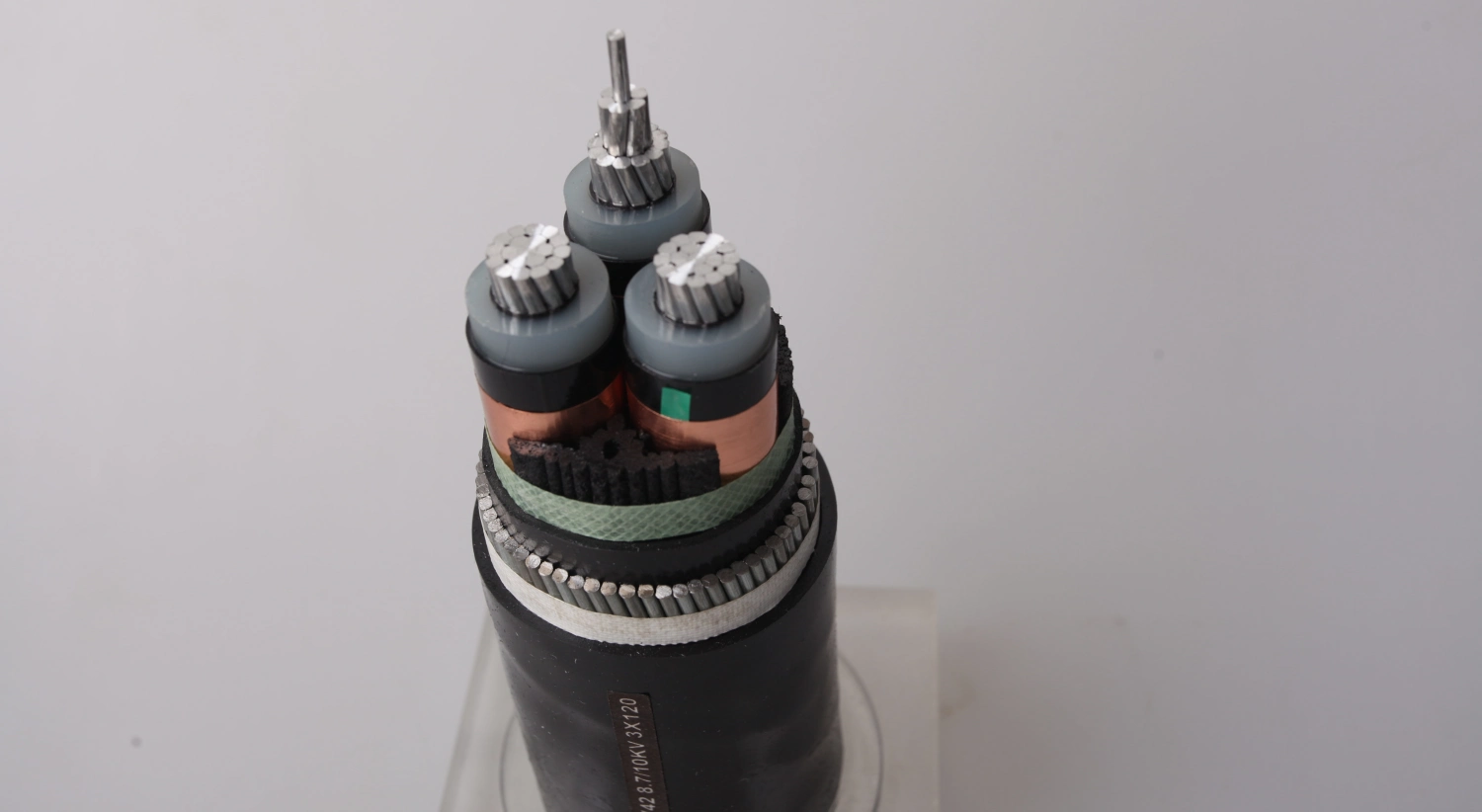
Armour: Galvanised steel wires are applied helically in a single layer for multicore cables. Wire diameter (typically 0.9 mm to 3.15 mm) scales with cable size to ensure near-100% coverage and high impact resistance. For single-core cables, AWA (Aluminium Wire Armour) prevents eddy-current heating.
Outer Sheath: PVC for general use or Low Smoke Zero Halogen (LSZH) for fire-sensitive areas. The sheath protects against corrosion, water ingress, and abrasion.
These layers work together to create a robust power cable capable of withstanding mechanical stress while maintaining electrical integrity.
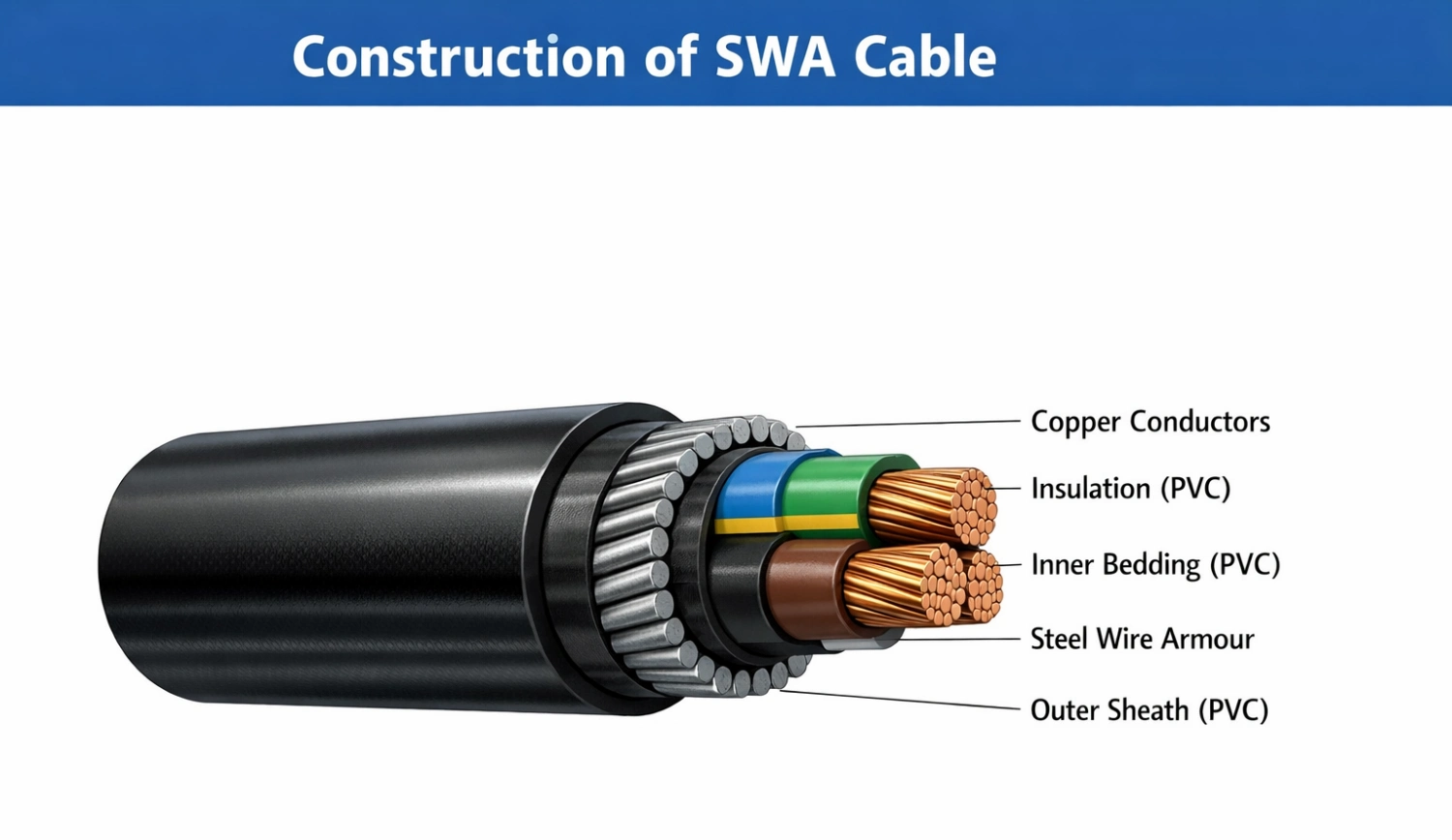
Table 1: Typical Construction Layers of Steel Wire Armoured XLPE Cable (SWA Cable)
|
Layer |
Material |
Primary Function |
Benefits in Harsh Environments |
|
Conductors |
Stranded Copper (Class 2) |
Power transmission |
Low resistance, high flexibility |
|
Insulation |
XLPE (Cross-Linked Polyethene) |
Electrical insulation & thermal performance |
90°C continuous rating, excellent short-circuit withstand |
|
Bedding |
PVC or LSZH |
Cushioning and separation |
Prevents armour abrasion on cores |
|
Armour |
Galvanised Steel Wires (SWA) |
Mechanical protection (tensile & impact) |
Superior tensile strength, acts as CPC when earthed |
|
Outer Sheath |
PVC or LSZH |
Environmental & corrosion protection |
UV, water, chemical and rodent resistance |
Types of SWA Cable and Comparison with STA
SWA Cable comes in various configurations tailored to specific loads and installations.
Common types include 2-core (single-phase), 3-core steel wire armoured cable (three-phase), 4-core, and multicore control variants. Popular sizes range from 1.5 mm² to 400 mm² and beyond, with 10mm steel wire armoured cable frequently chosen for sub-mains supplying lighting, small pumps, or outbuildings.
Steel Tape Armoured Cable (STA) differs markedly in construction and performance. STA employs flat steel tapes for strong radial compression resistance but provides limited tensile strength and reduced flexibility. SWA excels where axial pull, ground settlement, or impact risks exist, while STA may suit purely compressive underground runs where budget constraints dominate.
In practice, electrical contractors prefer SWA for its versatility across industrial, commercial, and utility projects. The wire armour handles both tension during pulling and long-term mechanical stresses better than steel tapes in most real-world electrical installations.
Table 2: SWA Cable vs Steel Tape Armoured Cable (STA) – Key Differences for Practical Selection
|
Feature |
SWA (Steel Wire Armoured Cable) |
STA (Steel Tape Armoured Cable) |
Recommended Application |
|
Armour Type |
Helical galvanised steel wires |
Flat galvanised steel tapes |
- |
|
Tensile Strength |
High (excellent for pulling & ground movement) |
Low |
Underground with potential settlement → SWA |
|
Compression Resistance |
Good |
Excellent |
Pure compressive burial → STA may be more economical |
|
Flexibility |
Better |
Stiffer |
Routes with bends → SWA |
|
Mechanical Protection |
Superior impact & tensile resistance |
Good radial protection |
Harsh industrial / mining → SWA |
|
Cost |
Higher |
Lower |
Budget-sensitive static runs → STA |
|
Use as CPC |
Commonly used |
Limited |
Installations needing armour earthing → SWA |
|
Typical Standards |
BS 5467, IEC 60502 |
Similar but different mechanical tests |
Power distribution in harsh environments → SWA |
Key Applications of SWA Cable
SWA Cable thrives in power distribution scenarios where mechanical protection is non-negotiable. It supports direct burial in many jurisdictions without extra conduits, feeding buildings, substations, and outdoor equipment efficiently.
Industrial facilities use it to supply motors, transformers, and heavy machinery, protecting against forklift traffic, vibration, and chemical exposure. Construction sites deploy 3 core steel wire armoured cable for temporary or permanent supplies, maintaining electrical safety even on unfinished ground.
Renewable energy projects, such as solar farms and wind turbines, rely on SWA for inverter-to-switchgear connections in exposed outdoor conditions. Mining, rail, and coastal installations benefit from its resistance to constant movement, impact, and salt spray. LSZH-sheathed versions enhance safety in tunnels, public buildings, and confined spaces by minimising toxic smoke emission.
For lighter loads, 10mm steel wire armoured cable commonly serves commercial lighting circuits or outbuilding feeds. Larger sizes handle the main incoming supplies or distribution boards. The armour’s dual role as CPC often eliminates the need for a separate earthing conductor, reducing material costs and simplifying design.
Installation Best Practices for SWA Cable
Proper installation directly determines the long-term reliability and electrical safety of any steel wire armoured system.
Trenching and Direct Burial: Assess soil type, expected loads, and nearby services first. Excavate to adequate depth (typically 500–750 mm or per local regulations). Lay a sand or stone-free bedding layer, position the cable with gentle snaking to allow thermal expansion, then apply warning tape and backfill carefully. This method protects armoured cable from accidental damage while permitting heat dissipation.
Pulling and Routing: When drawing cable through ducts, control tension strictly to avoid stretching armour wires or damaging the sheath. Observe minimum bending radii—usually 6–15 times the overall diameter, depending on size—to prevent deformation or insulation cracks. Use proper rollers and lubricants for longer runs.
Termination and Glanding: Precision matters here. Strip the outer sheath, bedding, and armour methodically. Apply suitable glands: BW for indoor dry areas and CW for outdoor or wet conditions. Armour wires must be securely clamped and earthed via the gland to maintain a low-impedance fault path to circuit breakers. Incomplete earthing or incorrect gland selection can compromise protection and create shock hazards.
Support and Derating: In free air or on cable tray, use adequate support spacing to prevent sagging. For vertical runs, additional clamps manage cable weight. Always apply derating factors based on installation method, grouping, ambient temperature, and soil thermal resistivity. Example ratings for a 10mm 3-core steel wire armoured cable (XLPE, copper):
- Clipped direct: approximately 73–85 A
- Direct in ground: approximately 58–92 A (varies with soil conditions)
- In free air: higher values possible
Table 3: Current Carrying Capacity for 3 Core Steel Wire Armoured Cable (SWA Cable) – Reference Values (BS 5467 / IEC 60502)
|
Nominal Conductor Area (mm²) |
Clipped Direct (A) |
In Free Air (A) |
Direct in Ground (A) |
Typical Application Example |
Approx. Overall Diameter (mm) |
|
6 |
53 |
56 |
44–58 |
Small sub-mains, lighting circuits |
15–17 |
|
10 |
73 |
78–82 |
58–92 |
10mm steel wire armoured cable – commercial sub-mains, small motors |
18–20 |
|
16 |
94 |
99 |
75–91 |
Distribution boards, medium loads |
20–23 |
|
25 |
102–118 |
110–128 |
82–99 |
Main feeds to buildings |
23–26 |
|
35 |
125 |
135 |
98–119 |
Industrial machinery |
25–28 |
Notes: Values are approximate for XLPE insulated SWA Cable at 30°C ambient air / 20°C ground. Apply derating factors for grouping, high ambient temperature, or poor soil thermal resistivity. Always verify with project-specific standards. Derate further for high ambient temperatures, grouped circuits, or poor soil thermal resistivity. Consult BS 7671 or IEC tables for project-specific calculations. Post-installation testing of insulation resistance and continuity is mandatory before energising.
Standards and Compliance for International Export
Global projects require adherence to recognised international standards to ensure quality and safety.
SWA Cable primarily complies with BS 5467 (UK) for XLPE-insulated, PVC-bedded and sheathed armoured cables, and IEC 60502-1 for extruded solid dielectric cables rated up to 1 kV. These standards define construction details, voltage testing, insulation properties, armour conductivity, and mechanical performance.
BS 5467 specifies galvanised steel wire armour for multicore cables and aluminium wire armour for single-core types to avoid magnetic losses. IEC 60502 aligns closely, easing export by promoting consistent quality worldwide. Additional requirements may include fire performance (BS EN 60332) and CPR classification (EN 50575) for European markets.
Third-party certifications such as BASEC build buyer confidence for international shipments. LSZH variants under BS 6724 address smoke and halogen concerns in sensitive installations. Compliance covers outer sheaths' durability, conductor resistance, short-circuit ratings, and overall suitability for use with modern electrical equipment.
For exporters and specifiers, requesting full test reports on mechanical impact, tensile strength, and thermal endurance demonstrates commitment to electrical safety and regulatory adherence.
Advantages, Limitations, and Selection Considerations
SWA Cable delivers clear advantages: outstanding mechanical protection, dual-function armour as CPC, high current-carrying capacity in power cables, and suitability for direct burial or exposed runs. Steel wire armoured XLPE cable provides excellent thermal performance, supporting heavier loads with less severe derating than PVC-insulated alternatives.
Limitations include greater weight and cost compared with unarmoured or STA cables, plus the requirement for specialised glands and trained termination skills. In purely compressive environments without significant tension, Steel Tape Armoured Cable may offer a more economical solution.
Selection should consider load current, installation method, environmental factors (including harsh environments), voltage drop, and future expansion needs. A 3-core steel wire armoured cable of 10 mm² may handle 60–80 A sub-mains effectively, but rigorous application of derating factors and local regulations remains essential to balance performance, safety, and budget.
Steel Wire Armoured Cable (SWA) continues to serve as a cornerstone of reliable electrical systems across industrial, utility, and renewable energy projects worldwide. Its carefully engineered construction, compliance with rigorous standards such as BS 5467 and IEC 60502, and proven performance in demanding conditions make it the preferred choice for electrical contractors facing mechanical and environmental challenges.
By thoroughly understanding the types, real-world applications, correct installation techniques, and compliance requirements of armoured cable, professionals can specify and deploy SWA solutions that deliver decades of safe, efficient, and durable service in power cable networks.

Related Articles

Related Products
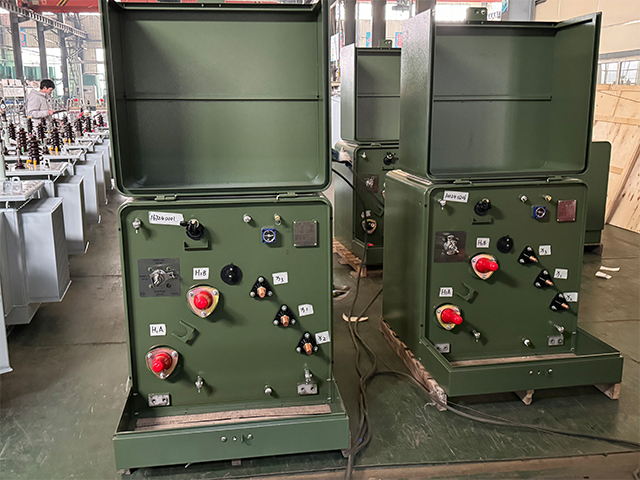
5kVA Single Phase Pad Mounted Transformer
The 5kVA Single Phase Pad Mounted Transformer is designed for reliable and efficient power distribution in residential, commercial, and light industrial applications. Ideal for medium-density areas, this transformer steps down high-voltage electricity to a usable lower voltage for safe distribution to homes and businesses.
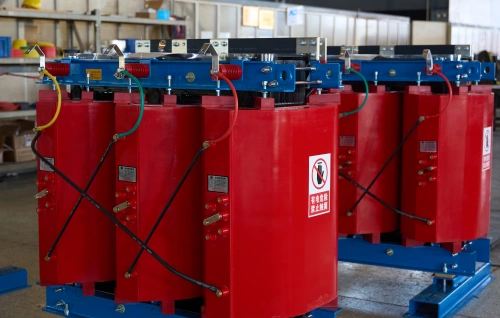
10kV Cast Resin Dry Type Transformer Copper Winding
The 10kV Cast Resin Dry Type Transformer Copper Winding, a high-reliability, oil-free power solution engineered for safe and efficient indoor medium-voltage distribution. This three-phase dry-type transformer features fully vacuum-cast epoxy resin encapsulation around high-purity copper windings, combined with premium low-loss grain-oriented silicon steel cores to deliver exceptional energy efficiency (typically 98%+), significantly reduced no-load and load losses, and outstanding partial discharge performance (<10pC). The cast resin design ensures superior moisture resistance, self-extinguishing fire safety (F1 class), robust short-circuit withstand, and maintenance-free operation. Natural air (AN) cooling with optional forced air (AF) upgrades supports high overload capacity while maintaining low acoustic emissions through advanced vibration isolation and optimized core/winding geometry. Compliant with IEC 60076-11 and equivalent standards, this transformer steps down 10kV primary (with ±2×2.5% or wider off-circuit taps) to 0.4kV secondary (Dyn11 vector group standard), making it the ideal choice for modern commercial, industrial, and utility indoor installations prioritizing safety, sustainability, and long-term performance.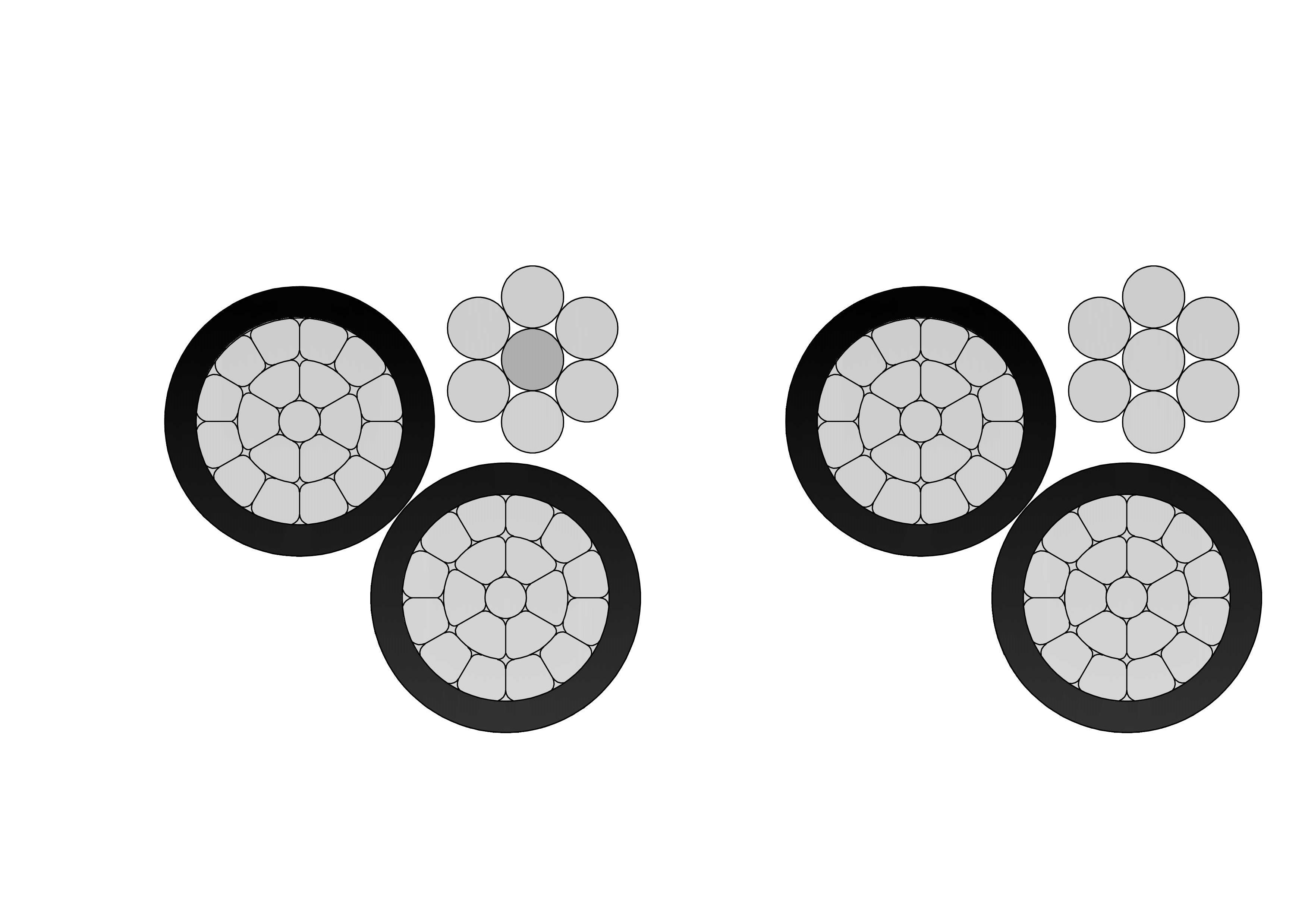
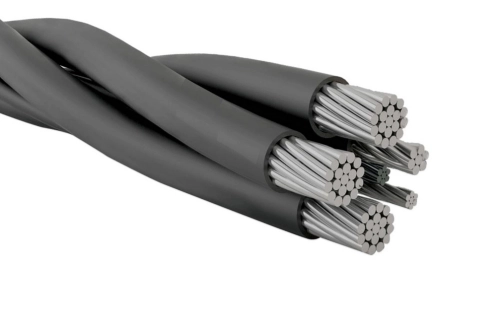
2/0 Triton Aluminum Conductor Triplex Overhead Service Drop Cable
The 2/0 Triton Aluminum Conductor Triplex Overhead Service Drop Cable is engineered for reliable overhead electrical service from utility distribution lines to residential and commercial buildings. The cable consists of two insulated aluminum phase conductors twisted around a bare aluminum neutral messenger, providing balanced electrical performance and strong mechanical support. Manufactured from high-purity aluminum and weather-resistant insulation compounds, the 2/0 Triton Aluminum Conductor Triplex Overhead Service Drop Cable delivers low electrical resistance, excellent corrosion resistance, and long-term durability in outdoor environments. Its lightweight construction simplifies handling and installation while maintaining the tensile strength required for aerial service. The cable is designed to perform under UV exposure, wind loading, and temperature variation. Comprehensive quality control and systematic testing are applied throughout production to ensure compliance with utility standards and dependable field performance.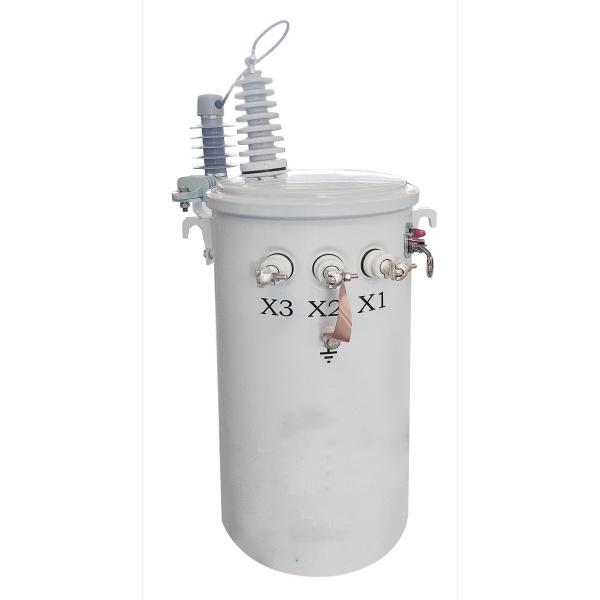
25kVA Completely self-protected(CSP) Single Phase Pole Mounted Transformer
The 25kVA Completely Self-Protected (CSP) Single Phase Pole Mounted Transformer is a compact, oil-immersed overhead distribution transformer with integrated self-protection for enhanced safety and reduced external equipment needs in residential, rural, small commercial, and light agricultural power supply. Compliant with ANSI C57.12.20, IEEE C57.12.00 / C57.12.90, DOE efficiency standards (meeting or exceeding DOE 2016 levels, aligned with 2029 amended requirements for reduced losses in single-phase units), and applicable CSA/IEC guidelines, this CSP unit delivers efficient step-down from medium-voltage primary lines to low-voltage secondary service, with built-in protection against overloads, faults, and surges, low no-load/load losses, and long service life in pole-mounted utility applications.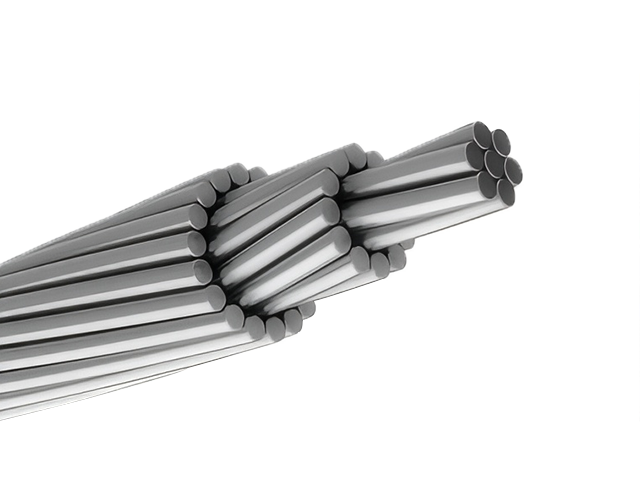
4 AWG SWANATE ACSR Conductor Cable
4 AWG SWANATE ACSR Conductor Cable is designed for overhead power distribution systems requiring dependable electrical performance and enhanced mechanical strength. It is manufactured using concentrically stranded aluminum wires reinforced with a galvanized steel core, ensuring an effective balance between conductivity and tensile durability. The aluminum strands provide low electrical resistance and efficient current transfer, while the steel core improves load-bearing capacity, controls sag, and increases resistance to mechanical stress during installation and operation. This construction allows the 4 AWG SWANATE ACSR conductor to perform reliably under wind load, temperature variation, and outdoor environmental conditions. Produced in accordance with ASTM and IEC standards, the 4 AWG SWANATE ACSR Conductor Cable offers consistent quality, easy handling, and long service life. It is widely applied in utility distribution lines, rural electrification projects, and overhead network upgrades where stable performance and cost efficiency are required.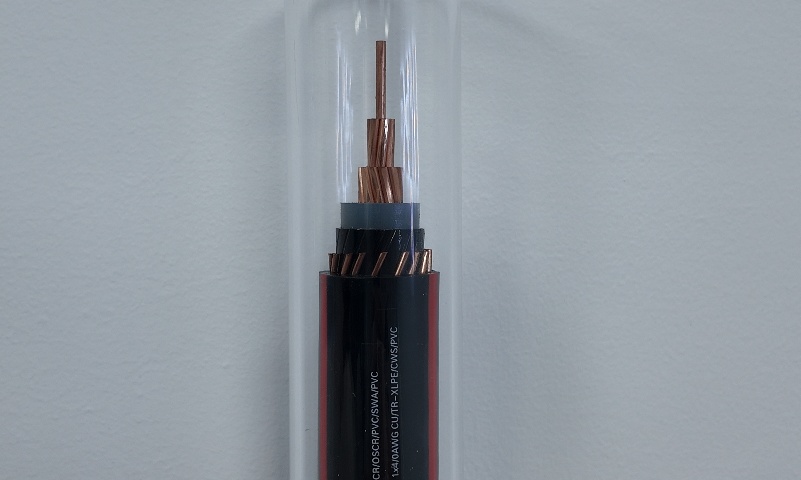
5-46kV TR-XLPE URD Medium Voltage Utility Cables
5–46kV TR-XLPE URD Medium Voltage Utility Power Cables are specifically designed for underground residential distribution and utility power networks. Manufactured with high-quality copper or aluminum conductors and tree-retardant cross-linked polyethylene (TR-XLPE) insulation, these cables provide superior resistance to electrical treeing, moisture ingress, and long-term aging. The TR-XLPE insulation system significantly extends service life in underground installations where environmental stress and moisture exposure are common. Rated for voltage levels from 5kV to 46kV, the cable ensures stable and efficient power transmission under continuous operating conditions. Its robust construction supports direct burial or duct installation, meeting the reliability requirements of modern utility infrastructure. Designed to meet utility and industry performance expectations, TR-XLPE URD cables offer consistent electrical performance, enhanced durability, and reduced maintenance over their operational lifespan.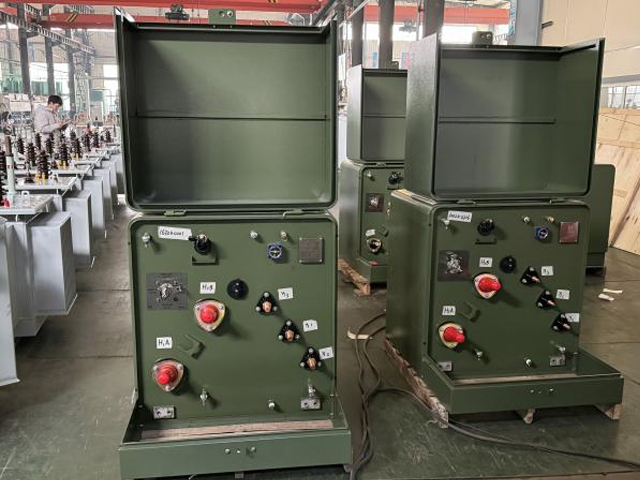
5kVA Conventional Type Single Phase Pole Mounted Transformer
NPC ELECTRIC has been focusing on the production of 5kVA Conventional Type Single Phase Pole Mounted transformer for decades, complying with international standards such as IEC 60076, ISO 9001, IEEE C57.12.00, etc. to ensure its safety, performance, and reliability. NPC ELECTRIC’s 5kVA conventional single-phase pole-mounted transformer is a small power transformer equipment, usually installed on power poles. This transformer is widely used in daily life and small industrial fields for its reliability and efficient power conversion capabilities, ensuring a stable and safe power supply. The transforming primary voltages from 2.4kV to 34.5kV (such as 12470Y/7200, 13200Y/7620, or 14400GrdY/8320) to secondary outputs like 120/240V split-phase or 277V. Featuring an interlaced core for surge resistance, high-grade silicon steel, and aluminum or copper windings.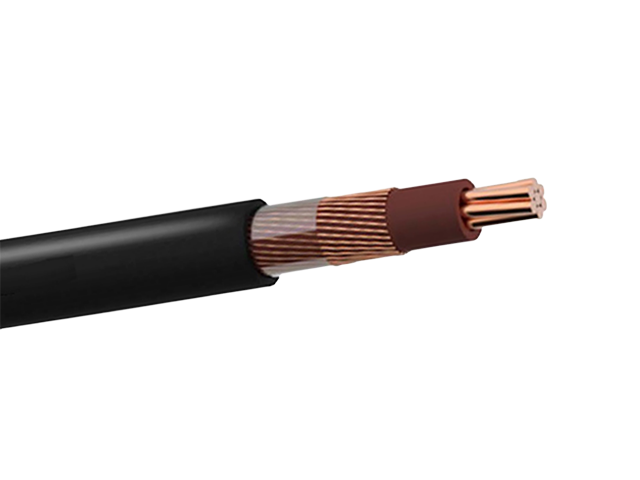
CONCENTRIC CABLE
NPC Electric Concentric Cable is designed with a central phase conductor surrounded by an evenly distributed concentric neutral conductor, providing a stable electrical return path and enhanced system safety. The concentric construction ensures uniform current distribution, reduces electromagnetic interference, and improves grounding reliability. High-purity copper or aluminum conductors are combined with durable insulation materials that offer excellent resistance to moisture, heat, and environmental stress. This cable structure is widely used in low-voltage power distribution, where mechanical protection and electrical stability are critical. The concentric neutral layer also enhances fault current handling and minimizes voltage drop during operation. With strong mechanical strength, long service life, and consistent electrical performance, concentric cables are suitable for underground installation and utility networks requiring dependable power delivery.
1/0 Echinus Aluminum Conductor Triplex Overhead Service Drop Cable
NPC Electric 1/0 Echinus Triplex Service Drop Cable provides reliable overhead secondary distribution for residential applications. Consisting of two 1/0 AWG aluminum phase conductors and one neutral messenger (7-strand) insulated with cross-linked polyethylene (XLPE) and twisted in triplex form, it meets ASTM, ICEA, and international standards. The robust insulation resists sunlight, moisture, and mechanical damage for decades of outdoor service. Lightweight design simplifies installation with low sag and easy handling. The 1/0 Echinus Triplex Service Drop Cable ensures minimal losses, high current capacity, and excellent weather performance up to 600V. Self-supporting messenger reduces pole loading. Flame-retardant options enhance safety. Commonly chosen for two-phase power delivery with neutral in subdivisions, rural homes, and temporary connections requiring safe, economical aerial bundled solutions with proven durability.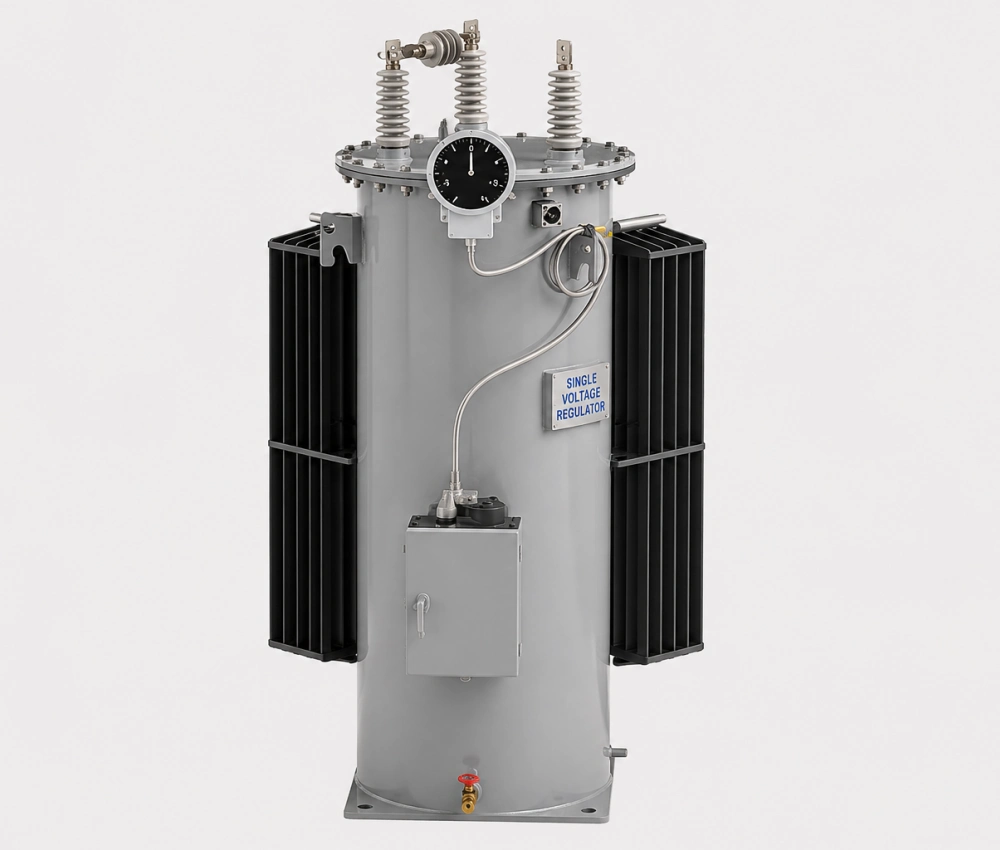
Single Phase Step Voltage Regulator for Substation
The Single Phase Step Voltage Regulator for Substation is a precision-engineered, automatic on-load tap-changing device designed to deliver stable voltage output in medium-voltage substation environments. Built with high-quality copper windings, premium grain-oriented silicon steel core, and a reliable motorized on-load tap changer, it provides fast and accurate voltage correction with minimal waveform distortion. The advanced digital AVR controller offers real-time monitoring, programmable settings, and multiple communication protocols for seamless SCADA integration. This regulator features robust protection systems against over-voltage, under-voltage, overload, short-circuit, and lightning surges. Its compact substation-optimized design, excellent overload capacity, and long-term reliability make it the ideal solution for maintaining consistent voltage levels despite load variations or grid fluctuations. Fully compliant with IEC 60076-21 and ANSI C57.15 standards, it ensures high efficiency, low losses, and trouble-free operation in demanding substation conditions.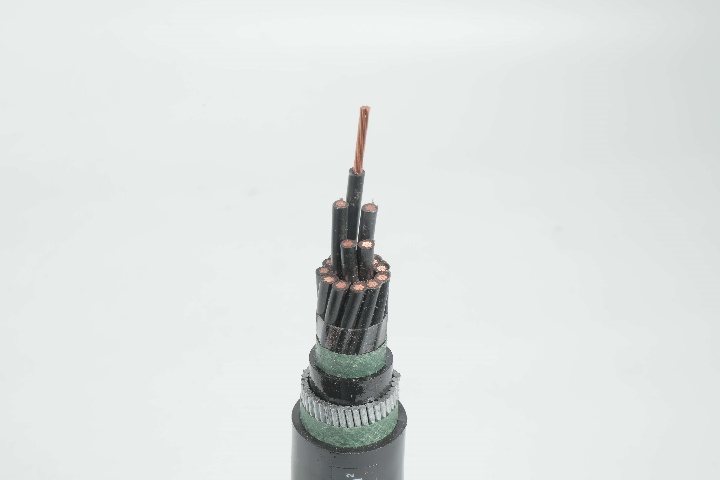
PLTC Shielded Instrumentation Tray Cable - 300V Copper Multi-Pair Cable
The PLTC Shielded Instrumentation Cable is a versatile power-limited tray cable engineered for precise signal transmission in industrial environments. It consists of stranded copper conductors with PVC insulation, twisted pairs or triads, aluminum foil shielding with drain wire for EMI protection, and a flame-retardant PVC jacket. This design ensures clean signal integrity, mechanical durability, and easy installation in cable trays. Rated 300V, the cable is suitable for control, instrumentation, and monitoring circuits. Compliant with UL 13 and NEC Article 725, the PLTC Shielded Instrumentation Cable undergoes extensive quality testing from raw materials to finished product, delivering consistent performance, safety, and reliability for modern industrial automation and process control applications.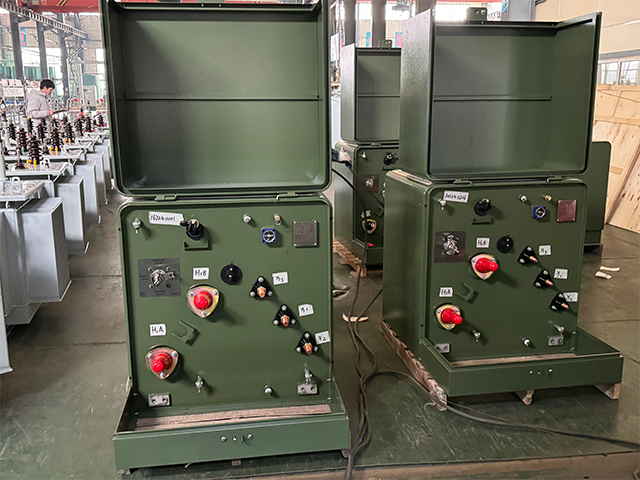
500kVA Single Phase Pad Mounted Transformer
The 500kVA Single Phase Pad Mounted Transformer is a high-capacity electrical transformer designed for reliable and efficient power distribution in commercial, industrial, and utility applications. With a robust, weatherproof enclosure, it is specifically built for outdoor use and can handle the demanding requirements of larger single-phase systems. This transformer offers a 500kVA capacity, ensuring dependable performance for a variety of load conditions.
50kVA Dry Type Transformer
NPC ELECTRIC 50kVA dry-type transformer is an efficient, safe and environmentally friendly power transformer. It adopts dry insulation structure and does not require oil immersion cooling. It is suitable for various small and medium-sized power systems. It is widely used in industries, commercial buildings and power distribution, providing users with stable and reliable power supply. Standard features include three-phase or single-phase configurations, aluminum or copper windings, 150°C or 115°C temperature rise with 220°C insulation class, ±2×2.5% primary taps for voltage adjustment, NEMA 1 or 3R enclosures (ventilated with louvers or encapsulated for dust/moisture protection), natural self-cooling (AN), electrostatic shielding options, and low sound levels per NEMA standards.
6 Voluta Aluminum Conductor Triplex Overhead Service Drop Cable
The 6 Voluta Aluminum Conductor Triplex Overhead Service Drop Cable is a high-quality, cost-effective solution for overhead power delivery from utility lines to residential or commercial weatherheads. It features three 6 AWG conductors: two insulated phase conductors of concentric or 7-strand 1350-H19 aluminum, covered in black cross-linked polyethylene (XLPE) or polyethylene (PE) insulation, twisted around a bare 6 AWG ACSR (6/1 strand) full-size neutral messenger for superior mechanical support and reduced sag. Rated 600V (phase-to-phase), with ampacity up to 85A (XLPE at 90°C) or 70A (PE at 75°C), this cable offers excellent weather resistance, corrosion protection, and lightweight design. Compliant with ASTM B-230, B-231, B-232, and ICEA S-76-474 standards, the 6 Voluta ensures safe, reliable performance in aerial service drop installations.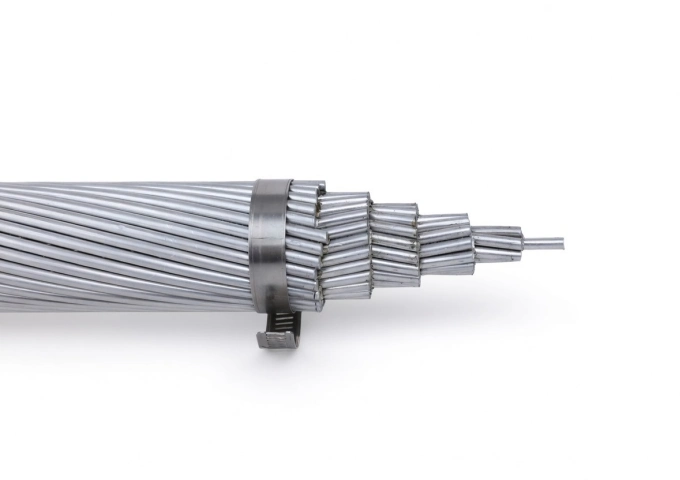
2000 MCM Cowslip AAC All Aluminum Bare Conductor Cable
The 2000 MCM Cowslip AAC Cable represents premium All Aluminum Conductor technology for overhead power applications. Built with 91 strands of high-conductivity 1350-H19 aluminum, this bare conductor delivers an optimal balance of electrical efficiency and mechanical robustness. With a 1.631-inch diameter, 32,200 lbs breaking strength, and 1518 amps ampacity, the Cowslip AAC offers low DC resistance of 0.00864 ohms per 1000 ft at 20°C and a weight of 1877 lbs per 1000 ft. This design minimizes sag while providing excellent corrosion resistance for extended outdoor service. Manufactured to meet ASTM B-230 and B-231 standards, the 2000 MCM Cowslip AAC Cable undergoes extensive quality testing from raw materials through finished product. It is the ideal solution for new installations and upgrades in transmission and distribution systems that demand lightweight, high-conductivity bare aluminum conductors.Welcome your inquiry
Honesty, Integrity, Frugality, Activeness and Passion