
Duplex Cable vs Triplex Cable vs Quadruplex Cable: Key Differences, Applications & Which to Choose
2026-06-19
Introduction to Multiplex Service Drop Cables
In modern electrical distribution systems, overhead service drop cables and underground residential distribution (URD) cables play a critical role in delivering reliable power from utility poles or transformers to end-user facilities. Duplex, Triplex, and Quadruplex cables—collectively known as multiplex or service drop cables—represent standardized configurations designed for low-voltage (typically 600V or below) applications. These cables consist of multiple aluminum conductors twisted together, often with a bare or insulated neutral messenger that provides both electrical neutrality and mechanical support.
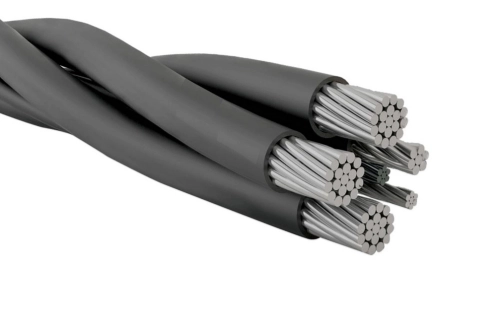
From a practical engineering perspective, the primary distinction lies in the number of conductors: Duplex features two, Triplex three, and Quadruplex four. This directly influences their suitability for single-phase versus three-phase power delivery, load capacity, installation methods, and long-term performance under environmental stresses such as wind, ice, UV exposure, and temperature fluctuations. High-quality variants utilize Aluminum 1350-H19 or AA-8000 series conductors with cross-linked polyethylene (XLPE) insulation for superior moisture, heat, and abrasion resistance.
Construction and Conductor Configuration
The construction of these cables follows rigorous industry standards such as ICEA, ASTM, and UL 854, ensuring mechanical strength and electrical integrity. In overhead service drop cables, phase conductors are concentrically stranded aluminum, insulated with black XLPE or polyethylene (PE) for sunlight and weather resistance. The neutral messenger is typically bare ACSR (Aluminum Conductor Steel Reinforced) or all-aluminum alloy, serving dual purposes: carrying unbalanced current and acting as a structural support for spanning between poles or to service entrances.
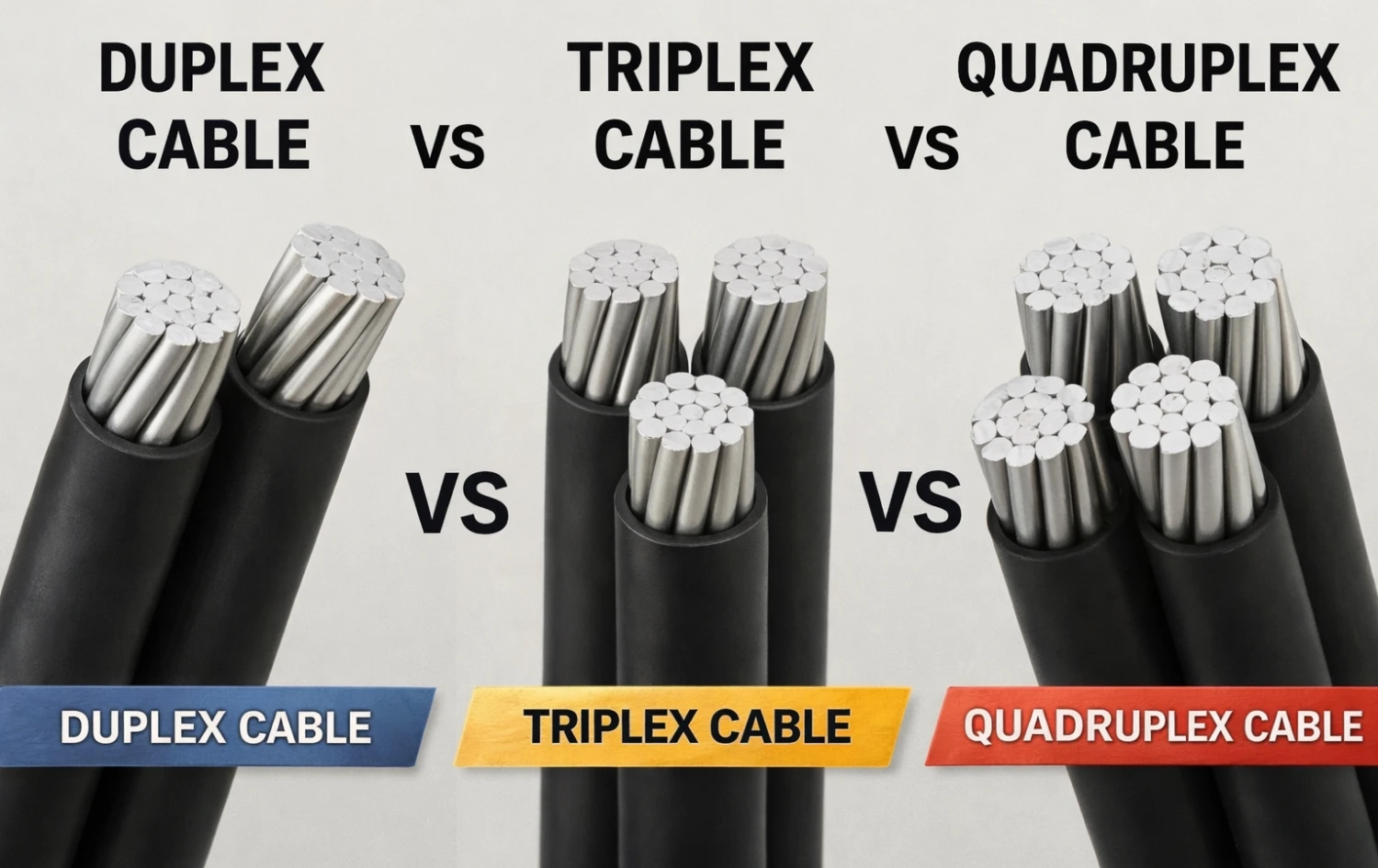
- Duplex Cable: Comprises one insulated phase conductor and one bare neutral messenger. This minimal configuration suits basic 120V or 120/240V single-phase supplies with a limited load.
- Triplex Cable: Features two insulated phase conductors (typically black and red for phase identification) twisted around one neutral messenger. It enables 120/240V single-phase, three-wire service, which is the standard for most North American residential metering.
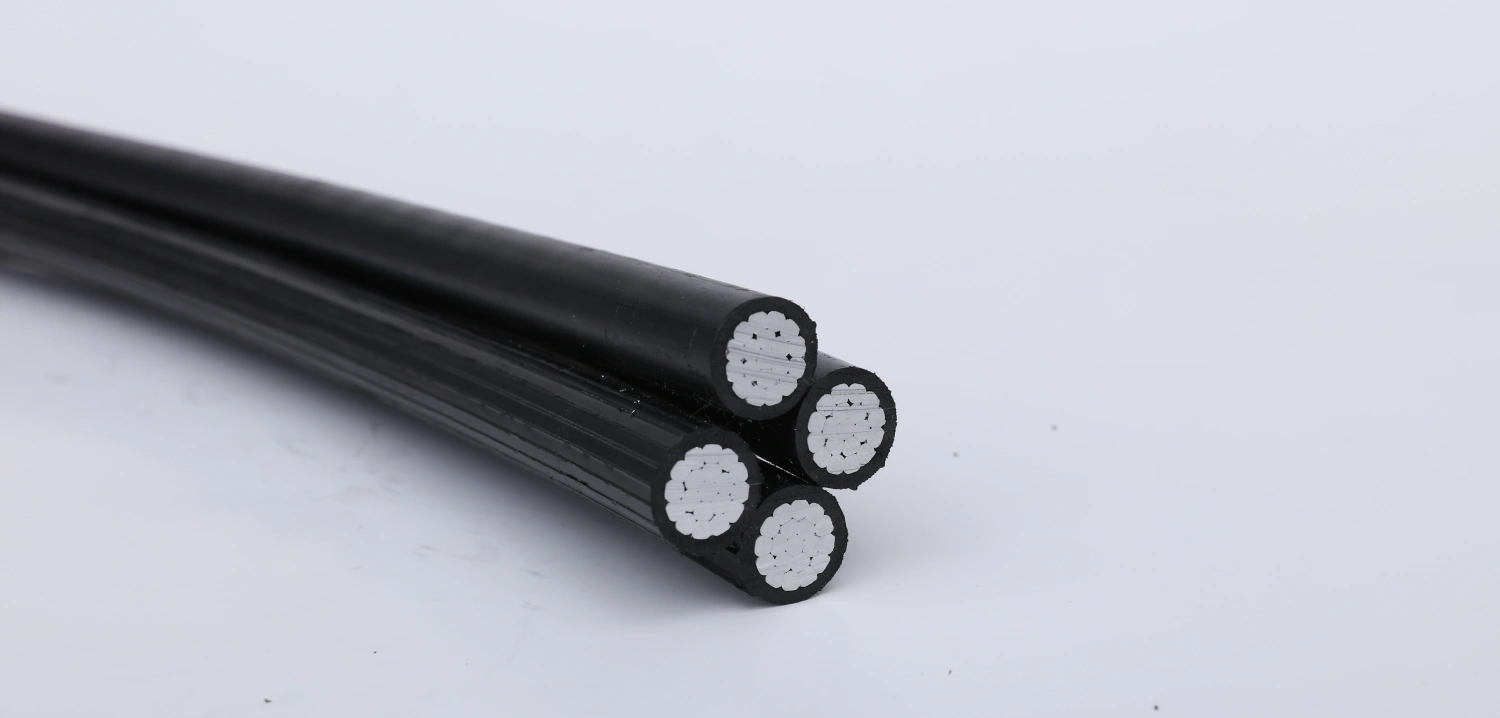
- Quadruplex Cable: Includes three insulated phase conductors (black, red, blue) plus one neutral. This setup supports 120/208V or 277/480V three-phase systems, or single-phase with an additional insulated neutral for enhanced safety and reduced voltage drop in longer runs.
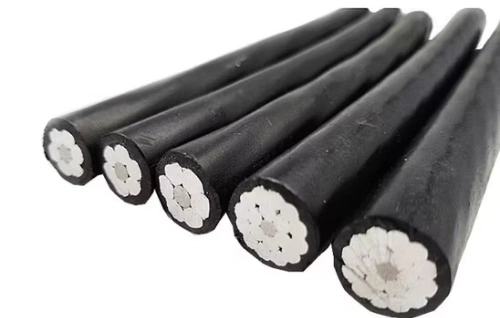
In Aluminum URD Triplex and Quadruplex variants intended for underground use, all conductors are fully insulated with XLPE (no bare messenger), rated for direct burial or duct installation per USE-2 standards. The helical twisting minimizes electromagnetic interference and improves handling during pulling or sagging. From a field installation viewpoint, the compact bundled design reduces sag under load, eases stringing with aerial equipment, and lowers the risk of conductor abrasion compared to individual single-conductor runs.
Table1:Construction and Configuration Comparison
|
Feature |
Duplex Cable |
Triplex Cable |
Quadruplex Cable |
|
Number of Conductors |
2 (1 phase + 1 neutral messenger) |
3 (2 phases + 1 neutral messenger) |
4 (3 phases + 1 neutral messenger) |
|
Typical Power Type |
Single-phase (limited, e.g., 120V) |
Single-phase (120/240V, 3-wire) |
Three-phase (120/208V or 277/480V) or enhanced single-phase |
|
Phase Conductors |
1 insulated aluminum |
2 insulated aluminum (black/red) |
3 insulated aluminum (black/red/blue) |
|
Neutral/Messenger |
1 bare or insulated aluminum/ACSR |
1 bare ACSR/AAC/AAAC messenger |
1 bare ACSR/AAC/AAAC messenger |
|
Common Insulation |
XLPE (90°C) or PE (75°C) |
XLPE (black, sunlight resistant) |
XLPE (black, sunlight resistant) |
|
Typical Applications |
Temporary power, street lighting |
Residential service drop (most common) |
Commercial/light industrial, three-phase loads |
|
Overhead Span Suitability |
Short spans |
Medium spans (up to 100-150 ft) |
Longer spans with higher mechanical strength |
Electrical Characteristics and Performance
Electrically, these cables are rated for 600 volts phase-to-phase, with maximum operating temperatures of 75°C for PE insulation or 90°C for XLPE, allowing higher ampacity in demanding conditions. Ampacity depends on conductor size (e.g., 6 AWG to 4/0 AWG or larger), installation method (overhead vs. direct burial), ambient temperature, and grouping factors per NEC Article 310 or equivalent international codes.
Triplex cables excel in single-phase power applications, delivering balanced 120/240V with the neutral handling return current. Quadruplex cables provide true three-phase capability, essential for motors, HVAC systems, and commercial loads where phase balancing prevents overheating and improves efficiency. A duplex is simpler but limited in capacity, often restricted to temporary construction power or street lighting.
XLPE insulation offers excellent dielectric strength, low moisture absorption, and resistance to cracking in cold climates or under UV degradation—critical for long service life in overhead power lines. In real-world testing and field data, XLPE-insulated high-quality service drop cables demonstrate lower failure rates in wet locations compared to older thermoplastic insulations. Engineers must calculate voltage drop (typically aiming for <3% for feeders) using conductor resistivity, length, and load current; larger AWG sizes in Quadruplex configurations often yield better performance over extended spans.
Overhead vs Underground Applications
Overhead service drop cables (Duplex, Triplex, Quadruplex) are optimized for aerial installation from utility poles to building service heads. The bare neutral messenger provides tensile strength for spans up to 100-150 feet, depending on ice/wind loading calculations per NESC standards. These are common in suburban and rural power distribution due to lower installation costs compared to trenching.
Aluminum URD Triplex and Quadruplex cables shift the design for underground residential distribution: fully insulated conductors eliminate the need for a separate messenger, enabling direct burial at 24-36 inches depth or installation in conduit. This configuration enhances safety by reducing exposure to physical damage and wildlife, while XLPE provides superior moisture resistance. In practice, utility crews prefer URD for new subdivisions where aesthetics and storm resilience are priorities, though it requires careful backfill to avoid sharp rocks damaging the insulation.
From an operational standpoint, overhead installations allow easier visual inspections and repairs but are more susceptible to storm damage. Underground offers protection but demands higher upfront labor and future locating efforts using tracers.
Table 3: Overhead vs. Underground (URD) Application Comparison
|
Aspect |
Overhead Service Drop (Duplex/Triplex/Quadruplex) |
Aluminum URD (Triplex/Quadruplex) |
|
Conductor Insulation |
Phase: XLPE/PE; Neutral: often bare messenger |
All conductors are fully insulated with XLPE (neutral with yellow stripe) |
|
Mechanical Support |
Bare ACSR/AAC messenger provides tensile strength |
No messenger; relies on insulation and conduit/direct burial |
|
Installation Method |
Aerial stringing from poles to the service head |
Direct burial (24-36 inches) or in a duct |
|
Typical Voltage Rating |
600V phase-to-phase |
600V |
|
Environmental Resistance |
Excellent UV & weather (XLPE); susceptible to storm damage |
Superior moisture & physical damage protection; less UV exposure |
|
Ampacity Rating Basis |
ICEA/NESC sag-tension tables (free air) |
NEC Table for direct burial or duct (lower than overhead due to heat dissipation) |
|
Common Use Cases |
Suburban/rural residential & commercial drops |
New subdivisions, aesthetically sensitive areas, storm-resilient grids |
|
Maintenance & Inspection |
Visual inspection easier; repairs faster |
Requires locating equipment; harder access but fewer weather-related failures |
|
Cost Consideration |
Lower initial installation cost |
Higher labor (trenching) but longer service life in harsh conditions |
Note: URD versions are typically fully insulated (without bare neutral) and comply with UL 854 and ICEA standards. For direct burial current carrying capacity, please refer to NEC 310.15 and the manufacturer's direct burial/pipeline data.
Key Differences: Duplex, Triplex, and Quadruplex Compared
The core differences stem from the number of conductors and the resulting power delivery:
- Number of Conductors: Duplex (2), Triplex (3), Quadruplex (4). This affects phase capability and neutral handling.
- Power Type: Duplex and Triplex primarily serve single-phase power (120/240V), while Quadruplex supports three-phase power for higher efficiency in balanced loads.
- Load Capacity and Ampacity: Quadruplex generally handles higher currents (e.g., 100-400A depending on size) due to three phases, making it suitable for commercial or multi-unit residential. Triplex is ideal for 100-200A residential services. Duplex suits lighter loads under 100A.
- Mechanical and Installation Aspects: More conductors increase cable diameter and weight, impacting sag calculations and pulling tension. Triplex strikes a balance for most overhead power line service drops.
- Cost and Material Efficiency: Duplex is the most economical for minimal needs. Quadruplex uses more aluminum but reduces the need for multiple separate runs, lowering overall labor in complex setups.
Table2:Typical Electrical and Physical Specifications
Example data (common dimensions, XLPE insulation, 90°C conductor temperature, 40°C ambient temperature, 2ft/s wind speed, typical values under conditions without direct sunlight):
|
Code Word / Size Example |
Cable Type |
Phase Conductor Size (AWG/kcmil) |
Neutral Messenger Size |
Approx. Overall Diameter (inches) |
Approx. Weight (lbs/kft) |
Ampacity (XLP 90°C, Overhead) |
|
Collie / Peakingese |
Duplex |
6 |
6 |
0.53 – 0.66 |
63 – 68 |
85 A |
|
Oyster / Periwinkle |
Triplex |
4 |
4 |
0.62 – 0.67 |
148 – 172 |
115 A |
|
Mussel / Conch |
Triplex |
2 |
2 or 4 |
0.80 |
204 – 262 |
150 A |
|
Snail / Neritina |
Triplex |
1/0 |
2 or 1/0 |
1.02 |
329 – 420 |
205 A |
|
Mustang / Pinto |
Quadruplex |
4 |
4 |
0.68 – 0.73 |
201 – 223 |
100 A (per phase) |
|
Criollo / Hanoverian |
Quadruplex |
1/0 or 2/0 |
1/0 or 2/0 |
1.12 – 1.36 |
529 – 799 |
180 – 235 A (per phase) |
|
Oldenburg |
Quadruplex |
4/0 |
4/0 |
1.50 |
946 – 986 |
275 A (per phase) |
Note: Ampacity is a typical value for overhead installation. Actual values need to be adjusted according to the installation method (overhead/direct burial), ambient temperature, and NEC correction factor. "Per phase" of Quadruplex refers to the current-carrying capacity of each phase conductor; the total capacity is higher when all three phases are balanced.
In field engineering, these distinctions guide compliance with local AHJ (Authority Having Jurisdiction) requirements and utility specifications. For instance, a single-family home typically uses Triplex for the service drop, while an apartment complex or workshop with heavy machinery may require Quadruplex.
Practical Selection Guidelines from Field Experience
Choosing the right cable requires a systematic assessment from the project planning stage. First, determine the service type: single-phase for most homes (Triplex preferred) or three-phase for commercial/industrial (Quadruplex). Calculate the expected demand load using NEC demand factors, then select a conductor size to maintain ampacity with derating for temperature and bundling.
Consider environmental factors: In coastal or high-UV areas, prioritize XLPE insulation for longevity. For long spans, verify messenger strength and consult sag-tension tables. Budget-wise, Aluminum URD Triplex and Quadruplex often prove cost-effective due to aluminum’s lightweight nature versus copper, though aluminum requires proper termination techniques (e.g., anti-oxidant compound and torque specifications) to prevent oxidation-related failures.
In international export markets, ensure compliance with IEC, BS, or NFC standards alongside UL/ICEA for North America. High-quality service drop XLPE insulation cables with compressed stranding offer better flexibility and reduced skin effect at higher frequencies if applicable. Always factor in future expansion—oversizing slightly with Quadruplex can accommodate load growth without re-trenching.
Advantages, Limitations, and Safety Considerations
Advantages:
- Bundled design simplifies installation, reduces clutter on poles, and improves aesthetics.
- Aluminum conductors provide an excellent conductivity-to-weight ratio, lowering structural demands on poles.
- XLPE insulation ensures reliable performance in harsh conditions, supporting modern grid resilience goals.
Limitations:
- Duplex lacks versatility for growing loads.
- Triplex may experience higher neutral current in imbalanced single-phase systems.
- Quadruplex is bulkier and more expensive upfront, though it delivers better long-term efficiency in three-phase setups.
Safety is paramount: Proper grounding of the neutral at the service entrance, use of weatherproof connectors, and adherence to clearance requirements prevent arcing or contact hazards. In underground applications, warning tapes and proper depth mitigate dig-in risks. From a maintenance perspective, periodic infrared thermography on connections helps detect hot spots early, especially in aluminum terminations.
Installation Best Practices and Maintenance
Successful deployment begins with pre-installation planning: survey pole attachments, calculate pulling tensions, and coordinate with utilities for transformer sizing. For overhead, use pre-twisted reels to maintain lay direction and avoid birdcaging. Underground requires smooth conduit bends and lubricant for longer pulls.
Post-installation, torque all connections to manufacturer specs and apply anti-corrosion treatments on aluminum. Routine patrols for overhead lines check for tree contact or insulation wear; for URD, monitor for ground faults using insulation resistance testing.
Modern designs increasingly incorporate traceable neutrals or enhanced jackets for smart grid integration, reflecting evolving utility needs for monitoring and reliability.
Conclusion: Making the Informed Choice
Duplex Cable, Triplex Cable, and Quadruplex Cable each serve distinct yet overlapping roles in today’s power distribution networks. For standard residential single-phase service drops, Triplex offers the optimal balance of capacity, cost, and ease of installation. Quadruplex becomes essential when three-phase power or higher loads demand balanced delivery, while Duplex remains viable for lightweight or temporary applications.
Ultimately, selection hinges on a thorough load analysis, site conditions, regulatory compliance, and total cost of ownership. By prioritizing high-quality Aluminum URD Triplex and Quadruplex with XLPE insulation, engineers and contractors ensure safe, efficient, and durable electrical infrastructure that meets both current demands and future growth. Consulting with cable manufacturers for project-specific ampacity tables and code interpretations remains a best practice in professional electrical work.

Related Articles


Related Products
636 MCM Orchid AAC Cable
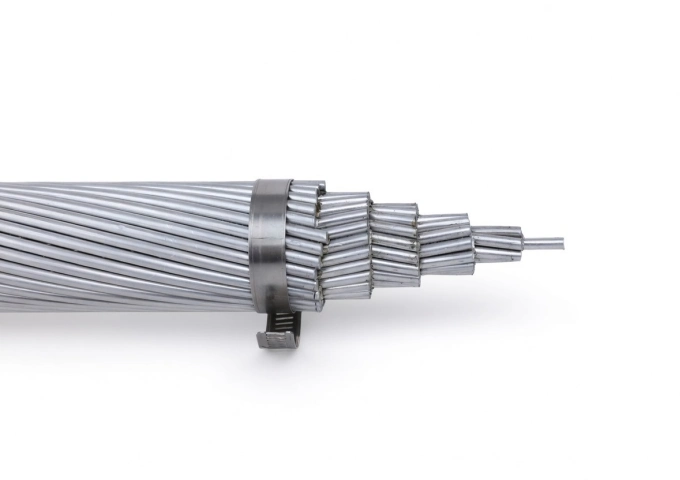
The 636 MCM Orchid AAC Cable represents premium All Aluminum Conductor technology for overhead power applications. Built with 37 strands of high-conductivity 1350-H19 aluminum, this bare conductor delivers an optimal balance of electrical efficiency and mechanical robustness. With a 0.918-inch diameter, 11,400 lbs breaking strength, and 765 amps ampacity, the Orchid AAC offers low DC resistance of 0.027 ohms per 1000 ft at 20°C and a weight of 597 lbs per 1000 ft. This design minimizes sag while providing excellent corrosion resistance for extended outdoor service. Manufactured to meet ASTM B-230 and B-231 standards, the 636 MCM Orchid AAC Cable undergoes extensive quality testing from raw materials through finished product. It is the ideal solution for new installations and upgrades in transmission and distribution systems that demand lightweight, high-conductivity bare aluminum conductors.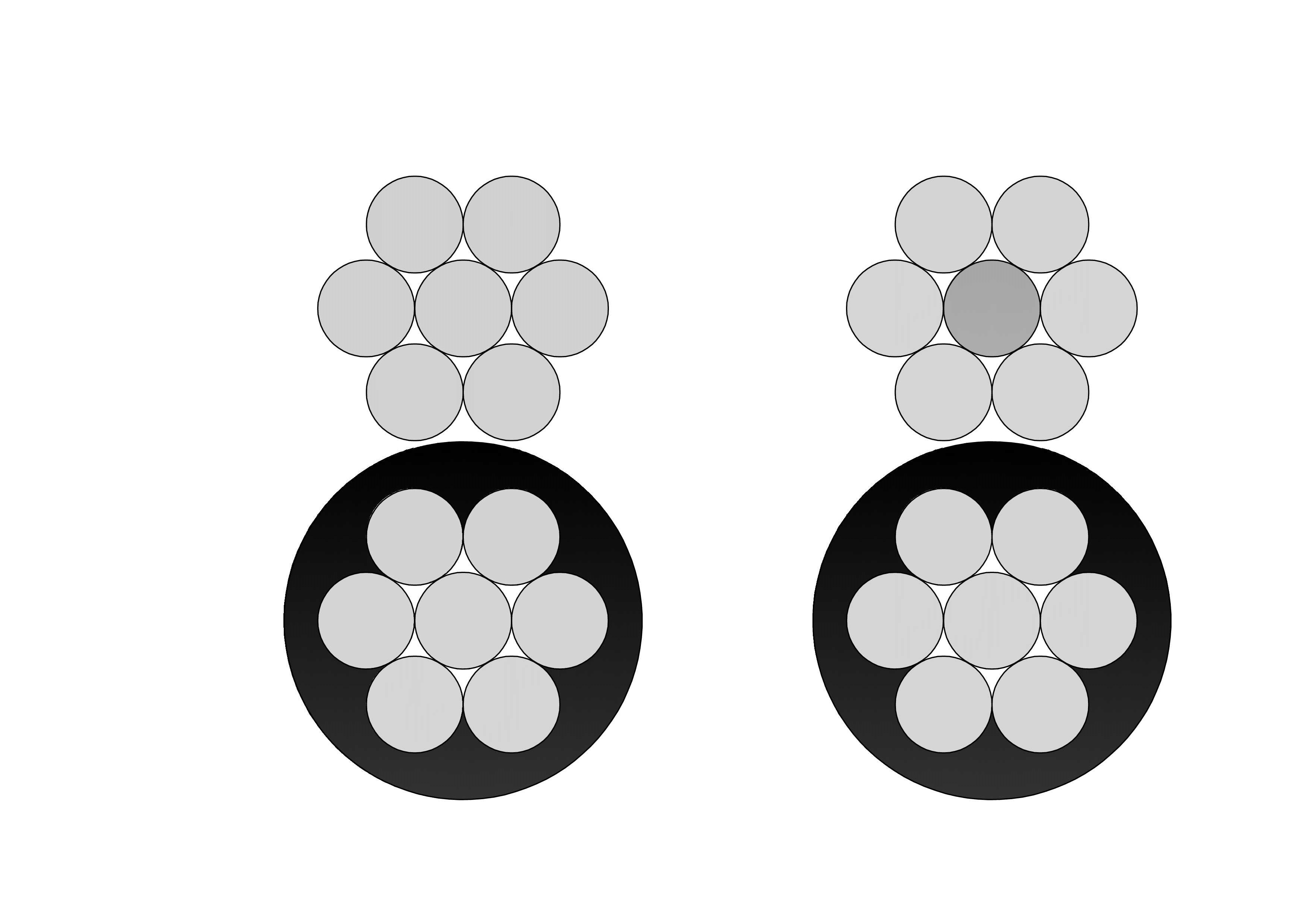
4 Eskimo Aluminum Conductor Duplex Overhead Service Drop Cable
Our 4 Eskimo Duplex Service Drop Cable provides reliable overhead secondary distribution for residential applications. Consisting of two 4 AWG aluminum conductors (one phase, one neutral, 7-strand) insulated with cross-linked polyethylene (XLPE) and twisted in duplex form, it meets ASTM, ICEA, and international standards. The robust insulation resists sunlight, moisture, and mechanical damage for decades of outdoor service. Lightweight design simplifies installation with low sag and easy handling. The 4 Eskimo Duplex Service Drop Cable ensures minimal losses, high current capacity, and excellent weather performance up to 600V. Self-supporting configuration reduces pole loading. Flame-retardant options enhance safety. Commonly chosen for single-phase power delivery in subdivisions, rural homes, and temporary connections requiring safe, economical aerial bundled solutions with proven durability.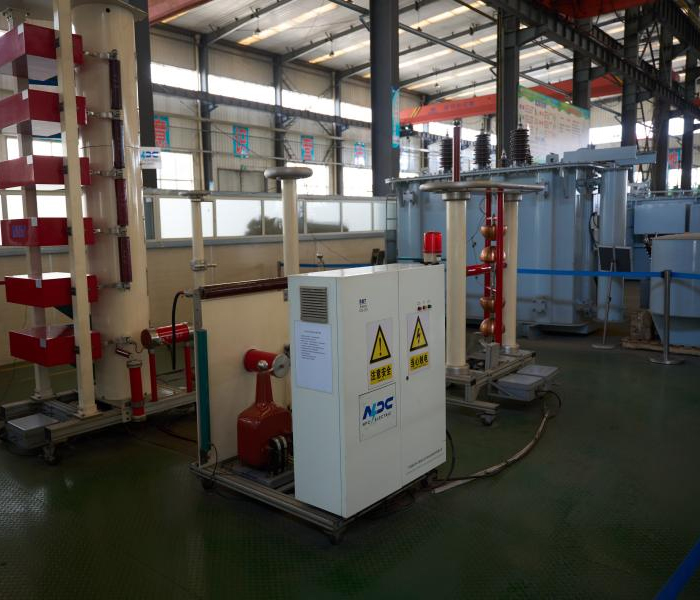
13.8kV 1600kVA Cast Resin Dry Type Transformer
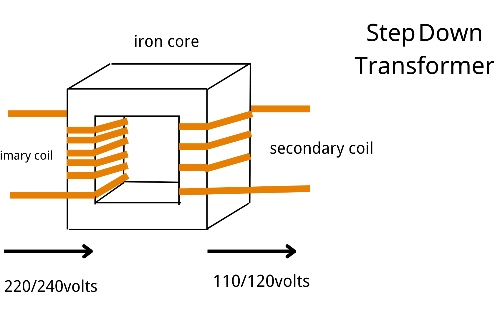
Introducing the robust 13.8kV 1600kVA Cast Resin Dry Type Transformer, a high-capacity, oil-free power solution engineered for safe, reliable indoor medium-voltage distribution in industrial and utility applications. This three-phase cast resin transformer utilizes premium low-loss grain-oriented silicon steel cores and high-conductivity copper (or optional aluminum) windings fully encapsulated in epoxy resin under vacuum pressure, delivering exceptional energy efficiency (often exceeding 98-99% per DOE/IEEE standards), significantly reduced no-load and load losses, and superior partial discharge performance (<10pC). Compliant with IEC 60076-11, IEEE/ANSI, and DOE efficiency requirements, this transformer steps down 13.8kV primary (with ±2×2.5% off-circuit taps standard) to common secondary voltages like 0.4kV, 0.48kV, or 0.66kV (Dyn11 vector group typical), making it ideal for sustainable, high-power indoor substations and facilities.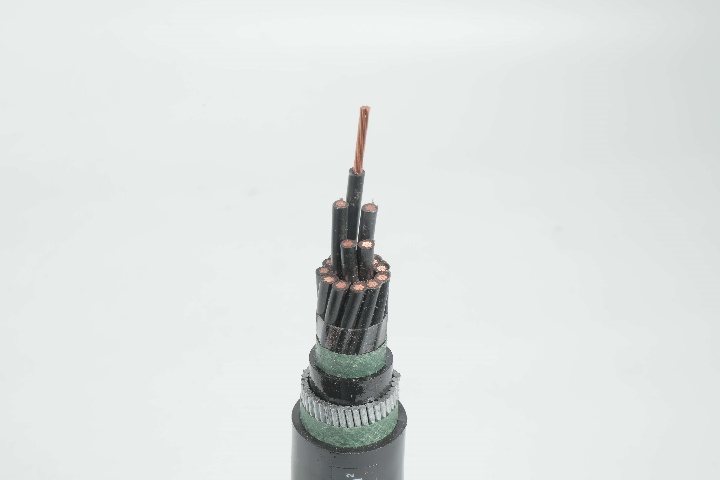
SY Control Cable (YSLYSY / HSLHSH) - Steel Braided Flexible Cable
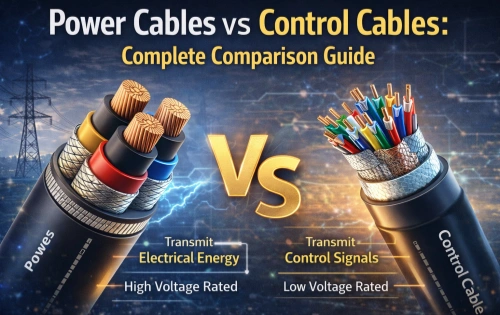
The SY Control Cable (YSLYSY / HSLHSH) is a robust steel wire braided flexible control cable designed for demanding industrial environments. It features finely stranded copper conductors with PVC or low-smoke zero-halogen (LSZH) insulation, twisted cores, a galvanized steel wire braid for superior mechanical protection and EMI shielding, and a durable PVC or LSZH outer sheath. The YSLYSY version offers standard PVC performance, while the HSLHSH version provides enhanced fire safety with low smoke and zero halogen properties. Rated 300/500V, this cable combines excellent flexibility with high mechanical strength, making it ideal for installations subject to vibration, tension, or physical stress. The SY Control Cable (YSLYSY / HSLHSH) undergoes strict quality testing from raw materials to finished product, ensuring consistent electrical performance, mechanical robustness, and safety compliance with IEC standards.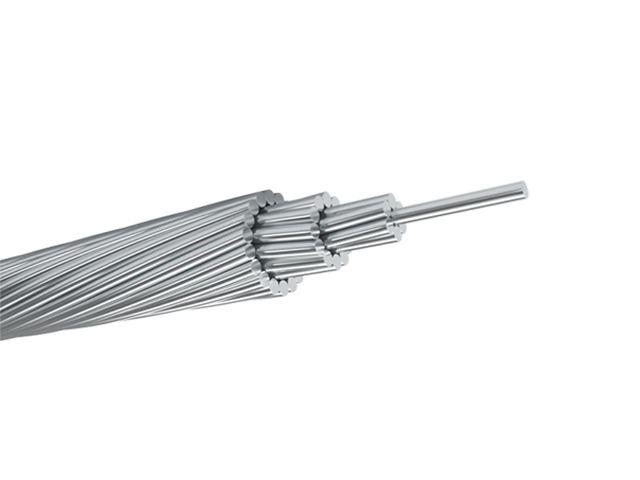
AMES AAAC Conductor Cable
AMES AAAC (All Aluminum Alloy Twisted) cables comply with ASTM B399 standards and have excellent conductivity and corrosion resistance. With 250 mm² nominal area and 19-strand design, it uses heat-treated aluminum-magnesium-silicon alloy (6201-T81) for enhanced strength (295 MPa min) and conductivity (53% IACS min). Meeting ASTM B398, B399, IEC 61089, and BS EN 50182 standards, this cable handles ampacity up to 600A at 75°C and voltages up to 33kV. The all-alloy construction avoids bimetallic corrosion, providing better resistance in harsh conditions than ACSR. Reduced weight minimizes sag and installation expenses, supporting longer spans. The Ames AAAC Conductor Cable delivers low electrical losses, high mechanical endurance, and excellent weather tolerance. Flame-retardant variants available. Perfect for urban grids, renewable projects, and coastal setups, it provides cost-effective, low-maintenance power delivery in overhead applications globally, excelling in reliability and lifespan over conventional conductors.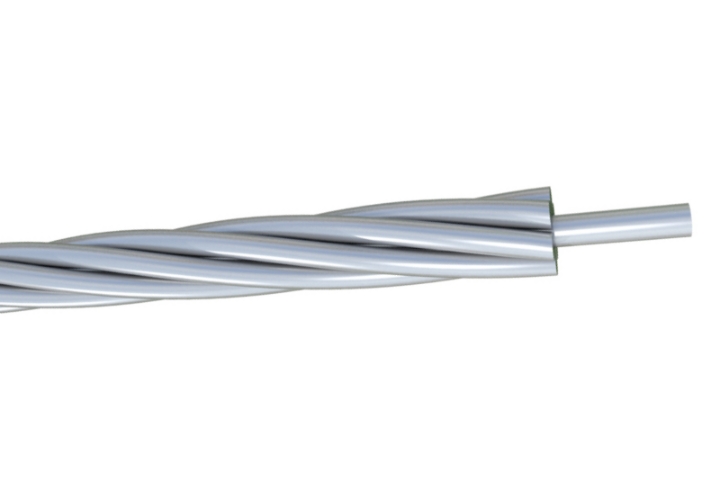
High Quality 16 Gauge Galvanized Steel Conductor Wire Supplier
The 16 Gauge Galvanized Steel Conductor Wire is a versatile and durable solution for electrical and construction applications. Made from premium steel and coated with a high-quality zinc layer through hot-dip galvanization, it provides superior resistance to corrosion and environmental wear. This wire is engineered to deliver consistent tensile strength while maintaining flexibility, making it suitable for grounding systems, fencing, and binding applications. The 16-gauge size ensures easy handling and adaptability for various installation requirements. Its uniform zinc coating enhances longevity and reduces maintenance costs, especially in outdoor environments exposed to moisture and chemicals. Manufactured under strict quality control systems, the wire meets international standards for performance and reliability. With customizable specifications such as coating thickness and tensile strength, the 16 Gauge Galvanized Steel Conductor Wire is widely trusted by contractors and industrial users for its durability and cost-effectiveness.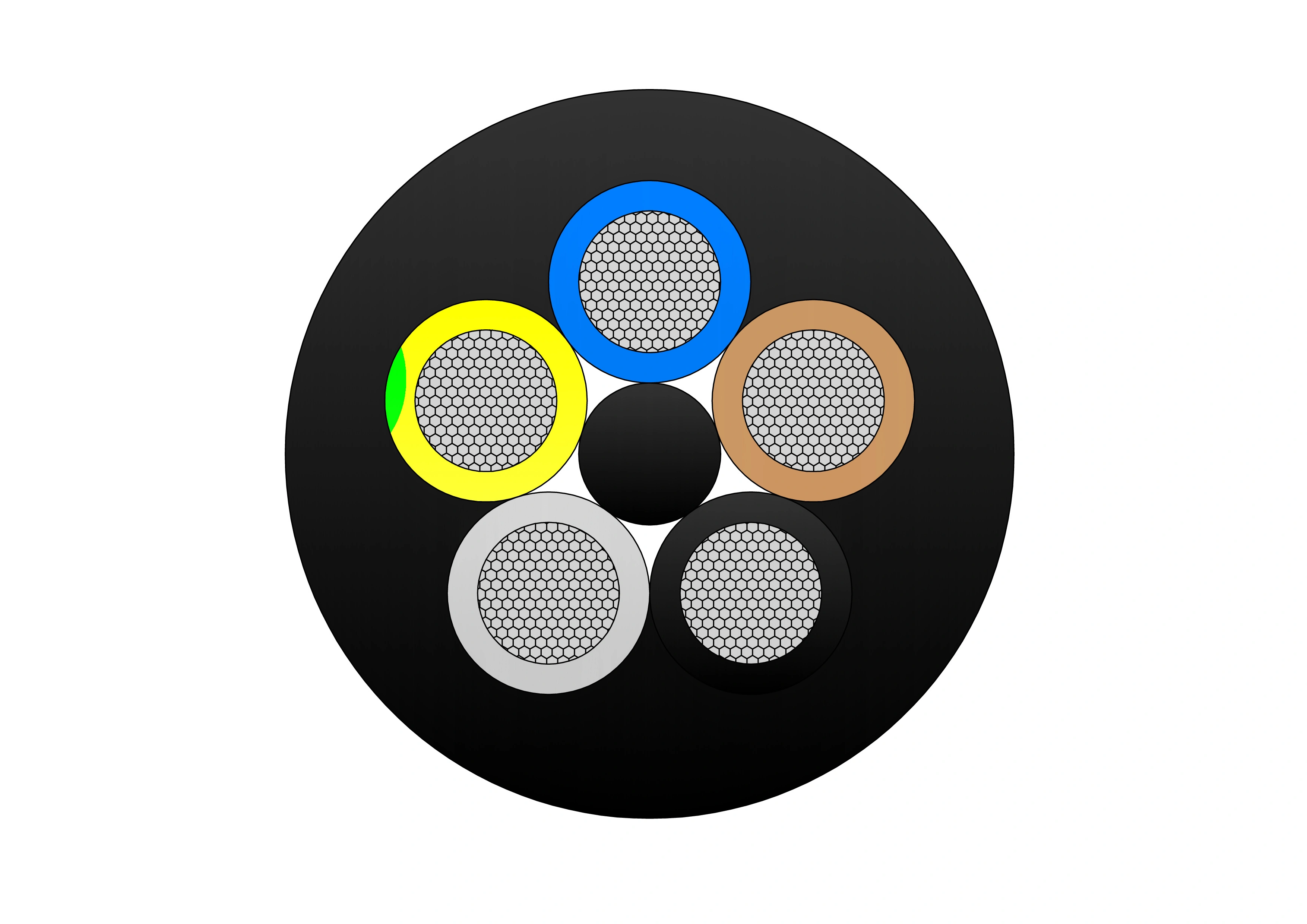
FG7H1OAR - 3.6/6kV, 6/10kV, 8.7/15kV and 12/20kV Cable
The FG7H1OAR - 3.6/6kV, 6/10kV, 8.7/15kV and 12/20kV Cable is a high-quality medium-voltage power cable designed for reliable fixed installations in demanding environments. It features stranded copper or aluminum conductors (class 2), semi-conductive conductor screen, XLPE (cross-linked polyethylene) insulation for excellent dielectric strength and thermal stability (90°C continuous, 250°C short-circuit), semi-conductive insulation screen, copper tape or wire screen for grounding and protection, optional armor (steel tape/wire), and a robust PVC or PE outer sheath resistant to mechanical stress, oils, chemicals, and UV. Compliant with IEC 60502-2 and equivalent standards (e.g., VDE, national codes), it offers low capacitance, high current-carrying capacity, and long service life. Available in single-core or multi-core configurations, the FG7H1OAR is ideal for power distribution in industrial plants, mining facilities, substations, and underground networks where safety, durability, and performance are critical.2Y-high-voltage-power-cable-2.webp)
A2XS(FL)2Y MDPE High Voltage 26/45 (52)kV Power Cable
The A2XS(FL)2Y MDPE High Voltage Power Cable is a single-core aluminum conductor cable with XLPE insulation and an MDPE sheath, rated 26/45 (52) kV. Designed for reliable medium-voltage power transmission, it meets IEC 60840 standards, providing excellent electrical performance, mechanical protection, and environmental resistance. Its construction includes an aluminum conductor, semi-conductive conductor screen, XLPE insulation, semi-conductive insulation screen, semi-conductive water swelling tape, copper wire metallic screen, longitudinal aluminum tape with PE copolymer coating, and an MDPE sheath. Water-blocking tape prevents water propagation inside the cable, ensuring dependable operation in power stations, industrial plants, and distribution networks. Suitable for underground, underwater, indoor, outdoor, and duct installations, this cable is ideal for distribution networks, generation unit connections, and industrial processes.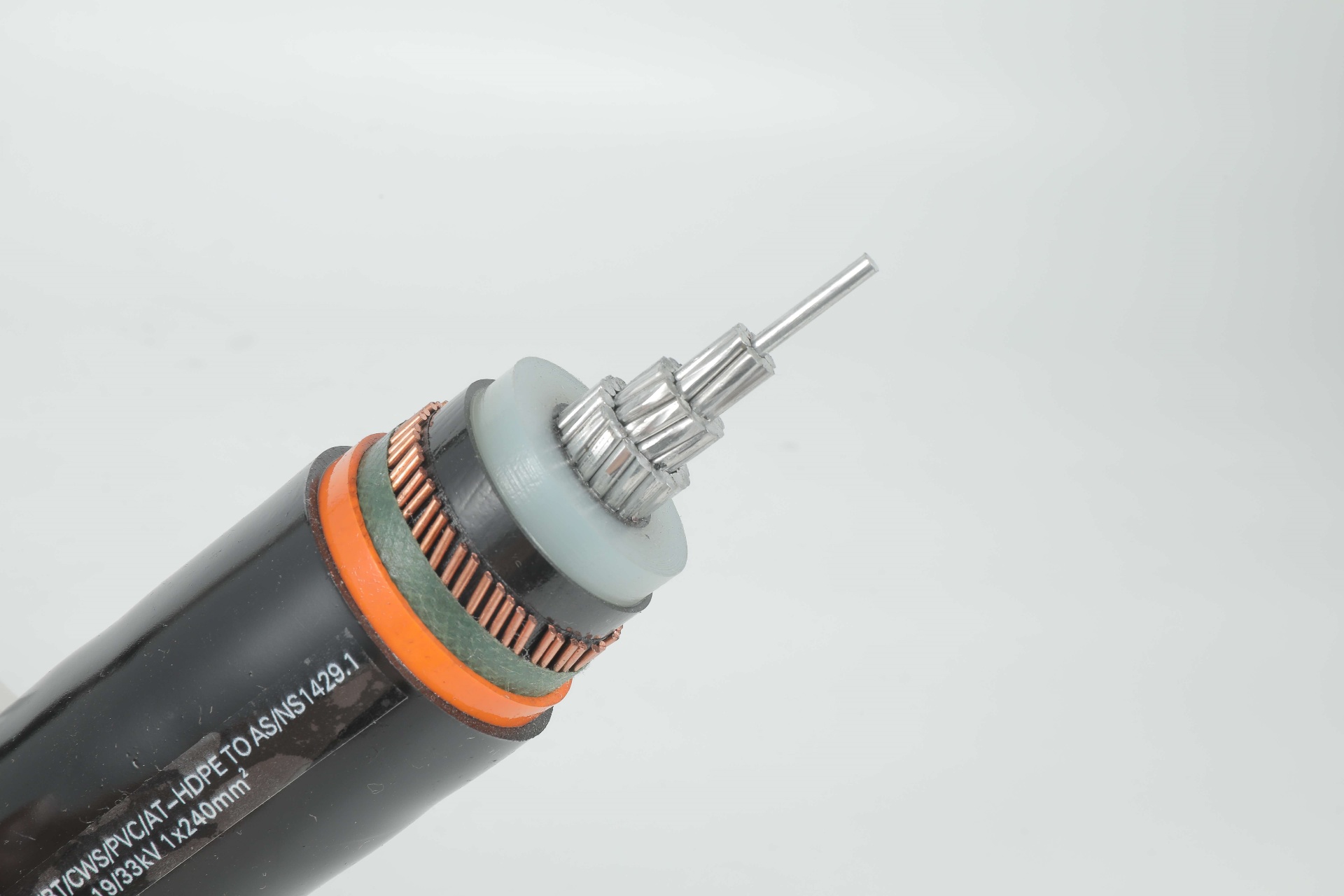
Single Core Medium Voltage Power Cable to IEC 60502
The Single Core Medium Voltage Power Cable to IEC 60502 is designed for efficient and reliable power transmission in medium voltage electrical networks. Manufactured with high-purity copper or aluminum conductors, this cable ensures low electrical losses and stable current flow. The insulation system, typically based on XLPE, provides excellent dielectric strength, thermal stability, and resistance to electrical stress. Single core construction allows flexible system design and efficient heat dissipation, making the cable suitable for substations, power plants, and industrial installations. The cable is engineered to withstand mechanical loads and operational stresses encountered in medium voltage applications. Compliance with IEC 60502 ensures the cable meets international requirements for safety, electrical performance, and durability. This medium voltage power cable is a dependable solution for modern power distribution systems requiring long service life and consistent performance.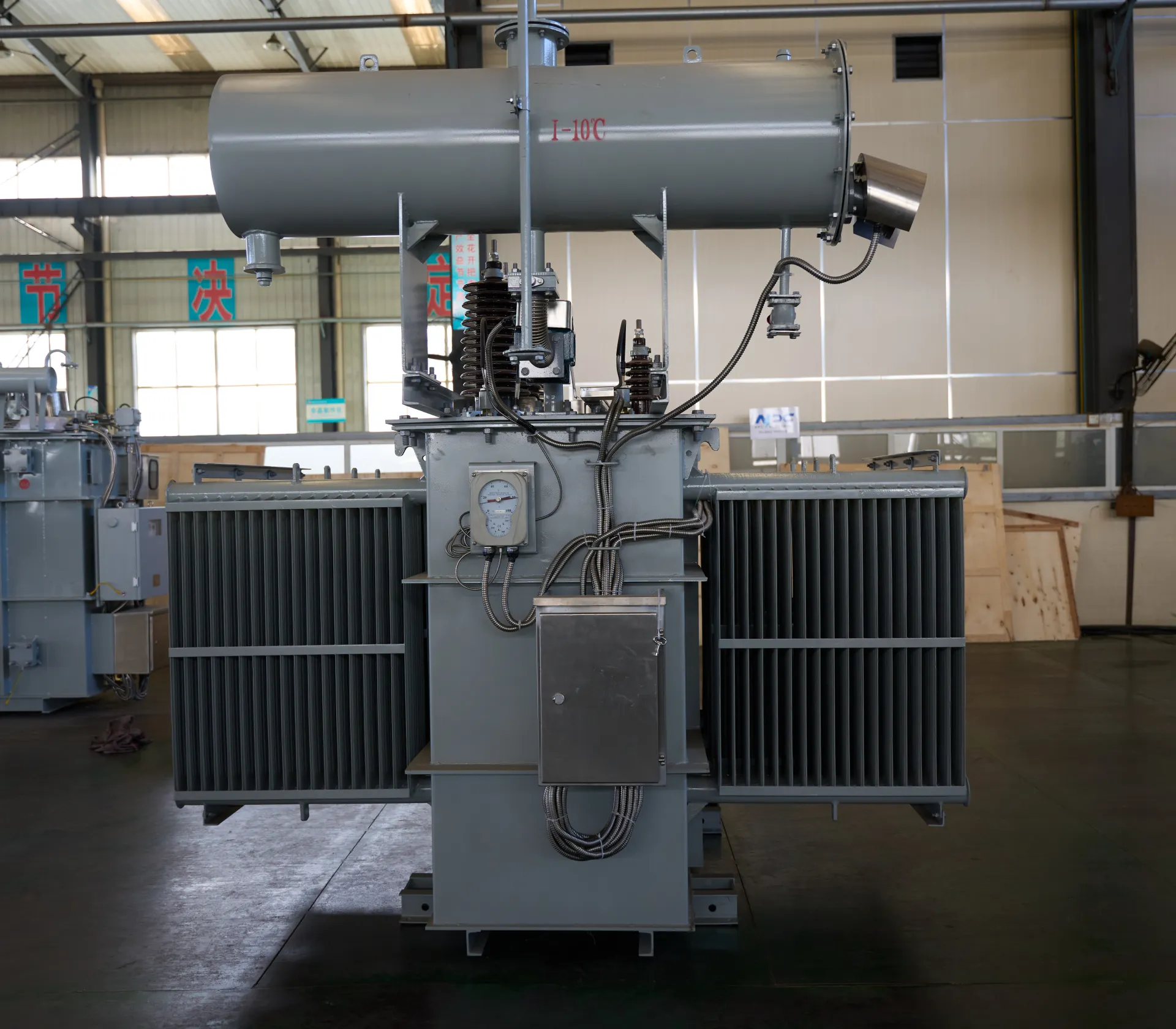
630kVA Three-Phase Oil-Immersed Outdoor Substation Transformer | 220V to 380V Step-Up Transformer
This 630kVA three-phase oil-immersed transformer is designed for outdoor substations, providing reliable voltage conversion from 220V to 380V. With a robust oil-immersed cooling system, it ensures excellent heat dissipation, stable performance, and long service life. Ideal for industrial facilities, commercial power distribution, and utility applications, this step-up transformer delivers consistent efficiency even under heavy load conditions.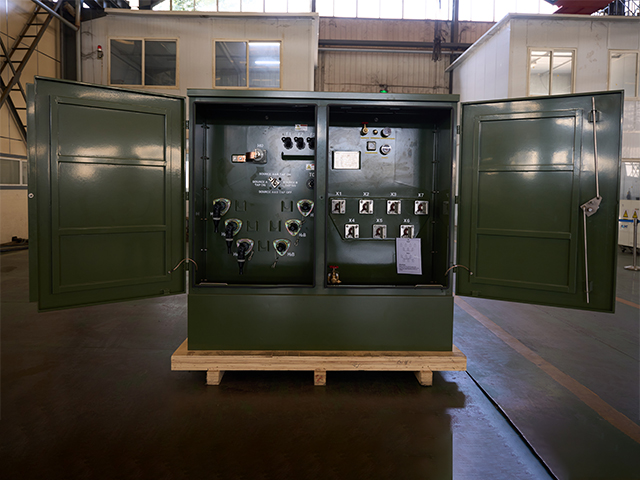
800kVA Three Phase Pad Mounted Transformer
NPC ELECTRIC's 800kVA three phase pad mounted transformer provides exceptional power handling for high-demand medium-voltage applications, ensuring stable and efficient distribution in outdoor settings. Built with safety and longevity in mind, this pad-mounted unit features three-point door latching, automatic pressure relief, liquid level/pressure/vacuum gauges, high BIL ratings (up to 150kV for surge protection), and a tamper-resistant structure suitable for public access areas. Its compact, low-profile footprint facilitates easy installation on concrete pads in constrained urban or industrial sites, while advanced enclosure integrity meets IEEE C57.12.28 requirements.
2000kVA 35kV Wind Turbine Step-Up Transformer for Onshore Wind Farms
The Wind Turbine Step-Up Transformer 2000kVA 35kV is purpose-built for onshore wind farms, enabling efficient voltage conversion from wind turbine generators to medium-voltage collection networks. Designed to operate reliably under fluctuating wind loads and harsh outdoor conditions, this transformer ensures stable power transmission and reduced energy losses across wind power systems. The oil-immersed insulation structure provides excellent thermal stability and long service life, while the optimized magnetic core minimizes no-load losses and acoustic noise. High-quality windings and reinforced insulation withstand frequent load variations caused by changing wind speeds.
6 Gauge Galvanized Steel Conductor Wire
The 6 Gauge Galvanized Steel Conductor Wire is a premium high-strength bare steel wire designed for overhead power line applications. Manufactured with heavy hot-dip zinc coating, this 6 AWG galvanized conductor provides exceptional corrosion resistance and long service life in harsh outdoor environments. It offers high tensile strength and reliable mechanical performance, making it ideal for use as overhead ground wire (static wire), guy wire, or messenger wire. Compliant with ASTM A475 and related standards, the 6 Gauge Galvanized Steel Conductor Wire undergoes rigorous testing from raw materials to finished product to ensure consistent quality, uniform zinc adhesion, and superior breaking strength. Its durable construction minimizes maintenance while delivering dependable protection and support for transmission and distribution lines.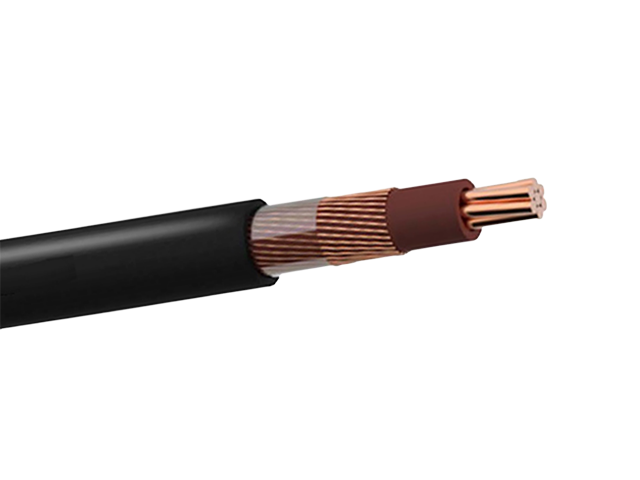
Copper Concentric Flat LV Cable 600/1000V
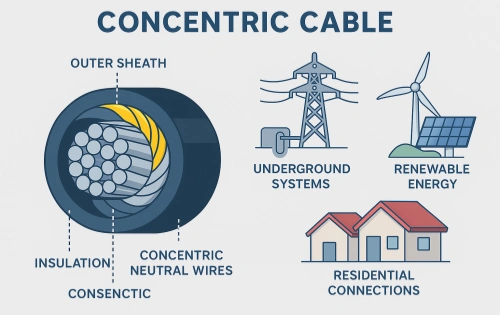
The Copper Concentric Flat LV Cable is engineered for safe and efficient low-voltage power delivery in residential and commercial applications. It consists of a stranded hard-drawn copper phase conductor with XLPE insulation, concentrically arranged copper neutral conductors, and a durable black polyethylene outer sheath. The flat design offers superior flexibility for easy installation in limited spaces while maintaining excellent electrical balance and mechanical protection. With high conductivity and UV-stabilized materials, this cable performs reliably in both overhead aerial and underground environments. The Copper Concentric Flat LV Cable meets international performance standards and undergoes extensive quality testing to ensure consistent performance, safety, and long service life for modern LV networks.3GHSSHCH-mining-cable-2.webp)
(N)3GHSSHCH Mining Cable
The (N)3GHSSHCH 3.6/6kV and 6/10kV medium voltage flexible mining cable is engineered for demanding industrial environments such as underground mining, tunneling, and heavy-duty mobile equipment. Featuring EPR rubber insulation, halogen-free LSZH sheath, and a copper wire braid screen, it offers superior mechanical strength, oil resistance, and flame retardancy. Its robust multi-layer construction includes semi-conductive layers, steel wire braid armour, and individual copper screening, ensuring reliable electrical performance and enhanced safety. With excellent flexibility, a wide operating temperature range (-40°C to +80°C fixed), and compliance with VDE, EN, and IEC standards, this cable guarantees long service life in the harshest conditions. Ideal for medium voltage power supply where safety, flexibility, and durability are critical.Welcome your inquiry
Honesty, Integrity, Frugality, Activeness and Passion