What is the Difference Between Single Core and Multi Core Cable? Design Comparison and Application Guide
2026-06-01
In modern electrical systems, selecting the correct cable type is critical for safety, efficiency, and long-term performance. Among the most fundamental decisions engineers and procurement professionals face is choosing between a single-core cable and a multi-core cable.
While both belong to essential types of cables used in industrial and commercial applications, their structural design, electrical behavior, and application scenarios differ significantly.
1. What is a Single Core Cable?
A single-core cable is an electrical cable that consists of only one conductor, typically made of copper or aluminum, surrounded by high-quality insulation such as PVC or XLPE, and often protected by an outer sheath or optional armour for mechanical strength and environmental resistance. This simple yet robust design provides a single dedicated path for power transmission, offering superior heat dissipation, higher current-carrying capacity for the same cross-section, excellent dielectric strength, minimal electromagnetic interference, and better voltage withstand capability compared to multi-core cables.
Single-core cables excel in high-voltage and high-current applications due to easier jointing, termination, longer laying lengths, and reduced skin effect in AC systems, making them ideal for fixed installations where flexibility is not the primary concern. They are widely used in high-voltage power transmission up to 400kV, substations, industrial plants like refineries and chemical facilities, underground distribution networks, transformer connections, and renewable energy systems.
When selecting a single-core cable, factors such as voltage rating, current load, installation environment, and proper earthing for induced voltages must be considered to ensure safety and efficiency. In summary, single-core cables are the preferred choice for reliable, efficient high-power delivery thanks to their straightforward construction and outstanding thermal and electrical performance, outperforming multi-core options in heavy-duty power scenarios while being less suitable for applications requiring high flexibility or multiple signal transmission.
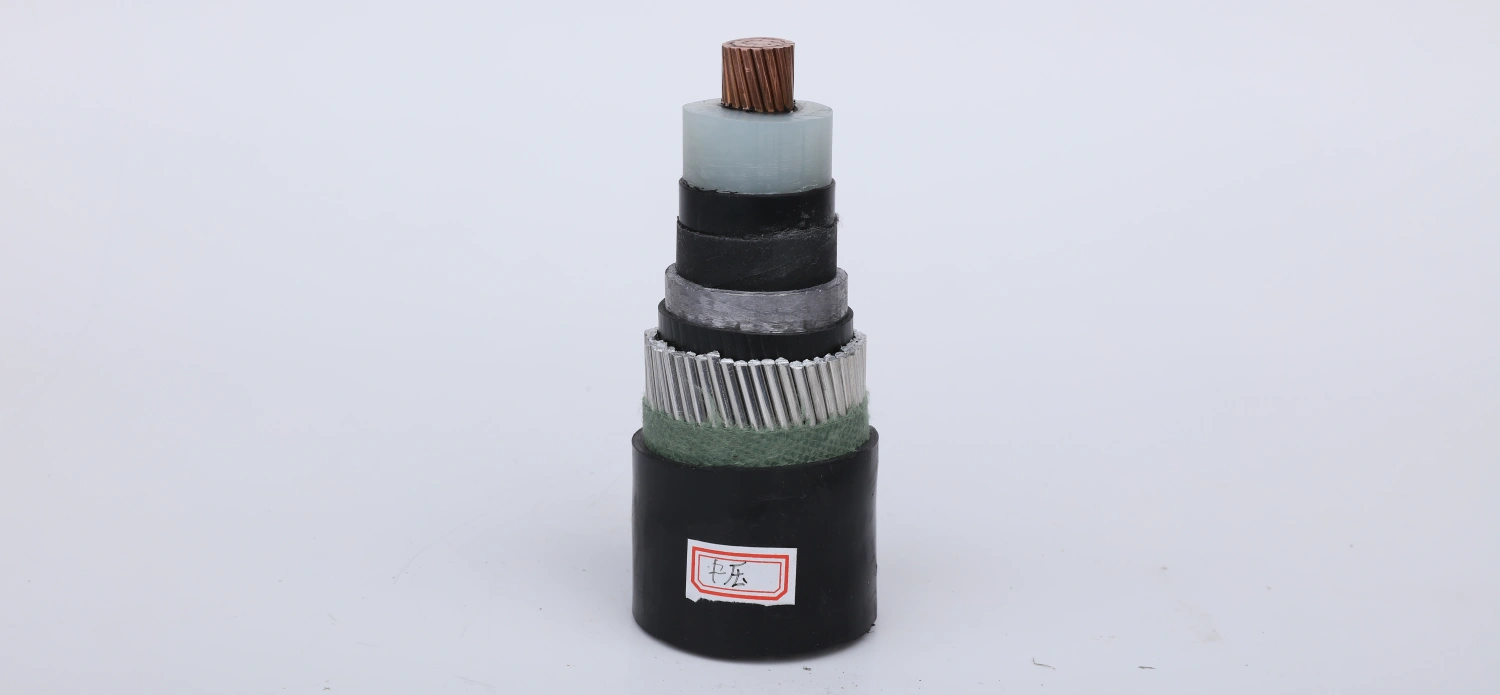
Key Characteristics
- Single-core cables consist of one conductor only
- Designed for simple circuits and high-current applications
- Lower capacitance and reduced complexity
- Common in power transmission and grounding systems
Advantages of Single-Core Cables
Key Benefits- High current capacity
- Better heat dissipation
- Simple installation
- Cost-effective for large-scale power distribution
|
Advantage |
Engineering Value |
|
Thermal Performance |
Reduced overheating |
|
Simplicity |
Easier fault detection |
|
Efficiency |
Lower resistance losses |
Structure Breakdown
|
Layer |
Function |
|
Conductor |
Carries electrical current |
|
Insulation |
Prevents leakage and short circuits |
|
Sheath (optional) |
Mechanical protection |
Engineering Insight
Because single core electrical cable designs are simpler, they are more effective in high-load environments where heat dissipation and current-carrying capacity are critical.
2. What is a Multi Core Cable?
A multi-core cable is an electrical cable that contains two or more individually insulated conductors, known as cores, bundled together within a single outer sheath for protection and organization. Typically made with copper or aluminum strands, each core is separately insulated with materials like PVC or XLPE to prevent short circuits and signal interference, while the overall sheath provides mechanical strength, environmental resistance, and sometimes electromagnetic shielding. This construction allows the cable to transmit multiple power lines, control signals, or data streams simultaneously in one compact unit, making it highly versatile compared to single-core designs.
Multi-core cables are widely used in low-voltage control systems, industrial automation, instrumentation, telecommunications, audio and video equipment, building wiring, automotive and trailer connections, machinery control panels, and signal transmission applications. They excel in scenarios requiring flexibility, frequent movement, or the integration of power, data, and control in one cable, such as in factories, offices, renewable energy setups, and domestic or commercial electrical installations.
In comparison with single-core cables, multi-core versions prioritize versatility and ease of handling for complex, multi-signal environments, while single-core options are preferred for high voltage, high current power transmission due to superior heat dissipation and simpler structure. When choosing a multi-core cable, key factors include the number of cores, voltage rating, conductor size, shielding needs, installation environment, and flexibility requirements to ensure optimal safety and performance. Overall, multi-core cables provide an efficient, organized solution for modern electrical and electronic systems demanding multiple connections in limited space.
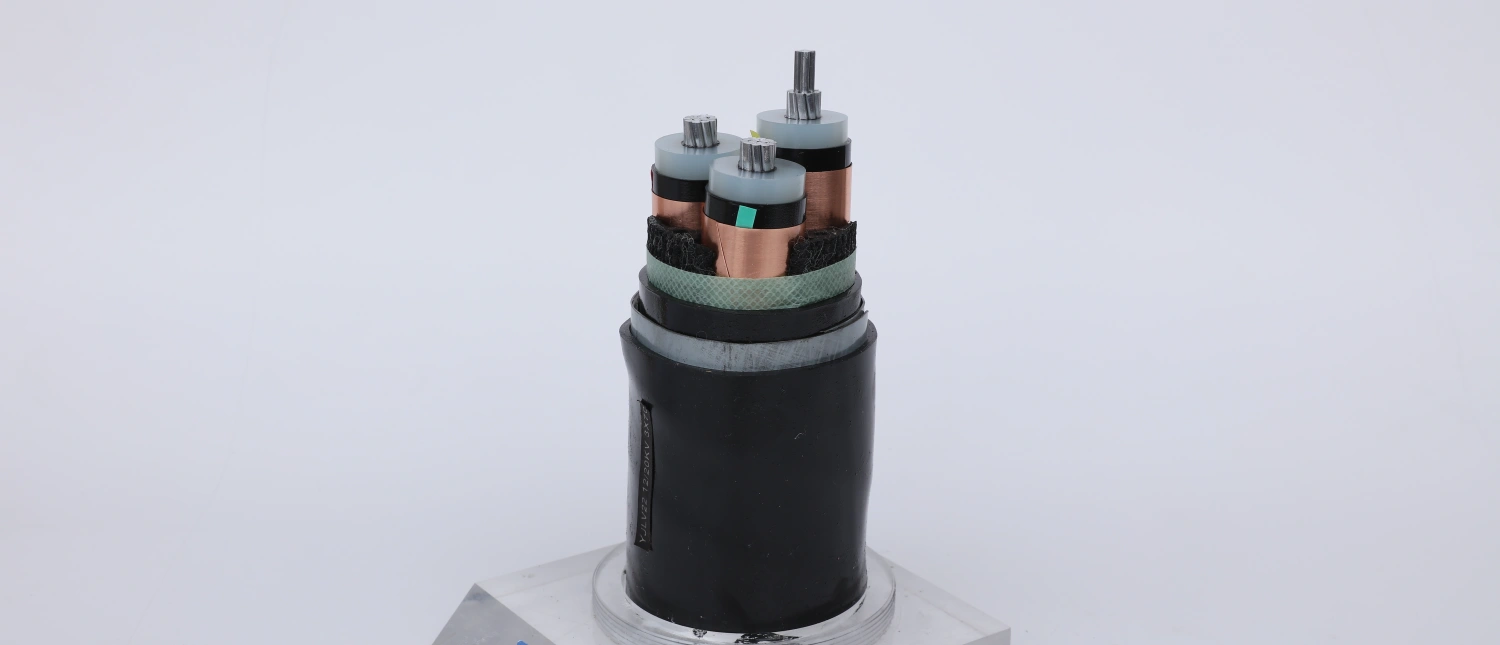
Key Characteristics
- Multi core cable consists of two or more conductors
- Compact design for complex wiring systems
- Widely used in control systems and automation
- Available in various types such as multi-core armored cable, multi-core fiber optic cable, and multi-core CAT6 cable
Advantages of Multi-Core Cables
Key Benefits
- Compact wiring solution
- Supports multiple circuits or signals
- Reduced installation time
- Improved organization in complex systems
Summary Table
|
Advantage |
Engineering Value |
|
Space Saving |
Ideal for tight installations |
|
Multi-functionality |
Combines multiple circuits |
|
Reduced EMI |
Better signal integrity |
Structure Breakdown
|
Layer |
Function |
|
Multiple Conductors |
Carry separate signals or phases |
|
Individual Insulation |
Prevents conductor interaction |
|
Outer Sheath |
Protection and organization |
|
Armor (optional) |
Mechanical protection |
Engineering Insight
Multicore cables are essential in environments where space efficiency and system integration are required, such as industrial automation and communication networks.
3. Single Core vs Multi Core Cable: Key Differences
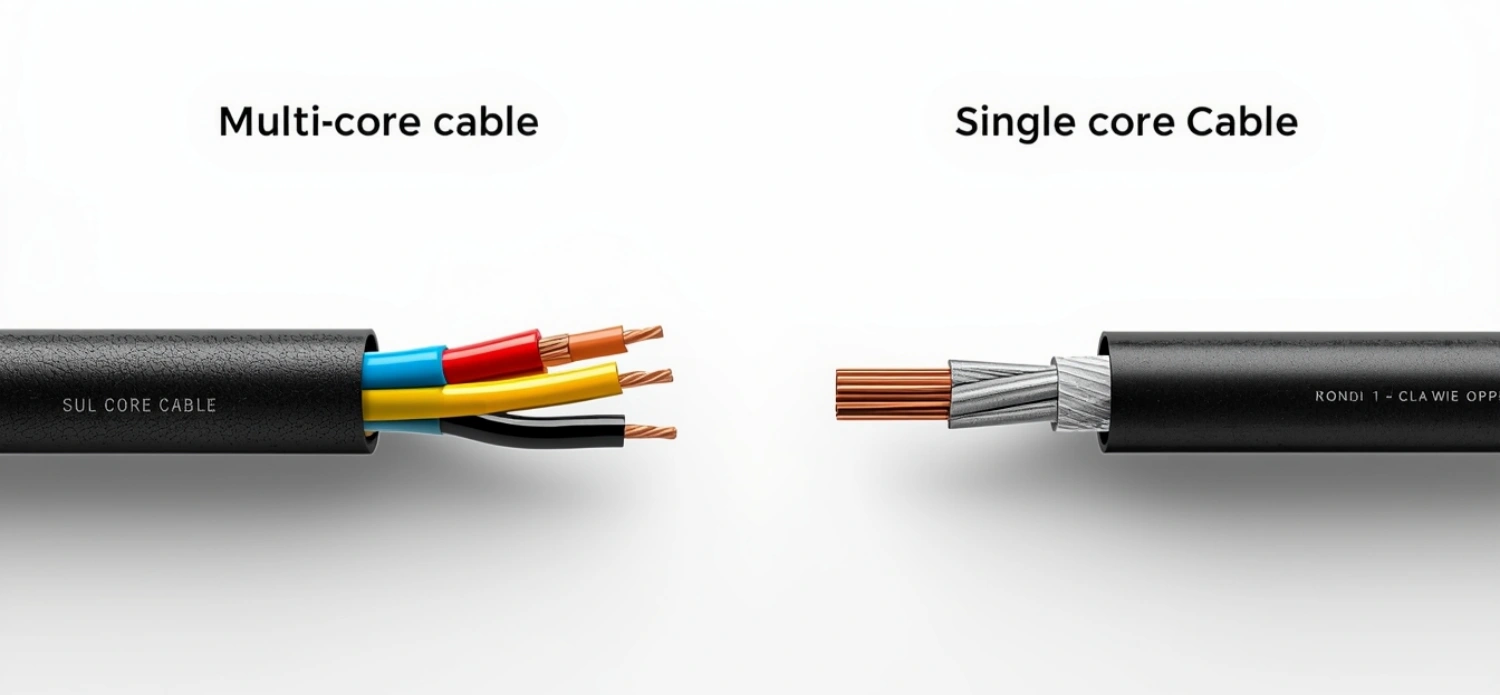
A single-core cable features one conductor, while a multi-core cable contains multiple individually insulated conductors bundled in one sheath, forming the fundamental structural difference. Single-core cables excel in heat dissipation, higher current-carrying capacity, superior voltage withstand, and minimal electromagnetic interference, making them ideal for high-voltage power transmission and fixed installations. In contrast, multi-core cables offer greater flexibility, easier routing in tight spaces, simplified installation for complex systems, and the ability to transmit multiple signals or circuits simultaneously, though they may experience crosstalk and slightly lower per-core current ratings.
When choosing between them, consider application needs: single core for heavy power delivery and multi-core for control, automation, and space-constrained wiring. Proper selection ensures optimal safety, efficiency, and performance in electrical projects.
Structural and Functional Comparison
|
Parameter |
Single Core Cable |
Multi-Core Cable |
|
Conductor Count |
One |
Multiple |
|
Flexibility |
Lower |
Higher |
|
Installation |
Simpler |
More complex |
|
Space Efficiency |
Low |
High |
|
Application |
Power transmission |
Control & signal systems |
|
Cost |
Lower per unit |
Higher but integrated |
4. Electrical Performance Comparison
4.1 Current Carrying Capacity
- Single-core cable supports higher current due to better heat dissipation
- A multi-core electrical cable may experience heat accumulation due to grouped conductors
4.2 Electromagnetic Interference (EMI)
- Single-core cables are more exposed to electromagnetic interference
- Multi-core designs reduce EMI through conductor proximity and shielding
4.3 Signal Transmission
- Multi-core CAT6 cable and multi-core fiber optic cable are optimized for data transmission
- Single-core cables are primarily used for power
5. Application Guide: Where to Use Each Cable Type
5.1 Single-Core Cable Applications
- High-voltage transmission lines
- Industrial power distribution systems
- Grounding and earthing systems
- Large electrical equipment connections
5.2 Multi Core Cable Applications
- Control panels and automation systems
- Communication networks (multi-core CAT6 cable)
- Data transmission (multi-core fiber optic cable)
- Underground installations (multi-core armored cable)
6. Installation Considerations
|
Installation Aspect |
Single Core Cable |
Multi-Core Cable |
|
Flexibility & Bending |
Lower flexibility; requires larger bend radius (typically 12x diameter); harder in tight spaces |
High flexibility; easier bending and routing in complex or confined areas |
|
Space Requirements |
Takes more conduit/tray space (40-60% more when multiple phases); suitable for narrow straight runs |
Saves 30-40% space; ideal for crowded panels, conduits, and compact installations |
|
Ease of Installation |
More labor-intensive (multiple reels/pulls); longer installation time for multi-phase circuits |
Simpler and faster; one cable handles multiple circuits, reducing pulling and handling effort |
|
Routing & Laying |
Best for long straight runs, vertical risers, fixed installations; easier individual termination |
Excellent for intricate routing, frequent bends, and tight spaces; reduces clutter |
|
Mechanical Protection |
Often needs additional support or armour in harsh environments; less prone to internal crosstalk |
Built-in bundling provides better organization; shielding options reduce EMI |
|
Labor & Cost Impact |
Lower material cost but higher labor for pulling and managing multiple cables |
Higher cable cost, but lower overall installation labor and time |
|
Maintenance & Termination |
Easier to identify and replace individual conductors; good for modular setups |
Simpler panel access, but harder to replace single cores without affecting others |
|
Best Installation Environments |
High-voltage power transmission, substations, underground fixed runs, and industrial fixed wiring |
Control systems, automation panels, building wiring, machinery with movement, space-constrained projects |
This comparison helps electrical engineers and installers choose the right cable type based on site conditions, ensuring safety, efficiency, and compliance with standards like IEC or NEC.
7. Safety and Compliance Factors
Single Core vs Multi Core Cable:
|
Safety & Compliance Aspect |
Single Core Cable |
Multi-Core Cable |
|
Short Circuit & Fault Risk |
Lower risk due to single conductor; faults are isolated and easier to detect/repair |
Higher risk of fault propagation between cores; one fault can affect neighbors |
|
Heat Generation & Thermal Safety |
Superior heat dissipation; lower operating temperature under the same load |
Mutual heating requires 10-15% derating; higher risk of overheating in bundles |
|
Electromagnetic Interference (EMI) |
Minimal EMI and induced voltages; no crosstalk between phases |
Higher potential for crosstalk and EMI; often requires shielding |
|
Induced Voltage & Earthing |
Critical: non-magnetic armour (AWA) and proper single-point or solid bonding to prevent shock or overheating |
Standard earthing of armour/sheath; fewer induced voltage issues |
|
Fire Resistance & Flame Retardancy |
Excellent individual insulation; easier to meet IEC 60332 & LSZH requirements |
Good with overall sheath, but bundle can spread fire faster; needs enhanced fire-resistant designs |
|
Voltage Rating & Dielectric Strength |
Higher voltage withstand; ideal for high-voltage applications |
Suitable for low-medium voltage; mixed voltages need segregated cores & double insulation |
|
Compliance Standards |
IEC 60502-1, NEC Article 310, UL 1581; focus on ampacity and armour bonding |
IEC 60502-1, NEC 310.15(B)(3) derating, BS 6724, IEC 60332-3 for bunched cables |
|
Installation Safety |
Reduced human error in high-power setups; careful handling of induced voltages |
Easier routing but higher risk of insulation damage during pulling in tight spaces |
|
Overall Safety in Harsh Environments |
Better for outdoor/underground high-power due to robust insulation |
Superior flexibility reduces mechanical stress; shielding enhances signal safety |
This table highlights key safety considerations to help engineers and installers ensure compliance with international standards (IEC, NEC, UL, BS) while minimizing electrical hazards, fire risks, and operational failures.
8. Cost vs Performance Analysis
Cost vs Performance Analysis of Single Core vs Multi Core Cable:
|
Aspect |
Single Core Cable |
Multi-Core Cable |
Winner / Better Choice |
|
Initial Material Cost |
Lower per conductor (especially for large sizes) |
Higher due to multiple insulated cores + complex sheath |
Single Core |
|
Installation Labor Cost |
Higher – multiple cables to pull and manage |
Lower – one cable handles multiple circuits |
Multi Core |
|
Total Project Cost |
Lower for simple high-power runs; higher labor in complex setups |
Often lower overall in control & compact installations |
Depends on the application |
|
Current Carrying Capacity |
Excellent – superior heat dissipation, higher ampacity |
Good but requires 10-15% derating due to mutual heating |
Single Core |
|
Flexibility & Routing |
Limited – larger bend radius needed |
Excellent – easy bending in tight spaces |
Multi Core |
|
Space Efficiency |
Poor – needs more conduit/tray space |
Excellent – saves 30-50% space in panels and conduits |
Multi Core |
|
Voltage & Power Performance |
Superior for high-voltage & high-current transmission |
Suitable mainly for low-medium voltage and control signals |
Single Core |
|
Maintenance & Repair Cost |
Lower – easier to identify and replace the individual core |
Higher – replacing one core may disturb the whole cable |
Single Core |
|
Long-term Reliability |
Higher in fixed heavy-duty power applications |
Good for flexible & signal applications |
Single Core (power) / Multi Core (control) |
|
Overall Cost-Performance |
Best for high-power transmission projects |
Best for automation, control panels & space-constrained wiring |
Single Core for power, Multi Core for versatility |
Recommendation: Choose a single-core cable when performance in high current and heat dissipation is critical. Opt for Multi-Core Cable when installation ease, flexibility, and space savings outweigh raw power performance.
9. Future Trends in Cable Technology
Smart Cables
- Integrated monitoring sensors
- Real-time diagnostics
Advanced Materials
- Low-loss conductors
- Fire-resistant insulation
High-Speed Data Cables
- Expansion of multi-core fiber optic cable systems
- Increased demand for smart infrastructure
10. FAQ
Q1: What is the main difference between a single-core and multi core cable?
A single-core cable has one conductor, while a multi-core cable contains multiple conductors for carrying multiple signals or circuits.
Q2: Which is better for power distribution?
Single-core cables are generally better due to higher current capacity and heat dissipation.
Q3: Are multi-core cables suitable for high voltage?
Yes, but typically in specialized designs like multi-core armored cable.
Conclusion
Understanding the difference between single-core cable and multi-core cable is essential for designing efficient and reliable electrical systems. While single-core cables excel in high-power applications, multi-core cables provide flexibility and integration for complex systems.
For engineers and global buyers, selecting the right cable type ensures optimal performance, safety, and cost-efficiency in both short-term projects and long-term infrastructure.

Related Articles
Related Products
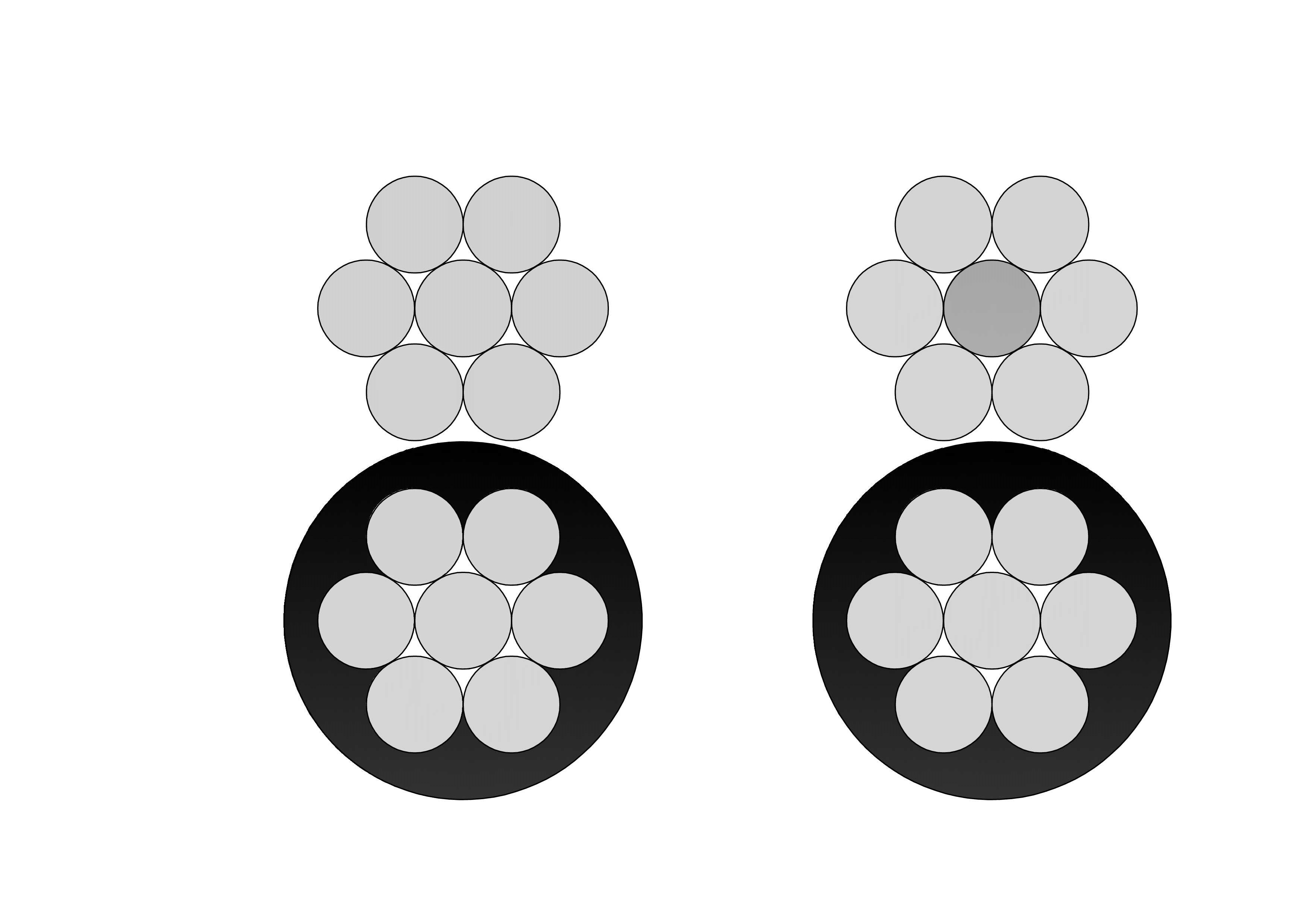
Copper Conductor Duplex Service Drop Cable 600V
The Copper Conductor Duplex Service Drop Cable 600V is a high-performance overhead cable for secondary power distribution from utility poles to service entrances. Featuring two insulated copper conductors (phase and neutral) twisted around a bare or insulated neutral messenger, it offers superior conductivity and mechanical strength. Insulation options include XLPE or PE for excellent UV, moisture, and abrasion resistance. Compliant with ASTM B-1, B-2, B-3, B-8, ICEA S-76-474, and ANSI/ICEA standards, this cable supports 600V applications with low voltage drop and high current capacity. The robust design ensures reduced sag, easy installation, and long service life in harsh weather conditions. The Copper Conductor Duplex Service Drop Cable 600V delivers minimal power losses and reliable performance for single-phase service drops. Widely used in urban, suburban, and rural electrification projects requiring premium copper overhead connections with enhanced durability and safety.-AL-medium-voltage-power-cable-2.jpg)
RHZ1-2OL(S)-AL Medium Voltage Power Cable(8.7/15kV, 12/20kV, 18/30kV Specifications)
NPC Electric RHZ1-2OL(S)-AL Medium Voltage Power Cable (8.7/15kV, 12/20kV, 18/30kV) combines economy with special fire safety for demanding medium voltage networks. Built with aluminium conductors, thermosetting XLPE insulation, metallic screen, and specially formulated LSZH sheath with superior fire-retardant characteristics (S), it meets UNE 21123-4 and higher CPR classifications. The special LSZH sheath drastically reduces smoke and eliminates corrosive gases in fires. Lightweight aluminium minimizes costs and installation effort. Excellent partial discharge resistance, low tan delta, and thermal endurance ensure efficiency and longevity. Suitable for direct burial, ducts, or indoor use in high-risk areas, the RHZ1-2OL(S)-AL Medium Voltage Power Cable is favored for metro systems, data centers, public venues, and infrastructure demanding reliable medium voltage cabling with advanced fire protection, environmental compliance, and enhanced life-safety in populated or confined spaces.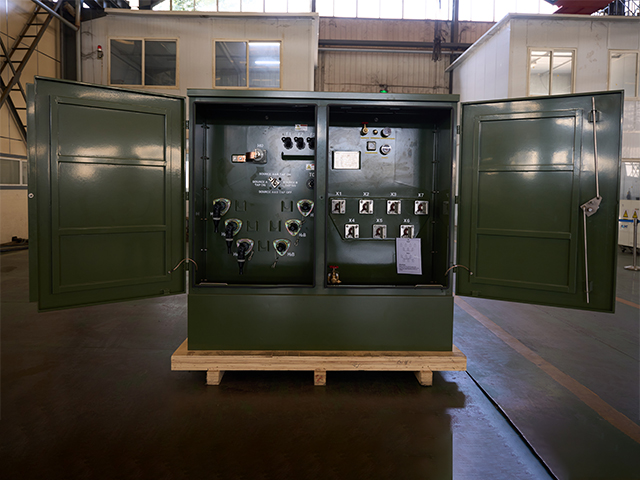
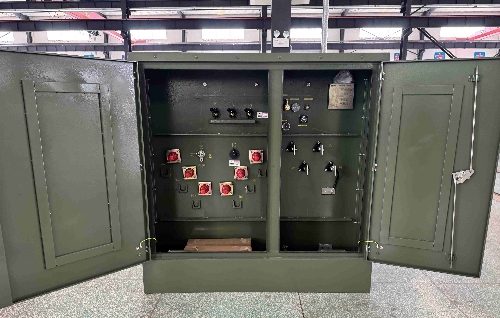
167kVA Three Phase Pad Mounted Transformer
The 167kVA three phase pad mounted transformer delivers robust and efficient power distribution for medium-voltage applications. Built to exceed ANSI C57.12.34, IEEE, and DOE efficiency standards, this compartmental-type unit features a durable, tamper-resistant steel enclosure with dead-front or live-front high-voltage bushings, radial or loop feed configurations, and a 65°C average winding rise for optimal thermal performance. Primary voltages range from 4160V to 34500V (with common options like 12470GrdY/7200 or 13800V), while secondary voltages include 208Y/120V, 480Y/277V, or custom low-voltage setups.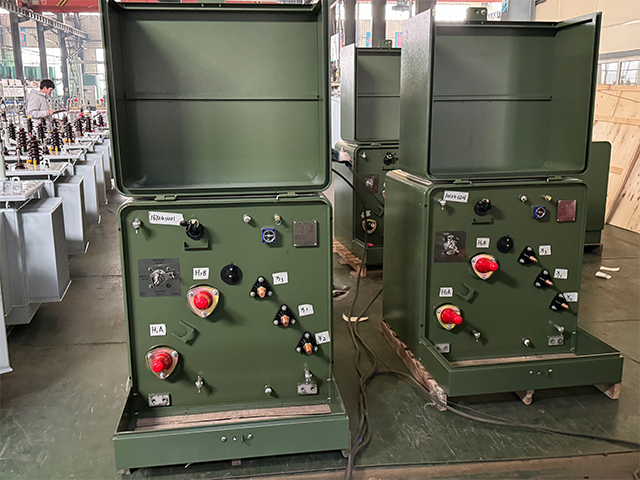
25kVA Single Phase Pad Mounted transformer
The 25kVA Single Phase Pad Mounted transformer with a power rating of 25 kVA, the high voltage of the transformer is 24940GRDY/14400×12470GRDY/7200V, which is a dual high voltage design. Customers can switch between 14.4kV and 7.2kV through a dual voltage switch according to the distribution line. There is a five-position voltage regulating switch on the high-voltage side, which can allow small changes in voltage within ±2 * 2 ½%. The 25 kVA transformer comes complete with an oil level indicator and a 4-position load break switch, adding to its versatility and ease of maintenance.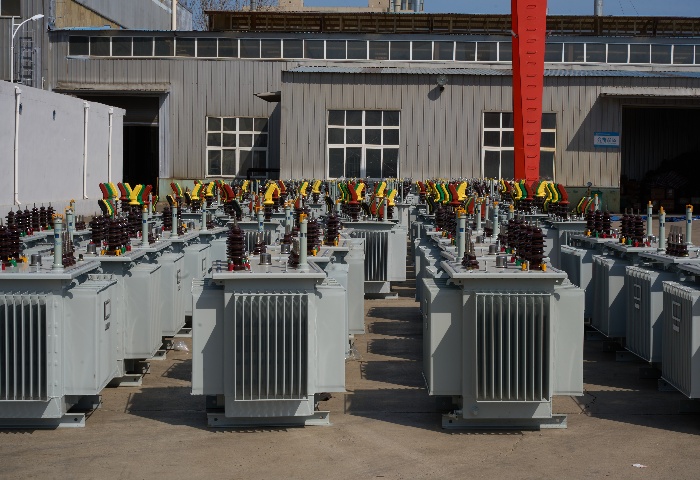
700kVA Oil Immersed Transformer
The 700kVA Oil Immersed Transformer is a high-performance three-phase distribution transformer optimized for dependable medium-voltage power conversion in 50/60Hz AC grids, featuring primary ratings of 11kV or 33kV and secondary at 0.4kV/0.415kV/0.433kV. It adopts a fully hermetically sealed corrugated tank construction for automatic volume compensation, delivering outstanding resistance to humidity ingress, corrosion. Incorporating low-loss grain-oriented silicon steel core (S11/S13 series compliant) for minimized no-load losses (typically 950-1300W), high-conductivity copper windings, and premium-grade mineral insulating oil (IEC 60296 certified, dielectric >55kV/2.5mm).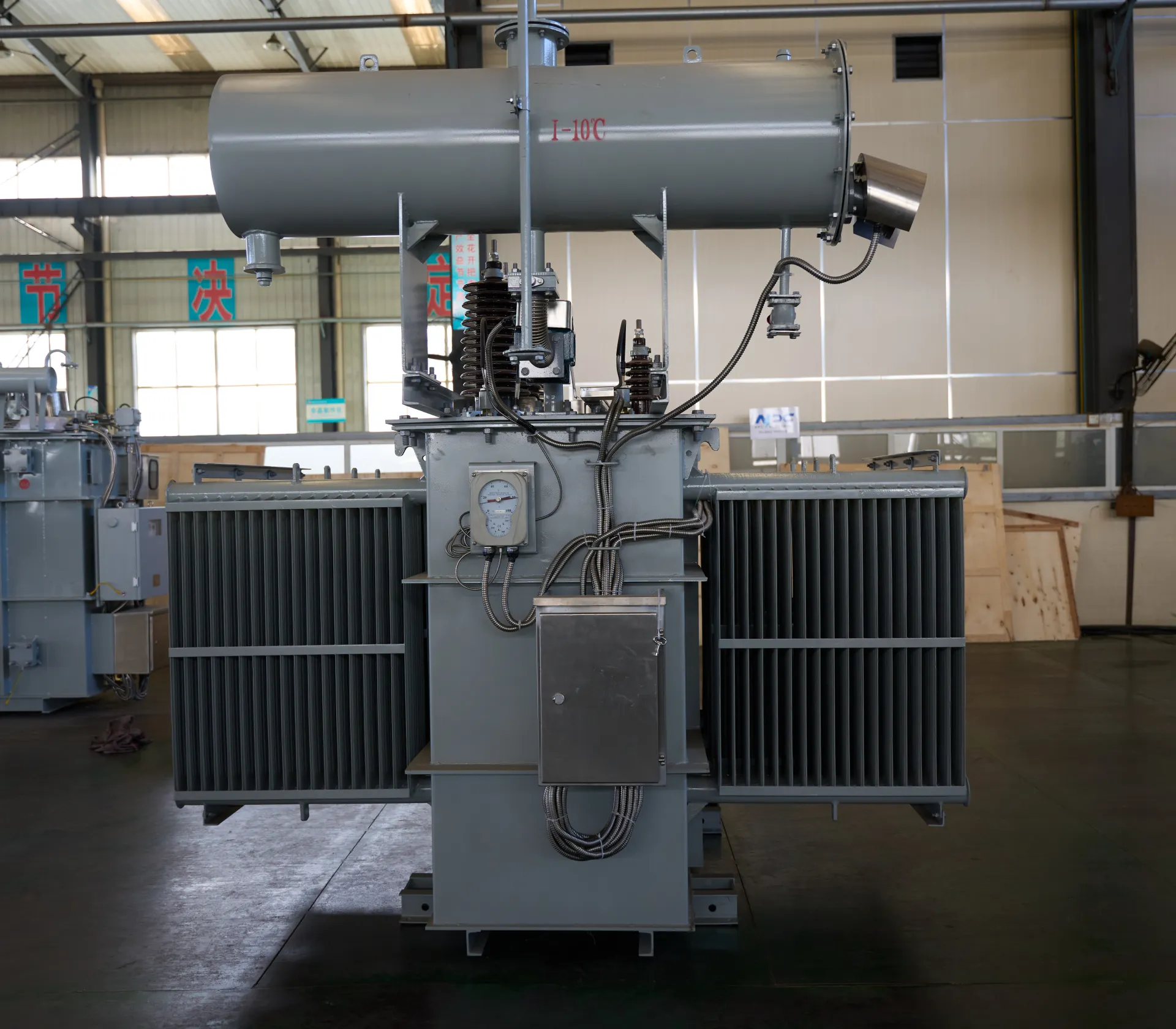
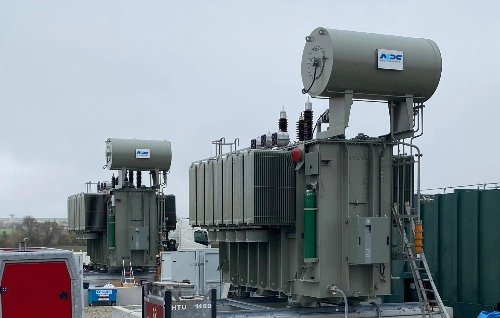
45kV 2500kVA Weatherproof & Oven-Proof Oil-Immersed Power Transformer
The 45kV 2500kVA Weatherproof & Oven-Proof Oil-Immersed Power Transformer is engineered for demanding outdoor applications requiring high durability, stable voltage transformation, and long-term operational reliability. Designed with premium cold-rolled silicon steel, high-conductivity copper windings, and a reinforced oil-immersed cooling system, the transformer ensures excellent thermal stability and resistance to overheating. Its oven-proof construction allows the unit to withstand high ambient temperatures, while the weatherproof enclosure provides protection against rain, dust, humidity, and corrosive environments. With advanced insulation, strong short-circuit endurance, and compatibility with both off-load and on-load tap changers, this 45kV outdoor transformer is ideal for substations, industrial facilities, renewable energy sites, and long-distance power distribution systems. Built in accordance with IEC 60076 standards, it delivers efficiency, reliability, and lifespan required for critical grid infrastructure.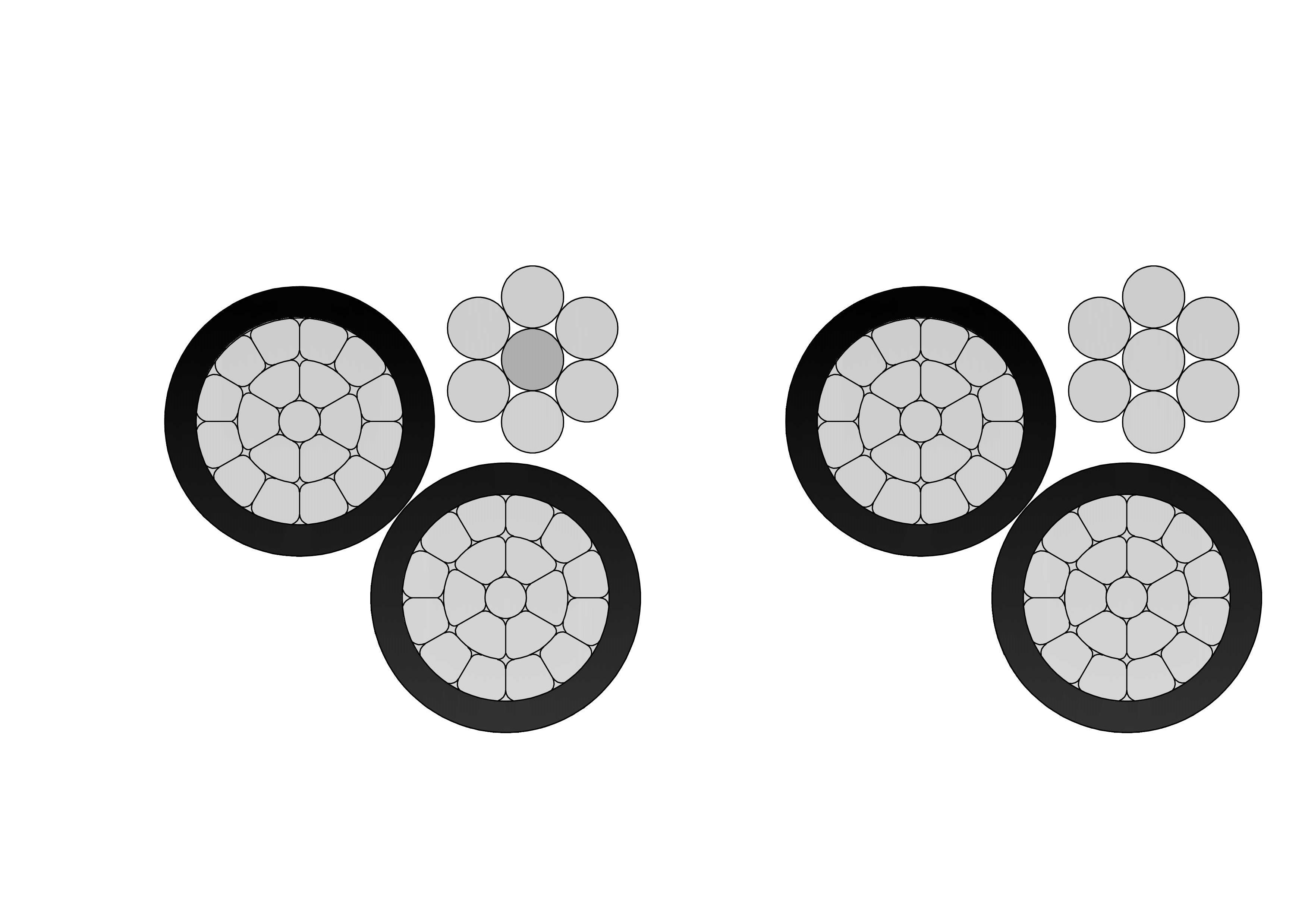
1/0 Echinus Aluminum Conductor Triplex Overhead Service Drop Cable
NPC Electric 1/0 Echinus Triplex Service Drop Cable provides reliable overhead secondary distribution for residential applications. Consisting of two 1/0 AWG aluminum phase conductors and one neutral messenger (7-strand) insulated with cross-linked polyethylene (XLPE) and twisted in triplex form, it meets ASTM, ICEA, and international standards. The robust insulation resists sunlight, moisture, and mechanical damage for decades of outdoor service. Lightweight design simplifies installation with low sag and easy handling. The 1/0 Echinus Triplex Service Drop Cable ensures minimal losses, high current capacity, and excellent weather performance up to 600V. Self-supporting messenger reduces pole loading. Flame-retardant options enhance safety. Commonly chosen for two-phase power delivery with neutral in subdivisions, rural homes, and temporary connections requiring safe, economical aerial bundled solutions with proven durability.
3/0 Cherrystone Aluminum Conductor Triplex Overhead Service Cable
The 3/0 Cherrystone Aluminum Conductor Triplex Overhead Service Cable is engineered to deliver safe, efficient, and durable overhead power distribution for utility networks. It features two insulated aluminum phase conductors helically wrapped around a bare aluminum neutral messenger, providing strong mechanical support and stable electrical performance. Manufactured using premium aluminum materials and high-performance insulation compounds, the 3/0 Cherrystone Aluminum Conductor Triplex Overhead Service Cable offers excellent resistance to corrosion, UV radiation, and environmental stress. Its optimized structure supports easy handling and installation while meeting utility and industry standards. The cable performs reliably under mechanical load, temperature variation, and prolonged outdoor exposure. Strict quality management systems and detailed testing procedures are implemented throughout production to ensure consistent performance and dependable service life.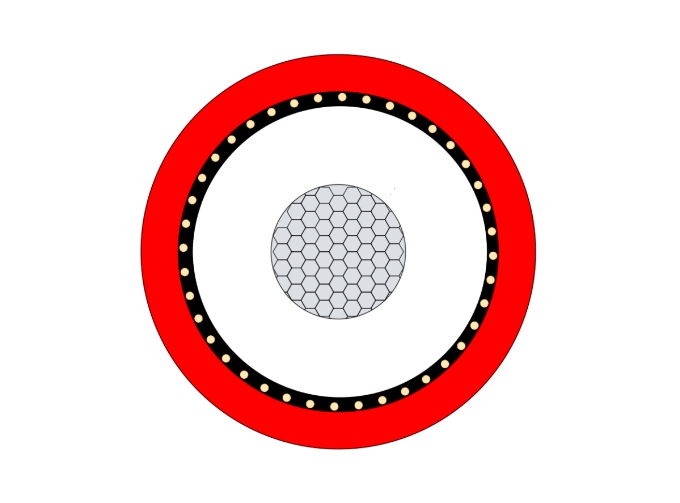
NA2XSY Aluminum XLPE LSZH Cable
NA2XSY Aluminum XLPE LSZH Cable is a medium-voltage power cable with an aluminum conductor, TR-XLPE insulation, and a PVC outer sheath. It is designed according to IEC 60502-2 and VDE 0276 standards for rated voltages typically from 6/10kV up to 18/30kV. This cable provides excellent thermal, electrical, and mechanical properties, making it suitable for reliable energy transmission in medium-voltage networks. This cable excels in fire-prone environments by minimizing smoke and toxic gas release, while providing excellent electrical insulation, thermal endurance, and moisture resistance. The aluminum core reduces weight and cost without compromising performance. Ideal for fixed wiring in buildings, subways, and industrial facilities.
10.5KV Oil Immersed Substation Transformer
The 10.5kV Oil Immersed Substation Transformer is specifically designed for medium-voltage power substations requiring stable voltage conversion and reliable long-term operation. Utilizing a proven oil-immersed insulation system, the transformer provides excellent dielectric strength and efficient heat dissipation, ensuring dependable performance under continuous load conditions. High-quality winding materials and precise manufacturing processes enhance mechanical strength and short-circuit resistance. With low operating noise and strong thermal stability, the transformer is well-suited for modern substations serving industrial, commercial, and infrastructure power distribution systems.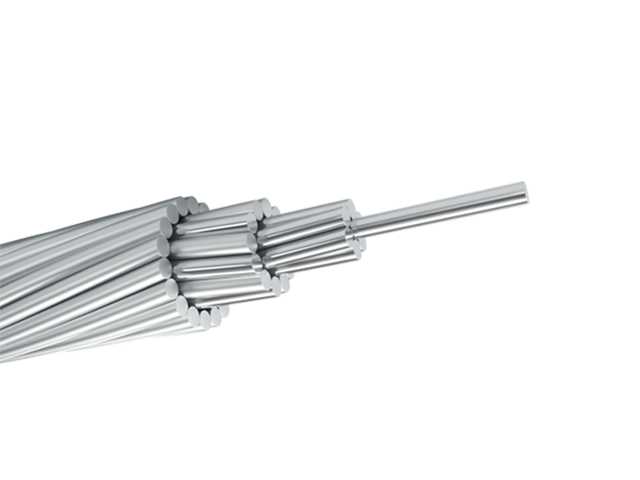
ACAR Conductor IEC 61089 Standard (A1/A3 & A1/A2) - Aluminum Alloy Reinforced
The ACAR Conductor IEC 61089 Standard (A1/A3, A1/A2) is a premium Aluminum Conductor Alloy Reinforced designed for efficient overhead power transmission and distribution. It consists of concentrically stranded 1350-H19 aluminum wires around a high-strength 6201-T81 aluminum-magnesium-silicon alloy core, offering an excellent balance of electrical conductivity and mechanical strength. Compared to equivalent ACSR conductors, this IEC 61089 ACAR provides higher ampacity at the same weight, lower sag, and superior corrosion resistance without steel core issues. Available in A1/A3 and A1/A2 configurations, it meets stringent IEC 61089 requirements for long-span lines. The ACAR Conductor IEC 61089 undergoes rigorous quality testing from raw materials to finished product, ensuring low DC resistance, high breaking strength, and reliable performance in various climates. Ideal for new installations or reconductoring projects where optimized strength-to-weight ratio and cost-effectiveness are critical.
800kVA Oil Immersed Transformer
The NPC ELECTRIC 800kVA Oil-Immersed Transformer is designed for high efficiency, durability, and reliable power distribution. Built to meet IEC 60076 and ANSI/IEEE standards, it ensures superior performance and safety. Certified for international quality compliance, it is ideal for industrial, commercial, and utility applications. This 800 kVA unit delivers outstanding energy efficiency (>99.55% typical), low no-load and load losses, excellent thermal performance, and proven durability in demanding outdoor environments.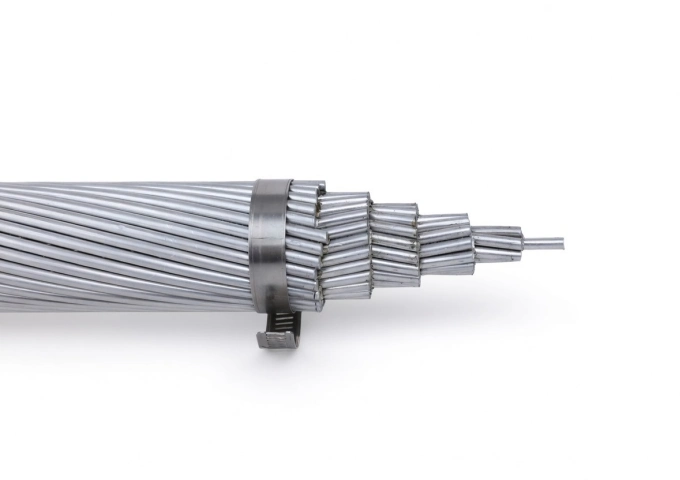
477 MCM Cosmos AAC Cable
The 477 MCM Cosmos AAC Cable represents premium All Aluminum Conductor technology for overhead power applications. Built with 19 strands of high-conductivity 1350-H19 aluminum, this bare conductor delivers an optimal balance of electrical efficiency and mechanical robustness. With a 0.793-inch diameter, 8,360 lbs breaking strength, and 639 amps ampacity, the Cosmos AAC offers low DC resistance of 0.0362 ohms per 1000 ft at 20°C and a weight of 447.8 lbs per 1000 ft. This design minimizes sag while providing excellent corrosion resistance for extended outdoor service. Manufactured to meet ASTM B-230 and B-231 standards, the 477 MCM Cosmos AAC Cable undergoes extensive quality testing from raw materials through finished product. It is the ideal solution for new installations and upgrades in transmission and distribution systems that demand lightweight, high-conductivity bare aluminum conductors.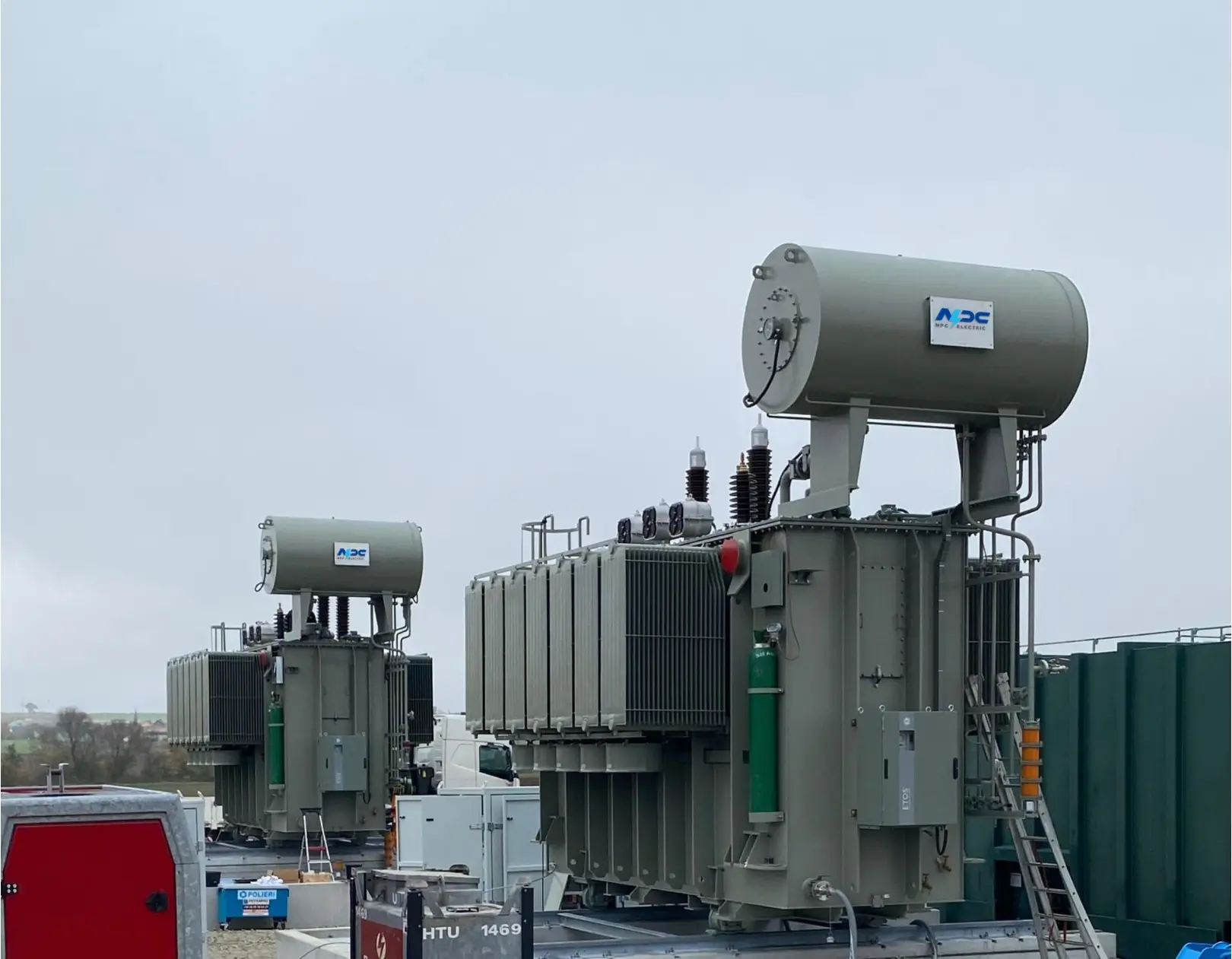
High Voltage 160kV Step-Up Power Transformer: Efficient 20MVA / 30MVA / 60MVA Solutions for Substations
The 160kV High Voltage Step-Up Power Transformer is designed to increase voltage levels efficiently for power generation plants and substation applications. Available in 20MVA, 30MVA, and 60MVA ratings, it supports stable energy transmission from generation sources to high-voltage networks. The transformer adopts a carefully optimized electromagnetic design that enhances voltage conversion efficiency while maintaining controlled thermal and electrical performance. Its oil-immersed insulation system ensures reliable cooling and long-term insulation stability under continuous operating conditions. The structural design emphasizes mechanical strength and operational safety, enabling dependable performance in outdoor substations and demanding grid environments. This step-up transformer is well suited for modern power systems that require efficient voltage elevation, reduced transmission losses, and consistent operational reliability.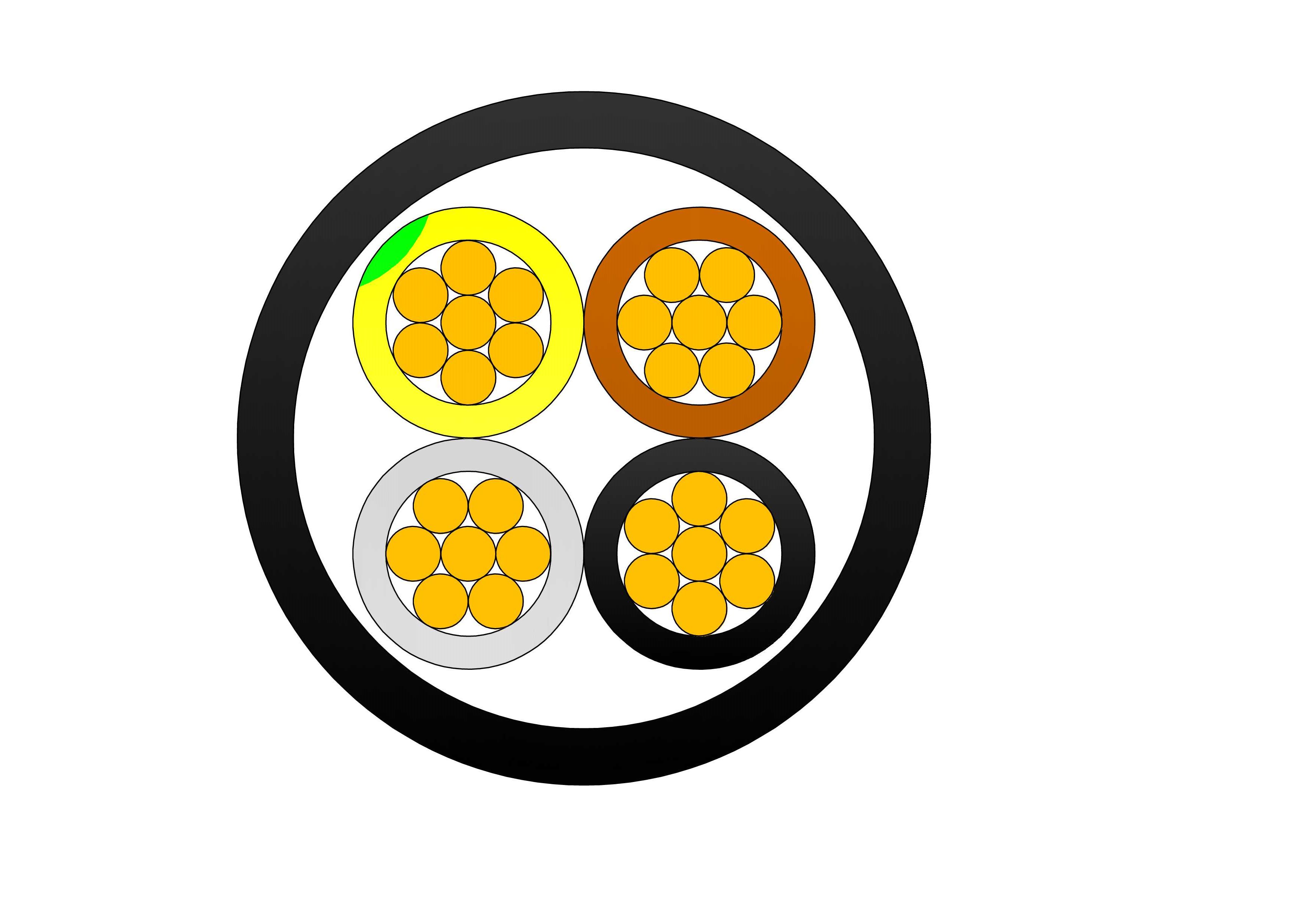
GYXTW Fiber Optic Cable
The GYXTW Fiber Optic Cable is a rugged central loose tube fiber optic cable designed for outdoor long-distance communication. It features a single central loose tube filled with water-blocking gel containing optical fibers, a corrugated steel tape armor for excellent mechanical protection, and a durable polyethylene (PE) outer sheath. Compliant with IEC 60794 and ITU-T standards, the GYXTW Fiber Optic Cable provides superior crush resistance, moisture blocking, and rodent protection. Available in single-mode and multi-mode with various fiber counts, it ensures low attenuation, high bandwidth, and reliable signal transmission. Its compact central tube design combined with steel tape armor makes it ideal for duct, aerial, and direct burial installations. The GYXTW Fiber Optic Cable is widely used in telecommunications backbone networks, FTTH, metropolitan area networks, and outdoor infrastructure projects requiring stable, secure, and durable fiber connectivity in challenging environments.Welcome your inquiry
Honesty, Integrity, Frugality, Activeness and Passion