
Articulated Unit Substation: Complete Guide to Design, Benefits & Installation
2026-06-25
The global demand for reliable, scalable, and rapidly deployable power infrastructure continues to grow as utilities, industrial facilities, renewable energy projects, and urban developments expand. Traditional substation construction methods often require extensive civil works, long project schedules, and complex on-site assembly. To address these challenges, the Articulated Unit Substation has emerged as an efficient and highly adaptable solution.
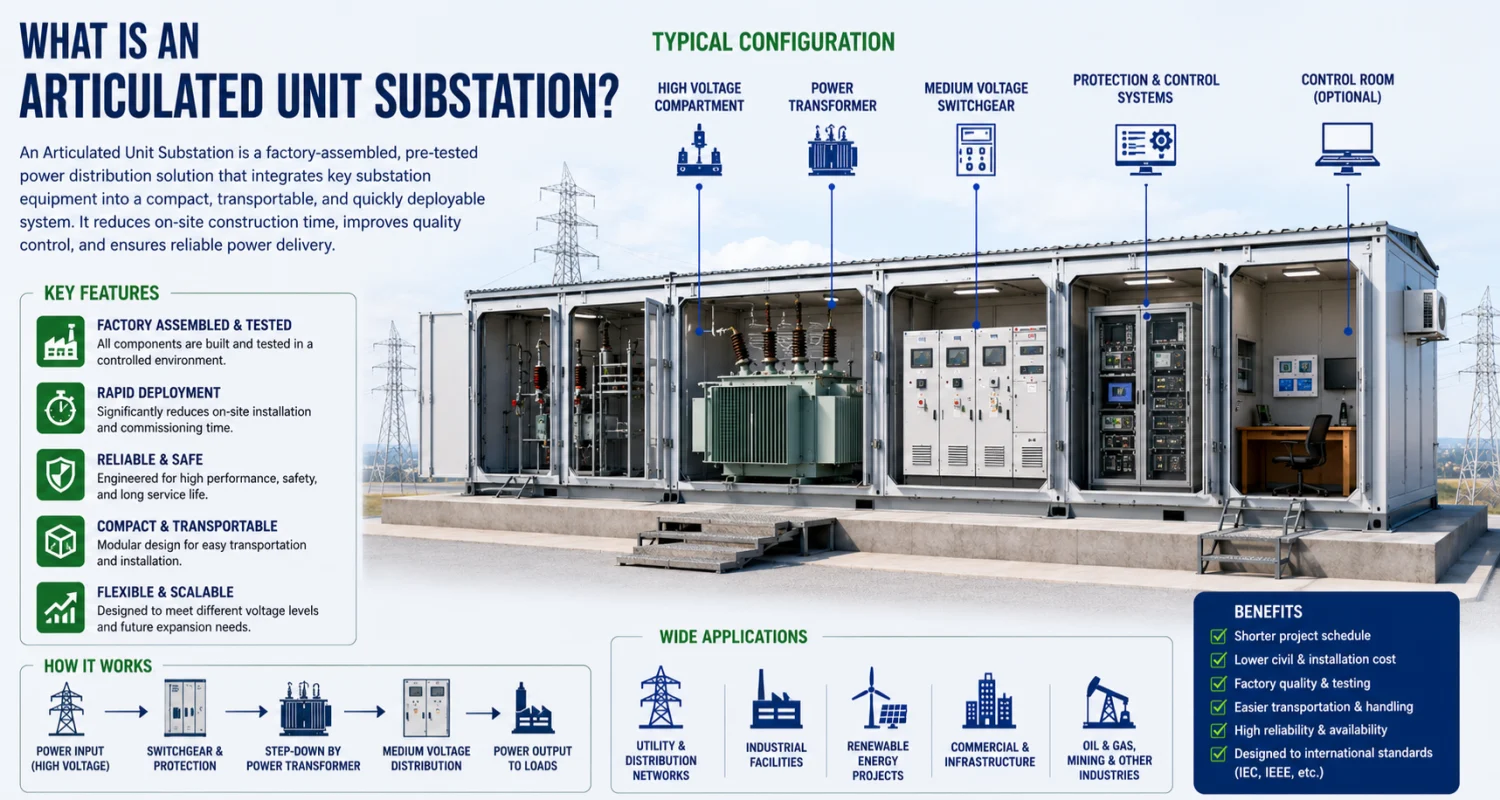
An articulated unit substation combines transformers, switchgear, protection systems, control equipment, and interconnecting components into a compact, factory-assembled configuration. By integrating critical electrical equipment into a modular structure, these substations significantly reduce installation time, improve quality control, and enhance overall project efficiency.
For utilities, EPC contractors, industrial operators, and renewable energy developers, understanding the design principles, operational benefits, and installation requirements of articulated substations is essential for successful project execution.
1. What Is an Articulated Unit Substation?
An Articulated Unit Substation is a factory-engineered power distribution solution that combines multiple substation components into a coordinated and transportable assembly. Unlike conventional substations, where equipment is installed individually on-site, articulated substations are preconfigured and tested before delivery.
The term "articulated" refers to the integrated arrangement of key electrical components that function as a unified system while maintaining accessibility for transportation, installation, maintenance, and future expansion.
A typical articulated substation may include:
- Power transformer
- Medium-voltage switchgear
- High-voltage switchgear
- Circuit breakers
- Disconnect switches
- Current transformers (CTs)
- Voltage transformers (VTs)
- Protection relays
- Control circuits
- SCADA communication equipment
- Auxiliary power systems
The design philosophy centers on minimizing site construction requirements while maximizing operational reliability.
Typical Technical Specifications of an Articulated Unit Substation
|
Parameter |
Typical Range |
|
Rated Voltage |
11kV – 220kV |
|
Rated Frequency |
50Hz / 60Hz |
|
Transformer Capacity |
1 MVA – 100 MVA |
|
Transformer Type |
Oil-Immersed / Dry-Type |
|
HV Switchgear Rating |
Up to 245kV |
|
MV Switchgear Rating |
3.3kV – 36kV |
|
Rated Current |
630A – 4000A |
|
Short Circuit Withstand Current |
25kA – 50kA |
|
Protection Degree |
IP54 – IP65 |
|
Communication Protocol |
IEC 61850 |
|
Cooling Method |
ONAN / ONAF |
|
Service Life |
30–40 Years |
2. Core Components of an Articulated Unit Substation
The performance of any substation depends on the quality and integration of its major components.
Power Transformer
The power transformer serves as the heart of the substation, converting electrical energy between different voltage levels.
Common transformer configurations include:
- 33kV/11kV
- 69kV/13.8kV
- 132kV/33kV
- 220kV/33kV
The transformer must be selected based on:
- Load demand
- Fault current levels
- Voltage regulation requirements
- Future expansion plans
A properly specified electrical transformer ensures long-term operational efficiency and reliability.
Switchgear Systems
Switchgear provides protection, control, and isolation capabilities.
Typical equipment includes:
- Vacuum circuit breakers
- SF6 circuit breakers
- Load break switches
- Disconnectors
- Earthing switches
Switchgear enables operators to safely isolate equipment during maintenance and fault conditions.
Protection and Control Systems
Modern substations rely heavily on digital protection systems.
Functions include:
- Fault detection
- Isolating faults
- Load management
- Remote monitoring
- Event recording
The integration of intelligent protection devices significantly improves system reliability.
Main Equipment Used in an Articulated Unit Substation
|
Equipment |
Function |
Importance |
|
Power Transformer |
Voltage conversion |
Critical |
|
Circuit Breaker |
Interrupt fault current |
Critical |
|
Disconnect Switch |
Equipment isolation |
High |
|
Earthing Switch |
Personnel safety |
High |
|
Current Transformer (CTs) |
Current measurement & protection |
Critical |
|
Voltage Transformer (VTs/PTs) |
Voltage measurement |
High |
|
Busbar System |
Power distribution |
Critical |
|
Protection Relay |
Fault detection |
Critical |
|
Control Circuits |
Operational control |
Critical |
|
SCADA System |
Remote monitoring |
High |
|
Battery Charger |
Auxiliary power supply |
Medium |
|
Control Room Equipment |
Operation & supervision |
High |
3. Electrical Substation Design Considerations
Successful electrical substation design requires balancing operational performance, safety, reliability, maintainability, and economic factors.
Voltage Levels
The first design consideration is determining appropriate voltage levels.
Common applications include:
|
System Type |
Typical Voltage Levels |
|
Distribution Substation |
33kV / 11kV |
|
Industrial Substation |
69kV / 13.8kV |
|
Transmission Substation |
132kV / 33kV |
|
Utility Grid Substation |
220kV / 132kV |
Voltage selection directly influences equipment ratings and system architecture.
Short Circuit Analysis
Engineers must perform comprehensive short circuit studies to determine:
- Fault current magnitude
- Equipment interrupting capacity
- Protection coordination
- Busbar design requirements
Underestimating fault levels can result in severe equipment damage and operational risks.
Environmental Conditions
Site-specific conditions affect equipment selection.
Important factors include:
- Ambient temperature
- Humidity
- Altitude
- Pollution levels
- Seismic activity
- Wind loading
Environmental assessments ensure long-term equipment performance.
4. Articulated Unit Substation vs Traditional Substations
Many project developers evaluate articulated substations against conventional site-built solutions.
Construction Schedule
Traditional substations often require:
- Extensive civil works
- Large construction teams
- Complex equipment coordination
Articulated substations significantly reduce these challenges.
|
Factor |
Traditional Substation |
Articulated Unit Substation |
|
Engineering Time |
High |
Moderate |
|
Site Work |
Extensive |
Minimal |
|
Factory Testing |
Limited |
Comprehensive |
|
Installation Time |
Months |
Weeks |
|
Expansion Flexibility |
Moderate |
High |
|
Quality Consistency |
Variable |
High |
Quality Assurance
Factory assembly provides:
- Controlled manufacturing conditions
- Consistent workmanship
- Comprehensive testing
- Reduced installation errors
This often results in improved reliability and reduced commissioning issues.
5. Role of IEC 61850 in Modern Articulated Substations
The digital transformation of substations has accelerated the adoption of IEC 61850.
What Is IEC 61850?
IEC 61850 is an international communication standard for substation automation systems.
It enables:
- Device interoperability
- Real-time communications
- Simplified engineering
- Enhanced system diagnostics
Benefits for Articulated Unit Substations
Implementation of IEC 61850 allows:
- Faster commissioning
- Reduced wiring complexity
- Improved fault analysis
- Enhanced cybersecurity capabilities
- Better SCADA integration
Digital substations increasingly depend on IEC 61850 architecture to support smart grid initiatives.
Future-Proofing Infrastructure
Utilities investing in articulated substations often specify IEC 61850 compliance to ensure compatibility with future network modernization programs.
6. Air Insulated vs Gas Insulated Configurations
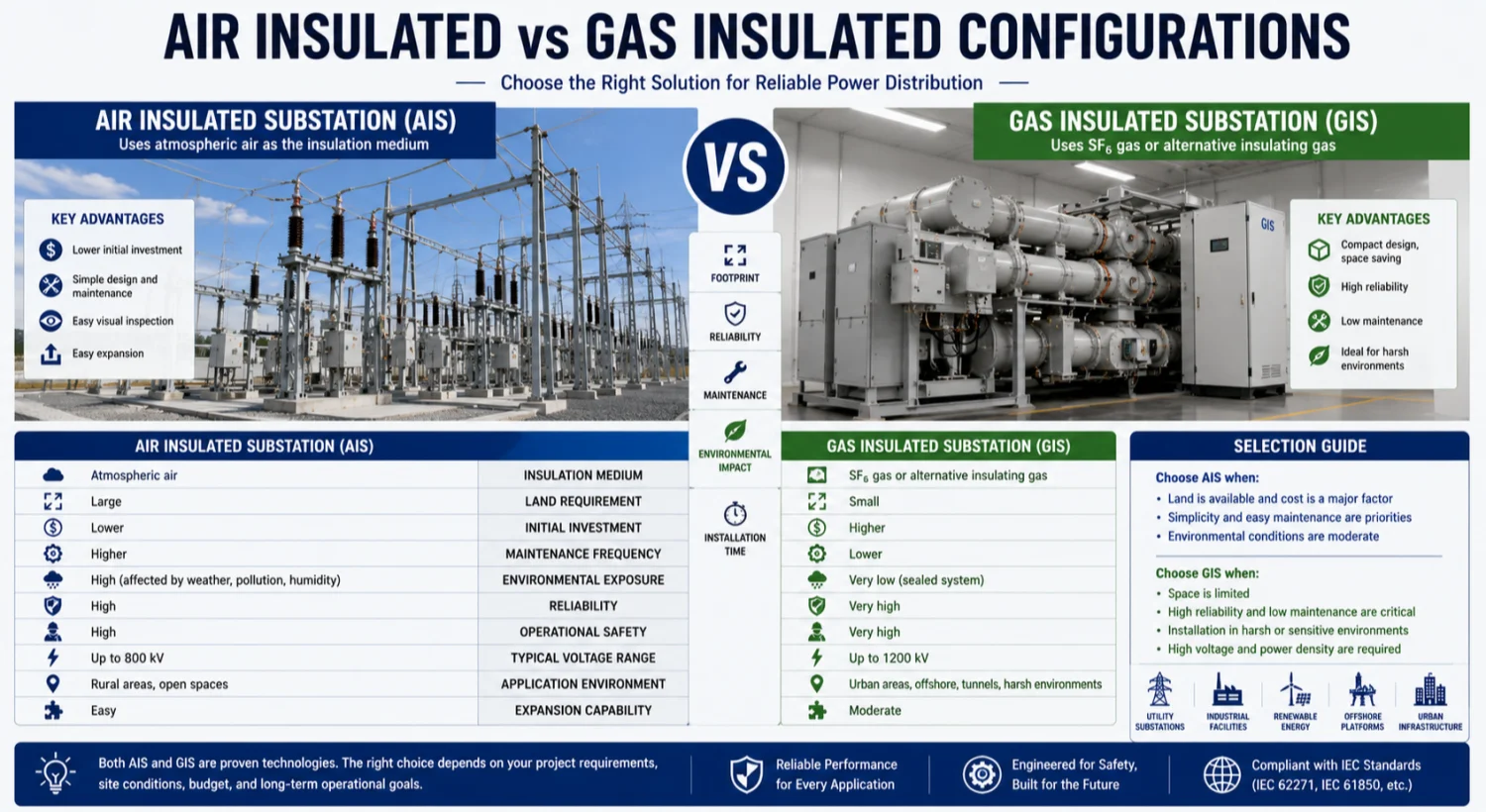
One of the most important decisions in substation design involves selecting insulation technology.
High Voltage Air Insulated Substation (AIS)
A high voltage air insulated substation uses atmospheric air as the primary insulation medium.
Advantages:
- Lower initial investment
- Simpler maintenance
- Easier visual inspection
Limitations:
- Larger footprint
- Greater exposure to environmental conditions
Gas Insulated Substation (GIS)
A gas insulated substation (GIS substation equipment) utilizes SF6 or alternative insulating gases.
Advantages:
- Compact design
- High reliability
- Reduced maintenance
- Superior performance in harsh environments
Limitations:
- Higher initial cost
- Specialized maintenance requirements
High Voltage Air Insulated Substation vs GIS Substation Equipment
|
Parameter |
AIS Substation |
GIS Substation |
|
Insulation Medium |
Air |
SF6 Gas / Alternative Gas |
|
Land Requirement |
Large |
Small |
|
Initial Investment |
Lower |
Higher |
|
Maintenance Frequency |
Higher |
Lower |
|
Environmental Exposure |
High |
Very Low |
|
Reliability |
High |
Very High |
|
Installation Time |
Longer |
Shorter |
|
Urban Application |
Limited |
Excellent |
|
Offshore Application |
Limited |
Excellent |
|
Expansion Capability |
Easy |
Moderate |
|
Operational Safety |
High |
Very High |
|
Typical Voltage Range |
Up to 800kV |
Up to 1200kV |
Selection Criteria
AIS is often preferred where land availability is not a constraint.
GIS becomes advantageous in:
- Urban environments
- Offshore installations
- Industrial facilities
- Renewable energy projects
7. Installation and Commissioning Best Practices
Proper installation is critical to achieving expected performance.
Site Preparation
Before delivery, project teams should verify:
- Foundation integrity
- Grounding systems
- Access roads
- Crane positioning
- Cable trench readiness
Early preparation reduces project delays.
Equipment Positioning
Articulated substations are designed to simplify placement.
However, engineers must ensure:
- Adequate clearance distances
- Safe maintenance access
- Ventilation requirements
- Future expansion capability
Testing and Commissioning
A comprehensive commissioning program should include:
- Transformer testing
- Protection relay verification
- CTs and VT calibration
- Circuit breaker functional testing
- Control circuit verification
- Communication system validation
Successful commissioning confirms that the substation is ready for safe energization.
8. Applications and Future Trends
The versatility of articulated substations makes them suitable for a wide range of industries.
Utility Distribution Networks
A distribution substation utilizing articulated construction can be rapidly deployed to support growing urban and rural demand.
Renewable Energy Projects
Solar and wind developers frequently adopt articulated substations due to:
- Faster project timelines
- Reduced construction costs
- Standardized deployment
Industrial Facilities
Applications include:
- Mining operations
- Oil and gas facilities
- Manufacturing plants
- Data centers
- Water treatment facilities
Smart Substation Evolution
Future developments include:
- Predictive maintenance
- AI-assisted fault diagnostics
- Digital twins
- Remote asset management
- Advanced grid analytics
These technologies will continue improving reliability and operational efficiency.
Frequently Asked Questions (FAQ)
1. What is an Articulated Unit Substation?
An Articulated Unit Substation is a factory-assembled power distribution solution that integrates a power transformer, switchgear, protection systems, control circuits, and auxiliary equipment into a compact and transportable structure. It is designed to reduce on-site construction time, improve quality control, and accelerate project commissioning compared to conventional substations.
2. What are the advantages of an Articulated Unit Substation over a traditional substation?
Articulated Unit Substations offer several advantages, including shorter installation time, reduced civil works, factory-tested components, improved reliability, lower project risk, and easier transportation. They are particularly suitable for utility networks, renewable energy projects, industrial facilities, and temporary power installations where rapid deployment is essential.
3. How does IEC 61850 improve substation performance?
IEC 61850 is an international standard for substation automation and communication. It enables seamless data exchange between intelligent electronic devices (IEDs), reduces wiring complexity, improves fault detection and isolation, supports remote monitoring, and simplifies integration with SCADA systems. This results in more efficient and intelligent substation operations.
4. What is the difference between an AIS and a GIS substation?
An Air Insulated Substation (AIS) uses atmospheric air as the insulation medium and typically requires a larger installation footprint. A Gas Insulated Substation (GIS) uses SF6 gas or alternative insulating gases, allowing for a much more compact design. GIS substations are often preferred in urban areas, offshore platforms, and locations where space is limited, while AIS substations are commonly selected when land availability is not a concern.
5. What factors should be considered when selecting an Articulated Unit Substation?
Key selection factors include voltage levels, transformer capacity, short-circuit ratings, environmental conditions, protection requirements, communication protocols, future expansion plans, and compliance with international standards such as IEC 61850 and IEC 62271. Buyers should also evaluate the manufacturer's engineering capabilities, factory testing procedures, and after-sales support.
Conclusion
The Articulated Unit Substation represents a significant advancement in modern power infrastructure design. By integrating transformers, switchgear, protection systems, and automation technologies into a factory-assembled solution, these substations offer faster deployment, higher quality control, and lower overall project risk compared with conventional site-built alternatives.
As utilities, renewable energy developers, and industrial operators seek more efficient ways to expand electrical networks, articulated substations provide a practical solution that combines engineering flexibility with operational reliability. Whether deployed as a Prefabricated substation, a utility distribution substation, or part of a large-scale transmission project, these systems support the growing demand for resilient, intelligent, and future-ready electrical infrastructure.
With increasing adoption of IEC 61850, advanced protection technologies, GIS and AIS configurations, and smart automation systems, articulated unit substations are expected to play an increasingly important role in the next generation of global power networks.

Related Articles

Related Products
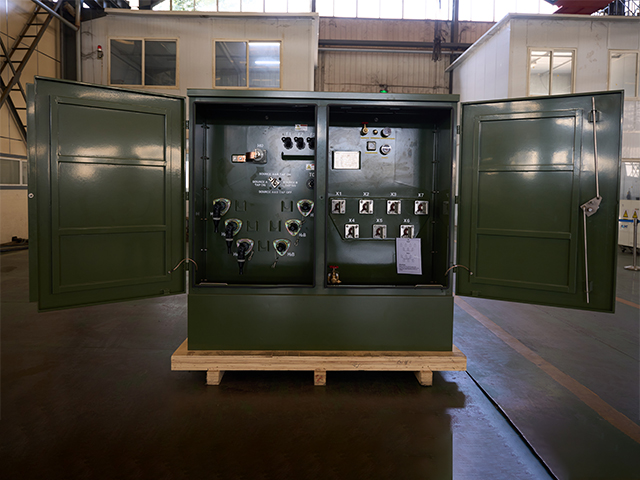
225kVA Three Phase Pad Mounted Transformer
The 225kVA three-phase pad transformer is an efficient and reliable power conversion device designed for commercial, industrial and distribution systems. With a high power capacity of 225kVA, the transformer is able to provide a stable three-phase power supply for large-scale equipment to meet high load requirements. Its rugged housing is made of weather-resistant materials and meets NEMA 3R standards, ensuring long-term stable operation in outdoor environments and preventing the influence of external factors such as water, dust and corrosion.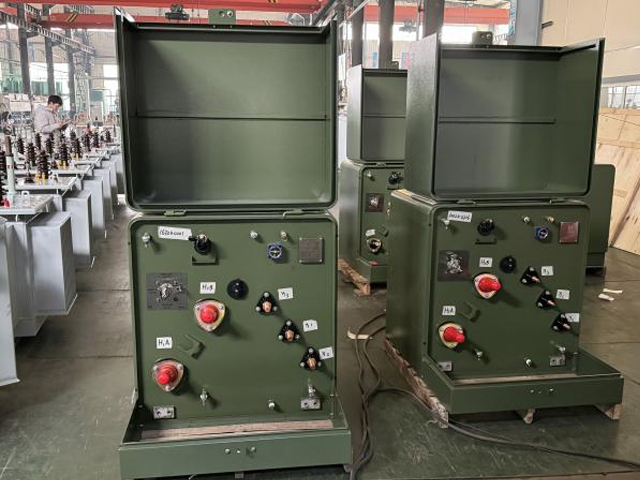
333kVA Single Phase Pole Mounted Transformer
NPC ELECTRIC'S 333kVA single phase pole mounted transformer stands as a powerhouse solution for intensive overhead distribution requirements, effectively reducing primary voltages such as 12.47kV, 24.94kV, or 34.5kV to secondary voltages including 120/240V, 277V, or 347V. Crafted with premium grain-oriented silicon steel cores and durable windings, it delivers outstanding energy efficiency, low losses, and compliance with modern DOE efficiency regulations alongside IEEE C57 and ANSI standards. The tank incorporates corrugated fins for optimal natural oil circulation (ONAN), supporting a 65°C temperature rise and robust overload handling. Equipped with essential protections like pressure relief valves, high-voltage bushings, and surge arresters, this transformer ensures dependable operation in exposed conditions. Its design prioritizes quiet performance, minimal maintenance, and extended service life, making it highly suitable for utilities managing substantial single-phase loads in evolving power networks.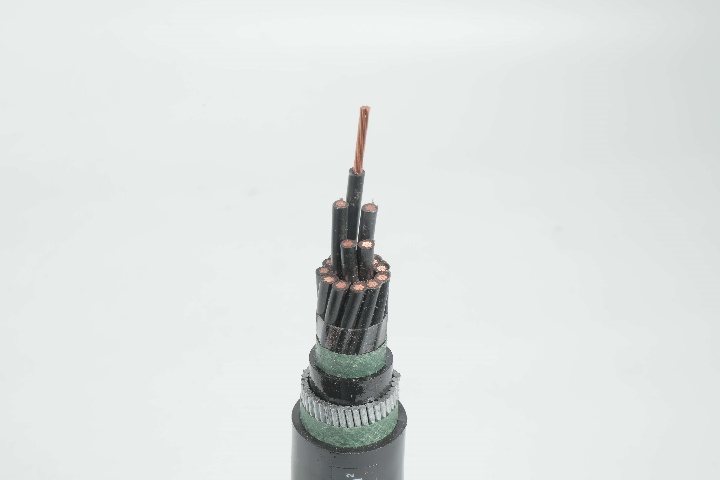
YY Control Cable (YSLY / HSLH) - 300/500V PVC & LSZH Flexible Control Cable
The YY Control Cable (YSLY / HSLH) is a highly flexible multi-core control cable designed for industrial automation, machinery, and building management systems. It features finely stranded copper conductors with PVC or halogen-free (LSZH) insulation, twisted cores, and a durable PVC or low-smoke zero-halogen outer sheath. Available in both standard PVC (YSLY) and flame-retardant low-smoke (HSLH) versions, this cable offers excellent flexibility, oil resistance, and reliable signal transmission. Rated 300/500V, it is suitable for indoor and protected outdoor installations. The YY Control Cable (YSLY / HSLH) undergoes strict quality testing from raw materials to finished product, ensuring consistent electrical performance, mechanical strength, and safety compliance with IEC 60227 and related standards.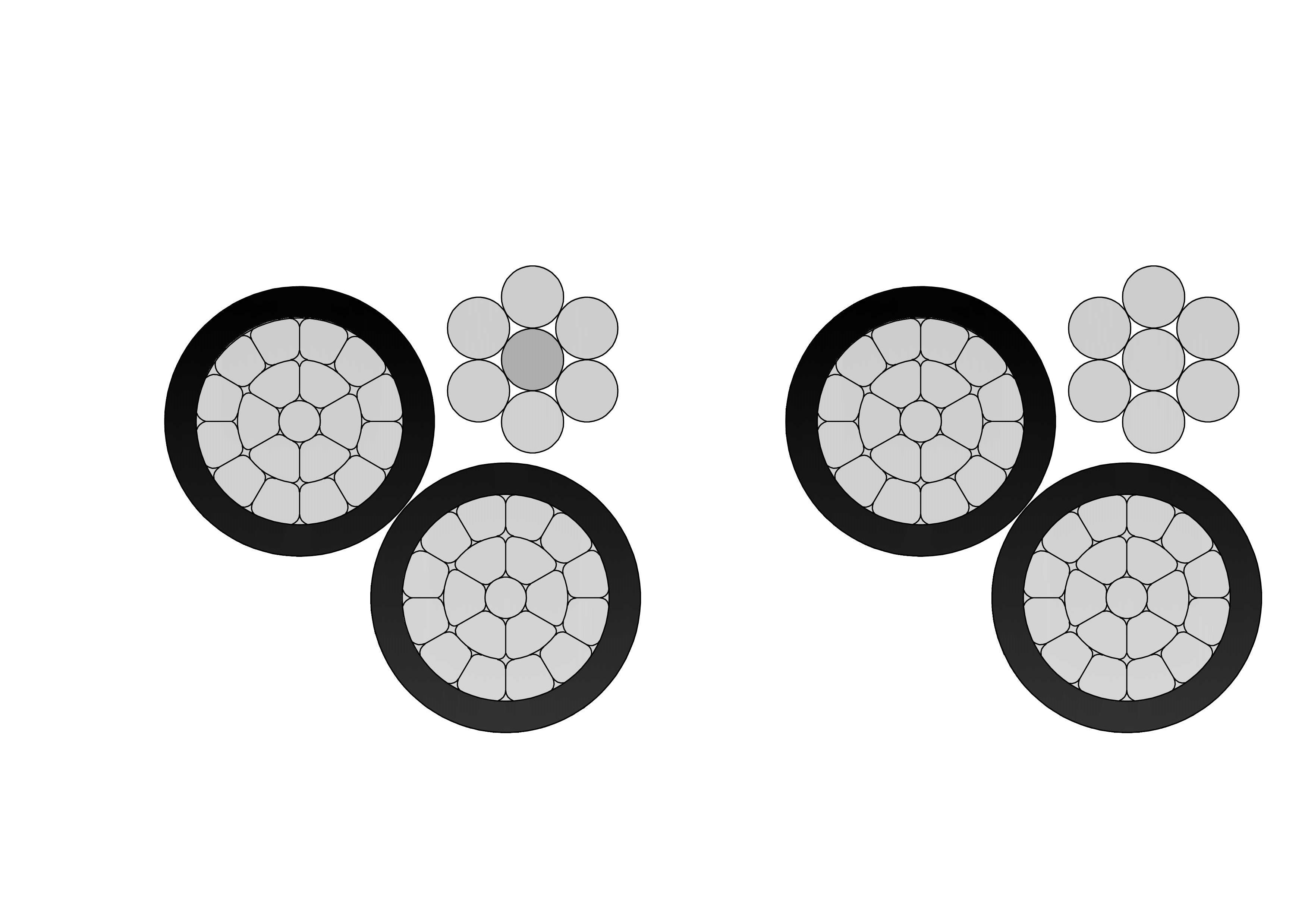
6 Hippa Aluminum Conductor Triplex Overhead Service Drop Cable Wire
6 Hippa Aluminum Conductor Triplex Overhead Service Drop Cable Wire is engineered for safe and efficient overhead service drop connections. It features two insulated aluminum conductors stranded around a reinforced neutral messenger, providing balanced electrical performance and mechanical stability. This cable offers excellent corrosion resistance, low sag characteristics, and simplified installation. The insulation system of the 6 Hippa Aluminum Conductor Triplex Overhead Service Drop Cable Wire is designed to withstand prolonged exposure to sunlight, moisture, and temperature variations, ensuring reliable outdoor operation. A complete quality assurance program is implemented during manufacturing, covering raw material testing, process inspection, and finished product testing. Each production stage follows standardized procedures to ensure conformity with international standards and utility requirements. The 6 Hippa Aluminum Conductor Triplex Overhead Service Drop Cable Wire is a dependable choice for modern overhead power distribution systems.
5MVA / 6.3MVA 35kV Three-Phase Oil-Immersed Step-Down Power Transformer
The 5MVA / 6.3MVA 35kV Three-Phase Oil-Immersed Step-Down Power Transformer is designed for reliable voltage reduction in medium-voltage power distribution systems. Built with high-grade silicon-steel cores, premium copper windings, and advanced oil-immersed cooling, it delivers low losses, strong short-circuit resistance, and stable thermal performance. The transformer features robust insulation, durable tank construction, and precision-engineered components to ensure long operational life. Suitable for industrial plants, utility substations, renewable energy facilities, and commercial power distribution, it supports both on-load and off-load tap changers for accurate voltage regulation. Engineered in compliance with IEC standards, this 35kV step-down transformer ensures high efficiency, dependable performance, and safe power delivery under various environmental and load conditions.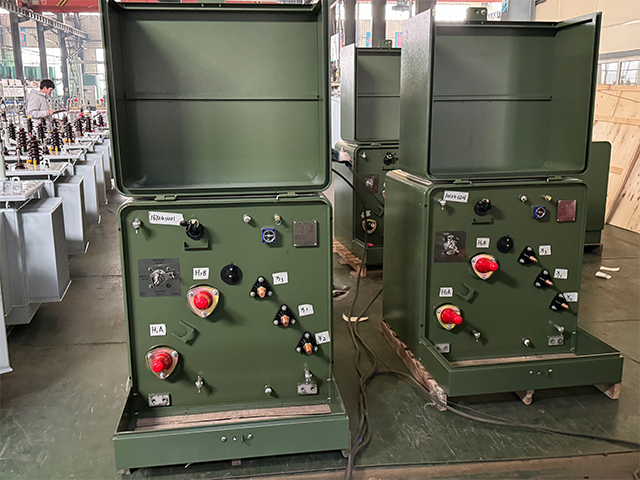
25kVA Single Phase Pad Mounted transformer
The 25kVA Single Phase Pad Mounted transformer with a power rating of 25 kVA, the high voltage of the transformer is 24940GRDY/14400×12470GRDY/7200V, which is a dual high voltage design. Customers can switch between 14.4kV and 7.2kV through a dual voltage switch according to the distribution line. There is a five-position voltage regulating switch on the high-voltage side, which can allow small changes in voltage within ±2 * 2 ½%. The 25 kVA transformer comes complete with an oil level indicator and a 4-position load break switch, adding to its versatility and ease of maintenance.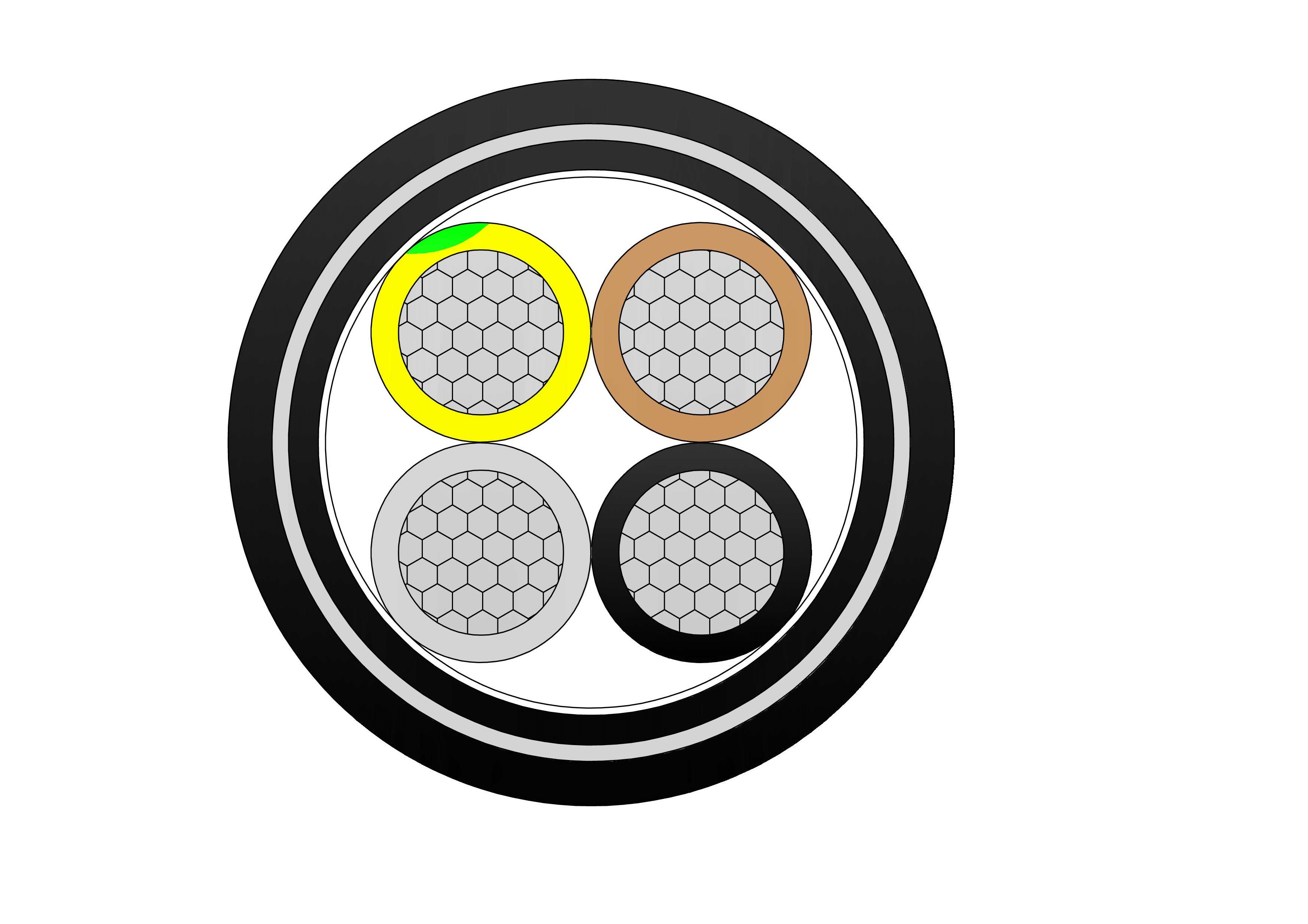
NAYBY 0.6/1kV Low Voltage Power Cable
NAYBY 0.6/1kV are low voltage power cables designed according to DIN VDE 0276 standard, suitable for fixed installation in indoor, outdoor, underground, cable ducts, or concrete (not exposed to vibration), with steel tape armoring providing additional mechanical protection. Featuring stranded or solid aluminium conductors, PVC insulation, filler, and robust PVC outer sheath, it complies with VDE 0276-603 and IEC standards. This unarmoured cable offers good electrical properties, mechanical strength, and resistance to moisture and chemicals. Lightweight aluminium design reduces installation and material costs compared to copper equivalents. Suitable for direct burial, ducts, or indoor fixed installations where mechanical protection is not critical. Flame-retardant with adequate current-carrying capacity, the NAYBY 0.6/1kV Low Voltage Power Cable ensures reliable performance with minimal losses.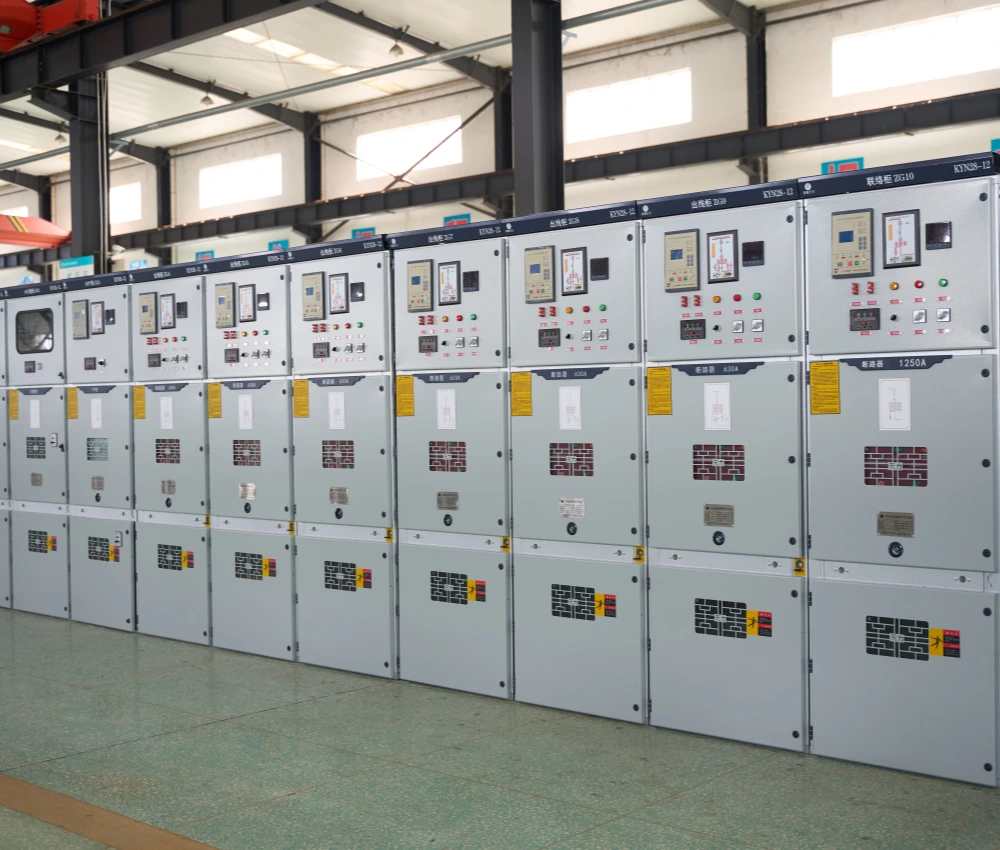
Low Voltage Switchgear
The Low Voltage Switchgear is a high-performance electrical distribution and protection system designed for safe, reliable, and efficient low-voltage power management in industrial facilities, commercial buildings, utility substations, renewable energy systems, and infrastructure projects. The switchgear integrates circuit breakers, protection relays, busbar systems, metering devices, and intelligent control components into a modular enclosure structure to provide stable electrical distribution and advanced operational safety. Manufactured using precision-engineered components and high-quality insulation materials, the low voltage switchgear ensures excellent electrical performance, thermal stability, and mechanical durability under demanding operating conditions. The modular cabinet design improves installation flexibility, simplifies maintenance procedures, and supports future expansion requirements while minimizing operational downtime. The Low Voltage Switchgear supports multiple distribution architectures, intelligent monitoring systems, and smart-grid communication protocols for modern energy management applications. With customizable configurations and scalable electrical protection functions, the system delivers dependable power distribution performance for industrial automation systems, commercial electrical networks, data centers, transportation infrastructure, and utility power systems.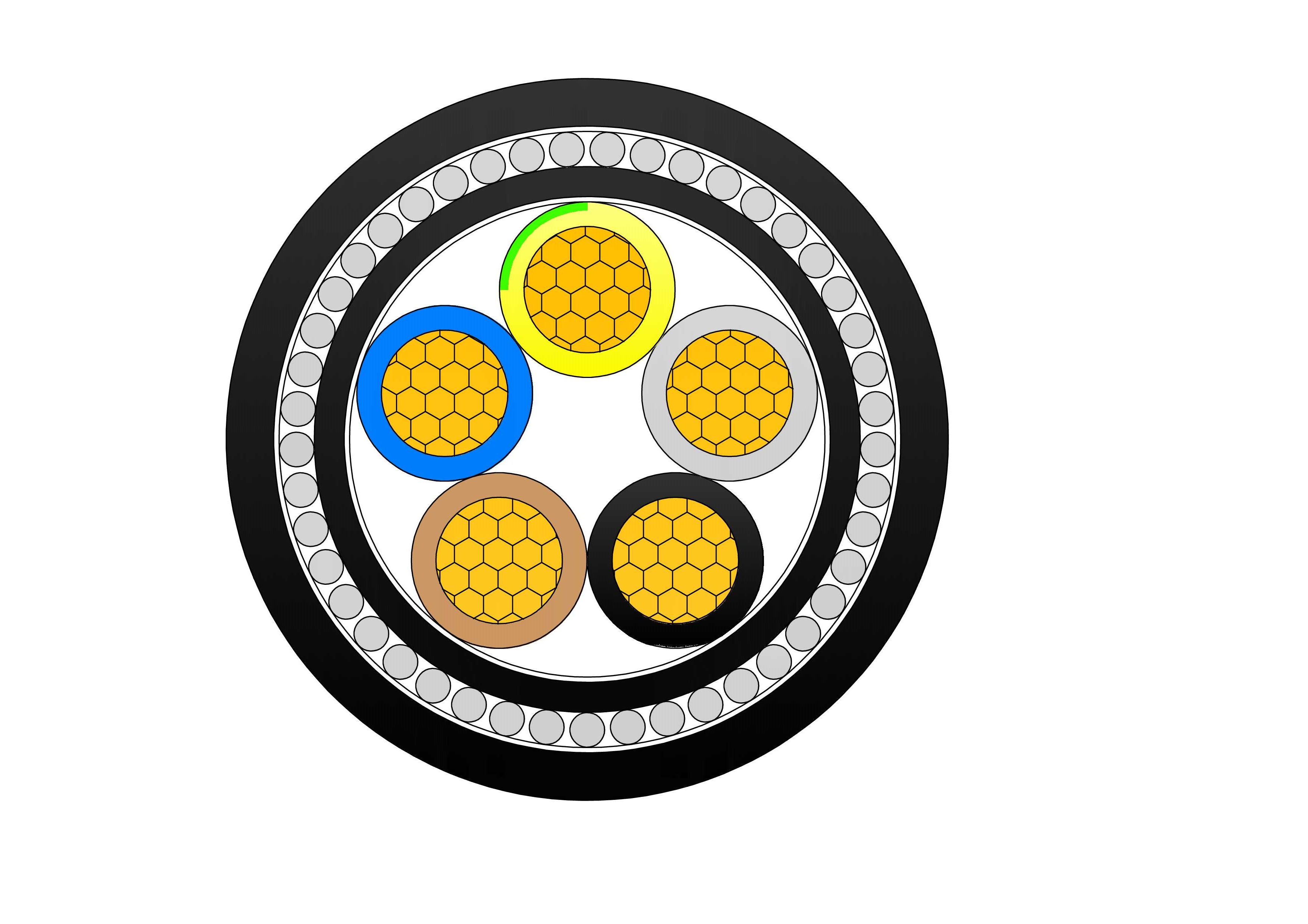
N2XRY 0.6/1kV Low Voltage Power Cable
N2XRY 0.6/1kV are low voltage power cables designed according to BS 5467 standard, suitable for fixed installation in indoor, outdoor, underground, Cable ducts ,conduits or concrete (not subject to vibration) environments,with additional mechanical protection due to steel wire armouring. Constructed with high-purity copper conductors, thermosetting XLPE insulation, PVC inner bedding, double galvanized steel tape armour, and tough PVC outer sheath, it meets IEC 60502-1 requirements. The STA armour delivers superior resistance to compression, impacts, and penetration, suitable for direct burial without conduits. Excellent electrical properties, reduced losses, and high overload capacity ensure optimal performance. Flame-retardant and environmentally stable, the N2XRY 0.6/1kV Low Voltage Power Cable is favored for factories, commercial developments, renewable energy sites, and infrastructure needing reliable, maintenance-free low-voltage cabling in challenging terrains.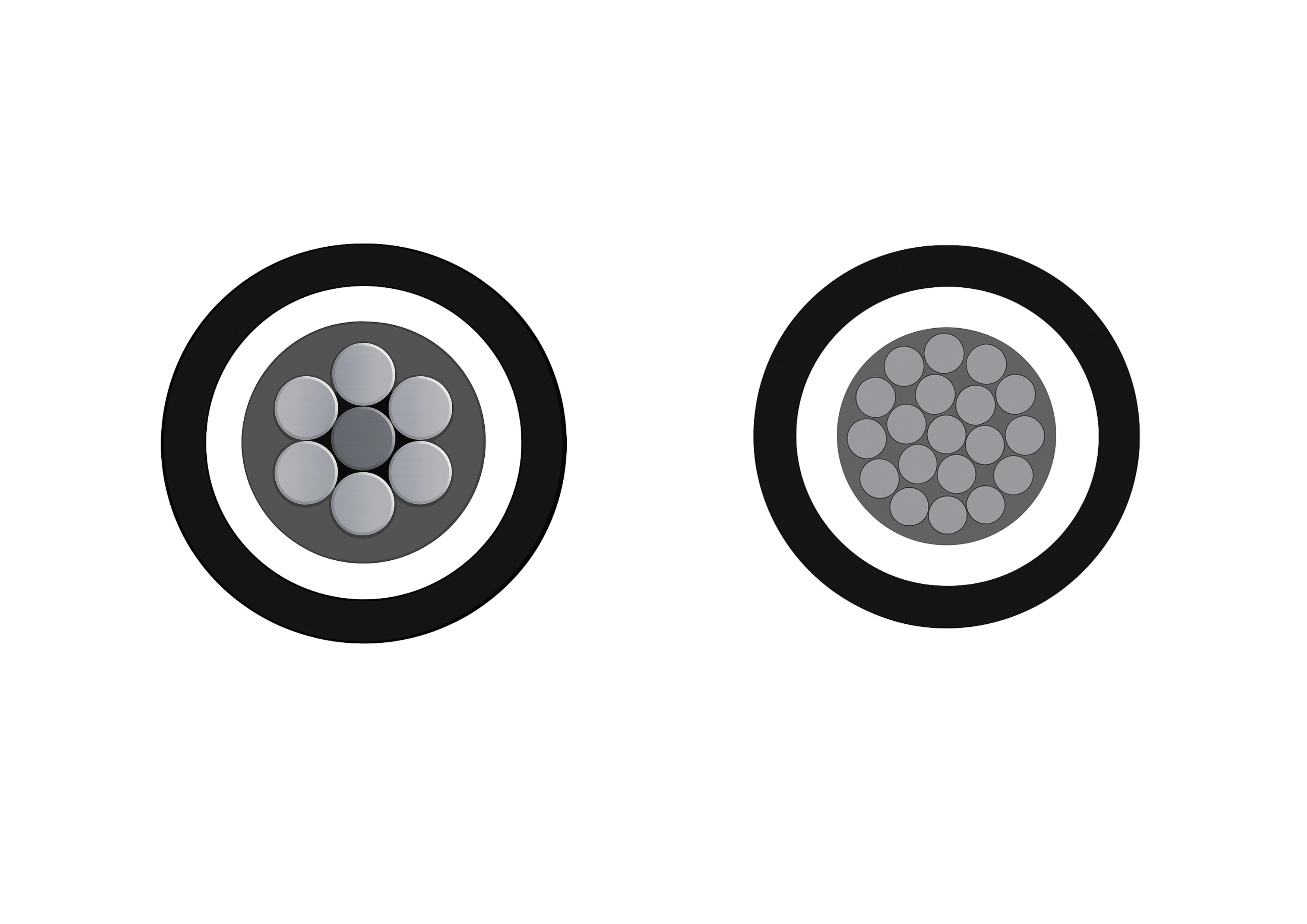
XLPE-HDPE Tree Cable Aluminum 25kV 1x185mm²
Power your network with confidence using the XLPE-HDPE Tree Cable Aluminum 25kV 1x185mm² – a high-performance medium-voltage cable engineered for demanding overhead distribution systems. Whether it’s industrial zones, main feeder lines, or expansive urban and rural networks, this cable delivers reliable, efficient, and uninterrupted power where you need it most. Built with high-conductivity aluminum alloy 1350 wires and compact class 2 stranding, it guarantees optimal current flow and mechanical strength. Optional semiconductor shielding enhances electrical stability for 15kV and 25kV networks, making it a dependable choice for modern power infrastructure. The XLPE inner insulation withstands 90°C continuous operation, while the robust HDPE outer jacket offers exceptional resistance to weather, UV exposure, mechanical abrasion, and electrical sparking. Available in gray with ASTM B230 markings and sequential metering, or blue for extra spark resistance in harsher environments, this cable is designed to perform under pressure.
4 Crab Aluminum Conductor Triplex Overhead Service Drop Cable Wire
4 Crab Triplex Aluminum Overhead Service Drop Cable is designed for reliable utility power delivery from pole-mounted transformers to the service entrance at residential, commercial, or light industrial sites. It consists of two insulated phase conductors and a bare AAC (All-Aluminum Conductor) messenger serving as both a neutral and mechanical support. Built for overhead single-phase service drops, it operates at voltages up to 600V and is insulated with black cross-linked polyethylene (XLP) for enhanced durability against UV, abrasion, and moisture. The 4 Crab's robust yet flexible structure prevents sagging and ensures stable performance over time. Utilities and contractors appreciate its cost-effectiveness and low-maintenance profile. Elevate your electrical infrastructure with this reliable cable that combines innovation and durability for uninterrupted power supply.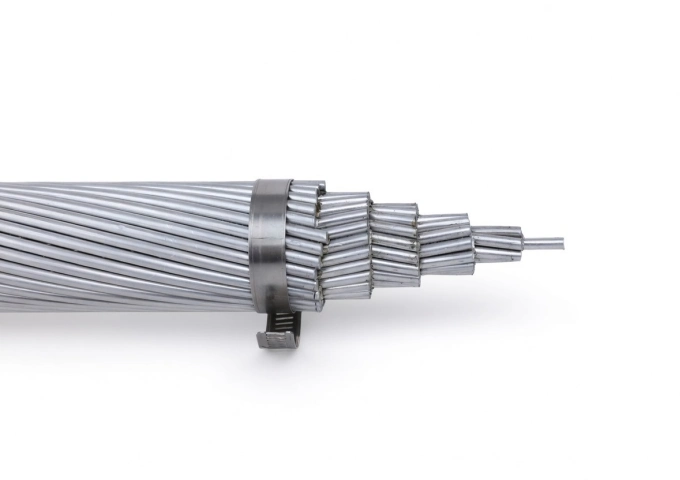
1590 MCM Coreopsis AAC Cable
The 1590 MCM Coreopsis AAC Cable is a high-performance All Aluminum Conductor designed for demanding overhead power transmission and distribution lines. Manufactured with 61 strands of premium 1350-H19 aluminum wire in a concentric lay configuration, this bare conductor provides excellent electrical conductivity with a low DC resistance of 0.0109 ohms per 1000 ft at 20°C. Featuring an overall diameter of 1.454 inches and a rated breaking strength of 27,000 lbs, the Coreopsis AAC delivers a robust ampacity of 1333 amps while weighing only 1493 lbs per 1000 ft. Its optimized strength-to-weight ratio minimizes sag and structural loading. Fully compliant with ASTM B-230 and B-231 standards, the 1590 MCM Coreopsis AAC Cable offers outstanding corrosion resistance for long-term durability in harsh outdoor environments, making it the preferred choice for utility networks requiring cost-effective, high-reliability bare aluminum conductors.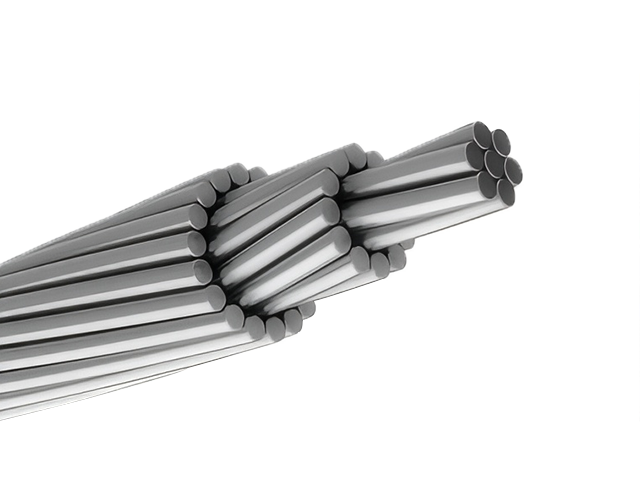
397.5 MCM CHICKADEE ACSR Conductor Cable
The ACSR Chickadee is a compact yet high-performance aluminium conductor steel reinforced cable, engineered for efficient energy transmission in overhead power systems. Constructed with hard-drawn 1350-H19 aluminium wires helically stranded around a galvanized steel core, this conductor is optimized to provide excellent electrical conductivity along with the mechanical strength needed for long-span and high-load applications. Compliant with ASTM B232 standards, the Chickadee conductor is suitable for primary and secondary bare cable use in transmission and distribution networks. The galvanized steel core, treated with Class A or B coating, ensures long-term corrosion resistance, even in aggressive outdoor environments. Ideal for compact power line installations or regions with light-to-moderate mechanical stress, Chickadee offers a reliable and cost-effective solution without compromising performance or safety.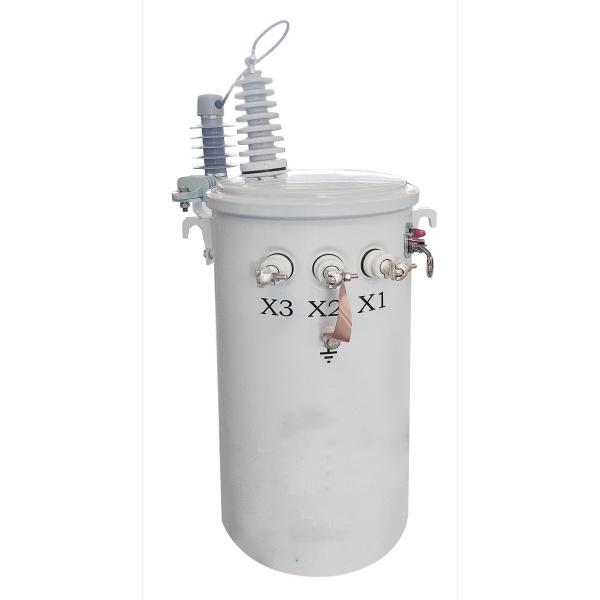
75kVA Completely self-protected(CSP) Single Phase Pole Mounted Transformer
NPC ELECTRIC, the production of a 75kVA Completely Self-Protected (CSP) Single Phase Pole Mounted Transformer is a high-efficiency, reliable solution for single-phase power distribution in residential, commercial, and small industrial applications. Equipped with built-in protection features such as overload, short-circuit, and over-voltage protection, it ensures automatic disconnection during fault conditions to prevent damage to the system. Its pole-mounted design saves space and is ideal for installation in both urban and rural environments. The transformer operates with minimal energy loss, ensuring high efficiency and long-term performance, while its durable construction makes it resistant to harsh weather conditions, ensuring a reliable and safe power supply over time.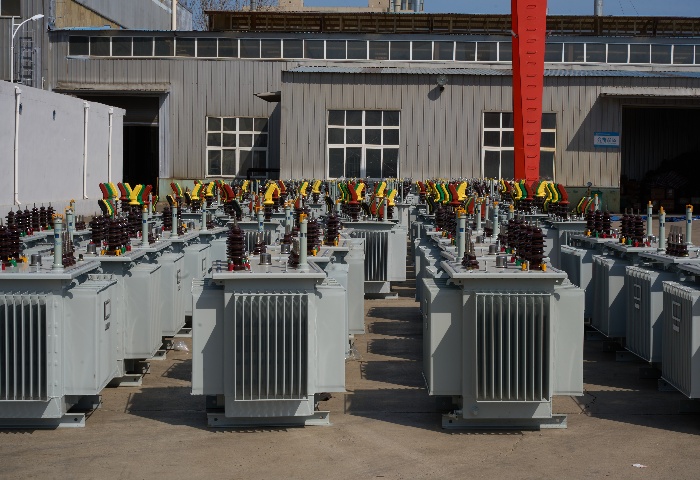
5000kVA Oil Immersed Substation Transformer
The 5000kVA Oil Immersed Substation Transformer is engineered for high-capacity power substations that demand continuous stability, strong load adaptability, and long operational life. Featuring an advanced oil-immersed insulation system, the transformer effectively enhances dielectric strength and thermal conductivity, ensuring reliable performance under heavy and fluctuating load conditions. With superior short-circuit withstand capability and efficient cooling performance, the transformer provides dependable power conversion for substations serving industrial, commercial, and infrastructure applications.Welcome your inquiry
Honesty, Integrity, Frugality, Activeness and Passion