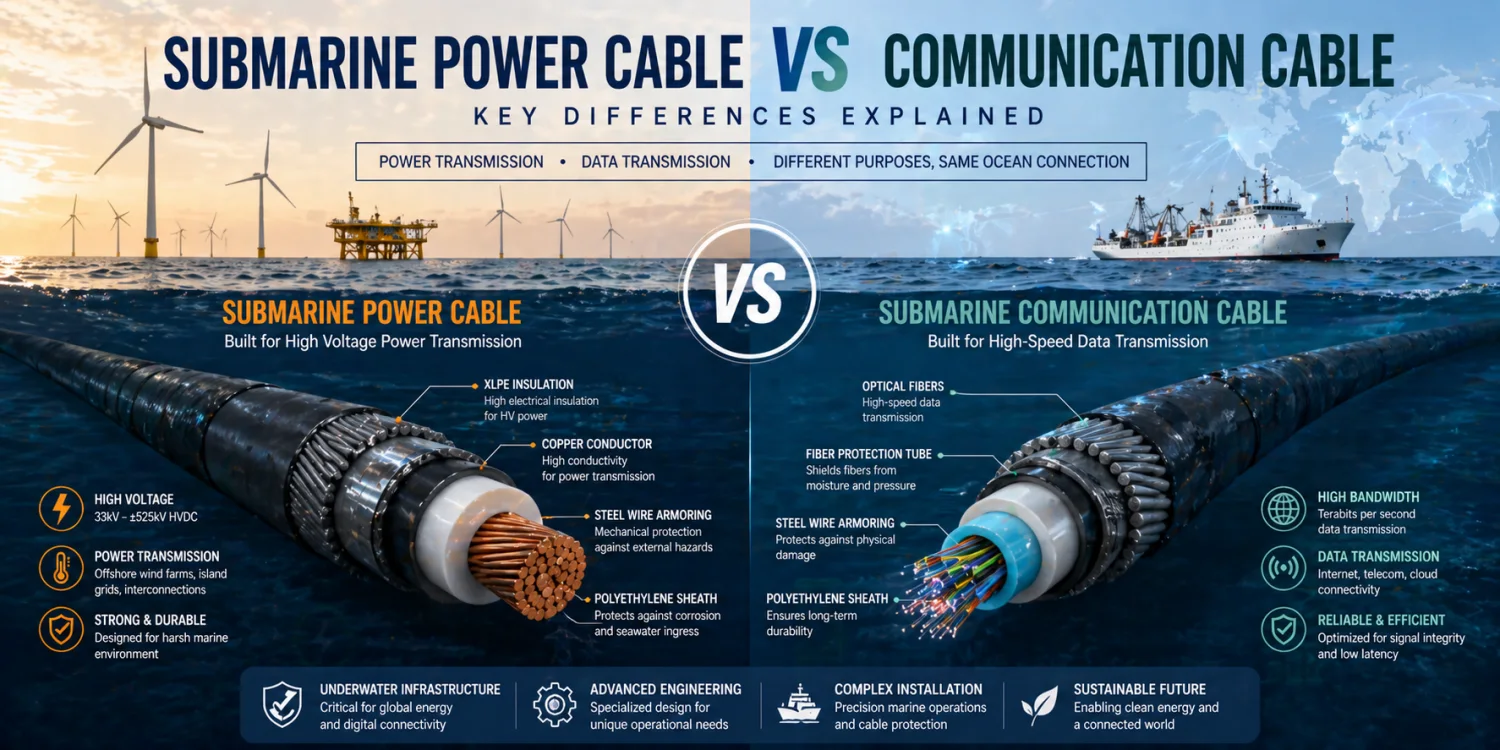
Submarine Power Cable vs Communication Cable: Key Differences Explained
2026-07-06
Modern global infrastructure depends heavily on submarine cables. Whether transmitting electricity between offshore wind farms and mainland grids or carrying internet traffic across continents, submarine cable systems form the invisible backbone of both global energy and communication networks.
Although submarine power cable systems and submarine communications cable systems are both installed underwater, their engineering principles, operating environments, structural designs, and performance requirements are fundamentally different. One is designed for high voltage power transmission under extreme electrical stress, while the other is optimized for ultra-fast data transmission using optical fiber technology.
As offshore renewable energy projects, intercontinental internet infrastructure, and subsea energy interconnections continue expanding, understanding the differences between submarine power cables and communication cables becomes increasingly important for utilities, EPC contractors, telecom operators, and industrial infrastructure developers.
1. What Is a Submarine Cable?
A submarine cable is any cable installed underwater to transmit electrical power or communication signals between offshore and onshore locations or across oceans and seas.
Modern submarine cables are generally divided into two categories:
- Submarine power cable systems
- Submarine communications cable systems
Historically, submarine telegraph cables were the first underwater communication systems developed during the 19th century. These early systems transformed global communications by enabling intercontinental telegraph transmission.
Today, advanced submarine optical cable systems carry nearly all international internet traffic, while submarine power systems support offshore renewable energy integration and long-distance electricity interconnections.
Submarine cable networks now extend across thousands of kilometers, with global submarine cable map systems illustrating dense international subsea infrastructure connecting continents, islands, and offshore facilities.
2. What Is a Submarine Power Cable?
A submarine power cable is specifically designed to transmit electrical energy underwater between two electrical systems.
These cables are widely used in:
- Offshore wind farms
- Island power supply systems
- Cross-border grid interconnections
- Offshore oil and gas platforms
- Subsea renewable energy projects
Unlike communication cables, submarine power cable systems must handle high voltage electrical stress, thermal loading, electromagnetic fields, and significant mechanical forces during installation and operation.
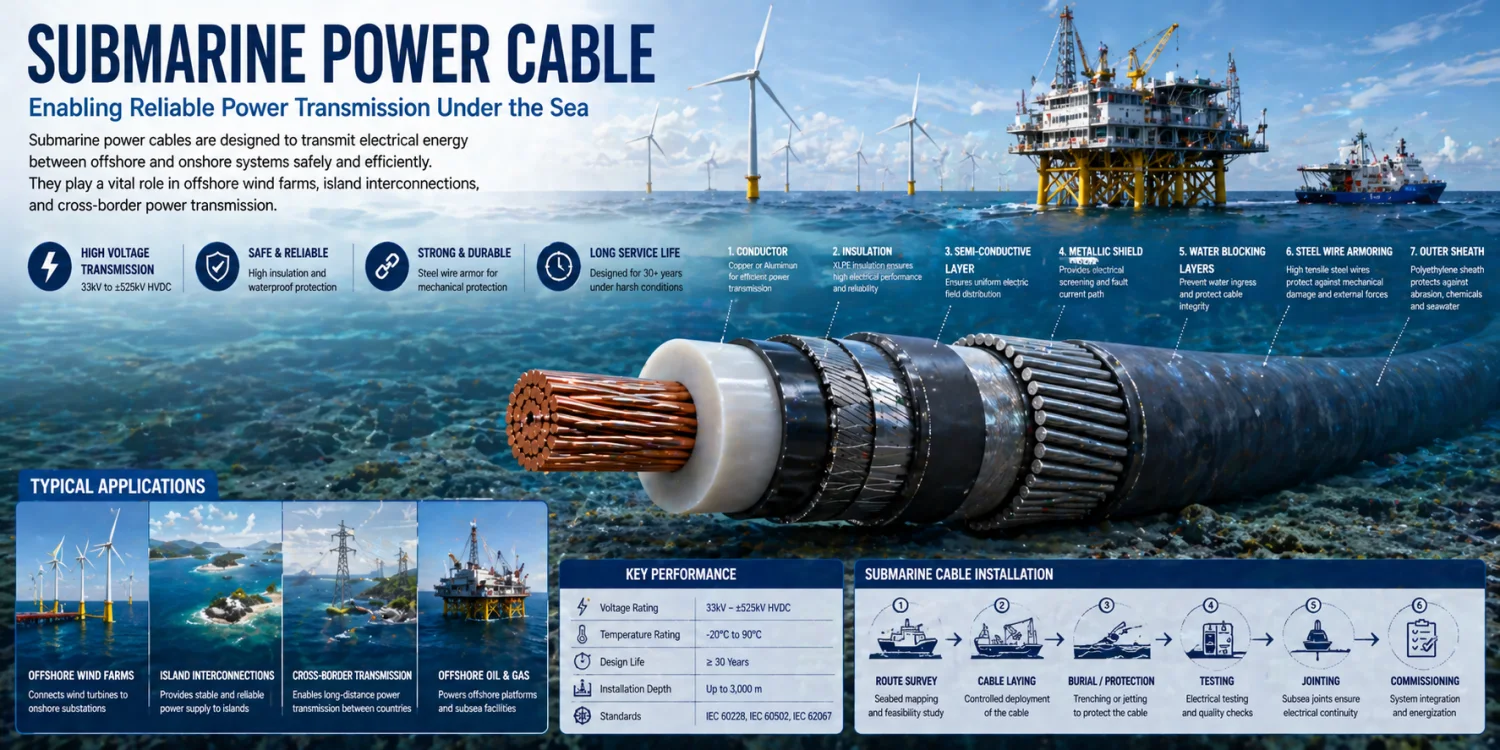
Typical Voltage Levels
Modern submarine power systems commonly operate at:
- 33kV
- 66kV
- 132kV
- 220kV
- ±320kV HVDC systems
High-voltage submarine cables are increasingly critical for offshore wind farms located far from shore because HVDC technology minimizes transmission losses over long distances.
Typical Voltage Levels and Applications of Submarine Power Cable Systems
|
Voltage Level |
Cable Type |
Typical Transmission Distance |
Common Applications |
|
33kV |
MV Submarine Cable |
Short distance |
Offshore wind inter-array systems |
|
66kV |
MV/HV Submarine Cable |
Medium distance |
Offshore renewable energy export |
|
132kV |
HV Submarine Cable |
Medium to long distance |
Island grid interconnection |
|
220kV |
High Voltage Submarine Cable |
Long distance |
Utility transmission projects |
|
±320kV HVDC |
HVDC Submarine Cable |
Very long distance |
Cross-border power transmission |
|
±525kV HVDC |
Ultra HVDC Cable |
Ultra-long distance |
Large offshore energy hubs |
Internal Structure of Submarine Power Cables
A submarine electrical power cable typically includes:
- Copper or aluminum conductor
- XLPE or mass-impregnated insulation
- Metallic shielding
- Water blocking layers
- Steel wire armoring
- Polyethylene outer sheath
Cables armored with steel wire provide strong mechanical protection against:
- Fishing equipment
- Anchors
- Abrasion
- Seabed movement
The overall cable design focuses heavily on electrical insulation and thermal management.
3. What Is a Submarine Communication Cable?
A submarine communications cable is designed to transmit digital information rather than electrical power.
Modern communication cables primarily use optical fiber technology.
These systems support:
- Internet traffic
- International telecommunications
- Cloud computing infrastructure
- Financial trading networks
- Military communications
- Global data center connectivity
Most modern submarine fiber cable systems contain multiple fiber pairs capable of transmitting terabits of data per second across oceans.
Evolution from Telegraph to Optical Fiber
Early submarine telegraph cables transmitted analog electrical communication signals using copper conductors.
Today’s submarine optical cable systems use:
- Fiber optic cores
- Optical repeaters
- Wavelength division multiplexing (WDM)
- Digital signal amplification
Modern submarine communications cable systems achieve extremely high bandwidth with low latency across intercontinental distances.
Structure of Communication Cables
A submarine fiber cable typically contains:
- Optical fiber core
- Gel-filled protection tubes
- Copper power conductor for repeaters
- Water barriers
- Steel wire protection
- Polyethylene sheath
Compared with submarine power cable systems, communication cables are significantly smaller and lighter because they do not carry large electrical loads.
4. Key Differences Between Submarine Power and Communication Cables
Although both systems operate underwater, their engineering requirements differ substantially.
Technical Comparison Between Submarine Power Cables and Communication Cables
|
Parameter |
Submarine Power Cable |
Submarine Communication Cable |
|
Primary Function |
Electrical power transmission |
Data transmission |
|
Transmission Medium |
Copper or aluminum conductor |
Optical fiber |
|
Typical Voltage Level |
33kV – ±320kV HVDC |
Low-voltage optical signaling |
|
Core Technology |
XLPE / HVDC insulation |
Fiber optic communication |
|
Thermal Generation |
High |
Very low |
|
Electromagnetic Field |
Significant |
Negligible |
|
Cable Diameter |
Large |
Small |
|
Steel Wire Armoring |
Heavy-duty |
Moderate |
|
Installation Weight |
Very heavy |
Relatively light |
|
Main Applications |
Offshore wind farms, grid interconnections |
Internet, telecom, cloud infrastructure |
|
Failure Consequence |
Power outage |
Communication disruption |
|
Maintenance Complexity |
Very high |
High |
The design philosophy of submarine power systems prioritizes electrical insulation and heat dissipation, while communication systems prioritize signal integrity and bandwidth capacity.
5. How Submarine Cables Are Installed
Installing submarine cables is one of the most technically demanding marine engineering operations.
Submarine Cable Installation Process
|
Installation Stage |
Main Engineering Activity |
Key Technical Challenge |
|
Route Survey |
Seabed mapping and environmental analysis |
Avoiding unstable seabed areas |
|
Cable Manufacturing |
Cable production and testing |
Maintaining insulation quality |
|
Cable Loading |
Loading onto a cable-laying vessel |
Managing cable bending radius |
|
Cable Laying |
Controlled subsea deployment |
Tension control |
|
Cable Burial |
Trenching and protection |
Seabed hardness |
|
Jointing and Testing |
Electrical and optical testing |
Waterproof sealing |
|
Commissioning |
Final system integration |
System synchronization |
Route Survey and Planning
Before any cable installation operation begins, extensive seabed analysis is conducted using:
- Sonar mapping
- Geological surveys
- Environmental studies
- Ocean current analysis
Engineers must avoid:
- Seismic zones
- Fishing areas
- Ship anchor routes
- Rocky seabeds
Cable Laying Operations
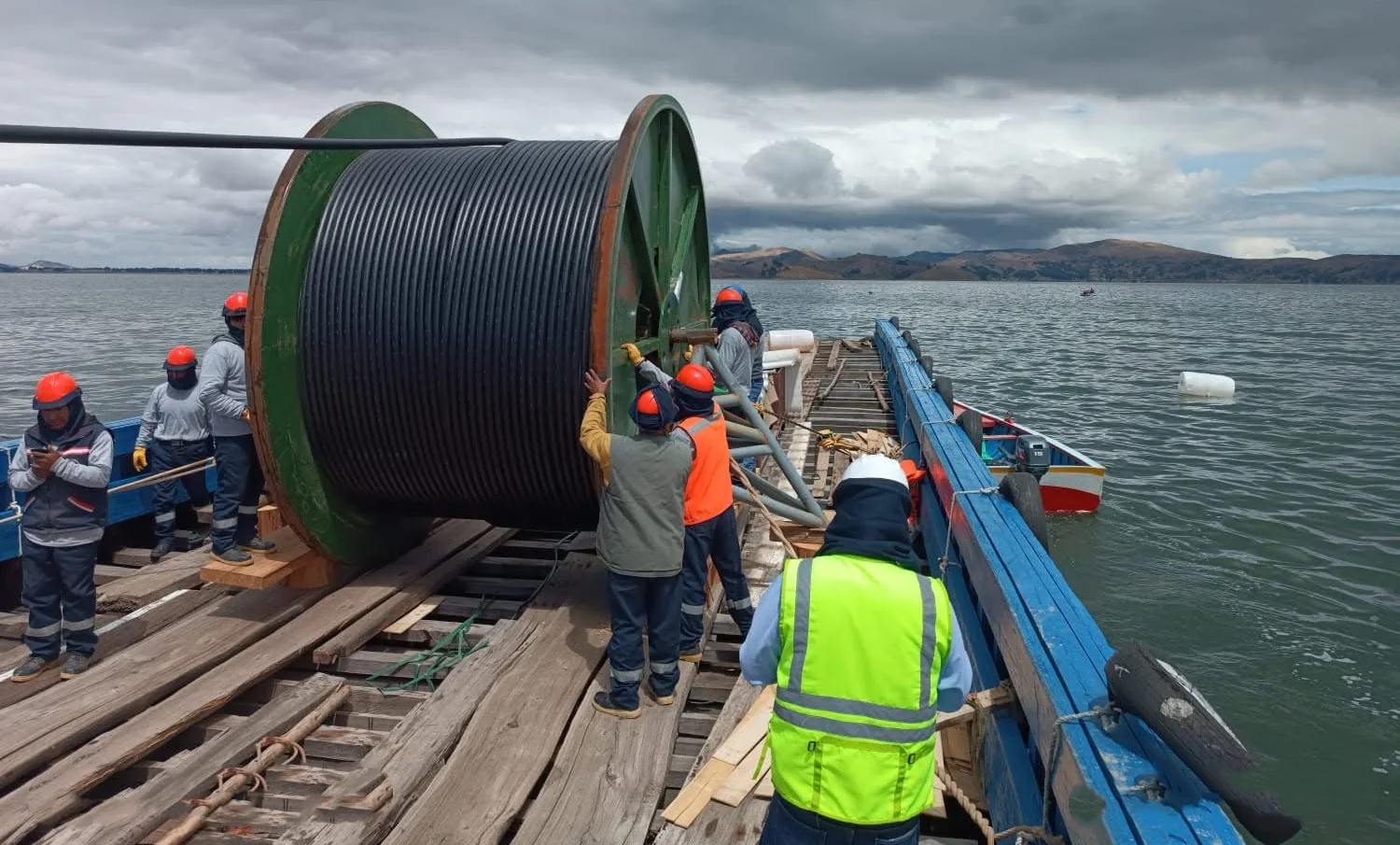
Specialized cable-laying vessels carefully deploy submarine cables onto the seabed.
Power cables often require:
- Burial trenching
- Heavy tension control
- Dynamic positioning systems
Communication cables are generally easier to install because of their lower weight and flexibility.
Burial and Protection
In shallow water regions, submarine cables are often buried to reduce external damage risks.
Protection methods include:
- Jet trenching
- Mechanical plowing
- Rock placement
Deep-sea sections may remain exposed where human activity is minimal.
6. Applications of Submarine Power and Communication Cables
Offshore Wind Farms
Offshore wind farms rely heavily on submarine power cable systems for transmitting generated electricity back to onshore grids.
Modern offshore wind projects increasingly use:
- 66kV inter-array cables
- HVDC export cables
- Dynamic subsea cable systems
The growth of renewable energy is dramatically increasing the demand for submarine power infrastructure.
International Internet Infrastructure
Submarine communications cable systems carry more than 95% of international internet traffic.
These cables connect:
- Continents
- Data centers
- Financial hubs
- Cloud infrastructure
Global digital economies depend on stable subsea communication systems.
Island Electrification
Submarine power systems allow islands to connect with mainland electrical grids, reducing dependence on diesel generation.
Benefits include:
- Lower carbon emissions
- Improved grid reliability
- Reduced energy costs
Offshore Oil and Gas
Subsea power cables provide electrical power to offshore production facilities and subsea equipment.
Communication cables simultaneously support monitoring and operational control systems.
7. Challenges and Risks in Submarine Cable Systems
Submarine cables operate in extremely harsh environments.
Mechanical Damage
Common causes include:
- Fishing trawlers
- Ship anchors
- Seabed landslides
- Earthquakes
Armored cable designs help reduce damage risks.
Thermal Stress in Power Cables
Submarine power cables generate significant heat during operation.
Poor thermal dissipation can reduce cable lifespan and transmission capacity.
Engineers must evaluate:
- Seabed thermal resistivity
- Cable spacing
- Current loading
Common Risks and Protection Solutions for Submarine Cable Systems
|
Risk Factor |
Impact on Cable System |
Most Affected Cable Type |
Common Protection Method |
|
Fishing Trawlers |
Mechanical damage |
Both |
Steel wire armoring |
|
Ship Anchors |
Cable rupture |
Both |
Cable burial and seabed routing |
|
Seabed Movement |
Structural stress |
Power cables |
Flexible cable design |
|
Thermal Overload |
Insulation aging |
Power cables |
Thermal monitoring systems |
|
Water Ingress |
Signal or insulation failure |
Both |
Water-blocking layers |
|
Corrosion |
Armor degradation |
Power cables |
Corrosion-resistant materials |
|
Optical Signal Attenuation |
Data loss |
Communication cables |
Optical repeaters |
|
Earthquakes |
Large-scale cable failure |
Both |
Route optimization and redundancy |
Signal Loss in Communication Cables
Optical signals weaken over long distances.
Submarine optical cable systems, therefore, require repeaters installed periodically along the cable route.
Repair Complexity
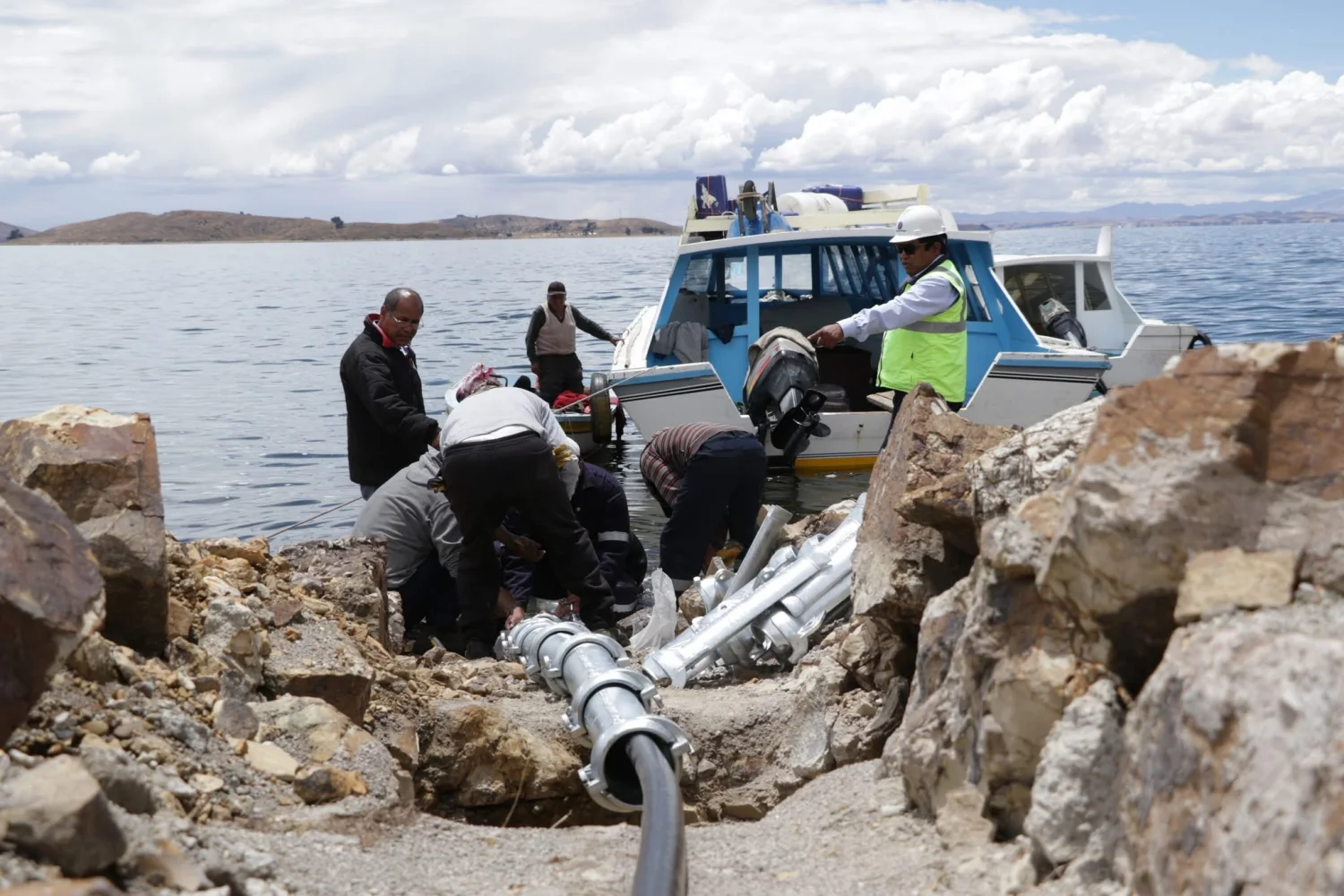
Repairing subsea cables is expensive and time-consuming.
Fault location and marine repair operations may require:
- Specialized vessels
- ROV systems
- Favorable weather conditions
8. Future Trends in Submarine Cable Technology
Global demand for both energy and digital connectivity continues driving submarine cable innovation.
Expansion of Offshore Renewable Energy
Offshore wind farms are rapidly increasing the demand for:
- HVDC submarine power systems
- Dynamic export cables
- Higher voltage transmission technology
Growth of Global Data Traffic
Cloud computing, AI infrastructure, and streaming services continue to expand demand for submarine fiber cable capacity.
Future communication systems will require:
- Higher fiber counts to expand
- Faster optical transmission
- Lower latency networks
Smart Monitoring Systems
Modern submarine cable systems increasingly integrate:
- Real-time thermal monitoring
- Distributed fiber sensing
- Predictive maintenance
- AI-based diagnostics
Environmentally Sustainable Cable Design
Manufacturers are developing more sustainable materials and installation techniques to minimize marine ecosystem impact.
Environmental regulations are becoming increasingly important in subsea infrastructure development.
9. FAQ: Submarine Power Cable vs Communication Cable
1. What is the difference between a submarine power cable and a communication cable?
A submarine power cable is designed to transmit electrical energy between offshore and onshore electrical systems, while a submarine communication cable is designed for data transmission using optical fiber technology. Power cables operate under high voltage conditions and require strong thermal and insulation performance, whereas communication cables focus on bandwidth, signal integrity, and low latency.
2. What are submarine power cables used for?
Submarine power cables are commonly used in offshore wind farms, island grid interconnections, offshore oil and gas platforms, and cross-border power transmission projects. They enable reliable electricity transfer across seas, oceans, and underwater environments.
3. How do submarine communication cables transmit data?
Modern submarine communications cable systems use optical fibers to transmit digital signals as pulses of light. Advanced technologies such as wavelength division multiplexing (WDM) allow submarine optical cable systems to carry massive amounts of internet and telecommunications traffic across continents.
4. Why do submarine cables use steel wire armoring?
Steel wire armoring provides mechanical protection against external damage caused by fishing equipment, ship anchors, seabed abrasion, and underwater movement. Armored submarine cables are especially important in shallow water regions where human activity is more frequent.
5. What voltage levels are used in submarine power cable systems?
Submarine power cable systems commonly operate at voltage levels ranging from 33kV to ±525kV HVDC. Medium-voltage cables are widely used in offshore wind farms, while high-voltage HVDC systems are used for long-distance power transmission and international grid interconnections.
6. How are submarine cables installed underwater?
Submarine cables are installed using specialized cable-laying vessels. The installation process includes seabed surveys, route engineering, controlled cable deployment, trenching or burial operations, cable protection, and final electrical or optical testing before commissioning.
Conclusion
Although submarine power cable systems and submarine communications cable systems both operate underwater, they serve fundamentally different purposes and require very different engineering approaches.
Submarine power cables are designed for high voltage electrical transmission, thermal management, and heavy mechanical protection, particularly in offshore wind farms and grid interconnection projects. In contrast, submarine fiber and optical communication cables focus on ultra-high-speed data transmission across global telecommunications networks.
As renewable energy expansion, digital infrastructure growth, and offshore industrial development continue accelerating worldwide, submarine cable technologies will remain essential components of modern global infrastructure.

Related Articles


Related Products
1590 MCM LAPWING ACSR Conductor Cable
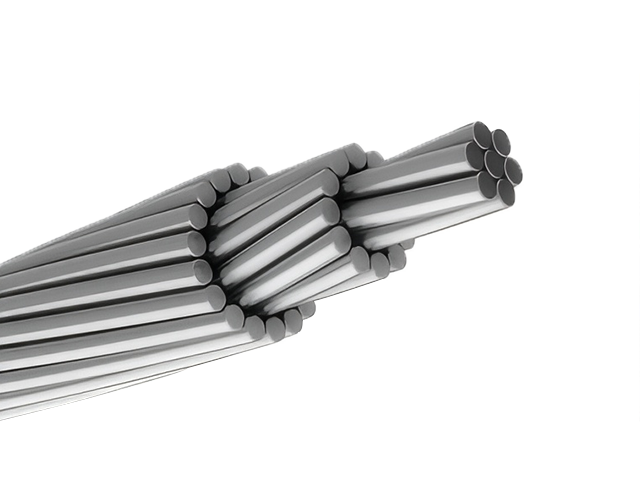
The ACSR 1590 MCM Lapwing 45/7 is a high-efficiency, bare concentric-lay-stranded conductor designed for superior performance in overhead power transmission and distribution systems, meeting ASTM B232 standards. It features a galvanized steel core (Class A or B) with 7 steel strands for robust mechanical strength, surrounded by 45 strands of hard-drawn 1350-H19 aluminum wire for excellent electrical conductivity. Ideal for long-span transmission lines and primary/secondary distribution networks, the Lapwing configuration offers exceptional corrosion resistance and customizable aluminum-to-steel ratios to fulfill specific electrical and mechanical demands, ensuring reliable and durable power delivery. Galvanized steel wires used for the core undergo tensile testing, zinc coating thickness measurement, and corrosion resistance evaluation. Dimensional accuracy and surface condition of all materials are verified before approval.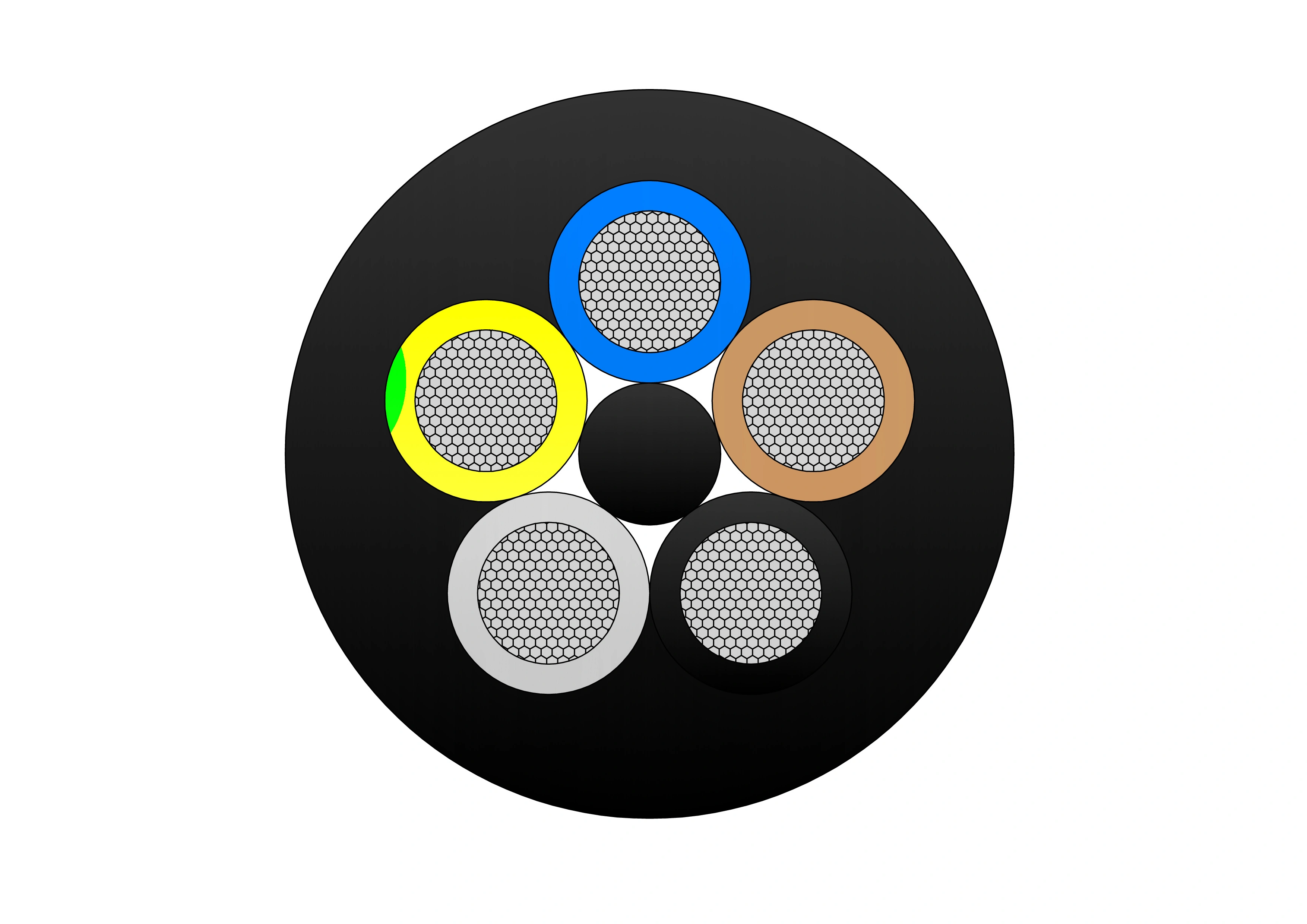
NTSCGECEWOU 3.6/6kV, 6/10kV, 8.7/15kV and 12/20kV Cable
The NTSCGECEWOU 3.6/6kV, 6/10kV, 8.7/15kV and 12/20kV Cable is a flexible, heavy-duty medium-voltage trailing/reeling cable designed for demanding mining and tunnelling operations. It features class 5 finely stranded tinned copper phase conductors for superior flexibility and corrosion resistance, semi-conductive conductor and insulation screens for field control, EPR (ethylene propylene rubber) insulation providing high dielectric strength and 90°C continuous operation, individual copper wire screens serving as earth conductors, control conductors, a monitoring conductor (ÜL), and a robust rubber outer sheath resistant to oil, flame, abrasion, tearing, and mechanical stress. Compliant with DIN VDE 0250, it supports high tensile loads, fast reeling speeds, tight bending radii, and effective EMC shielding across voltage ranges. The NTSCGECEWOU ensures safe, reliable MV power supply to mobile equipment such as shearers, tunnel boring machines, and conveyors in harsh underground and opencast environments, minimising downtime and enhancing operational efficiency.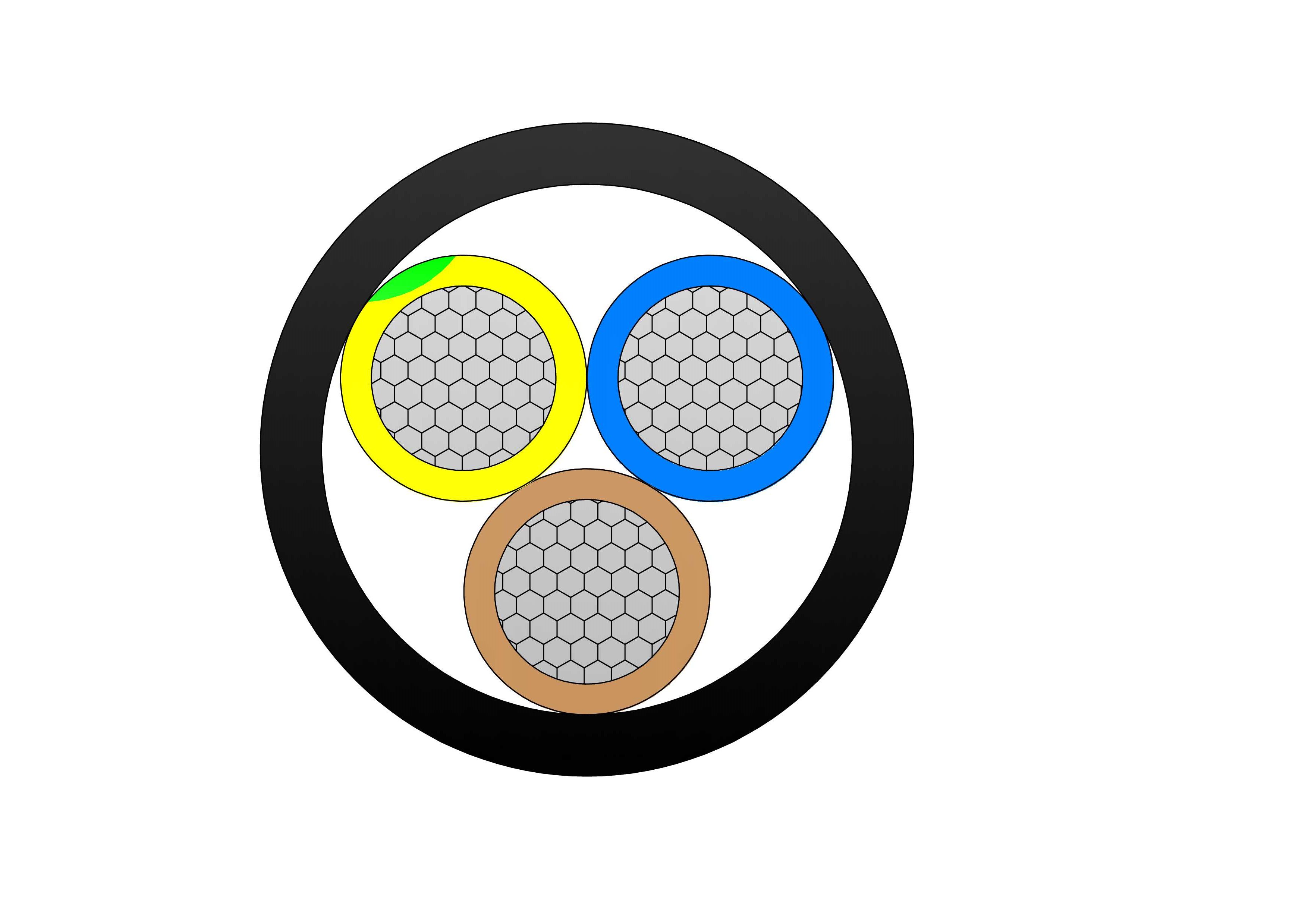
NA2XY 0.6/1 (1.2)kV Low Voltage Power Cable
NA2XY 0.6/1 (1.2)kV is a low-voltage power cable manufactured according to IEC 60502-1, suitable for fixed installation in indoor and outdoor environments, including underground and concrete installations where mechanical stress is minimal. This lightweight cable offers excellent electrical performance, high thermal stability, and superior resistance to moisture, chemicals, and mechanical stress. Suitable for direct burial, ducts, trays, or indoor fixed installations where no additional armour is required. With low dielectric losses and good current-carrying capacity, it minimizes energy waste. Flame-retardant and environmentally robust, the NA2XY 0.6/1 (1.2)kV Low Voltage Power Cable provides long service life and low maintenance costs. Widely used in industrial plants, commercial buildings, residential networks, and infrastructure projects needing reliable, cost-saving low-voltage aluminium cabling solutions worldwide.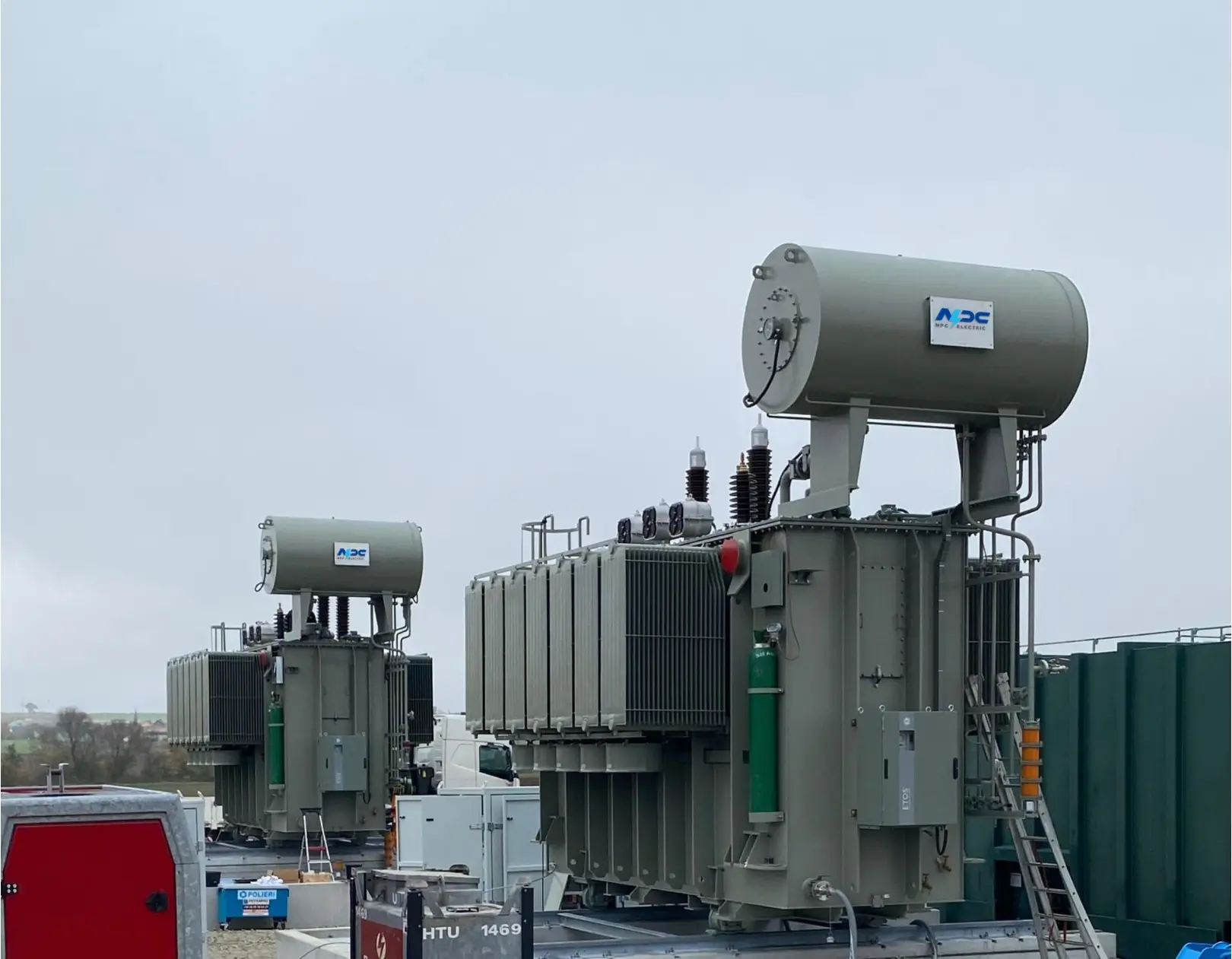
50kV 1000kVA Outdoor Three-Phase Oil-Immersed Power Transformer for Distribution
The 50kV 1000kVA Outdoor Three-Phase Oil-Immersed Power Transformer for Distribution is engineered to deliver high efficiency, stable voltage regulation, and long-term service reliability in medium-voltage distribution networks. Designed for outdoor installation, the transformer features a robust oil-immersed cooling system, high-grade silicon steel core, and pure copper windings to ensure excellent thermal performance and low-loss characteristics. Its rugged, weatherproof construction withstands harsh climates, ensuring continuous operation in industrial plants, utility grids, mining sites, and renewable energy distribution stations. With optimized insulation, superior dielectric strength, and advanced protection configurations, the transformer offers enhanced safety and reduced maintenance. This unit is ideal for step-down power distribution scenarios requiring consistent performance and dependable energy delivery.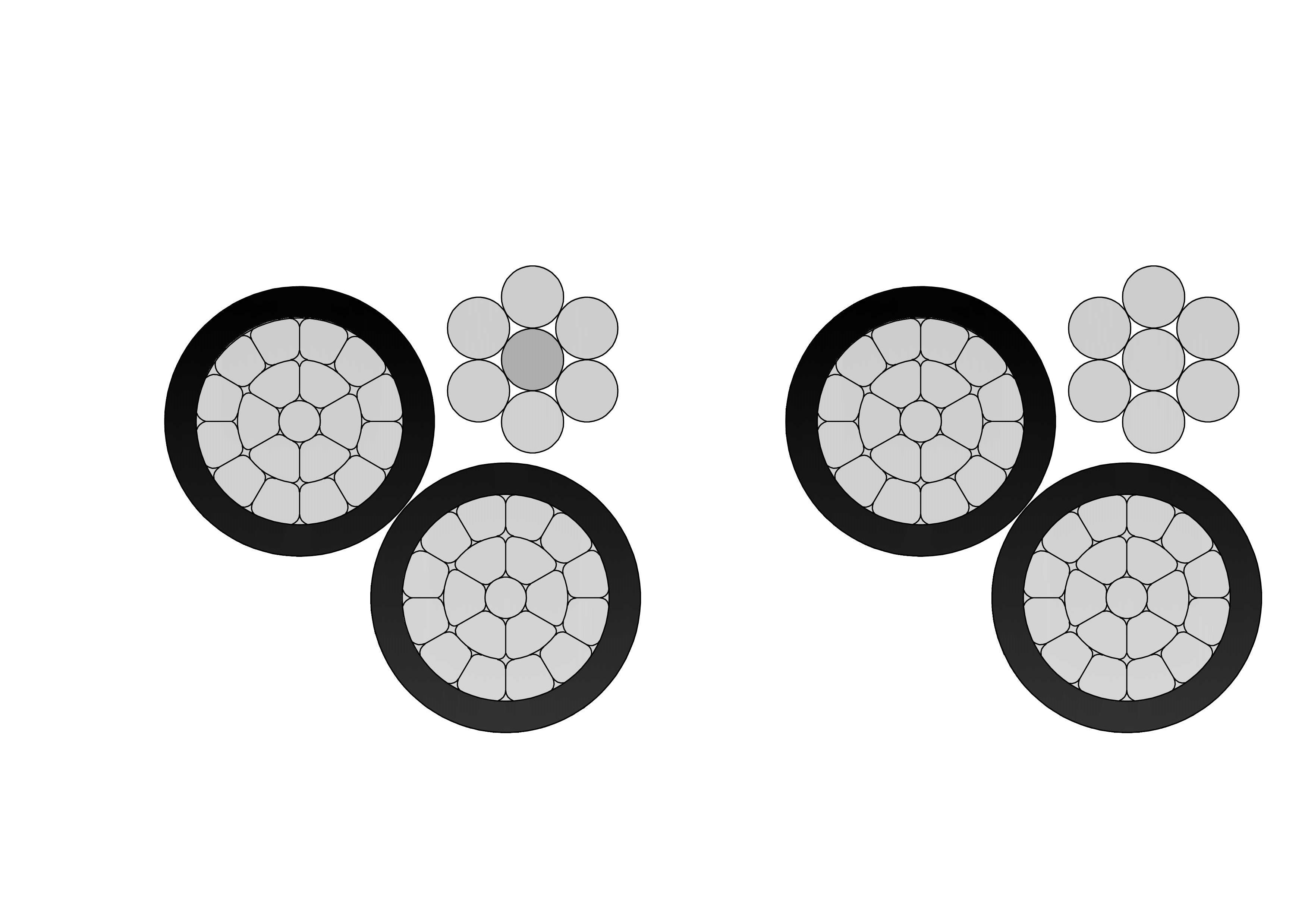
336.4 Nannynose Aluminum Conductor Triplex Overhead Service Drop Cable
Built for high-demand overhead applications, the 336.4 Nannynose Aluminum Conductor Triplex Overhead Service Drop Cable provides robust power transmission. It features three 336.4 MCM (19/w) 1350-H19 aluminum conductors: two black XLPE-insulated phases for superior dielectric and environmental protection, cabled around a bare 336.4 MCM (19/w) AAC neutral messenger for excellent tensile strength and sag control. Rated 600V with 90°C conductor temperature and ampacity up to 420A (XLPE), this cable complies with ASTM B-230/B-231 and ICEA S-76-474. Lightweight, corrosion-resistant, and cost-effective, the 336.4 Nannynose ensures dependable performance in large secondary distribution and service drop installations.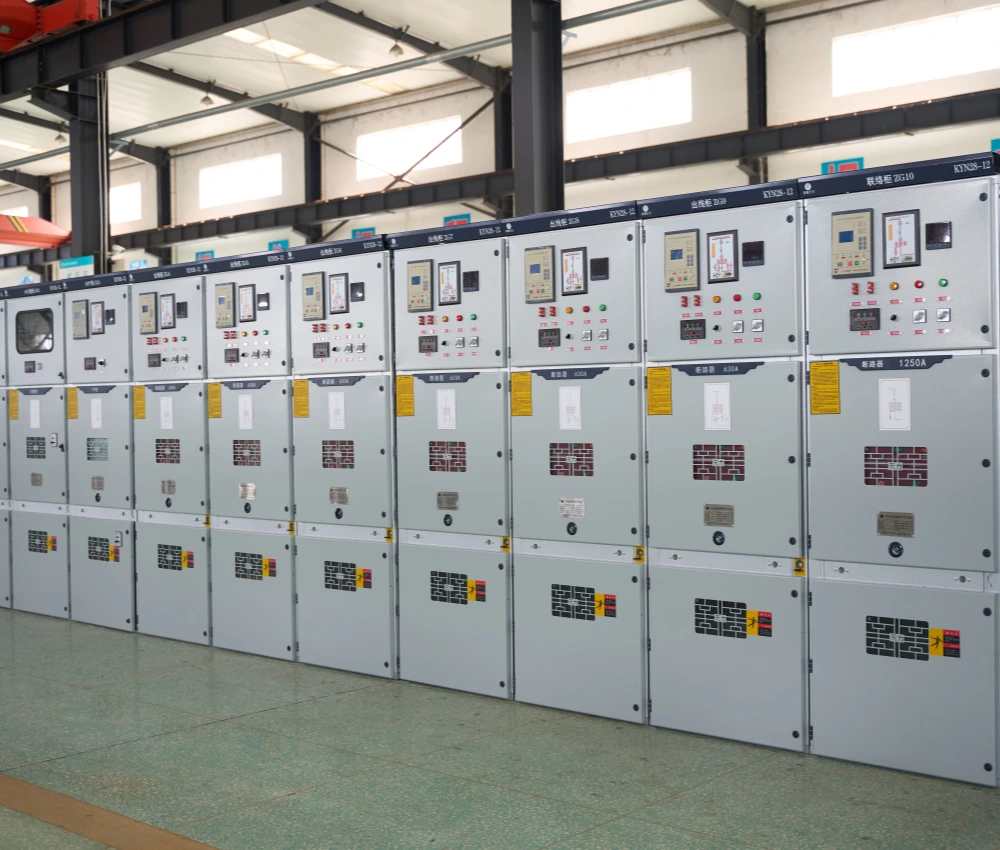
High Voltage Switchgear
NPC Electric high voltage switchgear delivers exceptional reliability and safety for modern electrical networks. Built with cutting-edge insulation technology and intelligent monitoring systems, this HV switchgear ensures seamless power distribution while protecting critical infrastructure from faults and overloads. Ideal for utilities, industrial plants, and renewable energy projects, it combines compact design with robust construction to minimize downtime and maximize operational efficiency in demanding environments.
11/0.4kV Dry Type Transformer | Indoor Power Transformer
Discover the reliable 11/0.4kV Dry Type Transformer | Indoor Power Transformer, a safe, oil-free solution designed for efficient medium-to-low voltage conversion in indoor electrical installations. This three-phase dry-type transformer (typically cast resin or vacuum pressure impregnated) features premium low-loss silicon steel cores and high-conductivity copper windings, achieving superior energy efficiency often exceeding 98% and complying with IEC 60076-11 standards. The epoxy resin encapsulation provides excellent moisture resistance, fire self-extinguishing properties (F1 class), minimal partial discharge (<10pC), and robust short-circuit withstand capability. With natural air (AN) cooling and optional forced air (AF) upgrades, it offers low noise operation, Class F/H insulation, and maintenance-free performance in demanding environments. Ideal for step-down from 11kV primary (with ±2×2.5% or wider off-circuit taps) to 0.4kV secondary (Dyn11 vector group standard), this indoor power transformer supports capacities from 100kVA to several MVA, delivering stable, eco-friendly power distribution without oil-related risks.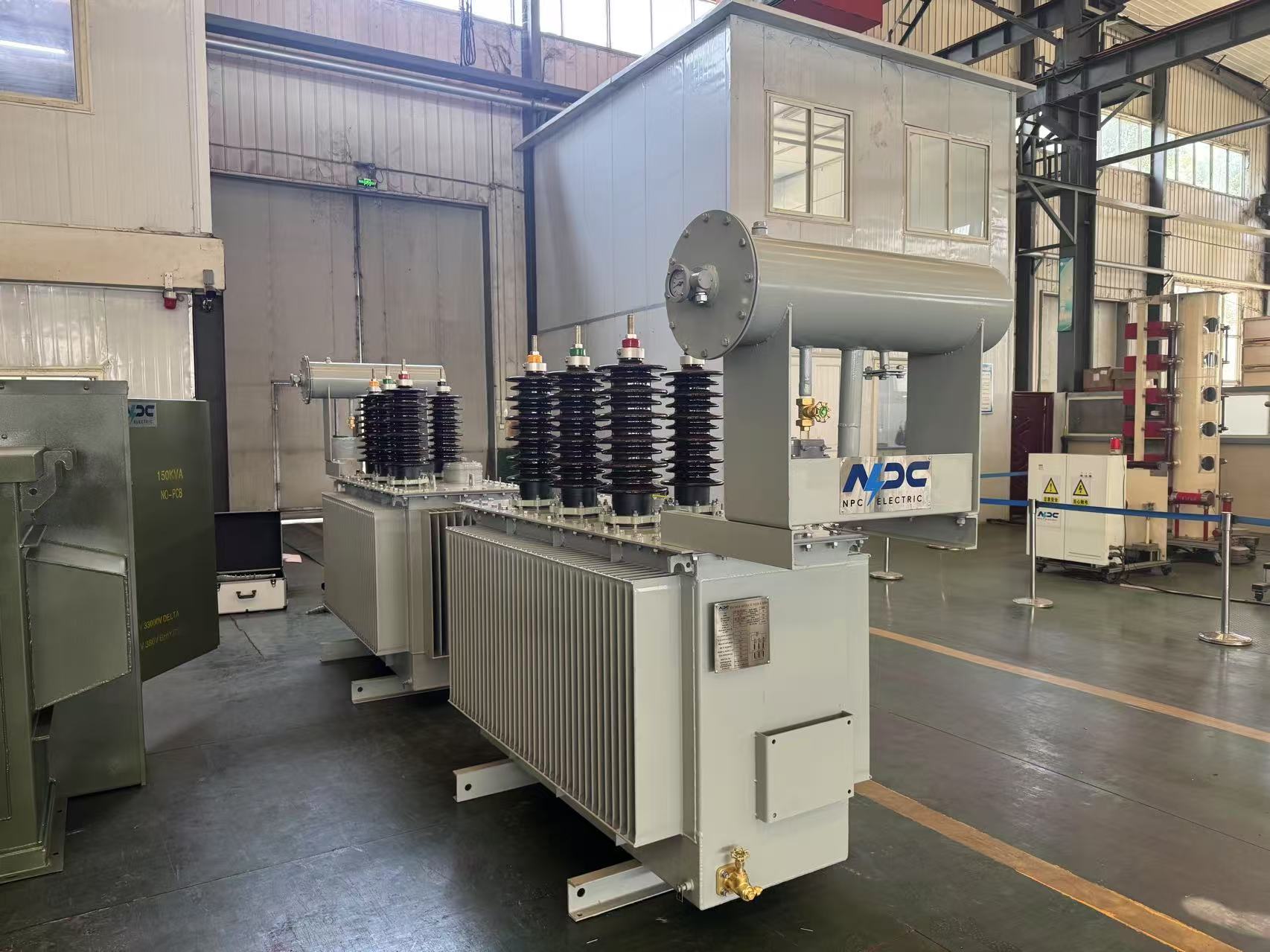
33kV 600A Neutral Zig-zag Grounding Reactor Transformer
The 33kV 600A Neutral Zig-zag Grounding Reactor Transformer is a high-performance grounding solution designed to meet the strict requirements of IEC 60076-1, IEC 60076-5, IEC 60076-20, and GB/T 1094.6 standards, with oil quality tested according to ASTM D6871. This grounding transformer is engineered to provide effective neutral grounding, enhanced system stability, and fault current limitation in medium- and high-voltage networks. With a primary voltage of 33kV and 11432.0kVA rating, the transformer supports 100A power rating for 10 seconds, making it ideal for system grounding applications in substations, industrial facilities, and renewable energy projects. The ONAN cooling method provides efficient heat dissipation for continuous operation, while the use of high-grade mineral insulating oil ensures long-term performance and compliance with international safety standards.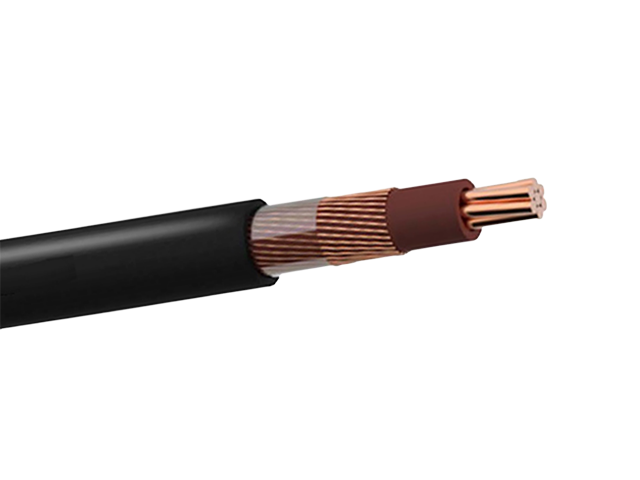
0.6/1kV Aluminum LV Concentric Service Cable with Pilot Communication Cores
The 0.6/1kV Aluminum LV Concentric Service Cable with Pilot Communication Cores is a smart-ready low-voltage cable designed for modern house service connections and secondary distribution. It features compact stranded AA8000 aluminum alloy phase conductors, XLPE insulation, a concentrically arranged aluminum alloy neutral, and two insulated pilot communication cores for remote metering, load management, or fault signaling. The entire assembly is protected by a durable black polyethylene sheath. This design combines excellent electrical performance, high mechanical strength, and communication functionality in one cable, reducing installation costs and enabling smart grid applications. Rated 0.6/1kV, the cable offers superior flexibility and corrosion resistance. It undergoes rigorous quality testing from raw materials to finished product, ensuring consistent conductivity, reliable pilot signal transmission, and long-term durability in aerial or underground environments.
2/0 Triton Aluminum Conductor Triplex Overhead Service Drop Cable
The 2/0 Triton Aluminum Conductor Triplex Overhead Service Drop Cable is engineered for reliable overhead electrical service from utility distribution lines to residential and commercial buildings. The cable consists of two insulated aluminum phase conductors twisted around a bare aluminum neutral messenger, providing balanced electrical performance and strong mechanical support. Manufactured from high-purity aluminum and weather-resistant insulation compounds, the 2/0 Triton Aluminum Conductor Triplex Overhead Service Drop Cable delivers low electrical resistance, excellent corrosion resistance, and long-term durability in outdoor environments. Its lightweight construction simplifies handling and installation while maintaining the tensile strength required for aerial service. The cable is designed to perform under UV exposure, wind loading, and temperature variation. Comprehensive quality control and systematic testing are applied throughout production to ensure compliance with utility standards and dependable field performance.
Raven ACSR Conductor Cable
The Raven ACSR Conductor Cable is a reliable overhead conductor designed for efficient power distribution. Named "Raven" for its 1/0 AWG size with 6/1 stranding (6 aluminum wires around 1 steel core), it combines lightweight aluminum for high conductivity with a galvanized steel core for tensile strength. Compliant with ASTM B230, B232, and ICEA standards, this cable offers a breaking load of approximately 3,550 lbs and a current rating up to 242 amps at 75°C in overhead applications. The aluminum 1350-H19 provides excellent corrosion resistance and low electrical resistance (0.1662 Ω/1000ft at 20°C), while the steel enhances sag control over spans up to 250m. Suitable for voltages up to 138kV in distribution lines, the Raven ACSR Conductor Cable minimizes line losses and withstands moderate weather loads, including wind and ice. Its economical design is ideal for utility upgrades, rural electrification, and grid extensions, ensuring dependable power delivery with minimal maintenance in overhead transmission and distribution systems worldwide.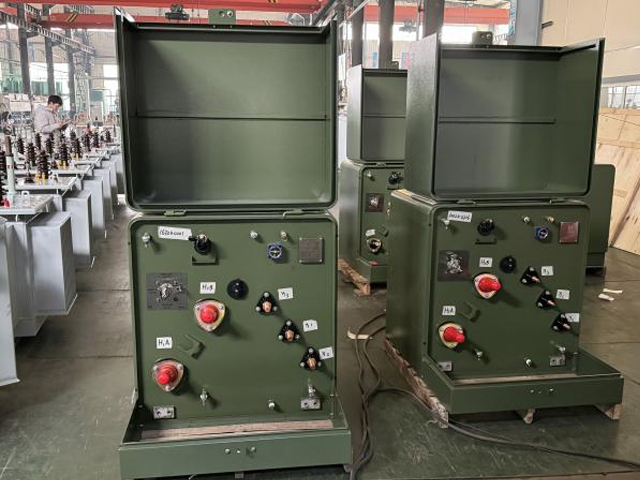
100kVA Conventional Type Single Phase Pole Mounted Transformer
NPC ELECTRIC has been specialized in manufacturing 100kVA Single Phase pole Mounted transformer for more than 20 years, which complies with international standards such as ANSI/IEEE C57, IEC60076 and other standards. Its main function is to convert high voltage electricity (such as 11kV, 13.8kV, etc.) into low voltage electricity (such as 120V/240V), providing stable and reliable power supply to end users. It is suitable for residential, commercial, agricultural and small industrial loads. Standard features include mineral oil insulation (ONAN cooling), aluminum or copper windings, primary voltages 2.4kV–34.5kV grounded wye or delta (common: 7200/12470GrdY, 7620/13200GrdY, 12470GrdY/7200, 24940GrdY/14400, 34500GrdY/19920), secondary 120/240V or 240/120V split-phase (options for 277V or custom), BIL ratings 95–150kV HV / 30kV LV, impedance typically 2.0–4.5%, ±2×2.5% or 5-position tap changer, conventional or CSP (completely self-protected) configurations with internal fuses, lightning arresters, weak-link protection, pressure relief valve, oil sight gauge, and ANSI 70 gray tank finish. Efficiency typically reaches 99.25–99.29% at 50% load per DOE levels (with 2029 amendments targeting further reductions in losses for units >100 kVA), with low sound levels and corrosion-resistant hardware for extended outdoor service.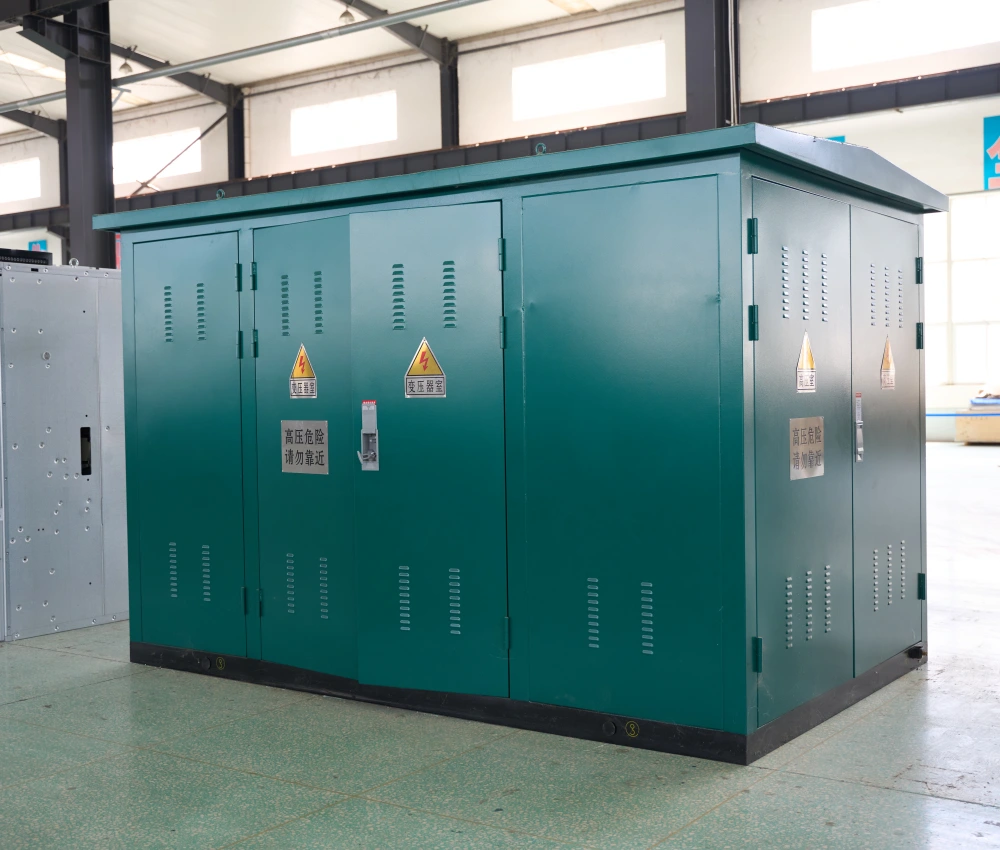
Prefabricated Compact Substation
The Prefabricated Compact Substation is an integrated medium-voltage and low-voltage power distribution solution engineered for modern urban infrastructure, renewable energy systems, industrial plants, and commercial facilities. The equipment combines medium-voltage switchgear, distribution transformer, and low-voltage distribution panel into a compact steel enclosure, significantly reducing installation time and site construction costs while improving operational reliability.Designed for outdoor operation under demanding environmental conditions, the compact substation features corrosion-resistant housing, advanced insulation systems, and optimized ventilation structures to ensure stable long-term performance. Its modular architecture allows flexible transformer capacities, voltage combinations, and protection configurations to meet different regional grid requirements and project specifications. The unit supports fast deployment, simplified maintenance, and enhanced safety protection, making it an ideal choice for power utilities, solar farms, wind power stations, transportation infrastructure, data centers, and residential developments. With intelligent monitoring options and customizable internal layouts, the prefabricated compact substation provides efficient, safe, and scalable electrical distribution for modern power networks.
Three Phase Cast Resin Dry Type Transformer
The Three Phase Cast Resin Dry Type Transformer is a safe, high-efficiency indoor power transformer series designed for reliable medium-voltage to low-voltage step-down in commercial, institutional, industrial, data center, hospital, school, high-rise, and renewable energy applications. With advanced epoxy cast-resin encapsulation and full high-conductivity copper windings, it completely eliminates oil fire risks, environmental hazards, and routine maintenance while offering excellent dielectric strength, thermal performance, resistance to moisture/dust/chemicals, and very low noise levels — making it the ideal choice for fire-sensitive, noise-restricted, space-constrained, or high-reliability indoor installations. Fully compliant with IEC 60076-11, IEC 60076-1/2/3/5/20, EN 50588-1 (eco-design), IEEE C57.12.01, IEEE C57.12.91, UL 1561 (optional listing), and DOE 2016 efficiency standards.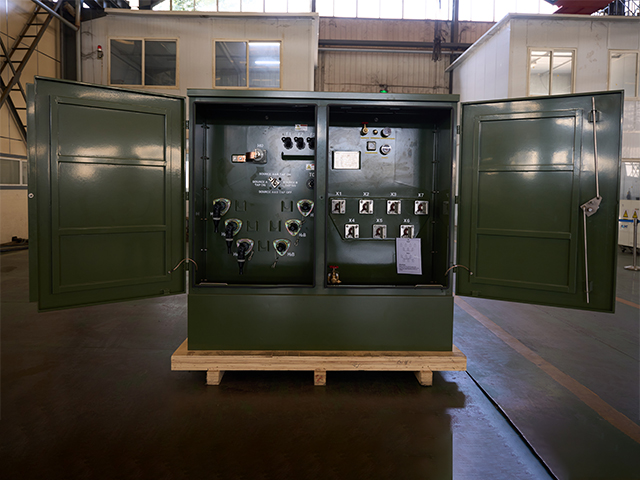
5000kVA Three Phase Pad Mounted Transformer
NPC ELECTRIC's 5000kVA Three Phase Pad Mounted Transformer (5 MVA) is a robust, liquid-immersed compartmental distribution transformer built for high-capacity outdoor pad-mounted installations on concrete foundations. Compliant with updated DOE energy conservation standards (post-2024 amendments, targeting high efficiency levels around 99.68% for 5000 kVA units), ANSI/IEEE C57.12.00, C57.12.34, C57.12.90, and related CSA/IEC norms, this transformer delivers top-tier energy efficiency, minimal no-load and load losses, and exceptional reliability in utility-scale, industrial, and commercial power systems. The tamper-resistant, weatherproof steel enclosure (dead-front or live-front) with NEMA 3R-equivalent protection ensures safety, reduced maintenance, and seamless blending into urban, suburban, or remote environments.Welcome your inquiry
Honesty, Integrity, Frugality, Activeness and Passion