
Complete Guide to Pad-Mounted and Compact Prefabricated Transformers
2026-08-10
1. The Growing Importance of Prefabricated Transformer Solutions
As global demand for electricity continues to rise, utilities, industrial facilities, renewable energy projects, and commercial developments are seeking faster, safer, and more efficient ways to deploy electrical infrastructure. Traditional substations often require extensive civil works, lengthy construction schedules, and significant on-site engineering resources. To address these challenges, prefabricated transformer solutions have become a preferred option in modern power distribution systems.
Among the most widely adopted solutions are Pad-Mounted Prefabricated Transformers and Compact Prefabricated Transformers. These factory-assembled systems integrate transformers, switchgear, protection devices, and auxiliary equipment into a single engineered unit, significantly reducing installation complexity while improving operational reliability.
Today, prefabricated transformer substations are extensively used across urban and suburban developments, industrial parks, renewable energy plants, transportation hubs, data centers, and utility distribution networks. Their modular design enables rapid deployment while maintaining compliance with international standards such as IEC, ANSI, IEEE, and local utility requirements.
Understanding how these systems are designed, manufactured, installed, and maintained is essential for engineers, procurement specialists, utility operators, and project developers involved in electrical infrastructure projects.
2. What Are Pad-Mounted and Compact Prefabricated Transformers?
A prefabricated transformer is a factory-built power distribution unit that combines multiple electrical components within a protective enclosure. Rather than assembling equipment separately at the project site, the complete system is engineered, tested, and verified before shipment.
Pad-Mounted Prefabricated Transformers
Pad-mounted transformers are ground-level distribution transformers housed inside locked, tamper-resistant steel enclosures. They are commonly installed on concrete pads and connected through underground cable systems.
These transformers are particularly suitable for:
- Residential communities
- Commercial buildings
- Shopping centers
- Schools and hospitals
- Data centers
- Utility distribution networks
Their enclosed construction improves public safety while protecting electrical equipment from environmental conditions and unauthorized access.
Compact Prefabricated Transformers
Compact Prefabricated Transformers, often referred to as compact substations or prefabricated substation units, integrate:
- Medium-voltage switchgear
- Distribution transformer
- Low-voltage distribution panel
- Protection and control systems
into a single enclosure.
These systems serve as complete transformer substations and can be deployed rapidly in locations where space constraints, project schedules, and operational efficiency are critical.
Table: Technical Comparison of Pad-Mounted and Compact Prefabricated Transformers
|
Parameter |
Pad-Mounted Prefabricated Transformers |
Compact Prefabricated Transformers |
|
Primary Application |
Residential and commercial distribution |
Industrial, utility and renewable energy projects |
|
Installation Method |
Ground-mounted on concrete pad |
Integrated substation installation |
|
Voltage Range |
5 kV – 35 kV |
11 kV – 36 kV |
|
Transformer Capacity |
50 kVA – 5000 kVA |
100 kVA – 5000 kVA+ |
|
MV Switchgear Included |
Optional |
Standard configuration |
|
LV Distribution Panel |
Limited |
Fully integrated |
|
Footprint |
Small |
Medium |
|
Underground Cable Compatibility |
Excellent |
Excellent |
|
Public Safety Level |
High |
Very High |
|
Factory Pre-Assembly Rate |
70–90% |
90–100% |
|
Typical Service Life |
25–35 Years |
25–40 Years |
|
Common Standards |
IEEE C57.12.34, ANSI, IEC |
IEC 62271, IEC 60076 |
Engineering Insight
For projects requiring a complete medium-voltage to low-voltage transformation and distribution solution, compact prefabricated transformer substations often provide greater functionality. Pad-mounted transformers remain the preferred choice where underground distribution systems and minimal footprint are the primary considerations.
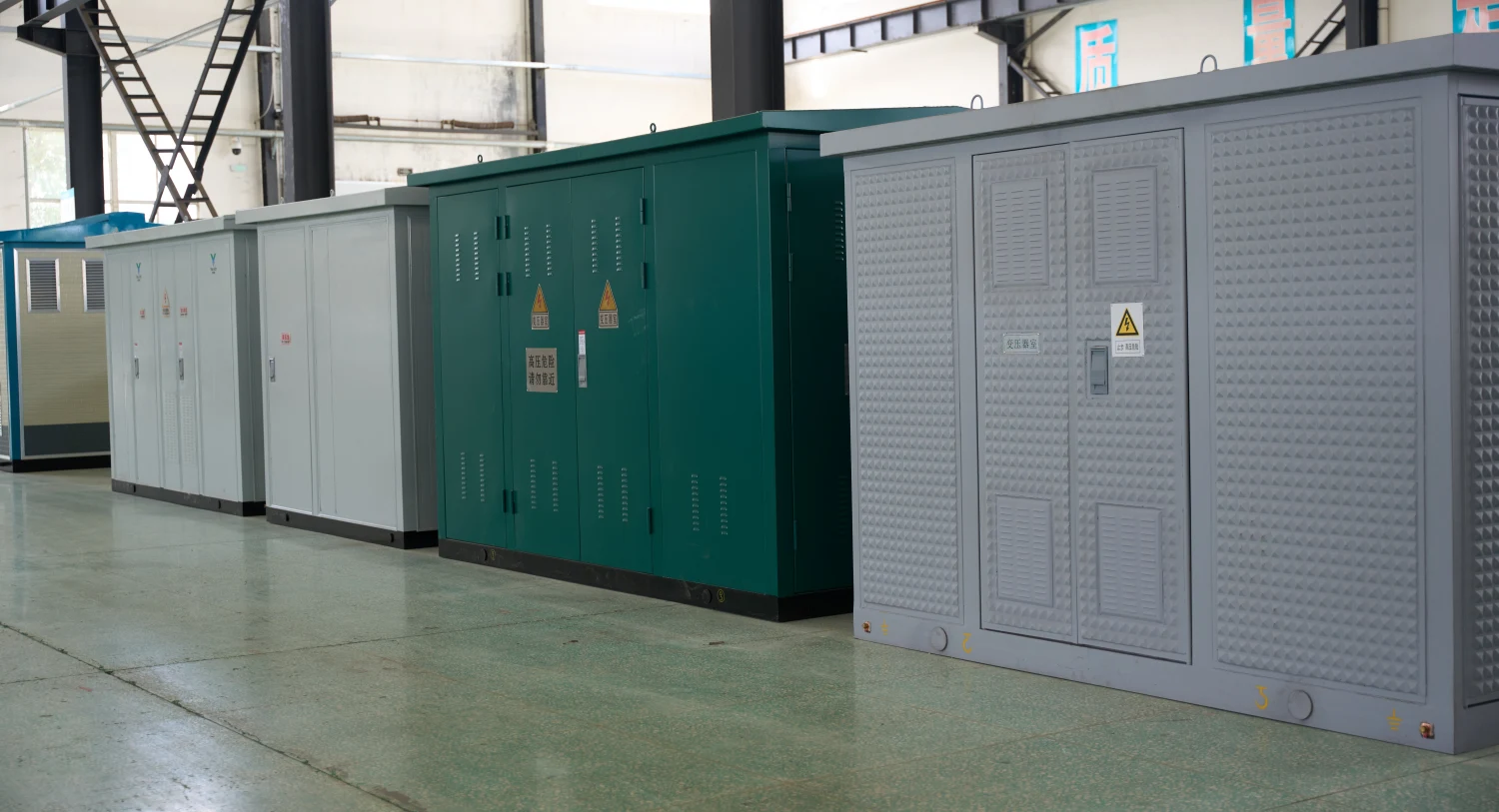
3. Internal Components and Engineering Design
The performance of any prefabricated transformer depends largely on its internal components and engineering architecture. A well-designed system must balance safety, efficiency, maintainability, and long-term reliability.
Medium-Voltage Compartment
The high-voltage section receives incoming power from the utility grid. Typical voltage levels include:
- 11 kV
- 13.8 kV
- 22 kV
- 33 kV
This compartment contains:
- Load break switches
- Vacuum circuit breakers
- Ring main units (RMUs)
- Current transformers
- Voltage transformers
- Surge arresters
These devices provide switching, isolation, fault protection, and network flexibility.
Transformer Section
The transformer serves as the core energy conversion component.
Common transformer types include:
- Oil-immersed transformers
- Mineral oil transformers
- FR3 natural ester transformers
- Dry-type transformers
The transformer converts medium-voltage electricity into low-voltage power suitable for end users.
Low-Voltage Distribution Section
This compartment distributes electricity to downstream loads and includes:
- Main circuit breakers
- Protection relays
- Metering equipment
- Busbar systems
- Power quality monitoring devices
Advanced systems may also integrate remote communication capabilities for smart grid applications.
Structural Enclosure
The enclosure provides mechanical protection and environmental resistance.
Design considerations include:
- Corrosion protection
- Ventilation systems
- IP-rated sealing
- Arc fault containment
- Thermal management
Proper enclosure design significantly influences equipment lifespan and operational reliability.
Table: Key Internal Components and Their Functions
|
Component |
Primary Function |
Engineering Importance |
|
Load Break Switch |
Switching and isolation of MV circuits |
Improves operational flexibility |
|
Vacuum Circuit Breaker |
Fault interruption and protection |
Enhances system reliability |
|
Ring Main Unit (RMU) |
Network distribution and sectionalizing |
Supports ring network operation |
|
Surge Arrester |
Protection against lightning and switching surges |
Prevents insulation failure |
|
Distribution Transformer |
Voltage conversion |
Core power transformation equipment |
|
LV Switchboard |
Distribution of low-voltage power |
Supplies downstream loads |
|
Protection Relay |
Fault detection and coordination |
Minimizes outage impact |
|
Current Transformer (CT) |
Current measurement and protection input |
Enables accurate protection settings |
|
Voltage Transformer (VT) |
Voltage measurement and monitoring |
Supports metering and protection |
|
SCADA Communication Unit |
Remote monitoring and control |
Enables smart grid integration |
|
Grounding System |
Personnel and equipment safety |
Reduces fault hazards |
|
Ventilation System |
Heat dissipation |
Extends equipment life |
Engineering Insight
Modern prefabricated transformer substations increasingly integrate digital monitoring devices and intelligent protection systems. These components allow operators to implement predictive maintenance strategies and improve overall grid visibility.
4. Applications in Modern Power Distribution Systems
The rapid growth of urbanization and electrification has increased the demand for compact, scalable, and reliable power infrastructure.
Prefabricated transformer substations have become essential components of modern power distribution systems because they support diverse applications while minimizing installation complexity.
Urban Infrastructure
Cities require highly reliable electrical systems within limited physical space.
Compact substations are frequently installed in:
- Residential developments
- High-rise buildings
- Commercial districts
- Transportation facilities
Their compact footprint allows planners to maximize valuable land use while ensuring reliable power delivery.
Industrial Facilities
Manufacturing plants often require dedicated distribution systems capable of supporting large motor loads, automation equipment, and critical production processes.
Prefabricated transformer solutions help industrial operators:
- Reduce construction time
- Improve power reliability
- Simplify future expansion
Renewable Energy Projects
Solar and wind farms increasingly utilize Compact Prefabricated Transformers to connect renewable generation assets to utility grids.
Benefits include:
- Faster commissioning
- Reduced engineering costs
- Standardized installation procedures
- Improved project scalability
Data Centers
Data centers demand uninterrupted power availability.
Prefabricated transformer systems support mission-critical environments by offering:
- High reliability
- Redundant configurations
- Integrated protection systems
- Remote monitoring capabilities
5. Pad Mounted Transformers vs. Pole Mounted Transformers
When designing distribution networks, engineers frequently compare pad-mounted transformers and pole-mounted transformers.
Although both serve similar electrical functions, their deployment strategies differ significantly.
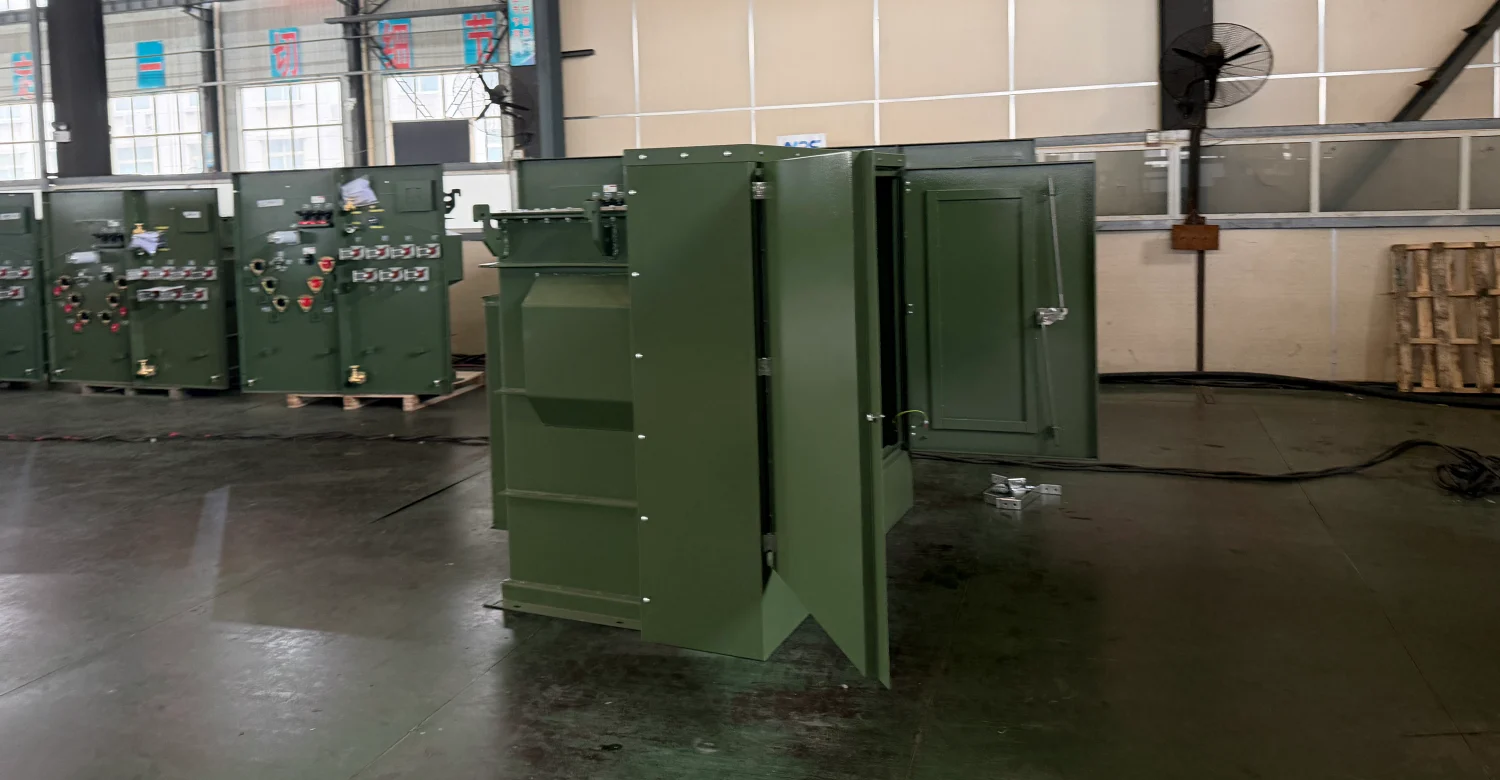
Pad Mounted Transformers
Advantages include:
- Enhanced public safety
- Underground cable compatibility
- Improved aesthetics
- Better environmental protection
- Reduced exposure to storm damage
These characteristics make them particularly suitable for urban and suburban developments.
Pole Mounted Transformers
Pole-mounted transformers remain widely used in rural and overhead distribution systems.
Advantages include:
- Lower installation costs
- Easier integration with overhead lines
- Simplified replacement procedures
However, they may be more vulnerable to severe weather conditions and external impacts.
Selection Criteria
Engineers typically evaluate:
- Population density
- Utility standards
- Environmental conditions
- Project budget
- Maintenance accessibility
- Network expansion requirements
The final decision should align with long-term operational objectives rather than solely initial capital expenditure.
6. Installation and Maintenance Best Practices
Proper installation and maintenance are fundamental to maximizing transformer service life and ensuring safe operation.
Installation Considerations
Before installation, engineers should conduct:
- Site surveys
- Load assessments
- Soil investigations
- Grounding studies
- Cable routing evaluations
Concrete foundations must be designed to support equipment weight while maintaining proper drainage.
Additional installation requirements include:
- Correct grounding systems
- Adequate ventilation clearance
- Cable termination verification
- Protection coordination testing
Factory-tested equipment can significantly reduce field commissioning risks.
Maintenance Strategies
Effective installation and maintenance programs focus on preventive rather than reactive approaches.
Routine inspections should include:
- Visual examinations
- Oil condition analysis
- Thermal imaging inspections
- Protection relay testing
- Grounding resistance measurements
Predictive maintenance technologies now allow operators to identify potential failures before they affect service continuity.
Remote monitoring systems can continuously track:
- Temperature
- Load conditions
- Moisture levels
- Partial discharge activity
- Voltage quality
These capabilities improve asset management and reduce operational costs.
Table: Recommended Inspection and Maintenance Schedule
|
Inspection Item |
Monthly |
Quarterly |
Annually |
Purpose |
|
Visual Inspection |
✓ |
✓ |
✓ |
Detect physical damage and corrosion |
|
Transformer Oil Level Check |
✓ |
✓ |
✓ |
Ensure proper cooling performance |
|
Oil Quality Analysis |
— |
— |
✓ |
Assess insulation condition |
|
Infrared Thermal Imaging |
— |
✓ |
✓ |
Identify hot spots and loose connections |
|
Grounding Resistance Test |
— |
— |
✓ |
Verify grounding effectiveness |
|
Protection Relay Testing |
— |
✓ |
✓ |
Ensure fault-clearing capability |
|
Cable Termination Inspection |
— |
✓ |
✓ |
Prevent connection failures |
|
SCADA Communication Check |
✓ |
✓ |
✓ |
Maintain remote monitoring functions |
|
Surge Arrester Inspection |
— |
✓ |
✓ |
Verify overvoltage protection |
|
Transformer Load Analysis |
✓ |
✓ |
✓ |
Avoid overload conditions |
|
Partial Discharge Monitoring |
— |
— |
✓ |
Detect insulation deterioration |
|
Enclosure Corrosion Assessment |
— |
✓ |
✓ |
Preserve structural integrity |
Engineering Insight
A structured maintenance program can extend transformer service life by more than 30% while significantly reducing unplanned outages. Utilities increasingly combine periodic inspections with online monitoring systems to optimize asset performance and lifecycle management.
7. Reliability, Safety, and Future Grid Requirements
As power systems become increasingly complex, reliability and safety requirements continue to evolve.
Modern distribution networks must support:
- Distributed energy resources
- Electric vehicle charging infrastructure
- Smart city applications
- Renewable integration
- Energy storage systems
Compact Prefabricated Transformers are particularly well suited for these challenges because they offer standardized, modular architectures that can be upgraded as network demands change.
Safety features commonly include:
- Internal arc protection
- Interlocked switching systems
- Fault isolation mechanisms
- Tamper-resistant enclosures
- Advanced grounding systems
The combination of engineering standardization and factory quality control contributes significantly to long-term operational performance.
For utility operators, reducing outage frequency and improving restoration speed are increasingly important performance metrics. Prefabricated transformer solutions support these goals through enhanced equipment reliability and simplified field servicing.
8. Choosing the Right Prefabricated Transformer Solution
The transition toward smarter, more resilient electrical infrastructure has accelerated the adoption of prefabricated transformer technologies worldwide. Whether deployed as Pad-Mounted Prefabricated Transformers in residential communities or as Compact Prefabricated Transformers in industrial and utility applications, these systems provide a practical balance of reliability, safety, efficiency, and scalability.
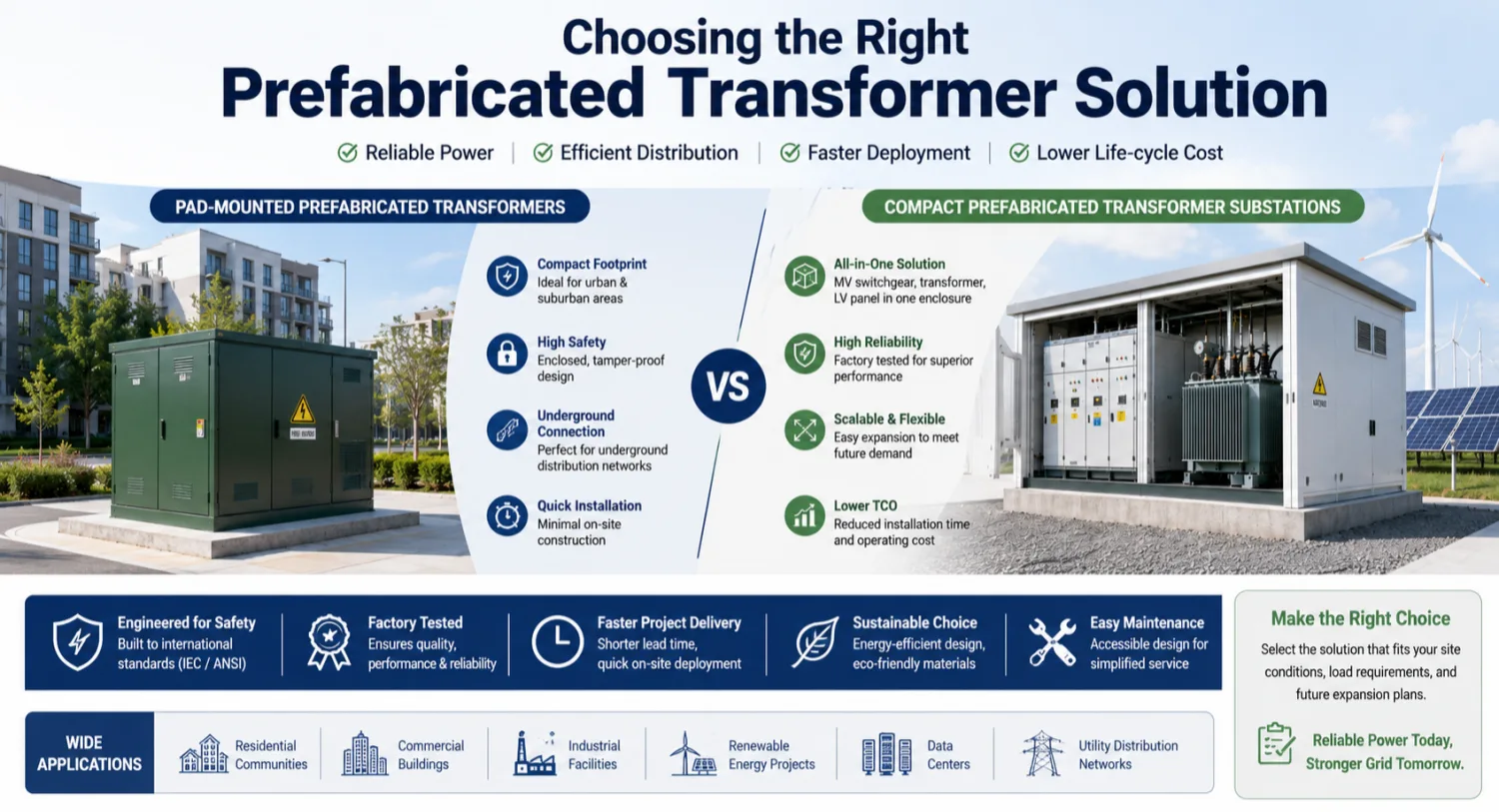
Their integrated design streamlines project execution, reduces installation time, and improves long-term operational performance. By combining high voltage switching equipment, transformers, protection systems, and low-voltage distribution components within a factory-tested enclosure, prefabricated transformer substations help organizations achieve dependable power delivery with lower lifecycle costs.
For utilities, EPC contractors, renewable energy developers, and industrial operators, selecting the appropriate solution requires careful consideration of load requirements, environmental conditions, maintenance strategies, and future expansion plans. When engineered and maintained correctly, modern prefabricated transformer systems serve as a cornerstone of reliable power infrastructure and support the continued evolution of global power distribution systems.
Frequently Asked Questions (FAQ)
FAQ 1: What is the difference between a pad-mounted transformer and a compact prefabricated transformer?
A pad-mounted transformer is primarily a ground-mounted distribution transformer installed on a concrete pad and commonly connected to underground cable networks. It is mainly used in residential, commercial, and urban distribution systems.
A compact prefabricated transformer, often referred to as a prefabricated transformer substation, integrates medium-voltage switchgear, a distribution transformer, low-voltage distribution equipment, and protection systems into a single factory-assembled enclosure. It provides a complete power distribution solution and is widely used in industrial facilities, renewable energy projects, and utility substations.
As shown in the technical comparison table, compact substations typically offer more integrated functionality, while pad-mounted transformers provide a smaller footprint and simplified installation.
FAQ 2: What are the main internal components of a prefabricated transformer substation?
A typical prefabricated transformer substation consists of several critical components:
- Medium-voltage switchgear
- Load break switches
- Vacuum circuit breakers
- Ring Main Units (RMUs)
- Distribution transformers
- Low-voltage switchboards
- Protection relays
- Current and voltage transformers
- SCADA communication systems
- Grounding systems
These components work together to ensure safe voltage transformation, power distribution, fault protection, and system monitoring.
FAQ 3: Where are pad-mounted prefabricated transformers commonly used?
Pad-mounted prefabricated transformers are commonly installed in:
- Residential communities
- Commercial complexes
- Shopping malls
- Hospitals
- Schools
- Data centers
- Urban and suburban distribution networks
Their enclosed design improves public safety while supporting underground power distribution systems and modern city infrastructure.
FAQ 4: How long does a prefabricated transformer typically last?
The expected service life of a prefabricated transformer depends on operating conditions, maintenance practices, and component quality.
Under normal operating conditions:
- Pad-mounted transformers typically last 25–35 years.
- Compact prefabricated transformer substations typically last 25–40 years.
Regular inspections, oil testing, thermal imaging, and preventive maintenance can significantly extend equipment lifespan and reduce unexpected failures.
FAQ 5: What maintenance is required for prefabricated transformer substations?
Routine installation and maintenance programs typically include:
- Visual inspections
- Oil level checks
- Oil quality analysis
- Infrared thermal inspections
- Grounding resistance testing
- Protection relay testing
- Cable connection inspections
- SCADA communication verification
Following the preventive maintenance schedule presented in the article can help improve reliability and reduce lifecycle costs.
FAQ 6: Why are prefabricated transformer substations becoming popular in modern power distribution systems?
Prefabricated transformer substations are gaining popularity because they offer:
- Faster project deployment
- Reduced on-site construction work
- Factory-tested quality assurance
- Improved operational reliability
- Lower installation costs
- Compact footprint
- Enhanced safety features
- Easy integration with smart grid technologies
These advantages make them ideal for modern power distribution systems, renewable energy projects, industrial facilities, and rapidly expanding urban infrastructure.

Related Articles
Related Products
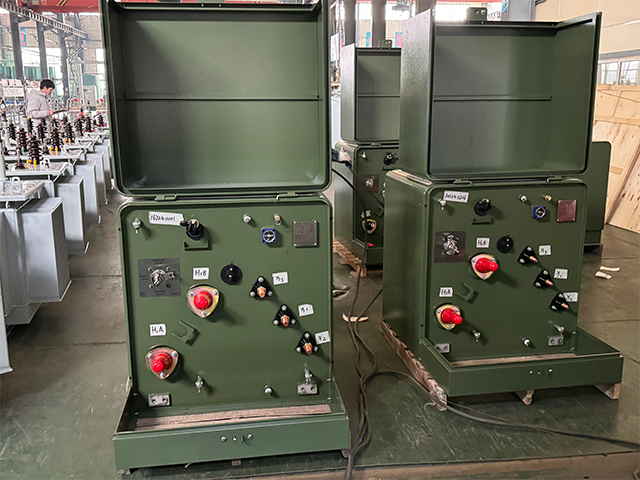
500kVA Single Phase Pad Mounted Transformer
The 500kVA Single Phase Pad Mounted Transformer is a high-capacity electrical transformer designed for reliable and efficient power distribution in commercial, industrial, and utility applications. With a robust, weatherproof enclosure, it is specifically built for outdoor use and can handle the demanding requirements of larger single-phase systems. This transformer offers a 500kVA capacity, ensuring dependable performance for a variety of load conditions.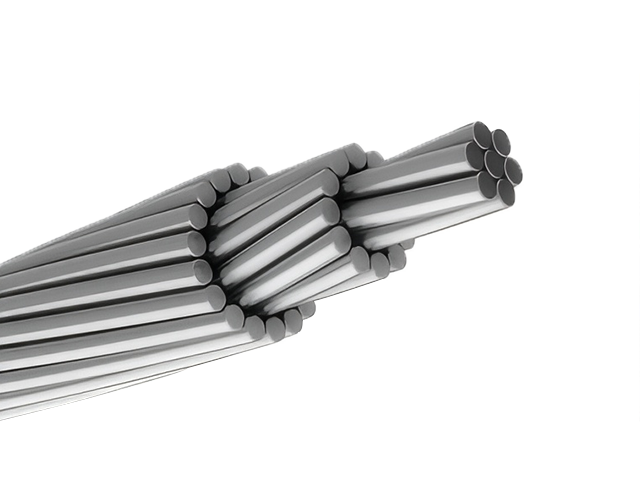
4 AWG SWAN ACSR Conductor Cable
The 4 AWG SWAN ACSR Conductor Cable is a reliable overhead conductor designed for utility distribution and light transmission applications requiring stable electrical performance and mechanical durability. It is manufactured with concentrically stranded aluminum wires reinforced by a galvanized steel core, combining efficient conductivity with added tensile strength. The aluminum strands ensure low resistance and consistent current flow, while the steel core reduces sag, improves load-bearing capability, and enhances resistance to wind and mechanical stress. This construction allows the 4 AWG SWAN ACSR conductor to perform reliably during installation and long-term outdoor service. Produced in accordance with ASTM and IEC standards, the 4 AWG SWAN ACSR Conductor Cable offers uniform quality, easy handling, and dependable service life. It is widely used in overhead distribution networks, rural electrification projects, and utility line upgrades where performance consistency and cost efficiency are essential.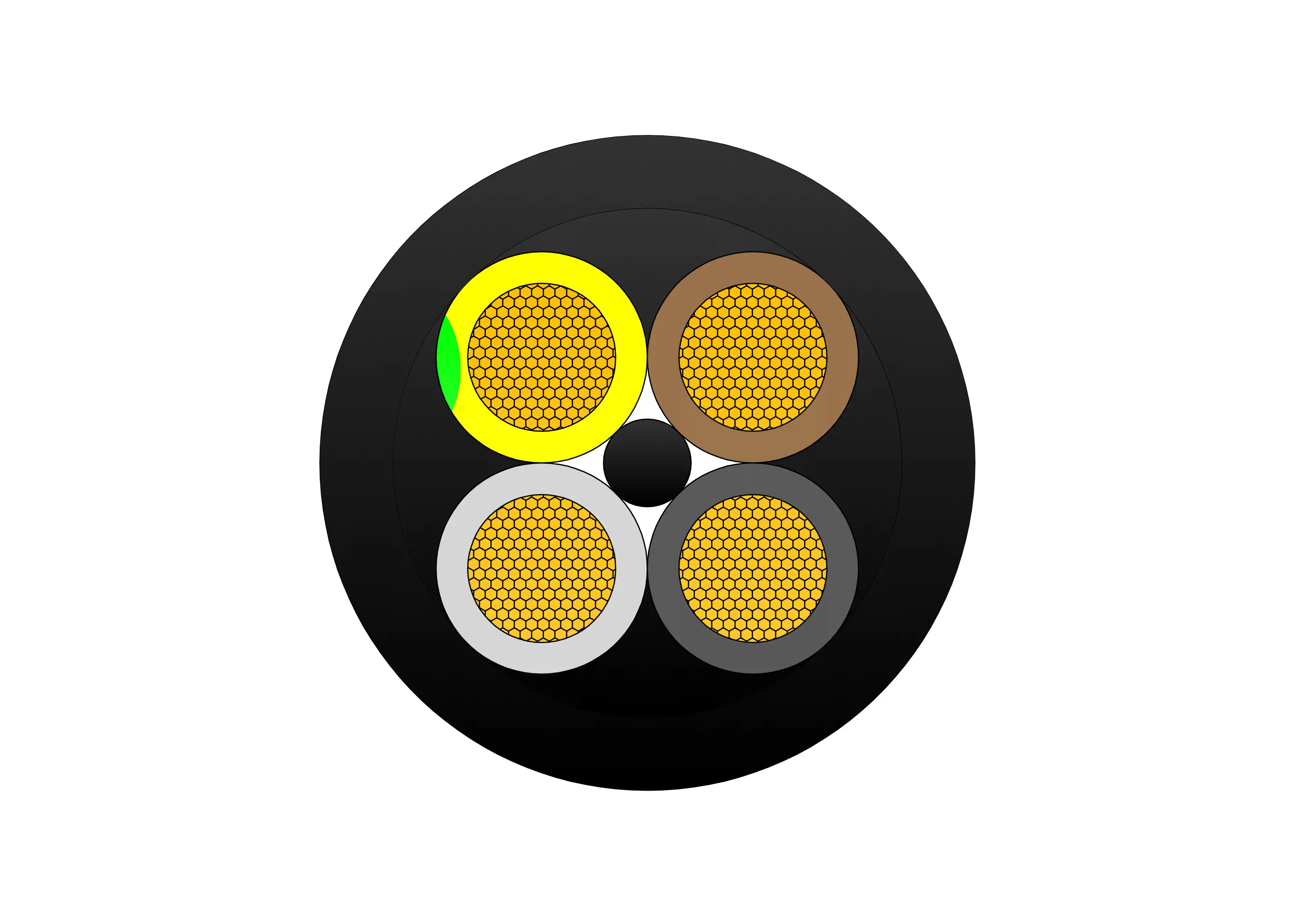
H07RN-F AD8 EN 50525-2-21 Flexible Rubber Cable
The H07RN-F AD8 EN 50525-2-21 Flexible Rubber Cable is a versatile, heavy-duty flexible cable designed for demanding applications in harsh environments. It features fine-stranded class 5 bare copper conductors for excellent flexibility and conductivity, EPR (ethylene propylene rubber) core insulation for high dielectric strength and thermal resistance (90°C continuous, 250°C short-circuit), an overall tinned copper braid screen (optional for some variants), and a robust polychloroprene (neoprene) outer sheath providing superior oil resistance, flame retardancy (IEC 60332-1), abrasion/chemical resistance, and weatherproofing. The AD8 rating ensures submersible performance up to 10 meters depth for continuous use in wet or underwater conditions. Compliant with EN 50525-2-21 and VDE 0285 standards, it offers mechanical robustness, ozone resistance, and long service life. The H07RN-F AD8 is ideal for mobile equipment, construction sites, mining, marine applications, and industrial power supply where flexibility, water immersion, and safety are critical.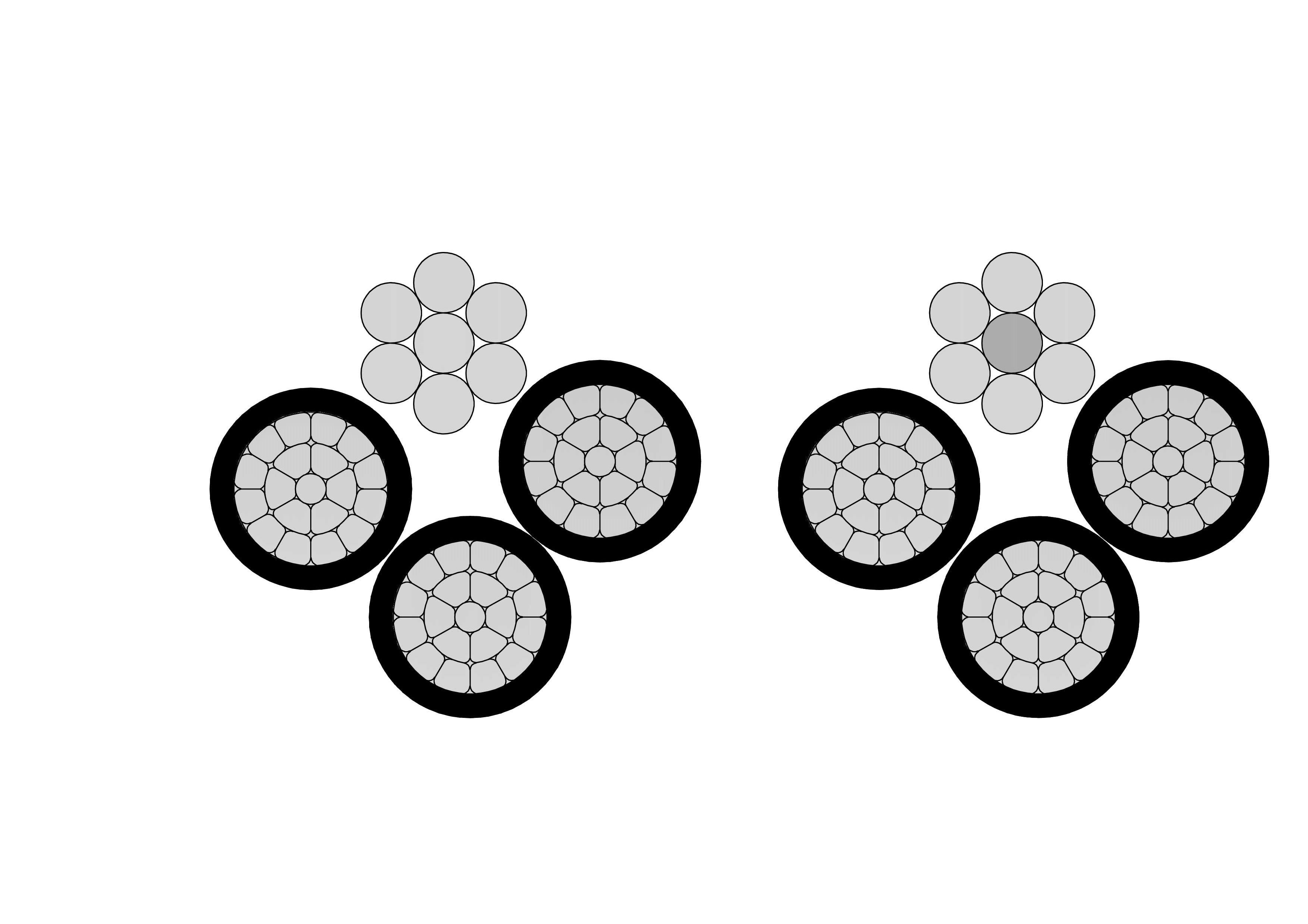
3/0 Suffolk Aluminum Conductor Quadruplex Overhead Service Drop Cable
The 3/0 Suffolk Quadruplex Service Drop Cable is a robust overhead cable for three-phase secondary power distribution with neutral. Featuring three 3/0 AWG aluminum phase conductors and one neutral messenger (7-strand) insulated with XLPE or PE and assembled in quadruplex configuration, it offers excellent mechanical strength and weather resistance. Compliant with ASTM B-230, B-231, ICEA S-76-474, and ANSI/ICEA standards, this cable supports 600V applications with superior UV, moisture, and abrasion protection. The self-supporting messenger reduces sag and simplifies installation over medium spans. The 3/0 Suffolk Quadruplex Service Drop Cable ensures low power losses, high current capacity, and long service life in harsh outdoor conditions. Lightweight and flexible, it is widely used for three-phase service drops in residential subdivisions, commercial buildings, and rural areas requiring safe, cost-effective aerial connections from utility poles to service entrances.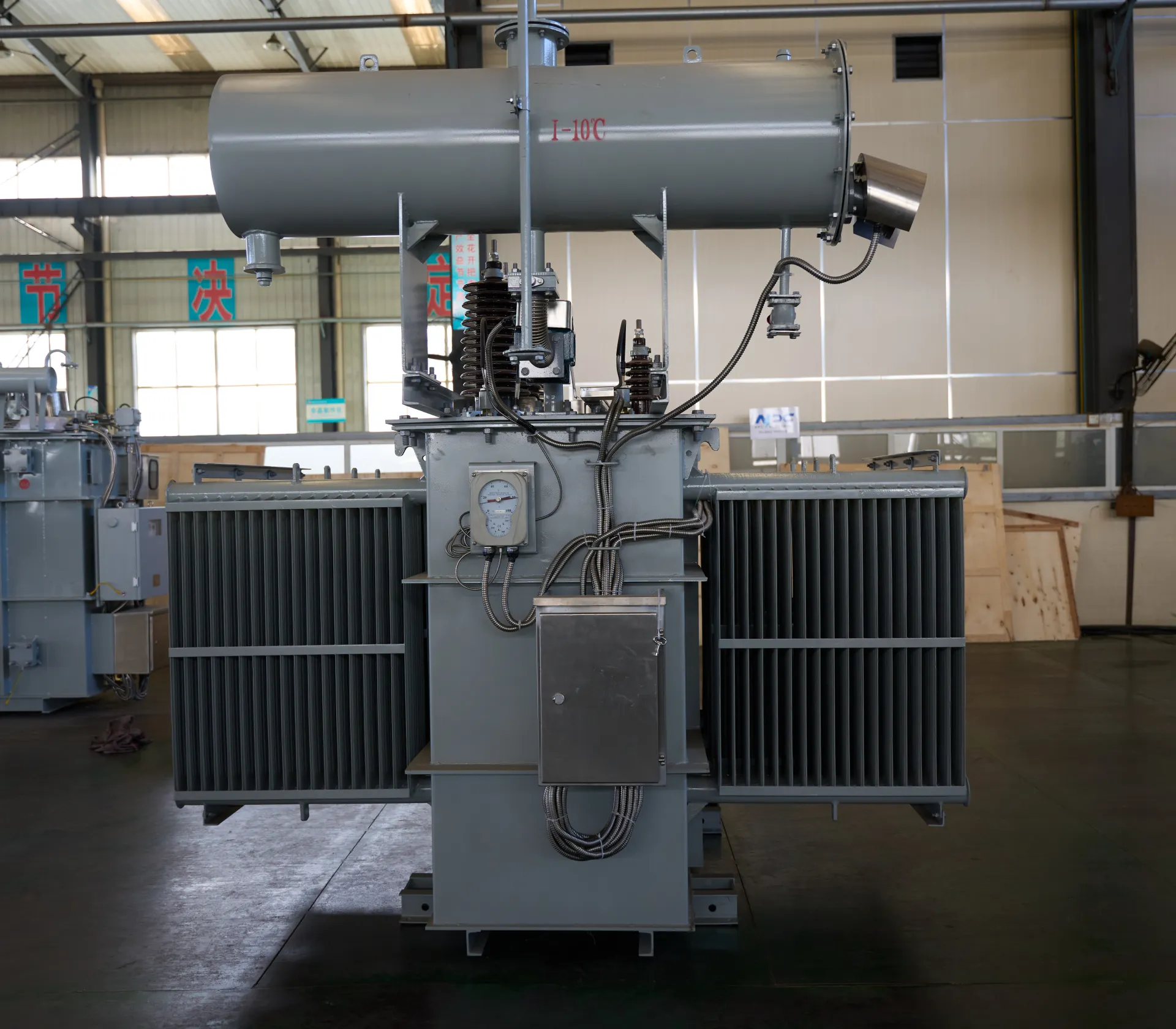
20kV Three-Phase Oil-Immersed Power Transformer 50-2500kVA Copper
The 20kV Three-Phase Oil-Immersed Power Transformer 50-2500kVA Copper adopts high-purity electrolytic copper windings, Class A insulation, and advanced ONAN cooling design. Available in energy-saving S11/S13/S20 series with no-load loss reduced by up to 40%. Fully sealed corrugated tank or conservator type effectively prevents oil aging and moisture ingress. It complies with IEC 60076, GB/T 1094, and can be equipped with ±5% or ±2×2.5% off-circuit tap changer. Low noise (<55 dB), strong short-circuit withstand capability, and overload capacity make it ideal for industrial parks, commercial buildings, and renewable energy projects. Vacuum oil filling and nitrogen sealing ensure insulation performance for over 30 years. Factory supports full third-party inspection (SGS/BV) and provides type test reports.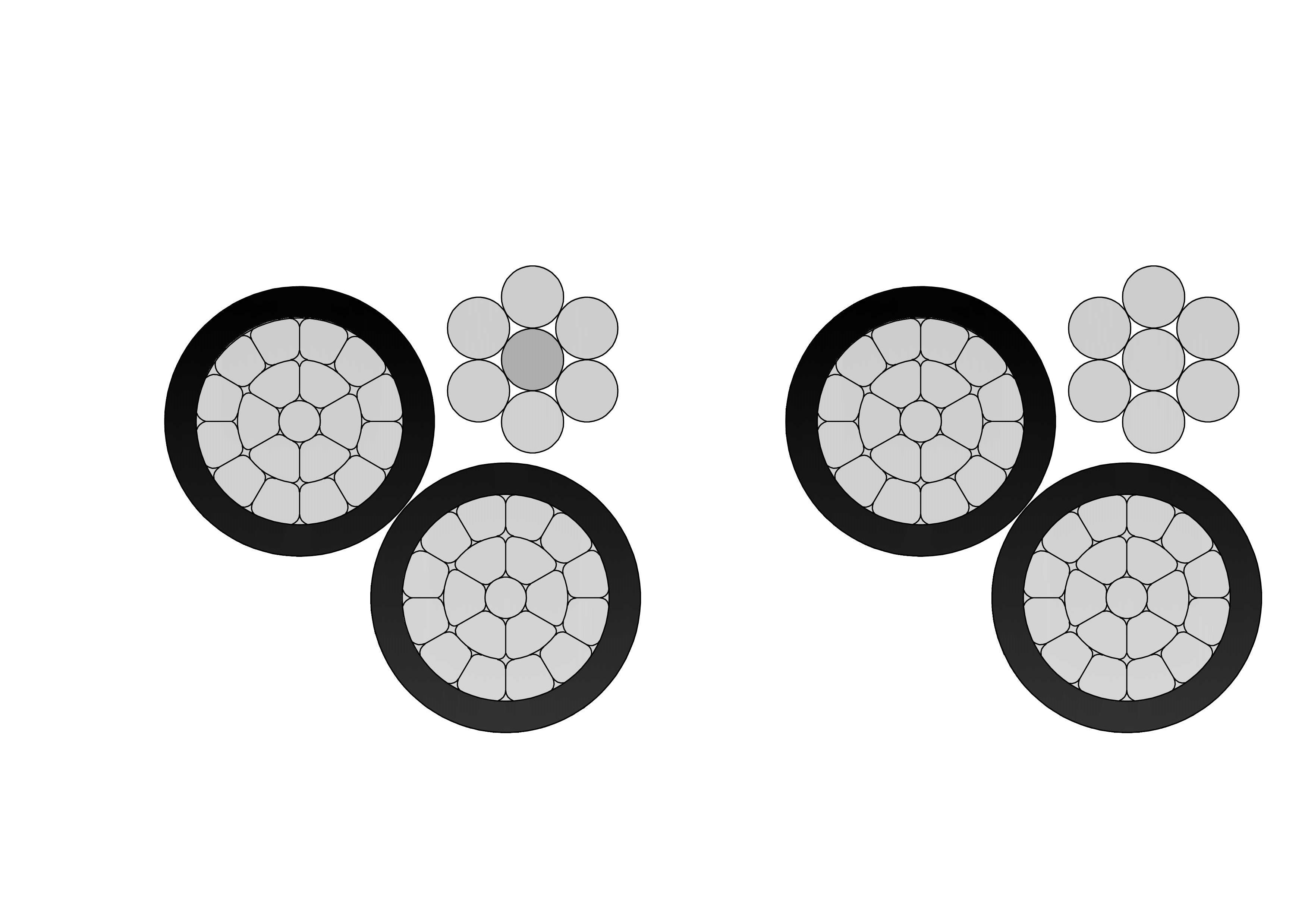
NS75/NS90 Triplex Unjacketed Overhead Neutral Supported Cable
The NS75/NS90 Triplex Unjacketed Overhead Neutral Supported Cable provides efficient overhead power delivery for Canadian utilities. It consists of two compact 1350-H19 aluminum phase conductors insulated in black sunlight-resistant PE (NS75, 75°C) or XLPE (NS90, 90°C), twisted around a bare ACSR full neutral messenger for structural support and reduced sag. Rated 600V, with NS90 offering higher ampacity due to 90°C rating, it meets CSA C22.2 No. 129 and supports single-phase service drops or secondary distribution. The unjacketed triplex design is lightweight, easy to install, and resistant to weathering, abrasion, and chemicals. Compliant with relevant standards, the NS75/NS90 Triplex ensures cost-effective, durable performance in pole-to-building or pole-to-pole aerial setups.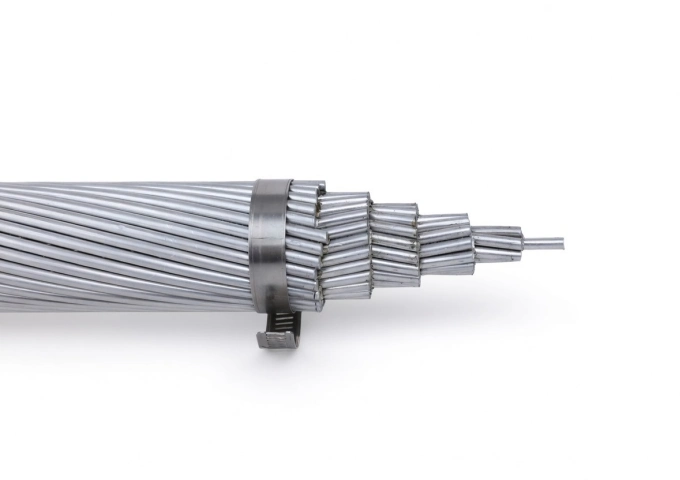
2 AWG IRIS AAC Cable
The 2 AWG IRIS AAC Cable is a premium All Aluminum Conductor designed for efficient overhead power transmission and distribution. Manufactured with high-purity 1350-H19 aluminum wires in a 7-strand concentric lay configuration, this bare conductor offers excellent electrical conductivity and lightweight performance. Ideal for urban and rural utility networks, the IRIS AAC delivers superior current-carrying capacity up to 185 amps while maintaining low sag and high reliability in various weather conditions. Its corrosion-resistant properties ensure long service life with minimal maintenance. Rigorously tested from raw materials to finished product, the 2 AWG IRIS AAC Cable meets or exceeds ASTM B-230 and B-231 standards, providing optimal strength-to-weight ratio and low DC resistance of 0.260 ohms per 1000ft. Choose this dependable solution for cost-effective power delivery in overhead lines on poles and towers.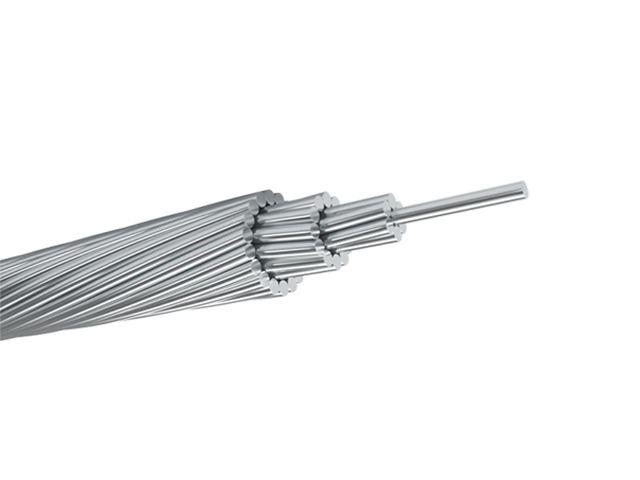
AZUSA AAAC Conductor Cable
AZUSA AAAC (All Aluminum Alloy Conductor) cables comply with ASTM B399 standards and are characterized by high strength, excellent conductivity, and superior corrosion resistance. Meeting ASTM B398, B399, IEC 61089, and BS EN 50182 standards, this cable handles ampacity up to 900A at 75°C and voltages up to 33kV. The all-alloy construction avoids bimetallic corrosion, providing better resistance in harsh conditions than ACSR. Reduced weight minimizes sag and installation expenses, supporting longer spans. The Azusa AAAC Conductor Cable delivers low electrical losses, high mechanical endurance, and excellent weather tolerance. Flame-retardant variants available. Perfect for urban grids, renewable projects, and coastal setups, it provides cost-effective, low-maintenance power delivery in overhead applications globally, excelling in reliability and lifespan over conventional conductors.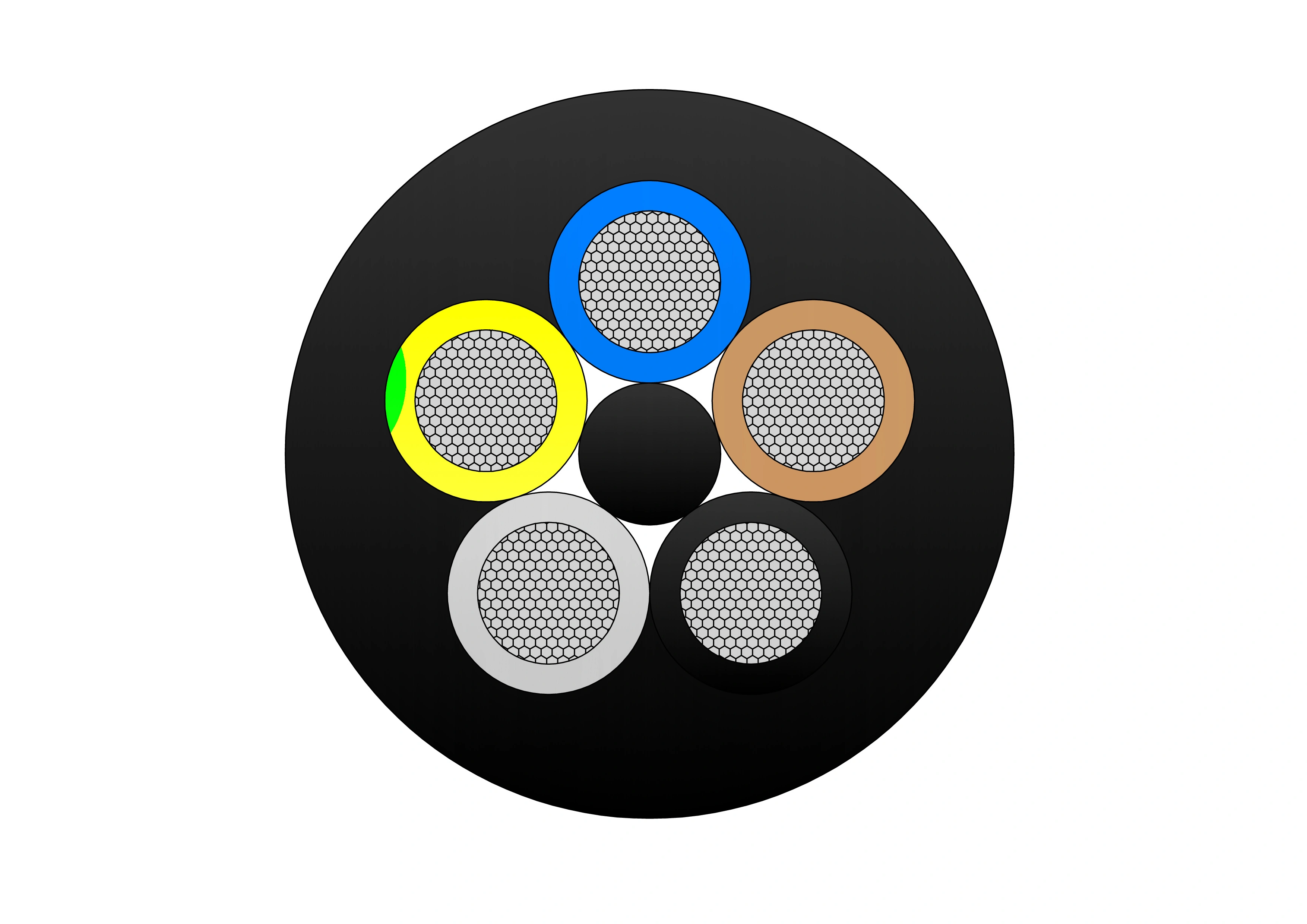
Type 245 Flexible Rubber Mining Cable
The Type 245 Flexible Rubber Mining Cable is an extra-heavy-duty flexible cable purpose-built for the most severe high-voltage underground mining environments. It features finely stranded tinned copper conductors (class 5) for exceptional flexibility and corrosion resistance, EPR (ethylene propylene rubber) insulation for outstanding dielectric strength, thermal stability (90°C continuous rating), and resistance to moisture/heat, an overall tinned copper braid screen providing superior EMI protection and grounding, and an extra-heavy-duty flame-retardant rubber outer sheath engineered to endure extreme abrasion, crushing, impact, cutting, tearing, oils, chemicals, and repeated high-tension reeling/drag. Compliant with AS/NZS 2802 and rigorous mining safety standards, it supports very high tensile loads, frequent flexing, tight bending radii, and reliable operation in wet, dusty, and hazardous mine conditions. The Type 245 is specifically suited for high-power trailing applications in coal and metalliferous mines, powering longwall shearers, continuous miners, face conveyors, shuttle cars, and other critical high-capacity mobile equipment, delivering maximum safety, durability, and uptime.
3/0 Fulgar Aluminum Conductor Triplex Overhead Service Drop Cable
3/0 Fulgar Aluminum Conductor Triplex Overhead Service Drop Cable is engineered for high-capacity overhead electrical service connections in utility distribution systems. The cable consists of two insulated aluminum phase conductors twisted around a bare aluminum neutral messenger, ensuring stable electrical transmission and strong mechanical support. Manufactured using high-purity aluminum and weather-resistant insulation compounds, the 3/0 Fulgar Aluminum Conductor Triplex Overhead Service Drop Cable delivers low electrical resistance, excellent corrosion resistance, and reliable long-term performance in outdoor environments. Its optimized conductor design allows efficient installation while maintaining the tensile strength required for aerial service applications. The cable is designed to withstand UV exposure, wind loading, and temperature fluctuations. Comprehensive quality control procedures and systematic testing are applied throughout the manufacturing process to ensure compliance with industry and utility standards and dependable field operation.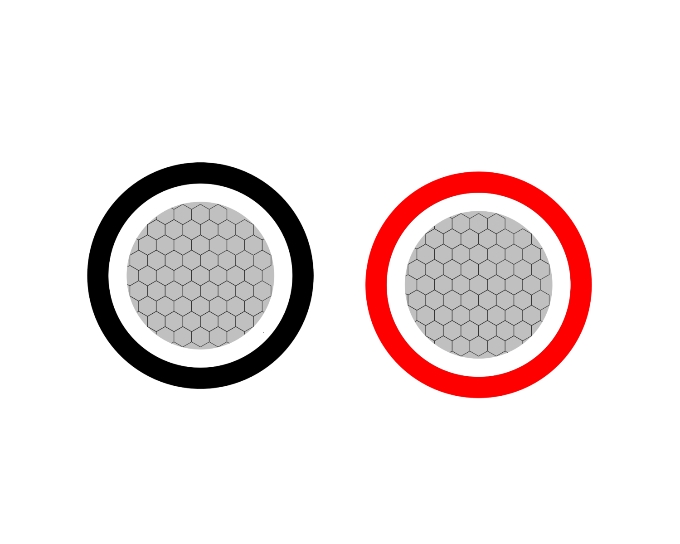
Photovoltaic Solar H1Z2Z2-K Cable
H1Z2Z2-K is a single-core DC 1500V cable specially designed for photovoltaic systems. It is widely used for connections between solar panels and inverters in solar power installations. Compliant with EN 50618 and IEC 62930 standards, it is suitable for indoor and outdoor use, both in fixed and mobile installations, and can withstand harsh environmental conditions. For installations where fire, smoke emissions, and toxic fumes create a potential risk to life and equipment, Water resistant to AD8.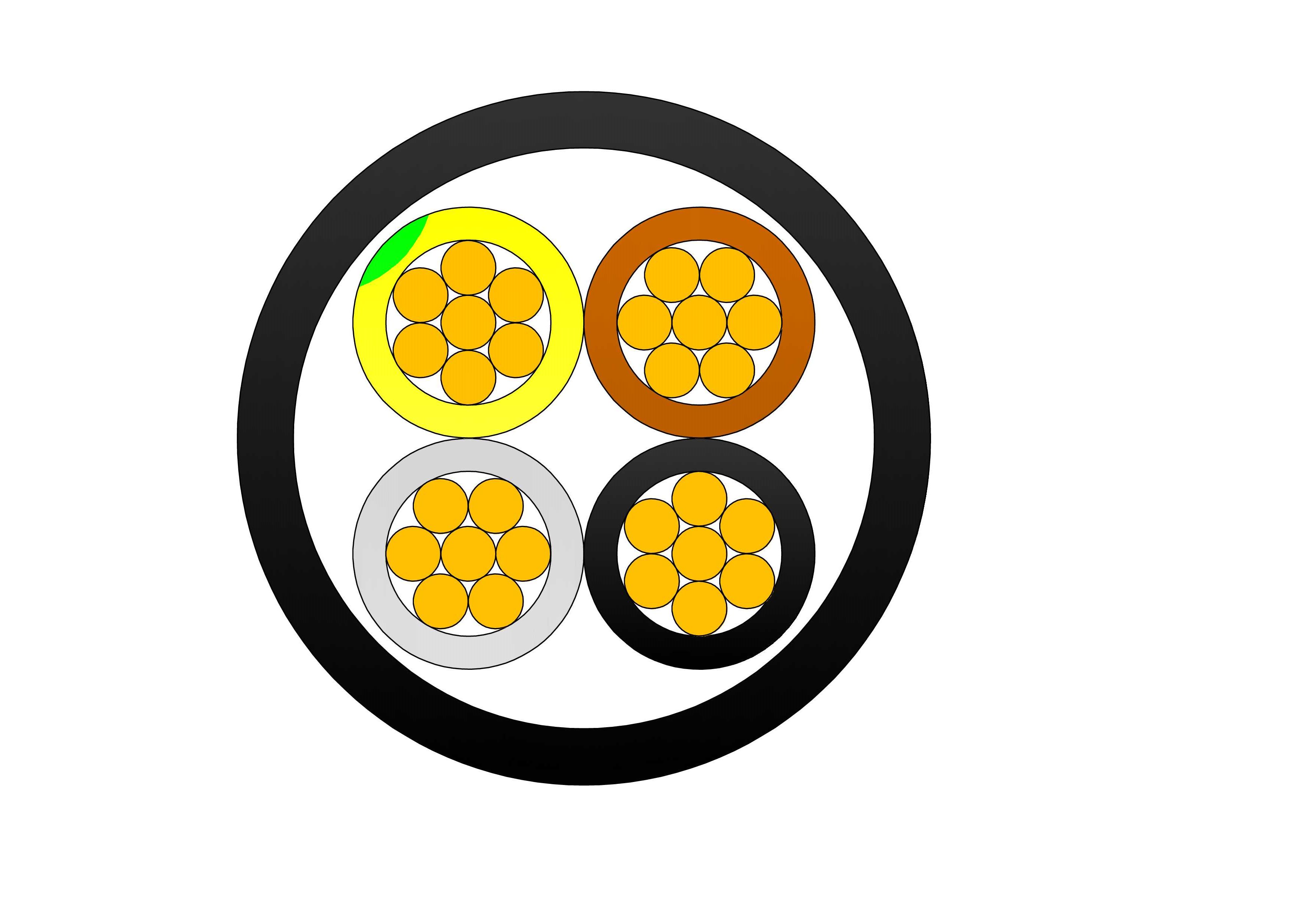
3+1 Cores Copper Cable CU/XLPE/PVC 0.6/1kV
The 3+1 Cores Copper Cable CU/XLPE/PVC 0.6/1kV is a high-performance low-voltage power cable designed for reliable electrical power transmission and distribution systems. Featuring three phase conductors and one neutral conductor, this cable is manufactured with high-purity copper conductors, cross-linked polyethylene (XLPE) insulation, and a durable PVC outer sheath. The combination of premium materials ensures excellent electrical conductivity, thermal stability, and mechanical protection. XLPE insulation provides superior dielectric properties, higher operating temperatures, and enhanced resistance to moisture, chemicals, and aging compared with conventional PVC-insulated cables. The PVC outer sheath offers excellent protection against abrasion, impact, and environmental conditions, making the cable suitable for indoor, outdoor, duct, tray, and underground installations. Designed to operate at rated voltages up to 0.6/1kV, this cable is widely used in industrial plants, commercial buildings, renewable energy projects, utility substations, and infrastructure developments. Manufactured according to international standards, the cable delivers long service life, reliable performance, and enhanced safety in demanding electrical distribution applications.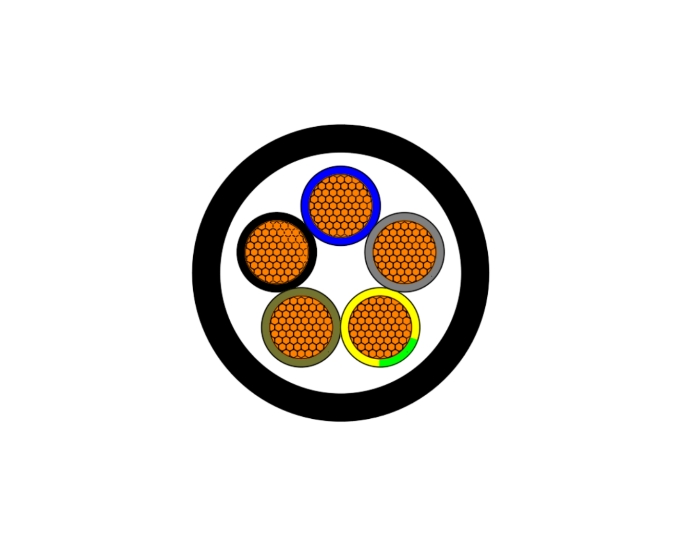
N2XY IEC 60502-1 XLPE PVC 0.6/1kV Cable
N2XY cable is a low-voltage power cable consisting of copper conductors, XLPE (cross-linked polyethylene) insulation, and a PVC (polyvinyl chloride) sheath, manufactured in accordance with IEC 60502-1 standards. Designed for 0.6/1kV fixed installations, it offers excellent electrical performance, mechanical strength, and thermal resistance, making it ideal for power transmission in industrial, commercial, and infrastructure projects.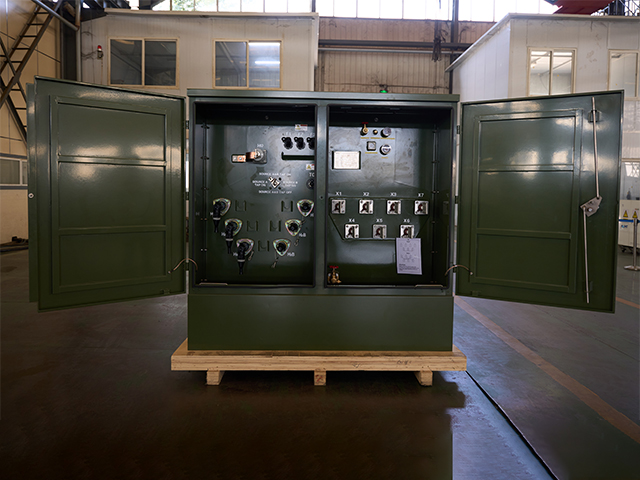
1500kVA Three Phase Pad Mounted Transformer
NPC ELECTRIC's 1500kVA Three Phase Pad Mounted transformer is designed with high-quality silicon steel sheets and insulating oil, in compliance with international standards such as IEC and ANSI, ensuring efficient and stable operation. It is suitable for a variety of scenarios such as urban power distribution, residential areas, commercial parks and industrial facilities. Whether it is ring network power supply or radial power supply, it can be flexibly applied to help achieve efficient and intelligent power transmission and distribution solutions.
1/0 Murex Aluminum Conductor Triplex Overhead Service Drop Cable
1/0 Murex Aluminum Conductor Triplex Overhead Service Drop Cable is engineered for secondary overhead power distribution from utility lines to residential and light commercial service entrances. The triplex construction consists of two insulated aluminum phase conductors twisted around a bare aluminum neutral messenger, providing both electrical transmission and mechanical support. The 1/0 Murex conductor size offers high current-carrying capacity, excellent tensile strength, and controlled sag performance, making it suitable for longer service drop spans and higher load requirements. Aluminum conductors ensure reduced weight, corrosion resistance, and ease of installation in outdoor environments. Manufactured in accordance with ASTM and utility standards, the 1/0 Murex Aluminum Conductor Triplex Overhead Service Drop Cable delivers consistent electrical performance, long-term durability, and reliable mechanical stability. It is widely used by utilities and contractors seeking a cost-effective and dependable overhead service drop solution.Welcome your inquiry
Honesty, Integrity, Frugality, Activeness and Passion