Power Transmission Lines: How They Work and Why They Matter
2026-04-14
Electric power transmission is the fundamental process that enables the large-scale delivery of electrical power from generation sources to consumers. At the center of this process are power transmission lines, which form the backbone of the global electrical grid and support industrial, commercial, and residential energy demands.
From an engineering standpoint, electric power transmission lines are designed to move bulk power over long distances with minimal energy loss, ensuring efficiency, stability, and reliability.
1. Basic Working Principle of Power Transmission Lines
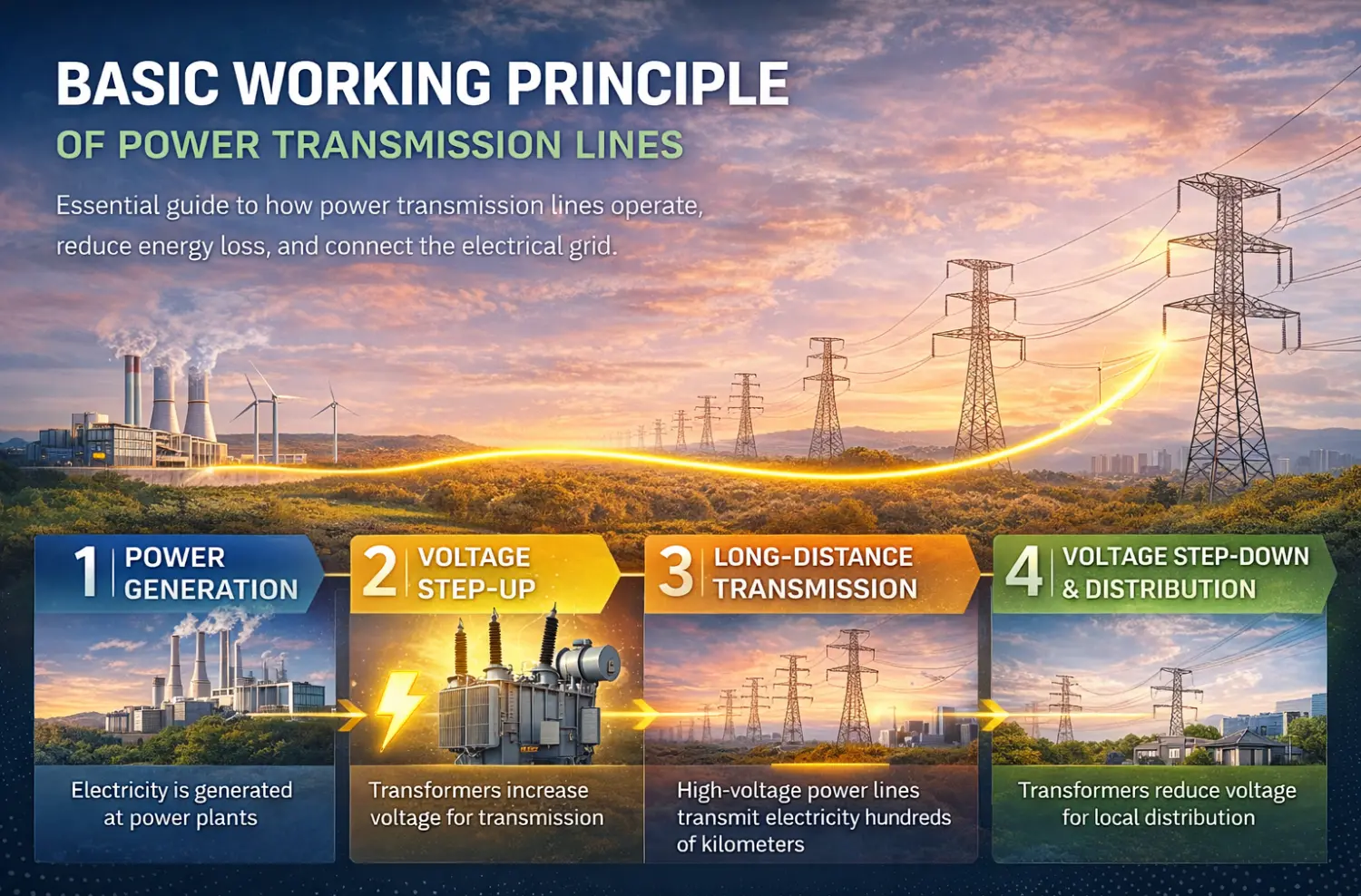
At its core, a power transmission line operates on the principle of electromagnetic energy transfer. Electrical energy generated at power plants is stepped up to high voltage levels and transmitted through conductors over long distances.
Key Mechanism:
- Power generation → Voltage step-up → Long-distance transmission → Voltage step-down → Distribution
Why High Voltage?
The use of high-voltage transmission is essential to reduce current for a given power level. According to the power equation:
- Power (P) = Voltage (V) × Current (I)
Increasing voltage reduces current, which directly minimizes resistive losses (I²R losses) in conductors. This is why high-voltage power transmission lines (typically 110kV–800kV) are used in modern electrical transmission systems.
2. Types of Power Transmission Lines
2.1 Overhead Power Transmission Lines
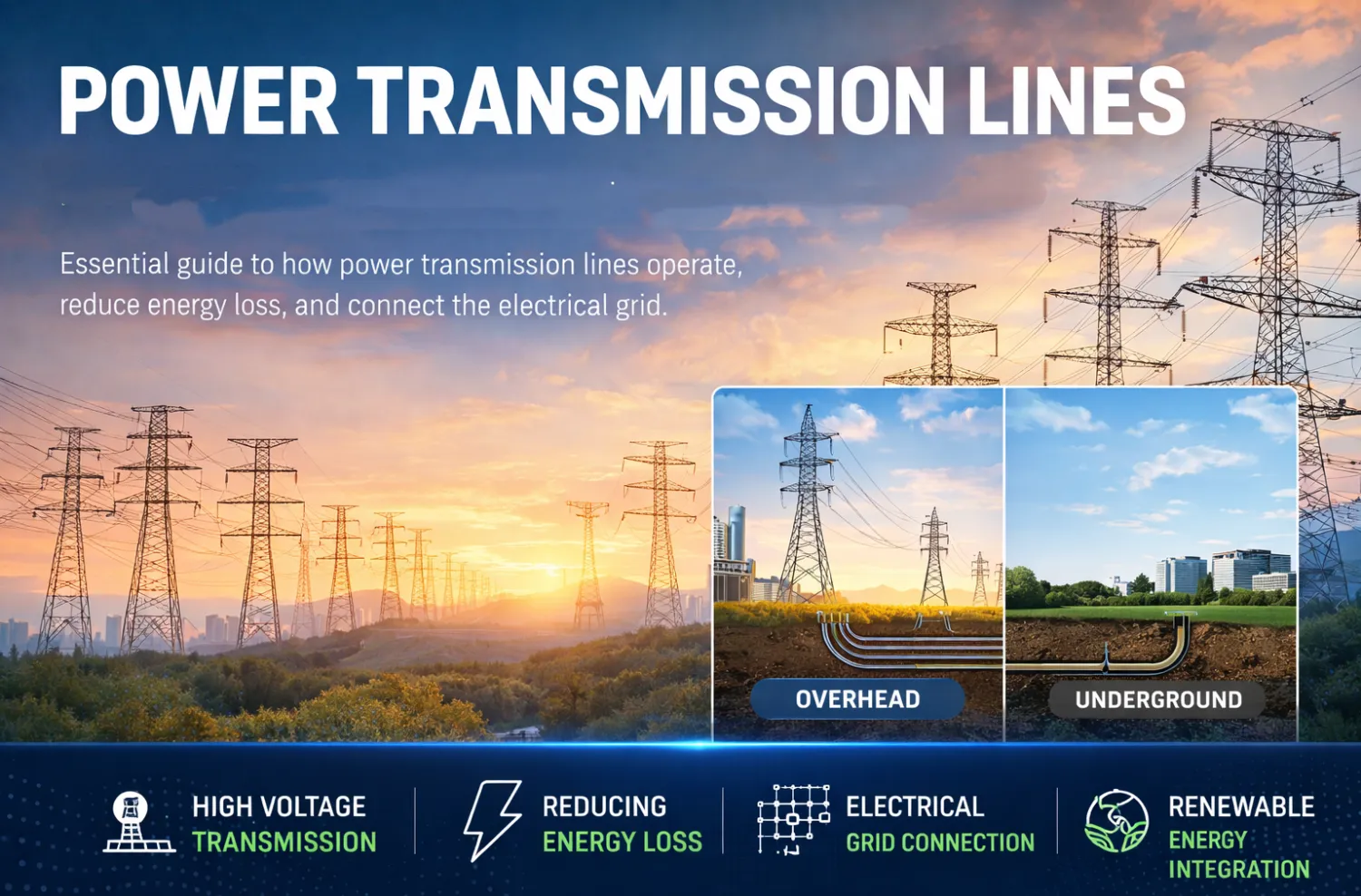
Overhead power transmission lines are the most widely used type due to their cost-effectiveness and ease of maintenance.
Advantages:
- Lower installation cost
- Easier fault detection
- Efficient heat dissipation
Engineering Considerations:
- Tower design and spacing
- Conductor sag and tension
- Environmental exposure (wind, ice, lightning)
2.2 Underground Power Transmission Lines
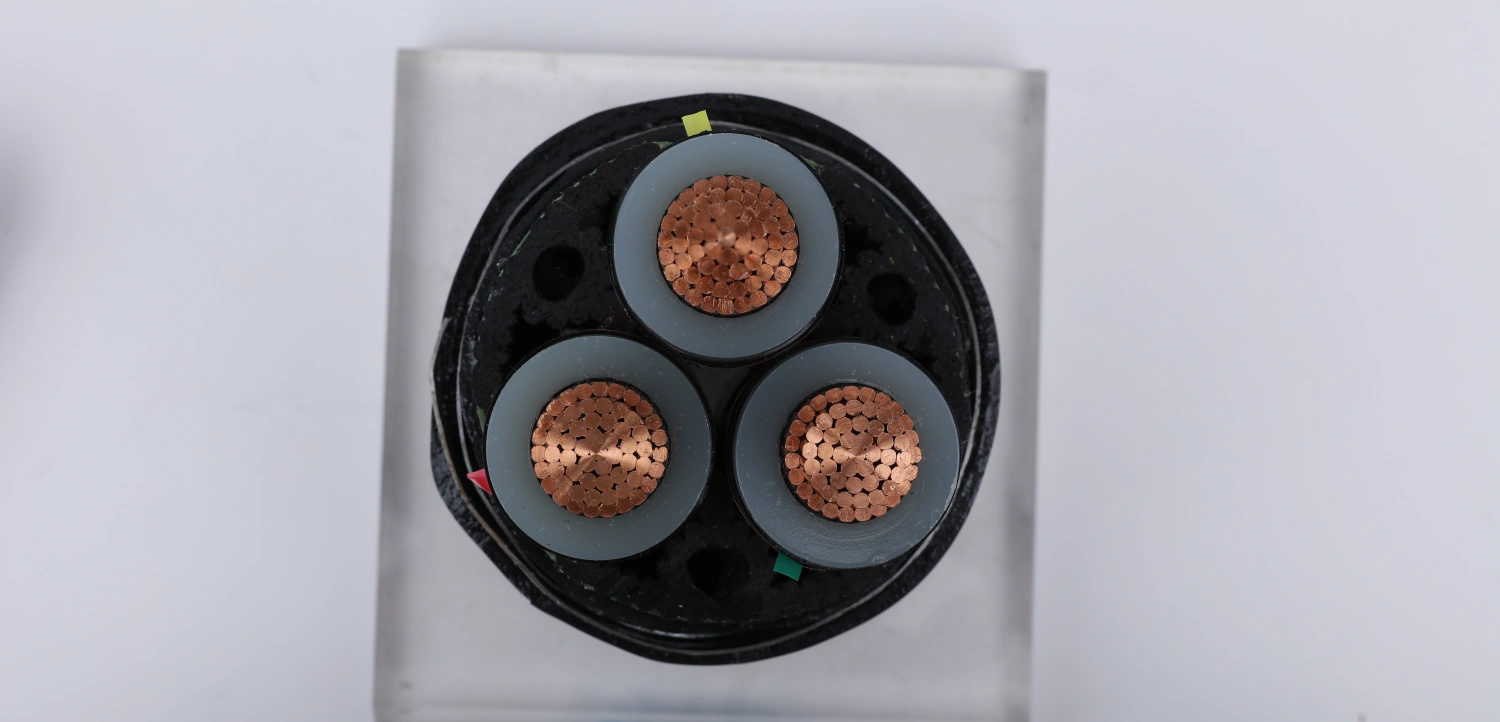
Underground power transmission lines use insulated high-voltage power cable or HV power cable systems buried beneath the surface.
Advantages:
- Enhanced safety
- Minimal visual impact
- Reduced exposure to the weather
Limitations:
- Higher installation and repair cost
- Thermal management challenges
- Complex fault detection
2.3 AC vs DC Transmission
AC Transmission
AC transmission is the dominant method in global electrical transmission systems due to the ease of voltage transformation.
HVDC Transmission
Used for ultra-long distances and intercontinental connections due to lower losses and improved stability.
📊 Overhead vs Underground Power Transmission Lines Comparison
|
Parameter |
Overhead Power Transmission Lines |
Underground Power Transmission Lines |
|
Installation Cost |
Low |
Very High |
|
Maintenance |
Easy |
Complex |
|
Fault Detection |
Fast |
Difficult |
|
Reliability |
Affected by the weather |
More stable |
|
Energy Loss |
Lower (better cooling) |
Higher (thermal limits) |
|
Safety |
Moderate |
High |
|
Environmental Impact |
Visual impact |
Minimal visual impact |
|
Application |
Long-distance transmission |
Urban / sensitive areas |
|
Cable Type |
Bare conductors |
High voltage power cable / HV power cable |
3. Voltage Levels and Classification
The power transmission line voltage determines system efficiency and application scope.
Standard Voltage Levels:
- Medium voltage: 1kV–69kV
- High voltage: 110kV–220kV
- Extra high voltage: 220kV–765kV
- Ultra high voltage: >800kV
Engineering Insight:
Higher voltage levels reduce energy loss but require:
- Advanced insulation systems
- Larger right-of-way
- Higher infrastructure costs
The selection of voltage class is a critical design decision in any transmission system.
📊 Typical Power Transmission Line Voltage Levels and Applications
|
Voltage Level |
Range |
Typical Application |
Transmission Distance |
Key Advantages |
|
Medium Voltage |
1kV – 69kV |
Industrial distribution, regional grids |
< 50 km |
Lower infrastructure cost |
|
High Voltage |
110kV – 220kV |
Regional transmission system |
50 – 200 km |
Balanced cost and efficiency |
|
Extra High Voltage (EHV) |
220kV – 765kV |
Bulk electric power transmission |
200 – 800 km |
Reduced energy loss |
|
Ultra High Voltage (UHV) |
>800kV |
Long-distance national grid |
> 800 km |
Maximum efficiency, high capacity |
Studies show that increasing transmission voltage from 110kV to 220kV can reduce energy loss by up to 30% in long-distance power transmission systems.
4. Components of a Transmission System
A complete transmission network consists of multiple integrated components:
Conductors
Typically, aluminum Cable or ACSR (Aluminum Conductor Steel Reinforced) cable is optimized for conductivity and strength.
Towers and Structures
Support power lines and maintain clearance from ground and obstacles.
Insulators
Prevent leakage currents and ensure safety in high voltage transmission.
Substations
Connect transmission and distribution systems, enabling voltage transformation and control.
5. Energy Loss in Power Transmission Lines
One of the most critical engineering challenges in electric power transmission is minimizing energy loss.
Types of Losses:
5.1 Resistive Loss (I²R Loss)
Occurs due to conductor resistance; increases with current.
5.2 Corona Loss
Occurs in high voltage power transmission lines, especially in humid or polluted environments.
5.3 Dielectric Loss
Relevant in underground power transmission lines due to the insulation materials.
🔍 Optimization Strategies:
- Increase the voltage level
- Use a high-quality high-voltage power cable
- Optimize conductor size
- Implement reactive power compensation
Efficient loss management directly improves the performance of electrical power delivery systems.
📊 Industry Data Insight:
Recent engineering studies indicate that:
- Up to 8–15% of total electrical power can be lost during transmission and distribution globally
- Optimized high voltage transmission systems can reduce losses by 30% or more
- Upgrading conductors and voltage levels significantly improves transmission network efficiency
💡 Why This Matters:
Reducing energy loss is one of the most cost-effective ways to improve the performance of modern electrical transmission systems, especially in large-scale power generation systems.
🌍 Global Market Insight:
- The global electric power transmission market is expected to grow significantly due to increasing demand for renewable energy
- Expansion of high-voltage power transmission lines is critical for integrating solar and wind energy
- Many countries are investing in underground power transmission lines in urban areas to improve grid reliability
📈 Engineering Perspective:
Future transmission systems will rely heavily on:
- Smart grid technologies
- High-capacity conductors
- Digital monitoring systems
This data is widely referenced by engineers and energy analysts when evaluating transmission efficiency and grid modernization strategies.
6. Role in Transmission and Distribution Systems
The transmission and distribution framework ensures electricity reaches end users reliably.
Transmission Stage:
Bulk transfer via high-voltage transmission lines over long distances.
Distribution Stage:
Voltage is reduced and delivered via distribution lines to consumers.
Practical Insight:
Poor coordination between transmission and distribution can lead to:
- Voltage instability
- Power outages
- Increased system losses
7. Why Power Transmission Lines Matter
Without electric power transmission lines, large-scale electrical power systems would not function. They enable:
- Reliable energy delivery
- Economic development
- Integration of renewable energy
- Stability of the global transmission network
From an engineering and infrastructure perspective, continuous investment in high-voltage transmission technology is essential for future energy security.
Frequently Asked Questions (FAQ)
1. What is a power transmission line?
A power transmission line is a system of conductors, towers, and insulators used to transmit electrical power over long distances from generation plants to substations within an electrical grid.
2. How does electric power transmission work?
Electric power transmission works by transmitting high-voltage electricity over long distances to reduce current and minimize energy loss before stepping down voltage for distribution.
3. Why are high-voltage power transmission lines used?
High-voltage power transmission lines reduce current flow, which significantly lowers resistive (I²R) losses and improves overall transmission efficiency.
4. What is the difference between transmission and distribution lines?
Transmission lines carry bulk electricity over long distances at high voltage, while distribution lines deliver electricity at lower voltages to end users.
5. What are overhead power transmission lines?
Overhead power transmission lines are conductors suspended on towers or poles, widely used due to lower cost and easier maintenance.
6. What are underground power transmission lines?
Underground power transmission lines use insulated high voltage power cable or hv power cable, typically installed in urban areas for safety and aesthetics.
7. What voltage is used in power transmission lines?
Typical power transmission line voltage ranges from 110kV to over 800kV, depending on distance and system requirements.
8. What causes energy loss in transmission lines?
Energy loss is mainly caused by resistance (I²R loss), corona discharge, and dielectric losses in cables.
9. What is AC transmission and why is it used?
AC transmission is widely used because it allows easy voltage transformation using transformers, making it efficient for large-scale electrical transmission systems.
10. What is the role of transmission lines in the electrical grid?
Power transmission lines are essential for connecting power generation sources to the electrical grid, ensuring reliable delivery of electricity across regions.

Related Articles
Related Products
2/0 Clio Aluminum Conductor Triplex Overhead Service Drop Cable
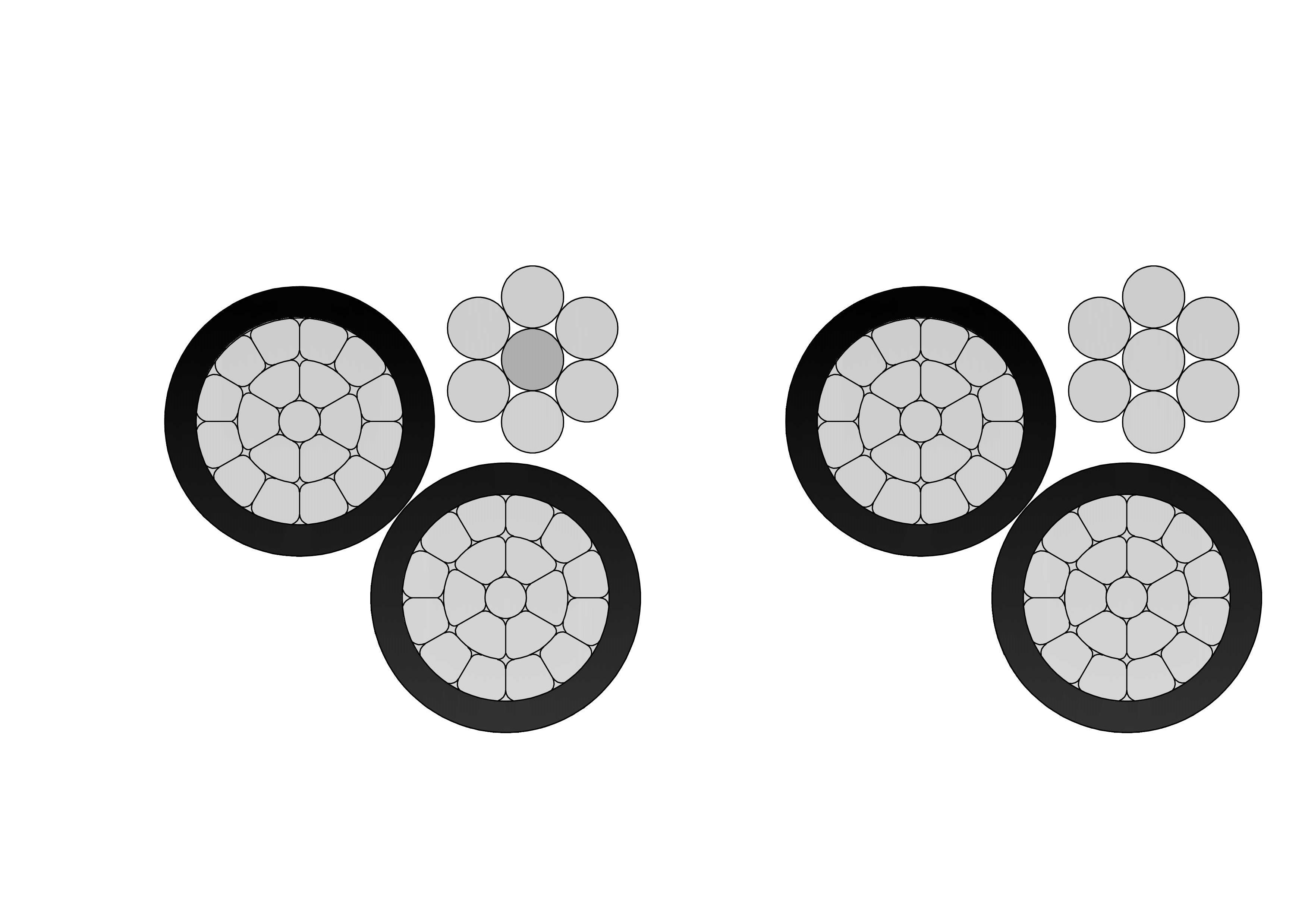
The 2/0 Clio Triplex Service Drop Cable is engineered for dependable overhead secondary power distribution to residential and small commercial service entrances. It features two 2/0 AWG aluminum phase conductors and one neutral messenger (7-strand aluminum or ACSR) with cross-linked polyethylene (XLPE) insulation in triplex configuration. Compliant with ASTM B-230, B-231, ICEA S-76-474, and ANSI/ICEA standards, this cable supports 600V applications with excellent UV, moisture, and abrasion resistance. The self-supporting messenger minimizes sag and enables easy installation across medium spans. The 2/0 Clio Triplex Service Drop Cable delivers low voltage drop, high current-carrying capacity, and outstanding durability in harsh weather conditions. Its lightweight and flexible design makes it the preferred choice for safe, cost-effective aerial connections from utility poles to customer service entrances in urban, suburban, and rural electrification projects worldwide.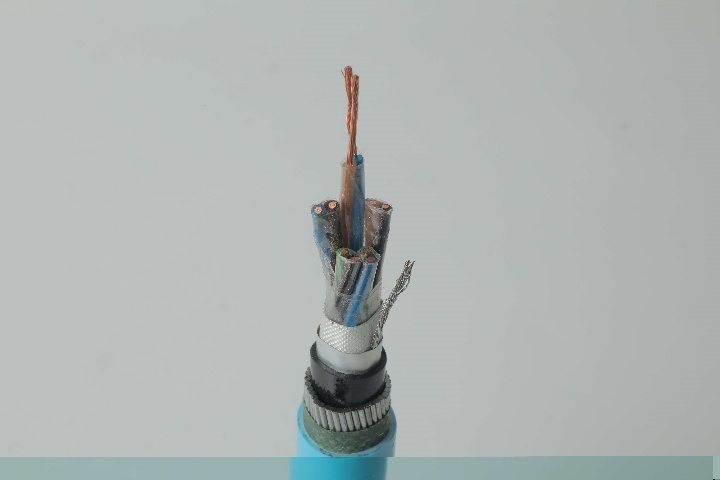
Instrumentation Cables—PVC Insulated, Overall Screened, Unarmoured PVC Sheathed Cables (CU/PVC/OSCR/PVC)
Instrumentation Cables CU/PVC/OSCR/PVC are PVC Insulated, Overall Screened, Unarmoured PVC Sheathed Cables. They are multi-conductor cables that carry and transport low-voltage electrical signals. These low-voltage signals are used to control and monitor electrical power systems. Instrumentation cables have many different industrial applications that include broadcasting, equipment control, such as drilling and pumping in the oil and gas industry, and data transfer, which includes analog and digital signals. They are manufactured according to the BS EN 50288-7 and BS EN 50288-1 standards to ensure quality. Depending on the application, instrumentation cables can be insulated with PVC or XLPE; the cables can be armoured or unarmoured. The sheathing materials can be of PVC, LSZH, or PE. The cables can have additional flame retardant or flame retardant properties, and they can be manufactured with special protections such as lead sheaths, or DRYLAM or AIRBAG technology.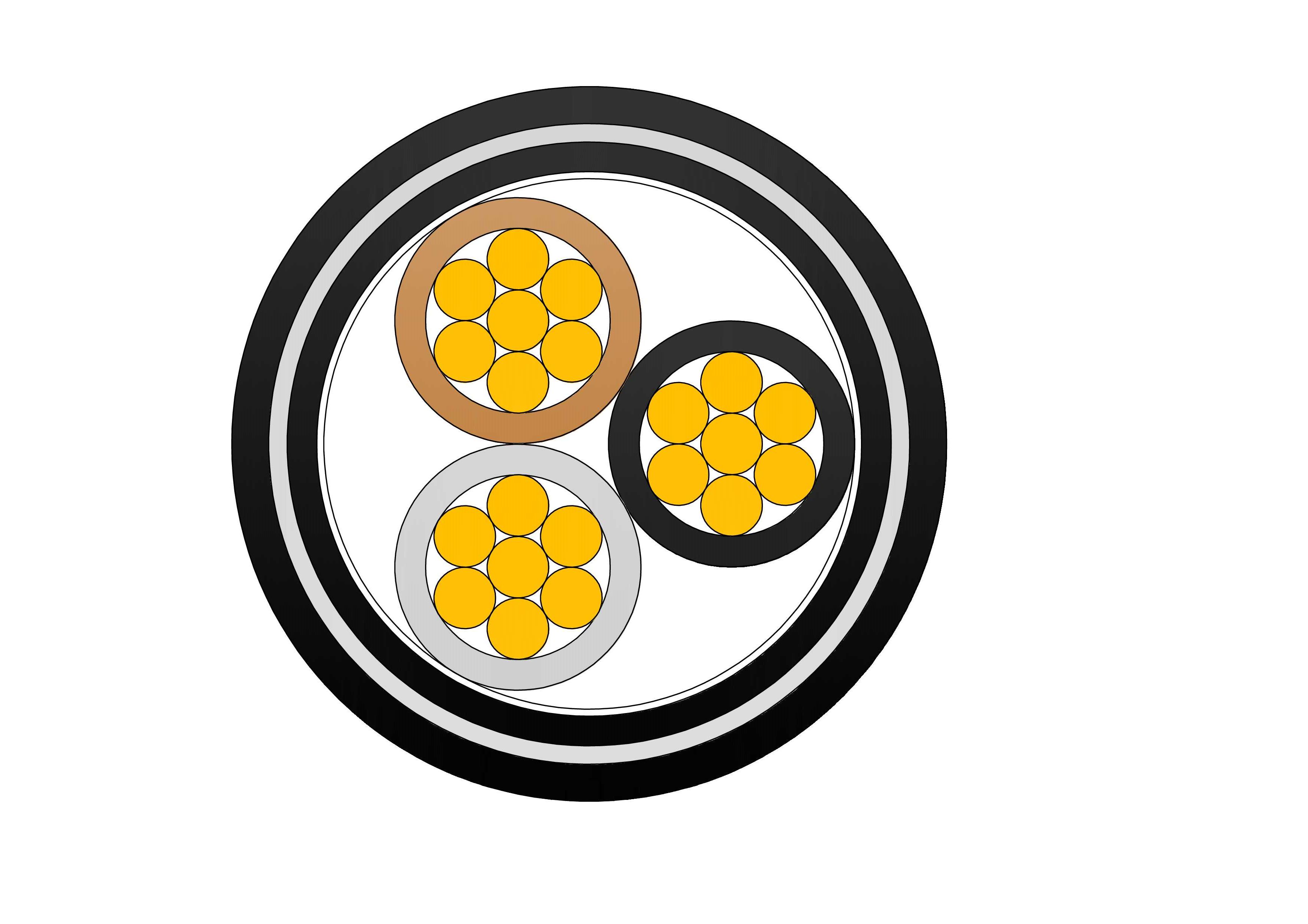
NYBY 0.6/1kV Low Voltage Power Cable
NYBY 0.6/1kV are low voltage power cables designed according to IEC 60502-1 standard, suitable for fixed installation in indoor, outdoor, underground, cable ducts, or concrete environments, with steel tape armoring for enhanced mechanical protection. Constructed with copper conductors, PVC core insulation, filling, galvanized steel wire armour, and tough PVC outer sheath, it meets VDE 0276 and IEC requirements. The SWA layer offers outstanding resistance to mechanical damage, enabling direct burial without additional conduits. Copper ensures minimal losses and high current rating. Flame-retardant and stable in moist conditions, the NYBY 0.6/1kV Low Voltage Power Cable is widely used in factories, renewable energy sites, commercial complexes, and infrastructure needing reliable, long-service-life low-voltage cabling with enhanced safeguarding in aggressive soils or high-risk areas.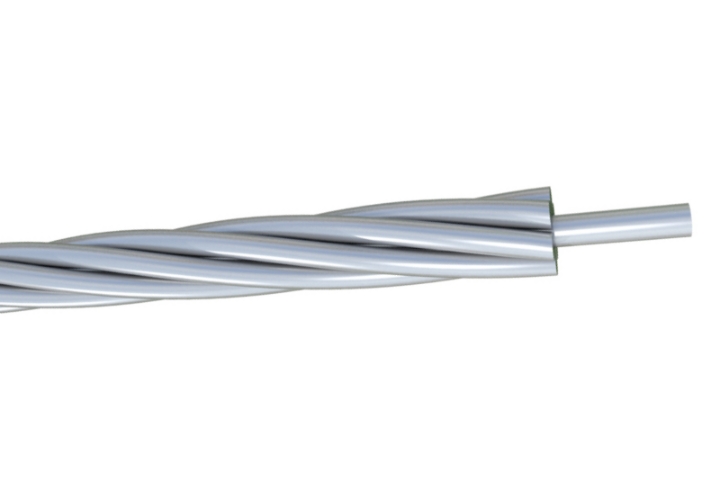
High Quality 16 Gauge Galvanized Steel Conductor Wire Supplier
The 16 Gauge Galvanized Steel Conductor Wire is a versatile and durable solution for electrical and construction applications. Made from premium steel and coated with a high-quality zinc layer through hot-dip galvanization, it provides superior resistance to corrosion and environmental wear. This wire is engineered to deliver consistent tensile strength while maintaining flexibility, making it suitable for grounding systems, fencing, and binding applications. The 16-gauge size ensures easy handling and adaptability for various installation requirements. Its uniform zinc coating enhances longevity and reduces maintenance costs, especially in outdoor environments exposed to moisture and chemicals. Manufactured under strict quality control systems, the wire meets international standards for performance and reliability. With customizable specifications such as coating thickness and tensile strength, the 16 Gauge Galvanized Steel Conductor Wire is widely trusted by contractors and industrial users for its durability and cost-effectiveness.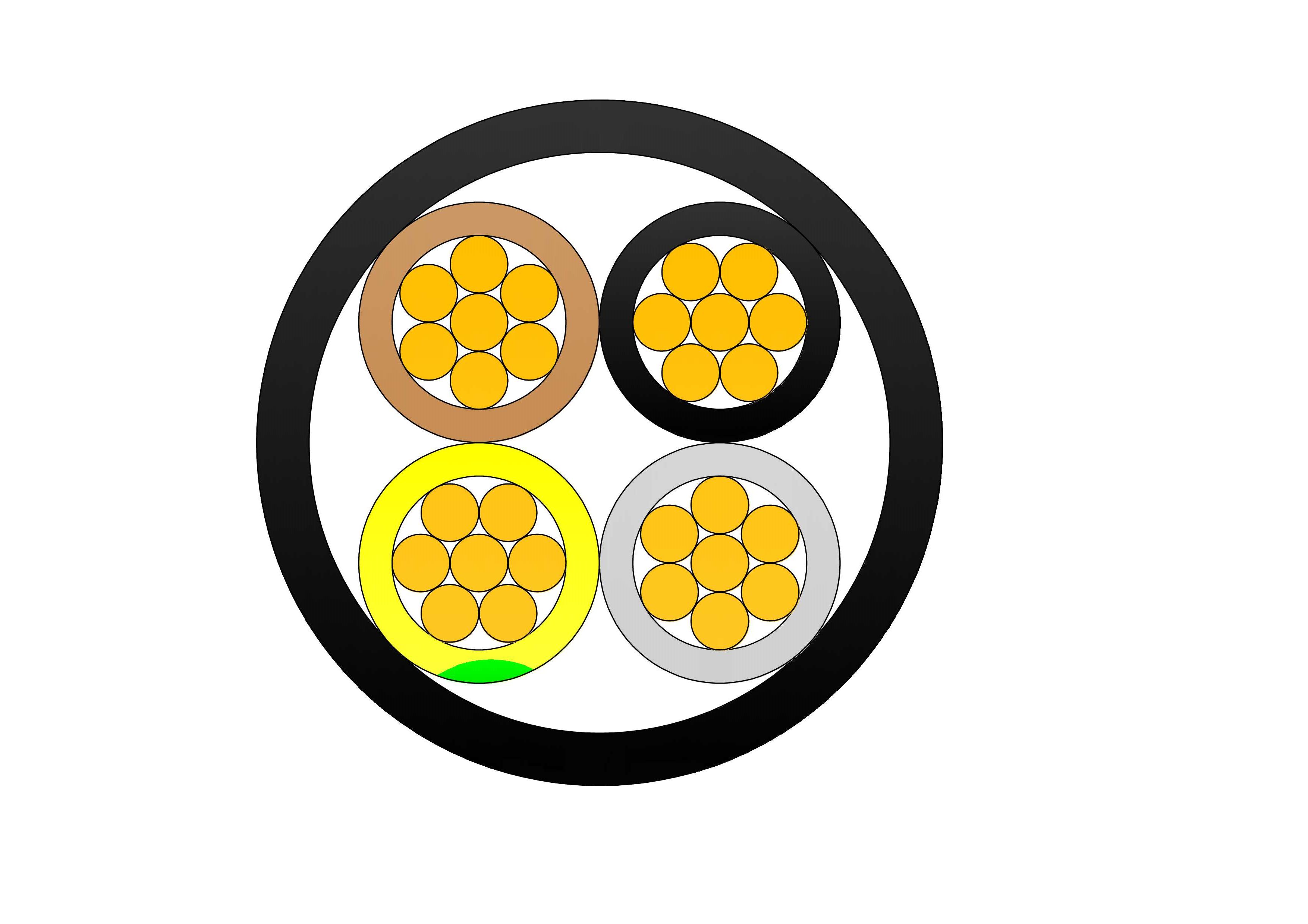
N2XY 0.6/1kV Low Voltage Power Cable
N2XY 0.6/1kV is a low-voltage power cable built to IEC/EN 60228 standards, ideal for fixed installations in dry or damp environments, including indoors, outdoors, and in concrete (excluding vibration zones), without the need for additional mechanical protection. Constructed with high-purity copper conductors, thermosetting XLPE insulation, and tough PVC jacket, it meets stringent IEC 60502-1 requirements. This cable provides low dielectric losses, excellent short-circuit tolerance, and strong resistance to environmental factors like water and abrasion. Perfect for fixed installations in wet or dry locations, including direct burial without armour when mechanical protection is not critical. Enhanced bending radius and flame-retardant properties facilitate safe, easy handling.
4 Periwinkle Aluminum Conductor Triplex Overhead Service Drop Cable
The 4-4-6 Periwinkle Aluminum Conductor Triplex Overhead Service Drop Cable is a cost-effective solution for overhead power delivery from utility poles to residential or light commercial weatherheads. It features concentric-lay-stranded 1350-H19 aluminum phase conductors (#4 AWG, 7-strand), black cross-linked polyethylene (XLPE) insulation for superior weather, UV, and thermal resistance, and a bare ACSR neutral messenger (#6 AWG, 6/1) providing mechanical strength and conductivity. Rated for 600 volts phase-to-phase at conductor temperatures up to 90°C (XLPE) or 75°C (Poly), it offers an allowable ampacity of approximately 100 amps (XLP). Compliant with ASTM B-230, B-231, B-232, B-399, and ICEA S-76-474 standards, this lightweight, flexible cable ensures easy installation and reliable performance in outdoor conditions, including wind, ice loading, moisture, and temperature fluctuations.
500kVA Dry Type Transformer
NPC ELECTRIC 500kVA Dry-Type Transformer offers reliable and efficient power distribution with a compact, oil-free design. It ensures safe, low-maintenance operation with advanced insulation and cooling systems, making it ideal for industrial and commercial use. With a capacity of 500kVA, it delivers stable performance while being environmentally friendly and cost-effective. Key characteristics feature three-phase design (single-phase adaptable), primary voltages 208V–600V (e.g., 480V Delta, 600V Delta), secondary voltages such as 208Y/120V, 480Y/277V, or custom, aluminum or copper windings, 150°C rise (standard) or 115°C/80°C with 220°C insulation class, ±2×2.5% primary taps, NEMA 1 ventilated enclosure (NEMA 3R/encapsulated options), natural convection cooling (AN), electrostatic shielding, and low sound levels per NEMA.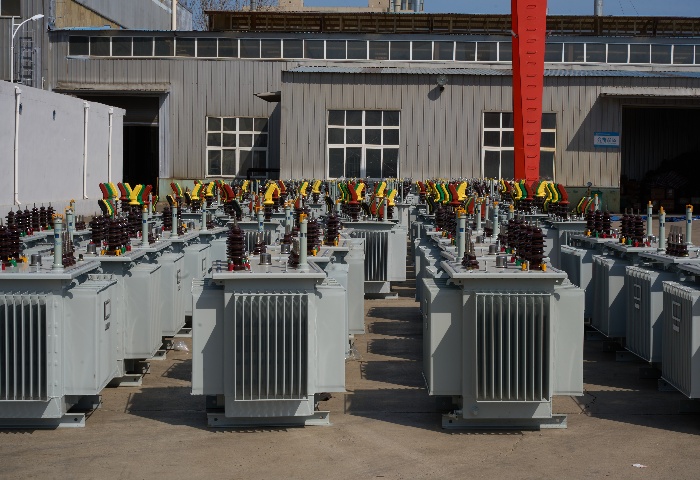
160kVA Oil Immersed Transformer
The 160kVA Oil-Immersed Transformer is characterized by its high efficiency and low loss, significantly reducing power consumption and operational costs. This transformer offers notable social benefits and is a high-tech product actively promoted by the government. Produced by a leading Chinese manufacturer, the NPC ELECTRIC 160kVA Oil-Immersed Transformer represents a pinnacle of electrical engineering, designed to meet the stringent demands of contemporary power distribution systems. These transformers are crafted with precision and incorporate cutting-edge technology, renowned for their exceptional durability, efficiency, and reliability.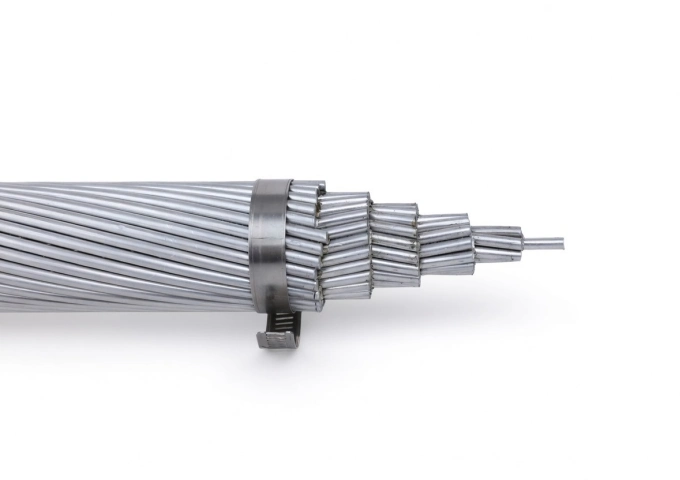
336.4 MCM Tulip AAC Cable
The 336.4 MCM Tulip AAC Cable is a high-performance All Aluminum Conductor designed for demanding overhead power transmission and distribution lines. Manufactured with 19 strands of premium 1350-H19 aluminum wire in a concentric lay configuration, this bare conductor provides excellent electrical conductivity with a low DC resistance of 0.0514 ohms per 1000 ft at 20°C. Featuring an overall diameter of 0.666 inches and a rated breaking strength of 6,150 lbs, the Tulip AAC delivers a robust ampacity of 513 amps while weighing only 315.8 lbs per 1000 ft. Its optimized strength-to-weight ratio minimizes sag and structural loading. Fully compliant with ASTM B-230 and B-231 standards, the 336.4 MCM Tulip AAC Cable offers outstanding corrosion resistance for long-term durability in harsh outdoor environments, making it the preferred choice for utility networks requiring cost-effective, high-reliability bare aluminum conductors.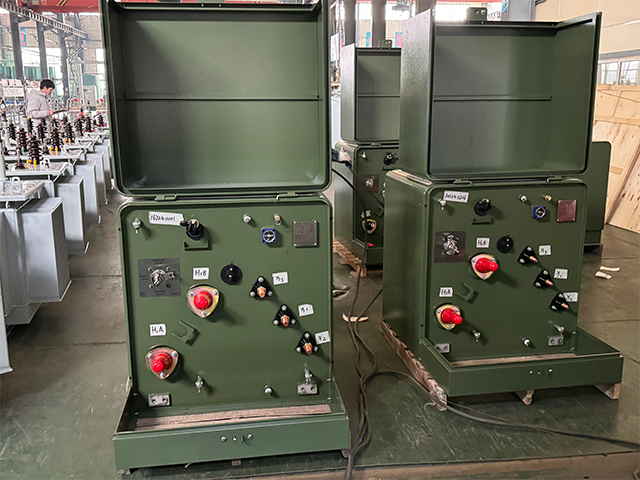
333kVA Single Phase Pad Mounted Transformer
The 333kVA Single Phase Pad Mounted Transformer is a high-performance electrical transformer designed for reliable power distribution in industrial and commercial applications. With a robust, weather-resistant enclosure, it is ideal for outdoor installations and offers efficient step-down voltage conversion. This transformer features a 333kVA capacity, providing reliable power to meet the demands of single-phase systems, and comes with customizable primary and secondary voltage configurations.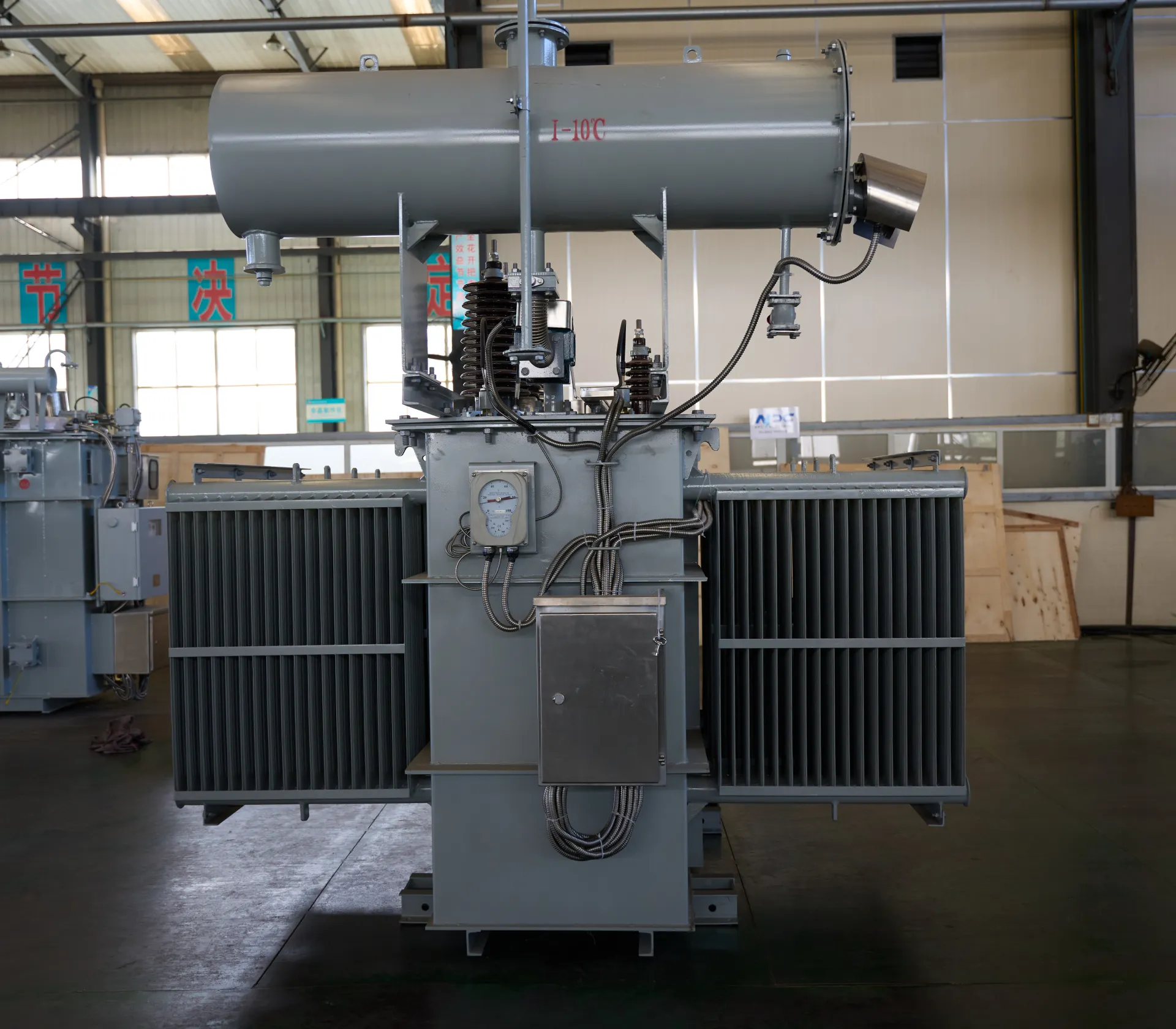
40MVA 110kV Three Phase Oil Immersed Transformer for Substation
The 40MVA 110kV Three Phase Oil Immersed Transformer is engineered for reliable high-voltage transmission and distribution in substations and power plants. Featuring high-purity copper windings, advanced ONAN/ONAF cooling, and on-load tap changer (OLTC ±8×1.25%), it delivers superior efficiency and minimal no-load/loss performance (SZ11/SZ13 series). Fully compliant with IEC 60076, GB 6451, and IEEE standards, it withstands 200kV lightning impulse and offers partial discharge below 10pC. The corrugated tank design ensures optimal heat dissipation and mechanical strength in harsh environments. Ideal for 110/33kV, 110/11kV, or 110/6.3kV step-down applications. Vacuum oil filling and nitrogen sealing guarantee long-term insulation integrity. Trusted by utilities worldwide for stable, maintenance-free operation over 30+ years. Contact us for technical datasheet and competitive pricing.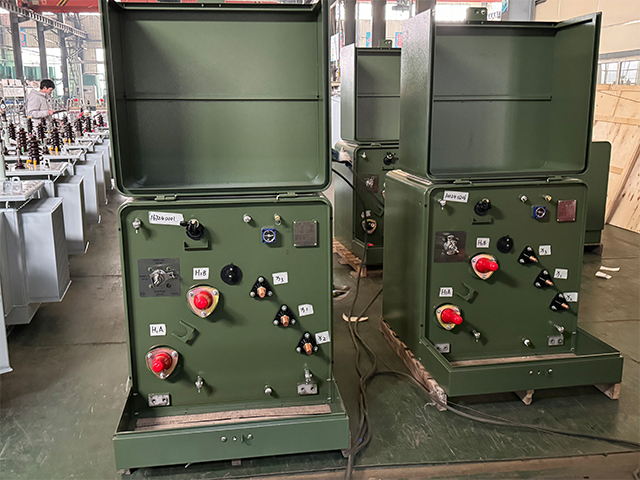
5kVA Single Phase Pad Mounted Transformer
The 5kVA Single Phase Pad Mounted Transformer is designed for reliable and efficient power distribution in residential, commercial, and light industrial applications. Ideal for medium-density areas, this transformer steps down high-voltage electricity to a usable lower voltage for safe distribution to homes and businesses.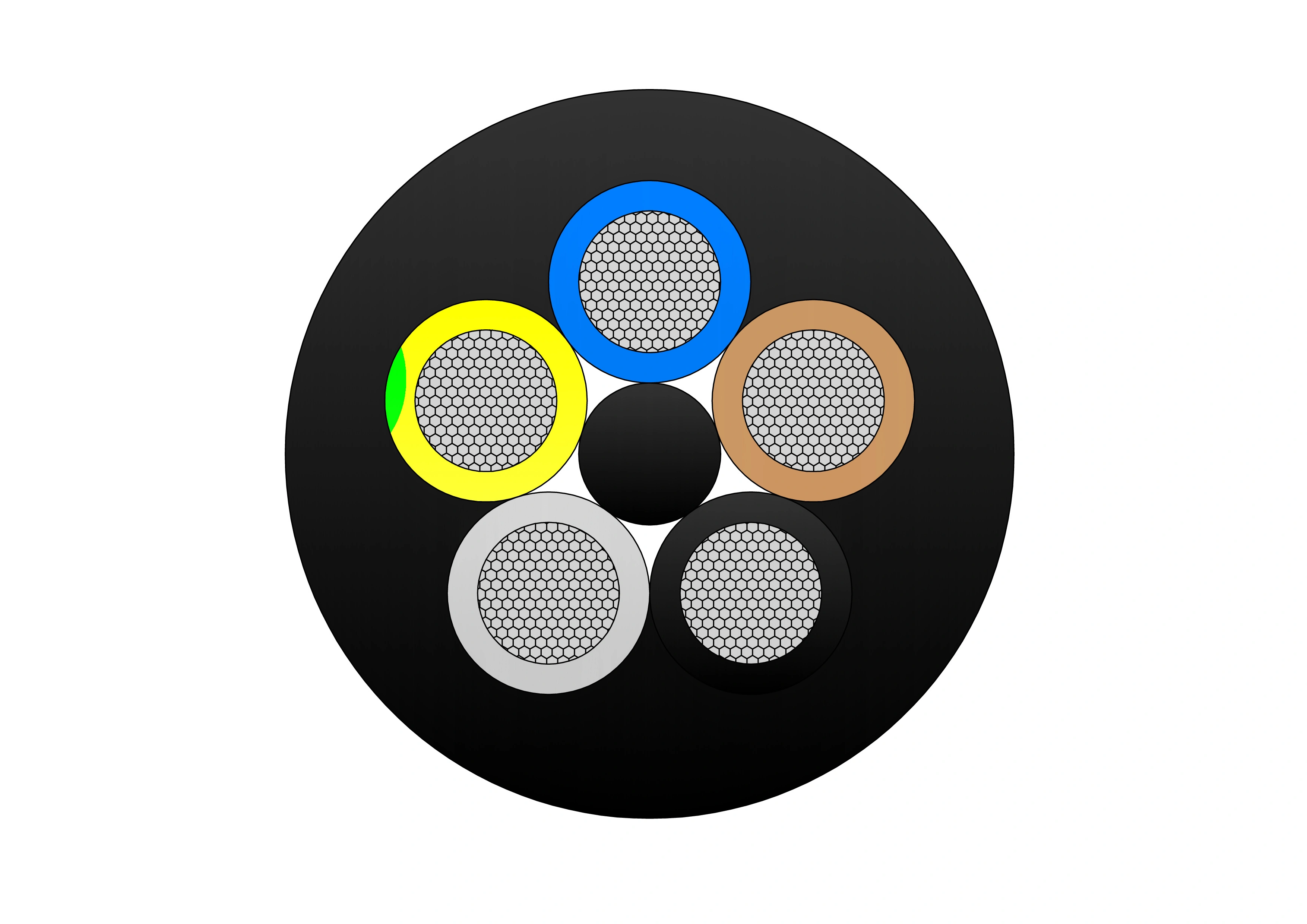
(N)TSCGECEWOU 3.6/6kV and 6/10kV ATB Cable
The (N)TSCGECEWOU 3.6/6kV and 6/10kV ATB Cable is a flexible, heavy-duty medium-voltage trailing/reeling cable with anti-torsion braid (ATB) for superior torsional stability in extreme mining conditions. It features class 5 finely stranded tinned copper phase conductors for flexibility and corrosion resistance, semi-conductive conductor and insulation screens, EPR insulation for high dielectric strength and 90°C rating, copper wire braid screen for EMI/grounding, control conductors, monitoring conductor (ÜL), anti-torsion polyester braid for reduced twisting under dynamic loads, and a tough rubber outer sheath resistant to oil, flame, abrasion, and mechanical stress. Compliant with DIN VDE 0250, it handles high tensile forces, fast reeling, and tight bends while providing EMC protection. The (N)TSCGECEWOU ATB ensures safe, reliable MV power to mobile equipment like draglines, shovels, and tunnel boring machines in harsh opencast/underground environments.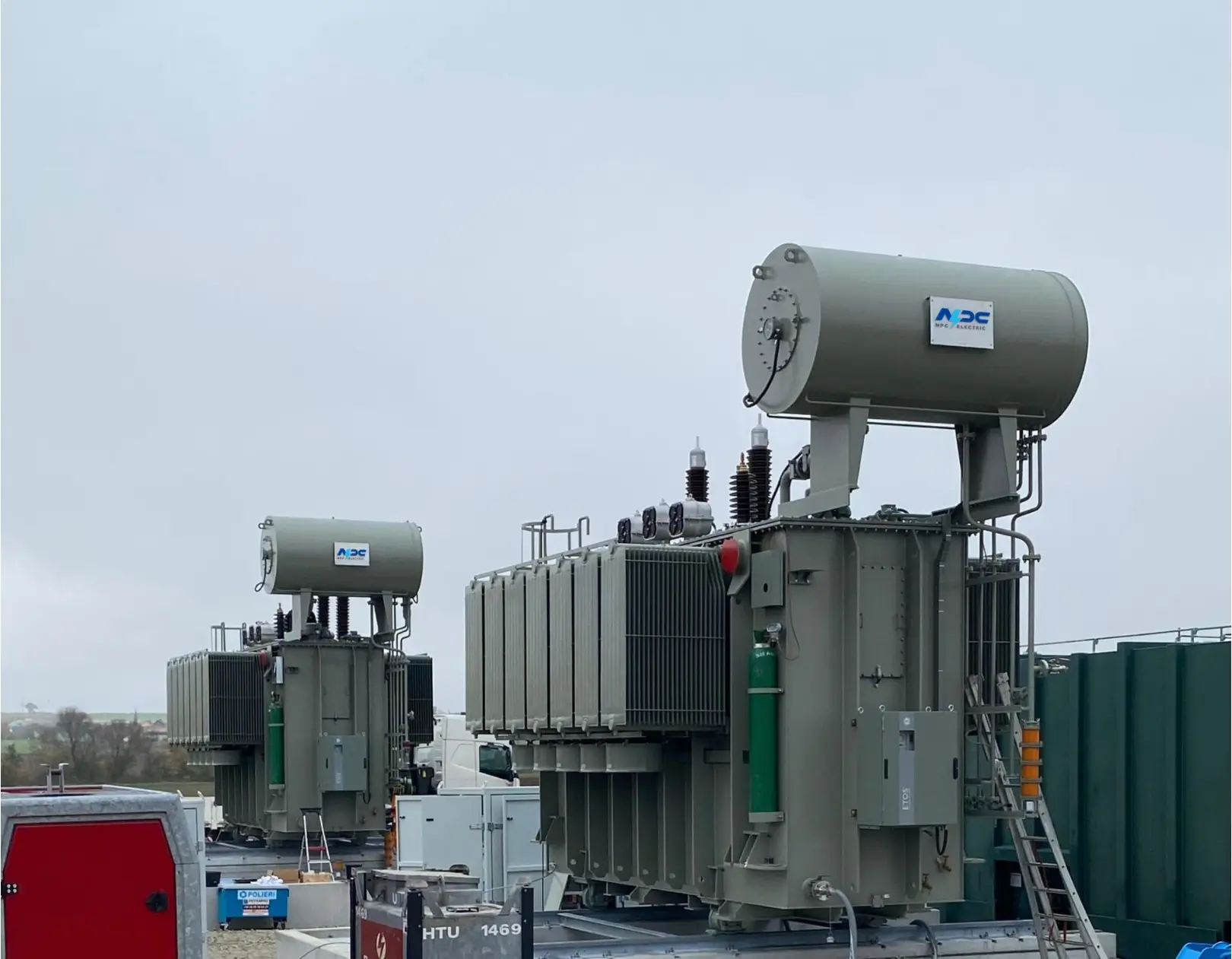
120kV High-Voltage Three-Phase Oil-Immersed Power Transformer
The 120kV High-Voltage Three-Phase Oil-Immersed Power Transformer is engineered for reliable and efficient operation in transmission networks and high-voltage substations. Designed with high-permeability silicon steel cores and precision-wound copper conductors, it delivers low losses, excellent thermal performance, and strong short-circuit withstand capability. The oil-immersed cooling system ensures effective heat dissipation, supporting continuous operation under heavy-load and fluctuating grid conditions. A robust tank structure, advanced insulation system, and outdoor-rated protection allow stable operation in harsh climates and demanding environments. Manufactured in accordance with IEC, IEEE, and ANSI standards, this transformer is widely applied in utility grids, industrial power systems, and large-scale infrastructure projects where high reliability, long service life, and stable voltage transformation are essential.2Y-high-voltage-power-cable-2.webp)
High Voltage / 2XS(FL)2Y, A2XS(FL)2Y 110kV Power Cable
2XS(FL)2Y / A2XS(FL)2Y 110kV High Voltage Power Cable is a longitudinally watertight, XLPE-insulated cable designed for primary power distribution up to 110kV (123kV highest). It features a Class 2 copper or aluminium conductor, extruded semi-conductive XLPE screens, and XLPE insulation applied via a three-layer co-extrusion process for superior electrical performance. A laminated aluminium or copper moisture barrier with copolymer coating provides excellent water and gas resistance, while HDPE oversheath ensures high abrasion resistance and flexibility. The copper wire screen with counter-helical copper tape offers optimal shielding, and water swellable tapes ensure longitudinal water blocking. Manufactured to IEC 60840, HRN HD 632, and IEC/EN 60228 standards, this cable is ideal for underground installations requiring high reliability and moisture protection.Welcome your inquiry
Honesty, Integrity, Frugality, Activeness and Passion