High-Voltage Transmission Lines: The Backbone of the Electric Power Grid
2026-01-19
High-voltage transmission lines form the backbone of the power distribution network, ensuring the efficient and reliable delivery of electricity to homes, industries, and businesses. These lines, carrying high-voltage power, enable long-distance, high-capacity energy transmission, reducing energy losses caused by long distances. High-voltage transmission lines play a crucial role in the power system, especially in cross-regional and cross-border power transmission scenarios, ensuring stable and efficient power flow. As the world's reliance on renewable energy gradually increases, widely distributed new energy sources such as wind and solar power also require high-voltage transmission lines to efficiently transmit them to the grid center, further enhancing the flexibility and reliability of the power system.
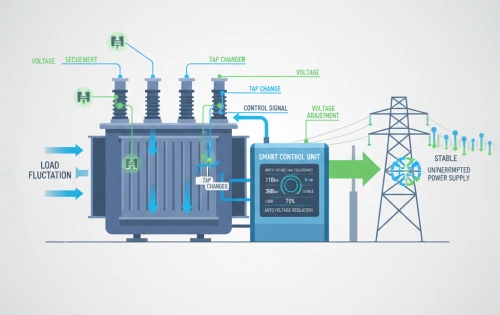
Furthermore, with the growth in electricity demand and the increasing focus on clean energy, high-voltage transmission lines are not only key to solving energy shortages and power supply bottlenecks, but also essential for ensuring stable grid operation, responding to load fluctuations, and providing higher energy efficiency. With continuous technological innovation, high-voltage transmission lines will continue to play an increasingly important role in future power systems.
What Are High-Voltage Transmission Lines?
High-voltage transmission lines are a key component of electric power systems. They are designed to carry electricity at very high voltage levels from power plants to local substations, where it is then distributed to homes and businesses. These transmission lines are typically used to transport electricity over long distances, which is why long-distance transmission is one of their key functions.
The high voltage allows the electricity to travel with minimal energy loss, a vital aspect of efficiency in modern electrical infrastructure. High voltage reduces the current flowing through the lines, which in turn minimizes the heat and energy lost due to resistance in the conductors. High-voltage transmission is thus essential for maintaining efficient power flow across vast networks, ensuring that power lines can deliver electricity reliably over vast distances.
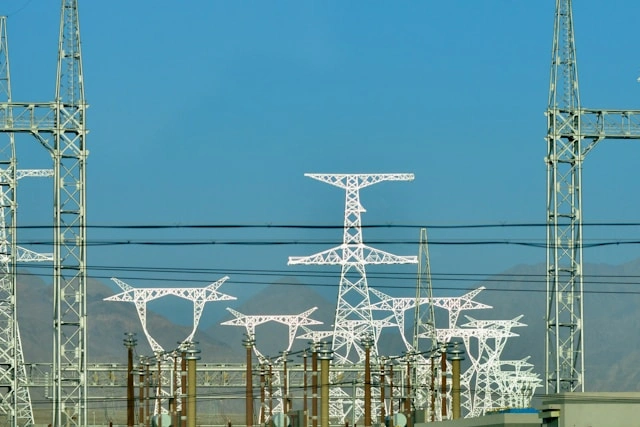
High-Voltage Transmission Lines in the Power Grid
In the context of the power grid, high-voltage transmission lines serve several key purposes:
-
Efficient Power Transfer: High voltage allows for efficient power transfer with less energy loss. Transmission lines carrying high-voltage power reduce the energy dissipated as heat, making the system more efficient.
-
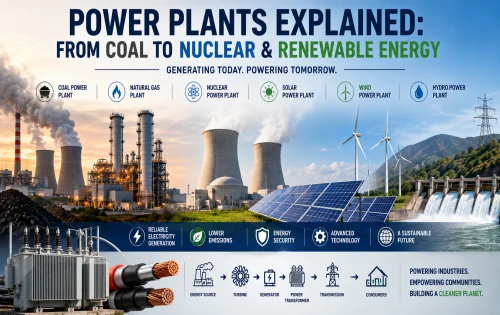
Connecting Power Plants to Distribution Networks: High-voltage lines transport electricity from large power plants, whether coal, natural gas, or renewable energy sources, to substations for local distribution.
-
Voltage Level Management: Voltage levels are carefully regulated at each stage of the transmission process, using transformers to step up the voltage for long-distance transmission and step it down again for use in homes and businesses.
-
Reliable Long-Distance Transmission: High-voltage power lines enable the transport of electricity across long distances without significant loss of power, which is crucial for urban and rural energy supply.
Types of High-Voltage Transmission Lines
There are several types of high-voltage transmission lines, each serving different purposes based on the specific needs of the power grid:
1. High Voltage AC Transmission Lines
The most common type of transmission line used for electric power transfer is alternating current (AC) high-voltage transmission. These lines carry electricity over long distances from the power generation source to substations where it can be distributed. AC is preferred because it is easier and cheaper to generate and distribute than DC (Direct Current).
2. High Voltage DC Transmission Lines (HVDC)
High-voltage direct current (HVDC) transmission lines are used for long-distance power transmission when AC lines become inefficient or impractical. HVDC lines are particularly effective for transmitting power across large distances, especially undersea cables or international borders. HVDC technology helps minimize energy losses and allows for the integration of renewable energy sources that require efficient power transfer.
3. High Voltage Power Lines Map and Routes for Power
The configuration of the high-voltage power lines and the routes for power are vital to the layout of the power grid. These routes are often mapped to optimize transmission efficiency and reliability. Urban areas might use underground high-voltage transmission lines, while rural areas rely more heavily on overhead power lines. The paths of these lines are planned to minimize disruptions, environmental impact, and energy loss.
4. Three-Phase Transmission Lines
Three-phase power is commonly used in high-voltage transmission lines to improve the efficiency of electrical power delivery. The three-phase system uses three separate conductors carrying alternating currents that are phased 120 degrees apart, which enables more efficient power distribution and power flow compared to single-phase systems.
|
Transmission Line Type |
Description |
Key Features |
Typical Applications |
|
High-Voltage AC Transmission |
AC transmission lines used for long-distance power transfer. |
Most common, uses alternating current; typically overhead or underground. |
Power distribution in urban and rural areas, high-voltage substations. |
|
High-Voltage DC Transmission (HVDC) |
DC transmission lines used for long-distance or undersea transmission. |
Reduces energy loss over very long distances, often used for international connections. |
Offshore wind farms, undersea cables, cross-border power transmission. |
|
Three-Phase Transmission Lines |
Uses three-phase electrical power to improve power transfer efficiency. |
Reduces loss, provides a stable and continuous power flow. |
High power applications, industrial facilities, and power grids. |
|
High Voltage Power Lines |
Overhead or underground lines carrying high-voltage electricity. |
Designed for long-distance electricity transport with minimal losses. |
Electric grid connections, long-distance transmission. |
|
High-Voltage Power Lines Map |
Mapping of high-voltage transmission routes to optimize power flow. |
Visualization of transmission routes for optimal energy distribution. |
Planning and monitoring electrical grid infrastructure. |
|
High-Voltage DC Transmission Lines |
Specific to DC lines for optimal energy transfer across vast distances. |
Efficient for long-distance energy transport with minimal losses. |
Renewable energy integration, remote solar and wind power transmission. |
High-Voltage Transmission Lines for Renewable Energy
As the world increasingly shifts towards renewable energy, high-voltage transmission lines have become even more critical for integrating solar, wind, and other renewable power sources into the existing grid. These sources are often located in remote areas far from major population centers, requiring long-distance transmission capabilities.
For example, high-voltage transmission lines are essential for transmitting wind power from offshore wind farms or remote land-based turbines to major urban areas. Similarly, solar farms in sunny regions require robust transmission networks to transport electricity to cities and industrial areas.
Moreover, HVDC transmission lines are increasingly being used to connect regions with high renewable energy potential to national or international grids, facilitating the efficient transport of electricity across borders.
Challenges and Innovations in High-Voltage Transmission Lines
While high-voltage transmission lines are integral to modern power grids, they face several challenges:
-
Aging Infrastructure: Much of the high-voltage transmission infrastructure is aging and in need of upgrades to handle modern demands, including renewable energy integration.
-
Environmental Impact: The construction and maintenance of high-voltage transmission lines can have significant environmental impacts, especially when located in sensitive areas. Innovations such as underground lines and less invasive materials are helping to mitigate these issues.
-
Technological Advancements: Advancements in high-voltage power lines technology, such as superconducting transmission lines and advanced HVDC systems, promise to increase efficiency and reduce power losses further.
High-voltage transmission lines are the backbone of the electric power grid, facilitating the efficient and reliable delivery of power across long distances. As the world transitions towards renewable energy, these lines will play an even more vital role in ensuring that energy from solar, wind, and other sustainable sources reaches consumers efficiently. By understanding how high voltage power lines work, their types, and their importance in power transmission, we can better appreciate their role in shaping the future of global energy systems.
As technology evolves and demand for energy grows, innovations in high-voltage transmission lines will continue to enhance the efficiency of the grid, reduce energy losses, and contribute to a more sustainable and resilient energy infrastructure.

Related Articles
Related Products
2/0 Cavolinia Aluminum Conductor Triplex Overhead Service Drop Cable
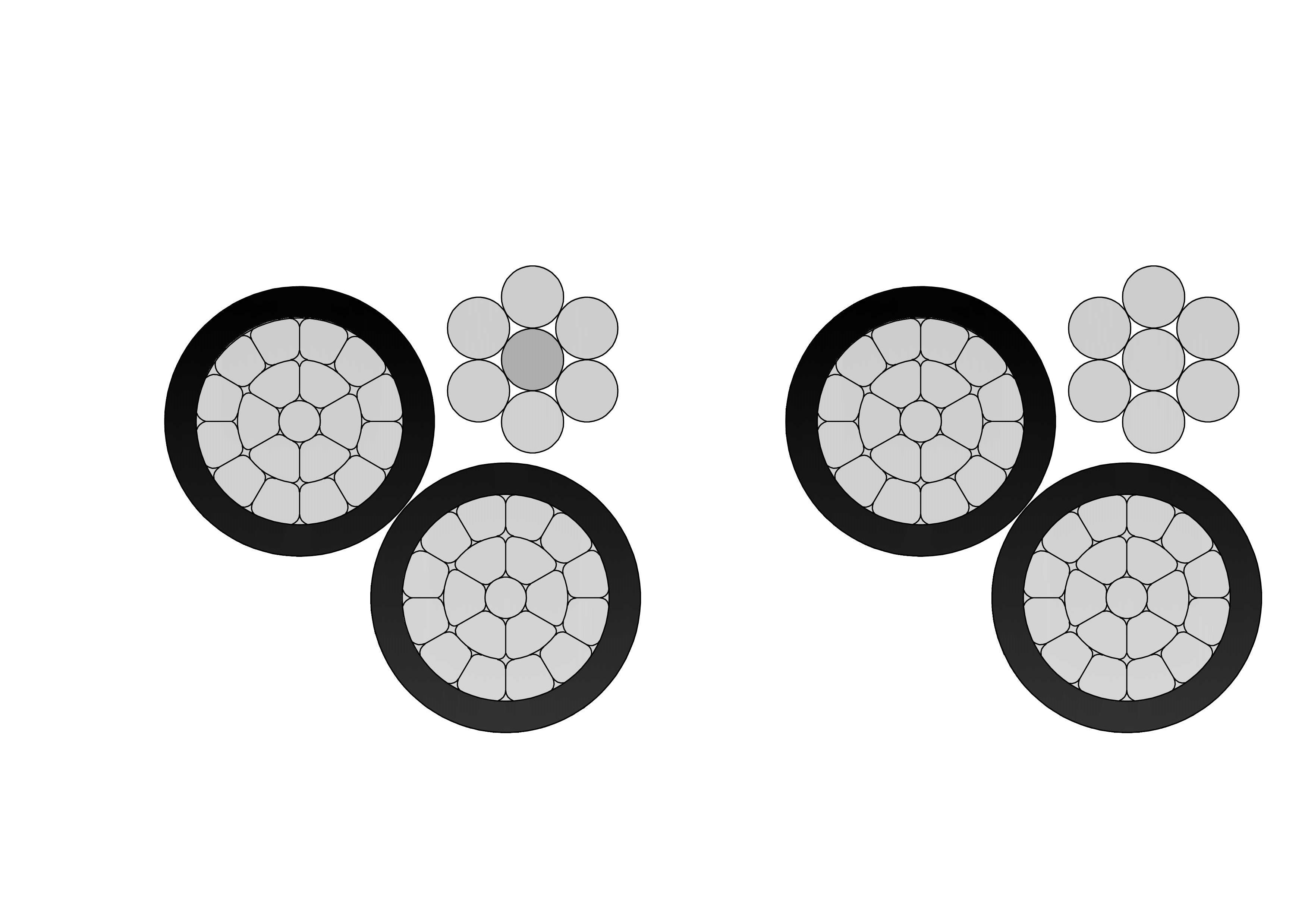
The 2/0 Cavolinia Triplex Service Drop Cable is a reliable overhead cable for secondary power distribution to residential service entrances. Featuring two 2/0 AWG aluminum phase conductors and one neutral messenger (7-strand) insulated with XLPE or PE and assembled in triplex configuration, it provides excellent mechanical strength and weather resistance. Compliant with ASTM B-230, B-231, ICEA S-76-474, and ANSI/ICEA standards, this cable supports 600V applications with high UV, moisture, and abrasion protection. The self-supporting messenger reduces sag and simplifies installation over medium spans. The 2/0 Cavolinia Triplex Service Drop Cable ensures low power losses, high current capacity, and long service life in harsh outdoor conditions. Lightweight and flexible, it is widely used for two-phase service drops with neutral in urban, suburban, and rural areas requiring safe, cost-effective aerial connections from utility poles to homes.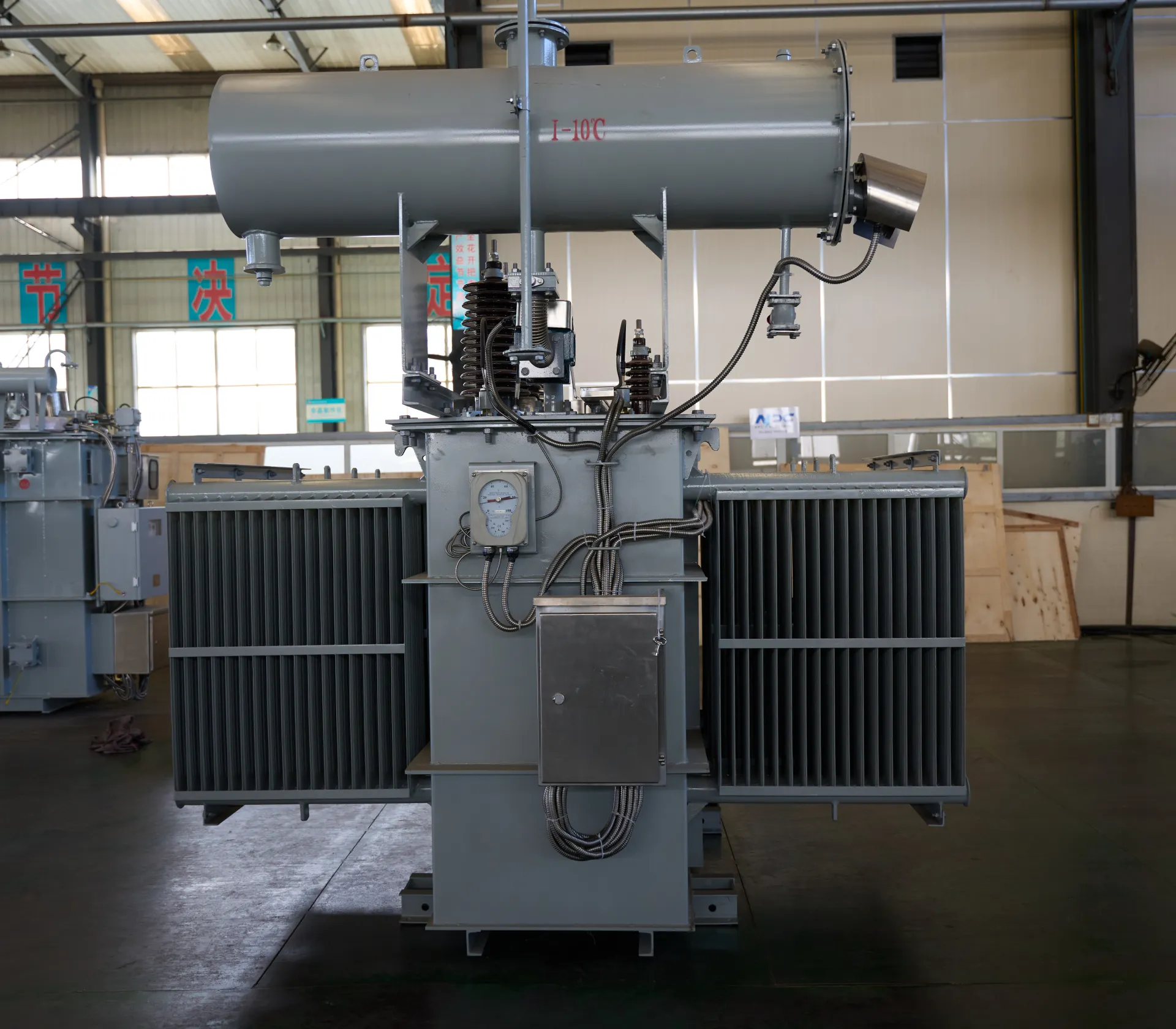
40kV 50MVA Oil Immersed Three-Phase MV&HV Power Transformer Copper
The 40kV 50MVA Oil Immersed Three-Phase MV&HV Power Transformer Copper is engineered for large-scale transmission and industrial substations. Equipped with high-purity copper windings, ONAN/ONAF cooling, and ±8×1.25% on-load tap changer, it achieves ultra-low losses (S13/S14 series). Fully compliant with IEC 60076 and GB/T 1094, it withstands 200 kV lightning impulse and PD <10 pC. Robust corrugated-fin tank with detachable radiators ensures excellent thermal performance under continuous heavy load. Typical voltages: 40±8×1.25%/11kV or 40/6.3kV. Vacuum oil filling and nitrogen sealing guarantee 35+ years of reliable, maintenance-free operation in harsh environments. Trusted by utilities and EPC contractors worldwide.
2000kVA 35kV Wind Turbine Step-Up Transformer for Onshore Wind Farms
The Wind Turbine Step-Up Transformer 2000kVA 35kV is purpose-built for onshore wind farms, enabling efficient voltage conversion from wind turbine generators to medium-voltage collection networks. Designed to operate reliably under fluctuating wind loads and harsh outdoor conditions, this transformer ensures stable power transmission and reduced energy losses across wind power systems. The oil-immersed insulation structure provides excellent thermal stability and long service life, while the optimized magnetic core minimizes no-load losses and acoustic noise. High-quality windings and reinforced insulation withstand frequent load variations caused by changing wind speeds.
2/0 Cyclops Aluminum Conductor Triplex Overhead Service Drop Cable
The 2/0 Cyclops Aluminum Conductor Triplex Overhead Service Drop Cable is engineered for reliable overhead electrical service from utility lines to residential and commercial buildings. This cable consists of two insulated phase conductors helically wrapped around a bare aluminum neutral messenger, ensuring mechanical strength and electrical stability. Manufactured using high-purity aluminum and weather-resistant insulation, the 2/0 Cyclops Aluminum Conductor Triplex Overhead Service Drop Cable delivers excellent conductivity, corrosion resistance, and long service life. Its lightweight construction simplifies installation while maintaining strong tensile performance for aerial applications. The cable is designed to meet utility standards and perform consistently under varying environmental conditions such as UV exposure, wind, and temperature fluctuations. Each production batch undergoes comprehensive testing to guarantee compliance, safety, and performance, making this cable a dependable solution for modern power distribution systems.H-medium-voltage-power-cable-2.jpg)
N2XS(F)H Medium Voltage Power Cable (6/10kV, 12/20kV, 18/30kV)
The N2XS(F)H Medium Voltage Power Cable is engineered for medium voltage power distribution systems operating at 6/10kV, 12/20kV, and 18/30kV, where electrical reliability and fire safety are essential. The cable combines a copper conductor with XLPE insulation and a longitudinally corrugated aluminum sheath that delivers excellent moisture protection and mechanical strength. The LSZH outer sheath minimizes toxic gas release and smoke generation during fire exposure, supporting safer evacuation and equipment protection. Designed and manufactured in compliance with IEC standards, N2XS(F)H cables provide low dielectric losses, high thermal stability, and dependable long-term operation. The metallic sheath enhances grounding and fault current performance, making the cable suitable for critical infrastructure and underground installations.
4 Scallop Aluminum Conductor Triplex Overhead Service Drop Cable
The 4 Scallop Triplex Aluminum Overhead Service Drop Cable is engineered for reliable utility power delivery from pole-mounted transformers to service entrances in residential, commercial, and temporary construction setups. It consists of two insulated phase conductors and a bare AAC (All-Aluminum Conductor) messenger that functions as both a neutral and mechanical support. Optimized for overhead single-phase service drops, it operates at voltages up to 600V and uses black cross-linked polyethylene (XLP) insulation to ensure long-lasting resistance to UV rays, moisture, and abrasion. This triplex configuration ensures excellent mechanical strength, reduced sag, and UV/weather resistance. Rated for 600V phase-to-phase and conductor temperatures up to 90°C (XLPE), it offers ampacity of 115A. Compliant with ASTM B-230, B-231, and ICEA S-76-474 standards, the 4 Scallop cable provides lightweight, corrosion-resistant performance ideal for long-term reliability in demanding aerial installations.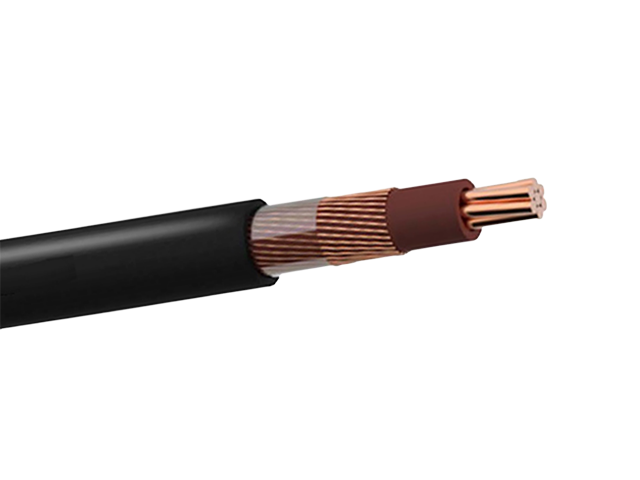
15kV Concentric Neutral Power Cable
The 15kV Concentric Neutral Power Cable is a premium medium-voltage underground distribution cable designed for reliable primary power delivery in distribution networks. It features a stranded copper or aluminum conductor, extruded semi-conducting conductor shield, TR-XLPE or EPR insulation, semi-conducting insulation shield, and helically applied bare copper concentric neutral wires, all protected by a tough sunlight-resistant LLDPE jacket. Available in 100% or 133% insulation levels with full or reduced neutral, this cable provides excellent electrical performance, moisture resistance, and mechanical protection. Suitable for direct burial or duct installations, the 15 kV Concentric Neutral Power Cable meets ICEA S-94-649, AEIC CS8, and related standards. It undergoes rigorous quality testing from raw materials to finished product, ensuring long-term reliability, low dielectric loss, and high resistance to water treeing in demanding underground environments.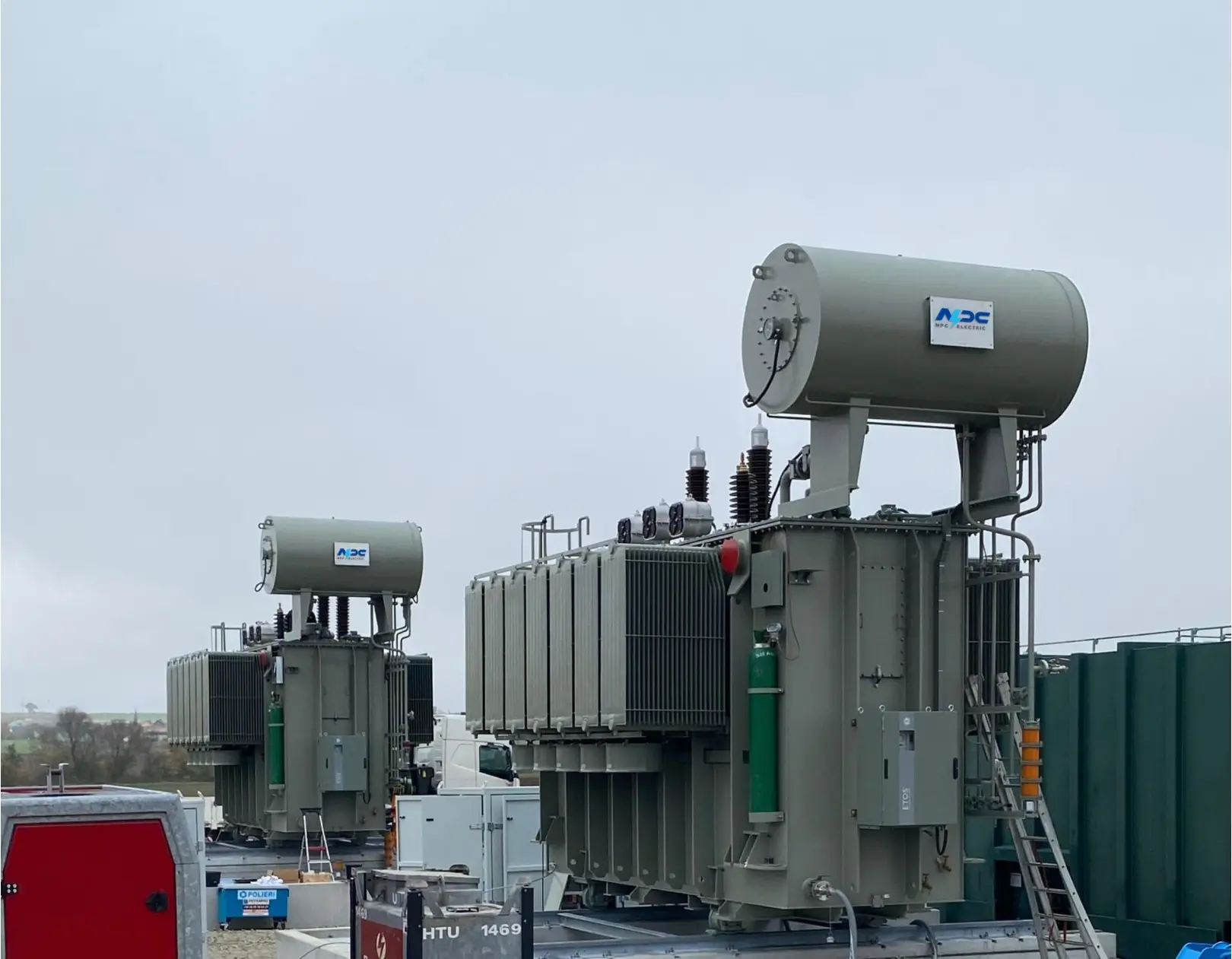
120kV High-Voltage Three-Phase Oil-Immersed Power Transformer
The 120kV High-Voltage Three-Phase Oil-Immersed Power Transformer is engineered for reliable and efficient operation in transmission networks and high-voltage substations. Designed with high-permeability silicon steel cores and precision-wound copper conductors, it delivers low losses, excellent thermal performance, and strong short-circuit withstand capability. The oil-immersed cooling system ensures effective heat dissipation, supporting continuous operation under heavy-load and fluctuating grid conditions. A robust tank structure, advanced insulation system, and outdoor-rated protection allow stable operation in harsh climates and demanding environments. Manufactured in accordance with IEC, IEEE, and ANSI standards, this transformer is widely applied in utility grids, industrial power systems, and large-scale infrastructure projects where high reliability, long service life, and stable voltage transformation are essential.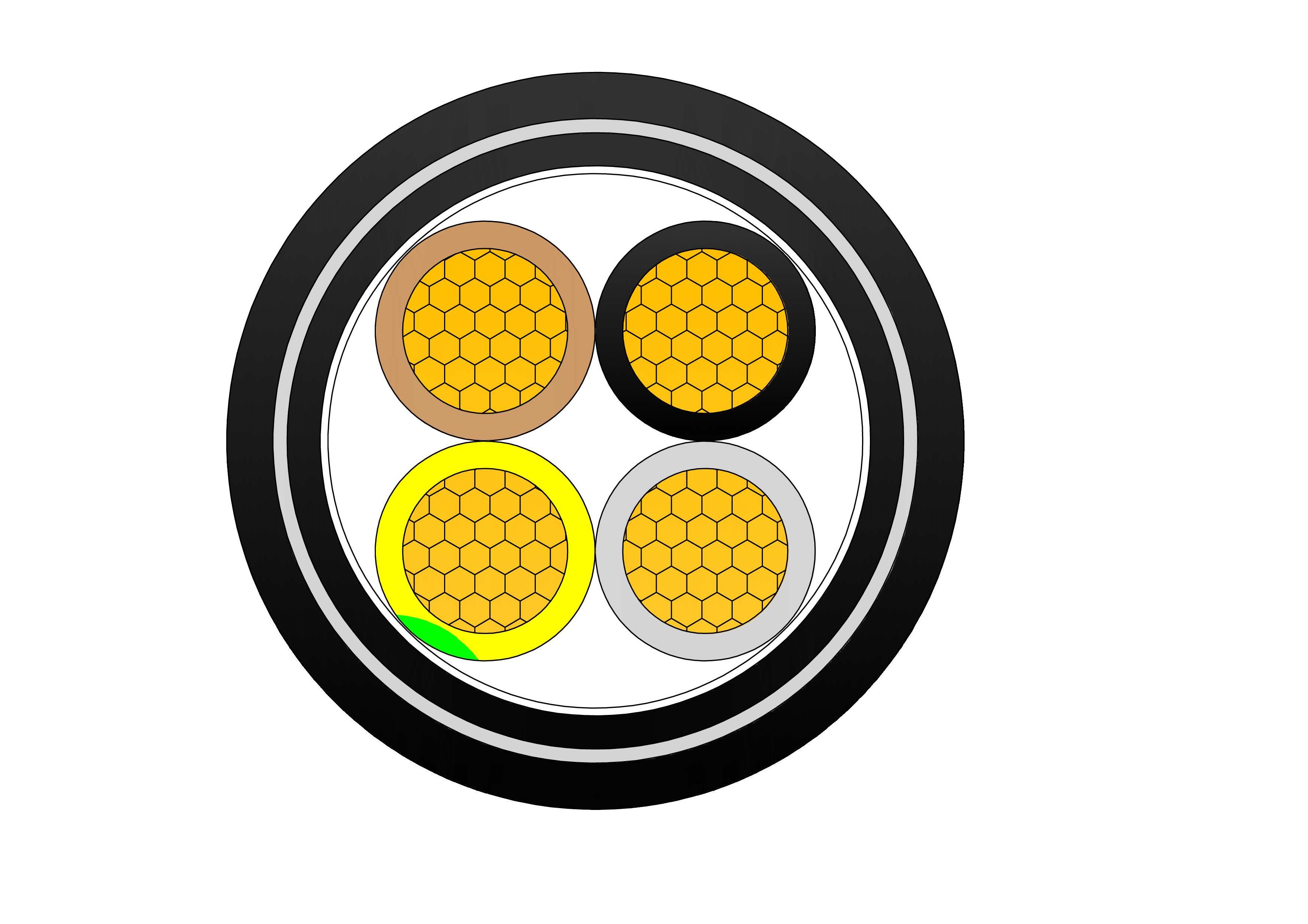
N2XBY 0.6/1kV Low Voltage Power Cable
N2XBY 0.6/1kV are low voltage power cables designed according to BS 5467 standard, suitable for fixed installation in indoor, outdoor, underground, Cable ducts or conduits, or concrete (not subject to vibration) environments. Featuring stranded copper conductors, cross-linked polyethylene (XLPE) insulation, PVC bedding, galvanised steel wire armour (SWA), and PVC outer sheath, it fully complies with IEC 60502-1 standards. The steel wire armour provides excellent mechanical protection against impacts, rodents, and crushing forces, making it perfect for direct burial. Widely used in industrial plants, infrastructure projects, and utility networks requiring reliable, protected low-voltage power supply underground or outdoors.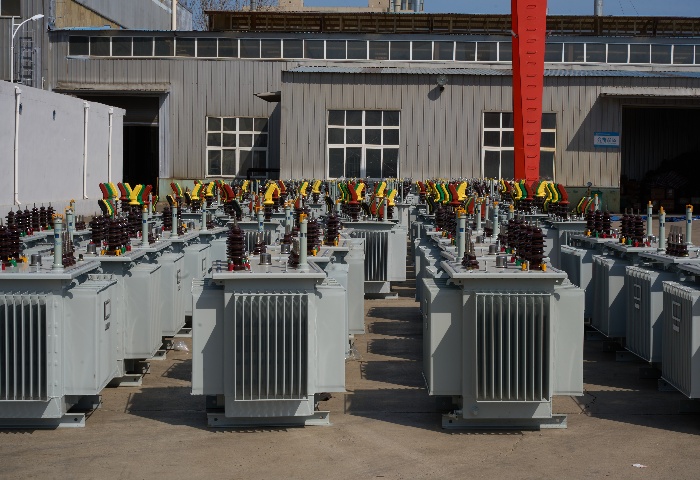
44kV Oil Immersed Transformer
NPC ELECTRIC's 44kV Oil Immersed Transformer is a heavy-duty three-phase power unit tailored for efficient high-voltage to medium-voltage step-down in 50/60Hz AC grids, handling primary inputs up to 44kV (or 40-46kV variants). Built with a durable conservator-equipped tank and high-efficiency radiator system for optimal oil circulation and heat dissipation. Suitable for pole or pad-mounted installations with YNd11/Dyn1 vector groups and high BIL (200-250kV), it delivers precise 44kV to secondary levels (e.g., 11kV/13.8kV/0.69kV), optimizing power quality, reducing harmonic distortions, and facilitating seamless integration in expansive utility infrastructures.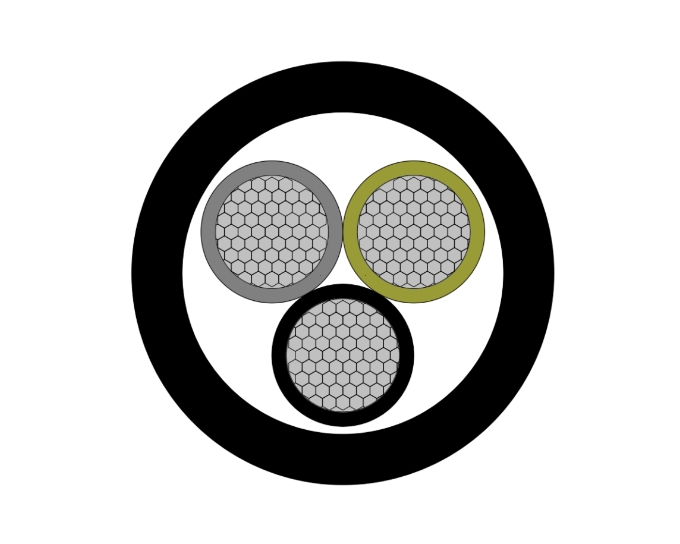
NA2X2Y Cables
NA2X2Y cable is a low-voltage power cable with an aluminum conductor, XLPE (cross-linked polyethylene) insulation, and a PE (polyethylene) outer sheath, designed for fixed installations in power distribution systems. It complies with IEC 60502-1 and is rated for 0.6/1kV. Thanks to its robust PE sheath, NA2X2Y cable provides excellent mechanical protection and high resistance to moisture, UV radiation, and chemicals—making it particularly suitable for outdoor and underground installation in solar photovoltaic (PV) projects. It is commonly used for connecting inverters, combiner boxes, transformers, and the main AC distribution network in solar farms.
3/0 Aega Aluminum Conductor Triplex Overhead Service Drop Cable
The 3/0 Aega Aluminum Conductor Triplex Overhead Service Drop Cable is designed to deliver safe and efficient overhead power distribution for utility networks. It features two insulated aluminum phase conductors helically wrapped around a bare aluminum neutral messenger, providing strong mechanical support and stable electrical performance. Manufactured using premium aluminum materials and high-performance insulation compounds, the 3/0 Aega Aluminum Conductor Triplex Overhead Service Drop Cable offers excellent resistance to corrosion, UV radiation, and environmental stress. Its optimized construction supports easy handling and installation while meeting utility and industry standards. The cable performs reliably under mechanical load, temperature variation, and long-term outdoor exposure. Strict quality management systems and detailed testing procedures are implemented throughout production to ensure consistent performance and dependable service life.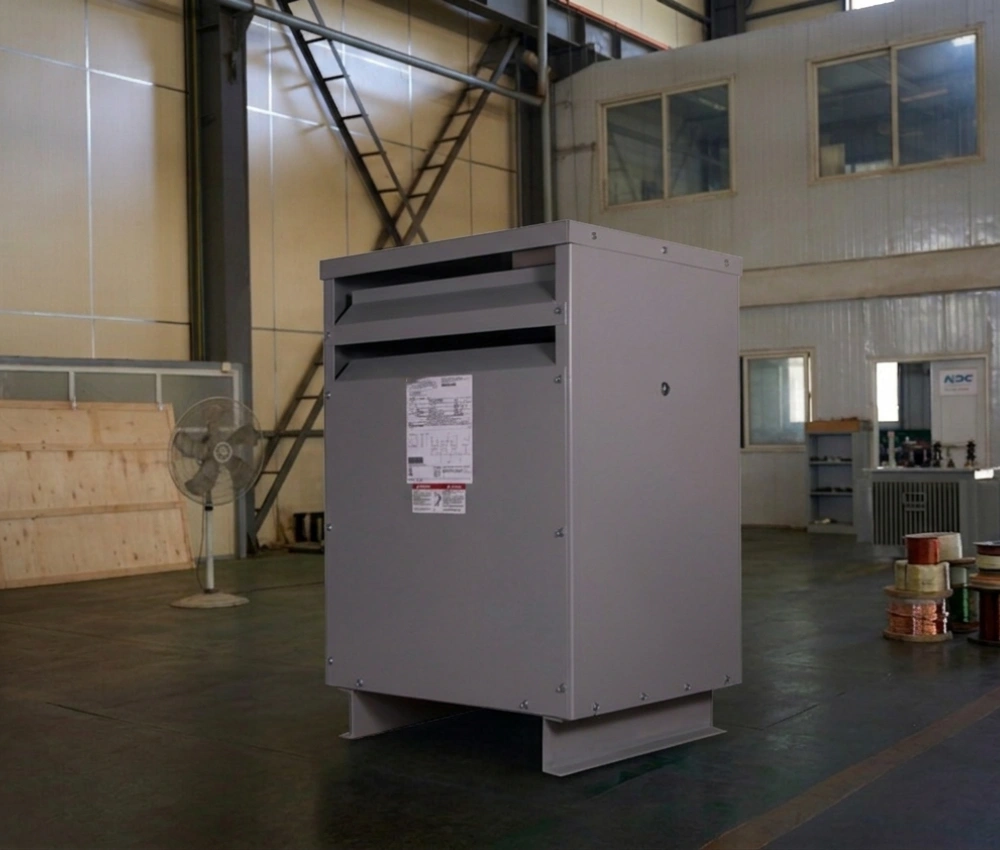
Isolation Transformer
The Isolation Transformer is a specialized power transformer designed to electrically separate the primary and secondary circuits while maintaining efficient power transfer. By eliminating direct electrical connections between input and output systems, the transformer effectively reduces electrical noise, suppresses common-mode interference, improves power quality, and enhances operational safety for critical equipment and sensitive electronic systems. It is widely utilized in industrial automation, healthcare facilities, data centers, telecommunications infrastructure, laboratory environments, and renewable energy systems where stable and clean power supply is essential. Available in single-phase and three-phase configurations, the transformer supports various voltage conversion requirements while delivering long-term reliability under continuous operating conditions. The Isolation Transformer can be integrated into modern power distribution networks, automation systems, and mission-critical electrical installations. With customizable winding configurations, enclosure options, and intelligent monitoring capabilities, the transformer offers flexible solutions for demanding industrial and commercial power applications while ensuring compliance with international electrical safety standards.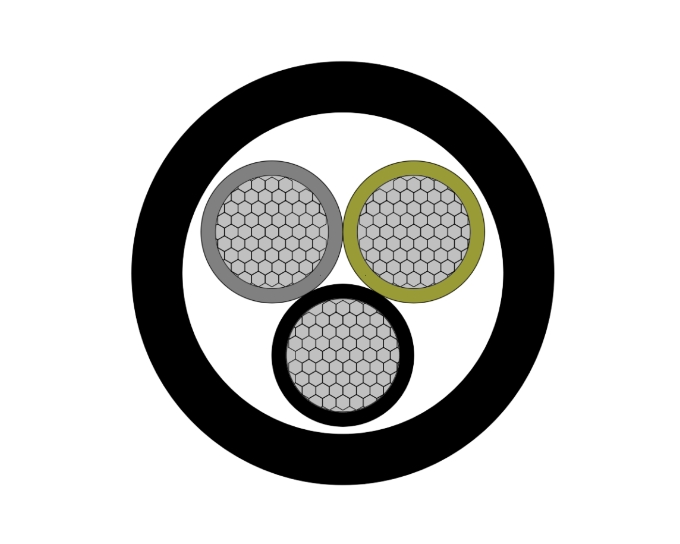
NA2XH Cables
NA2XH Cables is a low-voltage, halogen-free power cable with an aluminum conductor, XLPE (cross-linked polyethylene) insulation, and an LSZH (Low Smoke Zero Halogen) outer sheath. It is designed according to IEC 60502-1 and rated for 3.6kV applications. Lightweight aluminum reduces installation and material costs while maintaining excellent electrical performance and thermal stability. Resistant to moisture and mechanical stress, NA2XH Cables are suitable for indoor, outdoor, and direct burial applications.-AL-medium-voltage-power-cable-2.jpg)
RHZ1-2OL(AS)-AL Medium Voltage Power Cable(8.7/15kV, 12/20kV, 18/30kV Specifications)
RHZ1-2OL(AS)-AL are enhanced flame-retardant, low smoke, zero halogen (LSZH) medium voltage cables with aluminum conductors, manufactured under IEC 60502-2 standards. Featuring stranded aluminium conductors, cross-linked polyethylene (XLPE) insulation, metallic screen, and low smoke zero halogen (LSZH) outer sheath with enhanced fire performance (AS designation), it complies with UNE 21123-4 and CPR standards. In fire conditions, it emits very low smoke and no toxic gases. Aluminium construction reduces weight and costs while providing sufficient current capacity. Excellent partial discharge resistance, low dielectric losses, and high thermal stability ensure efficient, long-term operation. Suitable for direct burial, ducts, or indoor use in public areas. The RHZ1-2OL(AS)-AL Medium Voltage Power Cable is ideal for utilities, hospitals, schools, tunnels, and infrastructure projects requiring economical, high-safety medium voltage cabling with superior fire behavior and reliability worldwide.Welcome your inquiry
Honesty, Integrity, Frugality, Activeness and Passion