How to Choose the Right Mining Cable for Harsh Environments
2026-06-24
In the harshest mining environments, choosing the right mining cable is critical for safety, reliability, and operational efficiency. Underground mines expose cables to extreme conditions, including moisture, chemical corrosion, heavy abrasion, crushing forces, and wide temperature fluctuations. A poor-quality cable can fail unexpectedly, causing costly downtime, equipment damage, or even serious safety incidents.
High-performance mining cables must deliver superior flexibility, tear resistance, oil and chemical resistance, flame retardancy, and compliance with strict standards such as MSHA. Whether you need trailing cables, fixed installation cables, or high-voltage solutions, selecting the proper jacket material (like TPU or CPE) and construction is essential to withstand the toughest conditions.
1. Why Mining Cable Selection Is Critical
In modern mining operations, especially under harsh conditions, the reliability of a mining cable directly determines operational safety, productivity, and equipment lifespan. Unlike standard wires and cables, mining power cables are engineered to operate under extreme stress, including extreme temperatures, mechanical impact, moisture, and chemical exposure.
For engineers and procurement teams, selecting the correct power cable—whether an HV power cable or a flexible trailing cable—is not simply a technical decision but a strategic one. Poor cable selection can result in downtime, electrical failure, or even catastrophic accidents.
2. Understanding Harsh Mining Environments
Mining operations expose cables to some of the most demanding conditions on earth. Deep underground, mining cables must endure constant moisture, water ingress, chemical corrosion, abrasive rocks, heavy crushing loads, and extreme temperature swings. Vibrations from heavy machinery and frequent dragging further accelerate wear and tear.
These harsh mining environments significantly increase the risk of cable failure, leading to unplanned downtime, higher maintenance costs, and potential safety hazards. That’s why selecting the right mining cable with robust construction, superior flexibility, and high resistance to oil, chemicals, and flame is essential for reliable performance and long service life in tough mining applications.
Mining environments impose multiple stress factors on electrical cable systems:
Extreme Temperatures
Cables must operate reliably in ambient temperatures ranging from sub-zero underground mines to high-heat open-pit operations.
Mechanical Stress
Heavy machinery and continuous movement require cables with high mechanical strength to resist abrasion, impact, and tension.
Moisture and Chemicals
Underground mines expose underground mining cables to water ingress, oil, and corrosive substances.
Fire Hazards
The presence of combustible gases demands cables with flame resistance and fire-resistant properties.
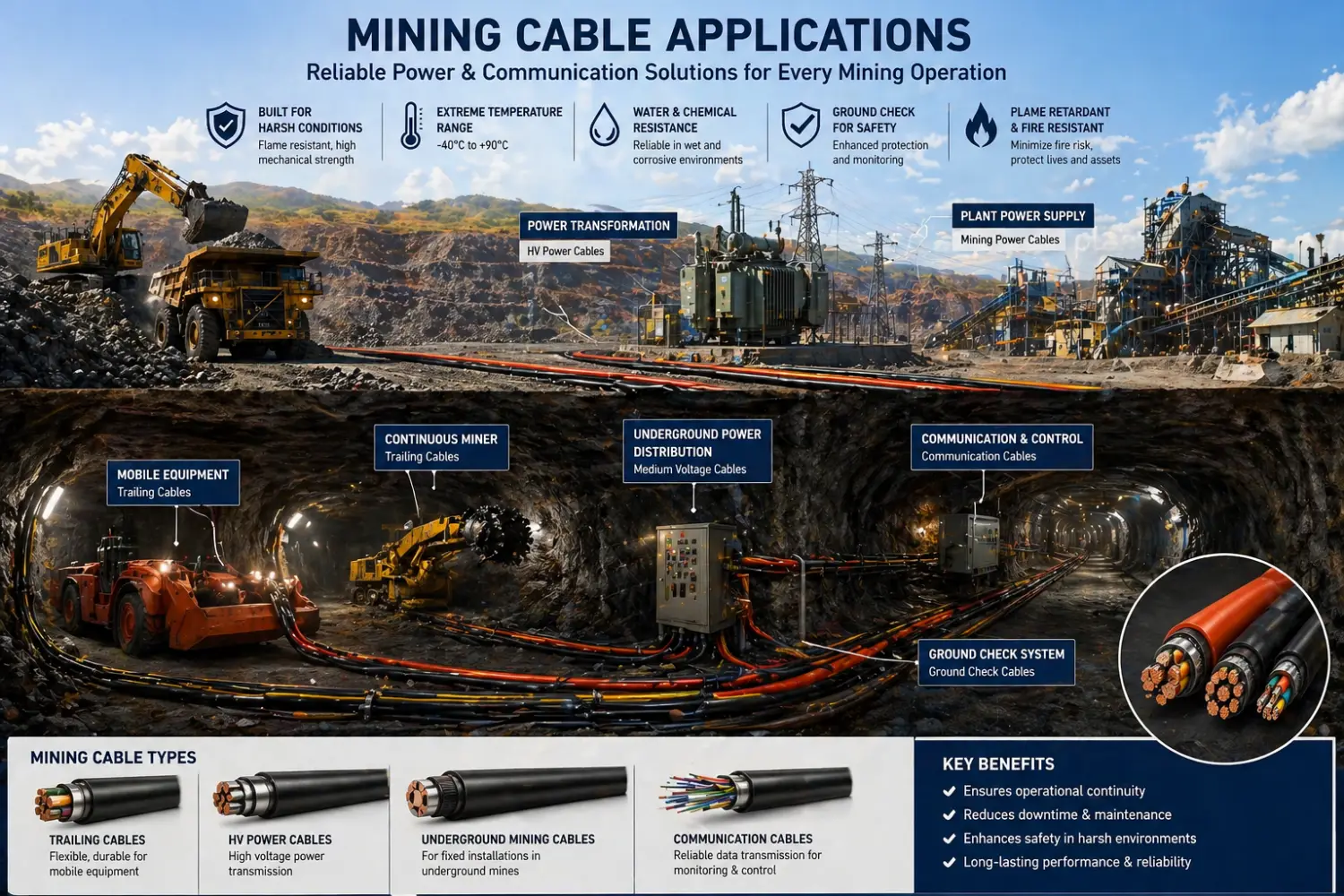
3. Types of Mining Cables for Harsh Conditions
Trailing Cable
A trailing cable is used for mobile mining equipment such as shuttle cars and drills.
Features:
- High flexibility
- Reinforced insulation
High Voltage Power Cable
HV power cable systems are used for long-distance power transmission in mining operations.
Applications:
- Large-scale mining sites
- Power distribution networks
Communication Cable
In modern mining, communication cable systems support monitoring, automation, and safety systems.
Underground Mining Cables
Specifically designed mining industry cables for underground use offer:
- Moisture resistance
- Flame-retardant insulation
- High durability
📊 Mining Cable Types and Application Matrix
|
Cable Type |
Voltage Range |
Application |
Key Features |
Environment Suitability |
|
Trailing Cable |
1kV–15kV |
Mobile mining equipment |
High flexibility, abrasion resistance |
High movement, harsh mechanical stress |
|
HV Power Cable |
6kV–35kV+ |
Long-distance power transmission |
High insulation strength |
Large mining sites |
|
Underground Mining Cable |
1kV–25kV |
Underground distribution |
Moisture-resistant, flame retardant |
Wet and confined environments |
|
Communication Cable |
Low voltage |
Monitoring & control systems |
Signal stability, shielding |
Automation systems |
4. Key Selection Criteria for Mining Cables
Cable Type Selection
Choosing the correct cable type depends on:
- Application (mobile vs fixed)
- Voltage level
- Environmental exposure
Mechanical Strength
Cables must withstand:
- Dragging
- Crushing
- Bending
High mechanical strength ensures long service life.
Flame Retardant and Fire Resistance
Use flame-retardant and fire-resistant cables to reduce fire risk in confined mining environments.
Temperature Resistance
Cables must maintain performance across varying ambient temperatures.
Ground Check System
A ground check conductor is essential for safety, enabling monitoring of grounding continuity.
📊 Key Parameters for Selecting Mining Power Cables
|
Parameter |
Typical Requirement |
Engineering Consideration |
Impact on Performance |
|
Voltage Level |
Low to high voltage |
Match system design |
Determines insulation thickness |
|
Temperature Range |
-40°C to +90°C |
Adapt to extreme temperatures |
Prevents insulation failure |
|
Mechanical Strength |
High |
Resistance to impact & tension |
Extends service life |
|
Flame Resistance |
Mandatory |
Use flame-resistant materials |
Enhances safety |
|
Flexibility |
Application-based |
Critical for trailing cable |
Prevents cable fatigue |
|
Moisture Resistance |
High |
Suitable for underground use |
Prevents corrosion |
|
Ground Check |
Required |
Safety monitoring system |
Prevents electrical hazards |
5. Choose the Right Mining Cable for Harsh Environments
Step 1: Identify Application Type
Determine whether the cable is for mobile equipment (trailing cable) or a fixed installation.
Step 2: Determine Voltage Level
Select an appropriate HV power cable or low-voltage cable based on system requirements.
Step 3: Evaluate Environmental Conditions
Consider:
- Extreme temperatures
- Moisture exposure
- Mechanical stress
Step 4: Check Safety Features
Ensure the cable has:
- Flame resistance
- Fire-resistant insulation
- Ground monitoring (ground check)
Step 5: Verify Mechanical Strength
Choose cables with high mechanical strength for durability under harsh conditions.
Step 6: Select a Reliable Supplier
Work with experienced manufacturers of mining industry cables for quality assurance.
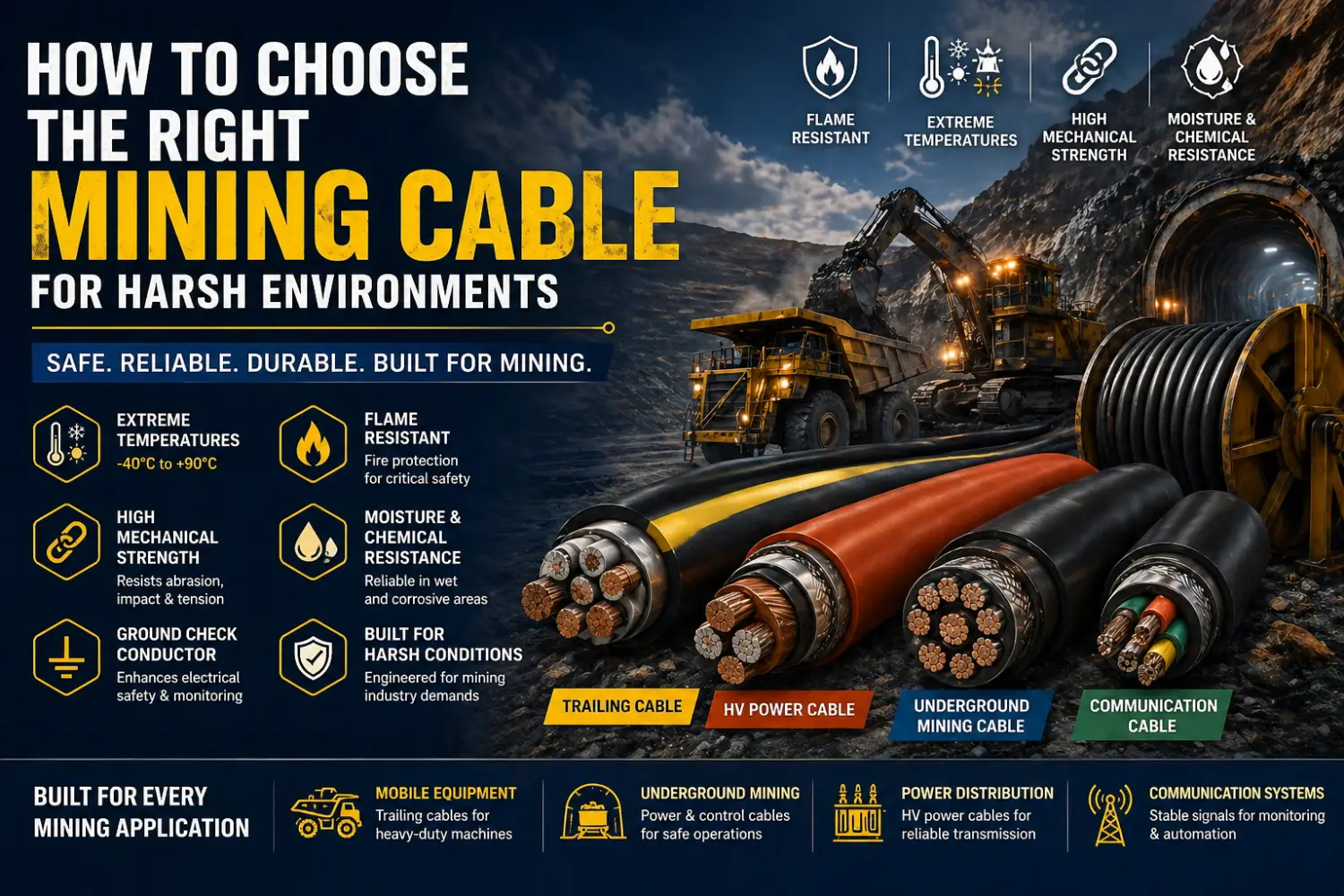
📊 Mining Cable Performance Requirements
|
Parameter |
Standard Requirement |
Engineering Impact |
|
Voltage Level |
Low to high voltage |
Determines insulation design |
|
Temperature Range |
-40°C to +90°C |
Ensures reliability in extreme temperatures |
|
Flame Resistance |
Mandatory |
Reduces fire hazards |
|
Mechanical Strength |
High |
Prevents damage under stress |
|
Moisture Resistance |
High |
Suitable for underground use |
|
Flexibility |
Depends on the application |
Critical for trailing cable |
6. Safety Considerations and Best Practices
Fire Safety
Using flame-resistant cables minimizes fire spread in underground environments.
Installation Practices
Proper routing and support reduce mechanical stress on cables.
Regular Inspection
Routine checks help identify wear and prevent failure.
Compliance Standards
Ensure cables meet international standards for mining applications.
📊 Common Mining Cable Risks and Prevention Strategies
|
Risk Type |
Cause |
Potential Impact |
Prevention Measures |
|
Insulation Breakdown |
Aging, heat, and moisture |
Short circuit, fire |
Use fire-resistant cables |
|
Mechanical Damage |
Dragging, crushing |
Cable failure, downtime |
High mechanical strength design |
|
Overheating |
Overload, poor ventilation |
Fire hazard |
Proper cable sizing |
|
Moisture Ingress |
Water exposure |
Corrosion, failure |
Waterproof insulation |
|
Ground Failure |
Faulty grounding |
Electrical hazard |
Install the ground check system |
7. Case Study: NPC ELECTRIC Mining Cable Project in Mongolia
Project Background
NPC ELECTRIC supplied mining power cables for a large-scale mining operation in Mongolia, where environmental conditions included:
- Extreme cold temperatures
- Dust and abrasive terrain
- Heavy equipment usage
In one of the world’s most challenging mining regions, NPC ELECTRIC successfully delivered high-performance mining cables for a major power distribution project in Mongolia. Facing extreme cold winters, high altitude, abrasive dust, and constant mechanical stress typical of Mongolian open-pit and underground mining operations, the project demanded cables that could deliver unmatched reliability in harsh mining environments.
NPC ELECTRIC supplied a range of robust low-voltage power cables, including YJLV-0.6/1kV models in specifications such as 3×70+1×35 mm², 3×95+1×50 mm², 3×120+1×70 mm², and armored cable YJLV22-0.6/1kV 3×240+1×120 mm². These cables were specifically engineered with superior flexibility, excellent oil and chemical resistance, flame retardancy, and strong mechanical protection to withstand crushing, dragging, and temperature fluctuations ranging from -40°C to high summer heat.
The result was outstanding. Since installation, the mining cable system has operated with zero unplanned failures, significantly reducing downtime and maintenance costs for the mining operator. Equipment uptime improved, safety compliance was enhanced, and overall operational efficiency rose in this remote and demanding location.
This Mongolia project highlights NPC ELECTRIC’s expertise in providing tailored mining cable solutions that meet international standards while addressing the toughest real-world conditions. Whether for surface mining, underground operations, or heavy machinery power supply, NPC ELECTRIC’s cables continue to prove their durability and value in extreme environments across the globe.
For mining companies seeking reliable, long-lasting mining cables for harsh environments, this case demonstrates how the right cable choice directly translates into higher productivity and lower total cost of ownership.
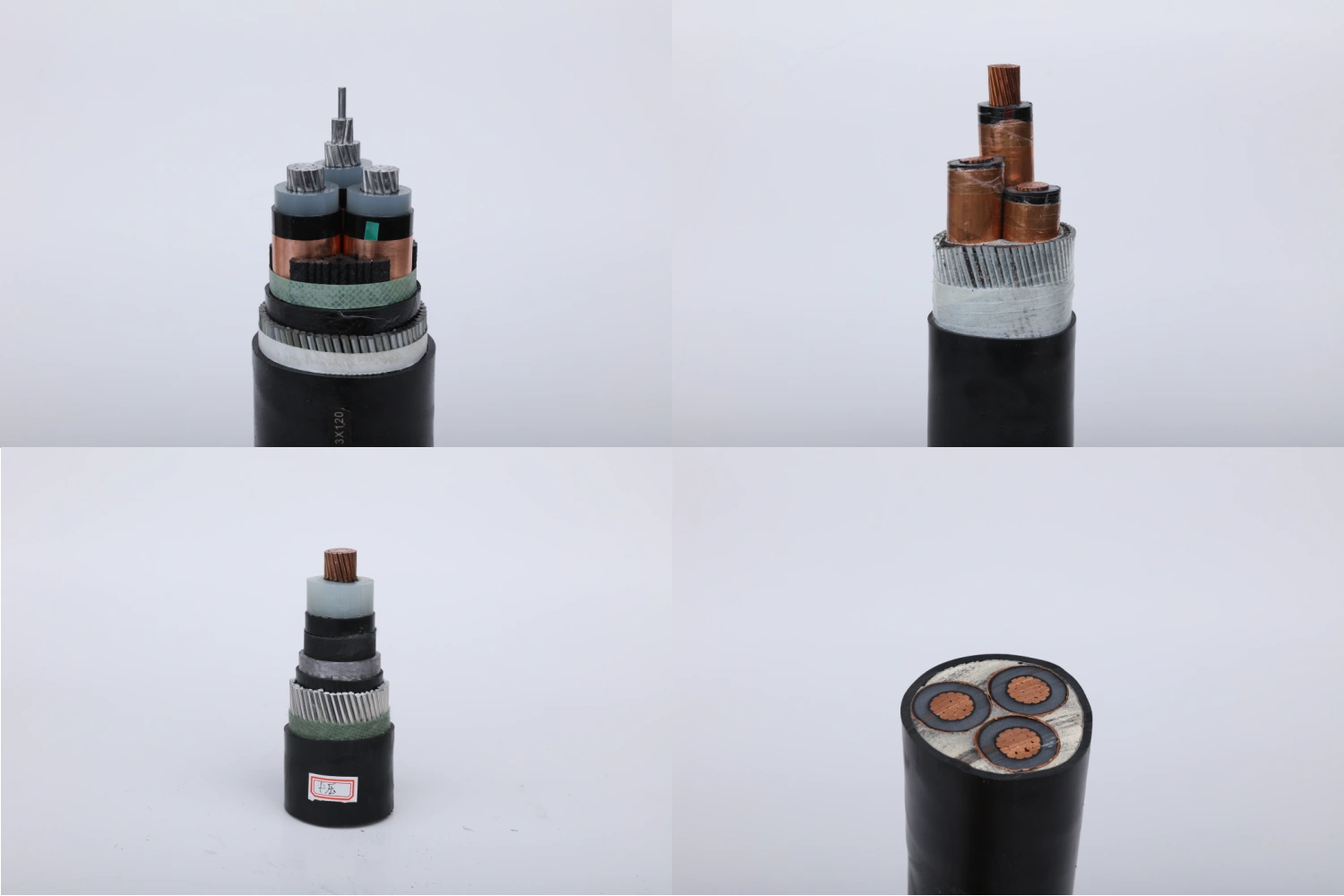
8. Common Mistakes in Mining Cable Selection
Underspecifying Cable Strength
Choosing cables without adequate mechanical strength leads to frequent failures.
Ignoring Environmental Conditions
Failure to consider harsh conditions can result in insulation degradation.
Choosing Low-Quality Products
Non-certified wires and cables compromise safety and performance.
9. Conclusion: Engineering Approach to Cable Selection
Selecting the right mining cable for harsh environments requires a comprehensive evaluation of technical, environmental, and operational factors. From HV power cable systems to flexible trailing cable solutions, each application demands a tailored approach.
By prioritizing flame resistance, durability, and proper design, mining operators can ensure safe and efficient operations. Partnering with experienced suppliers—such as those with proven project success like NPC ELECTRIC—provides a significant advantage in achieving long-term reliability.
❓ Frequently Asked Questions (FAQ)
1. What is a mining cable used for?
A mining cable is used to supply power to mining equipment and systems in harsh environments. It is designed to withstand extreme temperatures, mechanical stress, and moisture, making it suitable for underground and open-pit mining operations.
2. What is the difference between mining cables and standard power cables?
Unlike standard power cable products, mining power cables offer higher mechanical strength, flame resistance, and durability for use in harsh conditions such as underground mines.
3. What type of cable is best for underground mining?
Underground mining cables with flame-retardant, moisture-resistant insulation and high flexibility are ideal, especially for mobile equipment using trailing cable systems.
4. How do you ensure safety when using mining cables?
Safety is ensured by using fire-resistant cables, proper installation, regular inspection, and integrating a ground check system to detect faults.
5. What factors affect mining cable performance?
Performance depends on:
- Ambient temperatures
- Mechanical stress
- Voltage level (low to high voltage)
- Cable insulation and material quality

Related Articles
Related Products
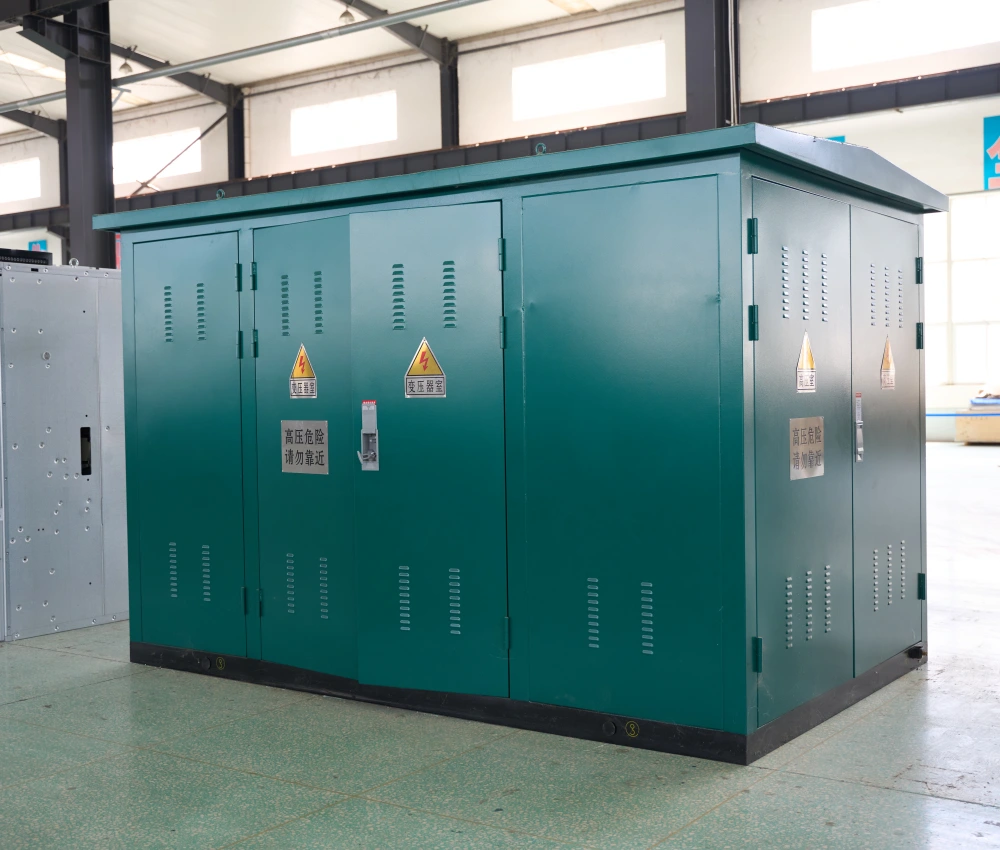
11kV 800kVA Prefabricated Compact Substation
The 11kV 800kVA Prefabricated Compact Substation is an advanced integrated power distribution system designed to provide safe, efficient, and reliable medium-voltage to low-voltage energy transformation for industrial, commercial, and infrastructure applications. The substation integrates 11kV medium-voltage switchgear, an 800kVA distribution transformer, low-voltage distribution equipment, and intelligent protection systems into a compact outdoor enclosure, significantly reducing installation space and on-site construction requirements. Built for continuous operation in demanding environments, the compact substation features a durable weather-resistant enclosure, optimized thermal ventilation structure, high-performance insulation system, and reinforced electrical safety protection. Its modular architecture simplifies transportation, accelerates installation, and minimizes maintenance complexity while ensuring stable long-term operational performance. The 11kV 800kVA compact transformer substation is suitable for utility distribution systems, renewable energy integration, manufacturing facilities, commercial complexes, and urban electrical infrastructure projects. With optional intelligent monitoring and remote communication functions, the substation supports modern smart-grid applications and improves operational efficiency across distributed power networks.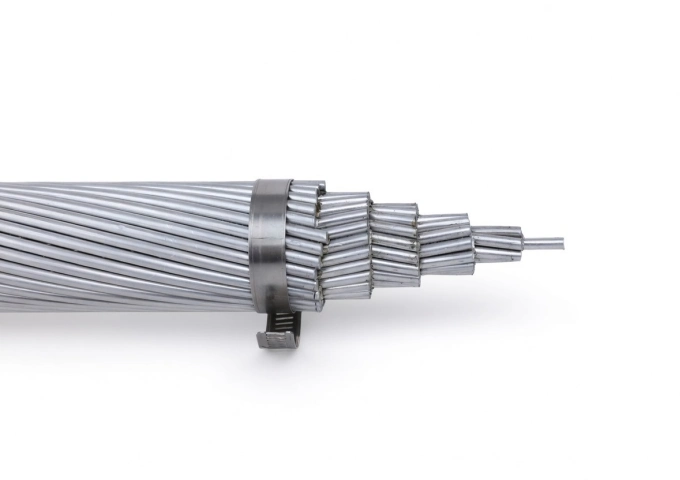
2500 MCM Lupine AAC Cable
The 2500 MCM Lupine AAC Cable is a high-performance All Aluminum Conductor designed for demanding overhead power transmission and distribution lines. Manufactured with 91 strands of premium 1350-H19 aluminum wire in a concentric lay configuration, this bare conductor provides excellent electrical conductivity with a low DC resistance of 0.00698 ohms per 1000 ft at 20°C. Featuring an overall diameter of 1.823 inches and a rated breaking strength of 41,900 lbs, the Lupine AAC delivers a robust ampacity of 1706 amps while weighing only 2370 lbs per 1000 ft. Its optimized strength-to-weight ratio minimizes sag and structural loading. Fully compliant with ASTM B-230 and B-231 standards, the 2500 MCM Lupine AAC Cable offers outstanding corrosion resistance for long-term durability in harsh outdoor environments, making it the preferred choice for utility networks requiring cost-effective, high-reliability bare aluminum conductors.2Y-high-voltage-power-cable-2.webp)
A2XS(FL)2Y HDPE High Voltage 64/110 (123) kV Power Cable
The A2XS(FL)2Y HDPE High Voltage 64/110 (123) kV Power Cable is a single-core aluminium conductor cable with XLPE insulation and HDPE sheath, designed in compliance with IEC 60840 standards. It offers excellent electrical performance, water resistance, and mechanical protection for high-voltage power transmission. Suitable for installation underground, underwater, outdoors, indoors, and in cable ducts, it ensures long-term reliability in power stations, industrial facilities, and distribution networks. The A2XS(FL)2Y HDPE is ideal for major HV transmission grids, underground/submarine lines, river crossings, offshore wind connections, and large-scale renewable energy projects where water ingress protection, efficiency, and long-term reliability are critical.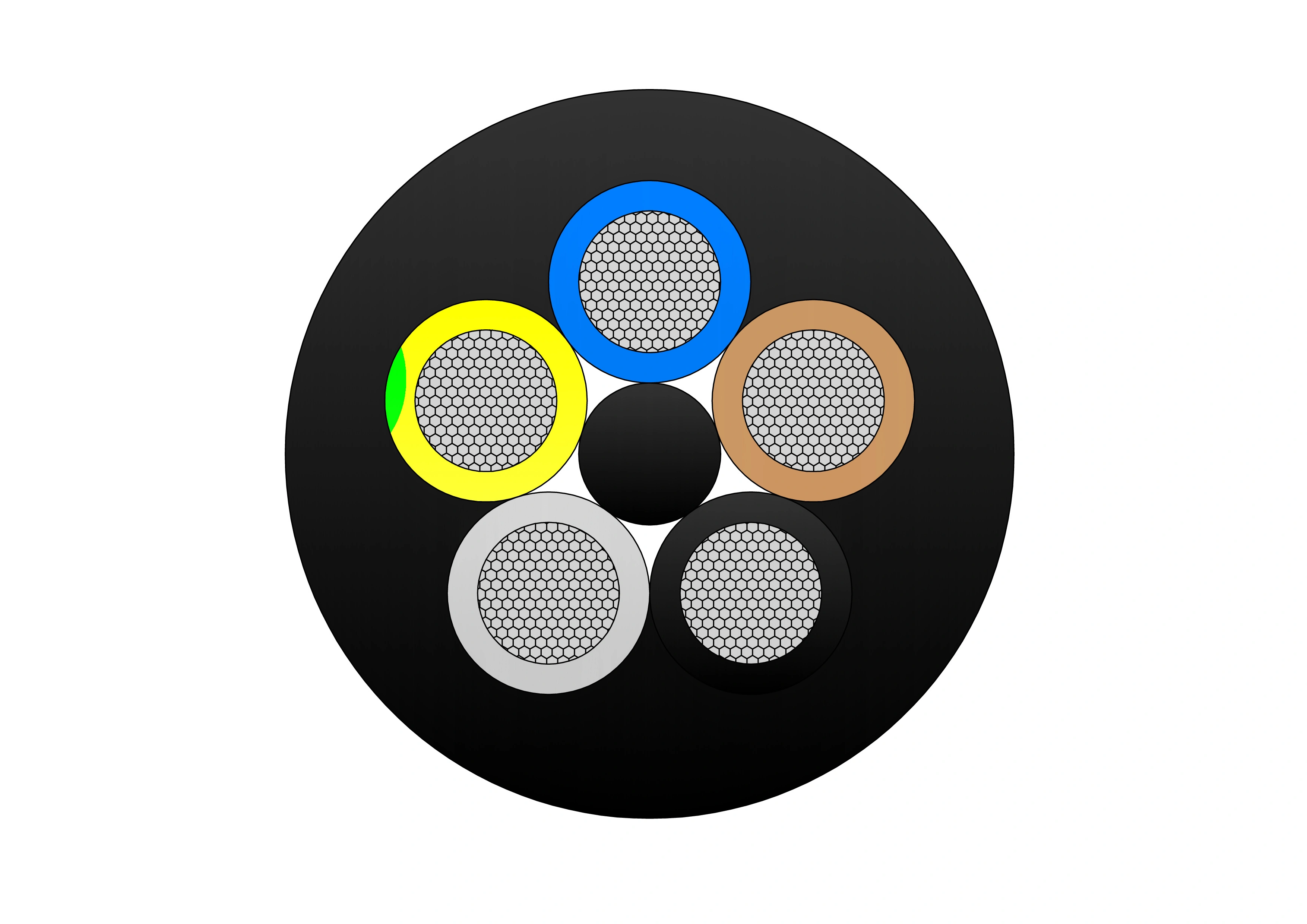
Type 241 Flexible Rubber Screened Mining Cable
The Type 241 Flexible Rubber Screened Mining Cable is a medium-voltage, rubber-insulated cable engineered for underground coal mining and general mining applications. It features tinned annealed copper conductors, EPR insulation, and a semi-conductive thermosetting screen for excellent electrical performance. The cable’s three screened power cores and three earth cores are arranged with a central pilot core for enhanced safety and control. With an HD-85-PCP extra heavy-duty outer sheath, it delivers oil resistance, flame retardancy, and superior mechanical durability. Compliant with AS/NZS 1802 and related standards, it ensures reliable operation under harsh mining conditions. The Type 241 is specifically suited for high-power trailing applications in coal and metalliferous mines, powering longwall shearers, continuous miners, shuttle cars, loaders, and face equipment with maximum safety and uptime.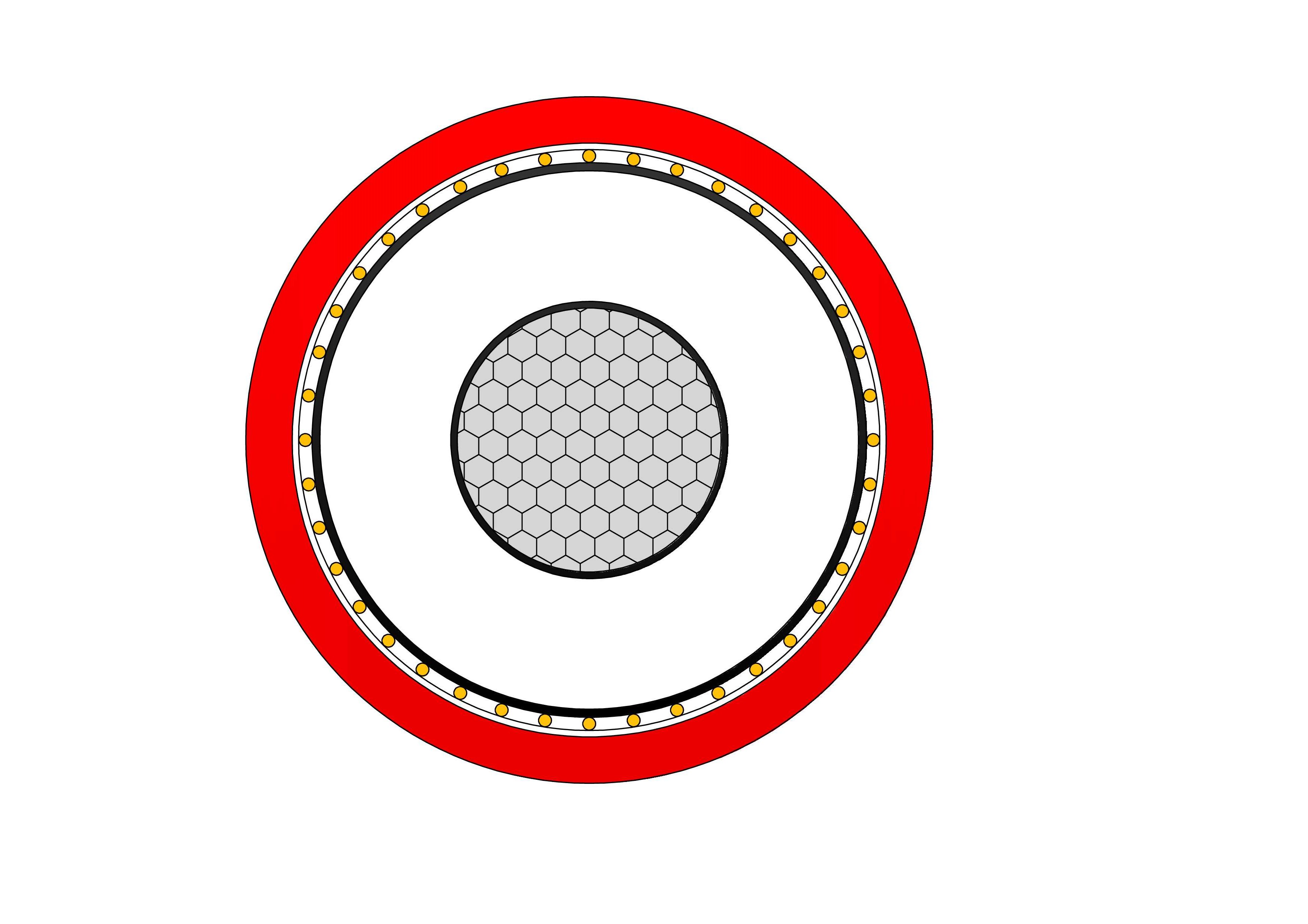
NA2XSY Medium Voltage Power Cable(6/10kV, 12/20kV, 18/30kV)
NA2XSY are medium voltage power cables with aluminum conductors and XLPE insulation, designed according to IEC 60502-2 standards. Constructed with aluminium conductors, thermosetting XLPE insulation, metallic screen (copper tape or wires), and tough PVC outer sheath, it meets IEC 60502-2 requirements. The screen ensures electromagnetic compatibility and fault protection. Low tan delta, high breakdown strength, and excellent thermal endurance minimize losses and support overloads. PVC sheath provides reliable mechanical and moisture protection for fixed installations. Optional longitudinal water-blocking improves performance in damp areas. Flame-retardant and easy to install, the NA2XSY Medium Voltage Power Cable is favored for power grids, manufacturing plants, commercial developments, and renewable energy sites demanding cost-efficient single-core medium voltage cabling with proven durability and performance in buried or tray installations worldwide.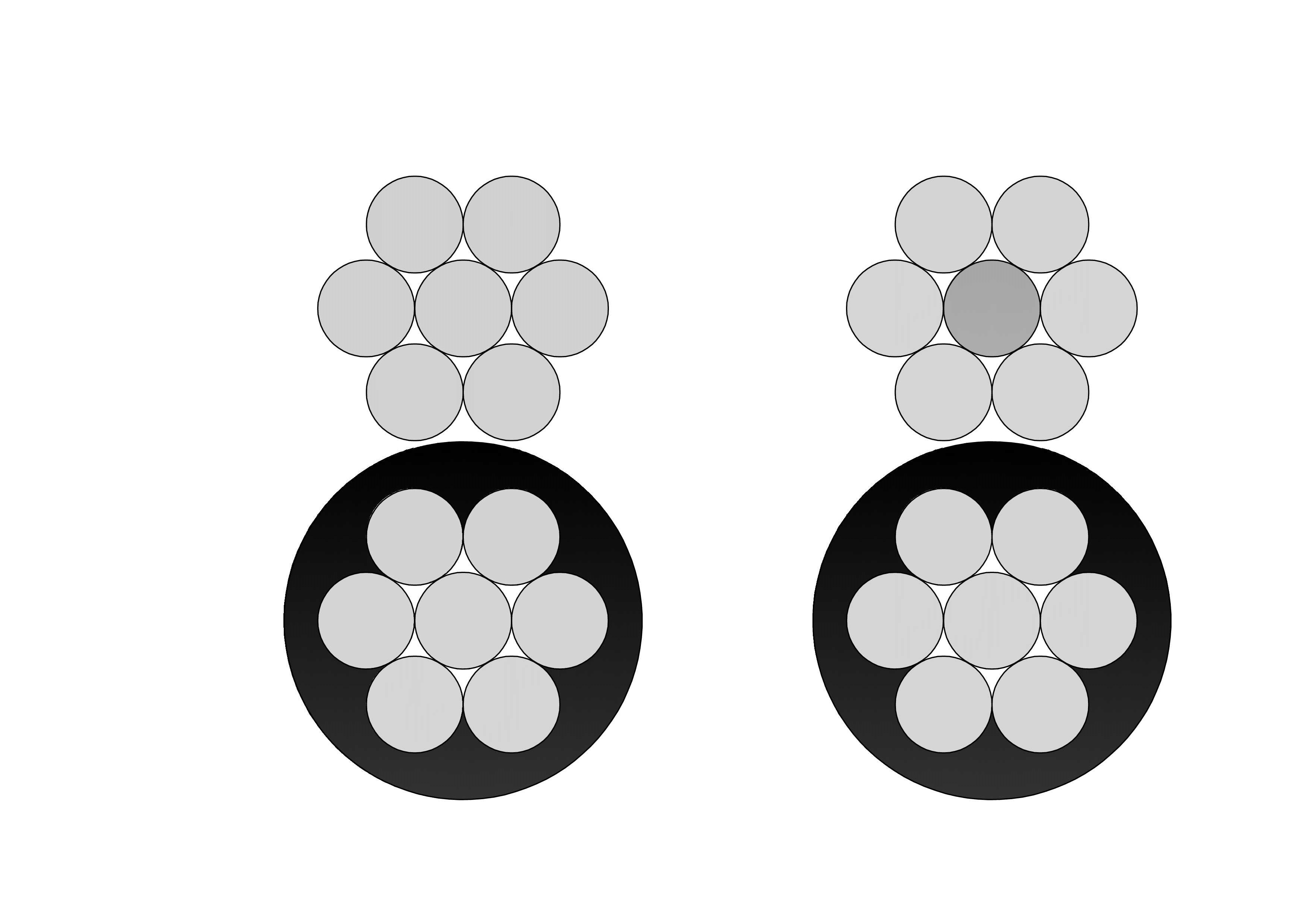
4 Whippet Aluminum Conductor Duplex Overhead Service Drop Cable
The 4 Whippet Duplex Service Drop Cable is a durable overhead cable for secondary power distribution to residential service entrances. Featuring two 4 AWG aluminum conductors (phase and neutral, 7-strand) insulated with XLPE or PE and assembled in duplex configuration, it provides excellent weather resistance and mechanical strength. Compliant with ASTM B-230, B-231, ICEA S-76-474, and ANSI/ICEA standards, this cable supports 600V applications with high UV, moisture, and abrasion protection. The self-supporting design simplifies installation with reduced sag over spans up to 100 feet. The 4 Whippet Duplex Service Drop Cable ensures low power losses, reliable performance in harsh outdoor conditions, and long service life. Lightweight and flexible, it is widely used for single-phase service drops in urban, suburban, and rural areas requiring safe, cost-effective aerial connections from utility poles to homes.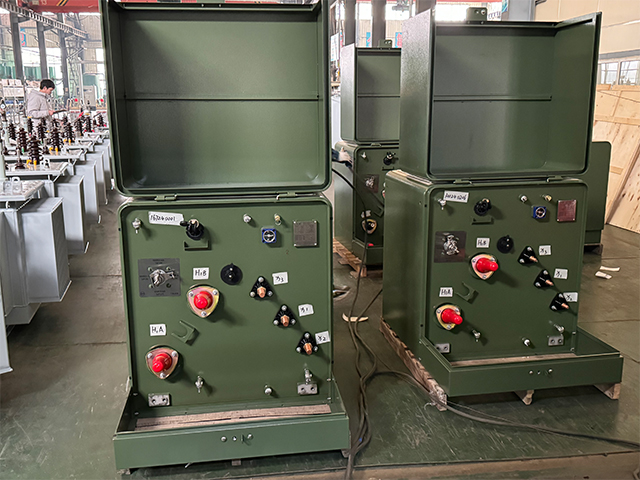
100kVA Single Phase Pad Mounted Transformer
The 100 kVA Single Phase Pad Mounted transformer adheres to a compartmental-type structure in line with IEEE Std C57.12.28 or IEEE Std C57.12.29 standards. It consists of a tank housing high-voltage and low-voltage cable terminating compartments, thoughtfully positioned side by side along one face of the transformer tank. In this configuration, the high-voltage compartment, fitted with two internally connected high-voltage bushing wells and inserts, a 4-position loadbreak switch, a 5-position tap changer switch, and a bayonet fuse, is situated alongside the low-voltage compartment featuring three stud L.V bushings and an oil level gauge.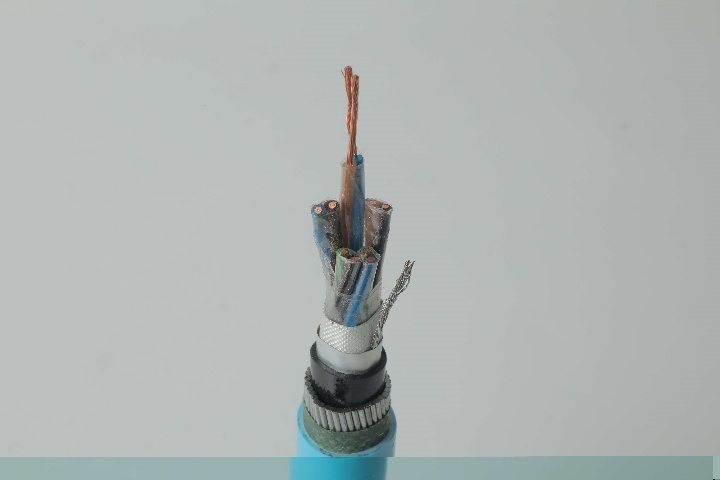
Instrumentation Cables—XLPE Insulated, Overall Screened ,Unarmoured PVC Sheathed Cables(CU/XLPE/OSCR/PVC)
Instrumentation cables come in twisted pairs, triads, and quads, depending on the customer’s applications; twisting reduces any electromagnetic interference by reducing the chances of electrical voltages and currents being induced in the conductor. Individual and overall screening are also applied in instrumentation cables to optimize the signal transferred and further reduce any electromagnetic interference. Screening of pairs, triads, or quads also includes a drain wire earthed to the ground, which ensures a noise-free signal transmission. Depending on the application, instrumentation cables can be insulated with PVC or XLPE; the cables can be armoured or unarmoured. The sheathing materials can be of PVC, LSZH, or PE. The cables can have additional flame retardant or flame retardant properties, and they can be manufactured with special protections such as lead sheaths, or DRYLAM or AIRBAG technology.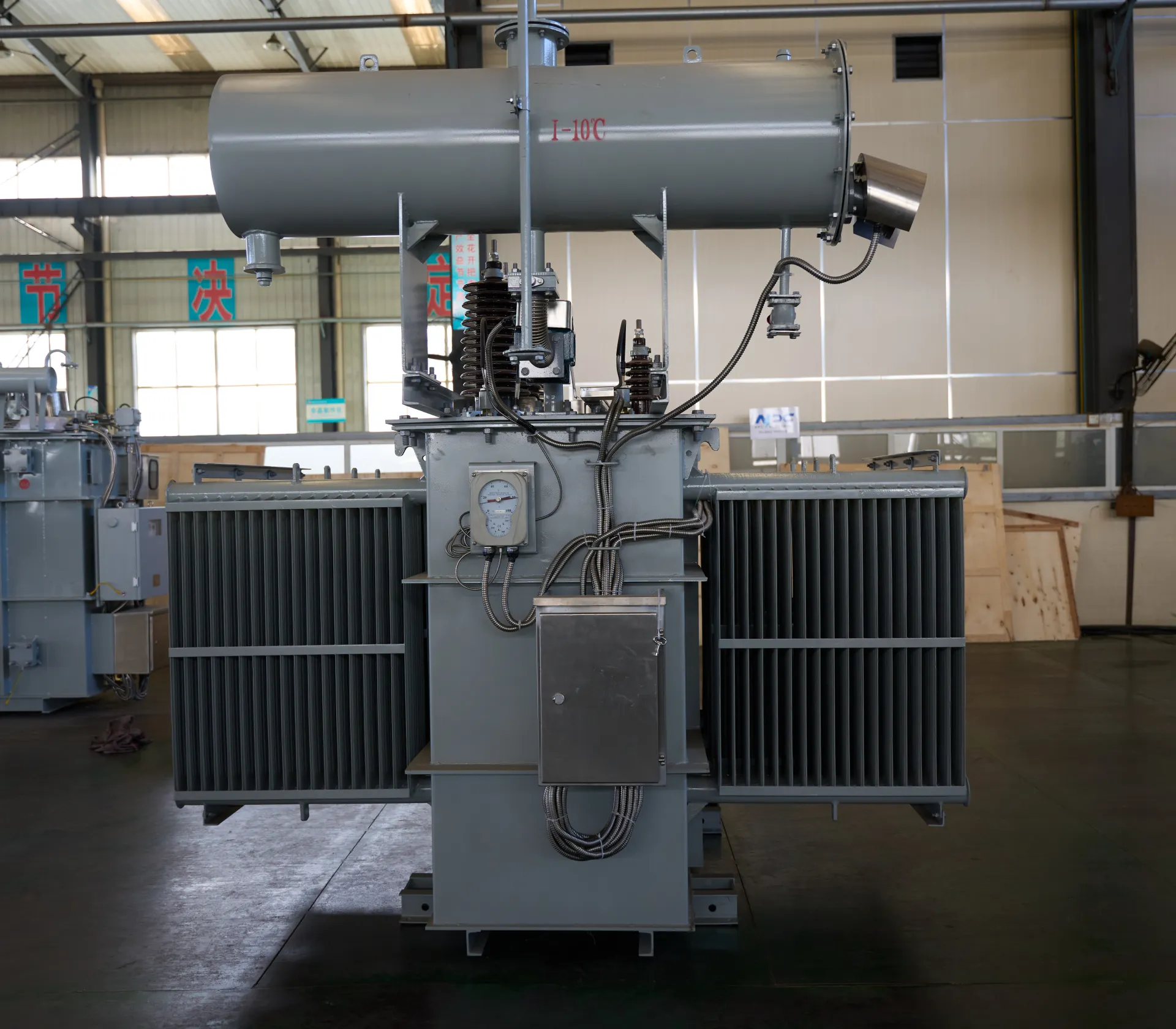
33kV 35kV Solar Power Transformer
NPC Electric 33kV 35kV Solar Power Transformer is a specialized solution engineered to bridge the gap between solar inverters and the high-voltage utility grid. Unlike standard distribution units, these transformers are optimized to handle the pulsed DC-to-AC waveforms generated by modern PV inverters. Utilizing high-permeability magnetic cores and oxygen-free copper windings, they significantly reduce "No-Load" losses during non-sunlight hours, maximizing your project's Levelized Cost of Energy (LCOE). The robust tank design features enhanced heat dissipation fins, ensuring stable operation even under peak solar radiation in desert or tropical climates.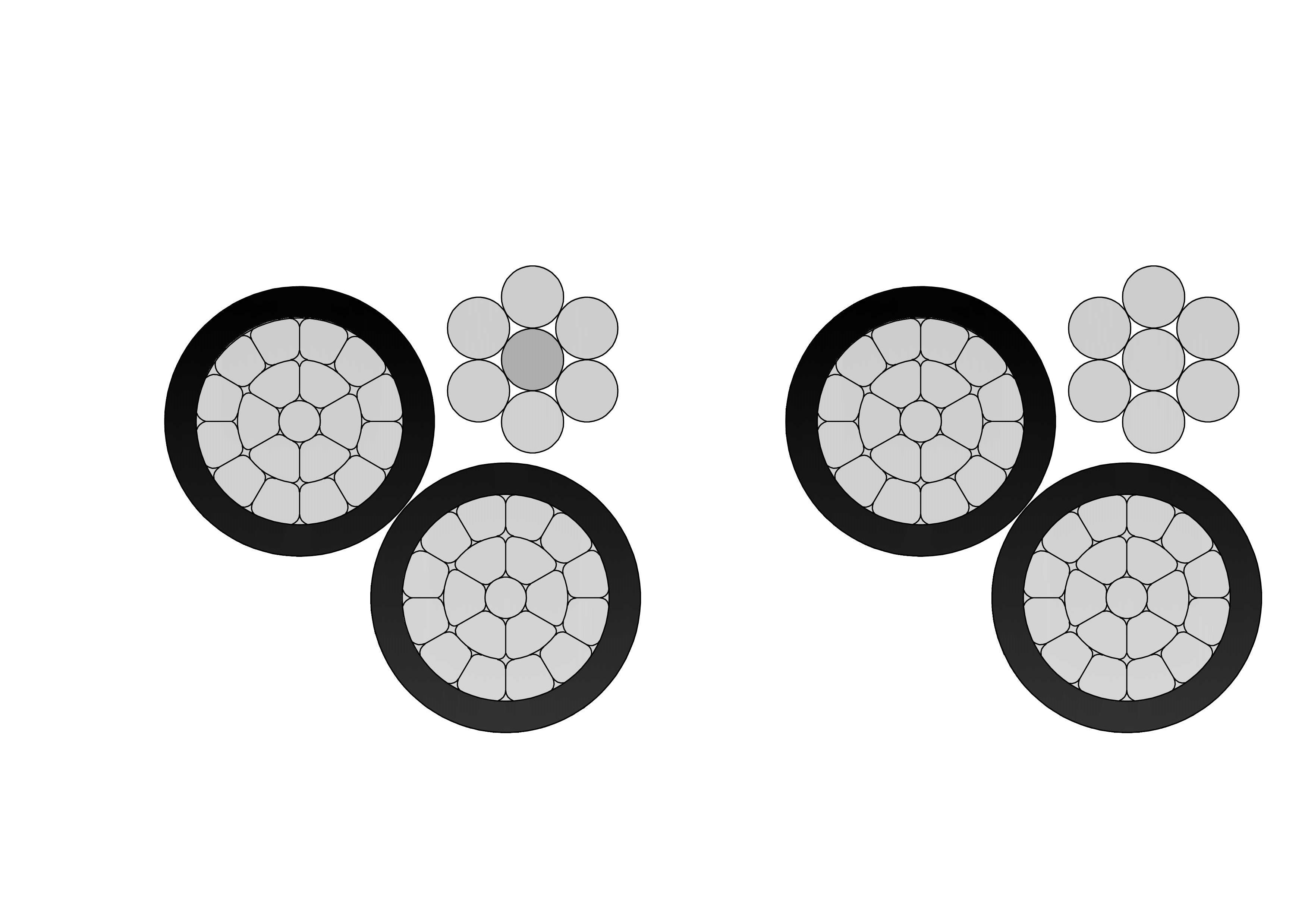
4 Barnacles Aluminum Conductor Triplex Overhead Service Drop Cable
The 4 Barnacles Aluminum Conductor Triplex Overhead Service Drop Cable is designed for reliable overhead electrical service connections in residential and light commercial utility distribution systems. The cable structure includes two insulated aluminum phase conductors twisted around a bare aluminum neutral messenger, providing stable electrical transmission and dependable mechanical support. Manufactured using high-quality aluminum and durable weather-resistant insulation compounds, the 4 Barnacles Aluminum Conductor Triplex Overhead Service Drop Cable offers low electrical resistance, strong corrosion resistance, and long service life in outdoor environments. Its optimized conductor construction allows efficient installation while maintaining adequate tensile strength for aerial applications. The cable is engineered to perform reliably under UV exposure, wind loading, and temperature variation. Comprehensive quality management systems and standardized testing procedures are implemented throughout production to ensure compliance with utility and industry standards and to deliver consistent, dependable performance in service.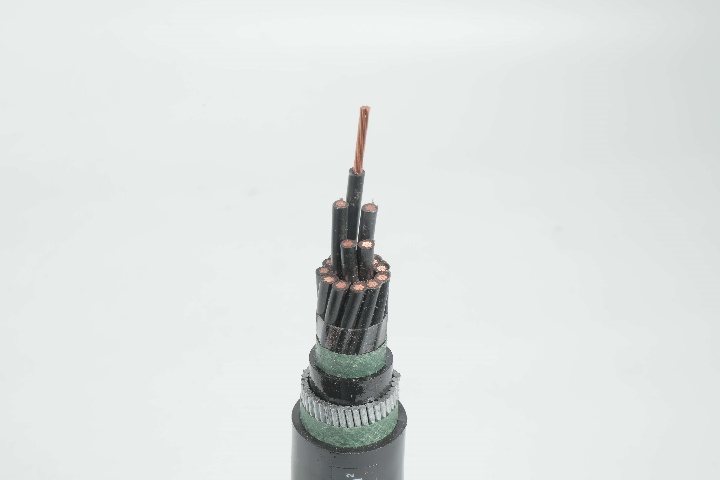
Control Cable 0.6/1 kV CVV to IEC 60502 Standard (2-30 core)
NPC Electric Control Cable 0.6/1 kV CVV to IEC 60502 Standard (2-30 core) is engineered for superior performance in demanding electrical control applications. Featuring concentric stranded copper conductors for excellent conductivity and flexibility, this cable is insulated with high-quality PVC in black, ensuring robust protection against environmental factors. Cores are identified with printed white numbers on black insulation for easy installation and maintenance. A PVC inner sheath and outer jacket provide additional mechanical strength and flame retardancy, making it suitable for indoor, outdoor, duct, and underground setups. Compliant with IEC 60502, it supports voltages up to 1 kV and operates in temperatures from -15°C to 70°C. This cable excels in control circuits, instrumentation, and auxiliary power systems, minimizing signal interference and ensuring data integrity. Available in 2 to 30 cores, it offers customization for specific project needs. Manufactured with precision, it reduces downtime and enhances system efficiency in industrial environments. Choose this CVV cable for long-lasting reliability, backed by rigorous quality testing and international standards.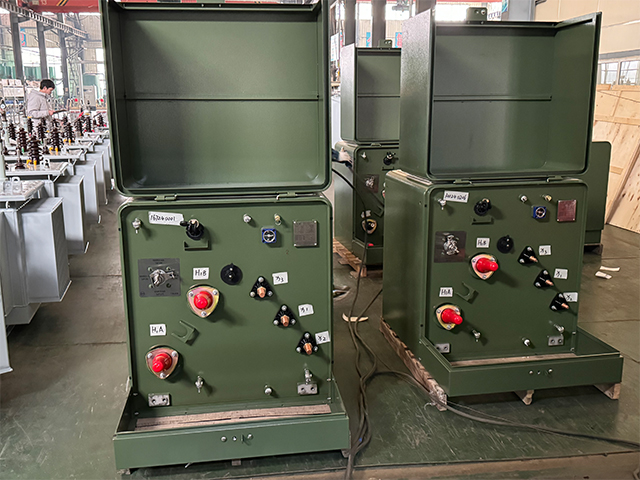
37.5kVA Single Phase Pad Mounted transformer
The 37.5kVA Single Phase Pad Mounted transformer with high voltage (HV) specifications of 24.94GRDY/14.4 kV and low voltage (LV) of 240/120V. At its core lies a robust tank, constructed from resilient alloy 304 stainless steel, guaranteeing longevity even in the harshest conditions. The HV and LV windings, equally critical components, are meticulously crafted from high-quality aluminum to ensure unwavering performance.
4 Periwinkle Aluminum Conductor Triplex Overhead Service Drop Cable
The 4-4-6 Periwinkle Aluminum Conductor Triplex Overhead Service Drop Cable is a cost-effective solution for overhead power delivery from utility poles to residential or light commercial weatherheads. It features concentric-lay-stranded 1350-H19 aluminum phase conductors (#4 AWG, 7-strand), black cross-linked polyethylene (XLPE) insulation for superior weather, UV, and thermal resistance, and a bare ACSR neutral messenger (#6 AWG, 6/1) providing mechanical strength and conductivity. Rated for 600 volts phase-to-phase at conductor temperatures up to 90°C (XLPE) or 75°C (Poly), it offers an allowable ampacity of approximately 100 amps (XLP). Compliant with ASTM B-230, B-231, B-232, B-399, and ICEA S-76-474 standards, this lightweight, flexible cable ensures easy installation and reliable performance in outdoor conditions, including wind, ice loading, moisture, and temperature fluctuations.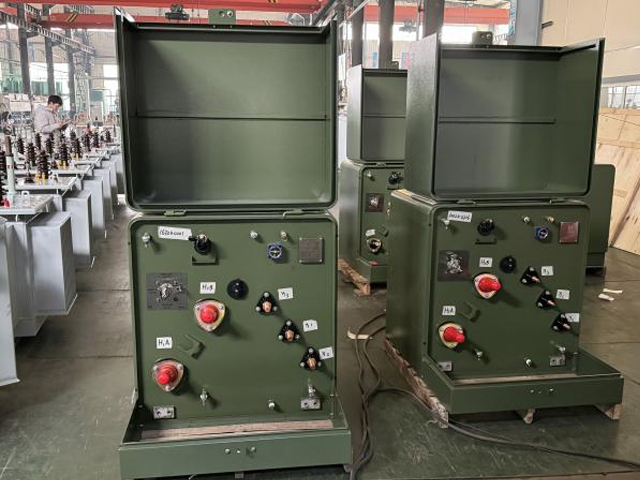
150kVA Single Phase Pole Mounted Transformer
NPC ELECTRIC'S 150kVA single phase pole mounted transformer is engineered for superior performance in overhead electrical distribution networks. This robust unit efficiently steps down high-voltage primary inputs, such as 13.8kV or 24.94kV, to secondary voltages like 120/240V or 277V, ensuring safe and reliable power delivery. Built with high-permeability toroidal cores and precision-wound copper conductors, it minimizes energy losses and enhances durability. Compliant with DOE-2016 efficiency standards and featuring a NEMA 3R-rated enclosure, this transformer withstands harsh environmental conditions while providing quiet operation. Ideal for utilities seeking long-term reliability, it includes protective features like surge arrestors and pressure relief valves to safeguard against overloads and faults. With a 65°C temperature rise rating and ONAN cooling, it handles diverse loads without compromising efficiency.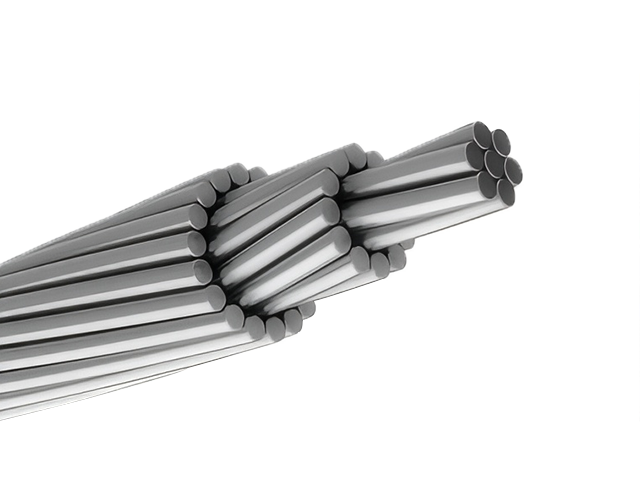
2 AWG SPARROW ACSR Conductor Cable
The 2 AWG SPARROW ACSR (Aluminum Conductor Steel Reinforced) cable, compliant with ASTM B232, ABNT NBR 7270/88, and IEC 61089 standards, is engineered for dependable performance in overhead transmission and distribution systems. Featuring a stranded 1350-H19 aluminum conductor for excellent electrical conductivity and a single galvanized steel core for enhanced mechanical strength, this cable is ideal for medium to long-span installations in suburban, agricultural, and utility networks. With a voltage rating of up to 25 kV, an operating temperature range of -10°C to +75°C, and a short-circuit tolerance of up to 150°C (5s), the SPARROW ACSR ensures reliable conductivity, corrosion resistance, and durability under wind and ice loading. Its lightweight, bare aluminum design with a corrosion-resistant steel core simplifies installation and ensures a long service life in diverse outdoor environments. Ampacity is calculated under standard conditions (conductor temperature: 75°C; ambient temperature: 25°C; wind speed: 1 m/s; full sun exposure).Welcome your inquiry
Honesty, Integrity, Frugality, Activeness and Passion