
The 100kVA Transformer: A Complete Guide
2026-02-10
The 100kVA transformer is one of the most widely deployed ratings in modern power distribution systems. It strikes a practical balance between capacity, efficiency, footprint, and cost, making it ideal for residential communities, commercial buildings, agricultural facilities, small industrial plants, and renewable energy projects.
What Is a 100kVA Transformer?
A 100kVA transformer is an electrical device designed to transfer electrical power with an apparent power rating of 100 kilovolt-amperes (kVA) between circuits using electromagnetic induction.
- kVA (kilovolt-ampere) represents apparent power
- Suitable for continuous and intermittent loads
- Commonly used as a step-down transformer in distribution networks
- Can also function as a step-up transformer in renewable or industrial systems
Typical Applications of a 100kVA Transformer
|
Application Area |
Typical Use Case |
|
Residential |
Small housing estates, apartment blocks |
|
Commercial |
Retail stores, offices, schools |
|
Industrial |
Workshops, light manufacturing |
|
Agriculture |
Irrigation pumps, grain dryers |
|
Solar inverters, battery systems |
|
|
Utilities |
LV distribution feeders |
Common Types of 100kVA Transformers
The 100kVA transformer is available in multiple structural and insulation designs to suit different electrical systems, installation environments, and load profiles. Selecting the correct type ensures long-term reliability, safety, and cost efficiency.
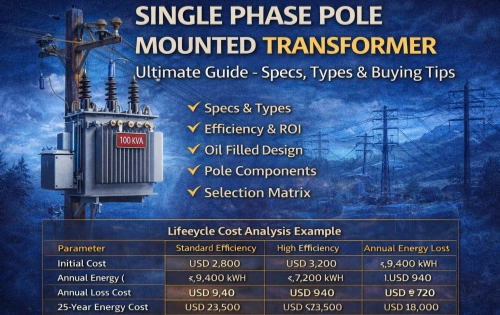
1. 100kVA Pole Mounted Transformer
Basic Parameters
|
Parameter |
Typical Value |
|
Rated Power |
100 kVA |
|
Phase |
Single phase / Three phase |
|
Primary Voltage |
6.6kV / 10kV / 11kV / 13.8kV |
|
Secondary Voltage |
240V / 415V / 480V |
|
Cooling Method |
ONAN (Oil Natural Air Natural) |
|
Insulation Medium |
Mineral oil / Eco oil |
|
Installation |
Overhead utility pole |
|
Standard |
ANSI C57 / IEC 60076 |
Typical Uses
- Rural power distribution
- Suburban residential feeders
- Agricultural electrification
- Temporary construction power
Design Scenarios
Pole-mounted transformers are compact and lightweight, designed to be suspended on utility poles. They minimize ground footprint and are ideal where land availability is limited or underground infrastructure is not economical.
Their oil-immersed design offers excellent thermal performance, making them suitable for fluctuating daily loads.
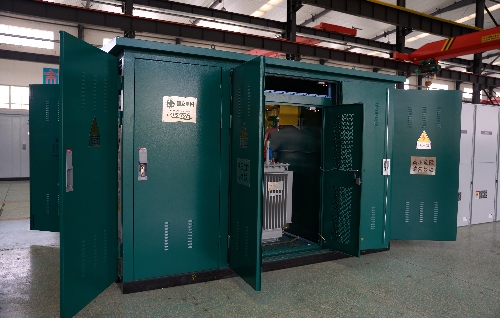
2. 100kVA Pad Mounted Transformer
Basic Parameters
|
Parameter |
Typical Value |
|
Rated Power |
100 kVA |
|
Phase |
Single phase / 3 phase |
|
Primary Voltage |
Up to 35kV |
|
Secondary Voltage |
400V / 415V / 480V |
|
Enclosure |
Steel, tamper-proof |
|
Cooling |
ONAN |
|
Protection |
Bay-onet fuse / Load break switch |
|
Installation |
Ground (pad mount) |
Typical Uses
- Residential housing developments
- Commercial complexes
- Schools and hospitals
- Underground distribution networks
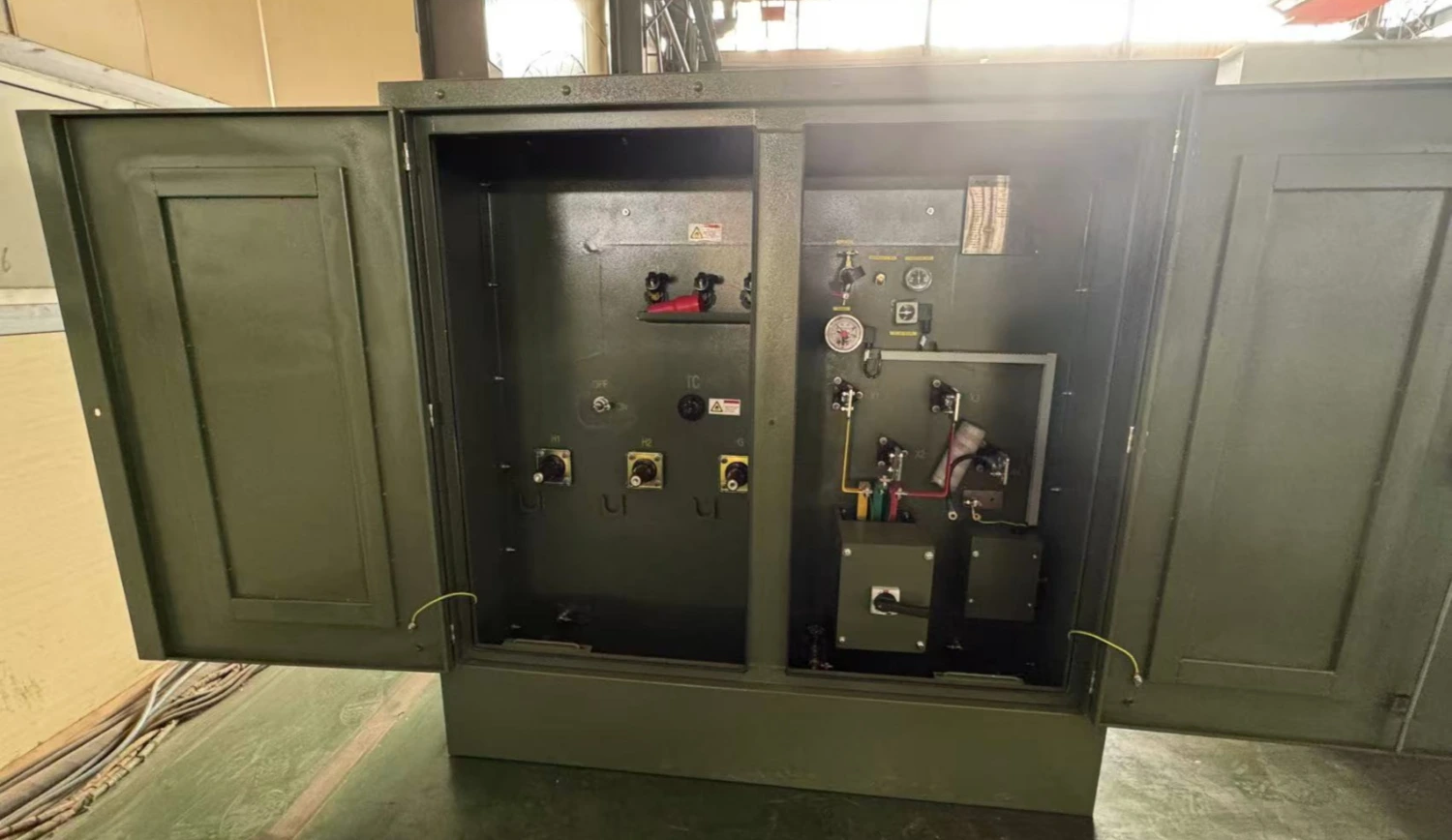
Design Scenarios
A 100kVA pad mounted transformer is engineered for public safety and aesthetics. Fully enclosed cabinets protect live components while enabling front-access maintenance.
This design is commonly used where underground cables replace overhead lines, especially in modern urban planning and renewable-ready communities.
3. 100kVA Oil Immersed Transformer
Basic Parameters
|
Parameter |
Typical Value |
|
Rated Power |
100 kVA |
|
Insulation |
Mineral oil / Silicone / Natural ester |
|
Cooling |
ONAN / ONAF (optional) |
|
Temperature Rise |
55K / 65K |
|
Efficiency |
≥ 98% |
|
Installation |
Outdoor / Indoor (ventilated) |
Typical Uses
- Utility substations
- Industrial plants
- Renewable energy interconnections
- Harsh climate environments
Design Scenarios
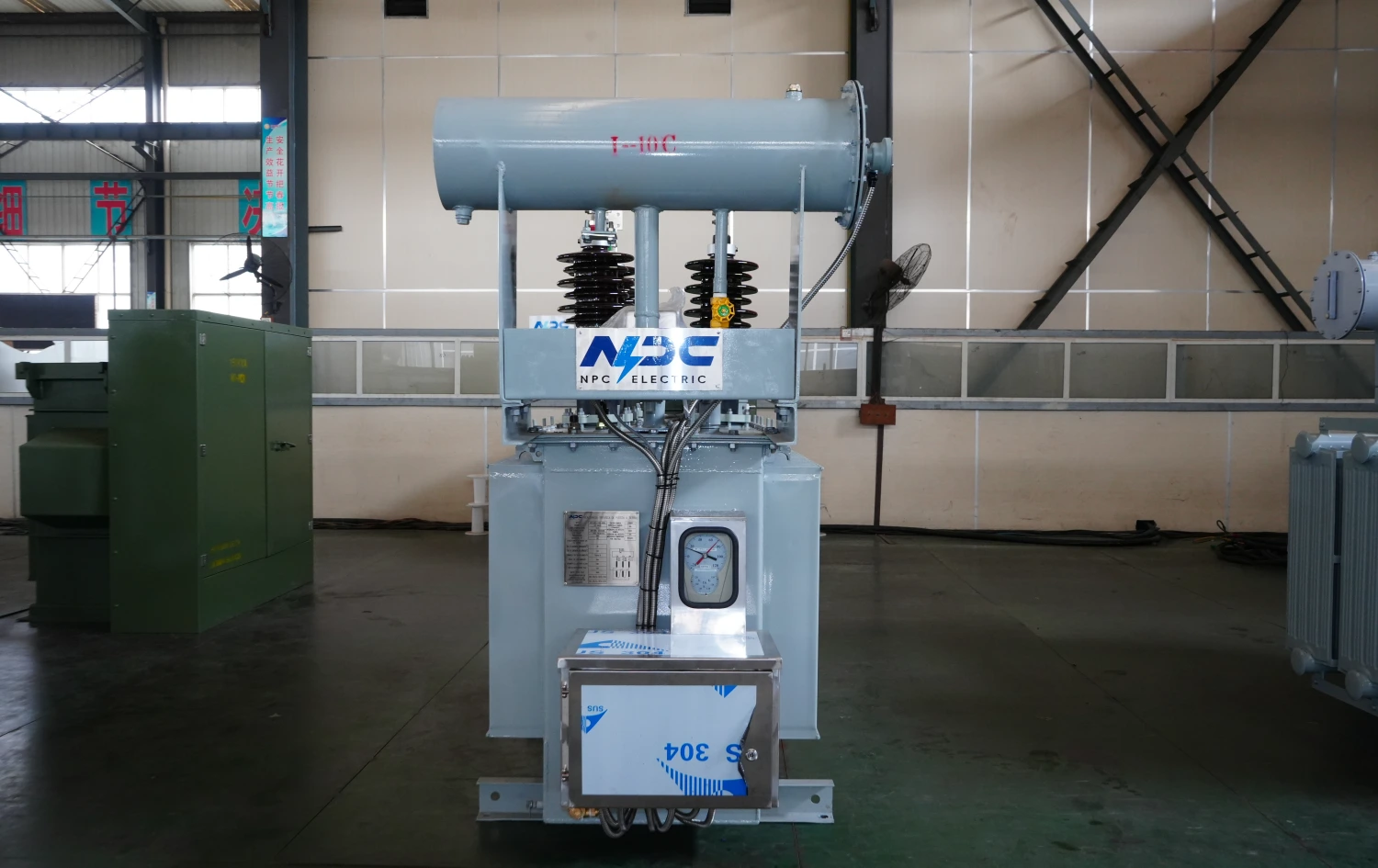
The 100kVA oil immersed transformer provides high dielectric strength and superior cooling, making it ideal for continuous operation and higher ambient temperatures.
Eco-friendly ester oil options support fire safety and environmental compliance, especially in solar and wind projects.
4. 100kVA Dry Type Transformer
Basic Parameters
|
Parameter |
Typical Value |
|
Rated Power |
100 kVA |
|
Insulation Class |
F / H |
|
Cooling |
AN (Air Natural) |
|
Enclosure |
IP00 / IP23 |
|
Fire Risk |
Very low |
|
Noise Level |
≤ 50 dB |
|
Installation |
Indoor |
Typical Uses
- Data centers
- Commercial buildings
- Hospitals and airports
- High-rise electrical rooms
Design Scenarios
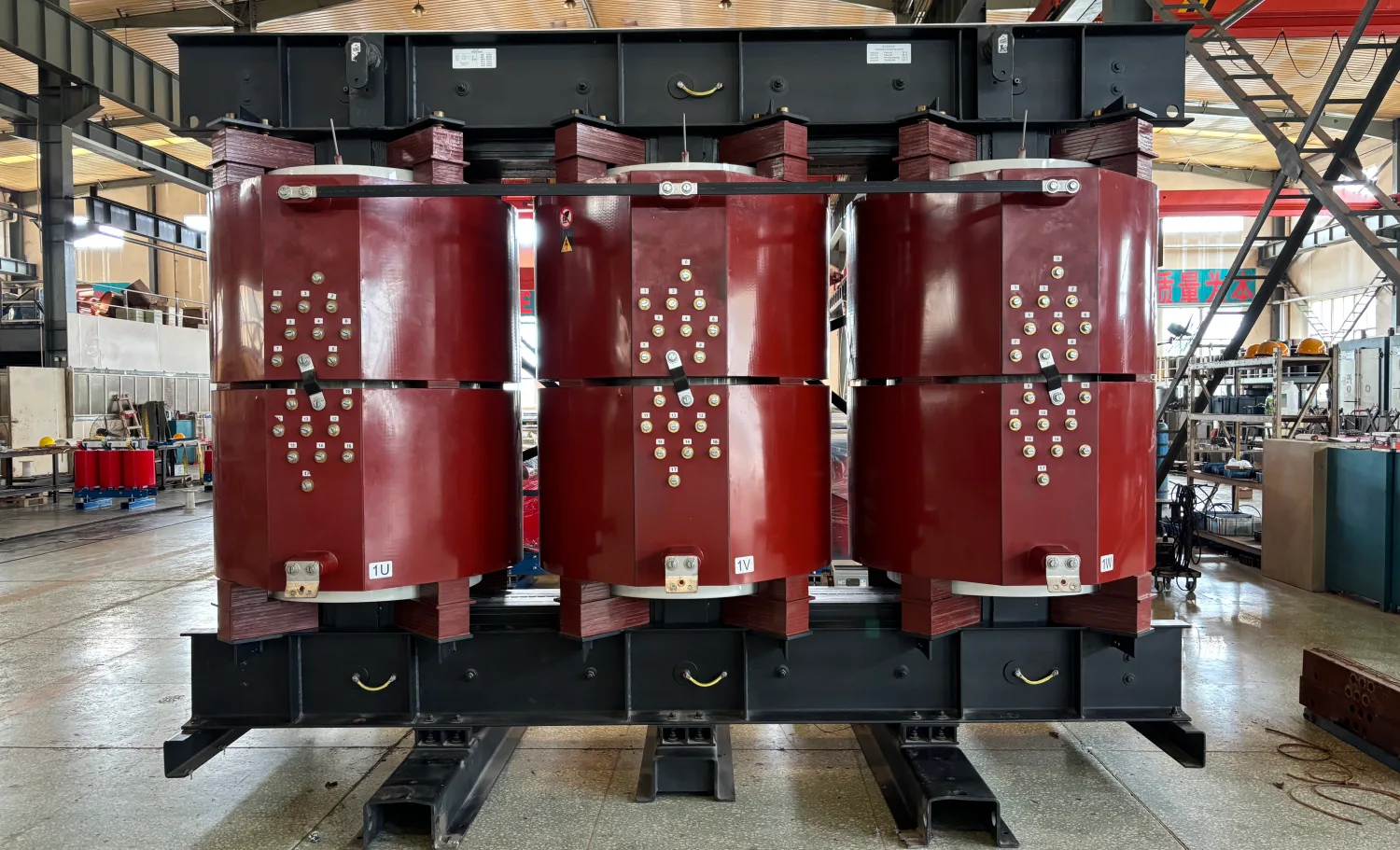
A 100kVA dry type transformer is designed for indoor environments where fire safety and low maintenance are critical. Without oil, there is no leakage risk, making it suitable for densely populated buildings.
Dry type units are preferred in HVAC systems, UPS power rooms, and clean energy facilities.
5. 100kVA Single Phase Transformer
Basic Parameters
|
Parameter |
Typical Value |
|
Rated Power |
100 kVA |
|
Phase |
Single phase |
|
Voltage Ratio |
Customizable |
|
Efficiency |
High at partial load |
|
Structure |
Pole mounted / Pad mounted |
Typical Uses
- Residential neighborhoods
- Street lighting systems
- Rural distribution
Design Scenarios
Single phase 100kVA distribution transformers are optimized for uneven or low-density loads, offering cost savings where three-phase power is unnecessary.
6. 100kVA 3 Phase Transformer
Basic Parameters
|
Parameter |
Typical Value |
|
Rated Power |
100 kVA |
|
Phase |
Three phase |
|
Connection |
Dyn11 / Yyn0 / ΔY |
|
Load Capability |
Balanced / Heavy loads |
|
Efficiency |
Higher than single phase |
Typical Uses
- Small factories
- Commercial centers
- EV charging stations
- Solar inverter systems
Design Scenarios
A 100kVA 3 phase transformer is designed for balanced, higher-density electrical loads. It ensures stable voltage, reduced losses, and compatibility with modern industrial and renewable energy systems.
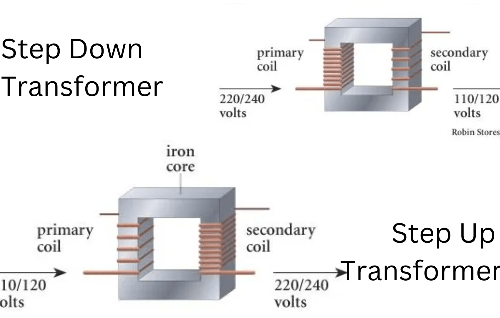
7. Step Up vs Step Down 100kVA Transformers
|
Type |
Voltage Function |
Typical Scenario |
|
MV → LV |
Utility distribution |
|
|
LV → MV |
Solar / Wind generation |
Step-up configurations are increasingly used in solar power plants, where inverter output voltage must be raised before grid connection.
Engineering Selection Summary
|
Scenario |
Recommended 100kVA Type |
|
Rural distribution |
Pole-mounted, oil-immersed |
|
Urban residential |
Pad mounted |
|
Indoor commercial |
Dry type |
|
Renewable energy |
Oil-immersed, step up |
|
Industrial loads |
Single Phase vs 100kVA 3 Phase Transformer
|
Parameter |
Single Phase |
100kVA 3 Phase Transformer |
|
Voltage Supply |
1Φ |
3Φ |
|
Load Capacity |
Lower |
Higher |
|
Efficiency |
Moderate |
Higher |
|
Applications |
Residential |
Commercial / Industrial |
|
Cost |
Lower |
Higher |
Standard Voltage Ratings
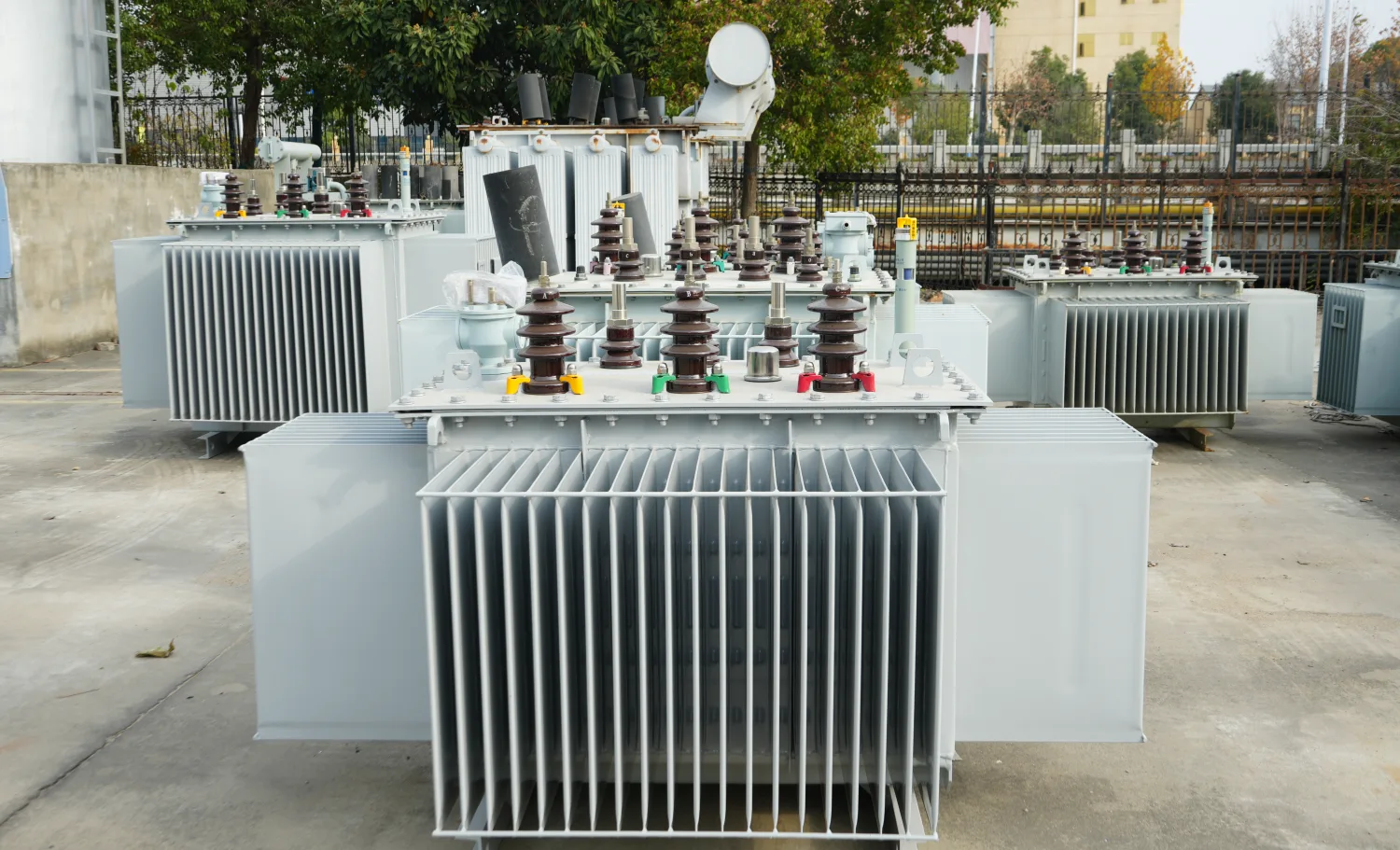
Typical voltage configurations for a transformer 100kVA include:
|
Primary Voltage |
Secondary Voltage |
|
11kV |
400V |
|
13.8kV |
415V |
|
22kV |
400V |
|
33kV |
690V |
|
480V |
208V / 120V |
Voltage design can be customized based on regional grid standards (IEC, ANSI, IEEE).
100kVA Transformer Technical Specifications
|
Parameter |
Typical Value |
|
Rated Power |
100 kVA |
|
Frequency |
50Hz / 60Hz |
|
Cooling |
ONAN / AN / AF |
|
Insulation Class |
A / F / H |
|
Temperature Rise |
55K / 65K |
|
Efficiency |
≥ 98% |
|
Impedance |
4% – 6% |
|
Noise Level |
< 55 dB |
100kVA Transformer Selection Decision Matrix
Selecting the correct 100kVA transformer requires balancing electrical load characteristics, installation environment, safety requirements, efficiency targets, and lifecycle cost. The decision matrix below provides a practical, field-oriented framework.
1. Primary Selection Criteria
Before choosing a transformer type, engineers should evaluate the following core parameters:
- Installation location (indoor/outdoor / overhead/underground)
- Load profile (residential, commercial, industrial, renewable)
- Phase requirement (single phase vs three phase)
- Fire and environmental risk
- Maintenance access
- Initial cost vs lifecycle cost
- Applicable standards (IEC, ANSI, IEEE)
2. 100kVA Transformer Selection Decision Matrix
|
Application Scenario |
Recommended Transformer Type |
Phase |
Cooling |
Key Reasons |
|
Rural power distribution |
Pole-Mounted Oil-Immersed |
Single / 3-phase transformer |
ONAN |
Low cost, minimal footprint, proven utility design |
|
Urban residential housing |
Pad-Mounted Transformer |
Single / 3-phase transformer |
ONAN |
Public safety, underground cable compatibility |
|
Commercial buildings |
Dry Type Transformer |
3-phase transformer |
AN |
Fire safety, low noise, indoor installation |
|
Industrial plants |
Oil Immersed Transformer |
3-phase transformer |
ONAN / ONAF |
High thermal margin, continuous duty |
|
Solar power plants |
Step-Up Oil Immersed Transformer |
3-phase transformer |
ONAN |
Grid interconnection, inverter voltage boosting |
|
Oil Immersed Transformer |
3-phase transformer |
ONAN |
High reliability under fluctuating load |
|
|
Data centers/hospitals |
Dry Type Transformer |
3-phase transformer |
AN |
Zero oil risk, high safety compliance |
|
Temporary construction sites |
Pole-Mounted Transformer |
Single-phase transformer |
ONAN |
Fast installation, mobility |
3. Selection Matrix by Installation Environment
|
Environment |
Preferred Type |
Reason |
|
Outdoor, open area |
Oil Immersed |
Superior cooling, weather tolerance |
|
Indoor electrical room |
Dry Type |
No oil leakage, reduced fire risk |
|
Public-access area |
Pad Mounted |
Tamper-proof enclosure |
|
Limited ground space |
Pole Mounted |
Vertical installation |
4. Phase Selection Matrix (Single Phase vs 3 Phase)
|
Load Condition |
Recommended Phase |
|
Residential streets |
Single phase |
|
Commercial complexes |
3 phase |
|
Industrial machinery |
3 phase |
|
Solar inverter systems |
3 phase |
|
Agricultural loads |
Single or 3-phase |
5. Voltage & Function Selection Matrix
|
System Requirement |
Transformer Configuration |
|
MV to LV distribution |
Step Down 100kVA Transformer |
|
LV to MV renewable output |
Step Up 100kVA Transformer |
|
Utility grid supply |
Standard distribution transformer |
|
Off-grid energy system |
Custom voltage ratio |
6. Cost vs Performance Decision Matrix
|
Priority |
Recommended Type |
|
Lowest initial cost |
Pole-Mounted Oil-Immersed |
|
Lowest maintenance |
Dry Type Transformer |
|
Highest efficiency |
Oil Immersed Transformer |
|
Longest service life |
Oil Immersed with ester oil |
|
Best fire safety |
Dry Type Transformer |
7. Engineering Recommendation Summary
For export-oriented projects, the optimal 100kVA transformer selection should prioritize:
- Compliance with IEC 60076 / ANSI C57
- High efficiency at partial and rated loads
- Suitability for local climate conditions
- Availability of technical support and spare parts
- Proven manufacturer quality systems (ISO, routine tests)
Leading transformer manufacturers increasingly offer customized 100kVA solutions, including eco-friendly oil options, smart monitoring, and renewable-ready designs, ensuring compatibility with modern power systems.
Efficiency & Energy Loss Considerations
A 100kVA distribution transformer is designed to minimize:
- No-load (core) losses
- Load (copper) losses
- Harmonic losses from modern electronics
High-efficiency designs reduce:
- Operating costs
- Carbon footprint
- Heat generation
Many transformer manufacturers now offer eco-design compliant models to meet international energy efficiency regulations.
Oil Immersed vs Dry Type: Quick Comparison
|
Feature |
Oil Immersed |
Dry Type |
|
Cooling |
Oil |
Air |
|
Fire Risk |
Medium |
Low |
|
Installation |
Outdoor |
Indoor |
|
Maintenance |
Periodic oil checks |
Minimal |
|
Cost |
Lower |
Higher |
Sizing & Load Calculation for a 100kVA Transformer
A simplified load estimation formula:
Load (kW) ≈ kVA × Power FactorExample:
- 100 kVA × 0.8 PF = 80 kW usable load
Design margin recommendation:
- Operate at 70–85% loading for long-term reliability
Installation Considerations
Key factors when installing a 100kVA pad-mounted transformer or pole-mounted transformer:
- Adequate ventilation
- Grounding and earthing system
- Short-circuit withstand capability
- Clearance and safety zoning
- Protection coordination (fuses, breakers)
Compliance & Standards
A quality 100kVA transformer manufacturer typically complies with:
- IEC 60076
- IEEE C57
- ANSI
- GB / EN standards
Certification ensures safety, interoperability, and long service life.
100kVA Transformer Selection Checklist
|
Selection Factor |
Recommendation |
|
Load Type |
Continuous / Variable |
|
Installation |
Indoor or Outdoor |
|
Cooling |
Oil or Dry |
|
Phase |
Single or Three |
|
Voltage Level |
Grid compliant |
|
Future Expansion |
+20% margin |
Typical Service Life & Maintenance
- Expected lifespan: 25–30 years
- Oil-immersed units require periodic oil testing
- Dry-type transformers need dust and thermal inspection
- Proper loading significantly extends service life
Future Trends in 100kVA Transformers
- Smart monitoring (temperature, load, oil quality)
- Low-loss amorphous cores
- Biodegradable insulating fluids
- Integration with renewable energy systems
- Compact designs for urban distribution
The 100kVA transformer remains a cornerstone of modern electrical infrastructure. Whether deployed as a 100kVA pole-mounted transformer, 100kVA pad-mounted transformer, oil-immersed transformer, or dry type transformer, it offers flexibility, reliability, and cost efficiency across diverse applications.
Selecting the right configuration—single or 100kVA 3 phase transformer, step up or step down—ensures optimal performance, safety, and long-term value in today’s evolving power systems.
For utilities, EPC contractors, and industrial users alike, a properly specified 100kVA distribution transformer is a smart and future-ready investment in electrical reliability.

Related Articles
Related Products
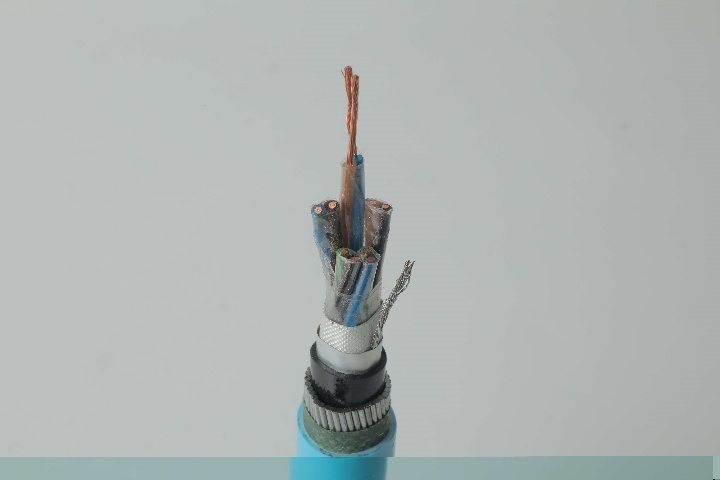
Instrumentation Cables—PVC Insulated,Individual & Overall Screened, Unarmoured PVC Sheathed Cables(CU/PVC/OSCR/PVC)
Instrumentation Cables are multi-conductor cables that carry and transport low-voltage electrical signals. These low-voltage signals are used to control and monitor electrical power systems. Instrumentation cables have many different industrial applications that include broadcasting, equipment control, such as drilling and pumping in the oil and gas industry, and data transfer, which includes analog and digital signals. They are manufactured according to the BS EN 50288-7 and BS EN 50288-1 standards to ensure quality. Instrumentation cables come in twisted pairs, triads, and quads, depending on the customer’s applications; twisting reduces any electromagnetic interference by reducing the chances of electrical voltages and currents being induced in the conductor. Individual and overall screening are also applied in instrumentation cables to optimize the signal transferred and further reduce any electromagnetic interference. Screening of pairs, triads, or quads also includes a drain wire earthed to the ground, which ensures a noise-free signal transmission.
30kVA Dry Type Transformer
The 30kVA Dry type transformer complies with ANSI, CSA, NEMA, IEEE, IEC, GB, and DOE standards. NPC ELECTRIC manufactures dry-type transformers in strict accordance with the highest industry and international standards. The 30kVA dry-type transformer provides dependable, oil-free power transformation for indoor environments, stepping down primary voltages such as 480V Delta, 600V, 11kV, or 10kV to secondary outputs like 208Y/120V, 480Y/277V, or 400Y/230V in three-phase configurations.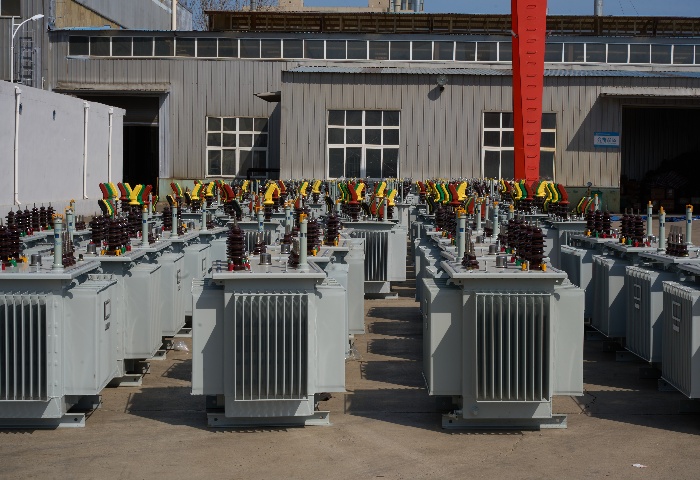
600kVA Oil Immersed Transformer
The 600kVA Oil Immersed Transformer is a robust three-phase distribution transformer designed for reliable medium-voltage power step-down in 50/60Hz AC networks, commonly with primary voltages of 11kV or 33kV. Utilizing premium grain-oriented silicon steel core (S11/S13 series) to achieve reduced no-load losses, copper or aluminum windings, and high-quality mineral oil , it minimizes load losses while providing ONAN cooling for substantial overload tolerance (up to 140% short-term). Compact design with Dyn11 vector group, BIL ratings, and pole/ground-mount flexibility ensures dependable performance, minimal energy dissipation, and seamless integration in modern distribution systems.SHOUOJ-mining-cable-2.webp)
(N)SHOU O/J - 0.6/1kV Mining Cable
The (N)SHOU O/J - 0.6/1kV flexible rubber-insulated cable is engineered according to VDE 0250 standards for reliable power supply in harsh environments such as underground mining, tunneling, and heavy-duty industrial sites. Its robust construction features Class 5 flexible copper conductors, durable rubber insulation, and a heavy-duty rubber outer sheath, delivering excellent mechanical strength, oil resistance, and flame retardancy. Designed for both fixed and flexible installations, the cable operates within a wide temperature range (-40°C to +80°C fixed) and withstands short-circuit temperatures up to +250°C. It is ideal for powering mobile equipment, submersible pumps, and industrial machinery in mining operations, particularly where abrasion resistance and safety are essential.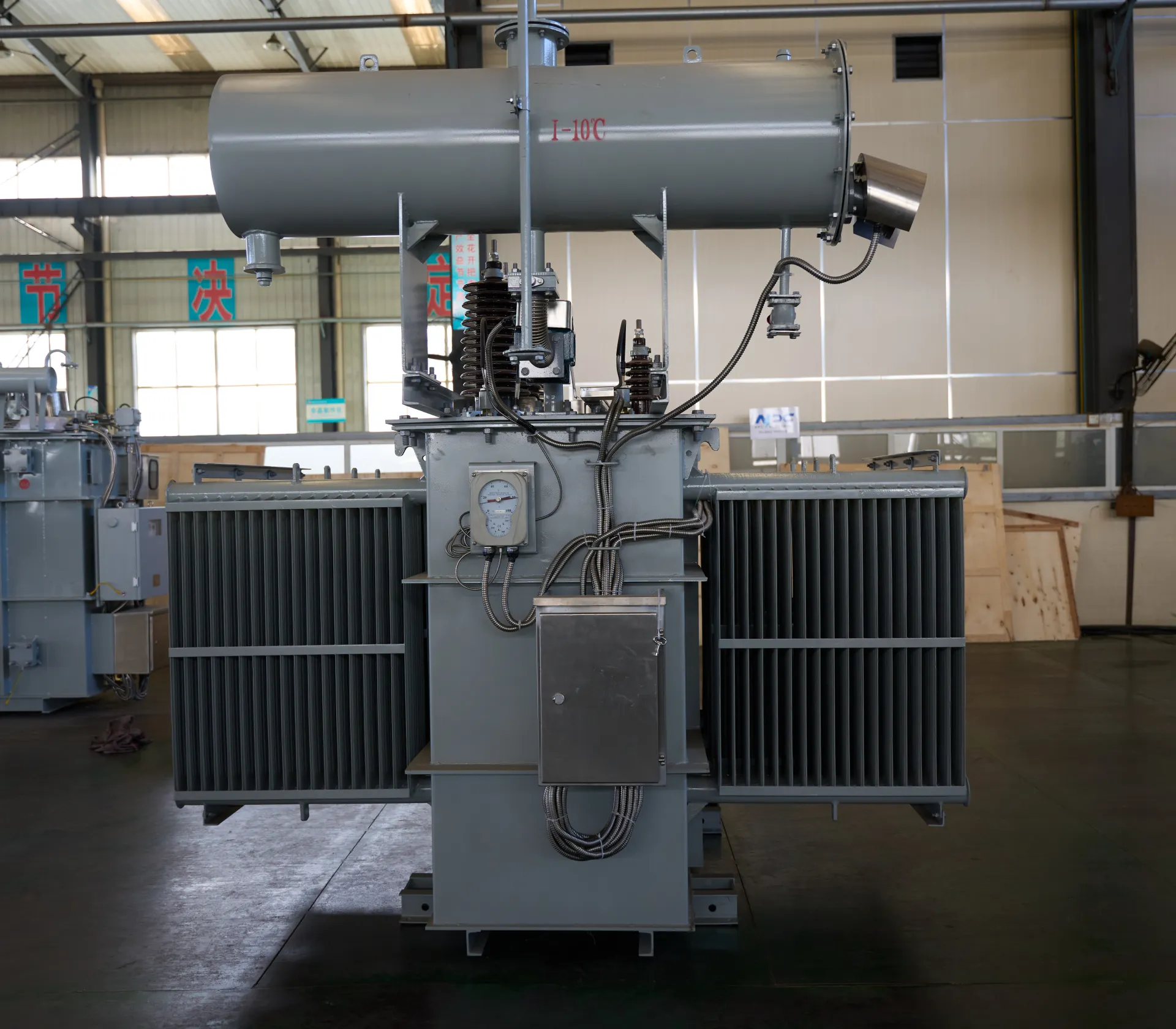
45kV 2500kVA Weatherproof & Oven-Proof Oil-Immersed Power Transformer
The 45kV 2500kVA Weatherproof & Oven-Proof Oil-Immersed Power Transformer is engineered for demanding outdoor applications requiring high durability, stable voltage transformation, and long-term operational reliability. Designed with premium cold-rolled silicon steel, high-conductivity copper windings, and a reinforced oil-immersed cooling system, the transformer ensures excellent thermal stability and resistance to overheating. Its oven-proof construction allows the unit to withstand high ambient temperatures, while the weatherproof enclosure provides protection against rain, dust, humidity, and corrosive environments. With advanced insulation, strong short-circuit endurance, and compatibility with both off-load and on-load tap changers, this 45kV outdoor transformer is ideal for substations, industrial facilities, renewable energy sites, and long-distance power distribution systems. Built in accordance with IEC 60076 standards, it delivers efficiency, reliability, and lifespan required for critical grid infrastructure.
11/0.4kV 630kVA Oil-Immersed Power Transformer Distribution Type
Discover our premium 11/0.4kV 630kVA Oil-Immersed Power Transformer, engineered for superior high-efficiency distribution in modern electrical grids. This robust transformer features advanced silicon steel cores that minimize energy losses, ensuring up to 98% efficiency under full load. Ideal for urban and rural power networks, it incorporates eco-friendly insulating oil with high dielectric strength, providing reliable voltage step-down from 11kV to 0.4kV while handling demanding loads up to 630kVA. Built with corrosion-resistant tanks and precision-wound copper coils, this distribution transformer guarantees long-term durability, reduced maintenance, and compliance with international standards like IEC 60076. Whether for residential complexes, commercial facilities, or industrial applications, it optimizes power delivery, lowers operational costs, and supports sustainable energy practices. Experience unmatched performance with this high-efficiency oil-immersed transformer designed for seamless integration into your power system.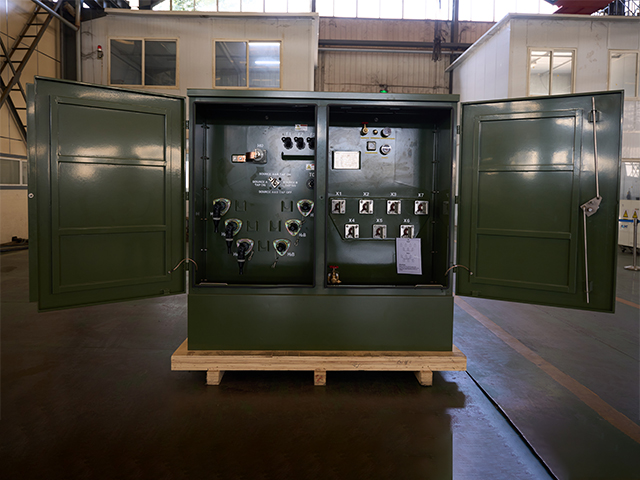
225kVA Three Phase Pad Mounted Transformer
The 225kVA three-phase pad transformer is an efficient and reliable power conversion device designed for commercial, industrial and distribution systems. With a high power capacity of 225kVA, the transformer is able to provide a stable three-phase power supply for large-scale equipment to meet high load requirements. Its rugged housing is made of weather-resistant materials and meets NEMA 3R standards, ensuring long-term stable operation in outdoor environments and preventing the influence of external factors such as water, dust and corrosion.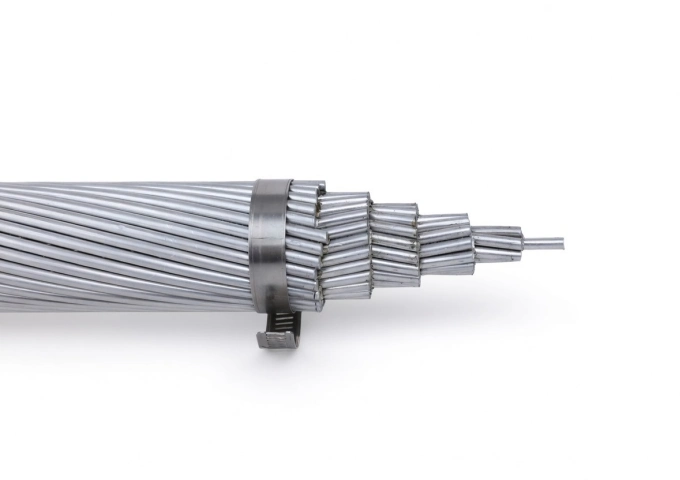
715.5 MCM Violet AAC Cable
The 715.5 MCM Violet AAC Cable is a high-performance All Aluminum Conductor designed for demanding overhead power transmission and distribution lines. Manufactured with 37 strands of premium 1350-H19 aluminum wire in a concentric lay configuration, this bare conductor provides excellent electrical conductivity with a low DC resistance of 0.024 ohms per 1000 ft at 20°C. Featuring an overall diameter of 0.974 inches and a rated breaking strength of 12,800 lbs, the Violet AAC delivers a robust ampacity of 823 amps while weighing only 671.7 lbs per 1000 ft. Its optimized strength-to-weight ratio minimizes sag and structural loading. Fully compliant with ASTM B-230 and B-231 standards, the 715.5 MCM Violet AAC Cable offers outstanding corrosion resistance for long-term durability in harsh outdoor environments, making it the preferred choice for utility networks requiring cost-effective, high-reliability bare aluminum conductors.
FR-N30XA8E-R 18/30kV Cable Gen to NF C 33-226 - Cu/XLPE/MDPE
The NF C 33-226 Cu-XLPE-MDPE 18/30kV Cable is a robust medium voltage power cable designed for safe and reliable energy transmission in fixed installations. It features a Class 2 stranded copper conductor, cross-linked polyethylene (XLPE) insulation, and a medium-density polyethylene (MDPE) outer sheath, ensuring outstanding electrical conductivity, insulation integrity, and mechanical protection. Complying with NF C 33-226, IEC 60502-2, and EN 60228, this cable is ideal for power distribution in industrial plants, substations, municipal grids, and commercial facilities. It provides excellent resistance to water (AD7) and UV radiation (ISO 4892), while being halogen-free (IEC/EN 60754-1) to ensure environmental and operational safety. With a voltage rating of 18/30 (36)kV and maximum operating temperature of 90°C, the Cu-XLPE-MDPE construction guarantees stable, efficient, and long-lasting performance in medium- and high-voltage networks.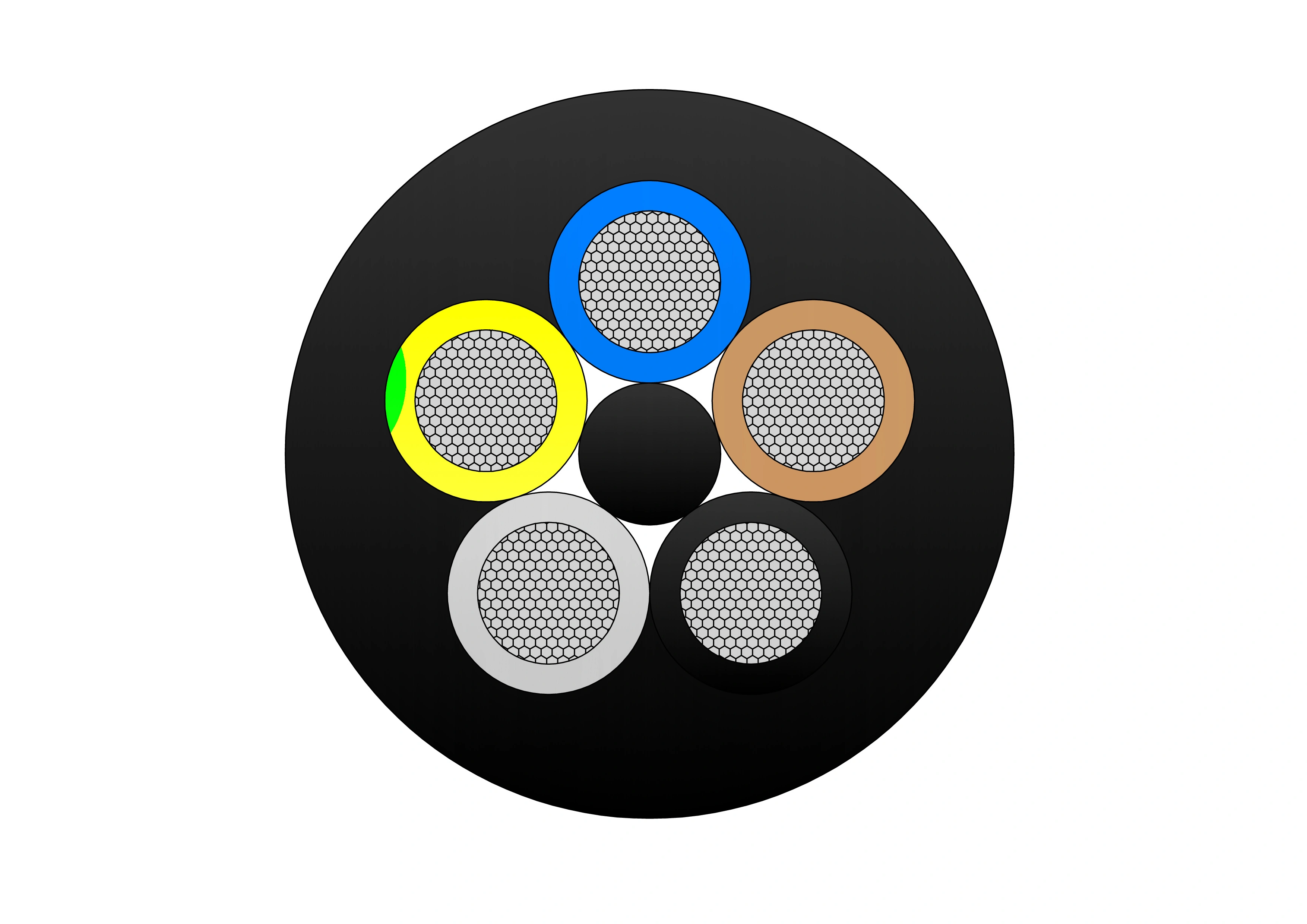
NTSCGEWOU 3.6/6kV, 6/10kV, 8.7/15kV, 12/20kV Cable
The NTSCGEWOU 3.6/6kV, 6/10kV, 8.7/15kV, 12/20kV Cable is a high-performance flexible medium-voltage trailing/reeling cable engineered for extreme mining and tunneling conditions. It comprises class 5 finely stranded tinned copper phase conductors for superior flexibility and corrosion resistance, semi-conductive conductor and insulation screens for field control, EPR insulation for excellent dielectric strength and 90°C continuous operation, copper wire braid screen for EMI protection and grounding, control conductors, monitoring conductor (ÜL), and a durable rubber outer sheath resistant to oil, flame, abrasion, tearing, and mechanical stress. Compliant with DIN VDE 0250, it handles high tensile loads, fast reeling speeds, tight bending radii, and effective EMC shielding across all voltage levels. The NTSCGEWOU delivers safe, reliable MV power to mobile equipment such as shearers, tunnel boring machines, draglines, and conveyors in harsh underground and opencast environments, minimizing downtime and ensuring long-term operational efficiency.
80kVA Oil Immersed Transformer
NPC ELECTRIC 80kva Oil Immersed Transformer boasts a robust design that incorporates high-quality materials and advanced manufacturing techniques. The transformer's core is made from premium cold-rolled silicon steel sheets, ensuring low loss and high efficiency. The oil-immersed design of the NPC ELECTRIC 80kVA transformer provides effective cooling and insulation, ensuring that the transformer operates within safe temperature limits and maintains optimal performance. The oil also acts as a dielectric medium, enhancing the transformer's electrical properties and protecting it from environmental factors.
1272 MCM Narcissus AAC All Aluminum Bare Conductor Cable
The 1272 MCM Narcissus AAC Cable represents premium All Aluminum Conductor technology for overhead power applications. Built with 61 strands of high-conductivity 1350-H19 aluminum, this bare conductor delivers an optimal balance of electrical efficiency and mechanical robustness. With a 1.300-inch diameter, 22,300 lbs breaking strength, and 1140 amps ampacity, the Narcissus AAC offers low DC resistance of 0.0135 ohms per 1000 ft at 20°C and a weight of 1194.8 lbs per 1000 ft. This design minimizes sag while providing excellent corrosion resistance for extended outdoor service. Manufactured to meet ASTM B-230 and B-231 standards, the 1272 MCM Narcissus AAC Cable undergoes extensive quality testing from raw materials through finished product. It is the ideal solution for new installations and upgrades in transmission and distribution systems that demand lightweight, high-conductivity bare aluminum conductors.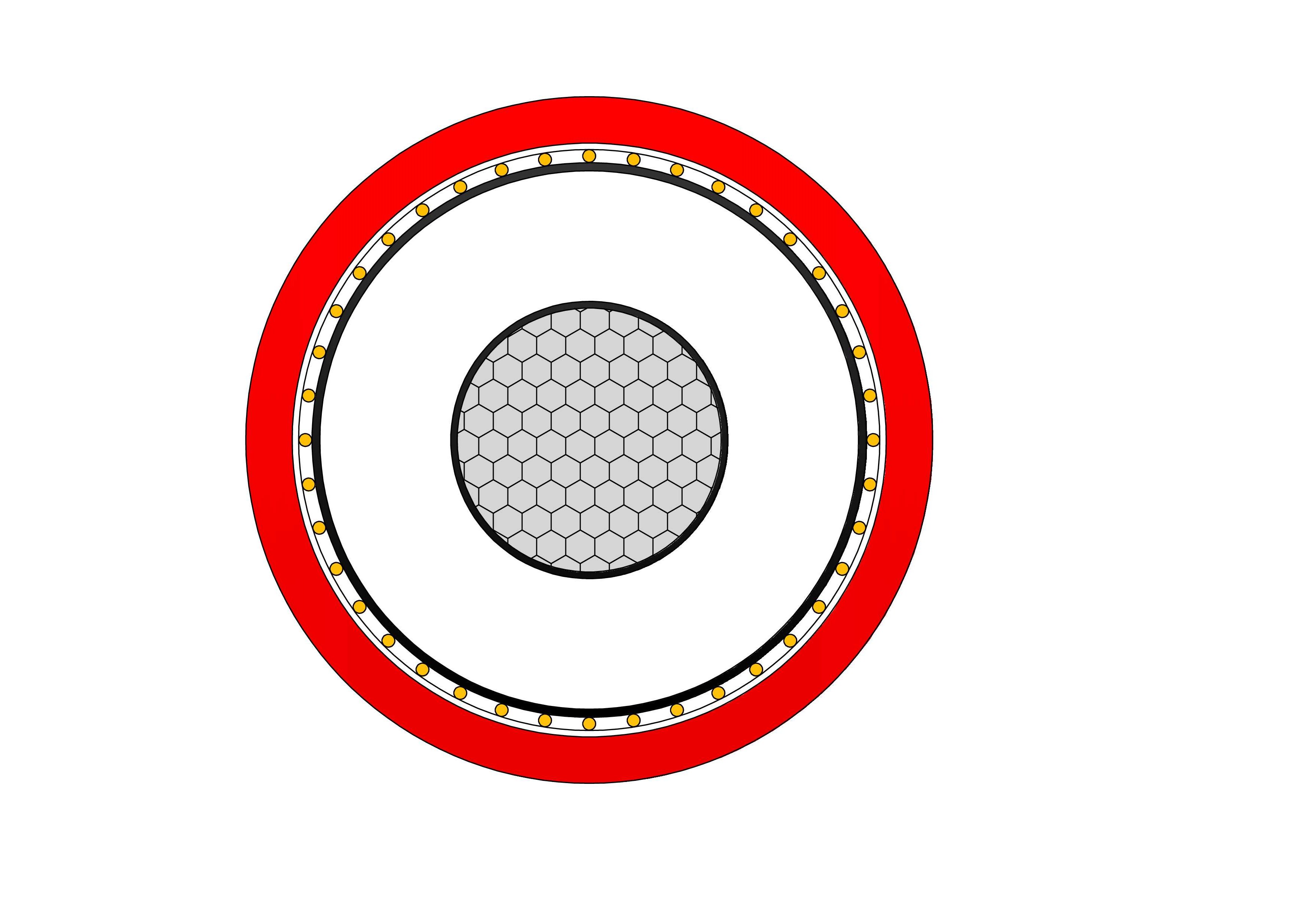
RHZ1-AL Medium Voltage Power Cable(8.7/15kV, 12/20kV, 18/30kV)
NPC Electric RHZ1-AL Medium Voltage Power Cable (8.7/15kV, 12/20kV, 18/30kV) provides economical fire safety for medium voltage networks. Built with aluminium conductors, thermosetting XLPE insulation, metallic screen, and advanced low smoke zero halogen (LSZH) sheath, it meets UNE 21123-4 and CPR requirements. During fires, it emits very low smoke and no corrosive gases, facilitating evacuation. Lightweight aluminium reduces costs and installation effort while delivering reliable current capacity. Superior partial discharge resistance, low tan delta, and thermal endurance ensure efficiency and longevity. Suitable for direct burial, ducts, or indoor use in sensitive areas, the RHZ1-AL Medium Voltage Power Cable is widely used in transportation hubs, data centers, public facilities, and infrastructure demanding reliable medium voltage cabling with enhanced fire protection, environmental compliance, and life-safety features in populated or confined spaces.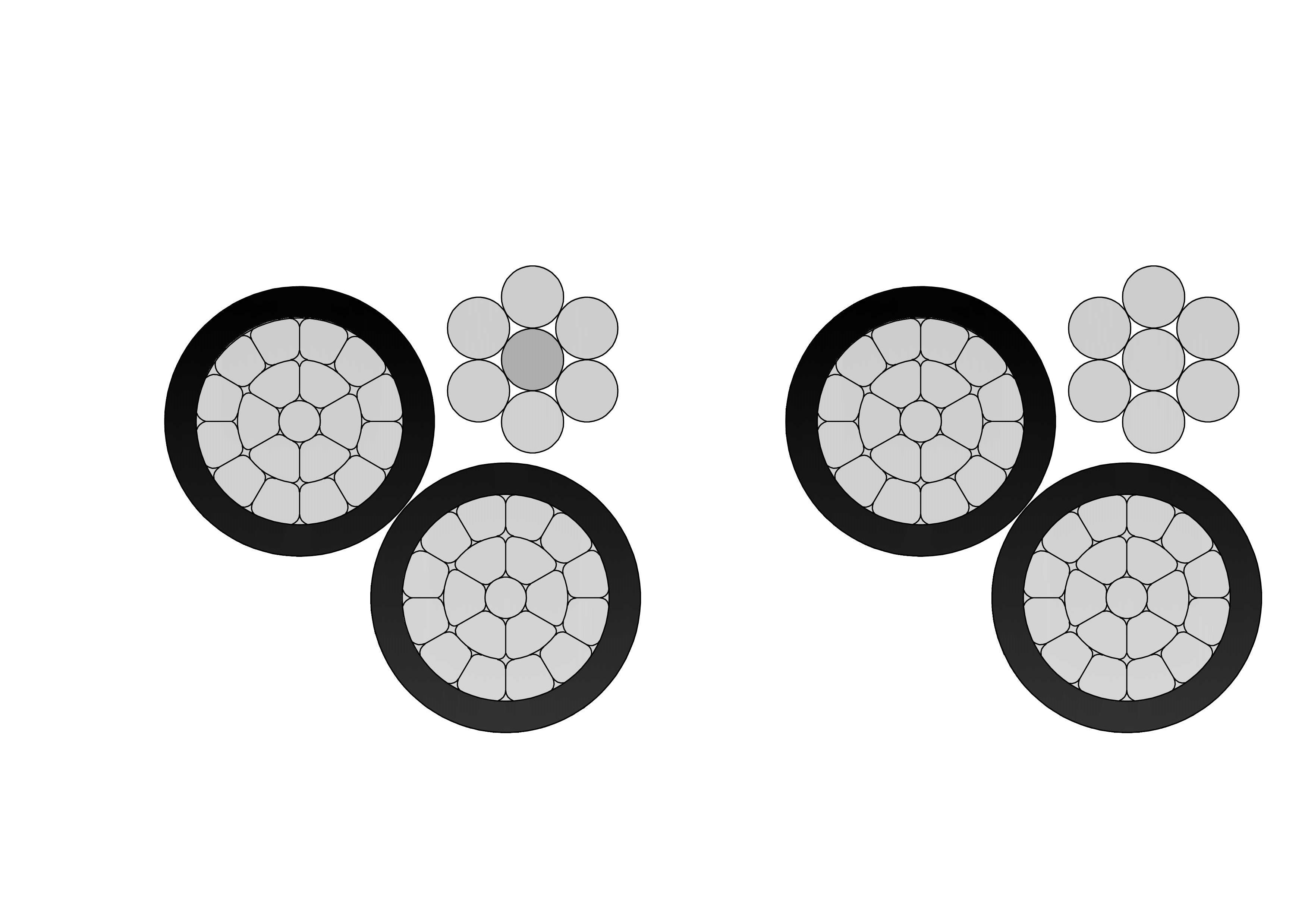
4 Scallop Aluminum Conductor Triplex Overhead Service Drop Cable
The 4 Scallop Triplex Aluminum Overhead Service Drop Cable is engineered for reliable utility power delivery from pole-mounted transformers to service entrances in residential, commercial, and temporary construction setups. It consists of two insulated phase conductors and a bare AAC (All-Aluminum Conductor) messenger that functions as both a neutral and mechanical support. Optimized for overhead single-phase service drops, it operates at voltages up to 600V and uses black cross-linked polyethylene (XLP) insulation to ensure long-lasting resistance to UV rays, moisture, and abrasion. This triplex configuration ensures excellent mechanical strength, reduced sag, and UV/weather resistance. Rated for 600V phase-to-phase and conductor temperatures up to 90°C (XLPE), it offers ampacity of 115A. Compliant with ASTM B-230, B-231, and ICEA S-76-474 standards, the 4 Scallop cable provides lightweight, corrosion-resistant performance ideal for long-term reliability in demanding aerial installations.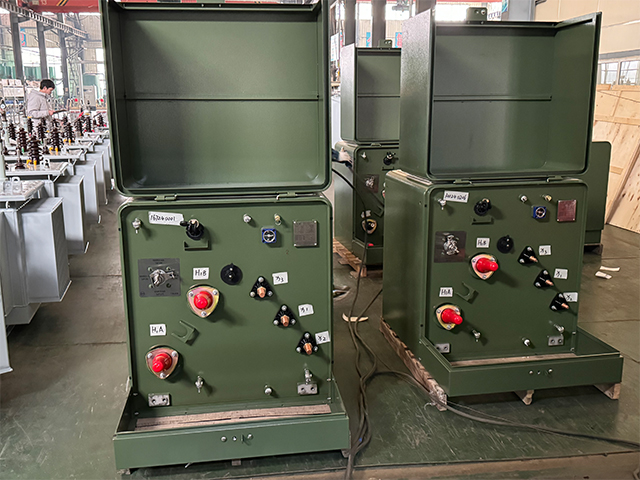
37.5kVA Single Phase Pad Mounted transformer
The 37.5kVA Single Phase Pad Mounted transformer with high voltage (HV) specifications of 24.94GRDY/14.4 kV and low voltage (LV) of 240/120V. At its core lies a robust tank, constructed from resilient alloy 304 stainless steel, guaranteeing longevity even in the harshest conditions. The HV and LV windings, equally critical components, are meticulously crafted from high-quality aluminum to ensure unwavering performance.Welcome your inquiry
Honesty, Integrity, Frugality, Activeness and Passion