
Energy Storage Plant Transformers: Ultimate Guide for BESS Projects
2026-03-19
Energy storage is rapidly transforming modern power systems, especially with the expansion of renewable energy and grid decentralization. At the core of every battery energy storage system (BESS) lies a critical component: the Energy Storage Plant Transformer.
These transformers are essential for managing energy flows, enabling charging and discharging cycles, and ensuring efficient integration between energy storage systems and the power grid.
From a practical engineering perspective, selecting the right transformer directly impacts:
- System efficiency
- Grid stability
- Long-term operational reliability
- Energy loss minimization
1. What Are Energy Storage Plant Transformers?
Energy Storage Plant Transformers are specialized power transformers designed for Battery Energy Storage Systems (BESS) and large-scale energy storage plants. They serve as the critical interface between the energy storage system and the electrical grid.
In a typical BESS, batteries store DC energy, which inverters convert to AC. The energy storage plant transformer then steps up this low-voltage AC (e.g., from inverters at 480V–690V) to medium or high voltage (e.g., 10kV–35kV or higher) for efficient grid connection, or steps it down during charging. They provide essential functions, including:
- Voltage matching and transformation for bidirectional power flow
- Galvanic isolation to enhance safety and protect against grid-side faults, overvoltages, and harmonics
- Mitigation of inverter-induced harmonics, overload during frequent cycling, and saturation risks
Common types include dry-type, oil-immersed, pad-mounted, and isolation transformers, often built to IEC, IEEE, or UL standards for grid-scale, solar+storage hybrid, or utility projects.
With the rapid growth of renewable integration and grid stabilization needs in 2026, high-efficiency, custom BESS transformers ensure reliable, low-loss operation, long lifespan (up to 60 years), and optimal performance in high-cycling energy storage plants. Choosing the right transformer boosts system efficiency, reduces losses, and supports sustainable energy transition.
Core Functions
|
Function |
Description |
|
Voltage Transformation |
Step-up or step-down between battery and grid |
|
Power Flow Control |
Manage bidirectional energy flows |
|
Grid Integration |
Enable synchronization with the grid voltage |
|
Isolation |
Protect system components |
|
Efficiency Optimization |
Reduce energy loss |
2. Typical BESS Transformer Configuration
A standard BESS system architecture includes multiple transformer stages:
|
Component |
Function |
|
Battery Modules |
Store energy |
|
PCS (Inverter) |
Convert DC to AC |
|
Increase the voltage to the grid level |
|
|
Grid Connection |
Interface with transmission and distribution |
Example System Flow:
Battery → PCS → Transformer → Grid
3. Transformer Types Used in Energy Storage Plants
Different types of energy storage transformers are selected based on project scale and environmental conditions.
3.1 Step-up Transformers
Used to connect low-voltage PCS output to medium/high voltage grid systems.
3.2 Medium Voltage Transformers
Operate within distribution-level energy infrastructure.
3.3 Dry-Type Transformers
- Suitable for indoor applications
- Lower fire risk
- Common in commercial and industrial installations
3.4 Oil-Immersed Transformers
- Higher efficiency
- Better heat dissipation
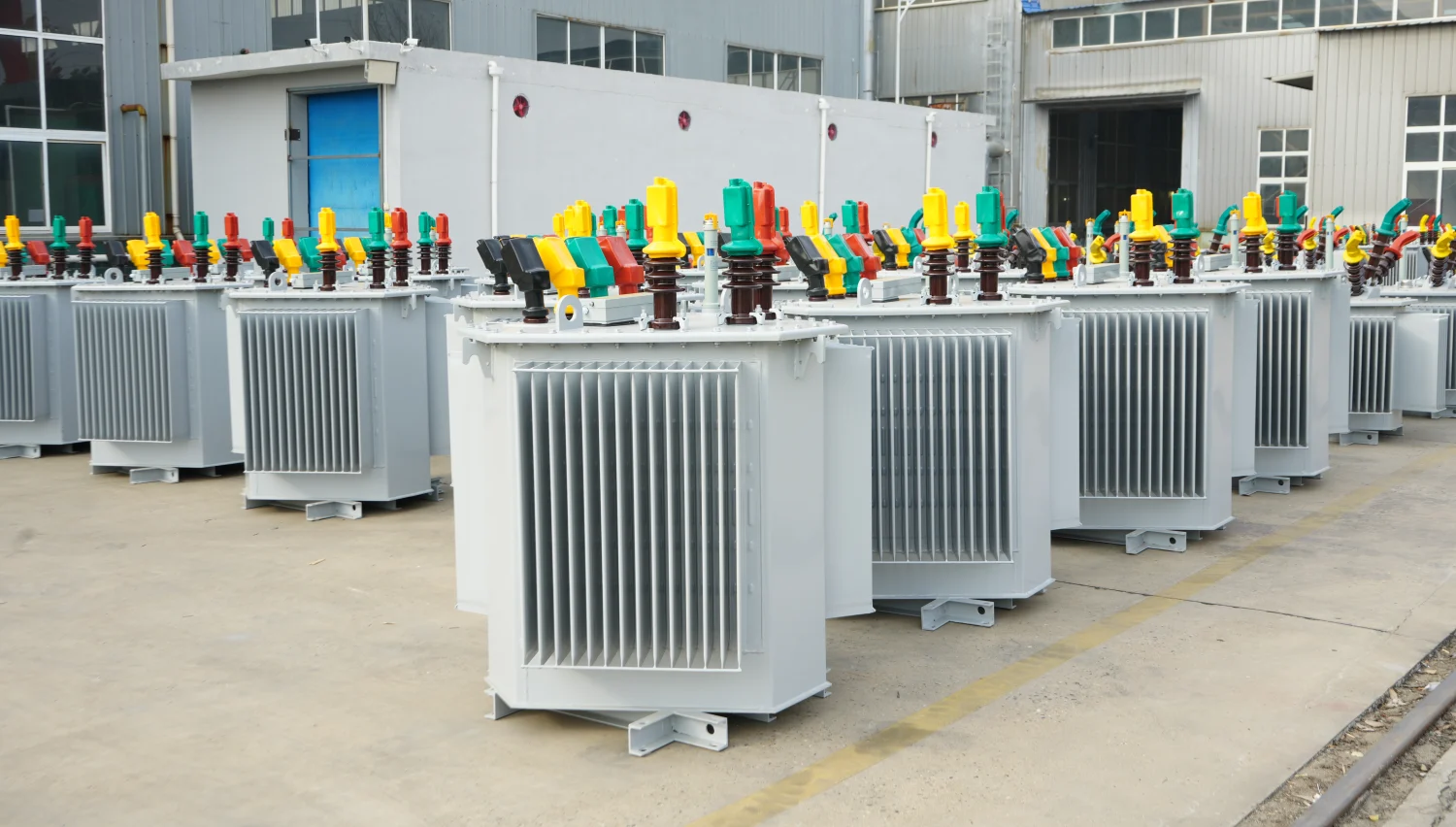
- Preferred for large-scale power plant transformer applications
4. Key Design Considerations
Designing transformers for BESS projects requires addressing unique operational challenges.
4.1 Load Profile
Unlike traditional power generation systems, BESS operates with:
- Rapid load fluctuations
- Frequent cycling
- Bidirectional power flow
4.2 Thermal Performance
Efficient heat management is critical due to:
- Continuous operation
- High load density
- Ambient temperature variations
4.3 Efficiency & Energy Loss
Reducing energy loss improves:
- System ROI
- Long-term operational performance
4.4 Voltage and Frequency Stability
Transformers must support:
- Stable grid voltage
- Dynamic frequency regulation
5. BESS Transformer Sizing Guide
Correct sizing ensures optimal performance and avoids system inefficiencies.
Basic Sizing Formula:

Typical Sizing Table
|
BESS Capacity |
Transformer Size |
Application |
|
500 kW |
630 kVA |
Small commercial systems |
|
1 MW |
1250 kVA |
Industrial applications |
|
5 MW |
6.25 MVA |
Utility-scale storage |
|
10 MW |
12.5 MVA |
Grid-level projects |
|
50 MW |
60–75 MVA |
Large energy storage plants |
6. High Voltage Integration in Energy Storage Plants
High Voltage Integration in Energy Storage Plants refers to the advanced electrical connection and voltage management strategies that enable large-scale Battery Energy Storage Systems (BESS) to seamlessly interface with medium- and high-voltage grids (typically 10kV–35kV, up to 110kV+ for utility-scale projects).
In grid-scale energy storage plants, batteries and inverters operate at lower DC/AC voltages (e.g., 800V–1500V DC on the battery side, 480V–690V AC post-inverter). High voltage integration involves specialized step-up transformers, power conversion systems (PCS), high-voltage switchgear, and direct grid-tie configurations to elevate output to transmission-level voltages. This minimizes transmission losses, enhances efficiency, and supports bidirectional power flow for charging/discharging.
Key benefits include:
- Reduced I²R losses over long distances
- Direct connection to substations or transmission networks without intermediate steps
- Improved grid stability via reactive power support, fault ride-through (FRT/LVRT), and harmonics mitigation
- Compatibility with renewable hybrids (solar + storage) using 1500V DC architectures
- Compliance with international standards (IEC, IEEE) for export markets
Emerging trends in 2026 favor high-voltage cascade designs and transformer-less MV connections (6–35kV) for cost savings and higher power density in utility-scale BESS. Effective high voltage integration ensures reliable, low-loss performance, accelerates renewable integration, and strengthens grid resilience amid rising demand for flexible energy storage solutions.
7. BESS Transformer vs Power Transformer vs Distribution Transformer
BESS Transformer vs Power Transformer vs Distribution Transformer compares three key transformer types in modern power systems, especially for grid-scale applications in 2026.
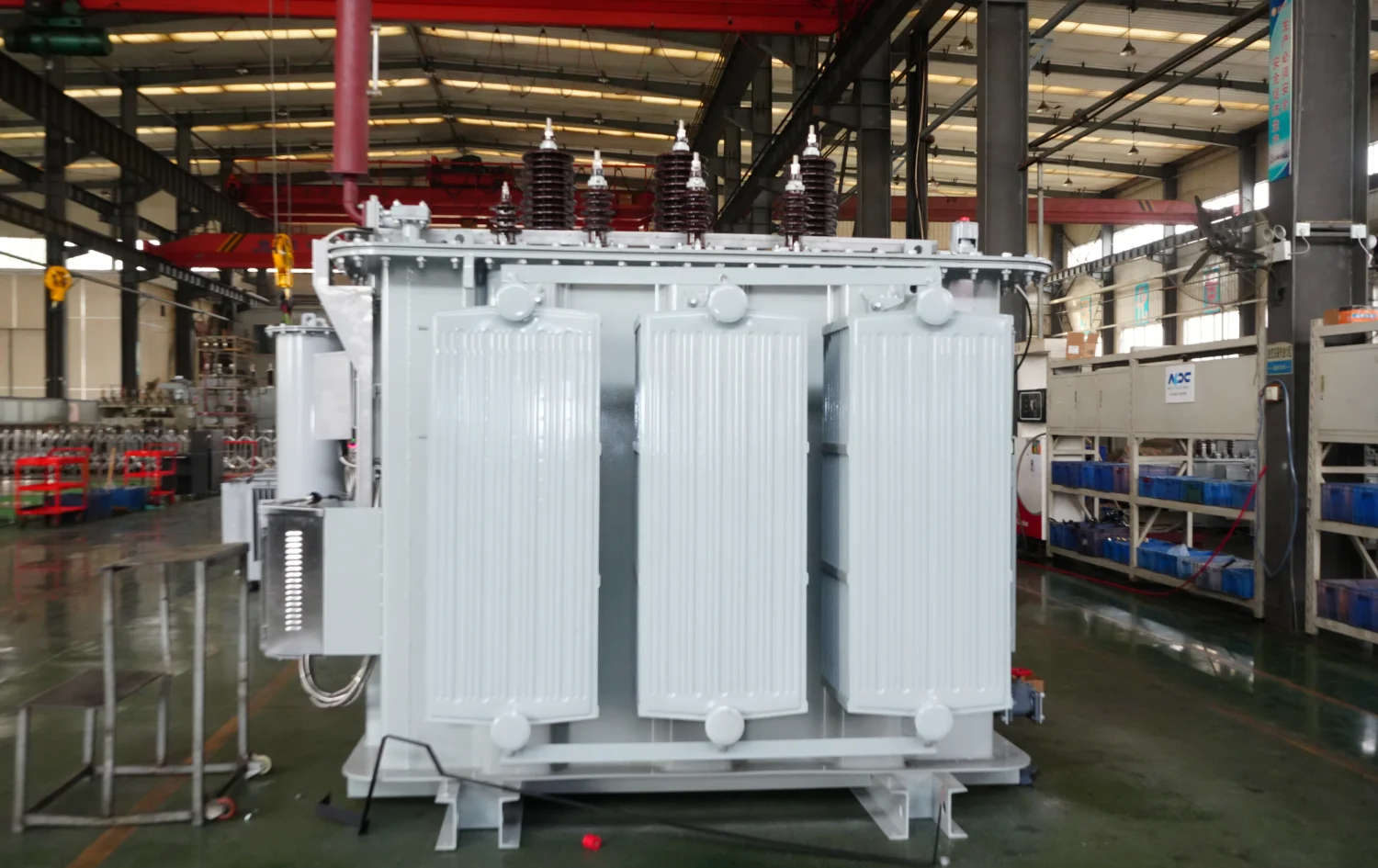
- BESS Transformer (Battery Energy Storage System Transformer): Specialized for Battery Energy Storage Systems (BESS) and energy storage plants. Handles bidirectional power flow with frequent full-load cycling (charge/discharge), high harmonic content from inverters (requiring K-factor rating or enhanced harmonic tolerance), overload during frequency regulation/peak shaving, and thermal stresses from rapid reversals. Typically medium-voltage (e.g., 690V–35kV step-up), oil-immersed or dry-type, with galvanic isolation, electrostatic shielding, and low-loss design for round-trip efficiency. Optimized for high-cycling, inverter-duty operation in utility-scale BESS, solar+storage hybrids, and grid services.
- Power Transformer: Used in high-voltage transmission networks (e.g., 66kV–765kV, 100MVA+). Focuses on step-up/step-down for long-distance bulk power transfer from generation to substations. Designed for near-constant full-load operation, maximum efficiency at rated load, high insulation, and low copper losses. Not suited for frequent cycling or high harmonics without derating.
- Distribution Transformer: Steps down medium voltage to low voltage (e.g., 11–33kV to 400/230V) for end-user delivery in residential, commercial, or light industrial areas. Rated 25kVA–2500kVA, prioritizes all-day efficiency (low no-load/core losses) under varying/partial loads. Operates unidirectionally with minimal cycling; standard designs struggle with BESS harmonics and reversals, leading to overheating or reduced lifespan.
Key differences summary:
- Application — BESS: Energy storage/grid support; Power: Transmission; Distribution: Local supply.
- Load Profile — BESS: Bidirectional, high cycling; Power: Steady full load; Distribution: Variable partial load.
- Harmonics & Overload — BESS: High tolerance required; Others: Lower priority.
- Efficiency Focus — BESS: Round-trip/low-loss cycling; Power: Full-load peak; Distribution: All-day average.
Understanding differences helps optimize system design.
|
Feature |
BESS Transformer |
Power Transformer |
Distribution Transformer |
|
Function |
Energy storage integration |
Power transmission |
End-user supply |
|
Load Type |
Dynamic, bidirectional |
Stable, unidirectional |
Variable load |
|
Application |
Energy storage projects |
Power plants |
Distribution networks |
|
Efficiency Focus |
Cycling efficiency |
Continuous efficiency |
Load efficiency |
8. BESS Transformer vs Solar Plant Transformer
In hybrid systems combining solar energy storage systems, transformer selection becomes more complex.
|
Parameter |
BESS Transformer |
Solar Plant Transformer |
|
Power Flow |
Bidirectional |
Mostly unidirectional |
|
Operation |
Charging & discharging |
Generation only |
|
Load Variation |
High |
Moderate |
|
Application |
Storage + grid |
Solar PV systems |
9. Advanced Technologies in Energy Storage Transformers
Modern transformer technology is evolving to support smart grid technologies and renewable energy integration.
Innovations Include:
- Low-loss core materials
- Digital monitoring systems
- Smart sensors for predictive maintenance
- Compact modular designs
10. Practical Engineering Example
A utility-scale BESS project:
|
Parameter |
Value |
|
System Capacity |
20 MW / 40 MWh |
|
Transformer Type |
Oil-filled step-up |
|
Voltage Level |
0.8 kV → 33 kV |
|
Application |
Peak shaving + frequency regulation |
This configuration ensures:
- Efficient power conversion
- Reliable grid interaction
- Long-term operational stability
11. Future Trends in Energy Storage Transformers
The future of energy storage transformers will be driven by:
- Expansion of renewable energy
- Increasing grid flexibility demands
- Growth in energy storage projects
- Integration with smart grid technologies
Key focus areas:
- Higher efficiency
- Reduced carbon footprint
- Enhanced digitalization
12. BESS Transformer Cost & Price Guide (Global Market Insights)
For international EPC contractors and project developers, understanding the cost structure of energy storage plant transformers is essential for budgeting and supplier selection.
Transformer pricing in BESS projects depends on multiple technical and commercial factors, not just capacity.
12.1 Key Cost Factors
|
Factor |
Impact on Price |
|
Transformer Capacity (kVA/MVA) |
Primary cost driver |
|
Voltage Level |
Higher voltage = higher insulation cost |
|
Cooling Method |
Oil-filled is usually more cost-effective |
|
Efficiency Class |
Low-loss designs increase upfront cost |
|
Material (Copper vs Aluminum) |
Copper has increased its price significantly |
|
Standards (IEC / ANSI / IEEE) |
Compliance adds certification cost |
|
Protection & Monitoring |
Smart transformers cost more |
12.2 Typical Price Range (Reference)
|
Transformer Rating |
Voltage Level |
Estimated Price Range (USD) |
|
630 kVA |
0.8/11 kV |
$8,000 – $15,000 |
|
1250 kVA |
0.8/11 kV |
$15,000 – $25,000 |
|
5 MVA |
0.8/33 kV |
$60,000 – $120,000 |
|
10 MVA |
0.8/33 kV |
$120,000 – $250,000 |
|
50 MVA |
11/132 kV |
$800,000 – $2,000,000 |
Note: Prices vary depending on region, raw material costs, and project specifications.
12.3 Cost Optimization Strategies
To reduce total project cost while maintaining performance:
- Select aluminum windings where acceptable
- Optimize transformer loading (avoid oversizing)
- Use standardized voltage levels
- Balance efficiency vs capital expenditure
- Work with experienced transformer manufacturers
12.4 CAPEX vs OPEX Consideration
|
Aspect |
Explanation |
|
CAPEX |
Initial transformer purchase cost |
|
OPEX |
Energy loss over lifetime |
|
Trade-off |
Higher efficiency reduces long-term cost |
For energy storage applications, lifecycle cost analysis is more important than initial price.
13. BESS Transformer Selection Calculator
To support engineers in real-world BESS system design, this simplified calculator helps determine the appropriate transformer capacity.
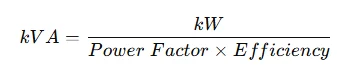
13.1 Basic Calculation Formula
13.2 Step-by-Step Example
Project Input:
|
Parameter |
Value |
|
BESS Power |
5 MW |
|
Power Factor |
0.9 |
|
System Efficiency |
0.98 |
Calculation:
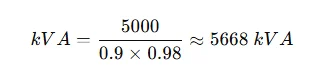
Recommended Transformer:
➡ Select 6.25 MVA transformer
13.3 Quick Selection Table
|
BESS Power (MW) |
Recommended Transformer (MVA) |
|
1 MW |
1.25 MVA |
|
2 MW |
2.5 MVA |
|
5 MW |
6.25 MVA |
|
10 MW |
12.5 MVA |
|
20 MW |
25 MVA |
|
50 MW |
60–75 MVA |
13.4 Engineering Considerations
When using the calculator, always include:
- Future load expansion (+10%–20%)
- Ambient temperature correction
- Harmonics from the PCS (inverter)
- Grid code requirements
13.5 Common Mistakes to Avoid
|
Mistake |
Impact |
|
Undersizing transformer |
Overheating, reduced lifespan |
|
Oversizing excessively |
Higher cost, low efficiency |
|
Ignoring harmonics |
Insulation stress |
|
Neglecting the duty cycle |
Incorrect thermal design |
14. BESS Transformer Manufacturers & Supplier Selection Guide
For EPC contractors, developers, and procurement teams, selecting the right energy storage plant transformer manufacturer is critical to ensuring project success, long-term reliability, and cost control.
In global BESS projects, transformer suppliers must meet both technical performance requirements and international compliance standards.
14.1 Key Criteria for Selecting Transformer Manufacturers
When evaluating suppliers, focus on the following engineering and commercial factors:
|
Criteria |
Description |
|
Technical Capability |
Experience in energy storage transformers and power transformers |
|
Voltage Range |
Ability to supply medium and high voltage solutions |
|
Standards Compliance |
IEC, IEEE, and ANSI certifications |
|
Project Experience |
Proven track record in BESS and renewable energy projects |
|
Customization |
Ability to design based on project-specific requirements |
|
Delivery Time |
Production and logistics capability |
|
After-Sales Support |
Installation guidance and maintenance services |
14.2 International Standards to Consider
For global export projects, transformers must comply with widely accepted standards:
|
Standard |
Region |
Description |
|
IEC 60076 |
Global |
Power transformer standard |
|
IEEE C57 |
North America |
Transformer design and testing |
|
ANSI |
USA |
Electrical equipment standards |
|
EN Standards |
Europe |
EU compliance requirements |
14.3 Top Transformer Manufacturer Categories
Instead of focusing only on brand names, it is more practical to classify suppliers based on capability:
|
Category |
Characteristics |
|
Global Brands |
Advanced technology, high cost, strong reliability |
|
Regional Manufacturers |
Competitive pricing, flexible customization |
|
OEM/ODM Suppliers |
Cost-effective, suitable for bulk procurement |
|
Specialized BESS Suppliers |
Focus on energy storage applications |
14.4 Supplier Comparison Table
|
Parameter |
Global Brands |
Regional Suppliers |
OEM Factories |
|
Price |
High |
Medium |
Low |
|
Lead Time |
Medium |
Fast |
Very fast |
|
Customization |
Medium |
High |
Very high |
|
Technical Support |
Strong |
Moderate |
Depends |
|
Best Use Case |
Utility-scale projects |
Commercial projects |
Large-volume procurement |
14.5 Practical Procurement Strategy
For energy storage projects, a balanced sourcing strategy is recommended:
- Use global brands for high-voltage grid-critical transformers
- Select regional manufacturers for cost-effective solutions
- Work with OEM factories for scalable deployment
14.6 Key Questions to Ask Suppliers
Before finalizing a transformer supplier, ask:
- What is your experience in BESS projects?
- Can you provide test reports (type & routine tests)?
- What are your loss values (no-load & load loss)?
- Do you support custom voltage and frequency requirements?
- What is your delivery timeline?
- Do you offer technical support for installation and commissioning?
14.7 Common Procurement Risks
|
Risk |
Impact |
|
Selecting the lowest price only |
Poor quality, high failure rate |
|
Ignoring standards compliance |
Project rejection |
|
Long delivery time |
Project delays |
|
Lack of technical support |
Installation issues |
Energy Storage Plant Transformers are a cornerstone of modern energy infrastructure, enabling efficient integration between battery systems and the power grid.
For engineers and project developers, proper transformer design and selection ensure:
- Reliable power supply
- Reduced energy loss
- Improved system efficiency
- Long-term project success
As energy storage systems continue to expand globally, advanced transformer solutions will play an increasingly critical role in delivering efficient power, stable grids, and sustainable energy systems.

Related Articles



Related Products
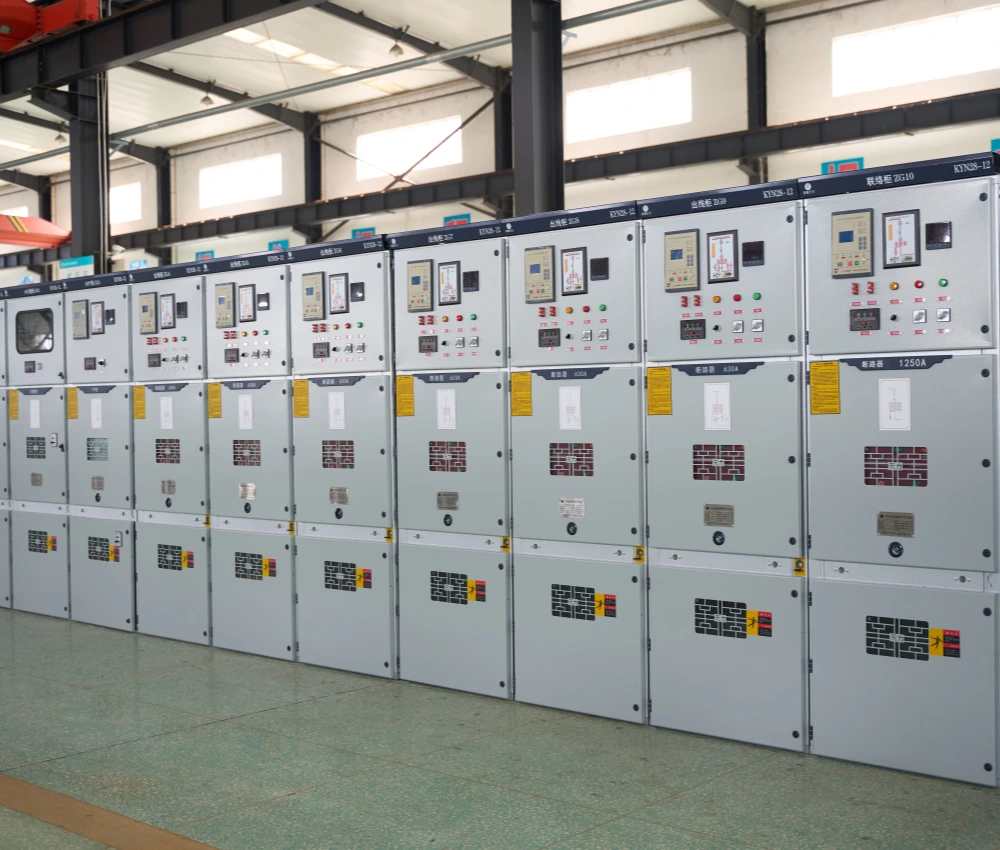
Armored Metal Enclosed Switchgear
The Armored Metal Enclosed Switchgear is a high-performance medium-voltage electrical distribution and protection system designed for industrial power networks, utility substations, renewable energy facilities, transportation infrastructure, and smart-grid applications. The switchgear adopts a fully compartmentalized armored metal enclosure structure integrating vacuum circuit breakers, disconnect switches, protection relays, current transformers, voltage transformers, and intelligent control systems into a compact modular cabinet assembly. This design significantly improves operational safety, electrical reliability, and maintenance efficiency for modern medium-voltage power distribution systems. Manufactured using precision-engineered insulated structures and reinforced metal-clad compartments, the armored metal enclosed switchgear provides outstanding dielectric strength, internal arc resistance, and mechanical durability under demanding operating conditions. Independent compartments for busbars, breaker units, cable chambers, and low-voltage control sections effectively isolate electrical faults and minimize fault propagation risks while improving maintenance accessibility and operational security. The Armored Metal Enclosed Switchgear supports intelligent automation systems, remote monitoring interfaces, and advanced communication protocols for digital substations and smart-grid infrastructure. With scalable configuration capabilities and flexible protection architectures, the switchgear delivers stable medium-voltage switching, fault isolation, and electrical distribution performance for industrial automation systems, utility networks, renewable energy integration projects, and mission-critical electrical facilities.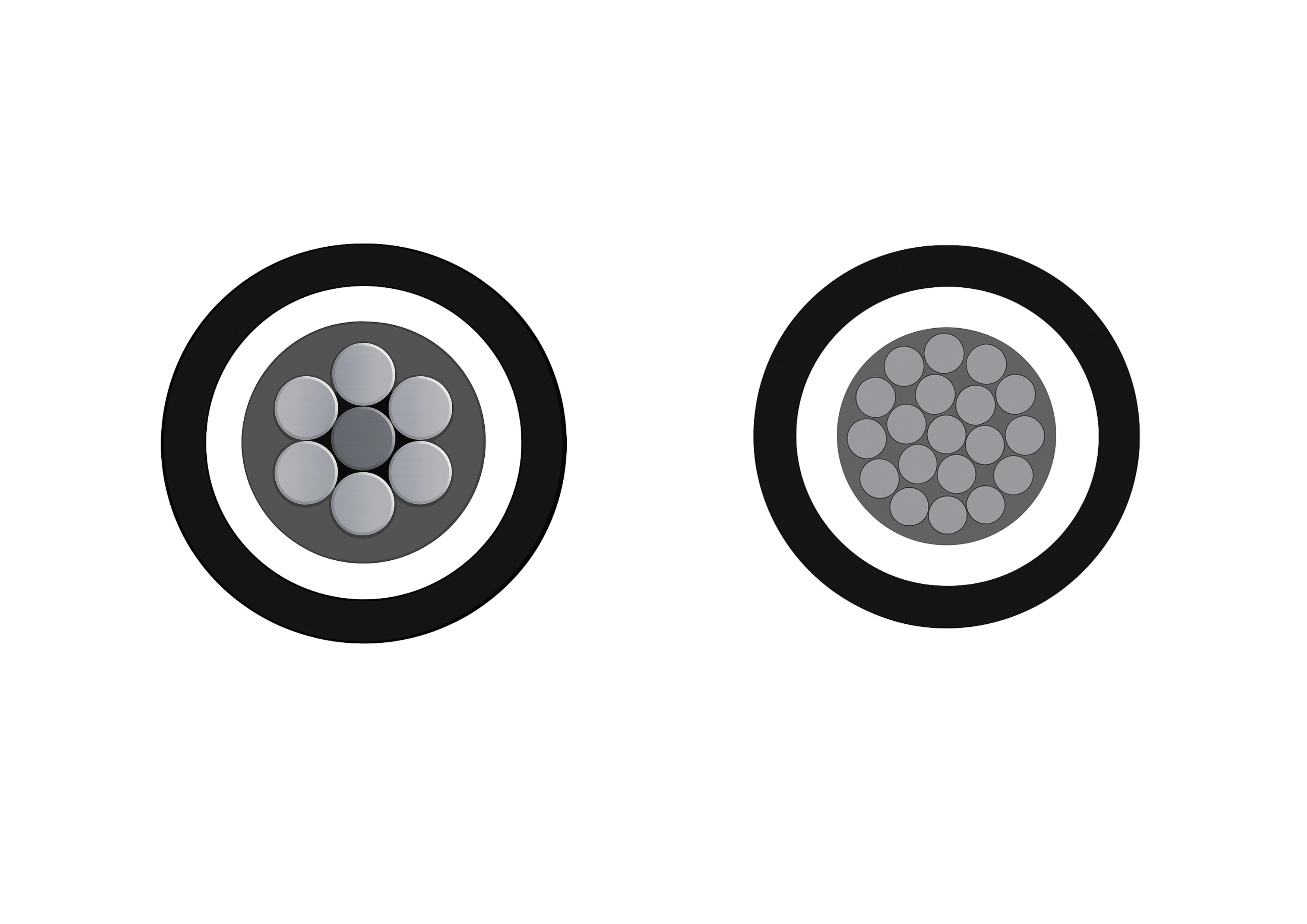
XLPE-HDPE Tree Cable Aluminum 25kV 1x70mm²
The XLPE-HDPE Tree Cable Aluminum 25kV 1x70mm² is specially designed for medium-voltage overhead distribution systems that demand higher load capacity. Its robust construction ensures outstanding performance and reliability even in harsh outdoor conditions, making it ideal for wooded areas, semi-urban environments, and locations where maintenance and tree-trimming need to be minimized. The conductor is made from high-conductivity aluminum alloy 1350 wires, round compacted with class 2 stranding, achieving a minimum conductivity of 61% IACS and a tensile strength of at least 130 MPa. Optional conductor shielding with an extruded semiconductor thermosetting compound is available for 15kV and 25kV applications, providing enhanced electrical performance. This 25kV XLPE-HDPE tree cable delivers reliable, eco-friendly power distribution with reduced maintenance needs. Its combination of high current capacity, environmental resilience, and long service life makes it a perfect solution for medium-voltage overhead networks in challenging outdoor settings.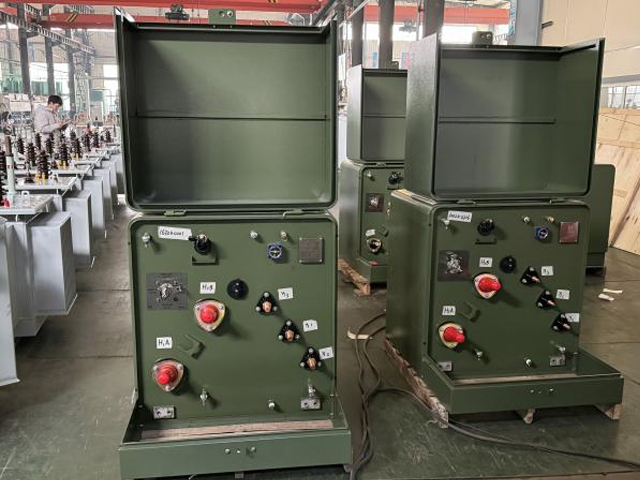
37.5kVA Conventional Type Single Phase Pole Mounted Transformer
37.5kVA Conventional Type Single Phase pole Mounted transformer has a rated capacity range from 10 kVA to 333 kVA, and complies with ANSI, IEEE, CSA, IEC60076 and other standards, ensuring safety, stability, and efficiency, allowing you to reduce operating costs. Our products have been widely exported to markets such as North America, Central and South America, and Southeast Asia. With rich experience, we provide comprehensive technical support and services. Key specifications include mineral oil insulation (ONAN cooling), aluminum or copper windings, primary voltages 2.4kV–34.5kV grounded wye or delta (common: 7200/12470GrdY, 7620/13200GrdY, 12470GrdY/7200, 24940GrdY/14400, 34500GrdY/19920), secondary 120/240V or 240/120V split-phase, BIL ratings 95–150kV HV / 30kV LV, impedance typically 2.0–4.0%, ±2×2.5% or 5-position tap changer, conventional or CSP (completely self-protected) configurations with internal fuses, lightning arresters, weak-link protection, pressure relief valve, oil sight gauge, and standard ANSI 70 gray tank finish. Efficiency typically reaches 99.01–99.05%+, with low sound levels and corrosion-resistant features for long-term outdoor durability.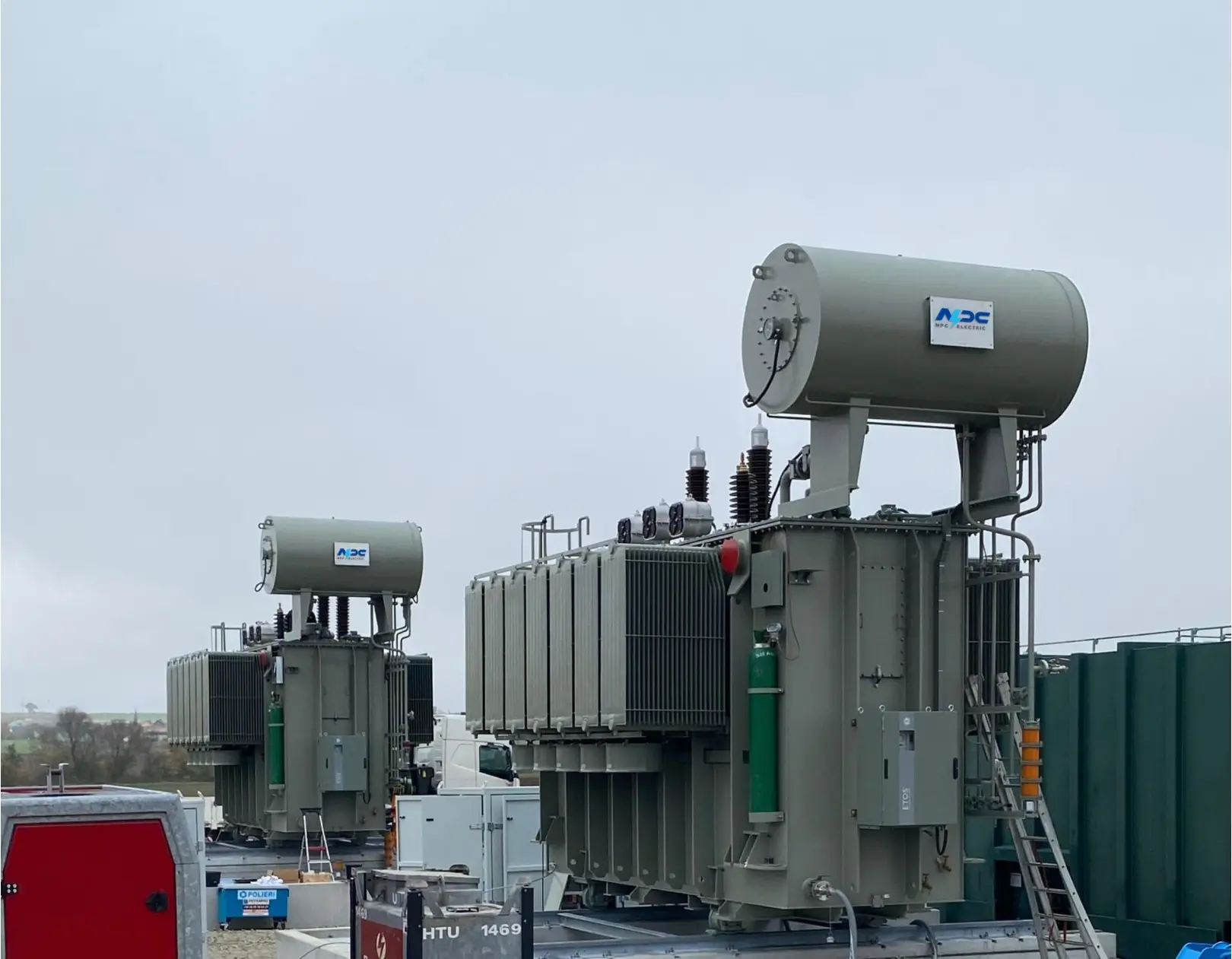
75kV 1250kVA Three Phase Oil Immersed Power Transformer Copper
The 75kV 1250kVA Three Phase Oil Immersed Power Transformer Copper is engineered for regional 66–75 kV transmission and industrial step-down applications. It adopts 99.99 % electrolytic copper windings, high-grade grain-oriented silicon steel S13 core, corrugated tank + ONAN cooling, and ±5 % off-circuit tap changer (on-load optional). Fully compliant with IEC 60076, lightning impulse withstand 350 kV peak, PD <10 pC, noise ≤58 dB. Fully sealed or conservator design with vacuum oil filling and nitrogen sealing ensures >30-year maintenance-free operation even in high-altitude or polluted areas. Ideal for mining, metallurgy, wind farms, and urban 75 kV substations requiring high reliability and low loss.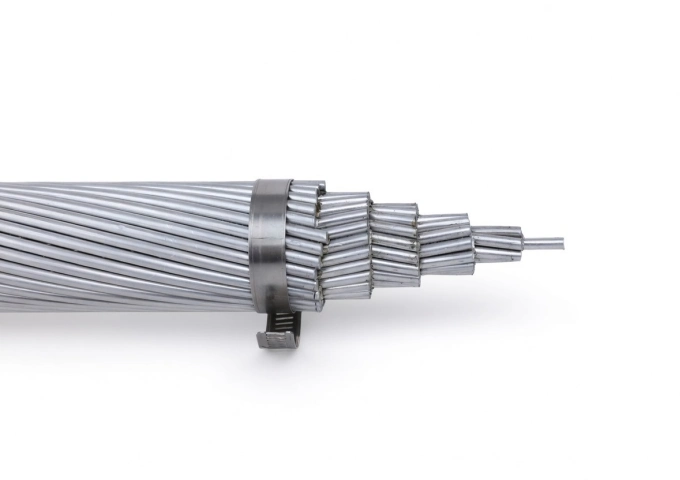
336.4 MCM Tulip AAC Cable
The 336.4 MCM Tulip AAC Cable is a high-performance All Aluminum Conductor designed for demanding overhead power transmission and distribution lines. Manufactured with 19 strands of premium 1350-H19 aluminum wire in a concentric lay configuration, this bare conductor provides excellent electrical conductivity with a low DC resistance of 0.0514 ohms per 1000 ft at 20°C. Featuring an overall diameter of 0.666 inches and a rated breaking strength of 6,150 lbs, the Tulip AAC delivers a robust ampacity of 513 amps while weighing only 315.8 lbs per 1000 ft. Its optimized strength-to-weight ratio minimizes sag and structural loading. Fully compliant with ASTM B-230 and B-231 standards, the 336.4 MCM Tulip AAC Cable offers outstanding corrosion resistance for long-term durability in harsh outdoor environments, making it the preferred choice for utility networks requiring cost-effective, high-reliability bare aluminum conductors.
Three Phase Pole Mounted Transformer
The three phase pole mounted transformer delivers balanced, high-capacity power transformation for overhead distribution lines, stepping down medium voltages such as 11kV, 22kV, or 33kV to low voltages like 400V/415V or 480V in Y or Delta configurations. Engineered with a five-legged core/coil assembly and premium grain-oriented silicon steel, it reduces magnetic losses and harmonics while achieving high efficiency levels per DOE and IEC standards. The oil-immersed tank with ONAN cooling ensures effective heat dissipation and a 65°C rise rating for continuous operation under demanding loads. Robust features include porcelain HV bushings, polymer LV bushings, tin-plated terminals for copper/aluminum connections, pressure relief devices, and lightning arrester provisions, offering excellent weather resistance and protection in exposed installations. This design provides cleaner aesthetics, lower installation costs compared to single-phase banks, and reliable service for motor starts and variable loads, making it a top choice for utilities modernizing grids.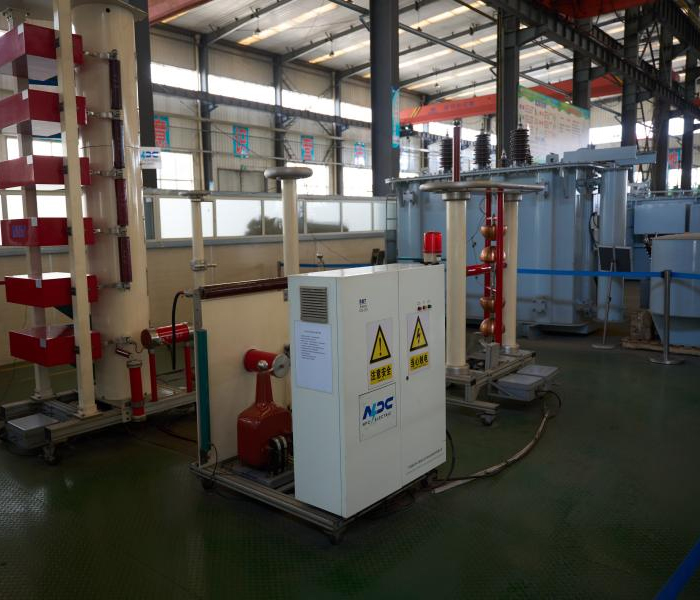
6300kVA Dry Type Transformer
The NPC ELECTRIC 6300kVA Dry Type Transformer is a high-performance, heavy-duty power solution designed for large industrial and commercial applications. With a capacity of 6300kVA, it features cutting-edge dry-type insulation technology, offering superior safety, low maintenance, and extended reliability. Built to withstand demanding operating conditions, this transformer provides stable, efficient, and noise-free performance while minimizing environmental impact. Its dry-type ventilated or encapsulated construction provides zero fluid maintenance, no spill/leak risks, and suitability for extreme high-density loads, space-limited, or environmentally restricted high-power applications.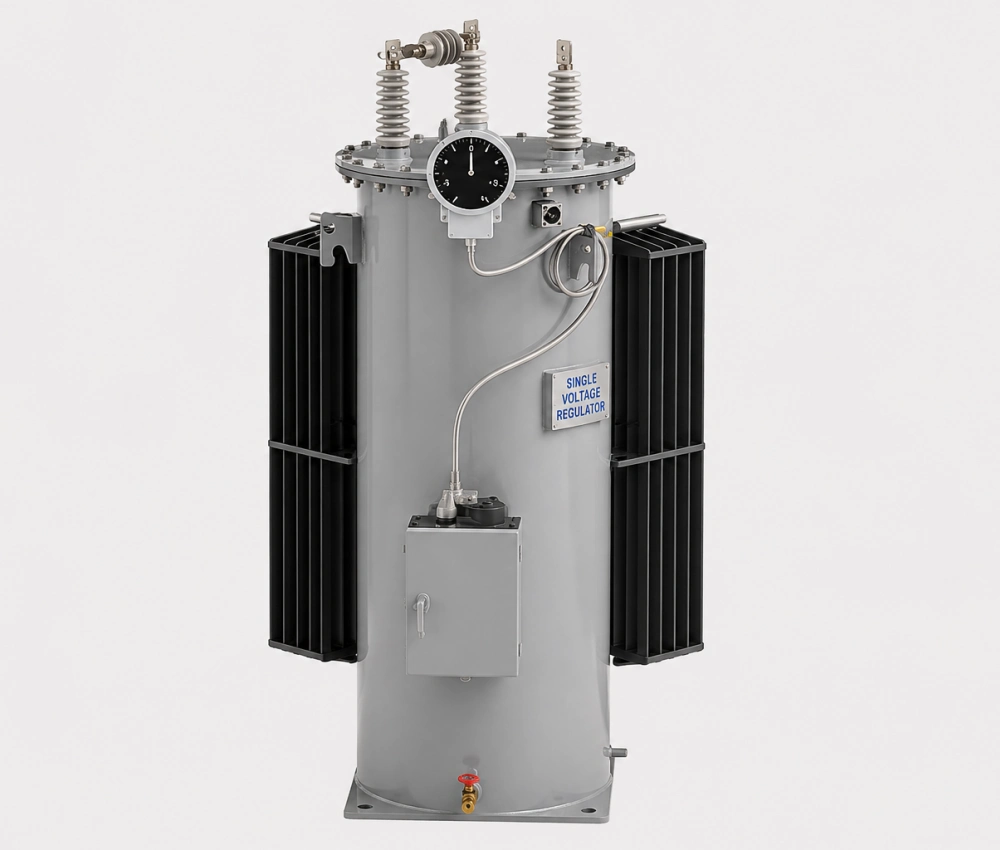
SVR-3 Type Three Phase Automatic Step Voltage Regulator
The SVR-3 Type Three Phase Automatic Step Voltage Regulator is a state-of-the-art on-load tap changing device engineered to provide precise, automatic voltage stabilization for medium-voltage distribution networks. Featuring premium copper windings, high-permeability silicon steel cores, and a fast-response motorized tap changer, the SVR-3 delivers accurate voltage correction with minimal disturbance. Its intelligent digital controller continuously monitors three-phase voltage and automatically adjusts taps to maintain stable output even under rapid load changes. Designed for harsh outdoor conditions, it offers excellent overload capability, low power loss, and comprehensive protection including over/under voltage, overload, short-circuit, and phase imbalance. With remote SCADA/GSM monitoring capability and robust sealed-tank construction, the SVR-3 significantly improves voltage profile, reduces line losses, and enhances overall power quality in distribution systems.
80kVA Dry Type Transformer
80kVA dry-type transformer launched by NPC ELECTRIC adopts advanced dry insulation technology, has the advantages of high efficiency, environmental protection, and safety, and is widely used in industrial, commercial, and residential power systems. The transformer has a compact design, strong load-bearing capacity, stable operation, and effectively reduces energy loss. The oil-free structure reduces the risk of fire, meets modern green environmental standards, and is suitable for use in environments with high requirements for power stability and low noise.
Three Phase Cast Resin Dry Type Transformer
The Three Phase Cast Resin Dry Type Transformer is a safe, high-efficiency indoor power transformer series designed for reliable medium-voltage to low-voltage step-down in commercial, institutional, industrial, data center, hospital, school, high-rise, and renewable energy applications. With advanced epoxy cast-resin encapsulation and full high-conductivity copper windings, it completely eliminates oil fire risks, environmental hazards, and routine maintenance while offering excellent dielectric strength, thermal performance, resistance to moisture/dust/chemicals, and very low noise levels — making it the ideal choice for fire-sensitive, noise-restricted, space-constrained, or high-reliability indoor installations. Fully compliant with IEC 60076-11, IEC 60076-1/2/3/5/20, EN 50588-1 (eco-design), IEEE C57.12.01, IEEE C57.12.91, UL 1561 (optional listing), and DOE 2016 efficiency standards.
50kV 1000kVA Outdoor Three-Phase Oil-Immersed Power Transformer for Distribution
The 50kV 1000kVA Outdoor Three-Phase Oil-Immersed Power Transformer for Distribution is engineered to deliver high efficiency, stable voltage regulation, and long-term service reliability in medium-voltage distribution networks. Designed for outdoor installation, the transformer features a robust oil-immersed cooling system, high-grade silicon steel core, and pure copper windings to ensure excellent thermal performance and low-loss characteristics. Its rugged, weatherproof construction withstands harsh climates, ensuring continuous operation in industrial plants, utility grids, mining sites, and renewable energy distribution stations. With optimized insulation, superior dielectric strength, and advanced protection configurations, the transformer offers enhanced safety and reduced maintenance. This unit is ideal for step-down power distribution scenarios requiring consistent performance and dependable energy delivery.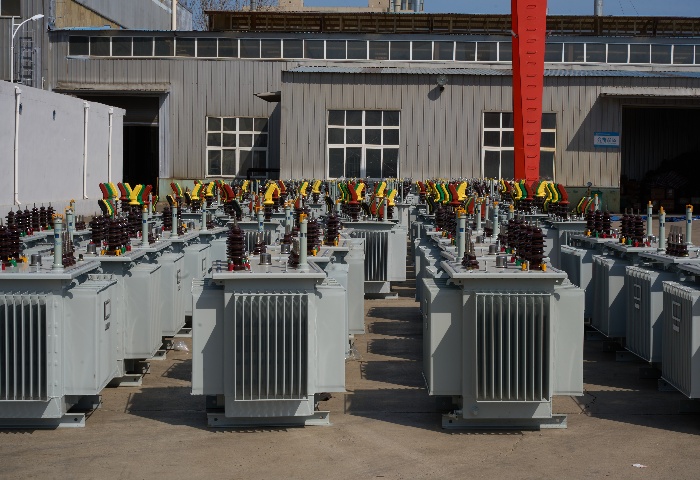
1600kVA Oil Immersed Transformer
The 1600kVA Oil Immersed Transformer is a high-capacity, three-phase, liquid-filled distribution transformer engineered for reliable outdoor pad-mounted or substation installations in utility networks, large commercial/industrial complexes, data centers, manufacturing plants, and high-demand power distribution systems. Primary voltages range from 2.4kV to 34.5kV (common: 34.5kV, 24.94kV, 13.8kV, 13.2kV, 12.47kV, 4.16kV) in delta or grounded wye configurations with BIL up to 200kV. Secondary voltages include 600Y/347V, 480Y/277V, 208Y/120V, 240/120V, or custom outputs with vector groups Dyn11, Dyn1, Yyn0, etc.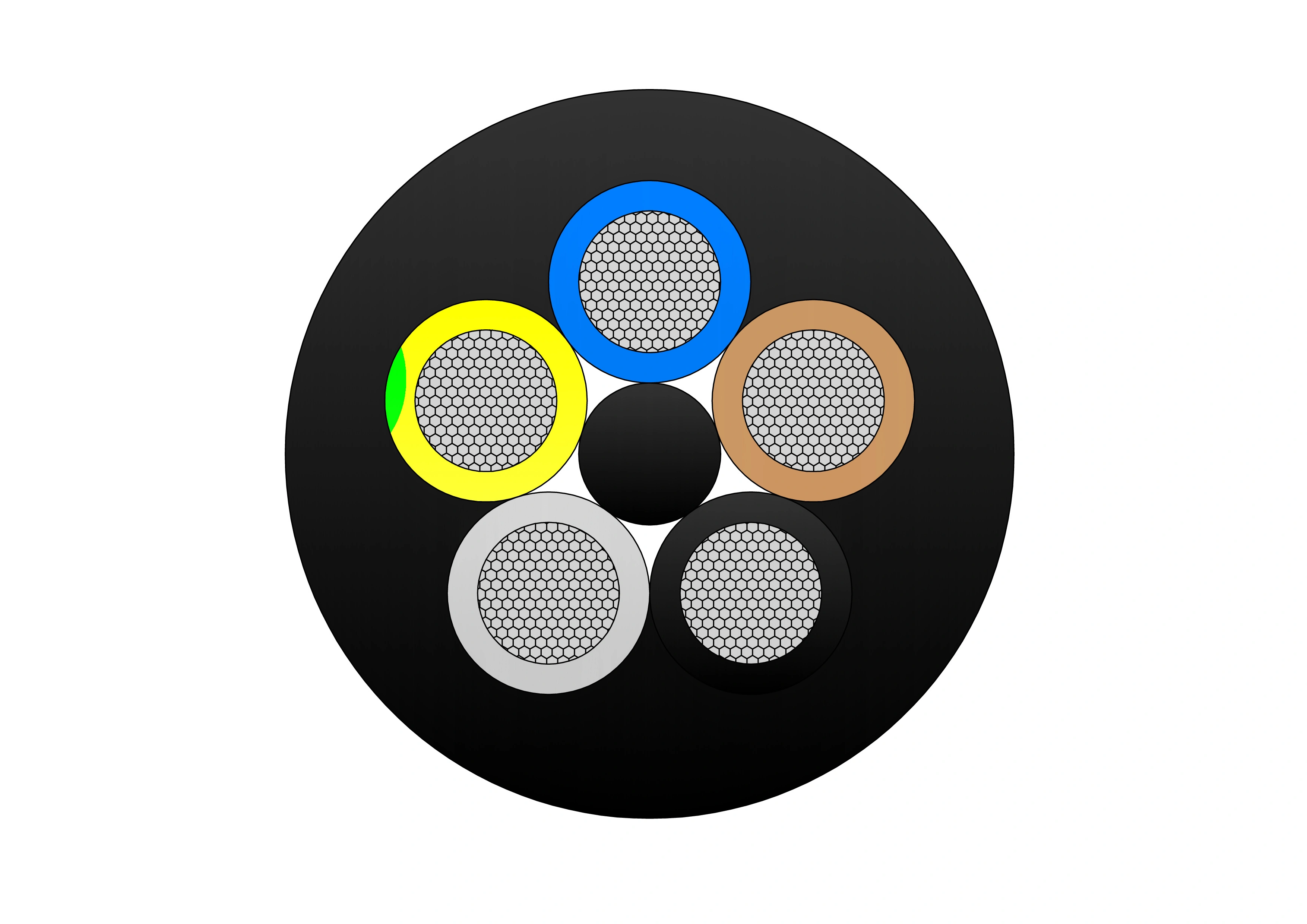
Type 209 Flexible Copper Screened Mining Cable
The Type 209 Flexible Copper Screened Mining Cable is a medium-voltage rubber-insulated cable designed for heavy-duty mining operations. It features tinned annealed copper conductors, EPR insulation, and a flexible copper wire/polyamide braid screen for superior electrical shielding. The extra heavy-duty PCP sheath provides oil resistance, flame retardancy, and high mechanical strength, making it ideal for trailing, feeder, and drilling applications in mining. Available in 1.1kV, 3.3kV, 6.6kV, and 11kV ratings, this cable complies with AS/NZS 2802 and ensures long service life under extreme conditions.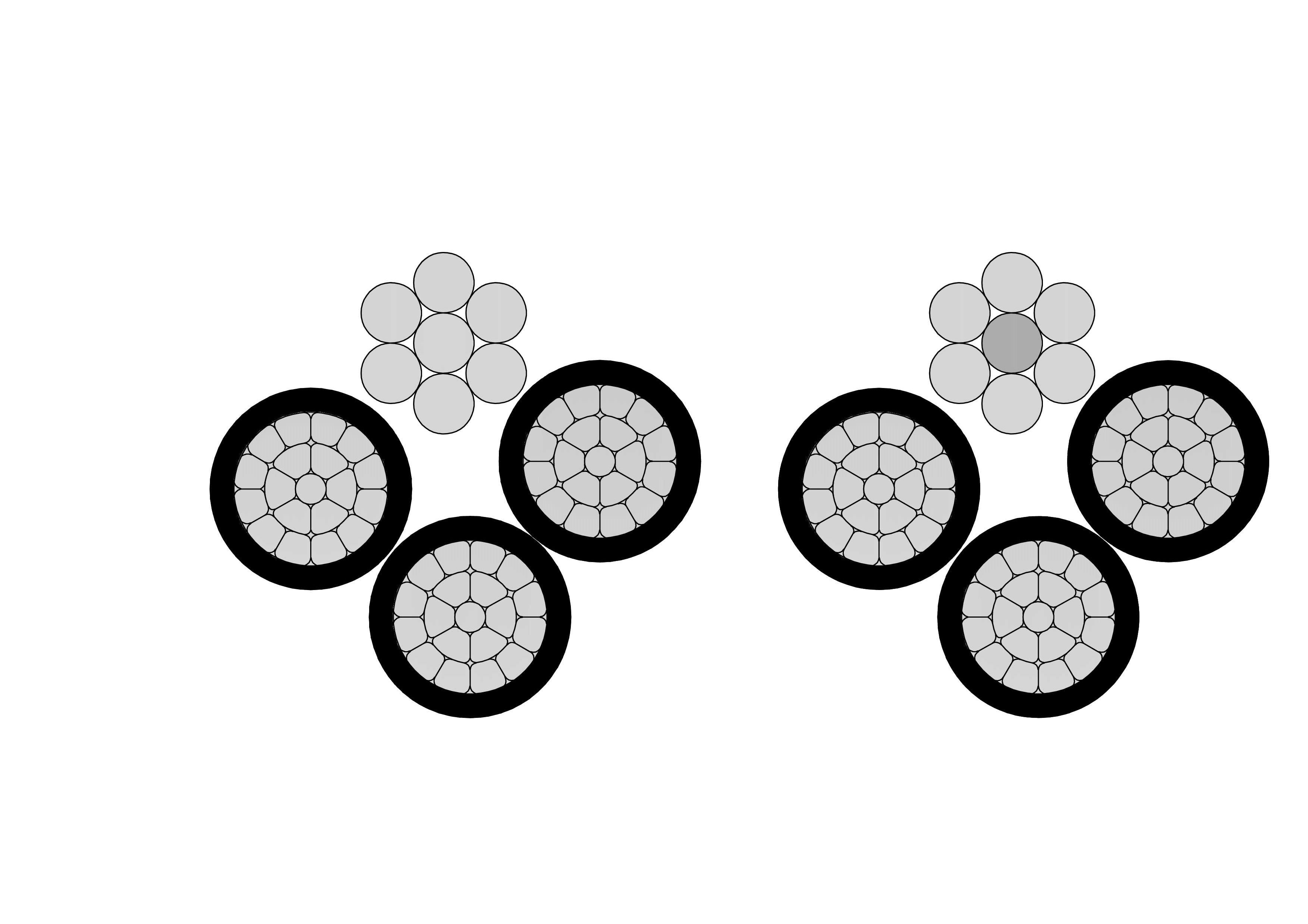
2 Palomino Aluminum Conductor Quadruplex Overhead Service Drop Cable
2 Palomino Aluminum Conductor Quadruplex Overhead Service Drop Cable is designed for delivering 3-phase power from pole-mounted transformers directly to the user's service entrance. Built with three 2 AWG aluminum phase conductors and one neutral messenger (7-strand) insulated with polyethylene or XLPE and formed into a quadruplex assembly, it meets ASTM and ICEA requirements for 600V service. The tough insulation offers outstanding protection against UV rays, moisture, tree contact, and abrasion. Self-supporting messenger design ensures easy pulling and reduced sag during installation. The 2 Palomino Quadruplex Service Drop Cable supports efficient power transfer with low voltage drop and high durability in extreme temperatures. Popular for its lightweight construction and reduced installation time, it is the choice for electricians and utilities. Widely deployed in housing developments, commercial services, and temporary power setups, this cable ensures safe, long-lasting overhead connections from distribution transformers to customer service entrances worldwide.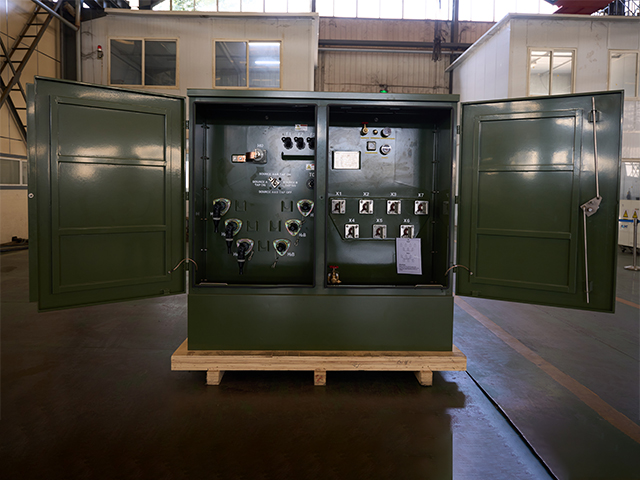
630kVA Three Phase Pad Mounted Transformer
NPC ELECTRIC's 630kVA three phase pad mounted transformer is engineered for demanding medium-voltage distribution needs, delivering superior efficiency and durability in outdoor installations. Compliant with the latest DOE efficiency standards, ANSI C57.12.34, IEEE requirements, and UL listings, this compartmentalized unit features a robust steel enclosure with corrosion-resistant coating, high-voltage dead-front or live-front bushings, radial or loop feed setups, and a standard 65°C winding rise for excellent thermal management. Primary voltages span from 4160V to 34500V (including popular grounded wye options like 12470GrdY/7200V or 13800GrdY/7970V), while secondary voltages cover 208Y/120V, 480Y/277V, or custom low-voltage configurations up to 600V.Welcome your inquiry
Honesty, Integrity, Frugality, Activeness and Passion