
Best Generator Step-Up Transformers: Types, Specs & Buying Guide
2026-07-29
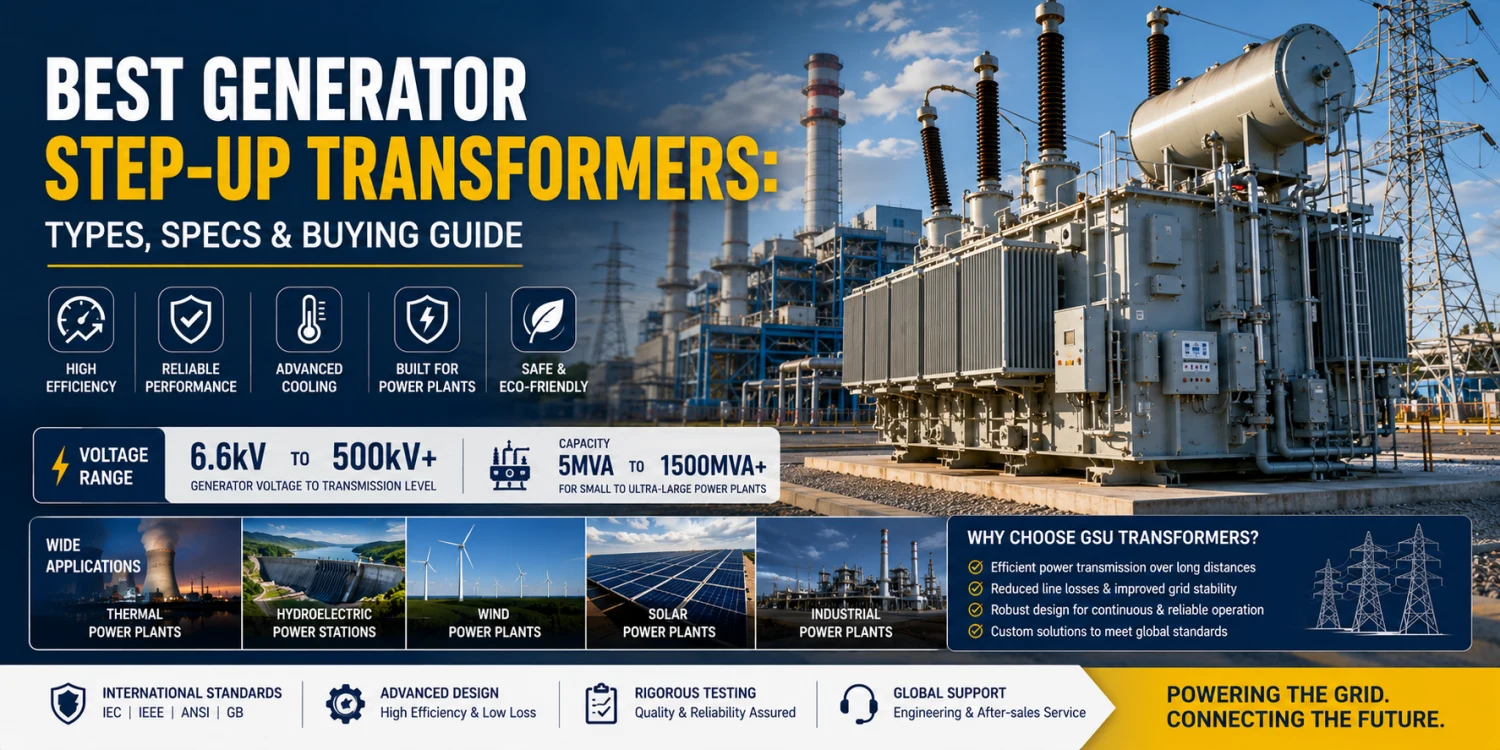
Generator Step-Up Transformers (GSU transformers) are among the most critical assets in modern power generation and transmission infrastructure. These transformers connect power plants to transmission networks by increasing generator voltage to high voltage transmission levels suitable for long-distance electrical power transfer.
Without step-up transformers, electrical energy generated by power plants would experience severe transmission losses over long distances. By stepping up voltage immediately after power generation, GSU transformers improve transmission efficiency, reduce current flow, minimize conductor losses, and enable stable integration into regional and national electrical grids.
Modern Generator Step-Up Transformers are widely used in:
- Thermal power plants
- Hydroelectric stations
- Nuclear facilities
- Solar farms
- Wind power systems
- Industrial captive power plants
- Utility substations
As energy demand continues rising and renewable energy projects expand globally, modern GSU transformers must support:
- Higher voltage ratings
- Increased efficiency
- Smart grid compatibility
- Renewable energy fluctuations
- Improved cooling systems
- Enhanced reliability
1. What Are Generator Step-Up Transformers?
Generator Step-Up Transformers are specialized power transformers designed to increase the relatively low generator voltage produced by power plants into much higher transmission voltages suitable for grid integration.
Typical generator voltage ranges include:
- 6.6 kV
- 11 kV
- 13.8 kV
- 15.75 kV
- 21 kV
GSU transformers then step up these voltages to transmission levels such as:
- 33 kV
- 66 kV
- 110 kV
- 220 kV
- 400 kV and above
Why Voltage Must Be Increased
Electrical transmission over long distances becomes more efficient at higher voltage levels.
When voltage increases:
- Current decreases
- Resistive losses decrease
- Conductor heating reduces
- Transmission efficiency improves
This principle is fundamental to modern electrical transmission systems.
Position of GSU Transformers in Power Plants
GSU transformers are typically installed directly between:
- Power generator output terminals
- High voltage transmission switchyards
They therefore serve as the critical interface between generation and transmission infrastructure.
Difference Between Step-Up and Step-Down Transformers
Step-up transformers increase voltage levels for transmission.
Step-down transformers reduce voltage for distribution and end-user applications.
Both transformer types are essential within modern power systems.
2. How Generator Step-Up Transformers Work
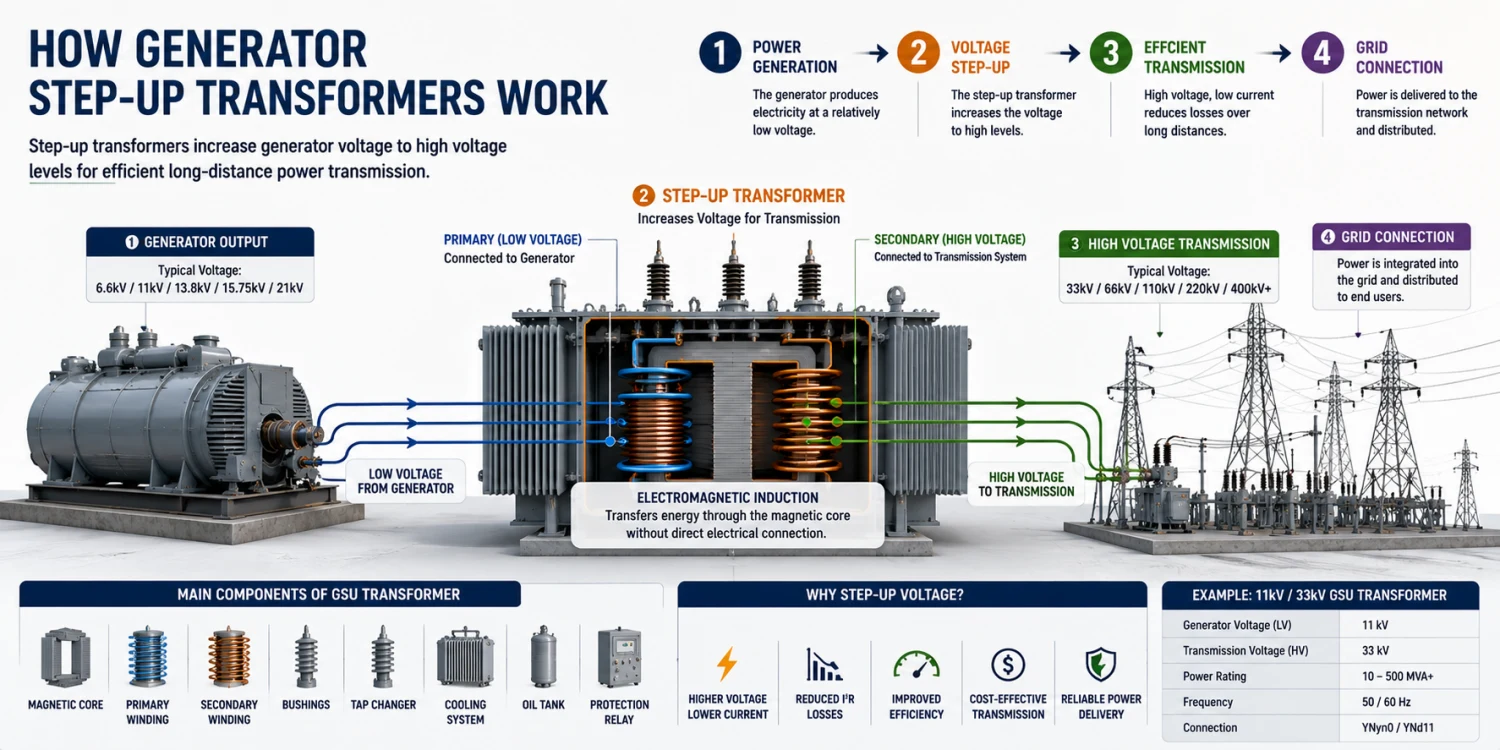
GSU transformers operate using electromagnetic induction principles.
Electrical energy transfers between transformer windings through a magnetic field generated within the transformer core.
Main Components of a GSU Transformer
A typical Generator Step-Up Transformer includes:
- Magnetic core
- Primary winding
- Secondary winding
- Insulation system
- Transformer tank
- Cooling system
- Bushings
- Tap changer
- Protection relays
Each component contributes to transformer efficiency and operational reliability.
Voltage Transformation Process
The generator supplies electrical energy to the low-voltage winding.
The transformer then increases voltage according to the winding turns ratio.
For example:
- Generator voltage: 11 kV
- Transmission voltage: 33 kV
This configuration forms an 11kV/33kV Generator Step-Up Transformer.
Three-Phase Transformer Operation
Most GSU transformers operate as three-phase transformer systems because large-scale power plants generate three-phase electrical power.
Three-phase systems provide:
- Higher efficiency
- Balanced power delivery
- Improved transmission capability
3. Main Types of Generator Step-Up Transformers
Different power plants require different GSU transformer configurations.
Table: Comparison of Main Generator Step-Up Transformer Types
|
Transformer Type |
Cooling Medium |
Typical Voltage Range |
Main Applications |
Key Advantages |
|
Oil Immersed GSU Transformer |
Mineral oil or ester fluid |
11 kV – 400 kV+ |
Thermal and utility power plants |
Excellent cooling efficiency |
|
Dry Type GSU Transformer |
Air or resin insulation |
6.6 kV – 35 kV |
Indoor industrial applications |
Lower fire risk |
|
Renewable Energy GSU Transformer |
Oil or dry type |
11 kV – 220 kV |
Wind and solar farms |
Handles fluctuating loads |
|
ONAN Cooling Transformer |
Natural oil and air circulation |
Medium to high voltage |
Standard utility systems |
Low maintenance |
|
ONAF Cooling Transformer |
Forced air cooling |
High-capacity transmission systems |
Large power stations |
Higher cooling capacity |
|
Ester Fluid Transformer |
Biodegradable insulating fluid |
Medium to high voltage |
Environmentally sensitive areas |
Improved fire safety |
Oil Immersed Generator Step-Up Transformers
Oil-immersed transformers use transformer oil for:
- Electrical insulation
- Heat dissipation
- Arc suppression
These are the most widely used GSU transformers globally.
Advantages include:
- Excellent cooling performance
- High power capacity
- Long operational life
- Better overload capability
Dry Type Generator Step-Up Transformers
Dry-type transformers use air or resin insulation instead of oil.
These transformers are typically used where fire safety is critical.
Advantages include:
- Lower fire risk
- Reduced environmental contamination
- Easier indoor installation
However, dry-type GSU transformers generally support lower power ratings compared to oil-immersed systems.
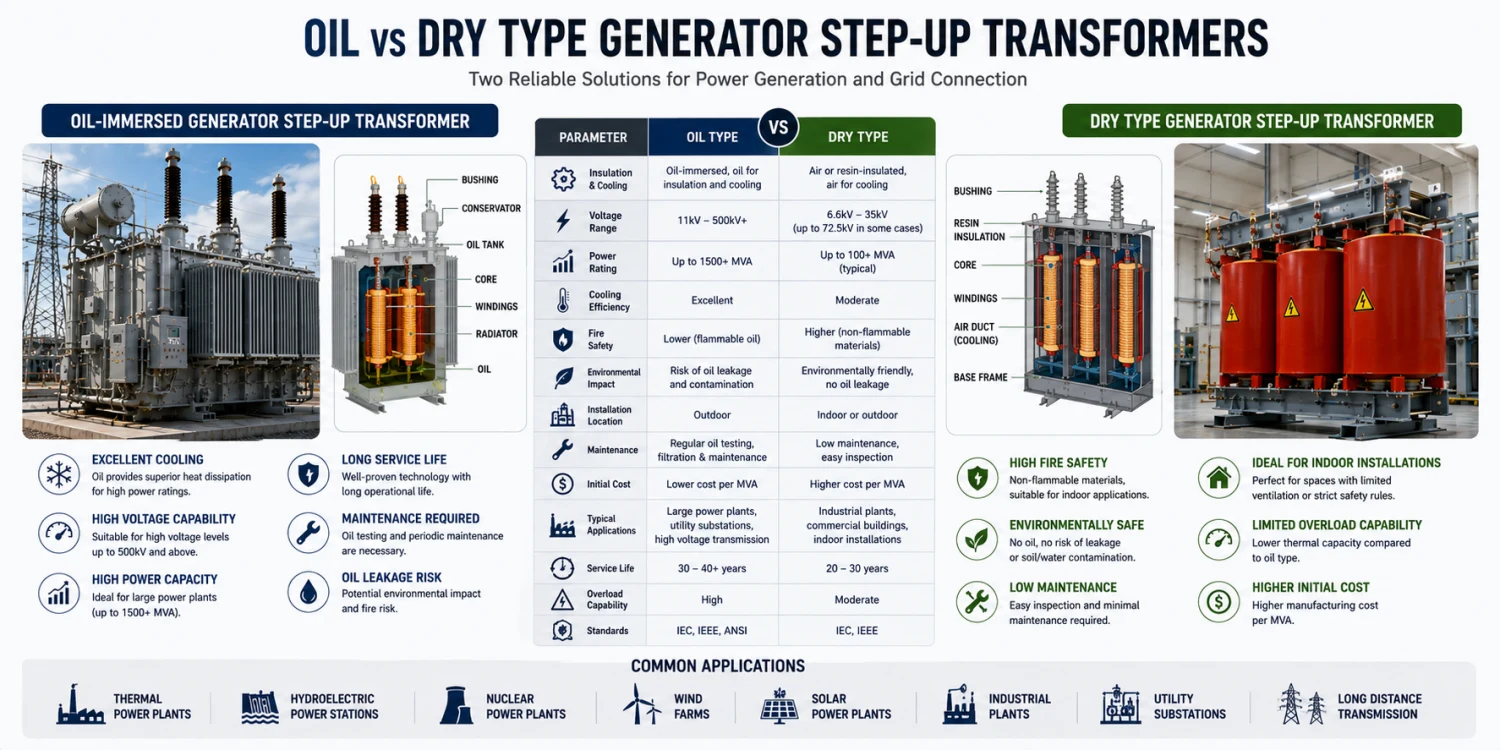
Oil vs Dry Type Generator Step-Up Transformers
Oil vs Dry Type Generator Step-Up Transformers remains an important engineering decision.
Oil transformers generally offer:
- Better thermal performance
- Higher voltage capability
- Lower cost per MVA
Dry-type transformers offer:
- Improved environmental safety
- Reduced maintenance risk
- Better indoor suitability
The correct choice depends on application conditions.
Table: Oil vs Dry Type Generator Step-Up Transformers
|
Parameter |
Oil Immersed GSU Transformer |
Dry Type GSU Transformer |
|
Cooling Efficiency |
Excellent |
Moderate |
|
Voltage Capability |
Very high |
Medium |
|
Fire Safety |
Lower |
Higher |
|
Maintenance Requirements |
Oil monitoring required |
Lower maintenance |
|
Installation Environment |
Outdoor utility systems |
Indoor applications |
|
Environmental Risk |
Possible oil leakage |
Environmentally safer |
|
Initial Cost |
Lower per MVA |
Higher per MVA |
|
Typical Applications |
Utility-scale power plants |
Commercial and industrial systems |
Renewable Energy GSU Transformers
Modern renewable energy projects increasingly use specialized step-up generator transformer systems for:
- Wind farms
- Solar power stations
- Battery storage systems
These transformers must manage variable power output and harmonics.
4. Key Technical Specifications of GSU Transformers
Generator Step-Up Transformers are highly engineered power transformers requiring careful specification.
Voltage Rating
Voltage rating is one of the most important parameters.
Typical examples include:
|
Generator Voltage |
Transmission Voltage |
|
11 kV |
33 kV |
|
13.8 kV |
132 kV |
|
15.75 kV |
220 kV |
|
21 kV |
400 kV |
Power Rating
GSU transformer ratings may range from:
- 5 MVA small industrial plants
- 1000+ MVA utility-scale power stations
Power rating depends on generator output capacity.
Table: Typical Generator Step-Up Transformer Voltage Configurations
|
Generator Voltage |
Transmission Voltage |
Typical Application |
Transformer Capacity Range |
|
6.6 kV |
33 kV |
Small industrial power plants |
5 – 50 MVA |
|
11 kV |
33 kV |
Medium utility generation |
10 – 100 MVA |
|
13.8 kV |
132 kV |
Gas turbine power stations |
50 – 300 MVA |
|
15.75 kV |
220 kV |
Large thermal power plants |
100 – 600 MVA |
|
21 kV |
400 kV |
Nuclear and ultra-large power stations |
500 – 1500 MVA |
|
34.5 kV |
500 kV |
Renewable energy transmission hubs |
300 – 1200 MVA |
Cooling Systems
Transformer cooling systems include:
- ONAN
- ONAF
- OFAF
- OFWF
Efficient cooling directly affects transformer lifespan and performance.
Insulation System
High-voltage GSU transformers require advanced insulation coordination to withstand:
- Switching surges
- Lightning impulses
- Thermal stress
Tap Changer Systems
Tap changers regulate output voltage under varying grid conditions.
Most large GSU transformers use on-load tap changers (OLTC).
5. Applications of Generator Step-Up Transformers
GSU transformers are essential across multiple power generation sectors.
Thermal Power Plants
Coal, gas, and combined-cycle plants use GSU transformers to connect generators to high-voltage transmission systems.
Hydroelectric Facilities
Hydroelectric stations often require large-capacity step-up transformers for remote power transmission over long distances.
Wind Power Plants
Wind farms use multiple collector transformers and centralized GSU transformers.
Renewable energy integration continues to increase demand for flexible GSU transformer design.
Solar Power Stations
Utility-scale solar farms require transformer systems capable of managing fluctuating generation profiles.
Industrial Captive Power Plants
Large industrial facilities often operate their own generation systems requiring dedicated GSU transformers.
6. How to Choose the Best Generator Step-Up Transformer
Selecting the correct GSU transformer requires evaluating electrical, thermal, environmental, and operational factors.
Table: Key Selection Factors for Generator Step-Up Transformers
|
Selection Factor |
Engineering Consideration |
Recommended Evaluation |
|
Generator Output Voltage |
Match generator terminal voltage |
Verify primary winding rating |
|
Grid Transmission Voltage |
Utility grid connection requirement |
Match secondary voltage level |
|
Transformer Capacity |
Continuous and peak load demand |
MVA sizing analysis |
|
Cooling Method |
Oil or dry type cooling |
Environmental and thermal evaluation |
|
Installation Environment |
Indoor, outdoor, coastal, desert |
Temperature and pollution assessment |
|
Insulation Coordination |
Lightning and switching impulse protection |
BIL and insulation testing |
|
Harmonic Performance |
Renewable energy and nonlinear loads |
Harmonic withstand capability |
|
Regulatory Compliance |
IEC, IEEE, ANSI standards |
Certification verification |
|
Smart Monitoring |
Online diagnostics and remote monitoring |
IoT compatibility |
|
Manufacturer Support |
Long-term technical service |
Spare parts and warranty support |
Evaluate Voltage Requirements
The transformer must match:
- Generator voltage
- Grid transmission voltage
- System insulation coordination
Analyze Load Conditions
Engineers must consider:
- Continuous load
- Peak demand
- Overload conditions
- Future expansion
Select the Cooling Method
Cooling system selection affects:
- Efficiency
- Maintenance
- Lifespan
- Installation environment
Oil-immersed transformers generally dominate high-capacity applications.
Review Environmental Conditions
Environmental considerations include:
- Ambient temperature
- Altitude
- Humidity
- Seismic activity
- Pollution levels
Confirm International Standards Compliance
Export-oriented transformer projects often require:
- IEC standards
- IEEE standards
- ANSI compliance
- Utility specifications
Evaluate Manufacturer Experience
Reliable Generator Step-Up Transformer manufacturers should provide:
- Factory testing
- Engineering support
- Warranty service
- Long-term spare parts support
7. Future Trends in Generator Step-Up Transformer Technology
The GSU transformer industry is evolving rapidly due to grid modernization and renewable energy growth.
Smart Transformer Monitoring
Modern transformers increasingly integrate:
- Online thermal monitoring
- Dissolved gas analysis
- AI diagnostics
- Predictive maintenance systems
Higher Efficiency Core Materials
Advanced magnetic core materials reduce:
- Core losses
- Heat generation
- Operating costs
Renewable Energy Integration
Renewable energy systems require transformers capable of handling:
- Voltage fluctuation
- Harmonics
- Bidirectional power flow
Eco-Friendly Insulation Systems
New transformer technologies increasingly use:
- Biodegradable ester fluids
- Low-emission insulation materials
- Improved fire-resistant systems
Digital Substation Compatibility
Future GSU transformers will increasingly integrate into:
- Smart grids
- Digital substations
- Automated power systems
Conclusion
Generator Step-Up Transformers are essential components of modern electrical power infrastructure. By increasing generator voltage to high voltage transmission levels, these transformers enable efficient long-distance power transmission while reducing energy losses across national electrical grids.
From traditional thermal power plants to modern renewable energy systems, GSU transformers support reliable grid operation, transmission stability, and large-scale energy integration. Selecting the correct transformer requires careful evaluation of voltage ratings, cooling systems, environmental conditions, insulation performance, and long-term operational requirements.
As global electricity demand continues rising and renewable energy deployment accelerates, Generator Step-Up Transformers will remain critical to the future development of modern power transmission systems, smart grids, and sustainable electrical infrastructure.

Related Articles
Related Products
Copper Concentric Round LV Cable
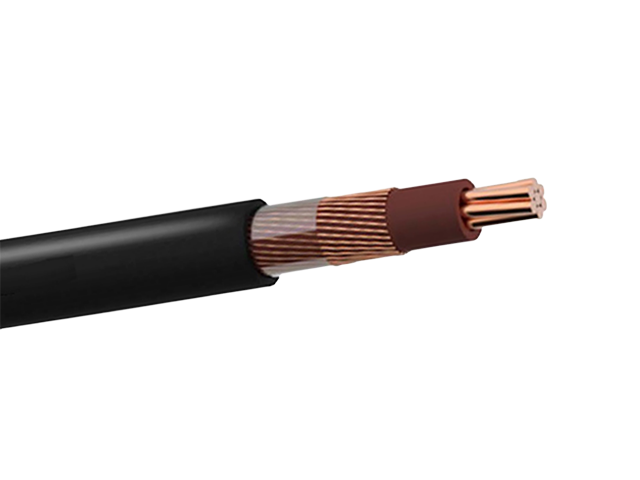
The Copper Concentric Round LV Cable is a high-performance low-voltage cable designed for reliable power delivery in residential and commercial service entrance applications. It features a stranded hard-drawn copper phase conductor with XLPE insulation, surrounded by concentrically arranged copper neutral conductors, and protected by a durable black polyethylene sheath. The round configuration ensures excellent flexibility, easy pulling through conduits, and balanced electrical performance. With superior conductivity, mechanical strength, and weather resistance, this cable is suitable for both aerial and underground installations. Manufactured to international standards, the Copper Concentric Round LV Cable undergoes rigorous quality testing from raw materials to finished product, guaranteeing consistent electrical performance, high safety, and long-term durability for modern LV networks.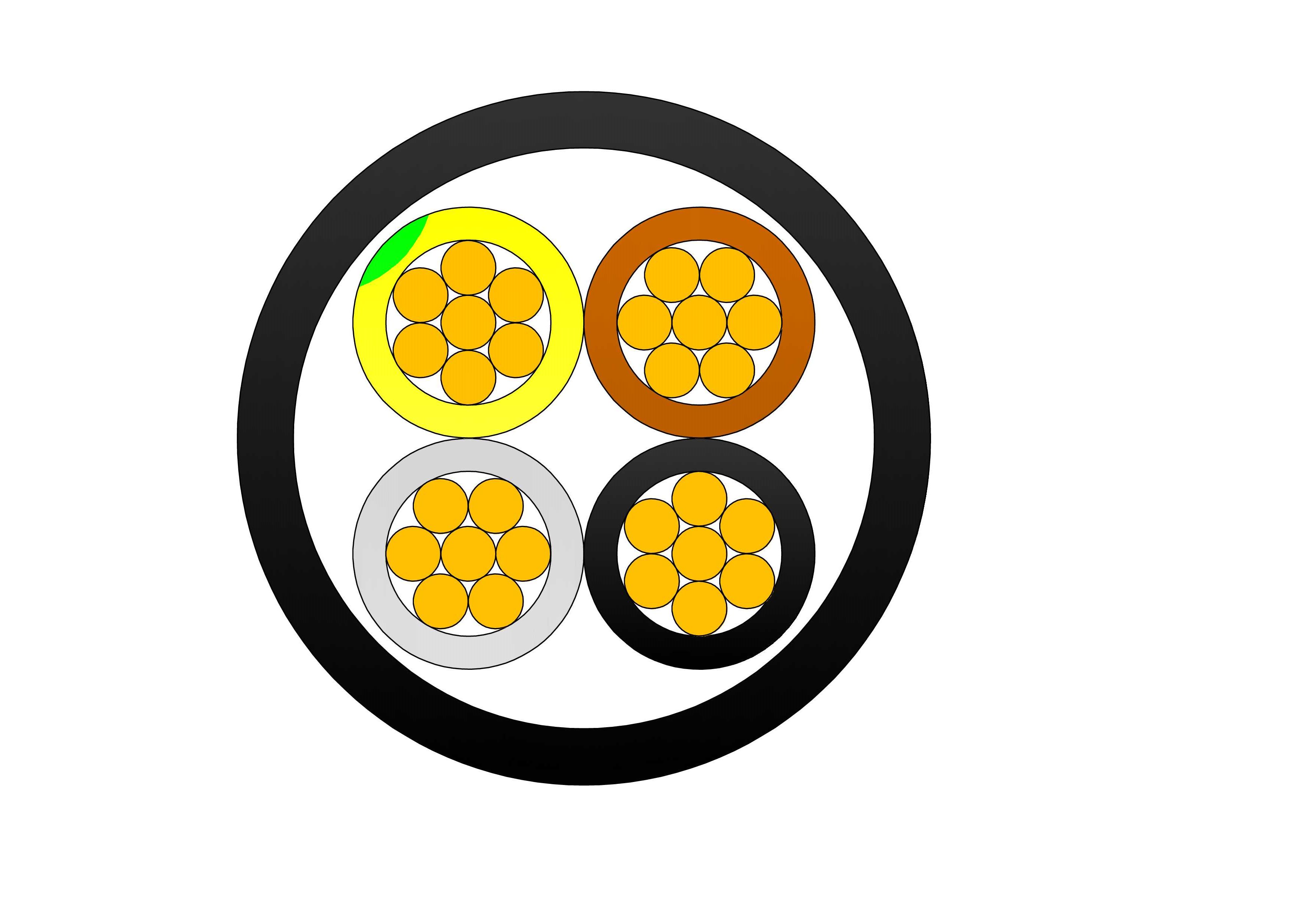
PV SOLAR Copper XLPE Insulated
The PV Solar Copper XLPE Insulated Cable is a premium solar cable engineered for efficient and reliable photovoltaic power systems. It utilizes high-purity stranded copper conductors for maximum conductivity and flexibility, paired with cross-linked polyethylene (XLPE) insulation that provides outstanding thermal stability, UV resistance, and weatherproof performance. Rated for DC 1.8kV and AC 0.6/1kV, this cable meets TÜV 2PfG 1169, EN 50618, and UL 4703 standards, ensuring safety and durability in harsh outdoor conditions. The PV Solar Copper XLPE Insulated Cable offers low voltage drop, high current capacity, and excellent flame retardant properties. Its superior flexibility facilitates easy installation in complex solar arrays. It is the preferred choice for high-end solar farms, rooftop systems, and commercial photovoltaic projects where maximum efficiency and long-term reliability are required.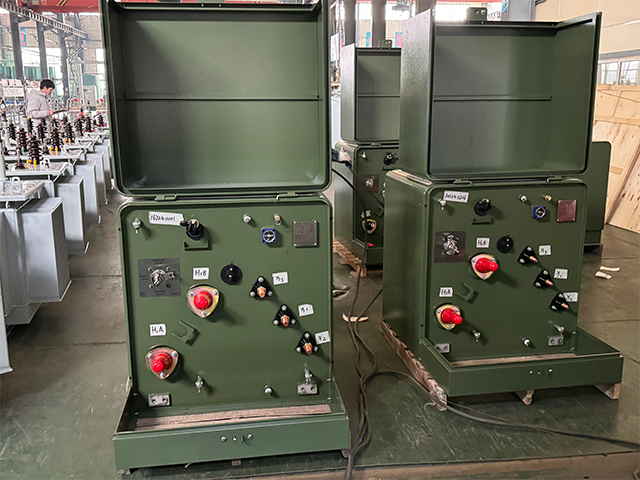
500kVA Single Phase Pad Mounted Transformer
The 500kVA Single Phase Pad Mounted Transformer is a high-capacity electrical transformer designed for reliable and efficient power distribution in commercial, industrial, and utility applications. With a robust, weatherproof enclosure, it is specifically built for outdoor use and can handle the demanding requirements of larger single-phase systems. This transformer offers a 500kVA capacity, ensuring dependable performance for a variety of load conditions.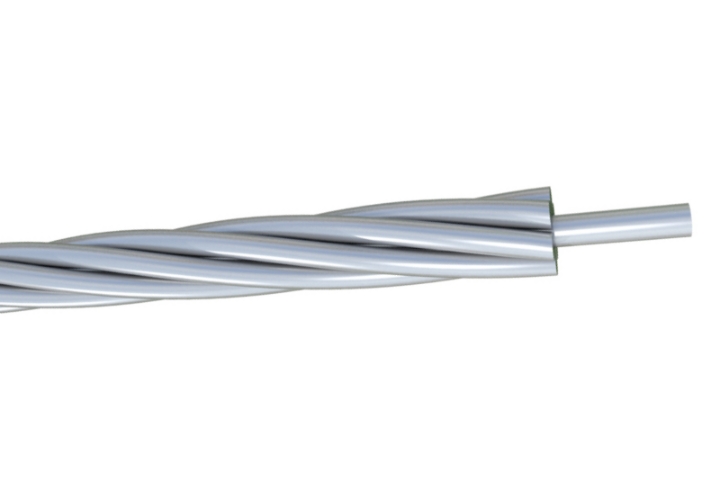
10 Gauge Galvanized Steel Conductor Wire
The 10 Gauge Galvanized Steel Conductor Wire is a premium high-strength bare steel wire designed for reliable overhead power line applications. Manufactured with heavy hot-dip zinc coating, this 10 AWG galvanized conductor delivers superior corrosion resistance and long service life in harsh outdoor environments. It offers excellent tensile strength and mechanical performance, making it ideal for use as overhead ground wire (static wire), guy wire, or messenger wire. Fully compliant with ASTM A475 and related utility standards, the 10 Gauge Galvanized Steel Conductor Wire undergoes rigorous testing from raw materials to finished product to ensure uniform zinc adhesion, consistent diameter, and high breaking strength. Its durable construction minimizes maintenance while providing dependable shielding and structural support for transmission and distribution systems.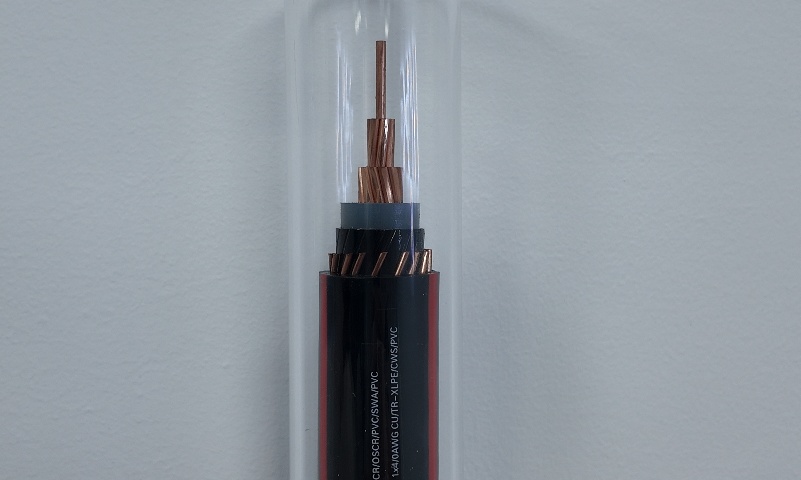
4/0 AWG Aluminum URD Cable 1/3 Neutral
The 4/0 AWG Aluminum URD Cable 1/3 Neutral is a durable and economical 600V underground residential distribution cable engineered for service entrance and secondary power delivery. It utilizes a 4/0 AWG stranded AA8000 aluminum alloy phase conductor with XLPE insulation and a 1/3 concentric aluminum alloy neutral, all protected by a rugged black polyethylene sheath. This design offers excellent flexibility, high conductivity, and superior moisture resistance, making it suitable for direct burial or conduit installations. The 1/3 neutral configuration provides a balanced and cost-effective solution for most residential applications. Manufactured to UL 854 and ICEA standards, the 4/0 AWG Aluminum URD Cable 1/3 Neutral undergoes extensive quality testing to ensure consistent performance and long service life in underground environments.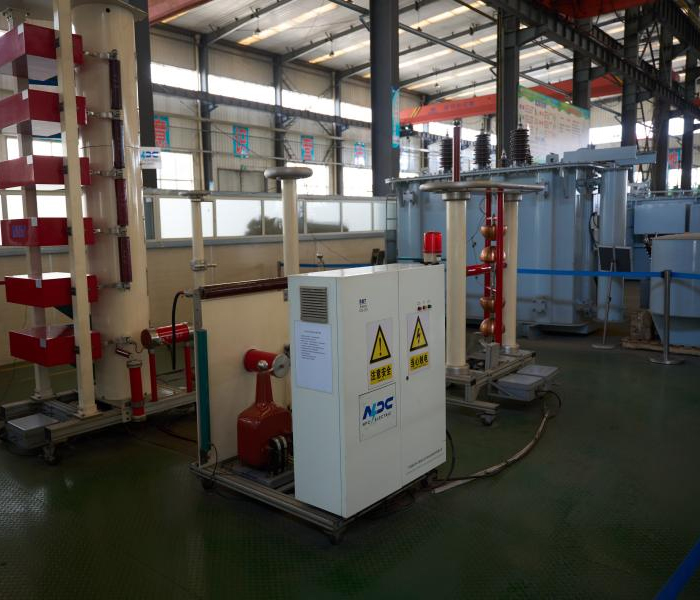
33kV Cast Resin Dry Type Transformer 1000kVA–5000kVA Three Phase
The 33kV Cast Resin Dry Type Transformer 1000kVA–5000kVA Three Phase is a high-capacity, oil-free power solution engineered for demanding indoor medium- and high-voltage distribution networks. This robust three-phase cast resin transformer utilizes premium low-loss grain-oriented silicon steel cores and high-conductivity copper windings (aluminum optional) fully encapsulated in high-grade epoxy resin under vacuum pressure, delivering exceptional energy efficiency (typically 98.5–99.5%), significantly reduced no-load and load losses, and superior partial discharge performance (<10pC). Fully compliant with IEC 60076-11, IEEE/ANSI, and relevant energy efficiency standards, this transformer steps down 33kV primary (with ±2×2.5% to ±10% off-circuit taps standard) to secondary voltages such as 0.4kV, 0.69kV, 6.6kV, or 11kV (Dyn11 vector group typical).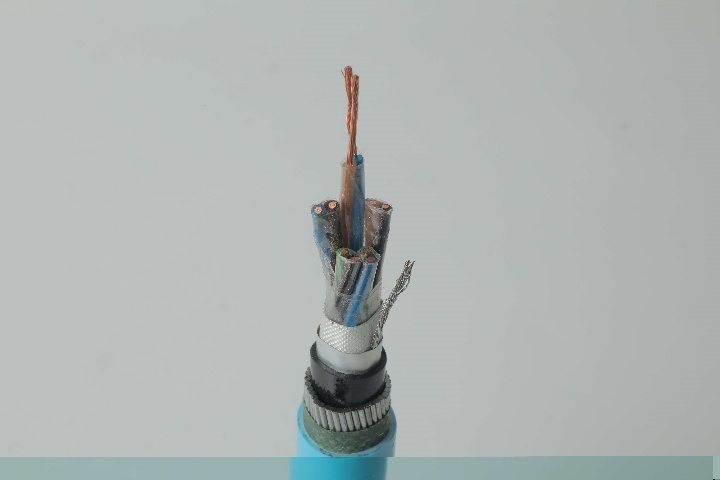
Instrumentation Cables—XLPE Insulated,Individual &Overall Screened,Unarmoured PVC Sheathed Cables(CU/XLPE/IOSCR/PVC)
Instrumentation Cables are multi-conductor cables that carry and transport low-voltage electrical signals. These low-voltage signals are used to control and monitor electrical power systems. Instrumentation cables have many different industrial applications that include broadcasting, equipment control, such as drilling and pumping in the oil and gas industry, and data transfer, which includes analog and digital signals. They are manufactured according to the BS EN 50288-7 and BS EN 50288-1 standards to ensure quality. Depending on the application, instrumentation cables can be insulated with PVC or XLPE; the cables can be armoured or unarmoured. The sheathing materials can be of PVC, LSZH, or PE. The cables can have additional flame retardant or flame retardant properties, and they can be manufactured with special protections such as lead sheaths, or DRYLAM or AIRBAG technology.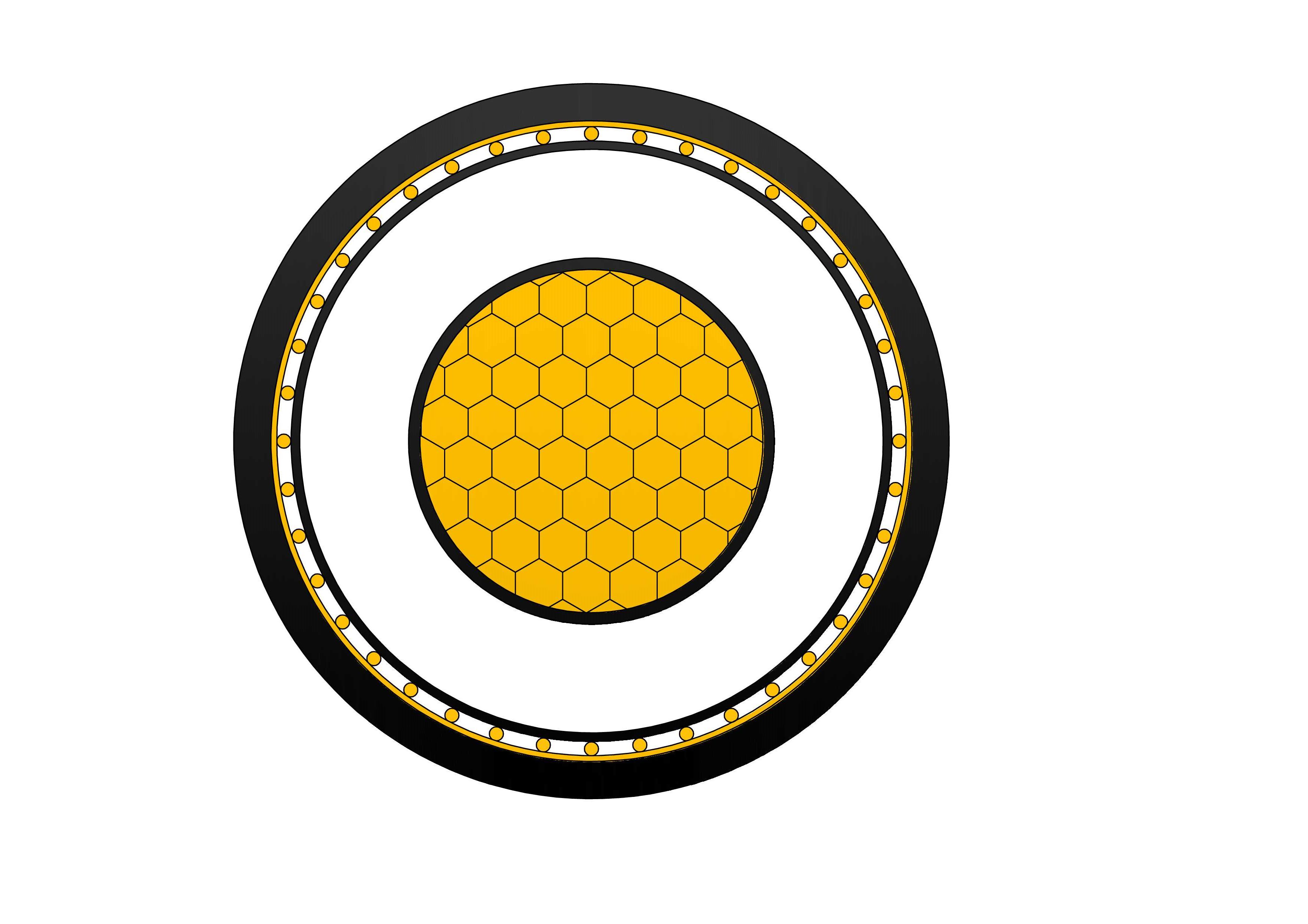
N2XS2Y Medium Voltage Power Cable(6/10kV, 12/20kV, 18/30kV)
N2XS2Y Medium Voltage Power Cable (6/10kV, 12/20kV, 18/30kV) is engineered for reliable medium voltage power transmission and distribution. Featuring stranded copper conductors, cross-linked polyethylene (XLPE) insulation, copper tape or wire screen, and robust polyethylene (PE) outer sheath, it fully complies with IEC 60502-2 standards. The PE sheath provides excellent resistance to moisture, UV, chemicals, and mechanical stress, ideal for direct burial. With low dielectric losses, high thermal stability, and superior partial discharge performance, it ensures efficient operation and long service life. Longitudinal and radial water blocking options available for enhanced protection. Flame-retardant and environmentally durable, the N2XS2Y Medium Voltage Power Cable is the preferred choice for utilities, industrial plants, renewable energy projects, and infrastructure networks requiring safe, high-performance medium voltage cabling in harsh underground or outdoor conditions worldwide.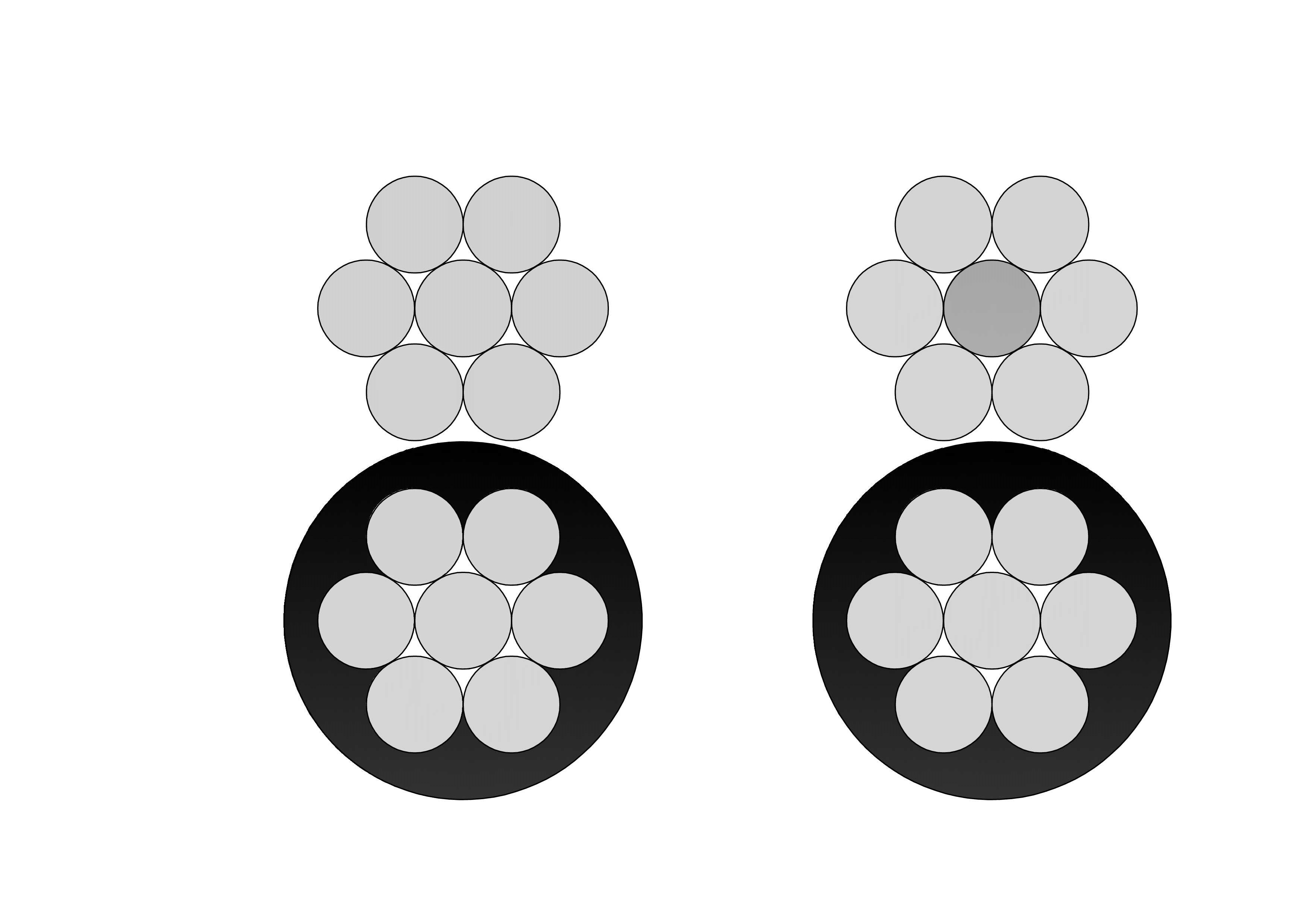
4 Whippet Aluminum Conductor Duplex Overhead Service Drop Cable
The 4 Whippet Duplex Service Drop Cable is a durable overhead cable for secondary power distribution to residential service entrances. Featuring two 4 AWG aluminum conductors (phase and neutral, 7-strand) insulated with XLPE or PE and assembled in duplex configuration, it provides excellent weather resistance and mechanical strength. Compliant with ASTM B-230, B-231, ICEA S-76-474, and ANSI/ICEA standards, this cable supports 600V applications with high UV, moisture, and abrasion protection. The self-supporting design simplifies installation with reduced sag over spans up to 100 feet. The 4 Whippet Duplex Service Drop Cable ensures low power losses, reliable performance in harsh outdoor conditions, and long service life. Lightweight and flexible, it is widely used for single-phase service drops in urban, suburban, and rural areas requiring safe, cost-effective aerial connections from utility poles to homes.
Single Core Aluminum Cable AL/XLPE/PVC Low Voltage Power Cable
The Single Core Aluminum Cable AL/XLPE/PVC is a high-performance low-voltage power cable designed for efficient electrical power transmission and distribution. Manufactured with a high-conductivity aluminum conductor, premium XLPE insulation, and a durable PVC outer sheath, the cable provides an economical and lightweight alternative to copper cables while maintaining excellent electrical performance. The XLPE insulation offers superior dielectric strength, low insulation loss, and excellent thermal stability, allowing continuous conductor operation at temperatures up to 90°C. The PVC sheath protects the cable from moisture, abrasion, chemicals, UV exposure, and mechanical damage, ensuring reliable performance in various installation environments. Its lightweight aluminum conductor reduces installation costs and simplifies handling during construction projects. Manufactured according to IEC 60502-1 and other international standards, the cable is suitable for power stations, industrial facilities, commercial buildings, renewable energy systems, and utility distribution networks. The Single Core Aluminum Cable AL/XLPE/PVC combines cost efficiency, reliability, durability, and safety, making it an ideal choice for modern electrical infrastructure projects worldwide.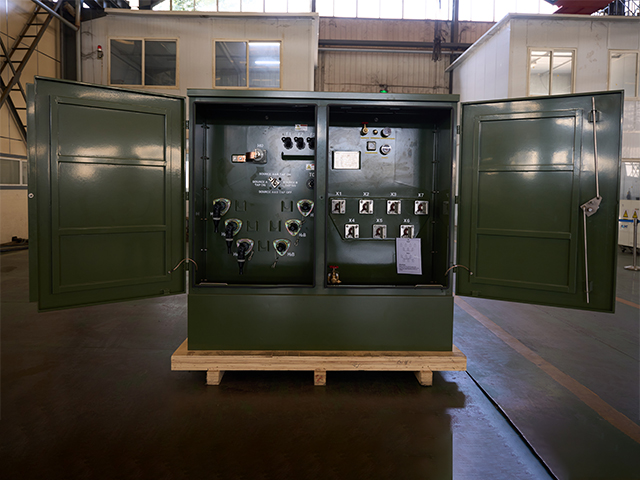
5000kVA Three Phase Pad Mounted Transformer
NPC ELECTRIC's 5000kVA Three Phase Pad Mounted Transformer (5 MVA) is a robust, liquid-immersed compartmental distribution transformer built for high-capacity outdoor pad-mounted installations on concrete foundations. Compliant with updated DOE energy conservation standards (post-2024 amendments, targeting high efficiency levels around 99.68% for 5000 kVA units), ANSI/IEEE C57.12.00, C57.12.34, C57.12.90, and related CSA/IEC norms, this transformer delivers top-tier energy efficiency, minimal no-load and load losses, and exceptional reliability in utility-scale, industrial, and commercial power systems. The tamper-resistant, weatherproof steel enclosure (dead-front or live-front) with NEMA 3R-equivalent protection ensures safety, reduced maintenance, and seamless blending into urban, suburban, or remote environments.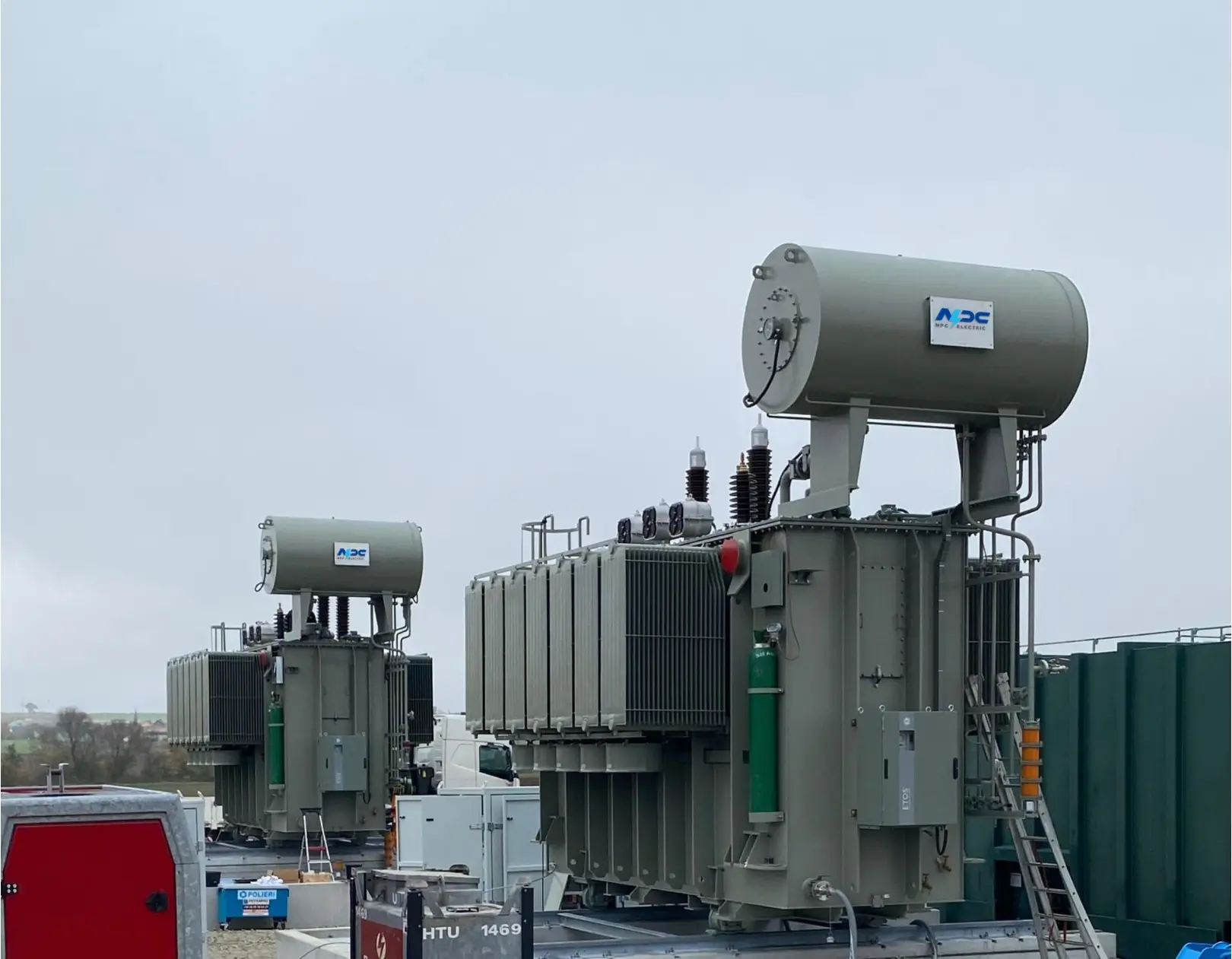
320 kV High Voltage Power Transformer
NPC Electric 320 kV High Voltage Power Transformer is engineered for ultra-high-voltage transmission networks where reliability, efficiency, and operational safety are critical. Designed to handle extreme electrical stress, this transformer supports stable power transfer across long-distance transmission lines and major grid interconnection points. Its oil-immersed insulation system provides superior dielectric strength and efficient heat dissipation, ensuring consistent performance under continuous high-load conditions. Advanced core optimization reduces magnetic losses, while precision winding design enhances voltage regulation and system stability. The transformer structure is built to withstand thermal expansion, mechanical forces, and short-circuit events, making it suitable for demanding grid environments. With long service life, low maintenance requirements, and high operational efficiency, the 320 kV power transformer is an ideal solution for modern high-voltage substations and large-scale energy infrastructure projects.
Type 240 Flexible Copper Screened Mining Cable With Three Pilots
The Type 240 Flexible Copper Screened Mining Cable with Three Pilots is a medium-voltage, rubber-insulated cable designed for mining machinery feeder applications and longwall supply. It features tinned annealed copper conductors, EPR insulation, and a tinned copper/polyamide braid screen for superior electrical and mechanical performance. The three interstitial pilot cores provide additional monitoring or control functions, making it suitable for complex mining and industrial systems. With its HD-PCP extra heavy-duty outer sheath, the cable offers oil resistance, flame retardancy, and high durability for harsh environments. Compliant with AS/NZS 2802 and related standards, it ensures reliable operation under extreme mechanical and electrical stress. Constructed with high-conductivity copper conductors, durable insulation, and a robust outer sheath, the cable offers excellent resistance to abrasion, vibration, oil, moisture, and harsh mining conditions. Its flexible design supports continuous movement and reduces installation stress.
55kV 1600kVA Three Phase Oil Immersed Power Transformer Copper
The 55kV 1600kVA Three Phase Oil Immersed Power Transformer Copper is designed for reliable medium/high-voltage distribution networks. It adopts 99.95 % electrolytic copper windings, Class A insulation, a corrugated-fin tank, and ONAN cooling for excellent heat dissipation. Available in energy-saving S11/S13 series with no-load loss reduced by up to 35 %. Fully sealed or conservator type prevents oil aging. Equipped with ±5 % or ±2×2.5 % off-circuit tap changer (on-load optional). Meets IEC 60076, GB/T 1094 standards, lightning impulse withstand 250 kV peak, PD <10 pC. Low noise (<58 dB), strong short-circuit strength, suitable for harsh environments. Vacuum oil filling + nitrogen sealing ensures a 30+ year lifespan. Widely trusted in mining, petrochemical, renewable energy, and urban 55 kV substations.
3000kVA Dry Type Transformer
3000kVA Dry Type Transformer is a high-performance, reliable power solution designed to meet the needs of large industrial and commercial facilities. With a 3000kVA capacity, it utilizes advanced dry-type insulation, ensuring exceptional safety, minimal maintenance, and extended durability. Built for demanding environments, this transformer provides stable, efficient, and low-noise operation while minimizing environmental impact. The NPC ELECTRIC 3000kVA Dry Type Transformer is the ideal choice for ensuring reliable and efficient power distribution in large-scale applications. Core features include three-phase design, primary voltages 208V–600V (e.g., 480V Delta, 600V Delta), secondary voltages such as 208Y/120V, 480Y/277V, or custom, aluminum or copper windings, 150°C rise (standard) or 115°C/80°C with 220°C insulation class, ±2×2.5% primary taps, NEMA 1 ventilated enclosure (NEMA 3R/encapsulated options), natural convection cooling (AN), electrostatic shielding, and low sound levels per NEMA.Welcome your inquiry
Honesty, Integrity, Frugality, Activeness and Passion