
Best 132kV Power Transformers: Price, Features, and Buying Guide
2026-07-14
As electrical grids continue to expand to support renewable energy, industrial growth, and urban infrastructure, the demand for reliable high-voltage transformers has never been greater. Among the most widely deployed transmission-class transformers is the 132kV power transformer, a critical component that transfers electrical energy efficiently between transmission and distribution voltage levels while maintaining system stability and reliability.
Whether installed in utility substations, renewable energy plants, mining operations, petrochemical facilities, or large industrial complexes, a power transformer must withstand demanding operating conditions over decades of continuous service. Selecting the right transformer involves far more than comparing prices. Engineers and procurement specialists must evaluate voltage ratings, cooling methods, insulation systems, short-circuit withstand capability, efficiency, international standards, and manufacturer expertise.
1. What Is a 132kV Power Transformer?
A 132kV power transformer is a high-voltage electrical transformer designed to transmit electrical energy between transmission and sub-transmission networks. It typically steps the voltage down from 132kV to lower voltage levels such as 33kV, 22kV, 13.8kV, or 11kV, although step-up configurations are also common in power generation and renewable energy applications.
Unlike distribution transformers, which serve end-user loads, a 132kV transformer is engineered for bulk power transfer, handling capacities ranging from 10 MVA to more than 250 MVA depending on system requirements.
Typical installation locations include:
- Utility transmission substations
- Renewable energy collection substations
- Heavy industrial plants
- Mining projects
- Oil & gas facilities
- Metropolitan grid expansion projects
Because these transformers operate continuously under high electrical and mechanical stress, they must comply with international standards such as IEC 60076 or IEEE C57 while delivering high efficiency, low losses, and excellent thermal performance.
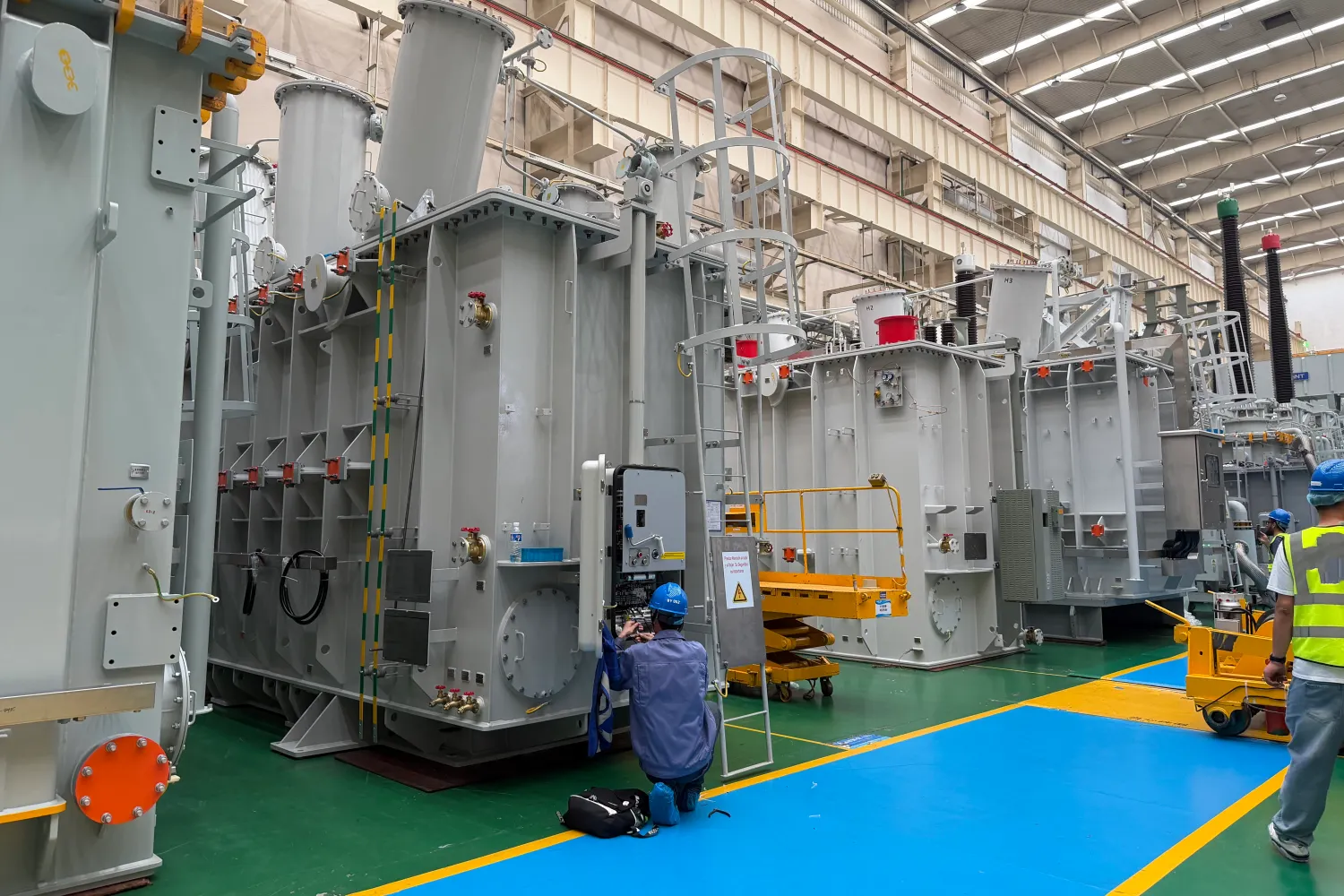
Typical Technical Specifications of 132kV Power Transformers
|
Parameter |
Typical Specification |
|
Rated Voltage (HV) |
132 kV |
|
Rated Voltage (LV) |
33 kV / 22 kV / 13.8 kV / 11 kV |
|
Rated Capacity |
10 MVA – 250 MVA |
|
Frequency |
50 Hz / 60 Hz |
|
Cooling Method |
ONAN / ONAF / OFAF / OFWF |
|
Vector Group |
Dyn11, YNd1, YNd11, YNyn0 |
|
Impedance |
8% – 18% |
|
Insulation Level (BIL) |
Up to 650 kV |
|
Tap Changer |
DETC or OLTC |
|
Transformer Oil |
Mineral Oil / Natural Ester Fluid |
|
Applicable Standards |
IEC 60076, IEEE C57 |
2. Internal Design and Construction Features
The long service life of a 132kV Oil Immersed Power Transformer is determined by its internal design quality and material selection.
Magnetic Core
Modern transformers use cold-rolled grain-oriented (CRGO) silicon steel or amorphous alloy cores to minimize no-load losses and improve efficiency.
Windings
Copper or aluminum conductors are precisely wound using layer or disc winding techniques to withstand both electrical stress and mechanical forces generated during short circuits.
Insulation System
High-grade cellulose paper combined with transformer oil provides insulation between windings while also supporting effective heat dissipation.
Cooling System
Most large transformers employ cooling methods such as:
- ONAN (Oil Natural Air Natural)
- ONAF (Oil Natural Air Forced)
- OFAF (Oil Forced Air Forced)
- OFWF (Oil Forced Water Forced)
The cooling system directly influences transformer loading capability and lifespan.
Tank and Accessories
Typical accessories include:
- Conservator tank
- Buchholz relay
- Oil level indicator
- Pressure relief device
- Winding temperature indicator
- Online monitoring systems
These components improve operational safety and simplify maintenance.
3. Comparing 69kV, 132kV, and 138kV Power Transformers
Although all three transformer classes perform similar functions, they are designed for different transmission systems and regional standards.
69kV Power Transformer
A 69kV power transformer is commonly used in regional distribution networks, medium-sized industrial plants, and utility substations. It generally offers lower investment costs and reduced installation complexity.
132kV Power Transformer
The 132kV power transformer is widely adopted in Europe, Asia, Africa, and many developing markets as the standard transmission voltage for medium-to-large substations.
138kV Power Transformer
The 138kV power transformer is primarily used in North America and follows ANSI/IEEE system voltage standards.
From an engineering perspective, 132kV and 138kV transformers have very similar construction principles. The selection typically depends on national grid voltage standards rather than technical superiority.
Comparison of High-Voltage Power Transformer Ratings
|
Feature |
69kV Power Transformer |
132kV Power Transformer |
138kV Power Transformer |
|
Typical Voltage Class |
Sub-Transmission |
Transmission |
Transmission |
|
Typical Capacity |
5–80 MVA |
10–250 MVA |
20–300 MVA |
|
Typical Applications |
Industrial Plants, Distribution Networks |
Utility Substations, Renewable Energy |
North American Utility Networks |
|
Common Standards |
IEC / ANSI |
IEC |
ANSI / IEEE |
|
Typical Cooling |
ONAN / ONAF |
ONAN / ONAF / OFAF |
ONAN / ONAF / OFAF |
|
Typical Installation |
Indoor / Outdoor |
Outdoor Substations |
Outdoor Substations |
|
Initial Investment |
Medium |
High |
High |
|
Grid Voltage Region |
Asia, Africa |
Europe, Asia, Africa |
USA, Canada |
4. Key Technical Features That Influence Performance
Choosing a high-quality transformer requires evaluating several critical performance indicators.
High Efficiency
Modern designs minimize both no-load losses and load losses through optimized magnetic core materials and low-resistance conductors.
Short-Circuit Strength
Large transformers must withstand severe electromagnetic forces during external short circuits without permanent winding deformation.
Low Partial Discharge
Advanced insulation systems maintain partial discharge levels within IEC limits, reducing insulation aging and improving long-term reliability.
Intelligent Monitoring
Digital monitoring systems continuously supervise:
- Oil temperature
- Winding temperature
- Moisture content
- Dissolved gas levels
- Load conditions
Predictive maintenance significantly reduces unexpected outages.
Environmental Compatibility
Modern oil-filled transformers increasingly utilize biodegradable insulating fluids or low-loss designs to reduce environmental impact.
5. Applications of 132kV Power Transformers
The versatility of electrical transformers makes them indispensable across multiple industries.
Utility Transmission Networks
Transmission substations use 132kV transformers to transfer electricity between high-voltage transmission systems and regional distribution networks.
Renewable Energy
Wind farms and solar power plants commonly use step-up transformers to connect renewable generation to national grids.
Heavy Industry
Steel mills, chemical plants, mining operations, and cement factories require high-capacity transformers to power energy-intensive production processes.
Infrastructure Projects
Railways, airports, ports, and metropolitan developments depend on reliable transmission transformers to maintain an uninterrupted power supply.
International EPC Projects
Engineering contractors frequently specify customized transformers with project-specific impedance, cooling methods, vector groups, and protection systems.
6. Understanding 132kV Power Transformer Price
One of the most common purchasing questions concerns the 132kV power transformer price. Unlike standard industrial equipment, there is no universal price because each transformer is engineered according to project-specific technical requirements.
Key factors affecting cost include:
- Rated power (MVA)
- Voltage ratio
- Cooling method
- Copper or aluminum windings
- Short-circuit impedance
- Efficiency class
- Tap changer type (DETC or OLTC)
- Protection and monitoring systems
- Applicable standards (IEC or IEEE)
- Transportation requirements
For large utility projects, lifecycle cost is generally a more important consideration than initial purchase price. A transformer with lower losses and higher reliability often delivers significant long-term savings through reduced operating expenses.
7. How to Choose the Right Power Transformer Manufacturer
Selecting a reliable power transformer manufacturer is one of the most important decisions in any power infrastructure project.
Key evaluation criteria include:
Engineering Experience
Manufacturers should have extensive experience designing high-voltage transformers for utility and industrial applications.
Compliance with International Standards
Preferred suppliers should comply with:
- IEC 60076
- IEEE C57
- ISO 9001
- ISO 14001
- ISO 45001
International Standards for High-Voltage Power Transformers
|
Standard |
Description |
|
IEC 60076-1 |
General Requirements for Power Transformers |
|
IEC 60076-2 |
Temperature Rise Requirements |
|
IEC 60076-3 |
Insulation Levels and Dielectric Tests |
|
IEC 60076-5 |
Short-Circuit Withstand Capability |
|
IEC 60296 |
Mineral Insulating Oils for Transformers |
|
IEC 60599 |
Dissolved Gas Analysis (DGA) Guide |
|
IEEE C57.12.00 |
General Requirements for Liquid-Immersed Transformers |
|
IEEE C57.12.90 |
Standard Test Code for Transformers |
|
IEC 61850 |
Communication Networks for Digital Substations |
|
ISO 9001 |
Quality Management Systems |
Manufacturing Capability
Modern production facilities should include:
- Automatic core cutting
- Vacuum drying systems
- Advanced winding equipment
- Oil filtration systems
- Factory Acceptance Testing (FAT)
Testing Capability
Routine and type tests should include:
- Lightning impulse tests
- Induced voltage tests
- Temperature rise tests
- Partial discharge measurement
- Short-circuit design verification
- Insulation resistance testing
Global Export Experience
Export-oriented manufacturers understand international logistics, documentation, packaging, and project management, reducing risks for overseas buyers.
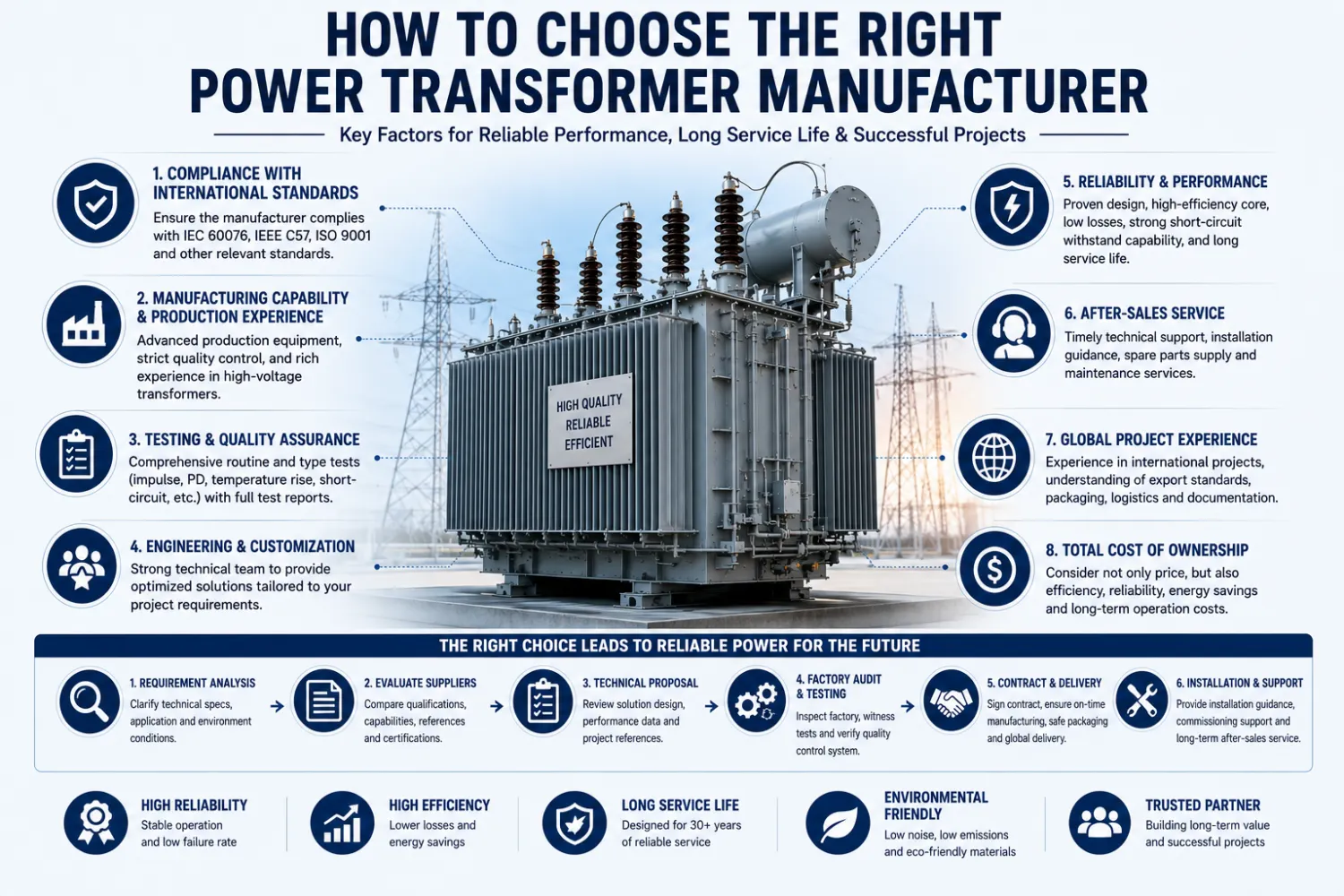
Power Transformer Manufacturer Evaluation Checklist
|
Evaluation Item |
Why It Matters |
|
IEC / IEEE Certification |
Ensures compliance with international standards |
|
Factory Acceptance Test (FAT) |
Verifies transformer quality before shipment |
|
Routine & Type Testing |
Confirms electrical and mechanical performance |
|
Short-Circuit Design Verification |
Improves reliability under fault conditions |
|
OLTC Supplier Brand |
Affects operational reliability and service life |
|
Transformer Core Material |
Influences no-load losses and efficiency |
|
Vacuum Drying Process |
Enhances insulation reliability |
|
Export Project Experience |
Simplifies logistics, documentation, and compliance |
|
Engineering Customization |
Supports project-specific voltage and impedance requirements |
|
After-Sales Technical Support |
Ensures long-term operational success |
8. Future Trends in High-Voltage Power Transformers
The future of high-voltage transformers is being shaped by digitalization, sustainability, and grid modernization.
Emerging trends include:
- Smart transformers with IoT monitoring
- AI-assisted predictive maintenance
- Online dissolved gas analysis (DGA)
- Low-loss magnetic core materials
- Biodegradable insulating fluids
- Digital substations based on IEC 61850
- Renewable energy integration
- Grid resilience and cyber-secure monitoring
These innovations help utilities improve reliability, optimize maintenance schedules, and reduce total ownership costs while supporting the transition toward cleaner and more intelligent power systems.
Frequently Asked Questions (FAQ)
1. What is a 132kV power transformer used for?
A 132kV power transformer is primarily used in high-voltage transmission and sub-transmission systems to transfer electrical energy between different voltage levels. It is commonly installed in utility substations, renewable energy plants, industrial facilities, mining operations, and large infrastructure projects. These transformers provide efficient voltage transformation while ensuring grid stability, low transmission losses, and reliable long-distance power delivery.
2. What is the difference between a 69kV, 132kV, and 138kV power transformer?
The main difference lies in the system voltage and regional grid standards. A 69kV power transformer is generally used in sub-transmission and industrial distribution systems. A 132kV power transformer is widely adopted in Europe, Asia, Africa, and many international markets for transmission networks, while a 138kV power transformer is commonly used in North American power systems following ANSI/IEEE standards. Their construction principles are similar, but voltage ratings and applicable standards differ.
3. How much does a 132kV power transformer cost?
The price of a 132kV Oil Immersed Power Transformer depends on several technical factors, including rated capacity (MVA), voltage ratio, cooling method, tap changer type, impedance, insulation level, monitoring systems, and compliance with IEC or IEEE standards. Because each transformer is custom-engineered for specific project requirements, manufacturers typically provide quotations based on detailed technical specifications rather than fixed pricing.
4. Why are oil-filled power transformers widely used in transmission systems?
An oil-filled power transformer uses insulating mineral oil or natural ester fluid for both electrical insulation and heat dissipation. Compared with dry-type transformers, oil-filled transformers offer higher voltage ratings, greater overload capability, better cooling efficiency, longer service life, and lower operating temperatures, making them the preferred choice for utility transmission and high-capacity industrial applications.
5. How do I choose a reliable power transformer manufacturer?
When selecting a power transformer manufacturer, buyers should evaluate engineering experience, compliance with IEC 60076 and IEEE C57 standards, manufacturing capability, quality management systems, factory acceptance testing (FAT), type testing, export experience, customization capability, and after-sales technical support. Working with an experienced manufacturer helps ensure reliable performance, lower lifecycle costs, and successful project delivery.
6. What tests should be performed before a 132kV power transformer is delivered?
Before shipment, every electrical transformer should undergo comprehensive factory testing, including winding resistance measurement, transformer turns ratio (TTR), insulation resistance testing, induced voltage tests, applied voltage tests, no-load and load loss tests, oil quality analysis, temperature rise tests (for type-tested units), partial discharge measurement, and Factory Acceptance Testing (FAT). These tests verify compliance with international standards and ensure safe, reliable operation after installation.
Conclusion
A 132kV power transformer is a strategic asset that plays a central role in modern transmission and industrial power networks. While purchase price is an important consideration, long-term value depends on engineering quality, efficiency, reliability, compliance with international standards, and the expertise of the power transformer manufacturer.
Whether comparing a 69kV power transformer, a 132kV oil-immersed power transformer, or a 138kV power transformer, buyers should evaluate electrical performance, cooling technology, protection systems, testing capability, and lifecycle cost rather than focusing solely on upfront investment. By partnering with an experienced manufacturer that offers customized engineering, comprehensive factory testing, and strong after-sales support, utilities, EPC contractors, and industrial operators can ensure safe, efficient, and reliable power transmission for decades to come.

Related Articles

Related Products
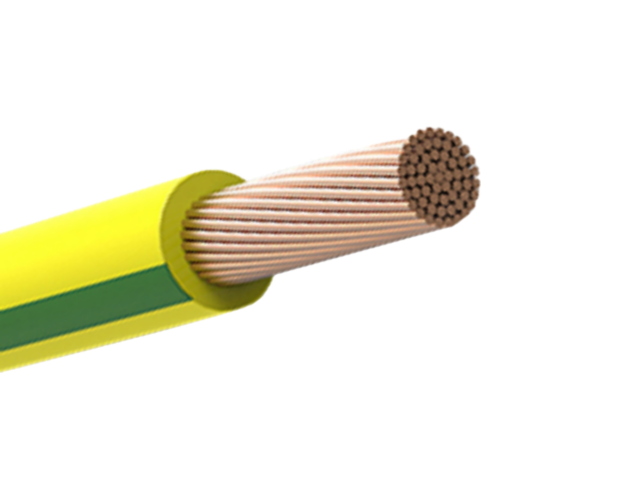
TW AND THW
Electrical wire TW AND THW is used in new construction projects or rewiring tasks in 600-volt systems. It is from NPC Electric are designed for building wiring applications where dependable electrical performance and installation safety are required. These single-core copper conductors are insulated with high-quality thermoplastic materials, providing stable conductivity, good mechanical protection, and resistance to heat and moisture. TW wire is suitable for dry or damp locations with moderate temperature ratings, while TH wire offers higher heat resistance for applications requiring enhanced thermal performance. Manufactured under strict quality control, NPC Electric TW and TH Wires deliver uniform insulation thickness, consistent conductor structure, and long service life. Their reliable performance and ease of handling make them a trusted choice for residential, commercial, and light industrial electrical installations.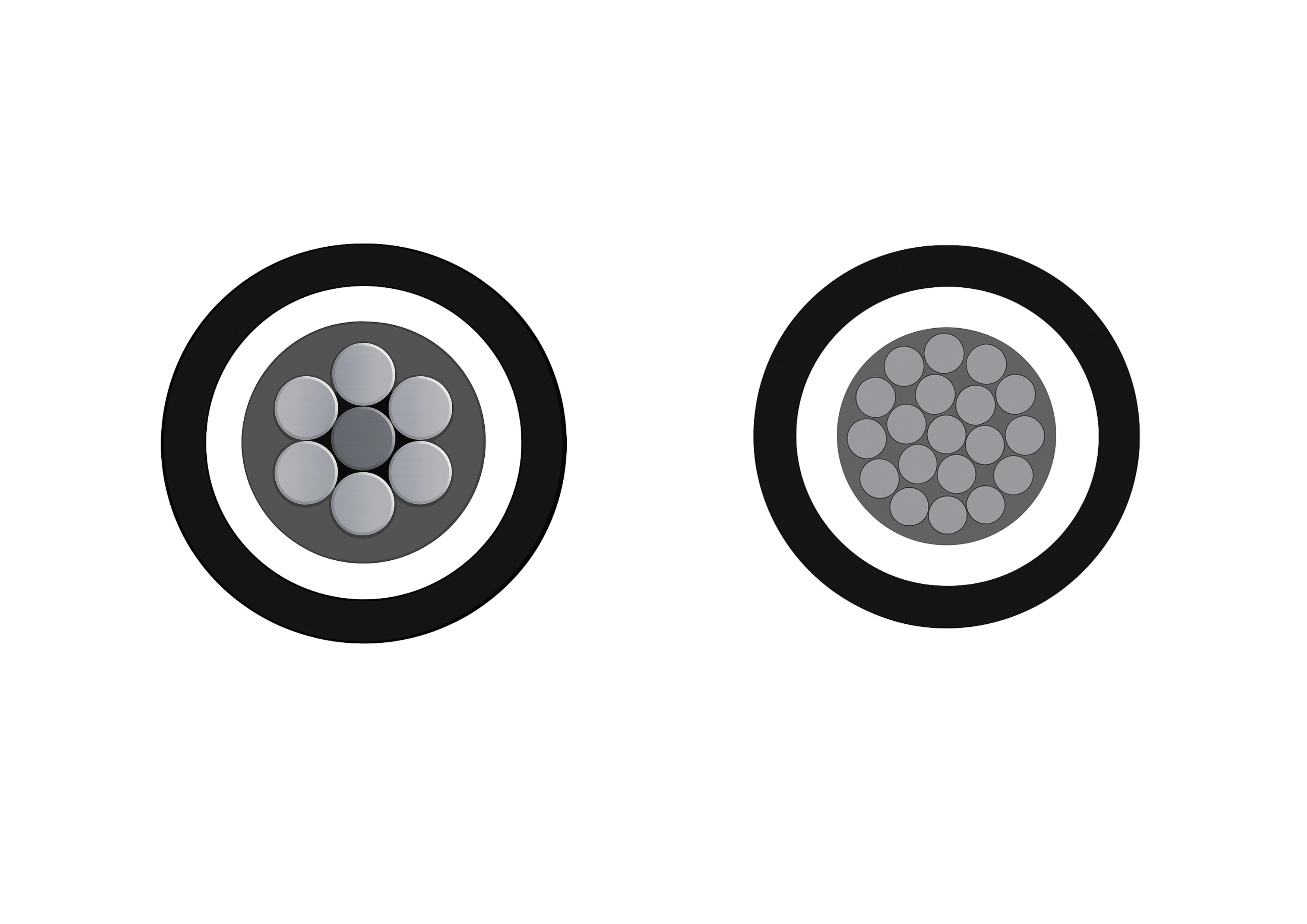
XLPE-HDPE Tree Cable Aluminum 25kV 1x50m㎡
The XLPE-HDPE Tree Cable Aluminum 25kV 1x50mm² is engineered for superior performance in medium-voltage overhead distribution networks, delivering exceptional reliability and long-term durability. Designed for challenging environments such as forested regions and urban areas, this cable ensures consistent power supply while minimizing maintenance and unplanned outages. Constructed with high-conductivity aluminum alloy 1350 wires, the cable features a round compacted conductor with class 2 stranding, achieving a minimum conductivity of 61% IACS and tensile strength of at least 130 MPa. Optional conductor shielding with an extruded semiconductor thermosetting compound is available for enhanced performance in 15kV and 25kV applications. The inner insulation is made from cross-linked polyethylene (XLPE), supporting continuous conductor operation at 90°C, and meeting ICEA S-121-733 physical standards. The robust outer cover is composed of high-density polyethylene (HDPE), offering outstanding resistance against weathering, UV radiation, mechanical abrasion, and electrical sparking up to 2.75kV. Standard cables come in gray with sequential metering markings in accordance with ASTM B230, while blue cables are recommended for harsher conditions requiring spark resistance above 5kV.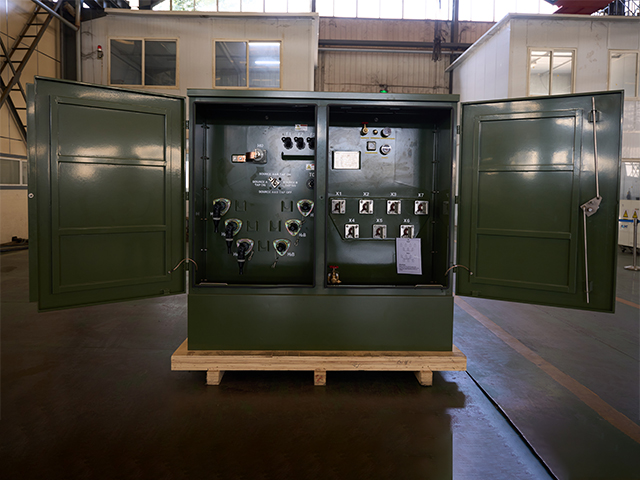
1250kVA Three Phase Pad Mounted Transformer
NPC ELECTRIC's 1250kVA Three Phase Pad Mounted Transformer is a high-performance, oil-immersed distribution transformer engineered for reliable underground power distribution in demanding environments. It delivers exceptional efficiency (up to 99.2% or higher), low no-load and load losses, and a 65°C average winding rise for extended service life exceeding 30-40 years. Key components include high-grade silicon steel core, aluminum or copper windings, 5-position tap changer (±2x2.5%), pressure relief valve, oil level gauge, and tamper-resistant enclosure in Munsell green finish.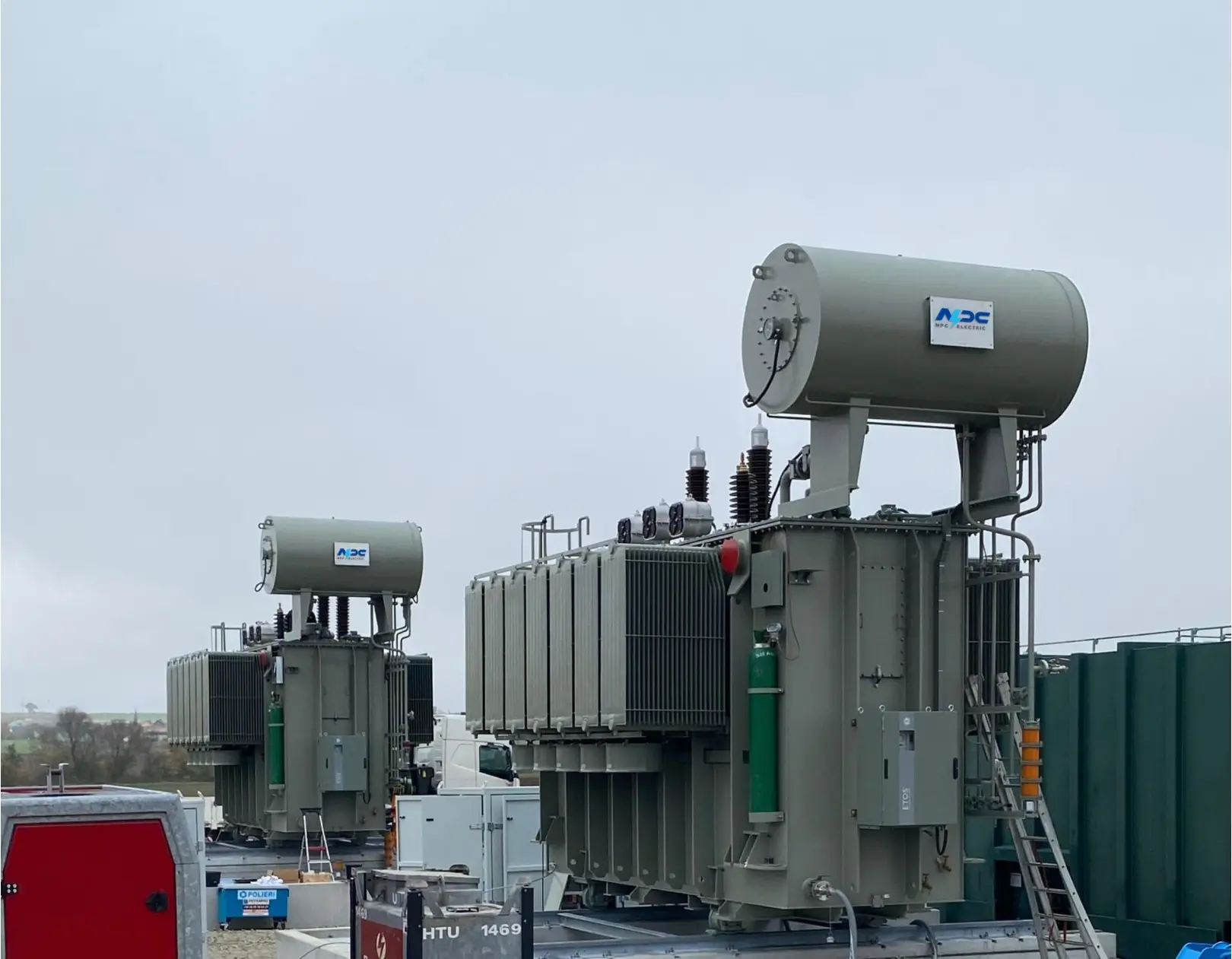
55kV 1600kVA Three Phase Oil Immersed Power Transformer Copper
The 55kV 1600kVA Three Phase Oil Immersed Power Transformer Copper is designed for reliable medium/high-voltage distribution networks. It adopts 99.95 % electrolytic copper windings, Class A insulation, a corrugated-fin tank, and ONAN cooling for excellent heat dissipation. Available in energy-saving S11/S13 series with no-load loss reduced by up to 35 %. Fully sealed or conservator type prevents oil aging. Equipped with ±5 % or ±2×2.5 % off-circuit tap changer (on-load optional). Meets IEC 60076, GB/T 1094 standards, lightning impulse withstand 250 kV peak, PD <10 pC. Low noise (<58 dB), strong short-circuit strength, suitable for harsh environments. Vacuum oil filling + nitrogen sealing ensures a 30+ year lifespan. Widely trusted in mining, petrochemical, renewable energy, and urban 55 kV substations.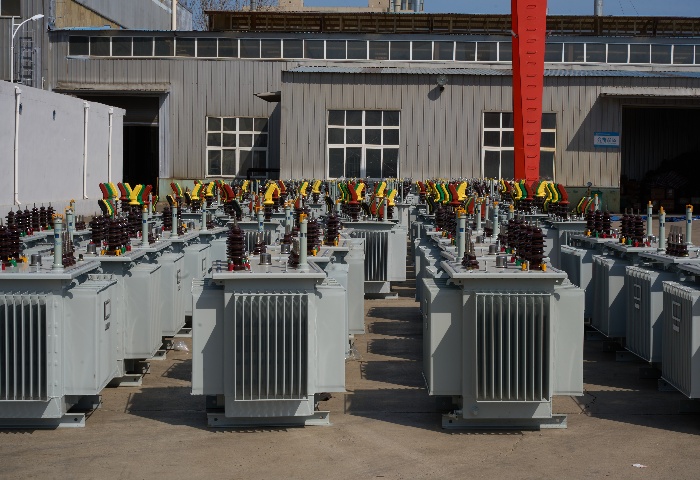
750kVA Oil Immersed Transformer
NPC ELECTRIC's 750kVA oil-immersed transformer uses advanced oil-immersed cooling technology to provide efficient and stable power conversion. The transformer complies with international standards such as the International Electrotechnical Commission (IEC) and ISO 9001, ensuring the high quality and safety of the product. Its sturdy structure and excellent overload resistance are widely used in industrial, commercial, and power network fields.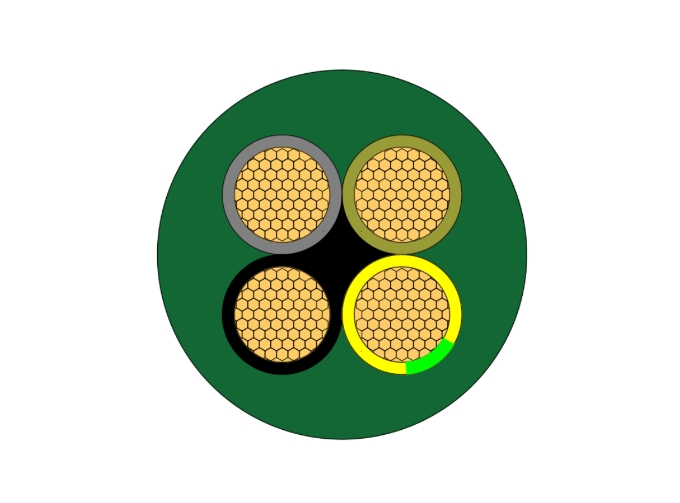
RZ1-K(AS) XLPE LSZH Flexible Cable
RZ1-K(AS) XLPE LSZH Flexible Cable is a single Core flame retardant LSZH flexible power cable suitable for instllation outdoor and indoor. The "(AS)" suffix denotes advanced fire-retardant properties, minimizing smoke and toxic gases during fires. Excellent bend radius and resistance to mechanical stress, oils, and chemicals ensure easy routing and durability.
380kV Oil-Immersed Power Transformer
NPC Electric 380kV Oil-Immersed Power Transformer is engineered for the most demanding extra-high voltage (EHV) transmission networks, providing a robust link between power generation and regional distribution. Utilizing a multi-step core stacking method with high-grade, laser-scribed silicon steel, this unit minimizes eddy current losses and vibration. The internal active part is submerged in high-dielectric-strength mineral oil, which serves both as a superior insulator and a high-efficiency coolant. Designed with a vacuum-proof, reinforced corrugated or radiator-type tank, it ensures hermetic integrity under extreme thermal cycling. With advanced electrostatic shielding and a focus on mechanical stability, this transformer offers unparalleled reliability for national grid backbones, ensuring continuous power flow with minimal maintenance requirements even in harsh environmental conditions.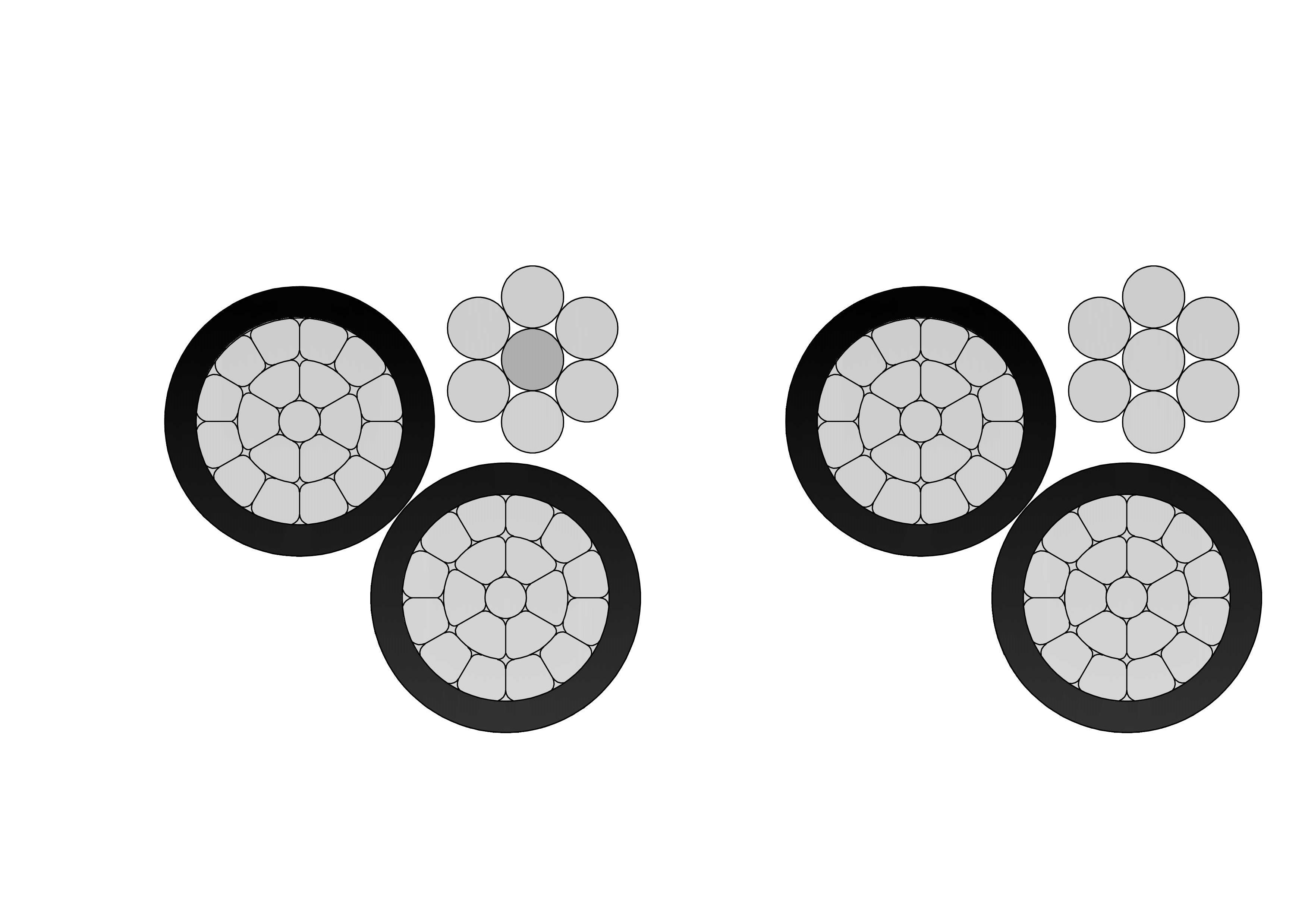
1/0 Janthina Aluminum Conductor Triplex Overhead Service Drop Cable
The 1/0 Janthina Triplex Service Drop Cable is a reliable overhead cable for secondary power distribution to residential service entrances. Featuring two 1/0 AWG aluminum phase conductors and one neutral messenger (7-strand) insulated with XLPE or PE and assembled in triplex configuration, it provides excellent mechanical strength and weather resistance. Compliant with ASTM B-230, B-231, ICEA S-76-474, and ANSI/ICEA standards, this cable supports 600V applications with high UV, moisture, and abrasion protection. The self-supporting messenger reduces sag and simplifies installation over medium spans. The 1/0 Janthina Triplex Service Drop Cable ensures low power losses, high current capacity, and long service life in harsh outdoor conditions. Lightweight and flexible, it is widely used for two-phase service drops with neutral in urban, suburban, and rural areas requiring safe, cost-effective aerial connections from utility poles to homes.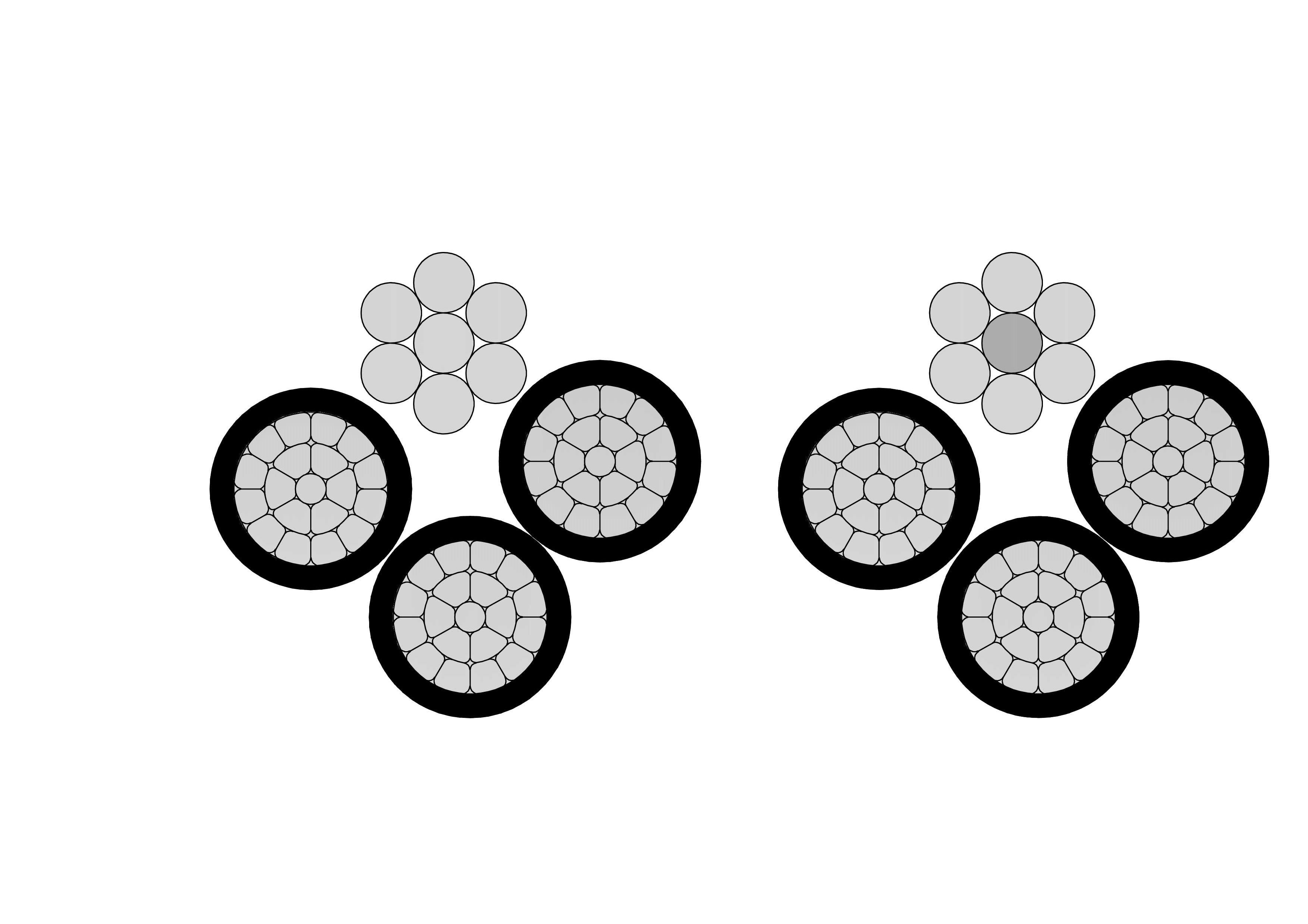
2/0 Grullo Aluminum Conductor Quadruplex Overhead Service Drop Cable
2/0 Grullo Aluminum Conductor Quadruplex Overhead Service Drop Cable is a high-performance solution for delivering three-phase electrical power from pole-mounted transformers to residential or commercial service entrances. It is specifically engineered for 600-volt phase-to-phase operations and supports conductor temperatures up to 90°C with cross-linked polyethylene (XLP) insulation, or 75°C when using standard polyethylene (PE) insulation. This cable consists of three phase conductors made from 1350-H19 aluminum, either stranded or compressed, and a bare ACSR (Aluminum Conductor Steel Reinforced) neutral messenger. Alternate messenger materials include AAC or 6201 alloy for different mechanical load and corrosion resistance preferences. With rugged black XLP insulation, this quadruplex cable provides exceptional weather resistance, UV protection, and thermal endurance, making it ideal for overhead outdoor installations in a wide variety of environments.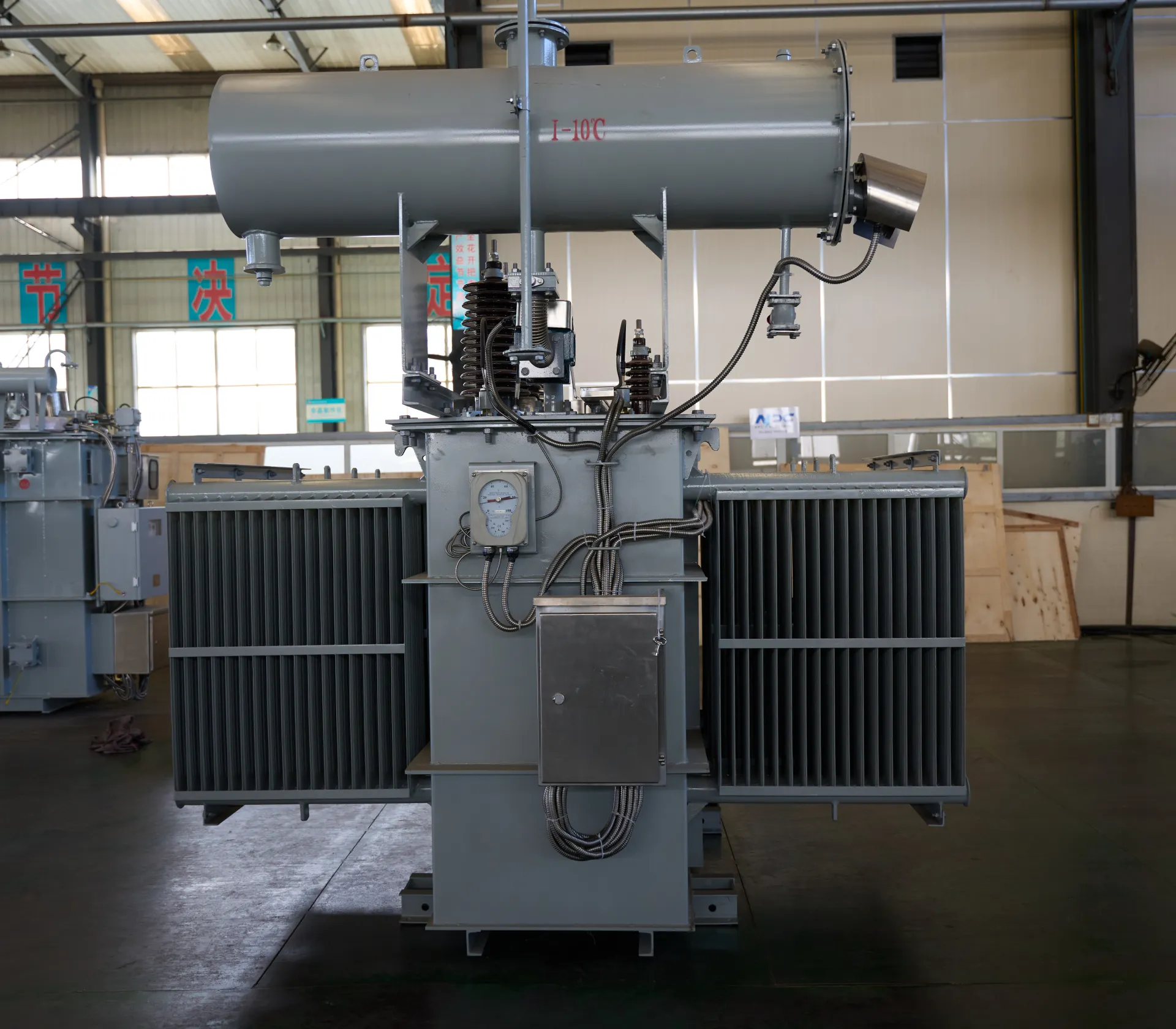
370MVA 750kV Oil-Immersed High-Voltage Transformer for Power Transmission
The 370 MVA 750 kV Oil-Immersed High-Voltage Transformer is designed for ultra-high-voltage (UHV) power transmission systems requiring exceptional reliability, stability, and long-distance energy delivery. With a robust oil-immersed insulation structure and high-grade copper windings, this transformer offers outstanding dielectric strength, low partial discharge, and excellent thermal performance. Engineered for 750kV grid networks, it effectively reduces transmission losses, enhances voltage regulation, and ensures safe operation under demanding load variations. Its precision-built core, advanced cooling system, and reinforced tank construction enable superior efficiency, extended service life, and high short-circuit resistance. Ideal for national power grid projects, long-distance transmission corridors, high-capacity substations, and UHV interconnection systems, this transformer delivers consistent and secure performance in critical large-scale power infrastructures.
1/0 Leda Aluminum Conductor Triplex Overhead Service Drop Cable
The 1/0 Leda Triplex Service Drop Cable is a durable overhead cable for secondary power distribution to residential service entrances. Featuring two 1/0 AWG aluminum phase conductors and one neutral messenger (7-strand) insulated with XLPE or PE and assembled in triplex configuration, it provides excellent mechanical strength and weather resistance. Compliant with ASTM B-230, B-231, ICEA S-76-474, and ANSI/ICEA standards, this cable supports 600V applications with high UV, moisture, and abrasion protection. The self-supporting messenger reduces sag and simplifies installation over medium spans. The 1/0 Leda Triplex Service Drop Cable ensures low power losses, high current capacity, and long service life in harsh outdoor conditions. Lightweight and flexible, it is widely used for two-phase service drops with neutral in urban, suburban, and rural areas requiring safe, cost-effective aerial connections from utility poles to homes.
250kVA Three Phase Pad Mounted Transformer
The 250kVA Three Phase Pad Mounted Transformer is a compact, liquid-immersed, self-cooled (ONAN) distribution transformer optimized for efficient, underground power delivery in residential, light commercial, and small industrial applications. Fully compliant with IEEE C57.12.34, ANSI C57.12.00, DOE 2016 efficiency standards, and UL-listed, this compartmental-type unit features dead-front 200A high-voltage bushing wells (loadbreak inserts), radial or loop feed options, and a sealed tank using non-PCB mineral oil or FR3 natural ester fluid for improved fire safety and environmental performance.
2000kVA 35kV Wind Turbine Step-Up Transformer for Onshore Wind Farms
The Wind Turbine Step-Up Transformer 2000kVA 35kV is purpose-built for onshore wind farms, enabling efficient voltage conversion from wind turbine generators to medium-voltage collection networks. Designed to operate reliably under fluctuating wind loads and harsh outdoor conditions, this transformer ensures stable power transmission and reduced energy losses across wind power systems. The oil-immersed insulation structure provides excellent thermal stability and long service life, while the optimized magnetic core minimizes no-load losses and acoustic noise. High-quality windings and reinforced insulation withstand frequent load variations caused by changing wind speeds.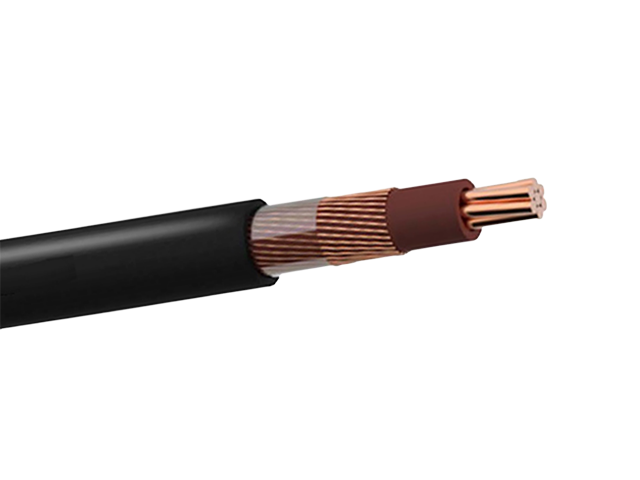
15kV Concentric Copper Power Cable
The 15kV Concentric Copper Power Cable is a premium medium-voltage underground distribution cable featuring a high-conductivity stranded copper conductor, extruded semi-conducting shields, tree-retardant TR-XLPE or EPR insulation, and a full concentric copper neutral layer protected by a rugged sunlight-resistant LLDPE jacket. This construction delivers superior electrical performance, excellent moisture and treeing resistance, and outstanding mechanical protection. Available with 100% or 133% insulation levels, the cable is ideal for direct burial or duct installations. Manufactured to ICEA S-94-649 and AEIC CS8 standards, the 15kV Concentric Copper Power Cable undergoes rigorous quality testing from raw materials to finished product, ensuring low dielectric loss, high reliability, and long service life in demanding underground environments.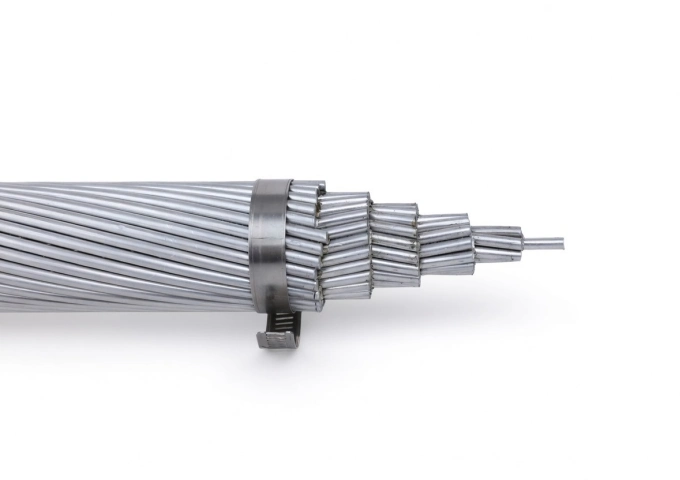
1/0 AWG Poppy AAC Cable
The 1/0 AWG Poppy AAC Cable represents premium All Aluminum Conductor technology for overhead power applications. Manufactured with seven strands of high-conductivity 1350-H19 aluminum, this bare conductor delivers an optimal balance of electrical efficiency and mechanical performance. Its 0.368-inch diameter and 1,990 lbs breaking strength support reliable operation with 247 amps capacity and minimal sag. Weighing just 99.1 lbs per 1000 ft, the Poppy AAC reduces structural loading and installation expenses while providing excellent corrosion resistance for extended outdoor service. Compliant with ASTM B-230 and B-231, the 1/0 AWG Poppy AAC Cable offers low DC resistance of 0.164 ohms/1000 ft at 20°C. It undergoes stringent quality testing from raw materials through finished product, making it an ideal choice for new builds and upgrades in transmission and distribution systems requiring dependable, lightweight bare conductors.Welcome your inquiry
Honesty, Integrity, Frugality, Activeness and Passion