
Single Phase Transformer: Full Catalog of All Types & Specifications
2026-02-26
In modern power systems, the single phase transformer remains one of the most widely deployed electrical assets worldwide. From rural electrification and residential supply to renewable energy and industrial auxiliary systems, its simplicity, reliability, and cost efficiency make it indispensable.
For international EPC contractors, utilities, and distributors, selecting the correct single phase power transformer requires not only understanding voltage and capacity ratings but also insulation systems, cooling methods, installation environments, and compliance with global standards.
1. What Is a Single Phase Transformer?
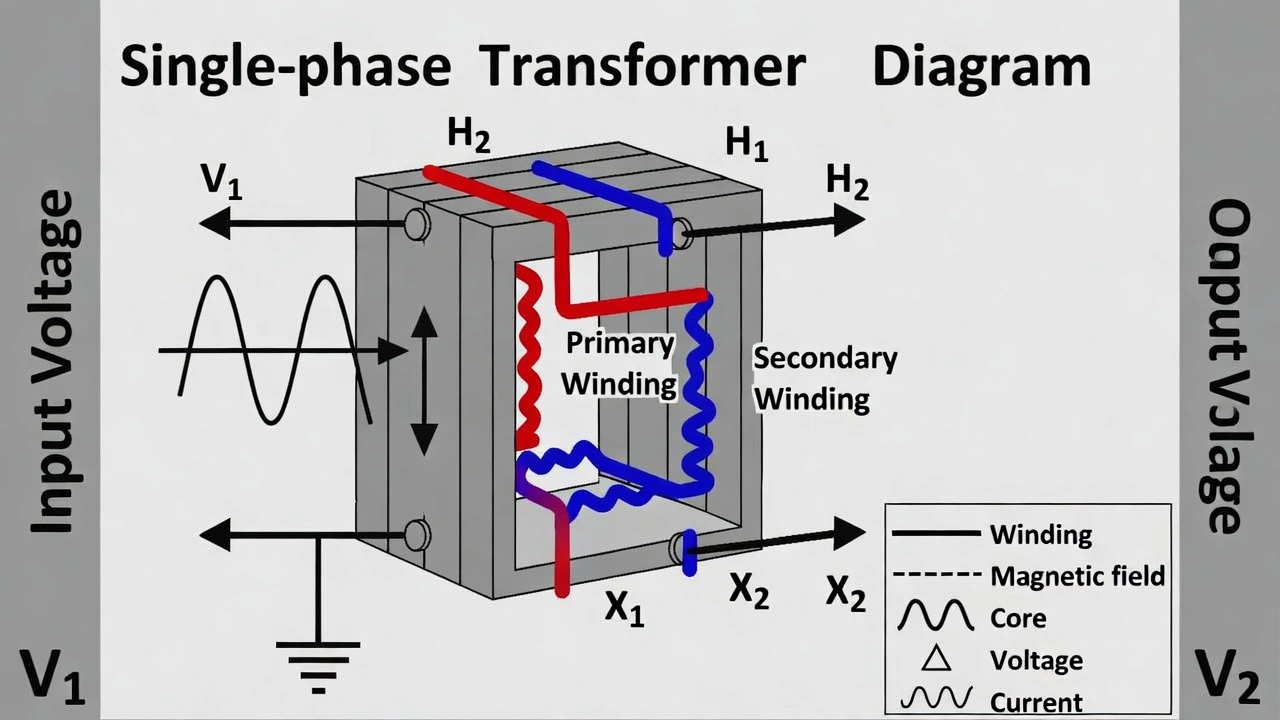
A single phase transformer is a static electrical device that transfers electrical energy between two circuits through electromagnetic induction using a single alternating current phase.
It consists of:
- Magnetic core (CRGO silicon steel)
- Primary winding
- Secondary winding
- Insulation system
- Cooling medium (oil or air)
- Tank or enclosure
It is primarily used in:
- Residential power supply
- Rural distribution networks
- Lighting systems
- Small commercial loads
- Control circuits
2. Main Types of Single Phase Transformer
Below is a structured classification of globally exported transformer types.
2.1 Classification by Installation Method
|
Type |
Application Environment |
Cooling |
Protection Level |
Typical Power Range |
|
Single phase pole mounted transformer |
Overhead rural networks |
Oil natural (ONAN) |
Outdoor |
5–167 kVA |
|
Single phase pad mounted transformer |
Underground distribution |
Oil natural |
Tamper-proof cabinet |
25–250 kVA |
|
Utility distribution |
Oil or dry |
Outdoor/Indoor |
5–500 kVA |
2.2 Classification by Insulation & Cooling Medium
|
Type |
Cooling Medium |
Key Features |
Typical Use |
|
Mineral oil |
High overload capacity, better heat dissipation |
Outdoor grids |
|
|
Air / Resin |
Fire resistant, low maintenance |
Indoor facilities |
|
|
Cast resin transformer |
Epoxy resin |
Moisture resistant, high safety |
Hospitals, malls |
The single phase oil filled transformer is the most widely exported due to its cost-performance ratio and high thermal capacity.
3. Technical Specifications Overview
International projects require compliance with IEC, ANSI, or IEEE standards.
3.1 Electrical Ratings
|
Parameter |
Standard Range |
|
Rated Power |
5 kVA – 500 kVA |
|
Primary Voltage |
6kV, 10kV, 11kV, 15kV, 20kV, 33kV |
|
Secondary Voltage |
120V, 220V, 230V, 240V |
|
Frequency |
50Hz / 60Hz |
|
Impedance |
2–6% |
|
Vector Group |
Usually single phase |
3.2 Core and Winding Materials
|
Component |
Material |
Engineering Impact |
|
Core |
CRGO Silicon Steel |
Reduces no-load loss |
|
Winding |
Copper / Aluminum |
Affects efficiency & cost |
|
Insulation |
Kraft paper / Nomex |
Thermal class control |
Modern low-loss core design reduces energy waste and improves lifecycle efficiency.
4. Special Transformer Types for Export Markets
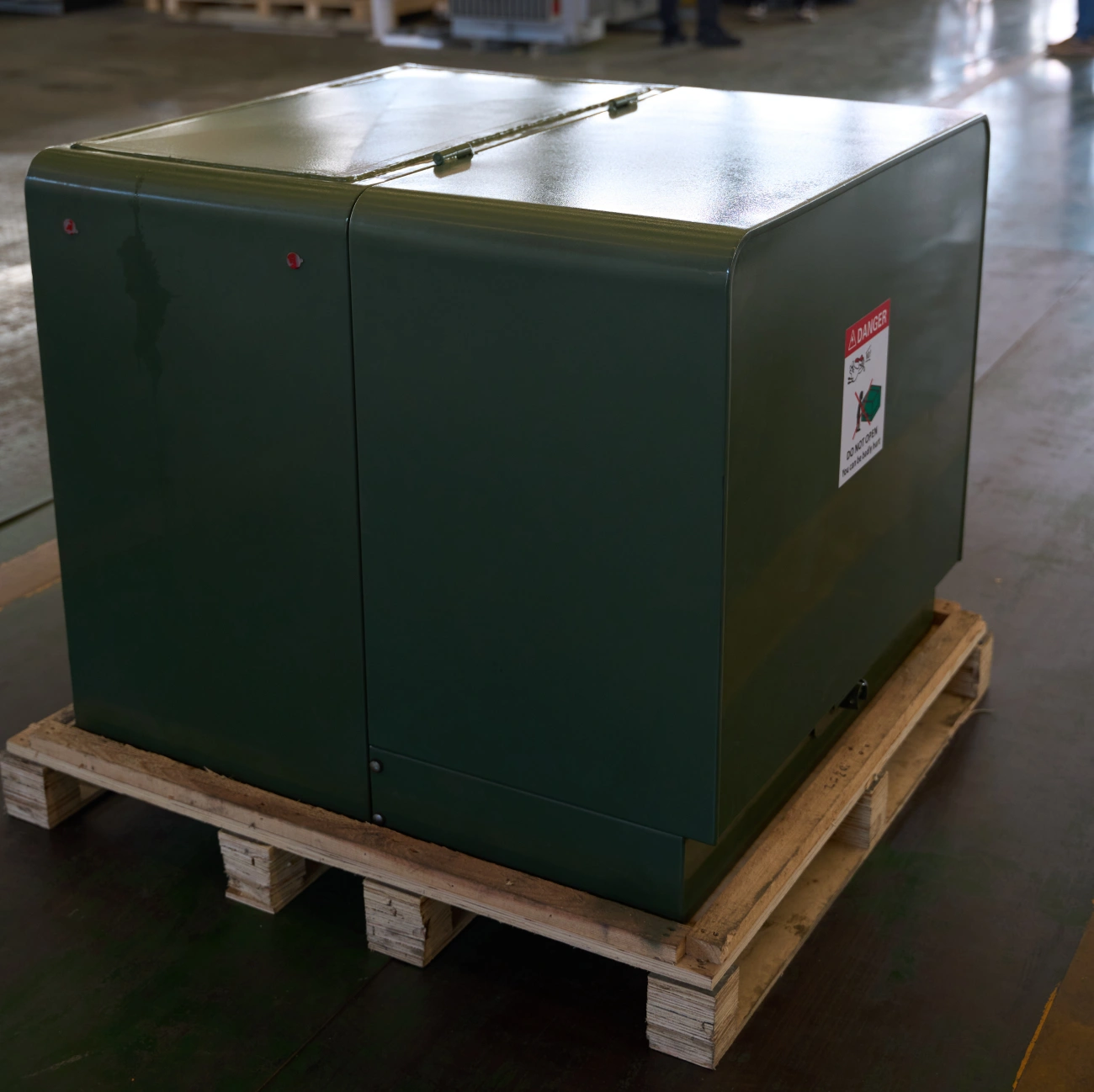
4.1 Single Phase Pad Mounted Transformer
A Single Phase Pad Mounted Transformer (also known as a single-phase pad transformer or single-phase underground distribution transformer) is primarily used in underground power distribution systems for residential communities, commercial buildings, and small industrial loads. It is mounted on a concrete pad, with a fully enclosed, theft-proof, and weatherproof enclosure, replacing traditional pole-mounted transformers and providing a more aesthetically pleasing and secure power distribution solution. It is particularly popular in North America, Latin America, and parts of Asia/Europe.
Key Features and Advantages
Compact and Low-Profile Design: Aesthetically pleasing and low-profile, typically 30-50 inches in height, making it easy to install in green areas or residential areas.
Tamper-Resistant: Pry-resistant and shockproof design, compliant with ANSI C57.12.28 enclosure integrity standard.
Cooling Method: ONAN (natural oil and air cooling), using mineral oil or environmentally friendly FR3/natural ester oil.
Protection Configuration: Common CSP (Completely Self-Protected) design, with built-in fuses, surge arresters, and secondary circuit breakers, eliminating the need for additional external protection equipment.
Incoming line type: Radial Feed or Loop Feed, Dead-front or Live-front.
Efficiency: Meets or exceeds DOE 2016/202X energy efficiency standards; high-efficiency design reduces operating costs.
Common Model List (kVA Capacity Range and Typical Specifications) The mainstream capacity of single-phase pad transformers is concentrated in residential/small commercial applications. The most common ranges in the international market are as follows (based on IEEE/ANSI C57.12.38, Eaton, Prolec GE, ERMCO, Daelim, and other major manufacturers):
|
kVA |
Specifications |
|
5–10 kVA |
Small loads, remote residences or farms |
|
15 kVA |
Standard entry-level residential power supply |
|
25 kVA |
Common homes/small apartments |
|
37.5 kVA |
Medium-sized residential areas |
|
50 kVA |
Larger residences or small commercial areas |
|
75 kVA |
Multi-family residences or light commercial areas |
|
100 kVA |
High-load residential clusters |
|
167 kVA |
The largest mainstream single-phase capacity, used for medium loads or temporary overloads (some manufacturers support 250 kVA, but this is less common) |
Typical voltage combinations (high voltage side / low voltage side):
Primary (HV): 12470GrdY/7200, 13200GrdY/7620, 14400/7200, 34500GrdY/19920, etc. (Common 2.4–34.5 kV range, BIL 60–150 kV)
Secondary (LV): 120/240V (most common, US residential standard), 240/480V, 347V, etc.
Tap Changer: ±2×2.5% or more, allowing voltage regulation
Main Series/Types (different manufacturers' names):
Mini-Pad / Shrubline: Compact, 10–167 kVA
Maxi-Pad / MaxiShrub: Slightly higher but with straighter cable routing, 10–167 kVA
Ranch Runner: Economical rural use, 10–50 kVA
Type 1 / Type 2: ANSI Standard front panel layout differences:
MicroTrim / Space-Saver: Ultra-compact, low-cost version
PEAK: Eaton high overload capacity series (supports temporary 109%+ load)
4.2 Single Phase Pole Mounted Transformer
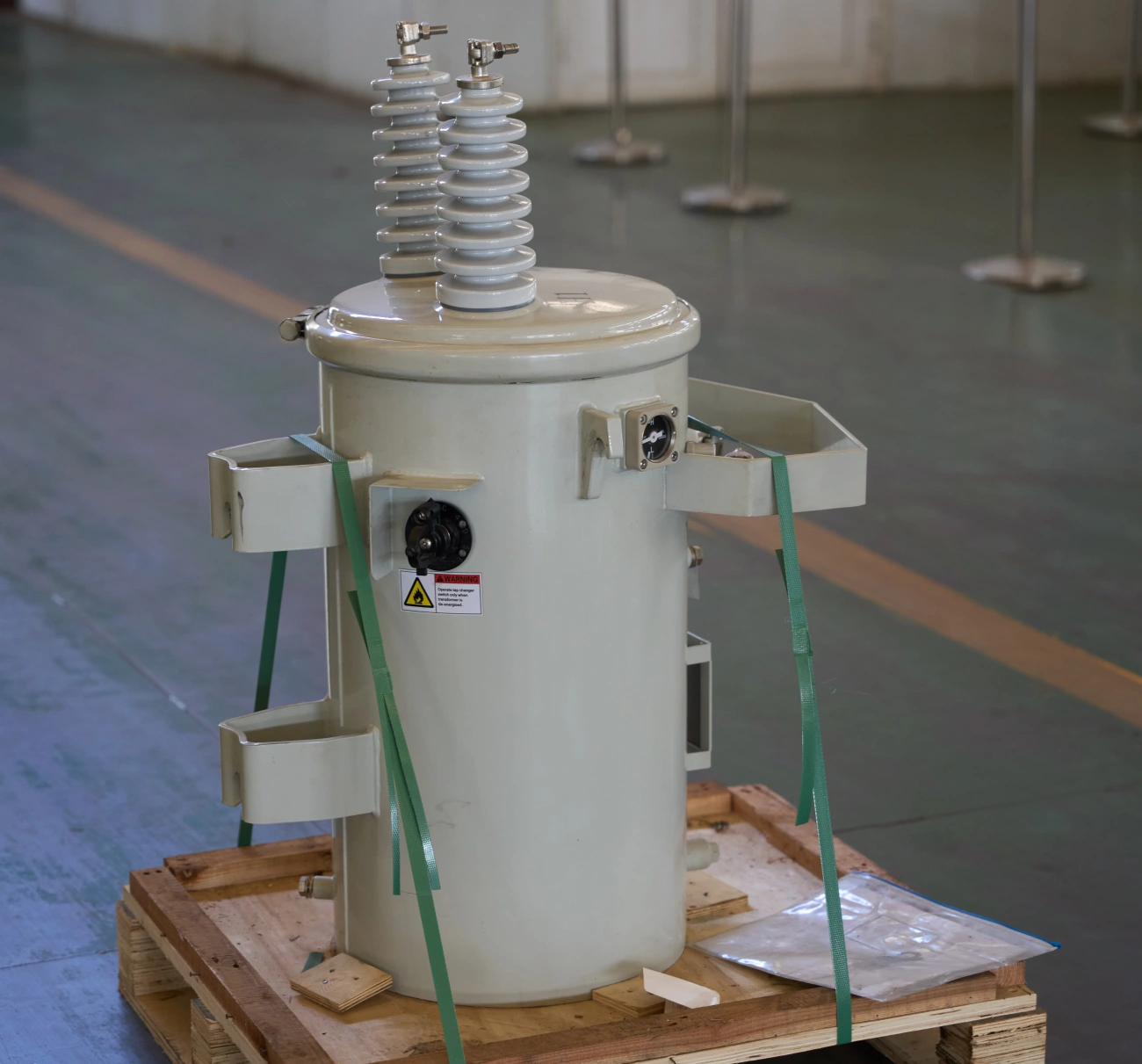
Single-phase pole-mounted transformers (also known as single-phase pole-mounted transformers or single-phase overhead distribution transformers) are one of the most common types in power distribution systems. They are primarily installed on utility poles to step down medium-voltage distribution lines (typically 10-35kV) to the low-voltage user side (commonly 120/240V single-phase residential standards). They are widely used in overhead distribution networks in rural areas, suburbs, residential areas, and light commercial loads. Compared to pad-mounted transformers, they are less expensive, easier to install, and easier to maintain, making them a mainstream choice, especially in North America, Latin America, Southeast Asia, Africa, and Australia.
Key Features and Advantages
Installation Method: Pole-mounted, using slings or brackets to fix the transformer to a wooden/concrete pole, saving ground space.
Cooling and Insulation: The mainstream type is oil-immersed, using ONAN cooling, and mineral oil or environmentally friendly ester oil (FR3/natural ester); a few dry-type types are used in special environments.
Protection Type:
Conventional: Requires an external fuse/surge arrester.
CSP (Completely Self-Protected): Built-in fuse, surge arrester, and secondary circuit breaker; the most popular export configuration.
MagneX or other self-protection types: With a resettable interruptor.
Efficiency Standards: Meets or exceeds DOE 2016/202X energy efficiency requirements (mandatory in the US market); high efficiency, low loss design.
Standards Compliance: ANSI C57.12.00, C57.12.20, IEEE, NEMA, RUS, IEC; UL/cUL, CSA certifications are common for North American exports.
Other Advantages: Corrosion-resistant coating (ANSI 70 gray), anti-theft design, with pressure relief device, adjustable taps (±2 × 2.5% taps).
Common Model List (kVA Capacity Range and Typical Specifications) Single-phase pole-mounted transformers typically cover residential to medium-sized loads. The most common ranges in the international market are as follows (based on data from major manufacturers such as Prolec GE, ERMCO, Eaton, Daelim, and Weisho):
|
kVA |
Specifications |
|
5–10 kVA |
Small rural/farm loads |
|
15 kVA |
Entry-level residential |
|
25 kVA |
Most common home/small community power supply |
|
37.5 kVA |
Medium-sized residential areas |
|
50 kVA |
Larger residential or light commercial |
|
75 kVA |
Multi-family or commercial entry-level |
|
100 kVA |
High-density residential clusters |
|
167 kVA |
Largest mainstream single-phase capacity, used for medium-sized loads (some support 250 kVA or higher, but rare) |
Typical Voltage Combinations (Primary HV / Secondary) LV):
Primary: 2400/4160Y, 7200/12470Y, 7620/13200Y, 13200/22860Y, 34500GrdY/19920, etc. (2.4–34.5 kV range, BIL 60–150 kV)
Secondary: 120/240V (North American residential standard), 240/480V, 347V, etc.
Tap Changer: Typically 5 stops (±2×2.5%), externally operated, no-load tap changer.
4.3 Single Phase Oil Filled Transformer
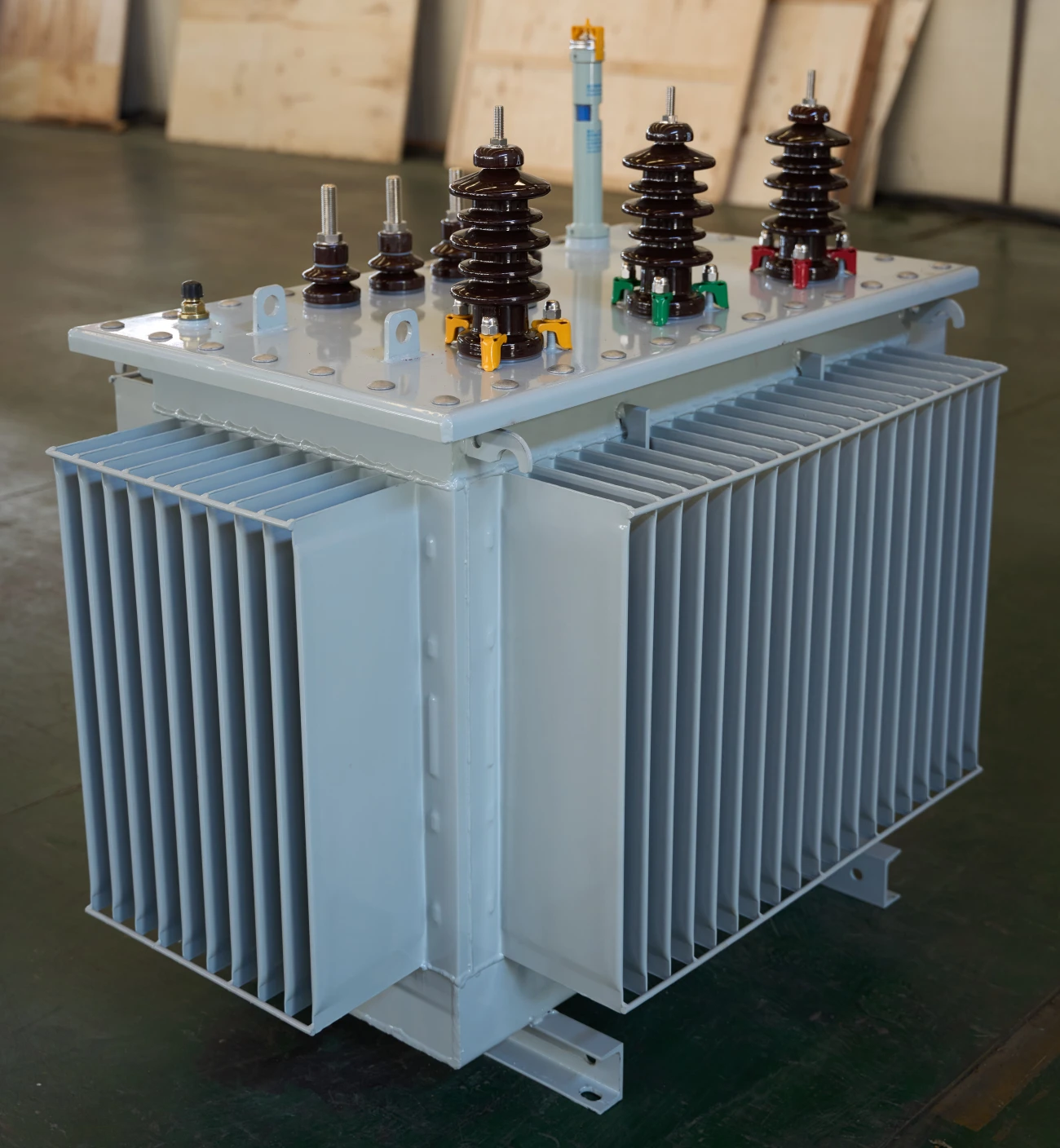
Single Phase Oil Filled Transformer (also known as Single Phase Oil Immersed Transformer or Single Phase Oil-Filled Distribution Transformer) is a reliable, cost-effective solution for stepping down medium voltage to low voltage in overhead or underground distribution systems. These transformers use mineral oil (or eco-friendly alternatives like FR3 natural ester fluid) for superior insulation, cooling, and heat dissipation, making them ideal for outdoor applications in residential, rural, commercial, and light industrial settings.
Key Features & Benefits
Oil-Immersed Design (ONAN Cooling): Natural oil natural air cooling provides excellent thermal performance, high overload capacity (up to 150-200% temporary), and long service life (typically 25-40+ years).
High Efficiency: Meets or exceeds DOE 2016/202X efficiency standards (U.S.), IEC 60076, ANSI/IEEE C57.12.00, and energy regulations in Europe, Latin America, and Asia—reducing no-load and load losses for lower operational costs.
Robust Construction: Sealed tank with pressure relief device, corrosion-resistant coating (ANSI 70 gray), lifting lugs, and bushings for easy installation and maintenance.
Protection Options:
CSP (Completely Self-Protected): Built-in primary fuses, secondary circuit breakers, and lightning arresters—no external protection needed (most popular for export).
Conventional: Requires external fuses/arresters.
Fluid Options: Standard mineral oil or fire-resistant/biodegradable FR3 fluid for enhanced safety in urban/residential areas.
Certifications: UL/cUL, CSA, IEEE, ANSI, IEC compliant; RUS-approved models common for North America/Latin America.
Dual Voltage & Taps: Often dual primary voltage designs with ±2×2.5% off-load tap changer for voltage adjustment.
Common Models & Specifications
Single phase oil filled transformers are available in pole-mounted (overhead) and pad-mounted configurations, with mainstream kVA ratings for global markets:
|
kVA |
Specifications |
|
5–10 kVA |
Small rural/farm loads |
|
15 kVA |
Entry-level residential |
|
25 kVA |
Most common household/small community (highest volume export model) |
|
37.5 kVA |
Medium residential clusters |
|
50 kVA |
Larger homes/light commercial |
|
50 kVA |
Larger homes/light commercial |
|
75 kVA |
Multi-family or small business |
|
100 kVA |
High-density residential |
|
167 kVA |
Maximum standard single-phase (up to 250-315 kVA in some custom lines) |
Typical Voltage Ratings:
Primary (HV): 2400/4160Y, 7200/12470Y, 7620/13200Y, 13200/22860Y, 34500GrdY/19920 (2.4–34.5 kV class, BIL 60–150 kV)
Secondary (LV): 120/240V (split-phase, North American standard), 240/480V, or 347V
Frequency: 50/60 Hz
Mounting Types:
Pole-Mounted Transformer: Overhead installation on utility poles—compact, economical for rural/suburban grids.
Pad-Mounted Transformer: Ground-level enclosure for underground feeds—tamper-resistant, aesthetic for residential/commercial areas.
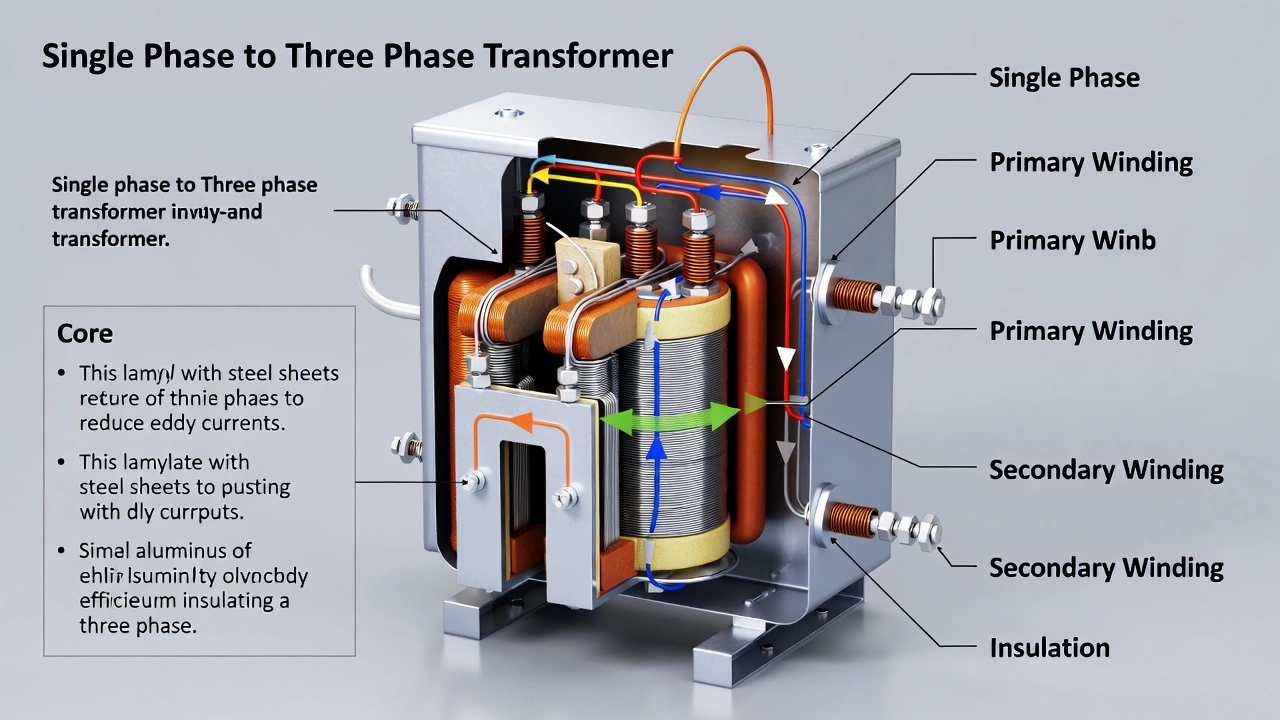
4.4 Single Phase to Three Phase Transformer
Single Phase to Three Phase Transformer (also known as Single-to-Three Phase Converter Transformer, Phase Conversion Transformer, or Single Phase Input to Three Phase Output Transformer) refers to specialized transformers or transformer-based systems designed to enable three-phase power output from a single-phase input source. This is essential in locations where only single-phase utility power is available (e.g., rural areas, residential zones, or small workshops), but three-phase equipment like motors, CNC machines, pumps, compressors, welders, or industrial machinery is required.
Important Clarification: A standard transformer alone cannot create true balanced three-phase power from single-phase input because it lacks the inherent 120° phase shift of three-phase systems. Pure transformers step voltage up/down or provide isolation but do not generate additional phases. Instead, "single phase to three phase transformers" in practice often combine:
A phase converter (rotary, static, or digital) to create artificial three-phase from single-phase.
A transformer for voltage matching (e.g., 230V single to 400V/460V three-phase) or isolation.
Common setups include rotary phase converter + transformer packages, autotransformer-based converters (e.g., Scott connection approximations), or specialized isolating converter transformers with capacitors/inductors for phase shifting in lighter loads
Key Features & Benefits
Phase Conversion Capability: Converts single-phase (e.g., 220-240V or 120V) to balanced or near-balanced three-phase output.
Voltage Flexibility: Step-up/step-down options (e.g., 230V 1Φ to 400V/460V 3Φ) for global compatibility.
High Efficiency & Reliability: Low losses, overload protection, long life (20+ years); often with overload capacity.
Types:
Rotary Phase Converter + Transformer: Uses an idler motor to generate third phase; most robust for heavy/inductive loads.
Static Phase Converter + Transformer: Capacitor-based; economical for light/start loads but limited to ~2/3 rated power.
Digital/Static Phase Converter: Solid-state (VFD-like); clean sine wave, precise control, UL-listed options.
Autotransformer Converter (e.g., TMT Series): Isolating type, single-phase 230V to three-phase 400V without neutral.
Standards & Certifications: UL/cUL, CSA, IEC, CE; DOE/IEEE compliant for efficiency.
Advantages: Cost-effective alternative to utility three-phase upgrade; easy installation; supports motor starting torque.
Common Models & Specifications
Mainstream capacities suit workshops to small industrial use (HP/kVA ratings based on motor loads; 1 HP ≈ 0.746 kVA):
|
HP |
Specification |
|
1-3 HP (0.75-2.2 kW) |
Entry-level for small motors/tools (e.g., lathes, drill presses) |
|
5 HP (3.7 kW) |
Most popular workshop size |
|
7.5-10 HP (5.5-7.5 kW) |
Medium machinery (compressors, pumps) |
|
15-20 HP (11-15 kW) |
Larger equipment |
|
Up to 100 HP+ |
Custom/heavy-duty with digital converters. |
Typical Voltage Configurations:
Input (Single-Phase): 220-240V, 120V, or 480V.
Output (Three-Phase): 220-240V, 400V, 415V, 460V/480V.
Frequency: 50/60 Hz.
Efficiency: ≥95-98% in digital models.
Popular Types & Examples (from Phoenix, DPS, Ronk, ATO, etc.):
Rotary Packages: 3-100 HP, often bundled with step-up transformers.
Digital: 5-20 HP, pure sine wave, precise for CNC/VFD loads.
Static: 1-10 HP, capacitor-start models.
5. Transformer Wiring and Electrical Diagrams
Understanding wiring is essential for field engineers.
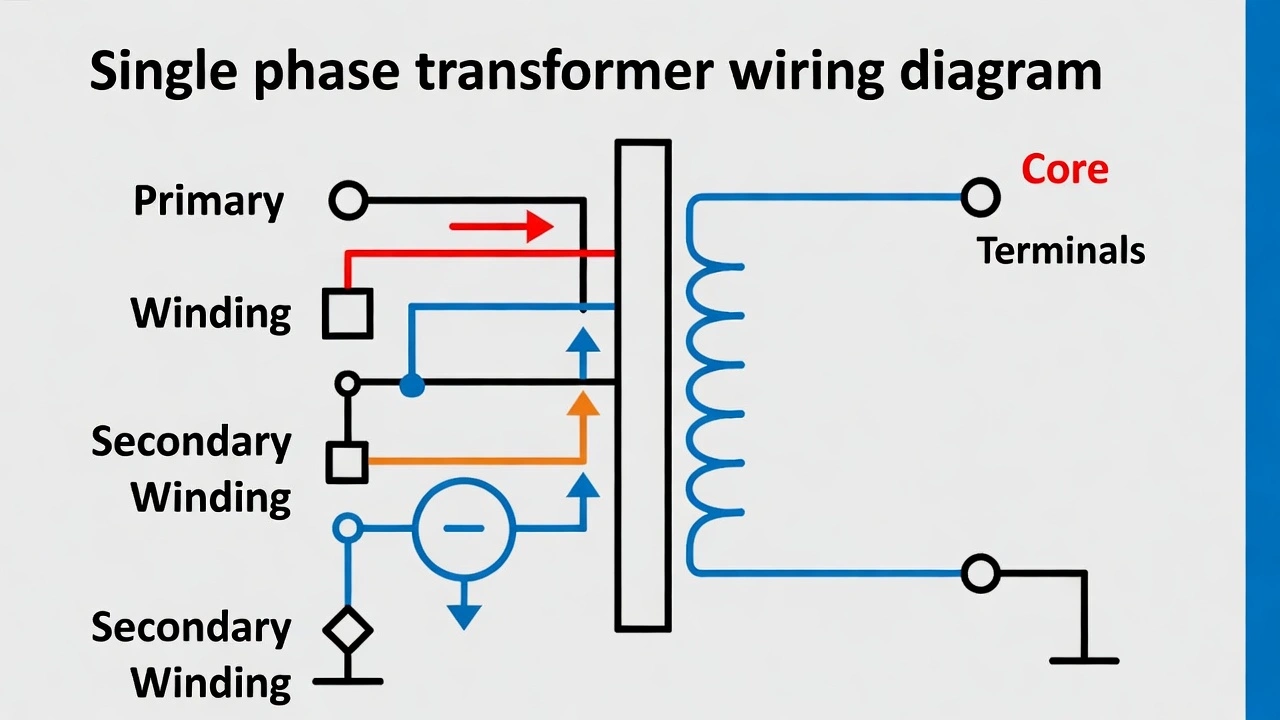
5.1 Single Phase Transformer Wiring Diagram (Basic Concept)
Primary winding connects to high voltage input.
Secondary winding supplies stepped-down voltage.
Common configurations:
- Two-bushing primary
- Three-bushing (with neutral)
- Center-tapped secondary
5.2 Single Phase Transformer Diagram (Structural View)
A simplified structural layout includes:
|
Component |
Function |
|
Core |
Magnetic flux path |
|
Primary Coil |
Input voltage |
|
Secondary Coil |
Output voltage |
|
Insulation Layer |
Electrical isolation |
|
Tank |
Mechanical protection |
Proper insulation clearance and creepage distance are critical for export compliance.
6. Engineering Design Considerations
From a working engineering perspective, transformer selection involves more than voltage matching.
6.1 Load Calculation
Transformer capacity should be selected at 70–80% normal loading to allow:
- Future expansion
- Voltage stability
- Reduced thermal stress
6.2 Temperature Rise
Standard limits:
|
Insulation Class |
Max Temperature Rise |
|
Class A |
60°C |
|
Class F |
100°C |
|
Class H |
125°C |
Oil-filled transformers typically operate with Class A insulation.
6.3 Efficiency and Losses
Two key losses:
- No-load loss (core loss)
- Load loss (copper loss)
High-efficiency export models comply with DOE or EU EcoDesign regulations.
7. International Standards & Certifications
For global exports, compliance may include:
- IEC 60076
- IEEE C57
- ANSI standards
- CE certification
- UL certification (for specific markets)
Factory testing includes:
- Ratio test
- Winding resistance test
- Insulation resistance test
- Induced voltage test
- Temperature rise test
8. Packaging & Export Considerations
For overseas shipment:
- Vacuum oil filling
- Nitrogen sealing (optional)
- Anti-corrosion coating
- Wooden or steel pallet packing
- Shock-proof bracing
Humidity and salt-spray protection are critical for coastal regions.
9. Maintenance & Service Life
Typical service life: 20–30 years.
Maintenance checklist:
- Oil level inspection
- Insulation resistance test
- Load monitoring
- Bushings condition check
Dry type transformers require periodic dust cleaning.
10. Future Trends in Single Phase Transformers
Emerging developments include:
- Amorphous core technology
- Smart monitoring sensors
- IoT-enabled load diagnostics
- Environment-friendly ester oil
These innovations reduce energy loss and improve operational transparency.
The single phase transformer remains a cornerstone of global power distribution systems. Whether selecting a single phase oil filled transformer, single phase dry type transformer, single phase pad mounted transformer, or single phase pole mounted transformer, proper engineering evaluation ensures long-term reliability.
For utilities, EPC contractors, and distributors, understanding specifications, wiring principles, and compliance requirements is essential when sourcing from an international transformer manufacturer.
Choosing the right single phase distribution transformer is not simply a purchase decision—it is an infrastructure investment that directly impacts grid stability, safety, and operational efficiency.

Related Articles
Related Products
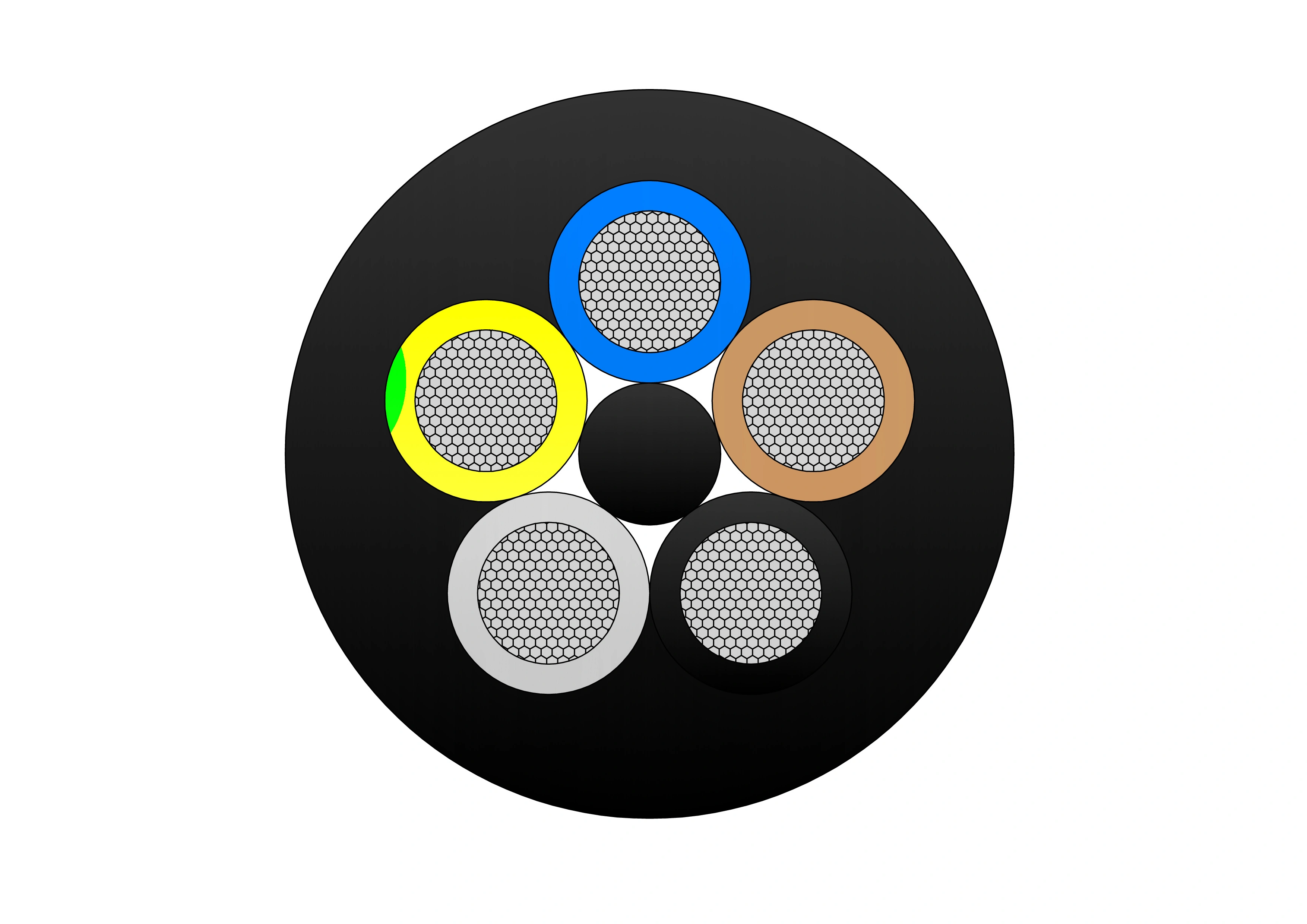
Type 245 Flexible Rubber Mining Cable
The Type 245 Flexible Rubber Mining Cable is an extra-heavy-duty flexible cable purpose-built for the most severe high-voltage underground mining environments. It features finely stranded tinned copper conductors (class 5) for exceptional flexibility and corrosion resistance, EPR (ethylene propylene rubber) insulation for outstanding dielectric strength, thermal stability (90°C continuous rating), and resistance to moisture/heat, an overall tinned copper braid screen providing superior EMI protection and grounding, and an extra-heavy-duty flame-retardant rubber outer sheath engineered to endure extreme abrasion, crushing, impact, cutting, tearing, oils, chemicals, and repeated high-tension reeling/drag. Compliant with AS/NZS 2802 and rigorous mining safety standards, it supports very high tensile loads, frequent flexing, tight bending radii, and reliable operation in wet, dusty, and hazardous mine conditions. The Type 245 is specifically suited for high-power trailing applications in coal and metalliferous mines, powering longwall shearers, continuous miners, face conveyors, shuttle cars, and other critical high-capacity mobile equipment, delivering maximum safety, durability, and uptime.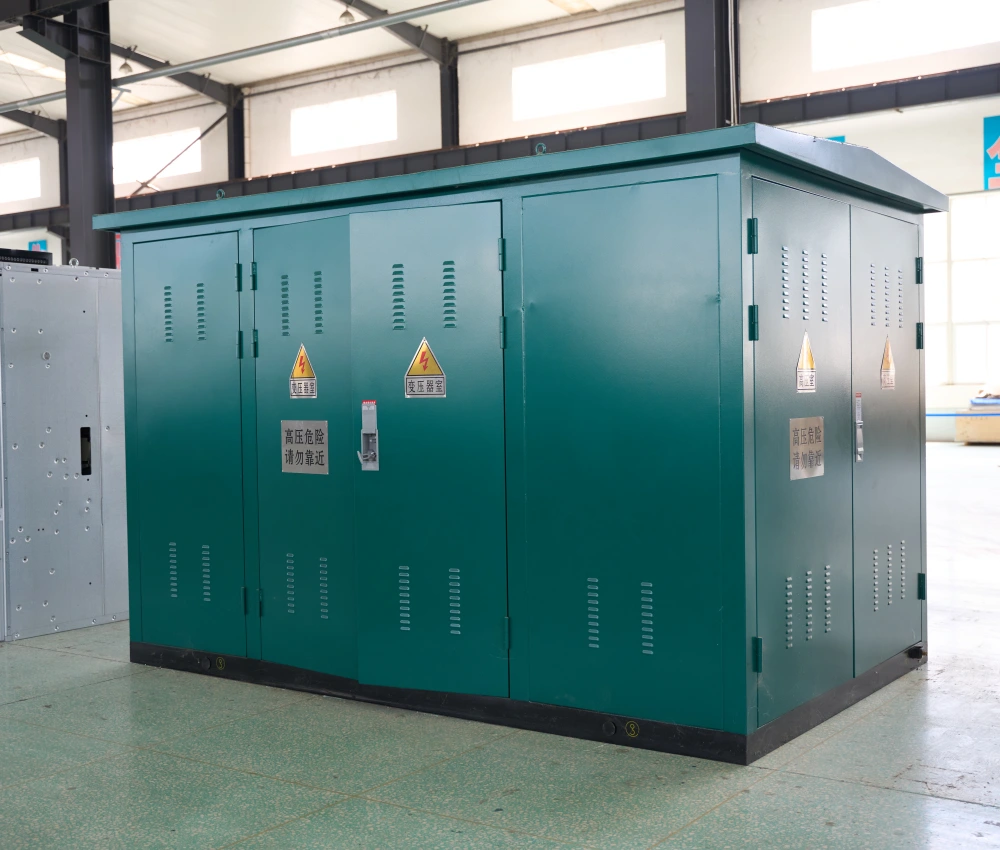
Prefabricated Switchgear Substation
The Prefabricated Switchgear Substation is an integrated medium-voltage power distribution system designed to provide safe, efficient, and intelligent electrical control for utility networks, industrial facilities, renewable energy projects, and commercial infrastructure. The system combines medium-voltage switchgear, transformer equipment, low-voltage distribution units, and advanced protection systems within a compact prefabricated enclosure, significantly reducing installation time and civil construction requirements. Manufactured using high-strength corrosion-resistant materials and advanced insulation technology, the switchgear substation delivers stable outdoor operation under harsh environmental conditions including high humidity, dust exposure, temperature fluctuations, and coastal environments. Its modular architecture improves operational flexibility, maintenance accessibility, and transportation efficiency while supporting scalable electrical distribution requirements. The Prefabricated Switchgear Substation supports multiple voltage classes, intelligent monitoring functions, and customized protection configurations for modern smart-grid applications. The compact design optimizes installation space while ensuring reliable medium-voltage switching, power distribution stability, and enhanced operational safety for industrial, utility, and infrastructure projects.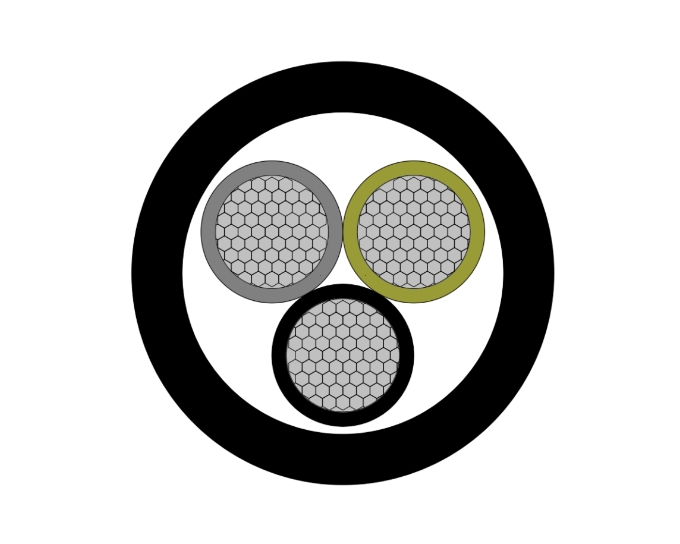
NA2X2Y Cables
NA2X2Y cable is a low-voltage power cable with an aluminum conductor, XLPE (cross-linked polyethylene) insulation, and a PE (polyethylene) outer sheath, designed for fixed installations in power distribution systems. It complies with IEC 60502-1 and is rated for 0.6/1kV. Thanks to its robust PE sheath, NA2X2Y cable provides excellent mechanical protection and high resistance to moisture, UV radiation, and chemicals—making it particularly suitable for outdoor and underground installation in solar photovoltaic (PV) projects. It is commonly used for connecting inverters, combiner boxes, transformers, and the main AC distribution network in solar farms.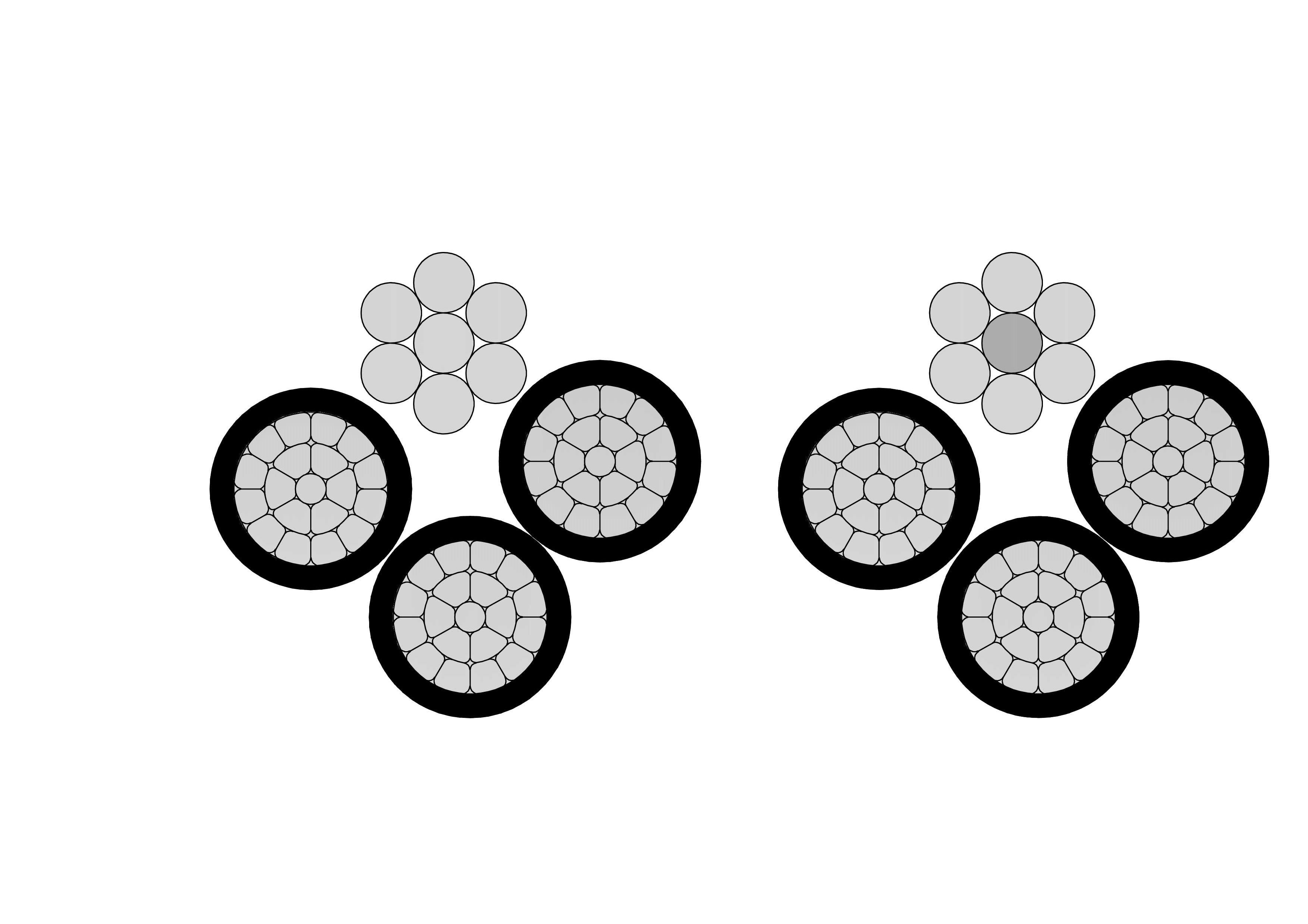
6 Chola Aluminum Conductor Quadruplex Overhead Service Drop Cable
Introducing the 6 Chola Quadruplex Service Drop Cable, a versatile overhead solution for three-phase secondary distribution with neutral. Built with three 6 AWG aluminum phase conductors and one neutral messenger (7-strand) insulated with polyethylene or XLPE and formed into a quadruplex assembly, it meets ASTM and ICEA requirements for 600V service. The tough insulation offers outstanding protection against UV rays, moisture, tree contact, and abrasion. Self-supporting messenger design ensures easy pulling and reduced sag during installation. The 6 Chola Quadruplex Service Drop Cable supports efficient power transfer with low voltage drop and high durability in extreme temperatures. Popular for its lightweight construction and reduced installation time, it is the choice for electricians and utilities. Widely deployed in housing developments, commercial services, and temporary power setups, this cable ensures safe, long-lasting overhead connections from distribution transformers to customer service entrances worldwide.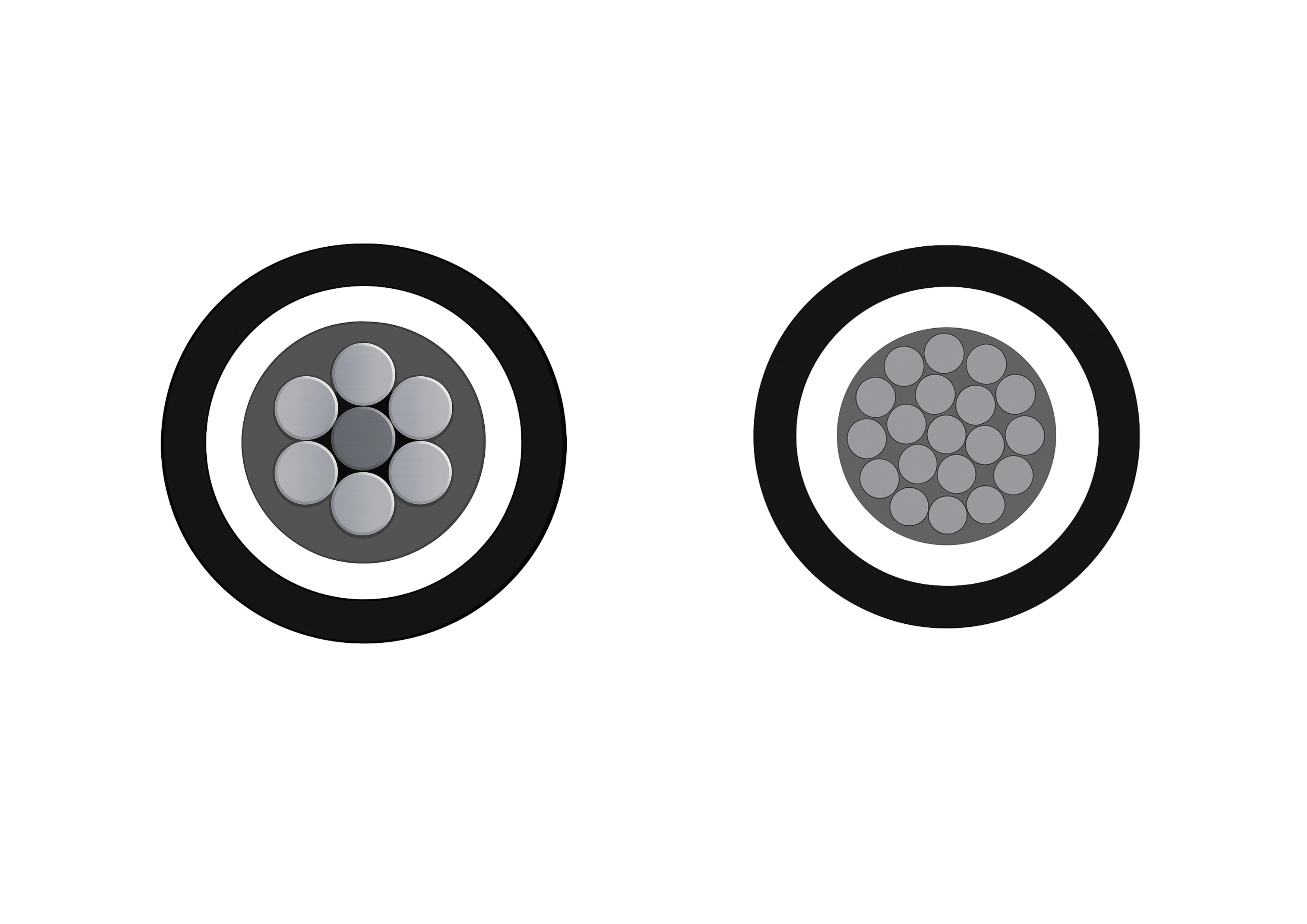
XLPE-HDPE Tree Cable Aluminum 25kV 1x35mm²
The XLPE-HDPE Tree Cable Aluminum 25kV 1x35mm² is specifically engineered for medium-voltage overhead distribution systems, particularly in densely wooded areas or locations with limited installation space. Manufactured in compliance with ASTM B230, ASTM B232, and ICEA S-121-733 standards, this cable features an aluminum alloy conductor, cross-linked polyethylene (XLPE) insulation, and a high-density polyethylene (HDPE) outer sheath, ensuring outstanding electrical performance, mechanical durability, and environmental resistance. The HDPE outer sheath provides strong protection against UV radiation, weathering, and mechanical abrasion, while significantly reducing the risk of power outages caused by tree branch contact and electrical sparking. The XLPE insulation layer guarantees stable dielectric performance at continuous operation temperatures up to 90°C, and the 1350 aluminum alloy compact conductor offers a lightweight yet high-conductivity solution, meeting the reliability requirements of medium-voltage power distribution.
2-Layer 15kV ACSR/AAC Tree Wire - Covered Overhead Distribution Cable
The 2-Layer 15kV ACSR/AAC Tree Wire is a covered overhead conductor designed for reliable medium-voltage distribution in areas with heavy tree contact. It features concentrically stranded ACSR or AAC conductors with a dual-layer covering of track-resistant high-density polyethylene (HDPE) or cross-linked polyethylene (XLPE). The inner layer provides insulation while the outer layer offers superior tracking and weathering resistance. This construction significantly reduces the risk of faults caused by tree limbs, minimizes wildfire ignition potential, and allows closer spacing to vegetation. Suitable for both spacer cable systems and conventional overhead lines, the 2-Layer 15kV ACSR/AAC Tree Wire meets ICEA S-121-733 and related ASTM standards. It undergoes rigorous quality testing from raw materials to finished product, ensuring excellent dielectric strength, mechanical robustness, and long-term performance in challenging environments.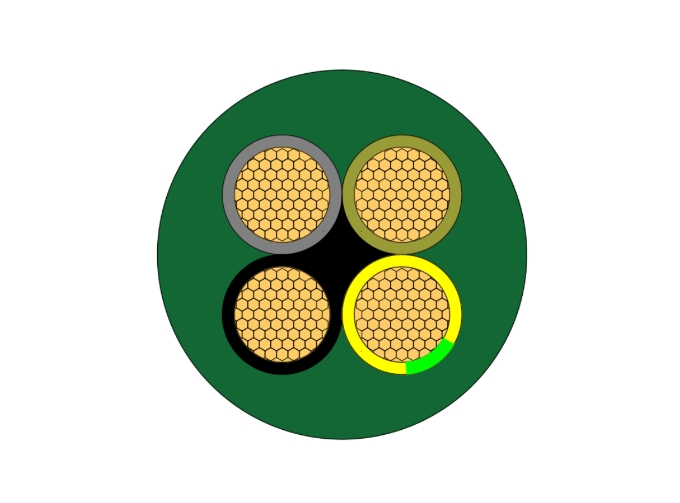
RZ1-K XLPE LSZH Flexible Cable
RZ1-K XLPE LSZH Flexible Cable is for installation where fire,smoke emission and toxic fumes create a potential threat to life and equipment. A flexible power and control cable designed for fixed applications.Manufactured with flexible conductors with halgon free cables. Excellent flexibility allows tight bending radii, simplifying installation in complex routing. Resistant to oils, chemicals, and moisture, the RZ1-K XLPE LSZH Flexible Cable offers superior thermal performance and long service life.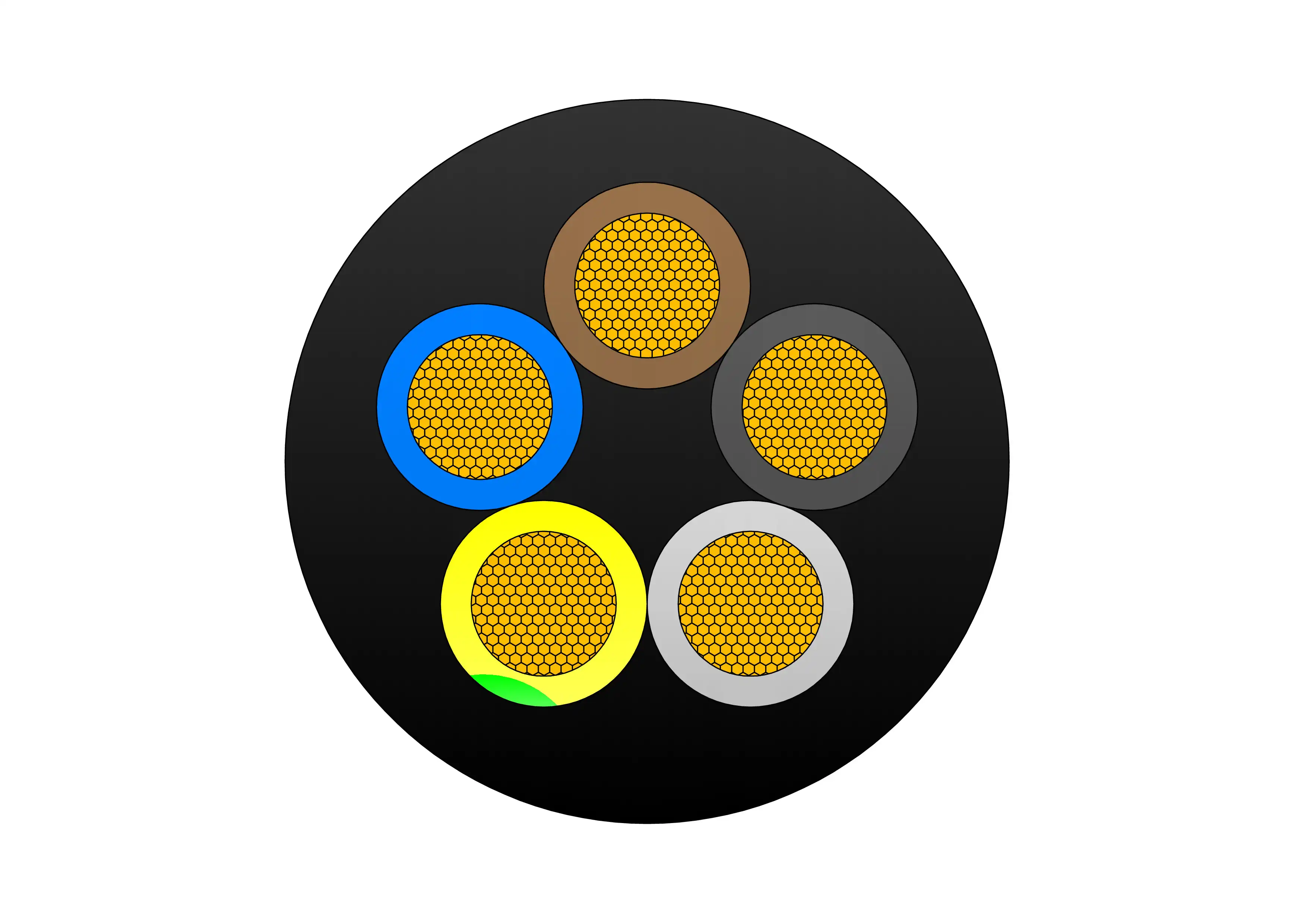
H07RN-8-F EN 50525-2-21 Flexible Rubber Cable
The H07RN-8-F EN 50525-2-21 Flexible Rubber Cable is a versatile, heavy-duty flexible cable designed for demanding applications in harsh, wet environments. It features fine-stranded class 5 bare copper conductors for excellent flexibility and conductivity, EPR (ethylene propylene rubber) core insulation for high dielectric strength and thermal resistance (90°C continuous, 250°C short-circuit), an overall tinned copper braid screen (optional for some variants), and a robust polychloroprene (neoprene) outer sheath providing superior oil resistance, flame retardancy (IEC 60332-1), abrasion/chemical resistance, and weatherproofing. The AD8 rating ensures submersible performance up to 10 meters depth for continuous use in wet or underwater conditions. Compliant with EN 50525-2-21 and VDE 0285 standards, it offers mechanical robustness, ozone resistance, and long service life. The H07RN-8-F is ideal for mobile equipment, construction sites, mining, marine applications, and industrial power supply where flexibility, water immersion, and safety are critical.
Outdoor Prefabricated Transformer Substation
The Outdoor Prefabricated Transformer Substation is an integrated medium-voltage power distribution solution designed for outdoor installation in industrial, commercial, utility, and renewable energy applications. The system combines medium-voltage switchgear, distribution transformer, low-voltage distribution equipment, and intelligent control systems into a compact prefabricated enclosure, providing efficient and reliable power transformation while minimizing construction time and installation costs. Engineered for harsh environmental conditions, the outdoor substation features a weather-resistant enclosure, corrosion-protected structure, advanced insulation technology, and optimized thermal ventilation system to ensure long-term operational stability. Its modular design allows rapid deployment, simplified transportation, and flexible installation while improving maintenance accessibility and operational safety. The Outdoor Prefabricated Transformer Substation supports multiple voltage levels, transformer capacities, and intelligent automation functions, making it suitable for utility distribution systems, renewable energy projects, urban infrastructure, mining facilities, transportation networks, and industrial manufacturing plants. With smart-grid compatibility and customizable configurations, the substation provides efficient and scalable electrical distribution performance for modern power networks.
2 Chow Aluminum Conductor Duplex Overhead Service Drop Cable
2 Chow Aluminum Conductor Duplex Overhead Service Drop Cable is designed for dependable secondary overhead power distribution from utility lines to residential and light commercial service entrances. The duplex configuration consists of two stranded aluminum conductors, typically functioning as a phase conductor and a neutral messenger, providing both electrical transmission and mechanical support. The No. 2 Chow conductor size delivers balanced current-carrying capacity with controlled sag, making it suitable for short to medium service drop spans. Aluminum construction offers low weight, excellent corrosion resistance, and ease of installation in outdoor environments. Manufactured in accordance with ASTM and utility specifications, the 2 Chow Aluminum Conductor Duplex Overhead Service Drop Cable ensures uniform stranding, stable conductivity, and reliable long-term performance. It is widely used by utilities and contractors seeking a cost-effective, durable solution for overhead service drop applications.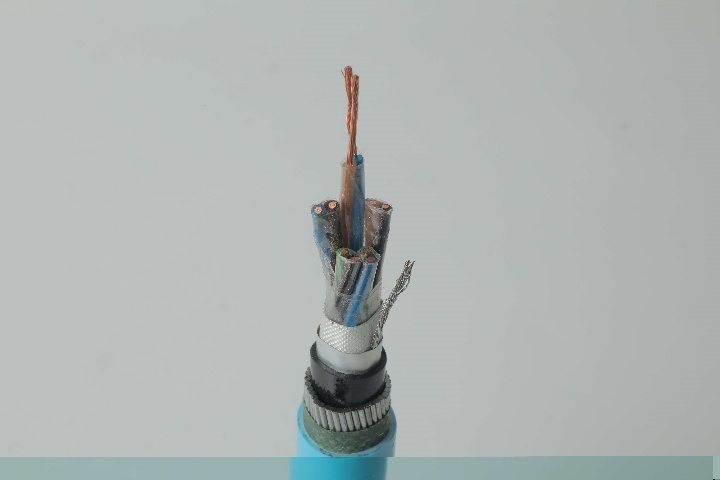
Instrumentation Cables—XLPE Insulated, Overall Screened, DRYLAM Layered, Wire Armoured PVC Sheathed Cables(CU/XLPE/OSCR/DRYLAM/SWA/PVC)
CU/XLPE/OSCR/DRYLAM/SWA/PVC instrumentation cables are engineered to deliver stable signal transmission under harsh environmental and mechanical conditions. XLPE insulated copper conductors provide excellent dielectric performance and resistance to thermal aging. The overall screen minimizes electromagnetic interference, ensuring precise signal transmission in sensitive instrumentation circuits. The DRYLAM water-blocking layer offers effective protection against moisture ingress, enhancing cable reliability in humid or buried installations. Steel wire armour improves resistance to mechanical stress and external damage, while the PVC sheath protects against abrasion, oils, and chemicals. This balanced construction combines electrical performance, water resistance, and mechanical durability for long-term industrial use.
2/0 Grullo Aluminum Conductor Quadruplex Overhead Service Drop Cable
2/0 Grullo Aluminum Conductor Quadruplex Overhead Service Drop Cable is a high-performance solution for delivering three-phase electrical power from pole-mounted transformers to residential or commercial service entrances. It is specifically engineered for 600-volt phase-to-phase operations and supports conductor temperatures up to 90°C with cross-linked polyethylene (XLP) insulation, or 75°C when using standard polyethylene (PE) insulation. This cable consists of three phase conductors made from 1350-H19 aluminum, either stranded or compressed, and a bare ACSR (Aluminum Conductor Steel Reinforced) neutral messenger. Alternate messenger materials include AAC or 6201 alloy for different mechanical load and corrosion resistance preferences. With rugged black XLP insulation, this quadruplex cable provides exceptional weather resistance, UV protection, and thermal endurance, making it ideal for overhead outdoor installations in a wide variety of environments.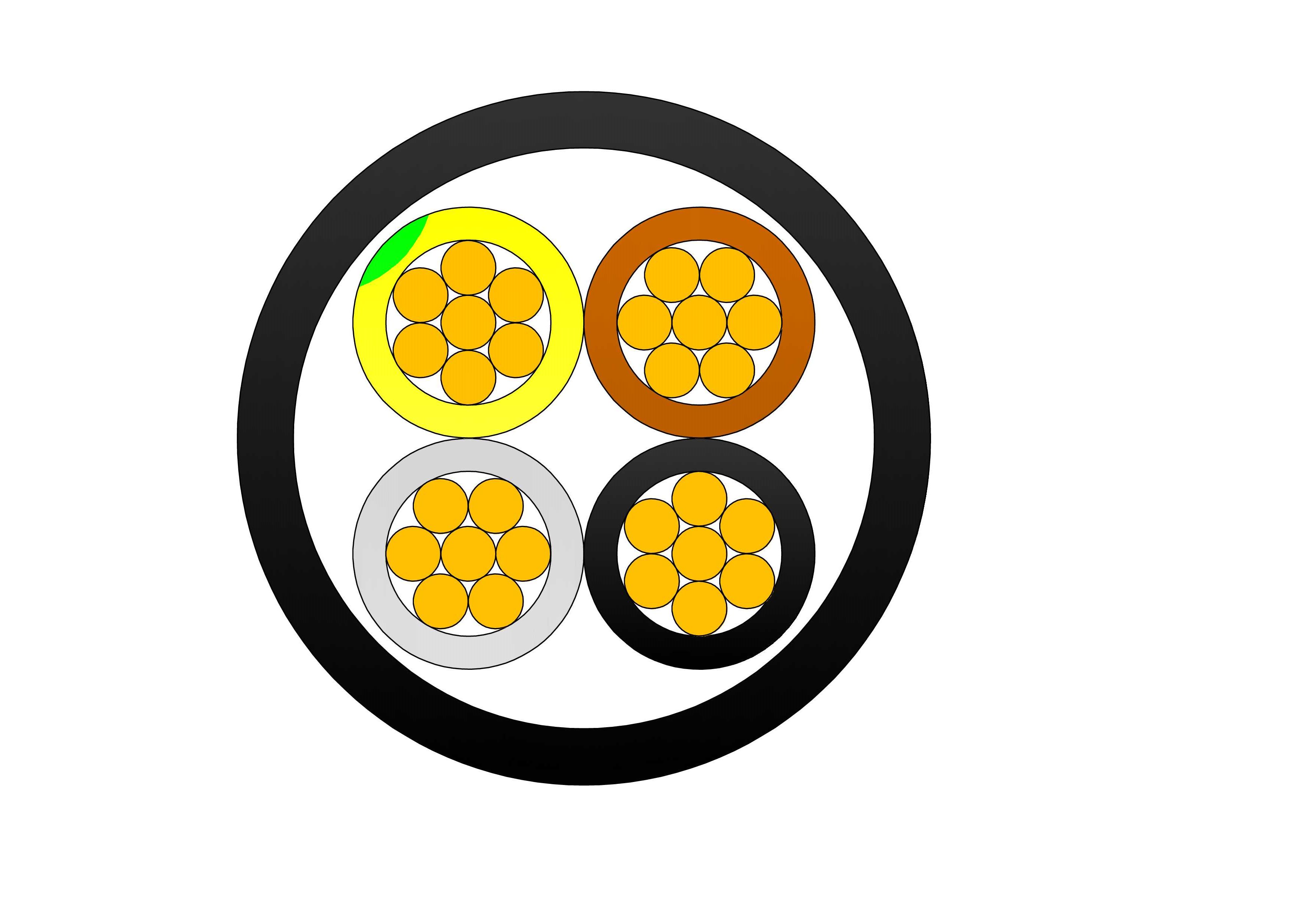
GYTA Fiber Optic Cable
The GYTA Fiber Optic Cable is a high-performance outdoor optical communication cable designed for long-distance transmission and backbone network applications. Featuring a stranded loose tube structure, central strength member, water-blocking compound, aluminum tape armor, and durable PE outer sheath, the cable provides outstanding mechanical protection and environmental resistance. Optical fibers are housed in gel-filled loose tubes that protect against moisture ingress and mechanical stress. The aluminum tape armoring enhances crush resistance and rodent protection, making the cable suitable for direct burial, duct, and aerial installations. The PE outer sheath offers excellent UV resistance, weather resistance, and long-term durability in harsh outdoor environments. Manufactured according to IEC, ITU-T, and international telecommunications standards, the GYTA Fiber Optic Cable supports stable, low-loss signal transmission over extended distances. It is widely used in telecommunications networks, metropolitan area networks, broadband infrastructure, data centers, and utility communication systems. The GYTA Fiber Optic Cable combines reliability, durability, and superior transmission performance for modern fiber optic communication networks.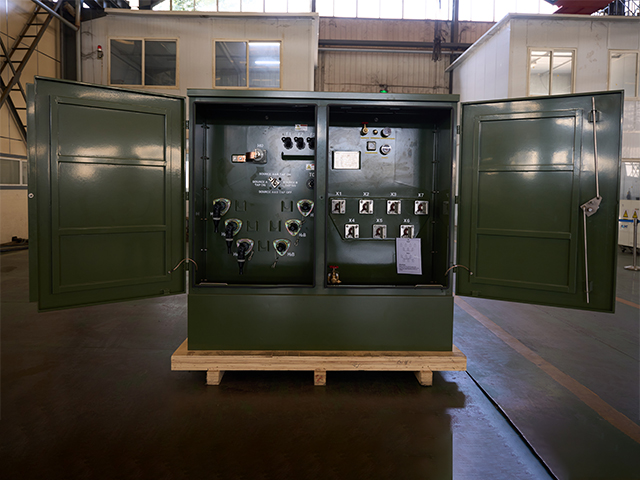
250kVA Three Phase Pad Mounted Transformer
The 250kVA Three Phase Pad Mounted Transformer is a compact, liquid-immersed, self-cooled (ONAN) distribution transformer optimized for efficient, underground power delivery in residential, light commercial, and small industrial applications. Fully compliant with IEEE C57.12.34, ANSI C57.12.00, DOE 2016 efficiency standards, and UL-listed, this compartmental-type unit features dead-front 200A high-voltage bushing wells (loadbreak inserts), radial or loop feed options, and a sealed tank using non-PCB mineral oil or FR3 natural ester fluid for improved fire safety and environmental performance.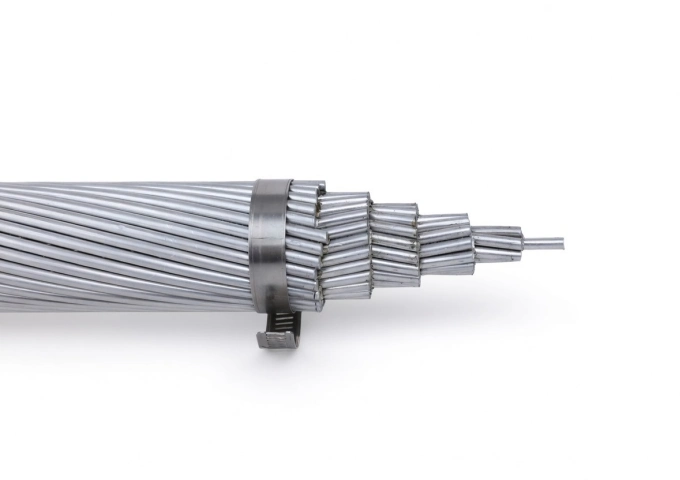
1113 MCM Marigold AAC Cable
The 1113 MCM Marigold AAC Cable is a high-performance All Aluminum Conductor designed for demanding overhead power transmission and distribution lines. Manufactured with 37 strands of premium 1350-H19 aluminum wire in a concentric lay configuration, this bare conductor provides excellent electrical conductivity with a low DC resistance of 0.0155 ohms per 1000 ft at 20°C. Featuring an overall diameter of 1.216 inches and a rated breaking strength of 19,300 lbs, the Marigold AAC delivers a robust ampacity of 1083 amps while weighing only 1045.4 lbs per 1000 ft. Its optimized strength-to-weight ratio minimizes sag and structural loading. Fully compliant with ASTM B-230 and B-231 standards, the 1113 MCM Marigold AAC Cable offers outstanding corrosion resistance for long-term durability in harsh outdoor environments, making it the preferred choice for utility networks requiring cost-effective, high-reliability bare aluminum conductors.Welcome your inquiry
Honesty, Integrity, Frugality, Activeness and Passion