
Cable Diameter Calculation Guide: Formulas, Charts & Tables
2026-04-07
In modern electrical and telecommunications engineering, accurate cable diameter determination stands as a foundational requirement for system reliability, safety, and performance. From industrial power distribution to high-speed data networks, selecting the correct diameter affects current-carrying capacity, voltage drop, heat dissipation, mechanical installation, and long-term durability.
Cable diameter is a fundamental parameter in electrical engineering and industrial design. It directly influences current-carrying capacity, voltage drop, thermal performance, and mechanical flexibility. In real-world export-oriented manufacturing—especially for transformers, power distribution systems, and industrial automation—incorrect cable diameter selection can lead to overheating, insulation failure, or even system downtime.
Understanding Cable Diameter vs. Cross-Sectional Area
Cable diameter refers to the overall outer measurement of a conductor or finished cable, while cross-sectional area (typically in mm² or circular mils) defines the conductive portion responsible for current flow. These two metrics connect through basic geometry but differ significantly in application. The conductor itself follows the circle area formula:
A = π × (d/2)² = (π × d²)/4
where A is the cross-sectional area in mm² and d is the conductor diameter in mm. Rearranged to solve for diameter:
d = 2 × √(A / π) ≈ 1.1284 × √A
This relationship proves critical when converting between AWG sizes and metric equivalents or when verifying manufacturer specifications. However, the finished cable outer diameter includes insulation, shielding, and jacketing, which can increase the total measurement by 50–200% depending on the cable type. In field work, always distinguish bare conductor diameter from overall cable diameter to avoid conduit fill violations or bending radius issues.
Practically, undersizing the diameter leads to overheating and fire hazards, while oversizing increases material costs and installation difficulty. Engineers must balance ampacity tables, voltage drop limits (typically ≤3–5% for power circuits), and environmental factors such as ambient temperature and bundling.
Key Formulas for Cable Diameter Calculation
Several core formulas support daily cable diameter calculation:
- Single Conductor Diameter from Area d (mm) = √(4 × A / π). This applies directly to solid conductors. For example, a 10 mm² copper conductor yields d ≈ 3.57 mm.
- Stranded Conductor Approximation. For stranded wires, the effective diameter accounts for the stranding lay factors. A common practical multiplier for the overall conductor bundle is approximately 1.15–1.25 times the equivalent solid diameter, depending on strand count and lay length.
- Wire Bundle Diameter When multiple insulated wires form a bundle (common in control panels or harnesses), use: Bundle Diameter ≈ k × √(n) × single wire diameter where n is the number of wires and k is a packing factor (typically 1.2 for random lay, up to 1.8–2.0 for tight bundles). More precise methods sum individual cross-sectional areas first, then apply the circle diameter formula to the total area. In practice, add a 10–20% margin for irregular packing and movement.
- Voltage Drop Influenced Sizing Required area A (mm²) = (2 × L × I × ρ) / (ΔU × cosφ) for single-phase, where L is length (m), I is current (A), ρ is resistivity (0.0178 Ω·mm²/m for copper at 20°C, 0.0282 for aluminum), and ΔU is allowable voltage drop. Convert the resulting area to diameter using the formula above. This calculation often drives final selection in long-run industrial installations.
These formulas provide the scientific backbone, but field experience shows that real cables deviate slightly due to manufacturing tolerances (±5–10% on diameter) and temperature effects on resistivity.
1. AWG Wire Conductor Diameter Chart (Copper Solid Conductor)
This table focuses on the fundamentals of cable diameter calculation and is applicable to power wires and cables.
|
AWG Size |
Conductor Diameter (mm) |
Cross-Sectional Area (mm²) |
Typical Applications |
Notes for Field Use |
|
22 AWG |
0.64 |
0.326 |
Signal, instrumentation, low-current control |
Flexible stranded version slightly larger (~0.7-0.8 mm) |
|
12 AWG |
2.05 |
3.31 |
Lighting, general outlets (15-20A) |
Common in residential/commercial wiring |
|
8 AWG |
3.26 |
8.37 |
Subfeeds, higher power circuits |
Good balance of ampacity and flexibility |
|
6 AWG |
4.11 |
13.3 |
50-75A circuits, motors |
6 awg cable diameter critical for voltage drop |
|
4 AWG |
5.19 |
21.1 |
Heavy-duty branch circuits |
4 awg cable diameter often used in industrial panels |
|
4/0 (0000) |
11.68 |
107 |
Main feeders, high-ampacity runs |
4 0 cable diameter requires large conduits |
Note: The above figures are for bare solid conductors. Stranded conductors have an effective diameter that is approximately 5-15% larger. Copper & Aluminum: Aluminum conductors have higher resistivity, requiring a larger cross-sectional area (approximately 1.6 times) for the same current, thus increasing the cable diameter. Always refer to the latest NEC/IEC ampacity table and consider temperature derating.
AWG System and Practical Diameter Charts for Copper & Aluminum
The American Wire Gauge (AWG) system remains the global standard for many exported wires and cables, especially in North American and international markets. Larger AWG numbers indicate smaller diameters. Here are typical bare conductor values for common sizes (solid conductor approximations; stranded versions are marginally larger in overall diameter):
- 22 AWG cable diameter: ~0.64 mm (area 0.326 mm²) – ideal for low-current signal and instrumentation wiring.
- 12 AWG cable diameter: ~2.05 mm (area 3.31 mm²) – common for general lighting and outlet circuits (up to ~20–25A depending on insulation).
- 8 AWG cable diameter: ~3.26 mm (area 8.37 mm²) – suitable for higher power subfeeds.
- 6 AWG cable diameter: ~4.11 mm (area 13.3 mm²) – frequently used for 50–75A circuits.
- 4 AWG cable diameter: ~5.19 mm (area 21.1 mm²) – heavy-duty branch circuits.
- 4/0 cable diameter (also called 0000 or 4 0): ~11.68 mm (area 107 mm²) – large power feeders carrying hundreds of amps.
For Copper & Aluminum comparisons, aluminum requires approximately 1.6 times larger cross-section than copper for equivalent resistance due to higher resistivity. Thus, a 4 AWG copper (≈21 mm²) roughly equates to a 2 AWG aluminum in performance, but the physical diameter increases accordingly. Always consult dual-rated ampacity tables, as aluminum derates more aggressively for heat.
Stranded conductors, preferred for flexibility in export equipment, maintain the same nominal area but present a slightly larger effective diameter. In practice, measure or request manufacturer data sheets for the exact overall cable diameter, including insulation.
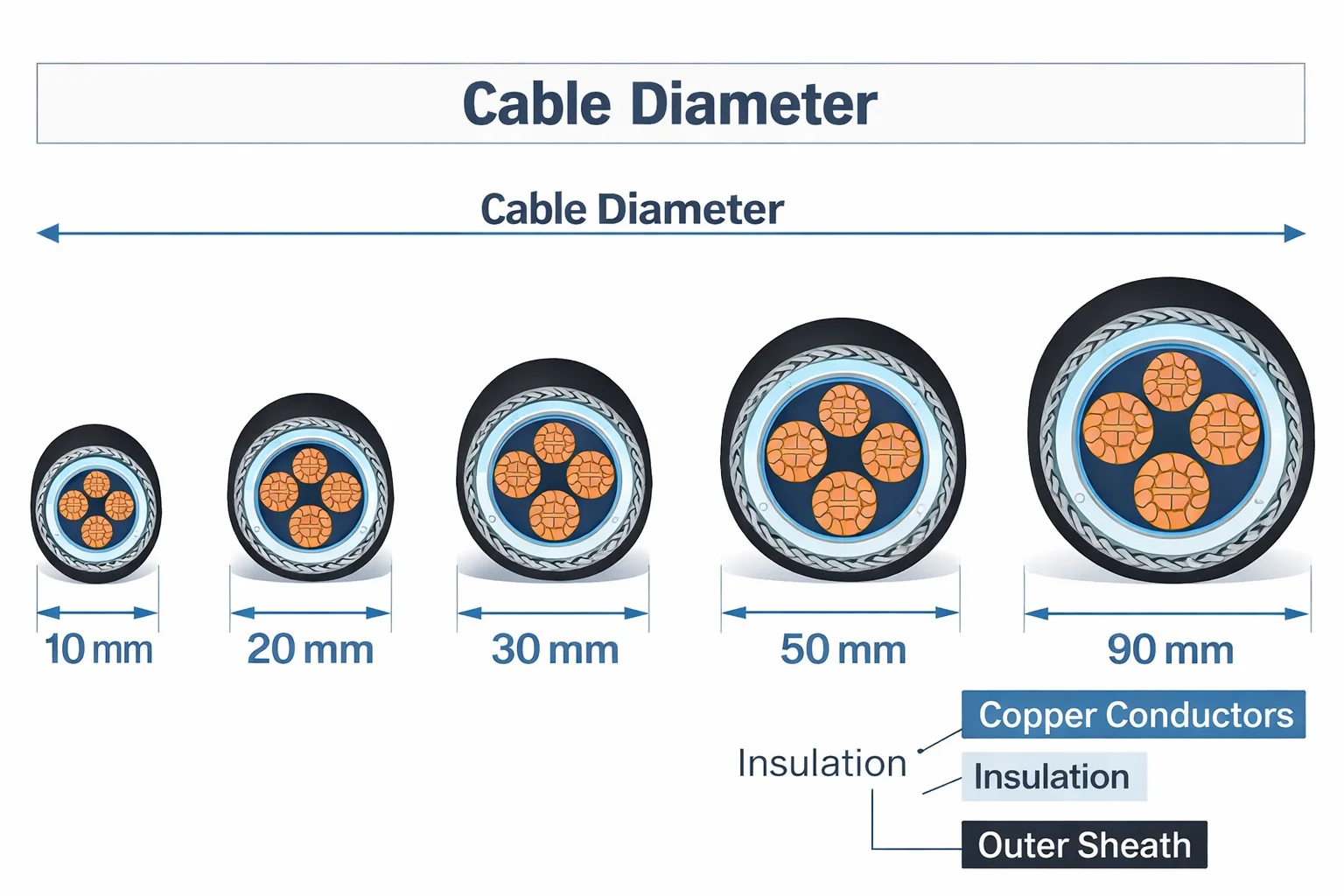
Coaxial Cable Diameter Considerations
Coaxial cable diameter directly impacts impedance (typically 50Ω or 75Ω), attenuation, and power handling. The characteristic impedance formula is:
Z₀ = (138 / √ε) × log₁₀(D/d)
where D is the inner diameter of the shield and d is the conductor diameter, with ε as the dielectric constant. Common RG6 coaxial cable diameter ranges 6.5–7.0 mm overall, while RG11 is thicker for lower loss over distance. In field installations, a larger coaxial cable diameter reduces signal attenuation at high frequencies but complicates routing. Always match connector dimensions precisely to the cable's outer and dielectric diameters to maintain performance in broadcast or CCTV systems.
Data and Network Cables: Cat 6 Cable Diameter
Cat 6 cable diameter typically measures 5.5–6.8 mm overall, larger than Cat 5e due to thicker 23 AWG conductors and internal separators that reduce crosstalk. This increased diameter affects conduit fill calculations—engineers must limit fill to 40% for easy pulling. In dense data center deployments, the larger cat 6 cable diameter improves performance up to 10 Gbps over 100m but requires careful pathway planning. Shielded versions (F/UTP or S/FTP) add further to the diameter, often reaching 7–8 mm.
1. Typical Overall Cable Outer Diameter (with Insulation) – Copper Power Cables
This table reflects the actual cable outer diameter in the installation (taking common insulation such as THHN/XLPE as an example; the values are approximate and may vary depending on the manufacturer).
|
AWG Size |
Approx. Overall Diameter (mm) |
Insulation Type Example |
Max Recommended Current (Copper, 75°C) |
Key Consideration |
|
22 AWG |
1.8 – 2.5 |
PVC/PE |
3 – 7 A |
Signal integrity |
|
12 AWG |
3.8 – 4.5 |
THHN |
20 – 25 A |
Conduit fill limit |
|
8 AWG |
5.5 – 6.5 |
THHN/XLPE |
40 – 55 A |
Heat dissipation in bundles |
|
6 AWG |
6.5 – 8.0 |
THHN/XLPE |
55 – 75 A |
6 awg cable diameter for voltage drop calc |
|
4 AWG |
8.0 – 9.5 |
XLPE |
70 – 95 A |
Mechanical strength |
|
4/0 |
15 – 18 |
XLPE/PVC |
200+ A |
Large bending radius required |
Note: Insulation thickness will significantly increase cable diameter. Aluminum cables of the same specifications typically have a larger outer diameter. Field recommendation: Measure a sample cable and allow a 10-15% margin for bundle or environmental factors.
Fiber Optic Cable Diameter
Fiber optic cable diameter varies widely by construction. Individual fibers have a standard 125 μm cladding with 250 μm coating, but finished cables range from 2–3 mm for simplex patch cords to 10–20 mm or more for high-fiber-count armored outdoor cables. Loose-tube designs accommodate thermal expansion, while tight-buffered versions prioritize flexibility. When calculating pathway capacity, treat fiber optic cable diameter similarly to copper but factor in minimum bend radius (typically 10–20× outer diameter) to prevent macrobending loss. In international export projects, hybrid copper-fiber cables demand integrated diameter planning for shared conduits.
1. Special Cable Types Diameter Comparison Chart
|
Cable Type |
Typical Overall Diameter (mm) |
Common Variants |
Key Performance Impact |
Practical Installation Tips |
|
Coaxial Cable (RG58) |
4.8 – 5.0 |
50Ω |
Higher frequency → larger diameter for lower loss |
Match the connector precisely |
|
Coaxial Cable (RG6) |
6.5 – 7.0 |
75Ω (broadband/TV) |
Coaxial cable diameter affects attenuation |
Outdoor: add UV jacket |
|
Coaxial Cable (RG11) |
9.5 – 10.5 |
75Ω (long runs) |
Lower loss over distance |
Heavier, harder to bend |
|
Cat 6 UTP |
5.5 – 6.5 |
23-24 AWG conductors |
Cat 6 cable diameter is larger than Cat5e |
Max 40% conduit fill |
|
Cat 6 F/UTP (Shielded) |
6.5 – 8.0 |
Foil shield |
Better EMI protection, slightly larger diameter |
Grounding critical |
|
Fiber Optic Patch Cord |
1.6 – 3.0 |
Simplex/Duplex (2.0mm common) |
Fiber optic cable diameter is small & flexible |
Bend radius ≥10× OD |
|
Multi-Fiber Outdoor Cable |
8 – 20+ |
12-24 fibers, loose tube |
Armored versions thicker |
Pulling the tension limit |
Note: Coaxial cable diameter directly affects impedance matching (Z₀ formula). Cat 6 cable diameter affects path planning in dense cabling in data centers. Fiber optic cable diameter must strictly adhere to the minimum bending radius to prevent signal loss. For hybrid cabling, calculate the overall fill ratio uniformly.
Practical Cable Sizing from the Field Perspective
In real projects, begin with load analysis: calculate maximum current, apply derating for temperature, bunding, and ambient conditions, then select the smallest diameter that satisfies ampacity and voltage drop. Next, verify mechanical aspects—conduit fill (NEC or IEC limits), bending radius, and pulling tension. For Copper & Aluminum, copper offers better conductivity and corrosion resistance in humid environments, while aluminum reduces weight and cost for long overhead runs, albeit with a larger required cable diameter.
Bundle calculations deserve special attention in control cabinets. Overly tight bundles reduce heat dissipation, necessitating larger individual diameters or derating. Modern design software helps, but manual verification using the area summation method remains essential for accuracy.
Temperature also influences effective diameter indirectly through expansion and resistance changes. Copper resistivity rises ~0.4% per °C, potentially requiring upsizing in hot environments.
Charts and Quick Reference Tables
While exact values depend on stranding and insulation, standard references show:
- Smaller gauges (22–12 AWG) suit signal and branch circuits.
- Mid-range (8–4 AWG) handle sub-panels and motors.
- Large sizes (4/0 and above) serve main feeders.
Always cross-reference with current standards (NEC, IEC 60364) and manufacturer datasheets, as insulation types (THHN, XLPE, PVC) add varying thicknesses to the final cable diameter.
1. Copper vs Aluminum Quick Comparison (Same Ampacity)
|
Parameter |
Copper Example (6 AWG) |
Aluminum Equivalent |
Diameter Impact |
Field Advantage |
|
Cross-Section (mm²) |
13.3 |
~21 (approx. 4 AWG) |
Aluminum larger |
Copper: smaller diameter, easier install |
|
Conductor Diameter (mm) |
4.11 |
~5.2+ |
+20-30% |
Aluminum: lighter, lower cost for long runs |
|
Typical Overall OD (mm) |
6.5-8.0 |
8.0-10.0 |
Noticeable |
Copper is better in corrosive/humid environments |
Note: Aluminum requires a larger cable diameter to compensate for resistivity, but it has a significant weight advantage. In actual projects, the selection should be based on a careful consideration of voltage drop and cost.
Conclusion: Best Practices for Accurate Cable Diameter Selection
Effective cable diameter calculation combines geometric formulas, material properties of Copper & Aluminum, and application-specific factors for coaxial cable diameter, cat 6 cable diameter, fiber optic cable diameter, and power wires. From initial load calculations through final installation verification, a systematic approach prevents costly rework and ensures compliance in international markets.
Engineers should maintain a personal reference library of AWG/mm² charts, voltage drop calculators, and bundling factors. In practice, measure sample cables during prototyping and apply conservative margins. This disciplined methodology delivers safe, efficient, and future-proof wires and cables systems that perform reliably under real-world conditions.

Related Articles

Related Products
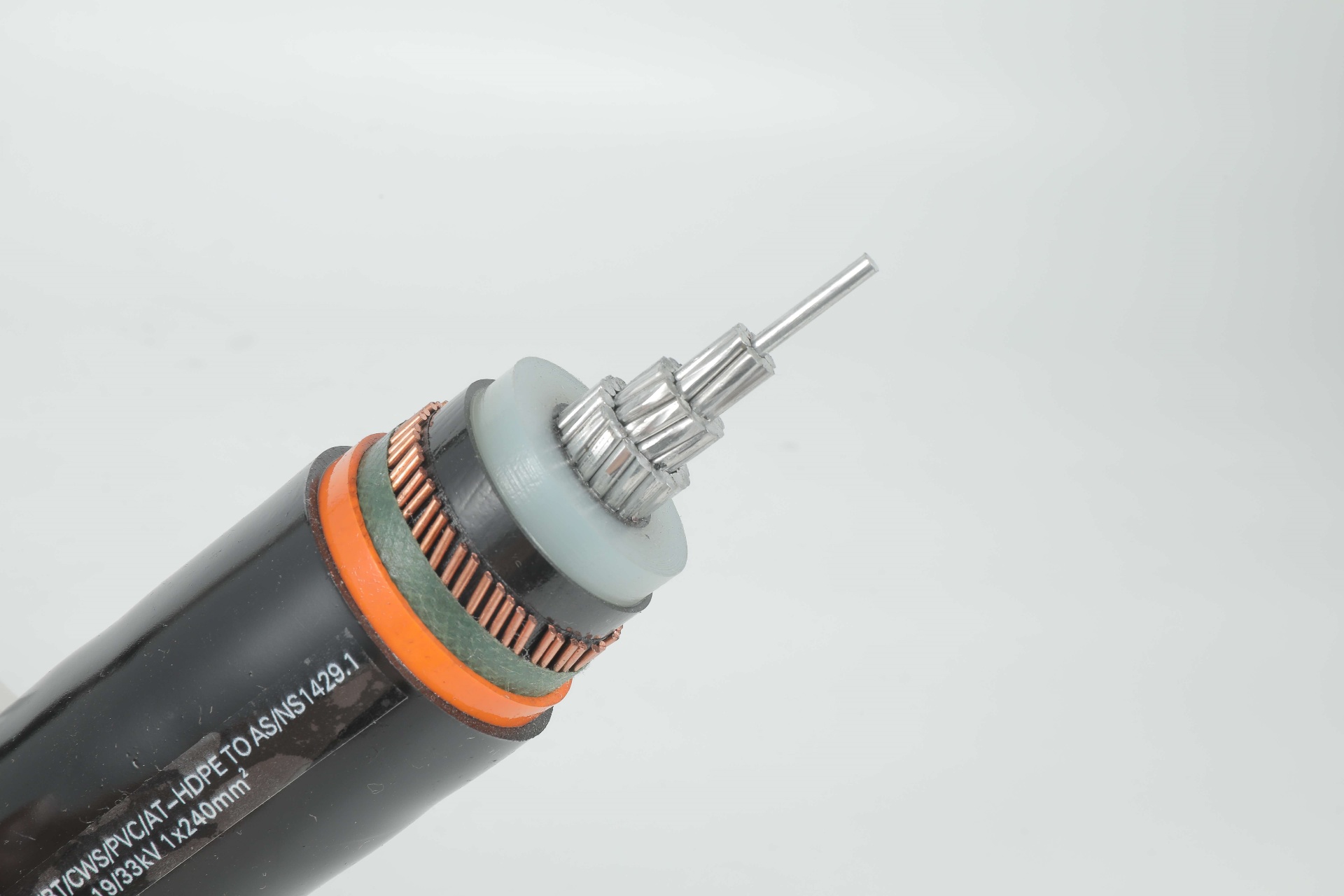
Single Core Medium Voltage Power Cable to IEC 60502
The Single Core Medium Voltage Power Cable to IEC 60502 is designed for efficient and reliable power transmission in medium voltage electrical networks. Manufactured with high-purity copper or aluminum conductors, this cable ensures low electrical losses and stable current flow. The insulation system, typically based on XLPE, provides excellent dielectric strength, thermal stability, and resistance to electrical stress. Single core construction allows flexible system design and efficient heat dissipation, making the cable suitable for substations, power plants, and industrial installations. The cable is engineered to withstand mechanical loads and operational stresses encountered in medium voltage applications. Compliance with IEC 60502 ensures the cable meets international requirements for safety, electrical performance, and durability. This medium voltage power cable is a dependable solution for modern power distribution systems requiring long service life and consistent performance.SSCHOU-mining-cable-2.webp)
(N)SSCHOU-J 0.6/1kV Mining Cable
The (N)SSCHOU-J 0.6/1kV cable is a flexible, rubber-insulated low voltage power cable designed in accordance with VDE 0250 standards. It is engineered for underground mining, tunneling, and heavy-duty industrial applications where flame retardancy, oil resistance, EMC protection, and mechanical durability are critical. With tinned copper conductors, robust rubber insulation, and a tinned copper wire braid (TCWB) screen for electromagnetic compatibility, this cable offers high electrical safety and mechanical reliability. It is suitable for dry, damp, wet, and hazardous environments, both indoors and outdoors, and can be permanently submerged in water up to 100 meters. Ideal for frequency converter drives and installations requiring superior shielding and long service life.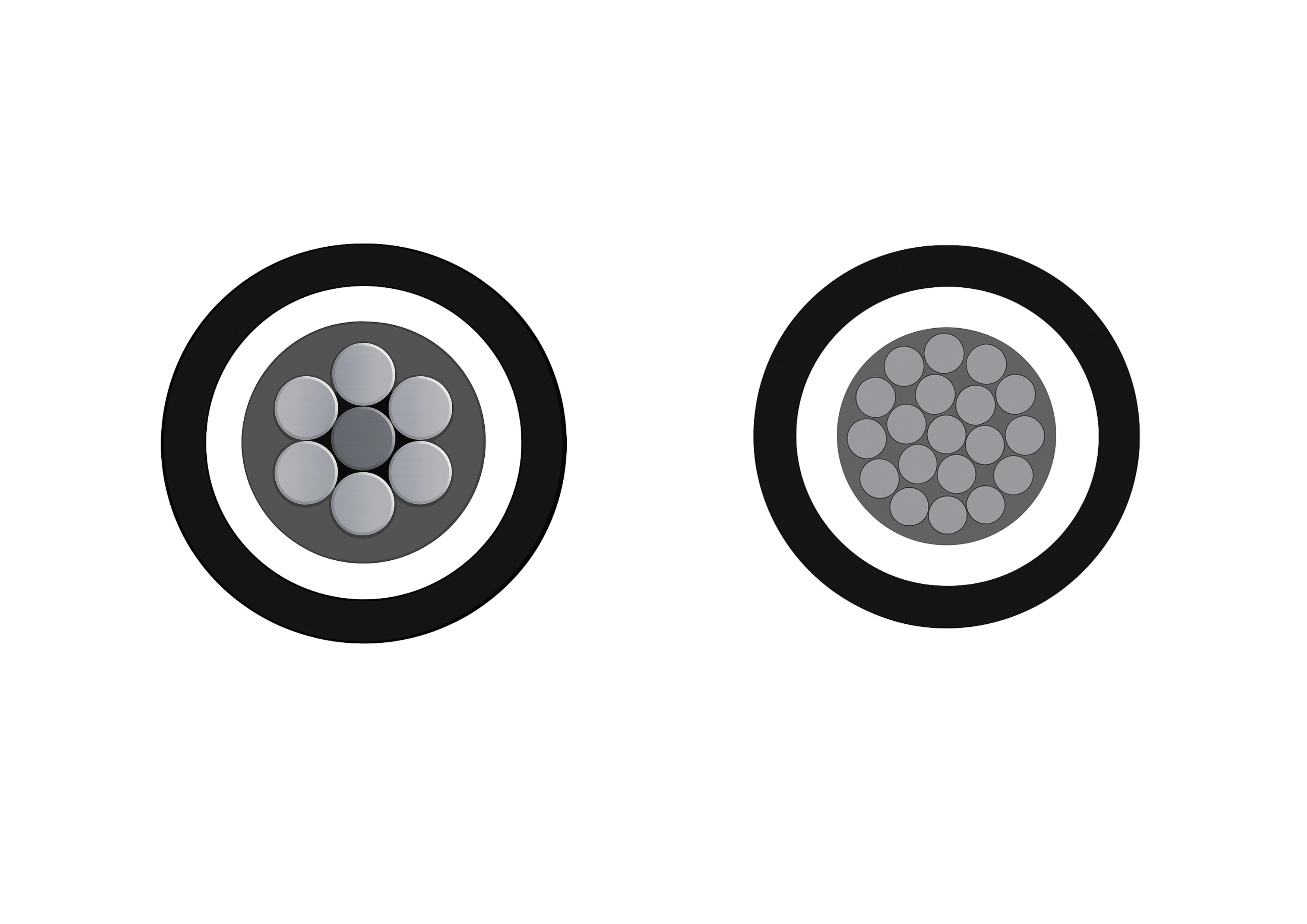
XLPE-HDPE Tree Cable Aluminum 25kV 1x50m㎡
The XLPE-HDPE Tree Cable Aluminum 25kV 1x50mm² is engineered for superior performance in medium-voltage overhead distribution networks, delivering exceptional reliability and long-term durability. Designed for challenging environments such as forested regions and urban areas, this cable ensures consistent power supply while minimizing maintenance and unplanned outages. Constructed with high-conductivity aluminum alloy 1350 wires, the cable features a round compacted conductor with class 2 stranding, achieving a minimum conductivity of 61% IACS and tensile strength of at least 130 MPa. Optional conductor shielding with an extruded semiconductor thermosetting compound is available for enhanced performance in 15kV and 25kV applications. The inner insulation is made from cross-linked polyethylene (XLPE), supporting continuous conductor operation at 90°C, and meeting ICEA S-121-733 physical standards. The robust outer cover is composed of high-density polyethylene (HDPE), offering outstanding resistance against weathering, UV radiation, mechanical abrasion, and electrical sparking up to 2.75kV. Standard cables come in gray with sequential metering markings in accordance with ASTM B230, while blue cables are recommended for harsher conditions requiring spark resistance above 5kV.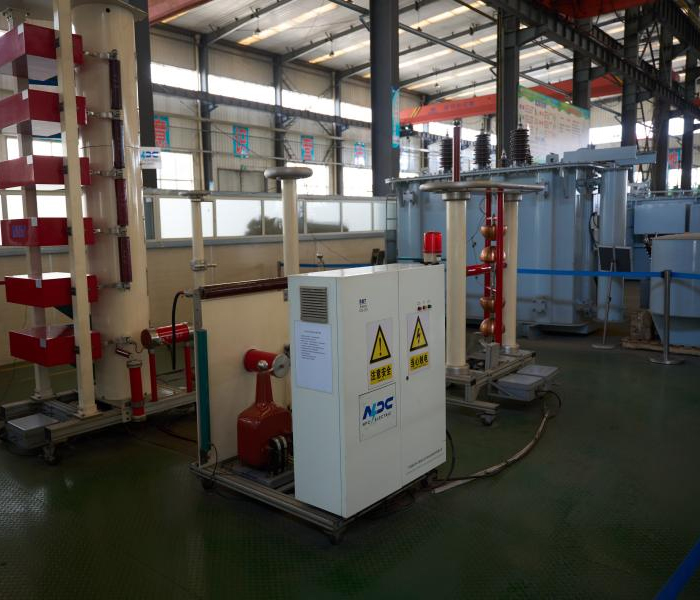
50kVA Dry Type Transformer
NPC ELECTRIC 50kVA dry-type transformer is an efficient, safe and environmentally friendly power transformer. It adopts dry insulation structure and does not require oil immersion cooling. It is suitable for various small and medium-sized power systems. It is widely used in industries, commercial buildings and power distribution, providing users with stable and reliable power supply. Standard features include three-phase or single-phase configurations, aluminum or copper windings, 150°C or 115°C temperature rise with 220°C insulation class, ±2×2.5% primary taps for voltage adjustment, NEMA 1 or 3R enclosures (ventilated with louvers or encapsulated for dust/moisture protection), natural self-cooling (AN), electrostatic shielding options, and low sound levels per NEMA standards.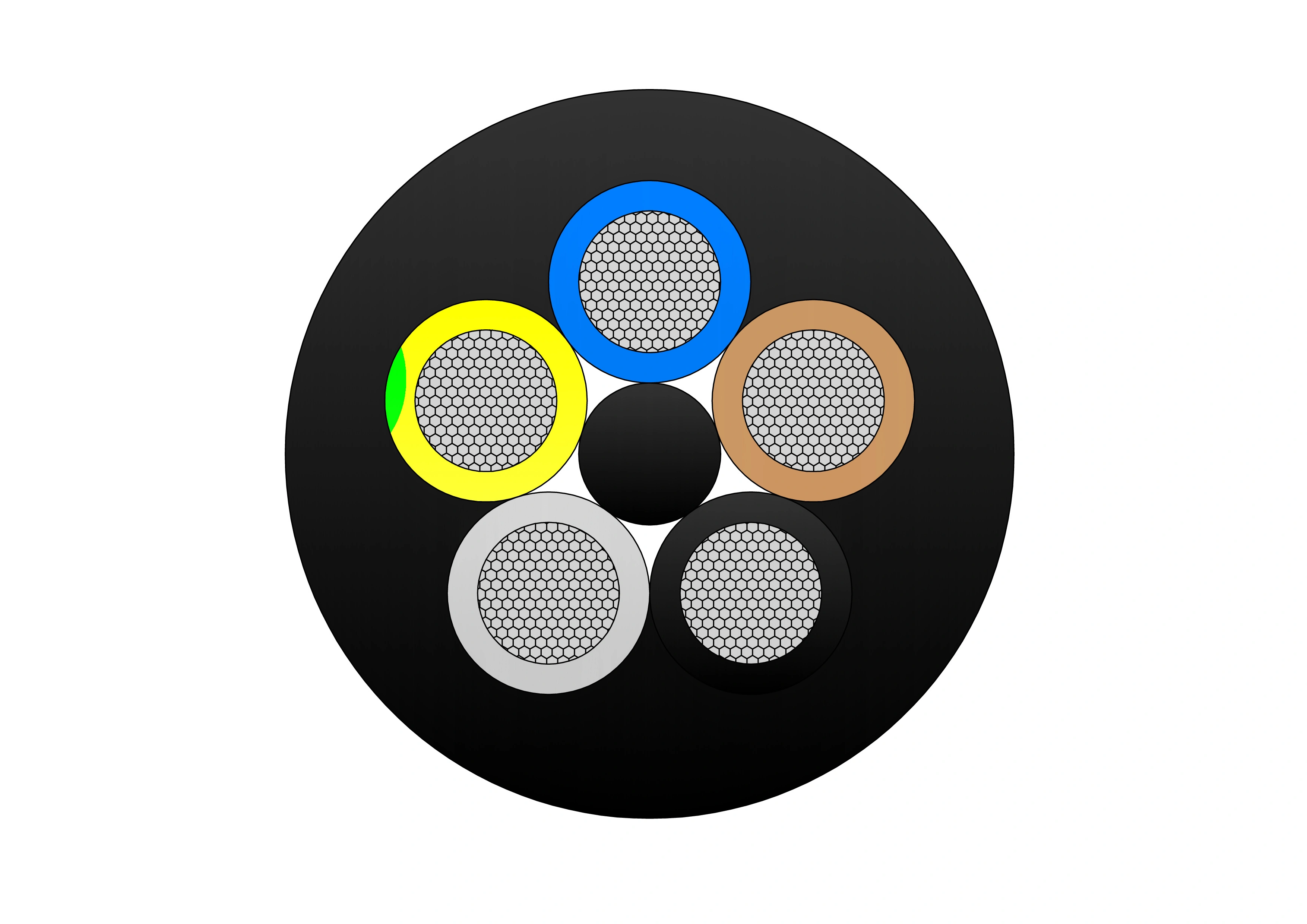
Type 441 Flexible Semi-Conductive Screened Mining Cable
The Type 441 Flexible Semi-Conductive Screened Mining Cable is a medium-voltage rubber-insulated cable engineered for harsh mining applications. It features tinned annealed copper conductors, EPR insulation, and semi-conductive screening for optimal electrical performance. Designed with three earth/protective cores and one pilot core, it is ideal for powering draglines, shovels, and drills, as well as for trailing and reeling uses in mining and industrial environments. Its HD-CSP extra heavy-duty outer sheath delivers oil resistance, flame retardancy, and high mechanical durability, ensuring long service life in demanding operational conditions. Compliant with AS/NZS 2802 and related standards, this cable provides reliable performance under extreme stress. The flexible construction of the Type 241 mining cable allows repeated bending and movement without compromising electrical performance. Manufactured under a strict quality management system, the cable undergoes comprehensive raw material testing, process inspection, and finished product testing to ensure compliance with mining standards and long-term operational reliability.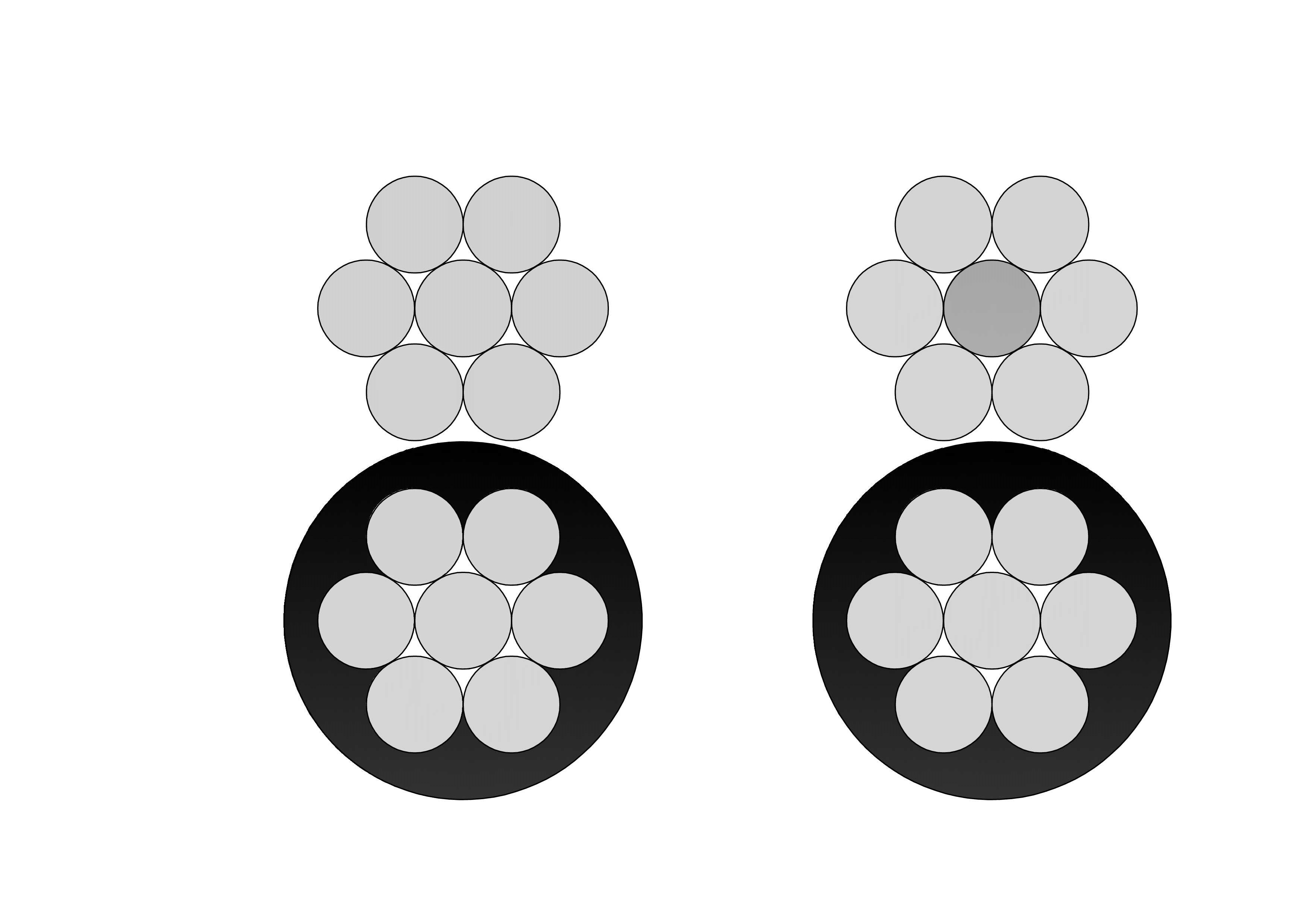
6 Setter Aluminum Conductor Duplex Overhead Service Drop Cable
6 Setter Aluminum Conductor Duplex Overhead Service Drop Cable is designed for reliable secondary overhead power delivery from utility distribution lines to residential and light commercial service entrances. The duplex construction consists of two stranded aluminum conductors, typically functioning as a phase conductor and a neutral messenger, providing both electrical transmission and mechanical support. The No. 6 Setter conductor size offers balanced current-carrying capability, controlled sag, and adequate tensile strength for short-span service drop installations. Aluminum construction ensures reduced weight, excellent corrosion resistance, and ease of handling during installation in outdoor environments. Manufactured in compliance with ASTM standards and utility specifications, the 6 Setter Aluminum Conductor Duplex Overhead Service Drop Cable features uniform stranding, stable electrical performance, and long-term durability. It is widely used by utilities and electrical contractors seeking a cost-effective, dependable solution for overhead service drop applications.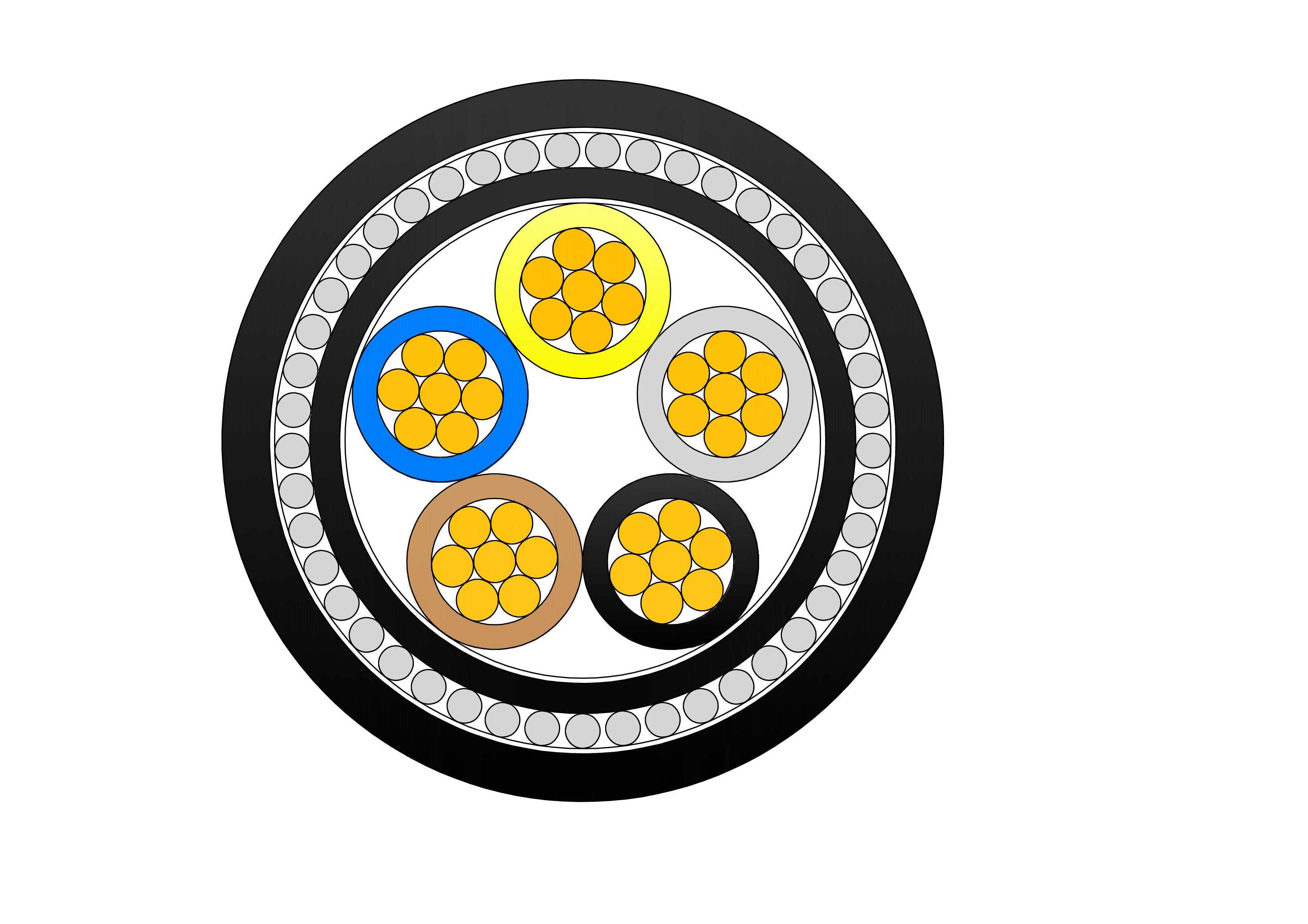
NYRY 0.6/1kV Low Voltage Power Cable
NYRY 0.6/1kV are low voltage power cables designed according to BS 5467 standard, suitable for fixed installation in indoor, outdoor, underground, cable ducts or concrete (not subject to vibration) environments, with steel wire armouring for mechanical protection. The cable features stranded copper conductors insulated with high-quality PVC, ensuring dependable electrical performance and thermal resistance under normal operating conditions. The metallic concentric conductor layer provides effective grounding and enhanced fault current capability, while the robust PVC outer sheath offers protection against moisture, abrasion, and external mechanical stress. Rated at 0.6/1kV and manufactured in accordance with relevant IEC standards, the NYRY cable is suitable for fixed installation both indoors and outdoors. Its construction supports long service life, consistent power delivery, and safe operation in demanding environments.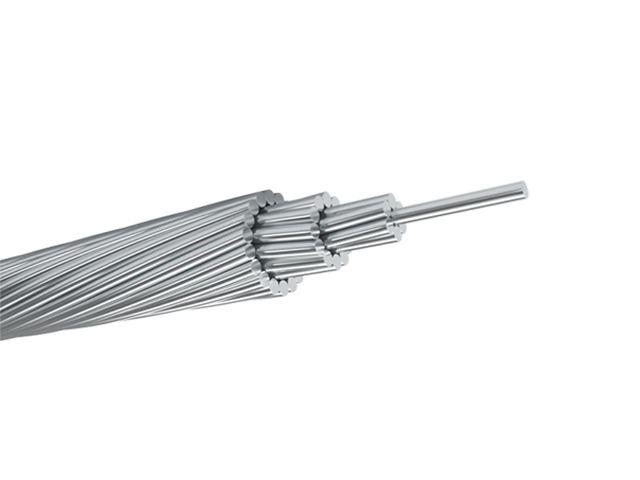
FLINT AAAC Conductor Cable
FLINT AAAC (All Aluminum Alloy Conductor) cables are manufactured in accordance with ASTM B399 and IEC 61089 standards, offering excellent strength, conductivity, and corrosion resistance. With 750 mm² nominal area and 37-strand design, it uses heat-treated aluminum-magnesium-silicon alloy (6201-T81) for enhanced strength (295 MPa min) and conductivity (53% IACS min). Meeting ASTM B398, B399, IEC 61089, and BS EN 50182 standards, this cable handles ampacity up to 1150A at 75°C and voltages up to 33kV. The all-alloy construction avoids bimetallic corrosion, providing better resistance in harsh conditions than ACSR. Reduced weight minimizes sag and installation expenses, supporting longer spans. The Flint AAAC Conductor Cable delivers low electrical losses, high mechanical endurance, and excellent weather tolerance. Flame-retardant variants available. Perfect for urban grids, renewable projects, and coastal setups, it provides cost-effective, low-maintenance power delivery in overhead applications globally, excelling in reliability and lifespan over conventional conductors.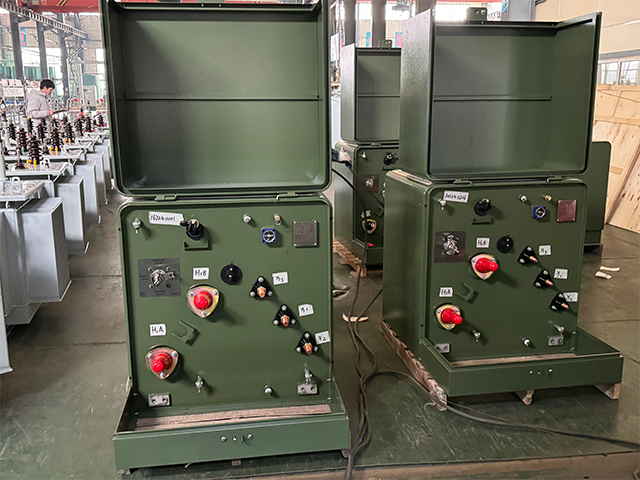
1000kVA Single Phase Pad Mounted Transformer
1000kVA Single Phase Pad Mounted Transformer, a high-capacity powerhouse optimized for extensive underground residential and commercial power distribution systems. This advanced oil-immersed transformer boasts ultra-efficient wound cores and premium windings to drastically cut operational losses while maintaining cool, stable performance even at peak demands. Fully aligned with ANSI C57.12.38, IEEE C57.12.00, and DOE efficiency requirements, this 1000kVA padmount delivers seamless step-down from primary voltages up to 34.5kV to versatile secondary outputs, empowering large-scale loop-feed or radial-feed networks with superior overload handling and minimal acoustic footprint.
630kVA Dry Type Transformer
NPC ELECTRIC 630kVA Dry-Type Transformer is a compact, oil-free solution for reliable power distribution. With advanced insulation and cooling systems, it ensures safe, low-maintenance operation, making it ideal for industrial and commercial applications. Offering 630kVA capacity, it delivers efficient, environmentally friendly, and cost-effective performance. Compliant with DOE amended energy conservation standards (finalized 2024, mandatory from April 23, 2029, with 20% loss reduction for three-phase low-voltage dry-type units), ANSI/IEEE C57.12.01, NEMA ST-20, UL 1561, and CSA standards, this low-voltage (≤600V) transformer minimizes no-load losses, runs cooler, and prioritizes fire safety without oils or fluids.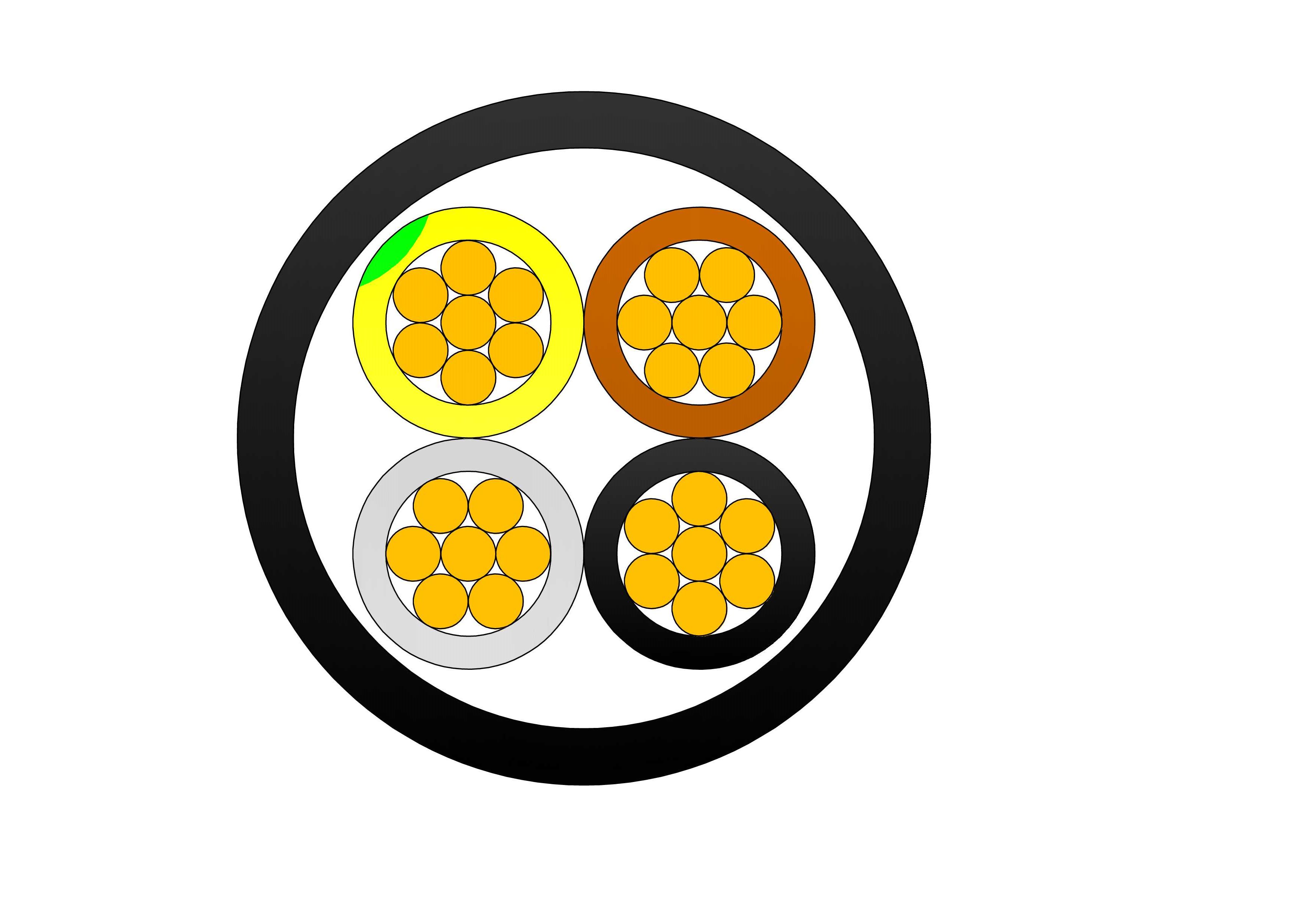
HV Submarine Cable
The High Voltage Submarine Cable is specifically engineered for underwater power transmission applications requiring exceptional electrical performance, mechanical strength, and long-term environmental reliability. Designed with high-conductivity copper or aluminum conductors, advanced XLPE insulation, water-blocking systems, metallic sheath protection, and galvanized steel wire armor, the cable ensures safe and efficient power transfer in challenging marine environments. The cable is capable of transmitting large amounts of electrical energy across seas, rivers, lakes, and offshore installations while maintaining low transmission losses. Its multi-layer protection structure provides superior resistance to hydrostatic pressure, seawater corrosion, mechanical impacts, and installation stresses. Manufactured according to international submarine cable standards, the High Voltage Submarine Cable supports voltage levels from 35kV to 500kV and beyond. It is widely used in offshore wind farms, island interconnections, offshore oil and gas platforms, marine renewable energy projects, and cross-sea transmission systems.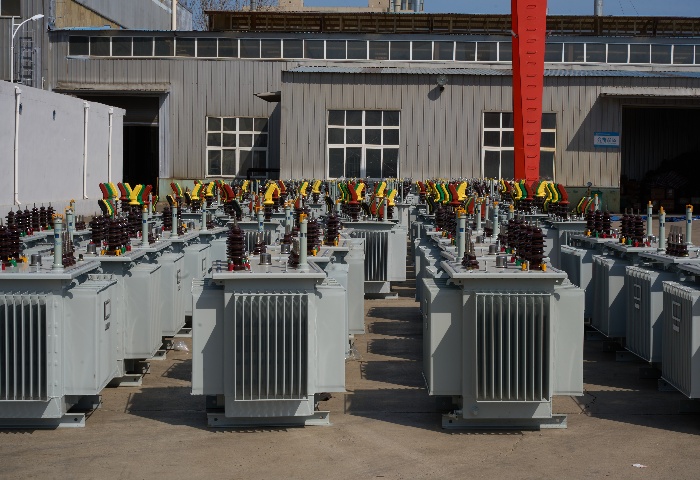
10.5KV Oil Immersed Substation Transformer
The 10.5kV Oil Immersed Substation Transformer is specifically designed for medium-voltage power substations requiring stable voltage conversion and reliable long-term operation. Utilizing a proven oil-immersed insulation system, the transformer provides excellent dielectric strength and efficient heat dissipation, ensuring dependable performance under continuous load conditions. High-quality winding materials and precise manufacturing processes enhance mechanical strength and short-circuit resistance. With low operating noise and strong thermal stability, the transformer is well-suited for modern substations serving industrial, commercial, and infrastructure power distribution systems.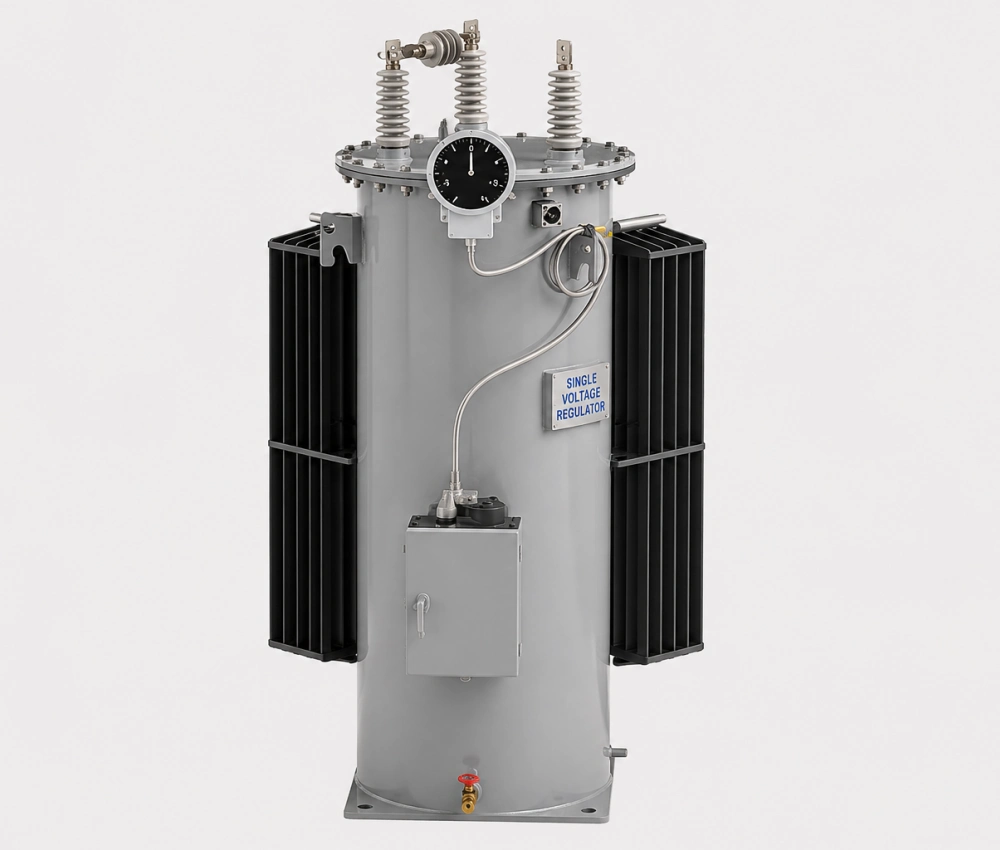
Three Phase Automatic Step Voltage Regulator
The Three Phase Automatic Step Voltage Regulator is a high-performance on-load tap changing device designed to automatically maintain stable voltage levels in medium-voltage distribution networks. Equipped with premium copper windings, low-loss silicon steel cores, and a reliable motorized on-load tap changer, it delivers fast, precise voltage correction with minimal waveform distortion. The intelligent digital controller continuously monitors three-phase voltage and load conditions, making real-time adjustments to ensure consistent output voltage despite fluctuations in supply or demand. Built for outdoor durability, it features a fully sealed oil-immersed tank with advanced corrosion protection, excellent overload capability, and comprehensive protection systems. This regulator significantly improves power quality, reduces line losses, and enhances equipment lifespan across distribution systems.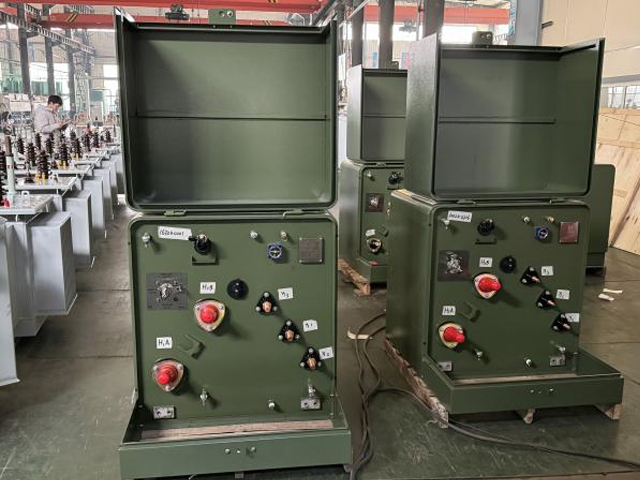
10kVA Conventional Type Single Phase Pole Mounted Transformer
NPC ELECTRIC specializes in designing and manufacturing 10 kVA single-phase pole-mounted transformers that comply with international standards, including IEEE C57.12.00, IEEE C57.12.20, DOE-2016 Efficiency, CSA C2.1 & C2.2, and CSA C802.1. Our unwavering commitment to excellence drives us to provide tailored solutions, ensuring that each transformer aligns precisely with your unique technical requirements. Regardless of the voltage level or operating environment, you can trust NPC ELECTRIC to deliver the ideal solution to meet your specific needs. Your satisfaction and the reliability of our transformers remain central to our dedication to quality. The 10kVA conventional single phase pole mounted transformer serves as an economical, reliable option for low-capacity overhead power distribution, converting primary voltages ranging from 2.4kV to 34.5kV (including common grounded wye configurations like 12470GrdY/7200, 24940GrdY/14400, or 13200Y/7620) to secondary levels such as 120/240V split-phase or 240V.
MV Submarine Cable
The Medium Voltage Submarine Cable MV XLPE Armoured is a robust underwater power cable engineered for reliable medium voltage transmission in marine environments. It features stranded copper or aluminum conductors, cross-linked polyethylene (XLPE) insulation for superior electrical and thermal performance, metallic water-blocking sheath, galvanized steel wire armour for mechanical protection, and a heavy-duty outer serving. Designed for voltage levels from 6/10kV to 66kV, this cable ensures low transmission losses, excellent hydrostatic pressure resistance, and long service life in harsh seabed conditions. Manufactured according to IEC 60502-2 and CIGRE recommendations, the Medium Voltage Submarine Cable MV XLPE Armoured is ideal for offshore wind farms, island-to-mainland power links, and oil & gas platform connections. Its advanced construction provides outstanding water tightness, corrosion resistance, and mechanical strength, making it a trusted solution for safe and efficient subsea power transmission.Welcome your inquiry
Honesty, Integrity, Frugality, Activeness and Passion