
The Principles of Transformer Operation: A Comprehensive Guide
2025-12-31
Transformers are at the heart of electrical distribution systems, playing a critical role in stepping up or stepping down voltage levels to ensure efficient power delivery. They are vital in everything from power generation plants to industrial manufacturing facilities, and even in everyday consumer electronics. This article aims to explore the principles of transformer operation, providing a detailed understanding of how transformers work, the different types of transformers available, and their practical applications in modern electrical systems.
What is a Transformer?
A transformer is an electrical device that transfers electrical energy between two or more circuits through electromagnetic induction. It changes the voltage level in an alternating current (AC) signal, either increasing or decreasing the voltage, without changing the frequency. The basic principle of operation is based on Faraday’s law of induction, which states that a changing magnetic field can induce an electromotive force (EMF) or voltage in a nearby conductor.
Types of Transformers
There are several types of transformers, each designed for specific applications. Some of the most commonly used types include:
-
Power Transformers: These are used to step up or step down voltages in large power transmission systems. They are typically used in substations and are designed to handle high voltage levels, often found in power grids.
-
Dry Type Transformers: Unlike oil-filled transformers, dry-type transformers use air or other non-flammable insulating materials for cooling. These are commonly used in urban environments, industrial facilities, and commercial buildings due to their safety and environmental benefits.
-
Distribution Transformers: These transformers reduce the voltage from transmission levels to a level suitable for consumer use, delivering power to homes and businesses.
-
Isolation Transformers: These are used to isolate different parts of an electrical system, providing safety by preventing electric shock or reducing noise interference.
The Principle of Transformer Operation
The operation of a transformer is based on electromagnetic induction. The transformer consists of two main parts: the primary coil and the secondary coil, both wound around a core. When an alternating current flows through the primary coil, it generates a magnetic field that is constantly changing in strength and direction. This changing magnetic field induces an electric current in the secondary coil, which is then used to power devices or further equipment.
The principal operation of a transformer depends on the relationship between the number of turns of wire on the primary and secondary coils, which determines the voltage ratio between the input (primary) and output (secondary) sides of the transformer.
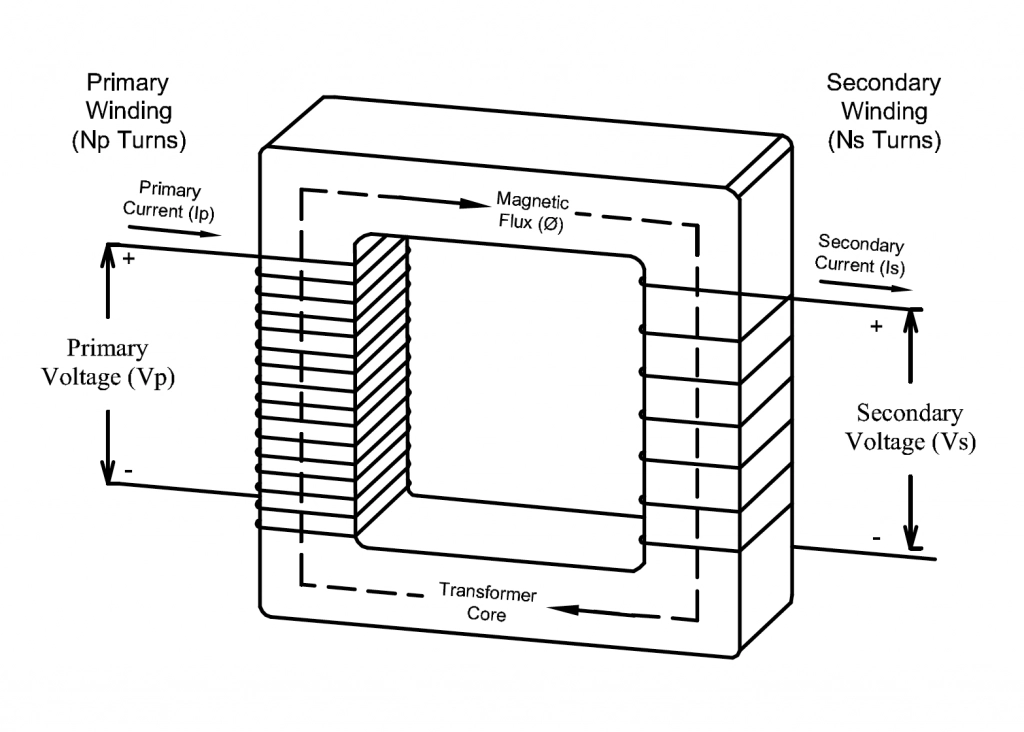
Understanding the Working of Transformers
At a fundamental level, a transformer works by transferring electrical energy via a magnetic field. When current flows through the primary coil, it creates a magnetic field in the transformer core. The core serves as a path for this magnetic field, ensuring it links both the primary and secondary coils. As the magnetic field changes, it induces a voltage in the secondary coil. This induced voltage depends on the number of turns on the secondary coil relative to the primary coil, which is determined by the voltage transformation ratio.
Efficiency of Transformer Operation
One of the key aspects of transformer operation is efficiency. A good transformer operates with minimal energy loss, which is a critical feature in high-power transmission systems. The primary sources of energy loss in transformers are core losses (hysteresis and eddy currents) and copper losses (due to the resistance of the windings).
To reduce core losses, modern transformers use silicon steel laminations that minimize eddy current losses. For copper losses, the resistance of the copper windings is minimized by using thicker wire or high-conductivity materials. Dry-type transformers, due to their insulation and cooling systems, often have slightly higher losses compared to oil-filled models but are favored for their safety and environmental friendliness.
Applications of Transformers
Transformers are used in a wide variety of applications in the electrical industry:
-
Power Transmission: Transformers are essential for stepping up voltage in power plants to allow electricity to be transmitted over long distances efficiently. Without transformers, power transmission would be highly inefficient due to energy losses.
-
Industrial Applications: In factories and industrial plants, transformers are used to supply the required voltage levels for machinery. Dry-type transformers are particularly suitable for industrial environments due to their robust construction and fire-resistant properties.
-
Residential Power Supply: Transformers play a crucial role in converting high-voltage electricity from the grid to the lower voltage used in homes and businesses.
-
Renewable Energy: With the growing adoption of renewable energy sources, transformers are increasingly used to integrate renewable power generation into the existing electrical grid. They help in adjusting the voltage levels from solar panels or wind turbines to be compatible with the grid.
Principle and Working of Dry-Type Transformers
A dry-type transformer operates on the same fundamental principle as other transformers but uses air or synthetic materials like resin for insulation instead of oil. These transformers are particularly well-suited for indoor installations in commercial and residential settings, where fire hazards need to be minimized. The principle of transformer operation in dry-type units is the same as oil-filled transformers, but the cooling mechanism is different.
Dry-type transformers are advantageous in environments where flammable materials are present, such as in buildings with high occupancy. They also require less maintenance and are more environmentally friendly since they don’t involve the use of oil.
The principle and working of transformers form the backbone of electrical power systems worldwide. Whether stepping up voltage for transmission or stepping down voltage for end-user applications, transformers are critical in ensuring the efficient and safe delivery of electrical power. Understanding the principles of transformer operation is essential for selecting the right transformer for specific applications, whether it’s a power transformer, dry-type transformer, or another variation.
As technology continues to evolve, transformers will remain at the forefront of the energy transition, helping to meet the growing demand for more efficient and sustainable power solutions.

Related Articles

Related Products
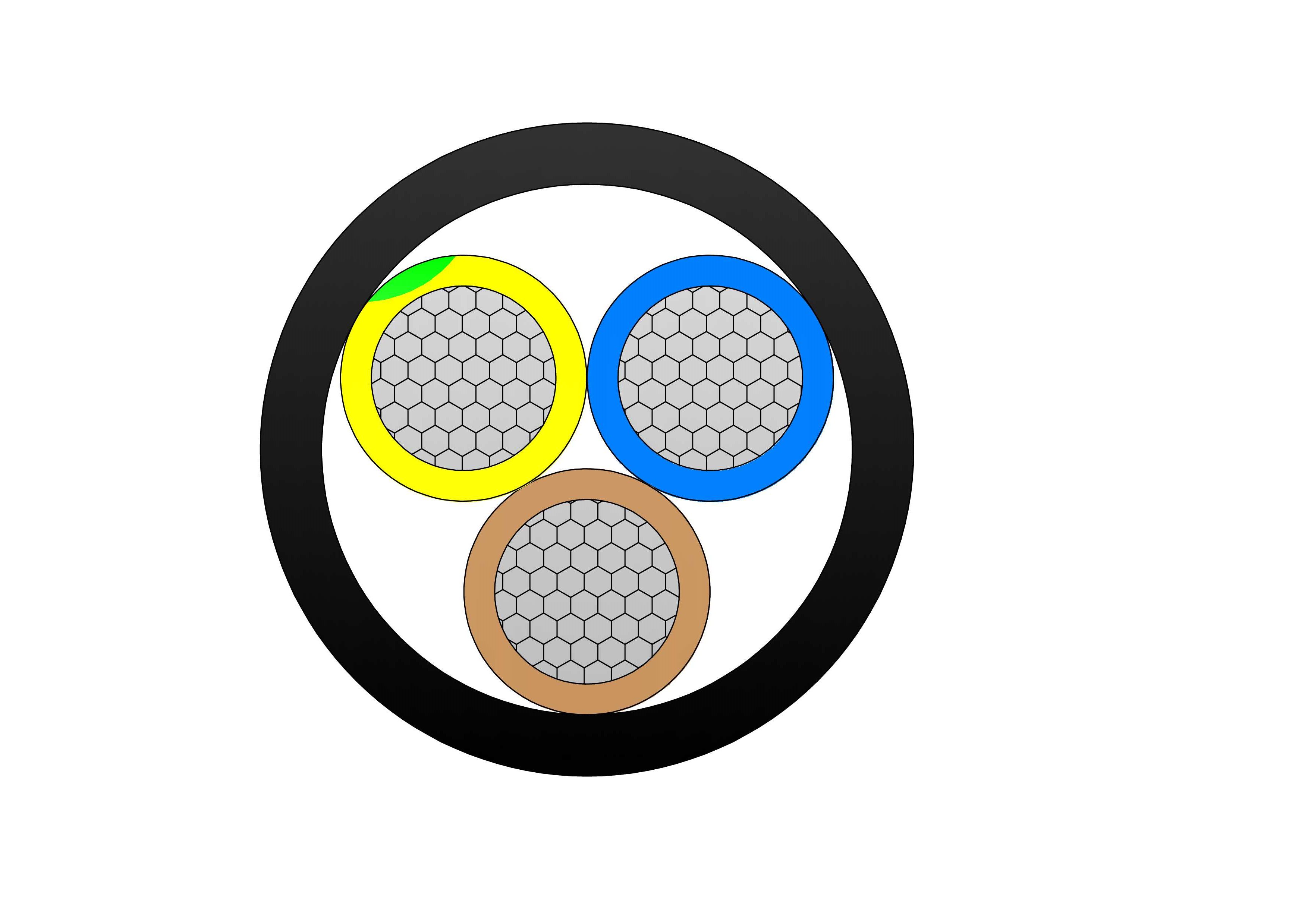
NA2XY 0.6/1 (1.2)kV Low Voltage Power Cable
NA2XY 0.6/1 (1.2)kV is a low-voltage power cable manufactured according to IEC 60502-1, suitable for fixed installation in indoor and outdoor environments, including underground and concrete installations where mechanical stress is minimal. This lightweight cable offers excellent electrical performance, high thermal stability, and superior resistance to moisture, chemicals, and mechanical stress. Suitable for direct burial, ducts, trays, or indoor fixed installations where no additional armour is required. With low dielectric losses and good current-carrying capacity, it minimizes energy waste. Flame-retardant and environmentally robust, the NA2XY 0.6/1 (1.2)kV Low Voltage Power Cable provides long service life and low maintenance costs. Widely used in industrial plants, commercial buildings, residential networks, and infrastructure projects needing reliable, cost-saving low-voltage aluminium cabling solutions worldwide.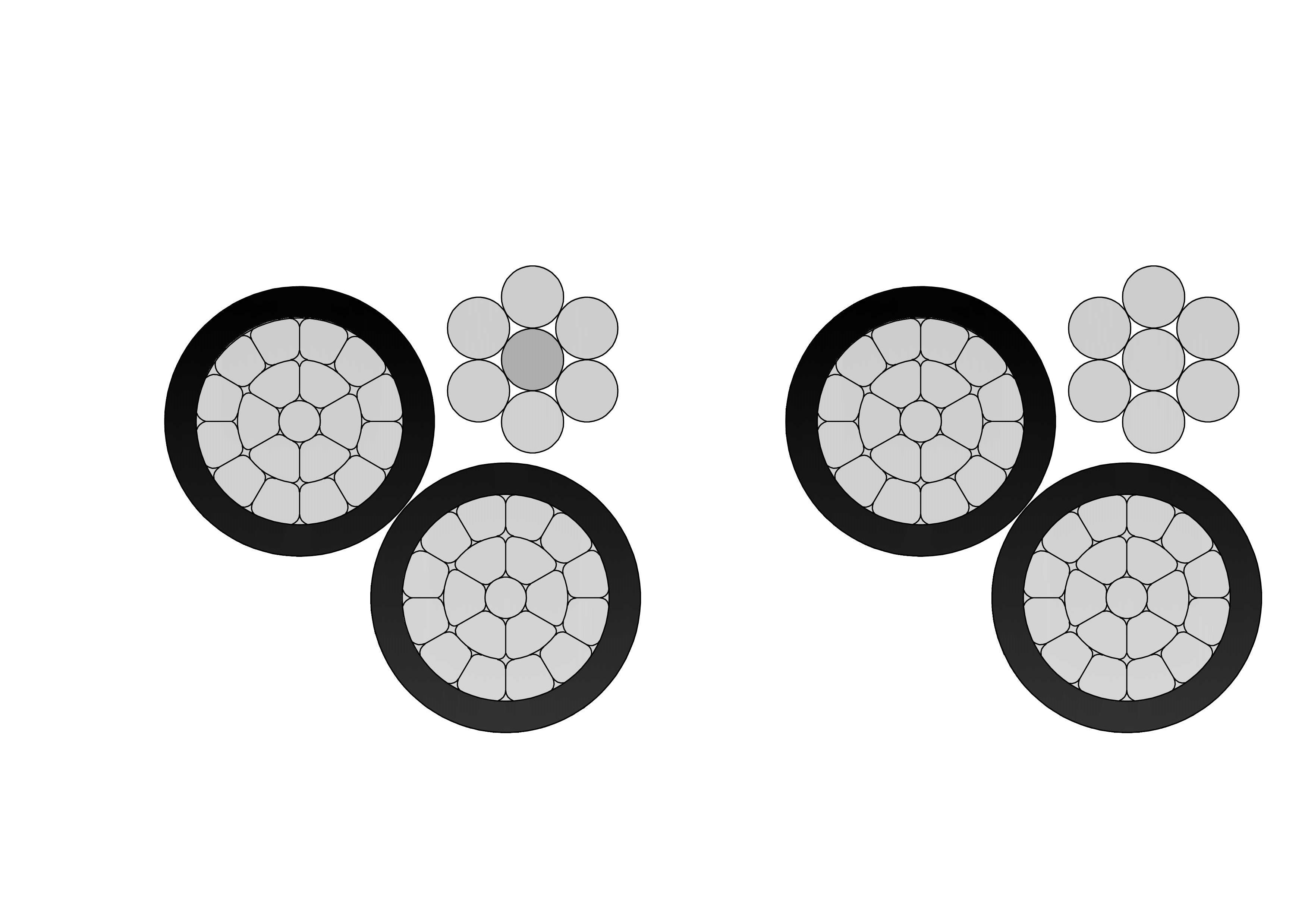
1/0 Sandcrab Aluminum Conductor Triplex Overhead Service Drop Cable
NPC Electric 1/0 Sandcrab Triplex Service Drop Cable provides reliable overhead secondary distribution for residential applications. Consisting of two 1/0 AWG aluminum phase conductors and one neutral messenger (7-strand) insulated with cross-linked polyethylene (XLPE) and twisted in triplex form, it meets ASTM, ICEA, and international standards. The robust insulation resists sunlight, moisture, and mechanical damage for decades of outdoor service. Lightweight design simplifies installation with low sag and easy handling. The 1/0 Sandcrab Triplex Service Drop Cable ensures minimal losses, high current capacity, and excellent weather performance up to 600V. Self-supporting messenger reduces pole loading. Flame-retardant options enhance safety. Commonly chosen for two-phase power delivery with neutral in subdivisions, rural homes, and temporary connections requiring safe, economical aerial bundled solutions with proven durability.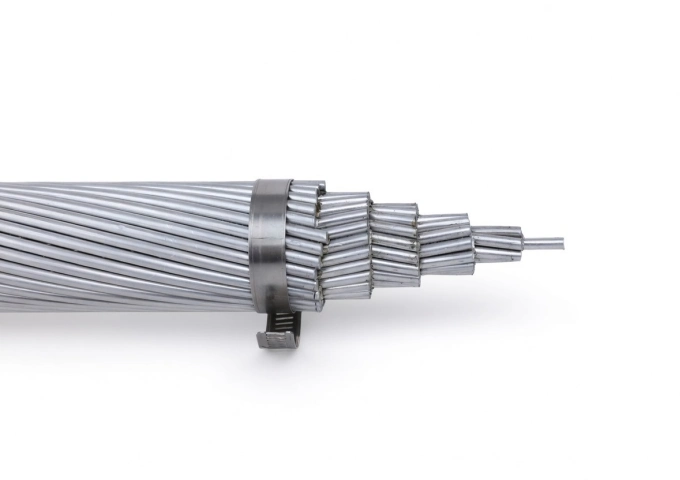
715.5 MCM Violet AAC Cable
The 715.5 MCM Violet AAC Cable is a high-performance All Aluminum Conductor designed for demanding overhead power transmission and distribution lines. Manufactured with 37 strands of premium 1350-H19 aluminum wire in a concentric lay configuration, this bare conductor provides excellent electrical conductivity with a low DC resistance of 0.024 ohms per 1000 ft at 20°C. Featuring an overall diameter of 0.974 inches and a rated breaking strength of 12,800 lbs, the Violet AAC delivers a robust ampacity of 823 amps while weighing only 671.7 lbs per 1000 ft. Its optimized strength-to-weight ratio minimizes sag and structural loading. Fully compliant with ASTM B-230 and B-231 standards, the 715.5 MCM Violet AAC Cable offers outstanding corrosion resistance for long-term durability in harsh outdoor environments, making it the preferred choice for utility networks requiring cost-effective, high-reliability bare aluminum conductors.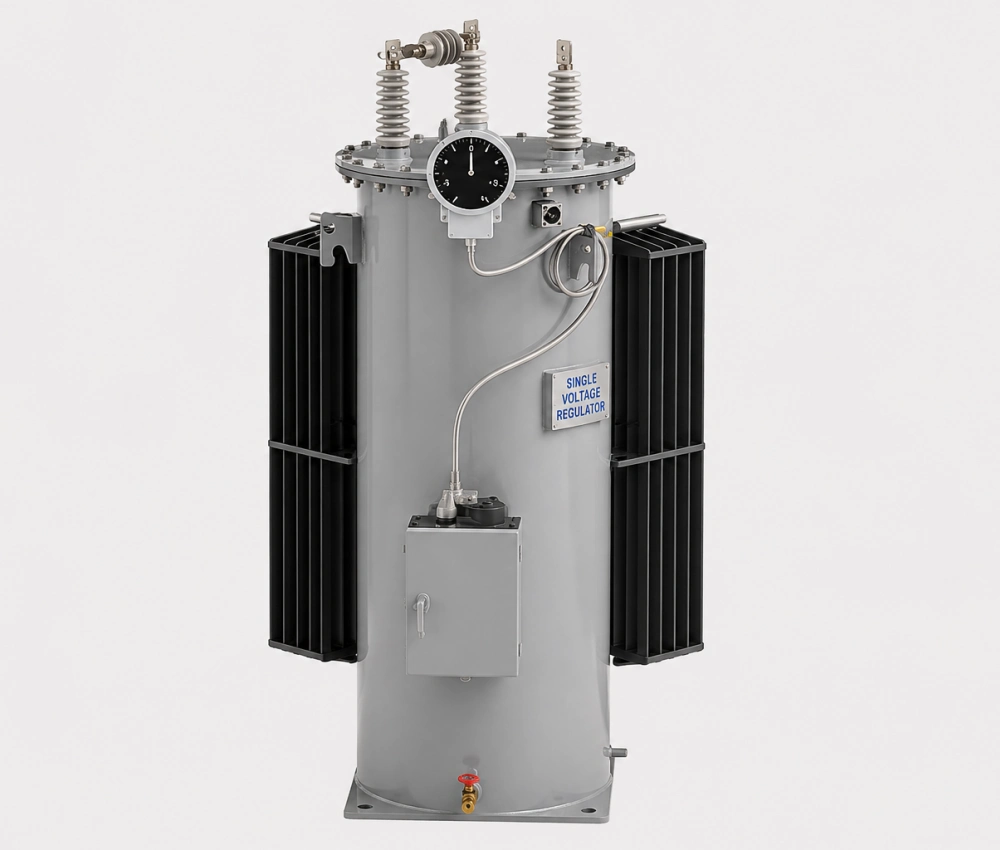
Three Phase Automatic Step Voltage Regulator
The Three Phase Automatic Step Voltage Regulator is a high-performance on-load tap changing device designed to automatically maintain stable voltage levels in medium-voltage distribution networks. Equipped with premium copper windings, low-loss silicon steel cores, and a reliable motorized on-load tap changer, it delivers fast, precise voltage correction with minimal waveform distortion. The intelligent digital controller continuously monitors three-phase voltage and load conditions, making real-time adjustments to ensure consistent output voltage despite fluctuations in supply or demand. Built for outdoor durability, it features a fully sealed oil-immersed tank with advanced corrosion protection, excellent overload capability, and comprehensive protection systems. This regulator significantly improves power quality, reduces line losses, and enhances equipment lifespan across distribution systems.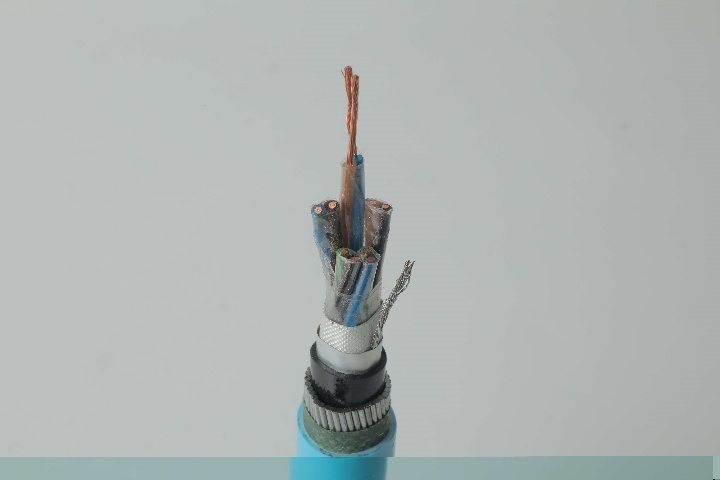
Instrumentation Cables—XLPE Insulated, Overall Screened, Wire Armoured PVC Sheathed Cables(CU/XLPE/OSCR/SWA/PVC)
Engineered for thermal resilience and electromagnetic shielding, the Instrumentation Cables—XLPE Insulated, Overall Screened, Wire Armoured PVC Sheathed Cables (CU/XLPE/OSCR/SWA/PVC) excel in high-temperature environments. Stranded copper conductors ensure low resistance and flexibility, with XLPE insulation providing 90°C continuous rating and 250°C short-circuit tolerance. Overall screening via aluminum/polyester tape and drain wire mitigates EMI/RFI, preserving signal quality. SWA armour protects against mechanical damage, while PVC sheath adds flame resistance and waterproofing. Meeting BS EN 50288-7 and BS EN 50288-1 standards, these multi-pair cables transmit analogue/digital signals with low capacitance in demanding circuits. Suitable for ducts, trays, direct burial, or outdoor exposures, they boost system integrity and reduce interruptions in heat-intensive areas. With enhanced dielectric properties and attenuation control, this CU/XLPE/OSCR/SWA/PVC offers dependable, maintenance-reducing solutions for professionals in petrochemical, power, and industrial sectors.
Type 275 Flexible Overall Semi-conductive Rubber Screened Mining Cable
The Type 275 Flexible Overall Semi-conductive Rubber Screened Mining Cable is a 1.1kV, medium-voltage cable designed for coal mining and heavy-duty industrial applications. It features tinned annealed copper conductors, EPR insulation, and a semi-conductive thermosetting compound screen for enhanced electrical performance. The cable is reinforced with polyamide yarn braid and protected by a heavy-duty CSP sheath, offering oil resistance, flame retardancy, and mechanical durability. Its robust construction ensures reliable power delivery to shuttle cars, electric pumps, and other mining equipment. Compliant with AS/NZS 2802 and stringent mining standards, it supports very high tensile loads, frequent flexing, tight bending radii, and reliable operation in wet, dusty, and hazardous mine environments.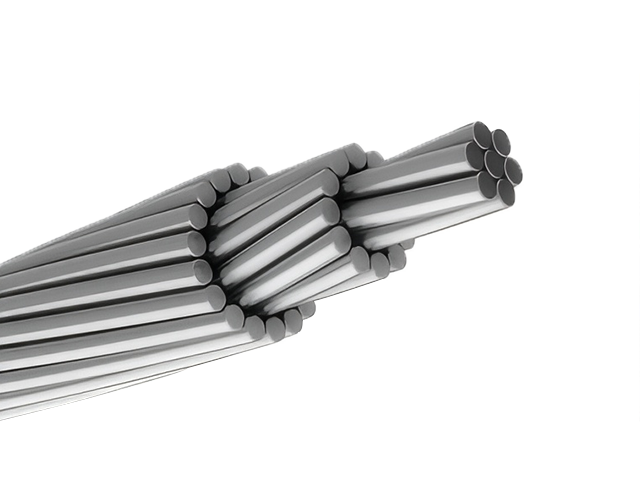
4 AWG SWANATE ACSR Conductor Cable
4 AWG SWANATE ACSR Conductor Cable is designed for overhead power distribution systems requiring dependable electrical performance and enhanced mechanical strength. It is manufactured using concentrically stranded aluminum wires reinforced with a galvanized steel core, ensuring an effective balance between conductivity and tensile durability. The aluminum strands provide low electrical resistance and efficient current transfer, while the steel core improves load-bearing capacity, controls sag, and increases resistance to mechanical stress during installation and operation. This construction allows the 4 AWG SWANATE ACSR conductor to perform reliably under wind load, temperature variation, and outdoor environmental conditions. Produced in accordance with ASTM and IEC standards, the 4 AWG SWANATE ACSR Conductor Cable offers consistent quality, easy handling, and long service life. It is widely applied in utility distribution lines, rural electrification projects, and overhead network upgrades where stable performance and cost efficiency are required.
(N)TSKCGEWOU 3.6/6kV, 6/10kV, 8.7/15kV and 12/20kV Cable
The (N)TSKCGEWOU 3.6/6kV, 6/10kV, 8.7/15kV, 12/20kV Cable is a rugged flexible medium-voltage cable optimized for dynamic mining and tunneling applications. It includes tinned class 5 copper phase conductors, semi-conductive screens, EPR insulation for outstanding dielectric and thermal properties (90°C rating), copper braid screen for shielding, control conductors, monitoring conductor (ÜL), and a heavy-duty rubber sheath resistant to oils, flames, abrasion, and mechanical damage. Compliant with DIN VDE 0250, it provides high flexibility, torsional strength, and EMC protection across voltage levels for extreme conditions. The (N)TSKCGEWOU ensures dependable MV energy delivery to mobile machinery such as excavators, draglines, shearers, and tunnel boring equipment in opencast and underground mining, enhancing safety, reducing voltage drop, and supporting long service life.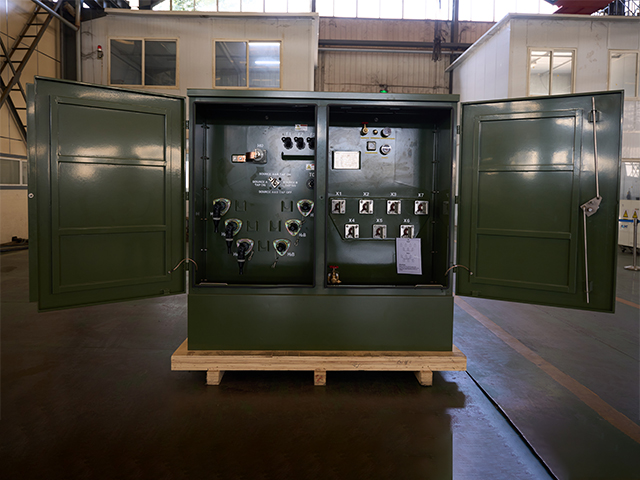
225kVA Three Phase Pad Mounted Transformer
The 225kVA three-phase pad transformer is an efficient and reliable power conversion device designed for commercial, industrial and distribution systems. With a high power capacity of 225kVA, the transformer is able to provide a stable three-phase power supply for large-scale equipment to meet high load requirements. Its rugged housing is made of weather-resistant materials and meets NEMA 3R standards, ensuring long-term stable operation in outdoor environments and preventing the influence of external factors such as water, dust and corrosion.H-medium-voltage-power-cable-2.jpg)
N2XS(F)H Medium Voltage Power Cable (6/10kV, 12/20kV, 18/30kV)
The N2XS(F)H Medium Voltage Power Cable is engineered for medium voltage power distribution systems operating at 6/10kV, 12/20kV, and 18/30kV, where electrical reliability and fire safety are essential. The cable combines a copper conductor with XLPE insulation and a longitudinally corrugated aluminum sheath that delivers excellent moisture protection and mechanical strength. The LSZH outer sheath minimizes toxic gas release and smoke generation during fire exposure, supporting safer evacuation and equipment protection. Designed and manufactured in compliance with IEC standards, N2XS(F)H cables provide low dielectric losses, high thermal stability, and dependable long-term operation. The metallic sheath enhances grounding and fault current performance, making the cable suitable for critical infrastructure and underground installations.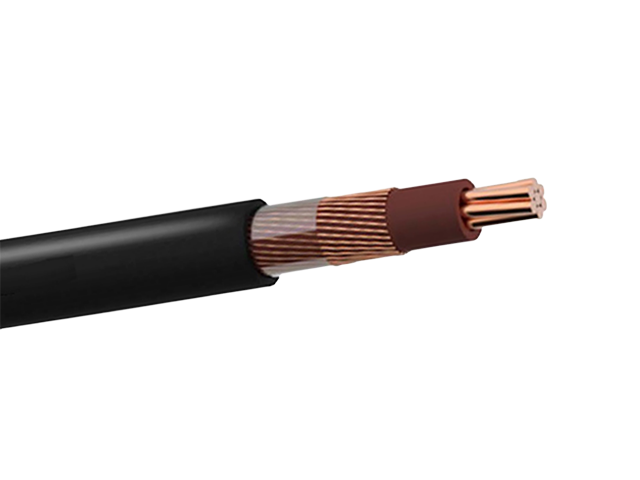
Airdac SNE & CNE Concentric Cable
The Airdac SNE & CNE Concentric Cable is a robust low-voltage aerial service connection cable designed for reliable house service from the distribution network to the consumer meter. It features a circular stranded hard-drawn copper phase conductor insulated with XLPE, surrounded by concentrically arranged neutral and earth conductors, and protected by a black polyethylene sheath. The SNE version provides separate neutral and earth conductors, while the CNE version combines them for simplified earthing. With a nylon ripcord for easy stripping and UV-stabilized materials, this cable offers excellent mechanical strength, electrical performance, and long-term durability. Manufactured to SANS 1507-6 and related standards, the Airdac SNE & CNE Concentric Cable undergoes rigorous quality testing from raw materials to finished product, ensuring safe, tamper-resistant, and vandal-proof performance in overhead or underground installations.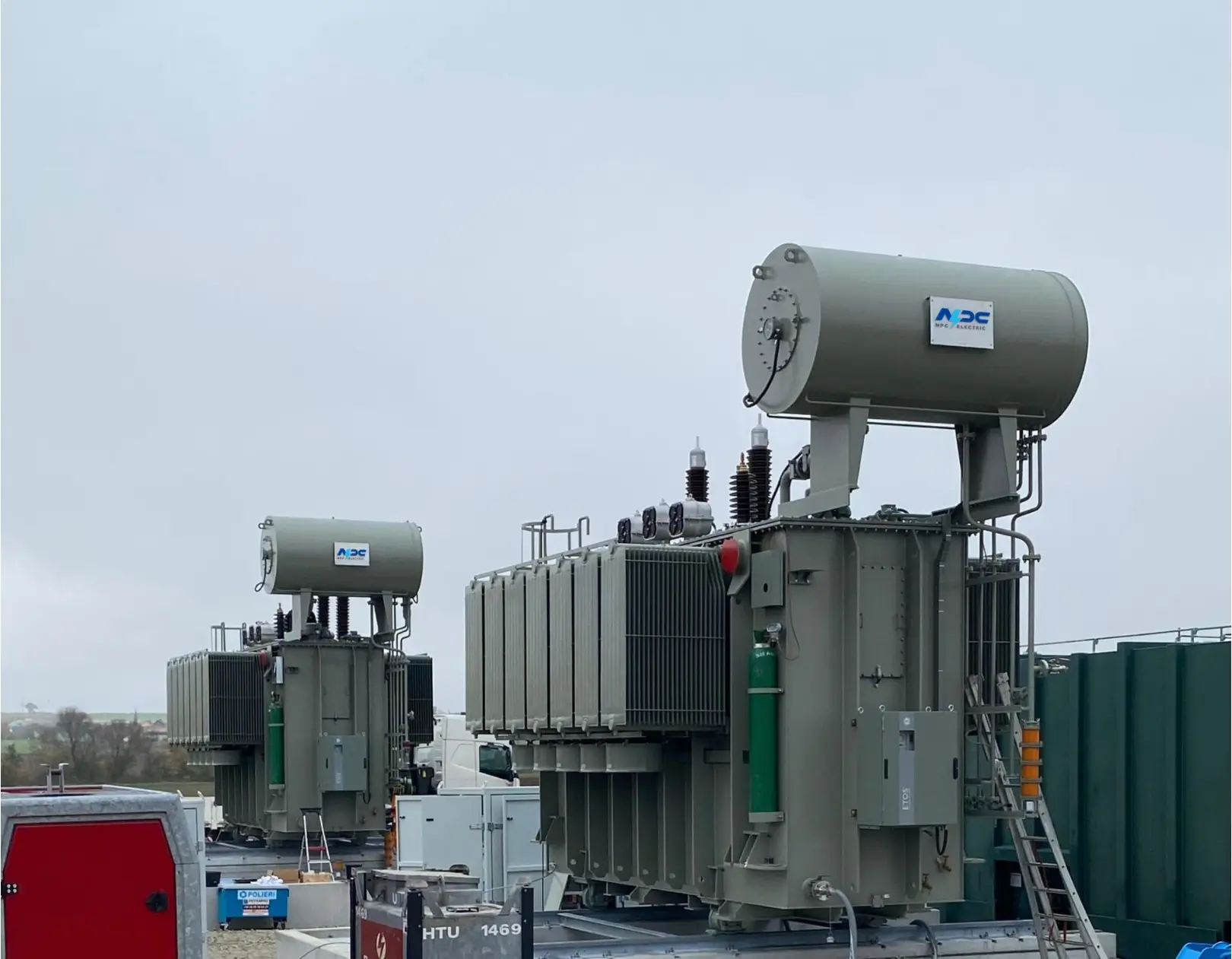
85kV 1850kVA Outdoor Oil Immersed Distribution Transformer Copper
The 85kV 1850kVA Outdoor Oil Immersed Distribution Transformer Copper is specially developed for 66–110 kV regional distribution networks and industrial users. It adopts 99.99 % electrolytic copper windings, high-permeability S13 grain-oriented silicon steel core, corrugated-fin tank + ONAN natural cooling, and ±5 % off-circuit tap changer (on-load optional). Fully compliant with IEC 60076, lightning impulse withstand 395 kV peak, PD <10 pC, noise ≤60 dB. Fully sealed conservator or sealed-type design with vacuum oil filling + nitrogen sealing guarantees >30-year maintenance-free operation even in high-altitude, high-pollution, or coastal areas. Ideal for mining, metallurgy, wind/solar grid connection, petrochemical plants, and urban 85 kV substations requiring maximum reliability and minimum losses.
2 Conch Aluminum Conductor Triplex Overhead Service Drop Cable
The 2-2-2 Conch Aluminum Conductor Triplex Overhead Service Drop Cable is a trusted solution for overhead power distribution from utility poles to residential or commercial weatherheads. Featuring concentric-lay-stranded 1350-H19 aluminum phase conductors (#2 AWG, 7-strand), durable black cross-linked polyethylene (XLPE) insulation, and a bare ACSR neutral messenger (#2 AWG, 6/1), it provides excellent electrical conductivity, superior weather/UV resistance, and mechanical support. Rated for 600 volts phase-to-phase with conductor temperatures up to 90°C (XLPE), it delivers an allowable ampacity of approximately 150 amps. Compliant with ASTM B-230, B-231, B-232, B-399, and ICEA S-76-474 standards, this lightweight, flexible cable ensures easy installation and long-term reliability in harsh outdoor environments, including wind, ice loading, and temperature fluctuations.
FR-N20XA8E-AR Triplex 12/20kV Cable Gen to NF C 33-226 - AL/XLPE/MDPE
The NF C 33-226 AL-XLPE-MDPE 12/20(24)kV Triplex Cable is a high-quality three-core medium voltage power cable designed for reliable three-phase energy transmission. It is constructed with Class 2 stranded aluminum conductors, cross-linked polyethylene (XLPE) insulation, and a medium-density polyethylene (MDPE) outer sheath, providing excellent electrical performance, thermal stability, and mechanical durability. Manufactured in accordance with NF C 33-226, IEC 60502-2, and EN 60228, this cable is ideal for industrial plants, municipal networks, and commercial power systems. It offers high resistance to water (AD7) and UV radiation (ISO 4892), and is halogen-free (IEC/EN 60754-1), ensuring safe and environmentally friendly operation. With a rated voltage of 12/20 (24)kV and a maximum conductor temperature of 90°C, this AL-XLPE-MDPE Triplex cable ensures efficient, safe, and long-term power transmission in medium-voltage distribution networks.
3000kVA Dry Type Transformer
3000kVA Dry Type Transformer is a high-performance, reliable power solution designed to meet the needs of large industrial and commercial facilities. With a 3000kVA capacity, it utilizes advanced dry-type insulation, ensuring exceptional safety, minimal maintenance, and extended durability. Built for demanding environments, this transformer provides stable, efficient, and low-noise operation while minimizing environmental impact. The NPC ELECTRIC 3000kVA Dry Type Transformer is the ideal choice for ensuring reliable and efficient power distribution in large-scale applications. Core features include three-phase design, primary voltages 208V–600V (e.g., 480V Delta, 600V Delta), secondary voltages such as 208Y/120V, 480Y/277V, or custom, aluminum or copper windings, 150°C rise (standard) or 115°C/80°C with 220°C insulation class, ±2×2.5% primary taps, NEMA 1 ventilated enclosure (NEMA 3R/encapsulated options), natural convection cooling (AN), electrostatic shielding, and low sound levels per NEMA.Welcome your inquiry
Honesty, Integrity, Frugality, Activeness and Passion