


13.8kV 1600kVA Cast Resin Dry Type Transformer
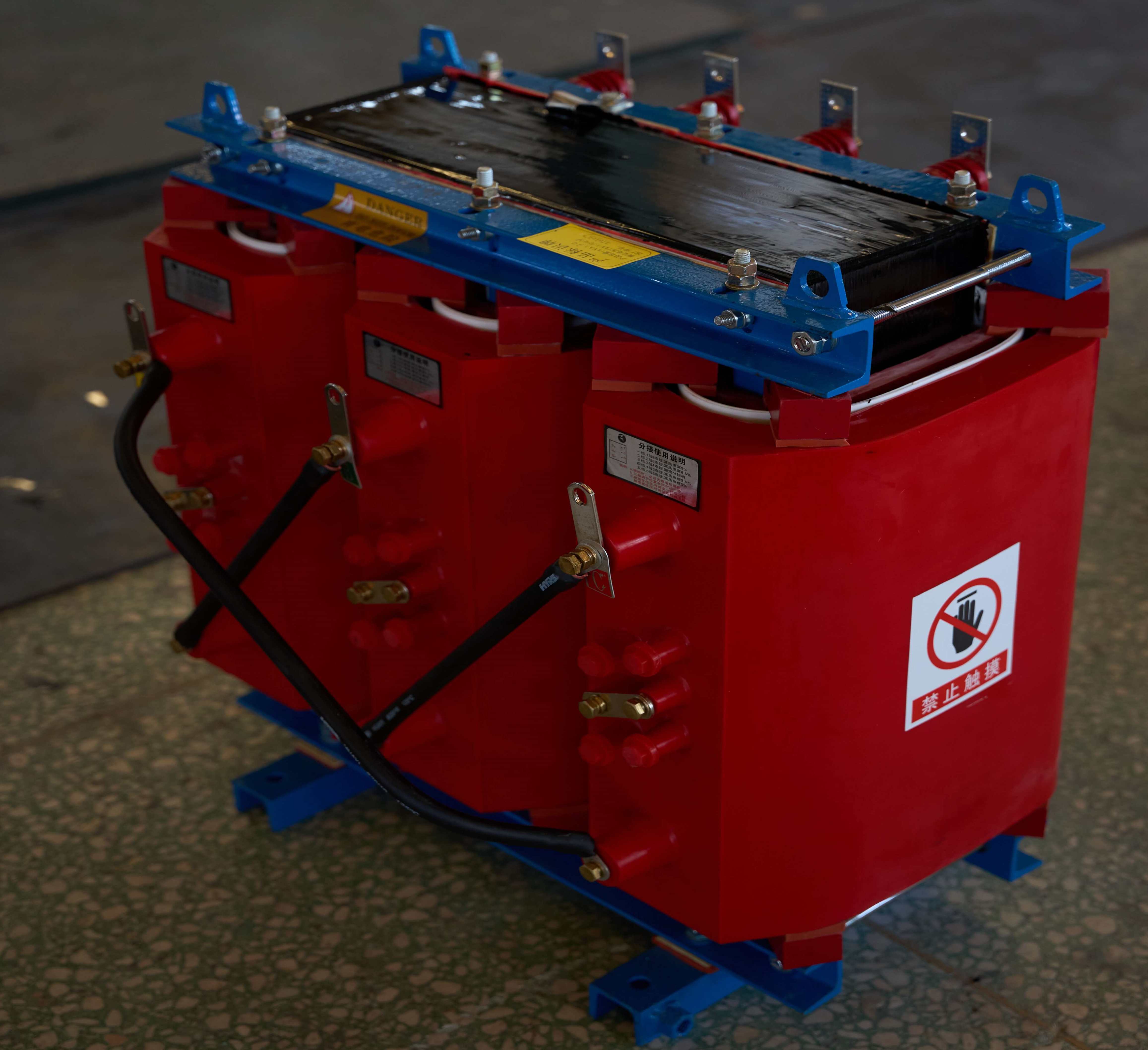
Introducing the robust 13.8kV 1600kVA Cast Resin Dry Type Transformer, a high-capacity, oil-free power solution engineered for safe, reliable indoor medium-voltage distribution in industrial and utility applications. This three-phase cast resin transformer utilizes premium low-loss grain-oriented silicon steel cores and high-conductivity copper (or optional aluminum) windings fully encapsulated in epoxy resin under vacuum pressure, delivering exceptional energy efficiency (often exceeding 98-99% per DOE/IEEE standards), significantly reduced no-load and load losses, and superior partial discharge performance (<10pC). Compliant with IEC 60076-11, IEEE/ANSI, and DOE efficiency requirements, this transformer steps down 13.8kV primary (with ±2×2.5% off-circuit taps standard) to common secondary voltages like 0.4kV, 0.48kV, or 0.66kV (Dyn11 vector group typical), making it ideal for sustainable, high-power indoor substations and facilities.
- Primary Voltage Ratings 13.8 kV (13800 V) delta or grounded wye
- Secondary Voltage Ratings 0.4 kV (400/230 V) or 0.48 kV (480Y/277 V) wye
- H.V. Tap Range ± 2×2.5% HV taps or others
- Type Dry type transformer
- BIL 30/95kV
- Standards IEEE, ANSI, NEMA,IEC,GB
- Application office buildings, transportation facilities
- Power Rating 1600kVA
- Certificate UL ,CESI
- Cooling Method OA/OF
- Opeartion Step Down & Step Up
Technical Specifications
Customization Optional
Packing and Shipping
Manufacturer Test
Routine Testing
Application
Technical Specifications
13.8kV 1600kVA Cast Resin Dry Type Transformer
Technical Specifications
Accessories
| Rated Power | 1600 kVA | |
| Rating Primary Voltage | 13.8kV | |
| Secondary Voltage | 480/277V 400/230V 380/220V Customized |
|
| Frequency | 50/60Hz | |
| Vector Group | Dyn11,Yyn0,Dyn5 | |
| Winding Material | Aluminum/Copper | |
| Efficiency | As IEEE,Doe 2016,CAS Std or Customized | |
| Impedance Voltage | Nominal 2% or Customized 1.1-5.75% | |
| Altitude | ≤1,000m or Customized | |
| Enclosure material | 304 Stainless Steel | |
|
Winding material |
Full high-conductivity copper (HV & LV) for maximum efficiency and lowest hot-spot temperatures | |
|
Temperature rise |
100°C or 120°C (Class F/H) |
|
| HV Bushing |
| LV Bushing |
| Tap changer connector |
| Lifting hook for complete transformer |
| Name plate |
Customization Optional
13.8kV 1600kVA Cast Resin Dry Type Transformer
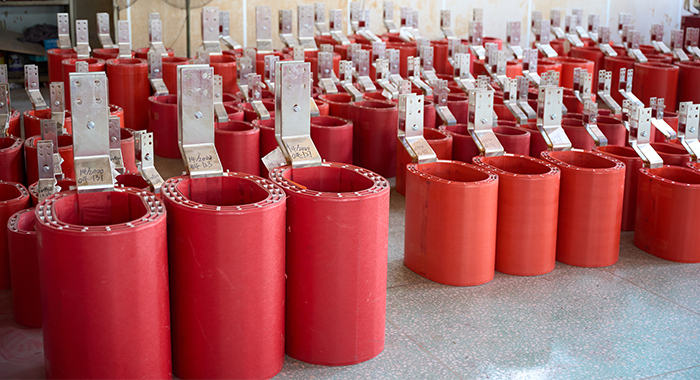
The 1600kVA three-phase cast resin dry type transformer supports extensive customization to precisely match project voltage ratings, installation environments, load profiles, acoustic requirements, and regional efficiency regulations. Primary voltage is centered on 13.8 kV (13800 V) in delta or grounded wye configuration, while secondary voltage can be configured as 400/230 V, 415/240 V, 480Y/277 V, 600Y/347 V, or any custom low-voltage output. Vector groups include Dyn11 (standard), Dyn1, Yyn0, or special configurations for phase shift and harmonic mitigation. Full copper windings are standard for maximum efficiency, lowest hot-spot temperatures, and superior short-circuit strength; aluminum windings are available for cost-sensitive applications. Insulation system options are Class F (155°C) or Class H (180°C) using high-quality cast-resin (epoxy) encapsulation for excellent resistance to moisture, dust, chemicals, and thermal cycling.
Enclosure choices include IP23 ventilated (indoor standard), IP54/IP55 totally enclosed (dust-tight/semi-outdoor), or forced-air cooled (AF) for 133–150% overload capacity in high-ambient or confined spaces. Temperature rise can be specified as 100°C or 120°C. Additional features include forced-air cooling packages with fan controls, digital temperature monitoring with alarm/trip relays, surge arresters, electrostatic shielding for noise-sensitive locations, K-factor rating (K-4 to K-13) for harmonic-rich loads (data centers, EV charging, VFDs), seismic bracing, ultra-low-noise execution (<58 dB with special core clamping and fan design), and custom finishes for corrosive or cleanroom environments. All variants are fully validated to IEC 60076-11, CE marking, UL 1561 (if requested), local efficiency standards, and client specifications.
Packing and Shipping
13.8kV 1600kVA Cast Resin Dry Type Transformer
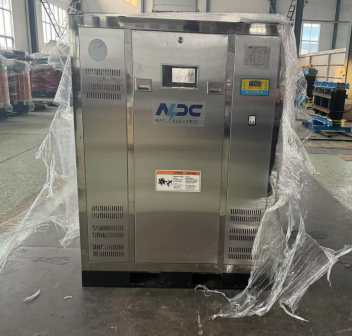
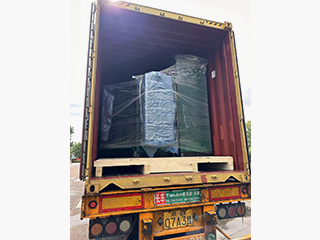
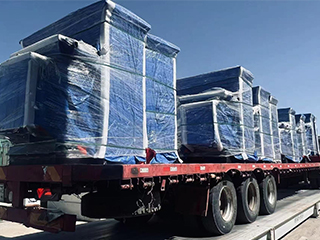
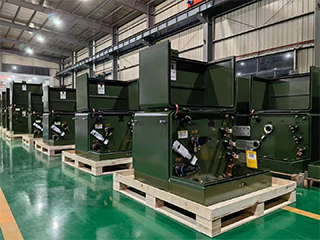
The 1600kVA three-phase cast resin dry type transformer is packaged with maximum protection to ensure safe domestic and international transport. The core-coil assembly is fully encapsulated in cast resin and rigidly secured inside the enclosure to prevent movement during transit. All terminals, taps, temperature sensors, fans (if equipped), and accessories are factory-installed and protected with caps or padding to avoid damage to bushings and connections.
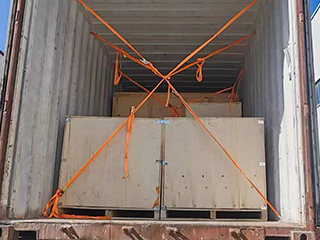
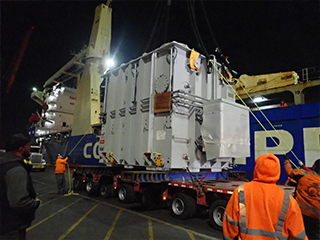
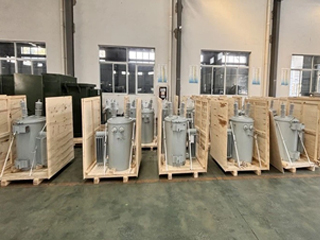
The transformer is mounted on a reinforced wooden pallet or steel skid designed for forklift and crane handling, wrapped in multi-layer stretch film and moisture-barrier material. Desiccant packs are included to control humidity, critical for cast-resin units that must remain dry before energization. The entire unit is then placed in a sturdy export-grade wooden crate (ISPM-15 heat-treated) with foam corner protectors, wooden bracing, and steel strapping for stability. Clear markings include gross/net weight, center of gravity, lift points, dimensions (approx. 2.6–3.2 m L × 1.7–2.1 m W × 2.6–3.0 m H), and handling instructions (“Fragile – Electrical Equipment – No Tipping”).
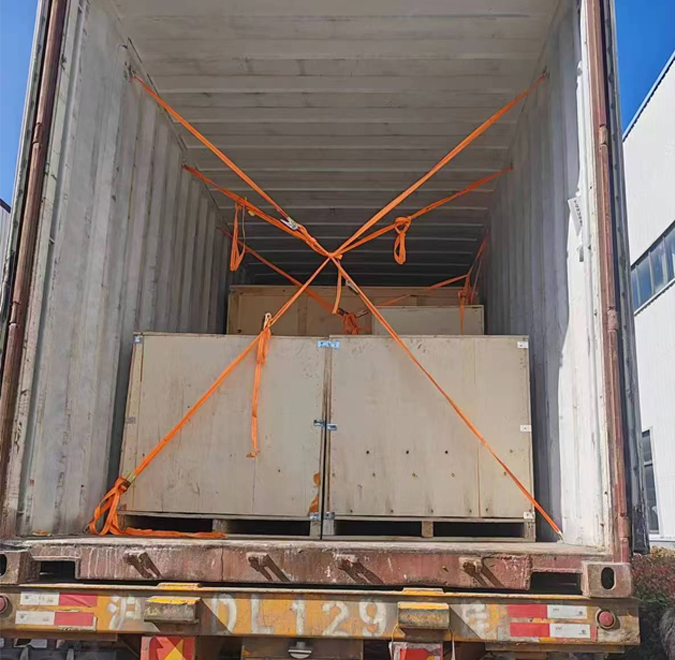
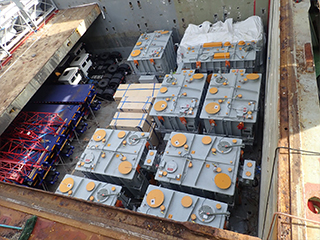
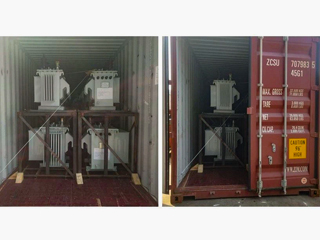
Domestic shipping uses enclosed trailers or flatbeds with secure blocking and tie-downs to minimize vibration. International shipments typically utilize 40ft open-top containers or flat-rack loading, with professional lashing using chains and timber dunnage for sea and road stability. Real-time GPS tracking and full-value cargo insurance are standard for high-value units. Upon arrival, detailed handling and installation manuals are provided, covering lifting procedures (via integrated lifting eyes), foundation placement with ventilation clearances, electrical connections, grounding, and pre-energization checks (insulation resistance, turns ratio, temperature sensor calibration).
Post-arrival services feature optional heavy-lift crane/SPMT offloading, condition assessment, insulation verification, and packaging recycling to accelerate commissioning. Multi-unit orders benefit from consolidated shipments and phased scheduling. This professional logistics framework guarantees flawless delivery, enhancing visibility for "secure 1600kVA dry type transformer shipping."
The transformer is mounted on a reinforced wooden pallet or steel skid designed for forklift and crane handling, wrapped in multi-layer stretch film and moisture-barrier material. Desiccant packs are included to control humidity, critical for cast-resin units that must remain dry before energization. The entire unit is then placed in a sturdy export-grade wooden crate (ISPM-15 heat-treated) with foam corner protectors, wooden bracing, and steel strapping for stability. Clear markings include gross/net weight, center of gravity, lift points, dimensions (approx. 2.6–3.2 m L × 1.7–2.1 m W × 2.6–3.0 m H), and handling instructions (“Fragile – Electrical Equipment – No Tipping”).
Domestic shipping uses enclosed trailers or flatbeds with secure blocking and tie-downs to minimize vibration. International shipments typically utilize 40ft open-top containers or flat-rack loading, with professional lashing using chains and timber dunnage for sea and road stability. Real-time GPS tracking and full-value cargo insurance are standard for high-value units. Upon arrival, detailed handling and installation manuals are provided, covering lifting procedures (via integrated lifting eyes), foundation placement with ventilation clearances, electrical connections, grounding, and pre-energization checks (insulation resistance, turns ratio, temperature sensor calibration).
Post-arrival services feature optional heavy-lift crane/SPMT offloading, condition assessment, insulation verification, and packaging recycling to accelerate commissioning. Multi-unit orders benefit from consolidated shipments and phased scheduling. This professional logistics framework guarantees flawless delivery, enhancing visibility for "secure 1600kVA dry type transformer shipping."
32
32 years of industry experience
Manufacturer Test
13.8kV 1600kVA Cast Resin Dry Type Transformer
Progress Test
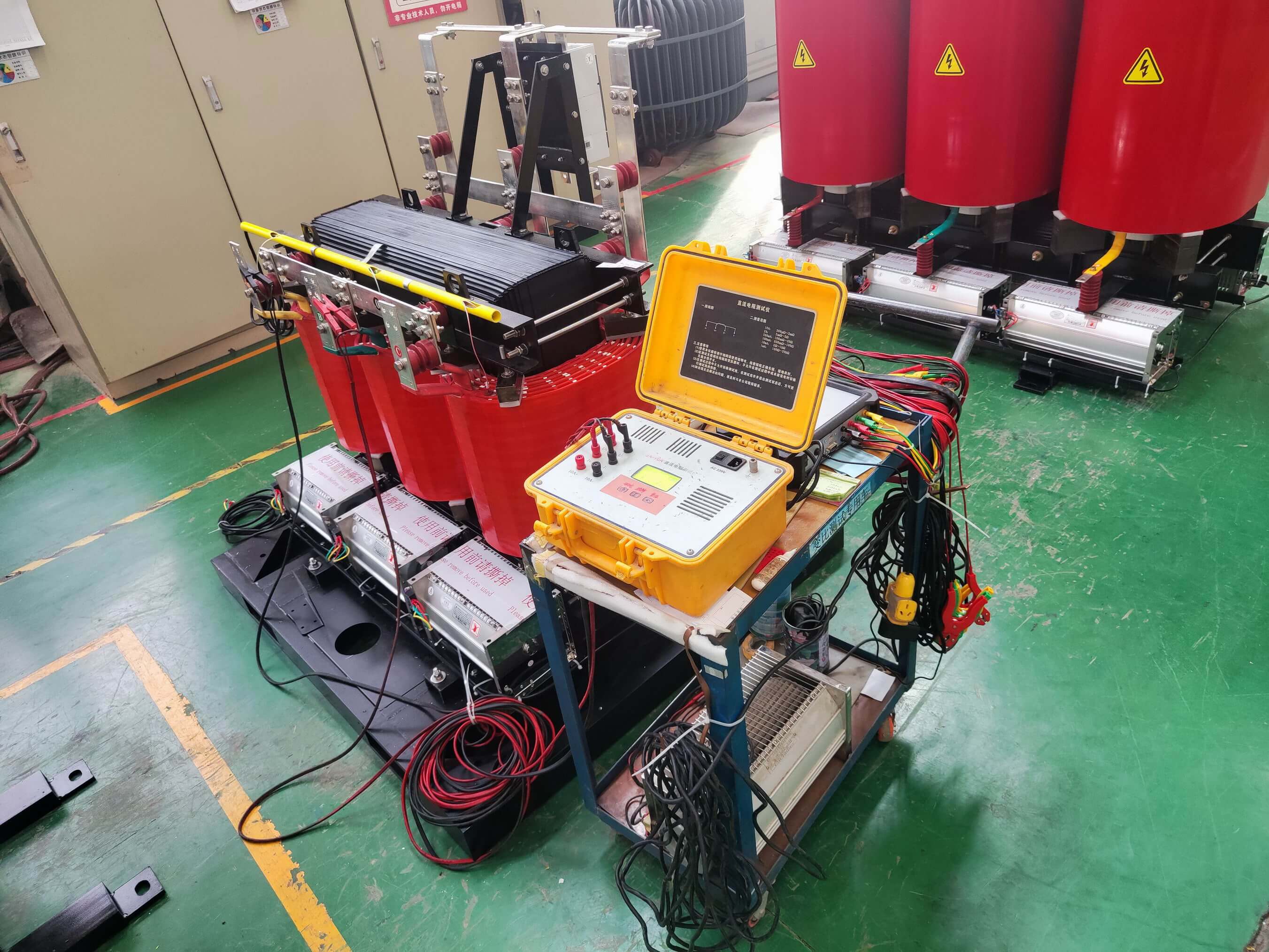
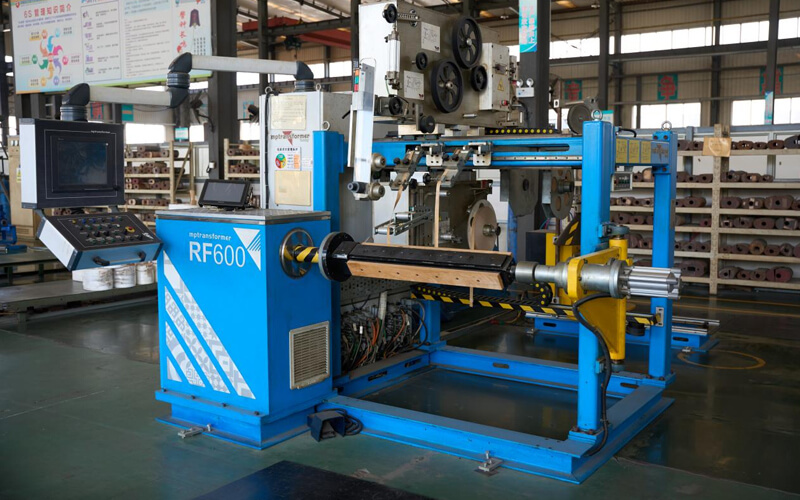
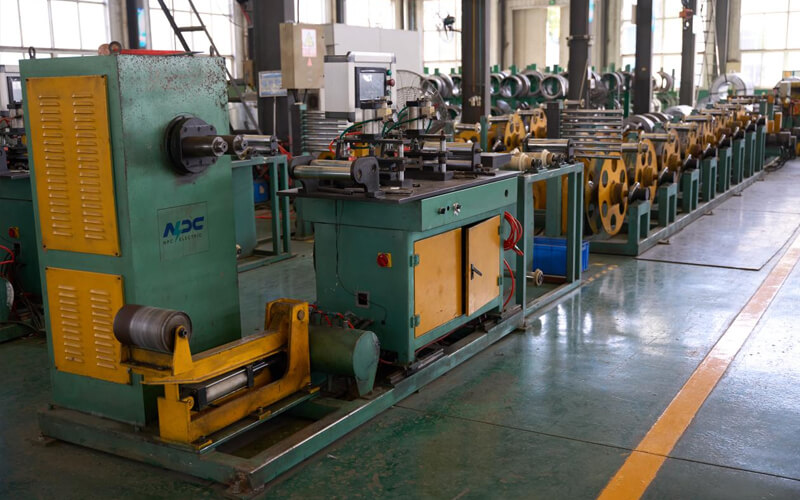
Early manufacturing for the 13.8kV 1600kVA cast resin dry type transformer includes core validation through Epstein frame and flux density testing on premium grain-oriented silicon steel to ensure ultra-low no-load losses. Copper (or aluminum) winding production employs automated precision layering with inter-turn high-potential surge testing for insulation uniformity. Pre-casting conductor alignment uses 3D laser scanning for accurate duct placement. Vacuum pressure impregnation monitors resin flow and void elimination via ultrasonic methods. Core-coil preliminary assembly features low-voltage excitation for magnetization, harmonic, and magnetic balance profiling. These phased validations, tracked digitally with serialization, establish foundations for high-efficiency performance. Advanced progress testing involves resin casting with multi-zone curing monitoring, post-cure hardness testing, and thermal expansion checks. Partial discharge pre-screening during voltage ramps confirms levels below low pC thresholds.
Design Tests
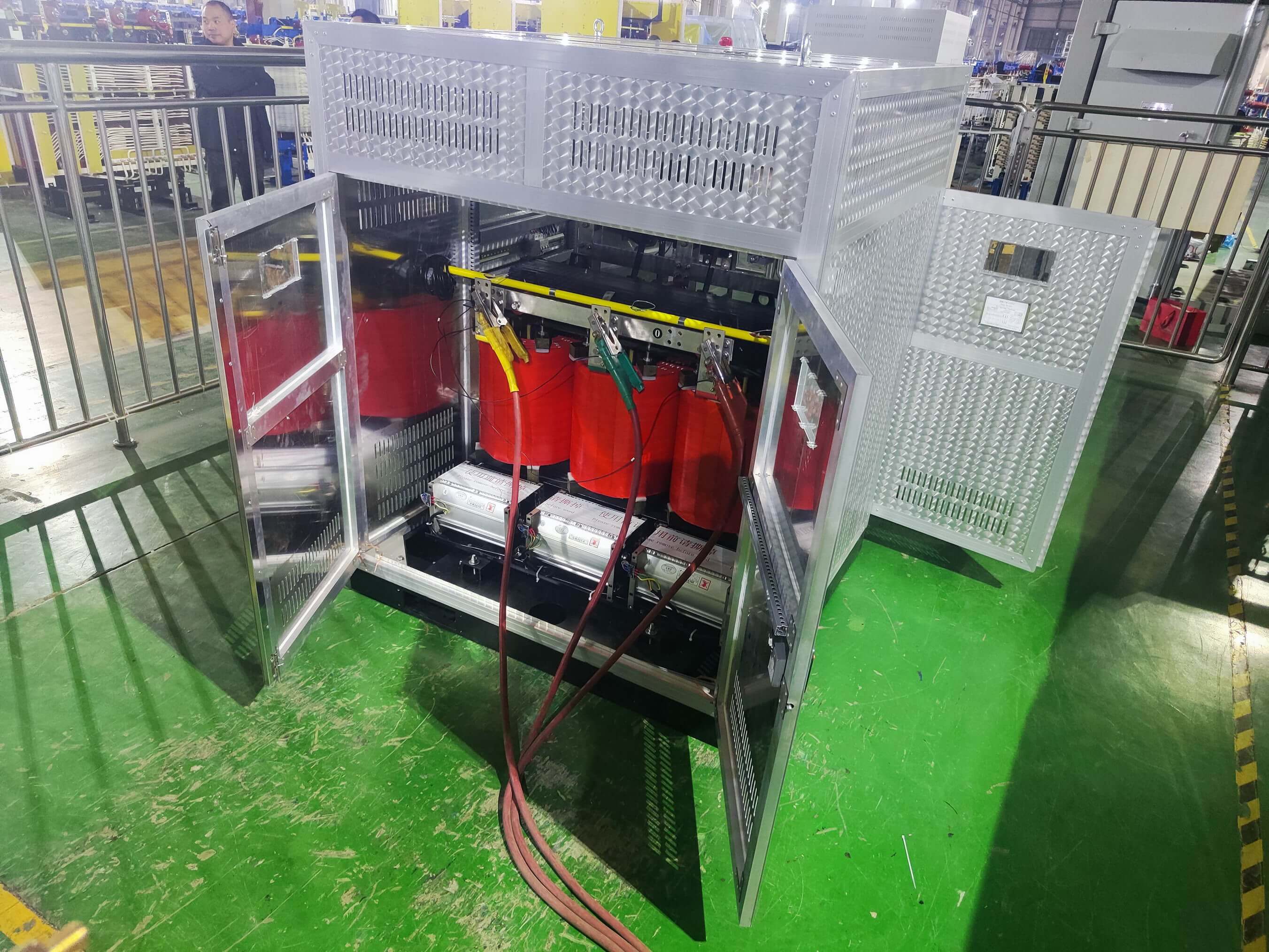
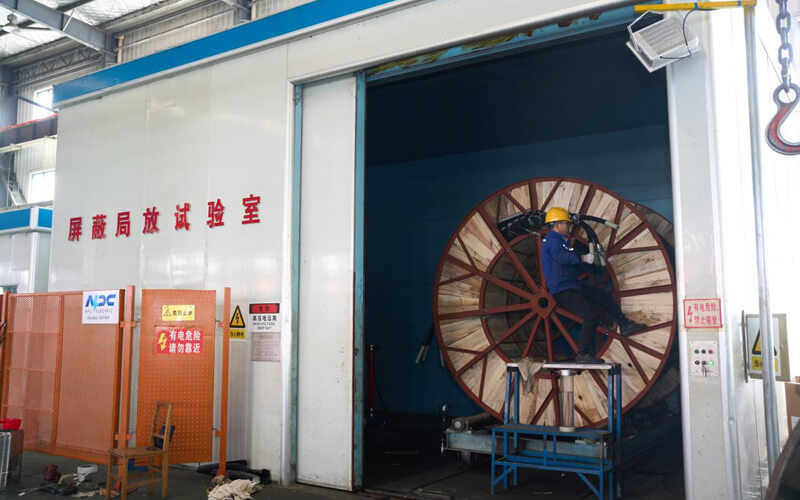
All transformer will be test after finished the production, test items as below:
♦ Insulation Power Factor
♦ Winding Resistance
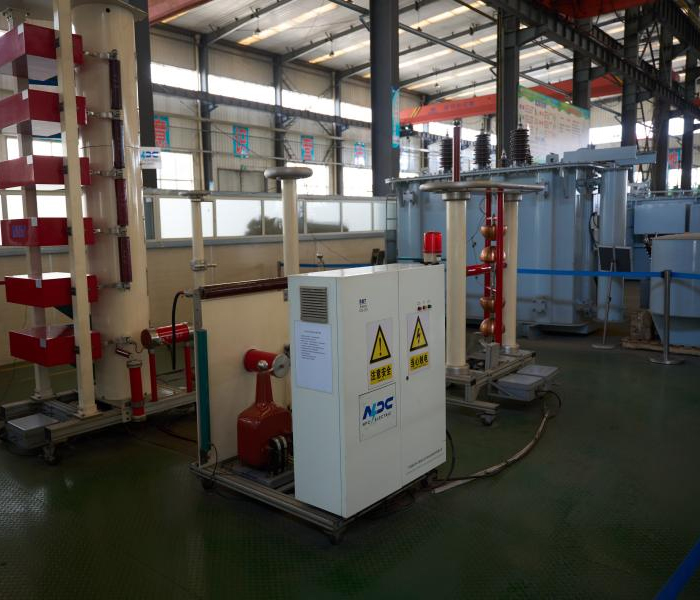
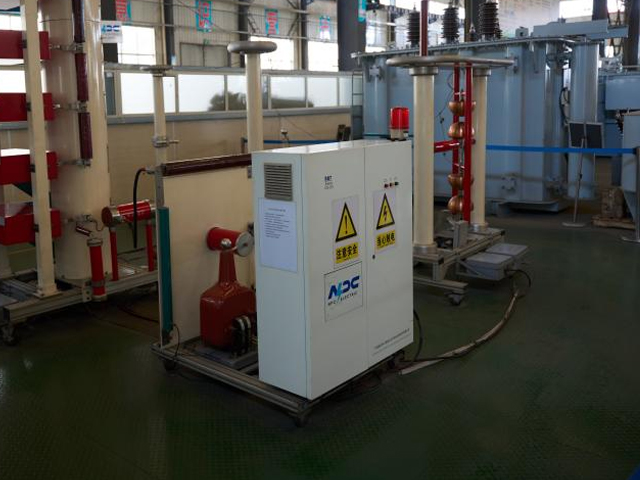
♦ Impulse Tests
♦ On load Loss Test
♦ No Load Loss Test
♦ Leak Test
♦ DC Insulation Resistance Test
♦ Transformer Turns Ratio/TTR (All Tap Voltages)
♦ Impedance Voltage & Load Loss (Rated Voltage)
♦ Excitation & No-Load Loss (Rated Voltage)
♦ Applied Voltage
♦ Insulation Resistance (Rated Voltage)
♦ Temperature Rise
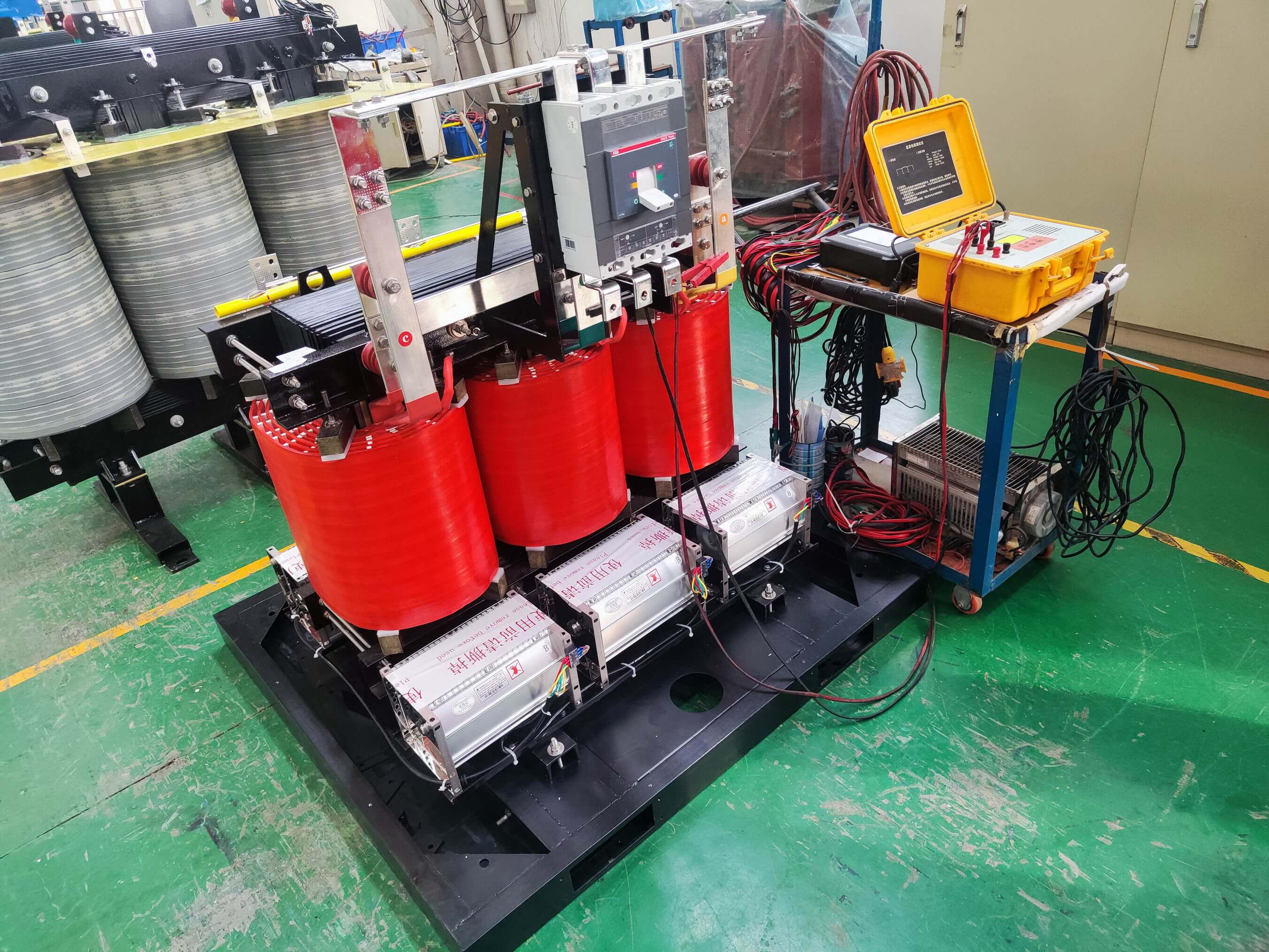
Transformer Factory Acceptance Test
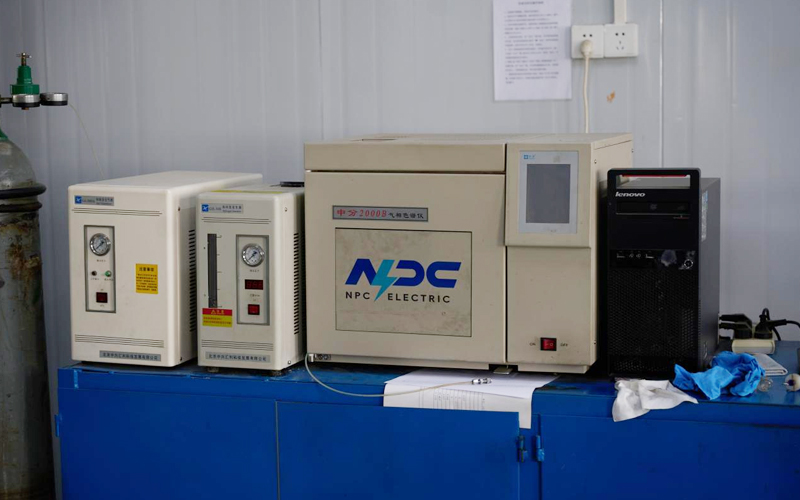
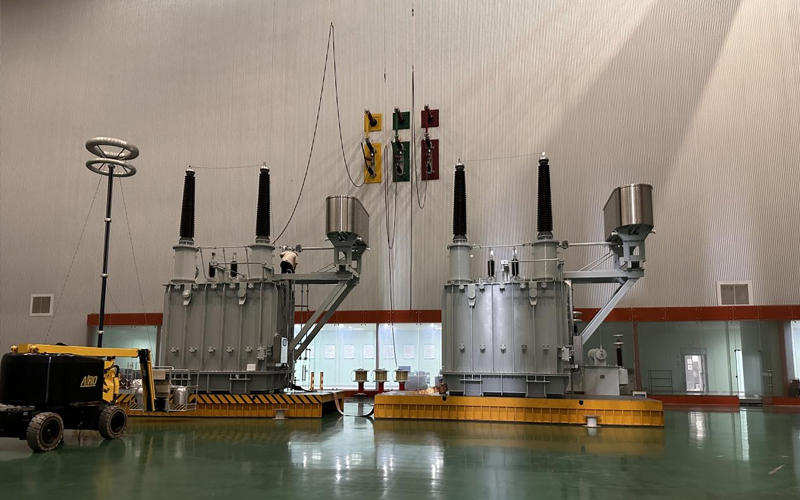
Factory Acceptance Testing begins with precise ratio and polarity verification across taps using dual-reference ratiometric equipment, confirming 13.8kV primary accuracy within 0.15%. No-load loss, excitation current, and harmonics are measured at 90-110% voltage to validate core efficiency against DOE/IEEE targets. Winding resistance at reference temperature enables load loss segregation and thermal modeling. Dielectric routine tests include applied withstand at full levels, insulation resistance exceeding minimums, and dissipation factor below 0.3%. Partial discharge under induced overvoltage limits levels to low pC. These core tests, with optional witnessing, establish baseline certification per IEC 60076-11. Advanced FAT incorporates double-frequency induced overvoltage with sensitive partial discharge/RIV/acoustic monitoring, maintaining discharge below 10pC. Temperature rise testing at rated/overload uses fiber-optic sensors to confirm hotspots within Class F/H limits.
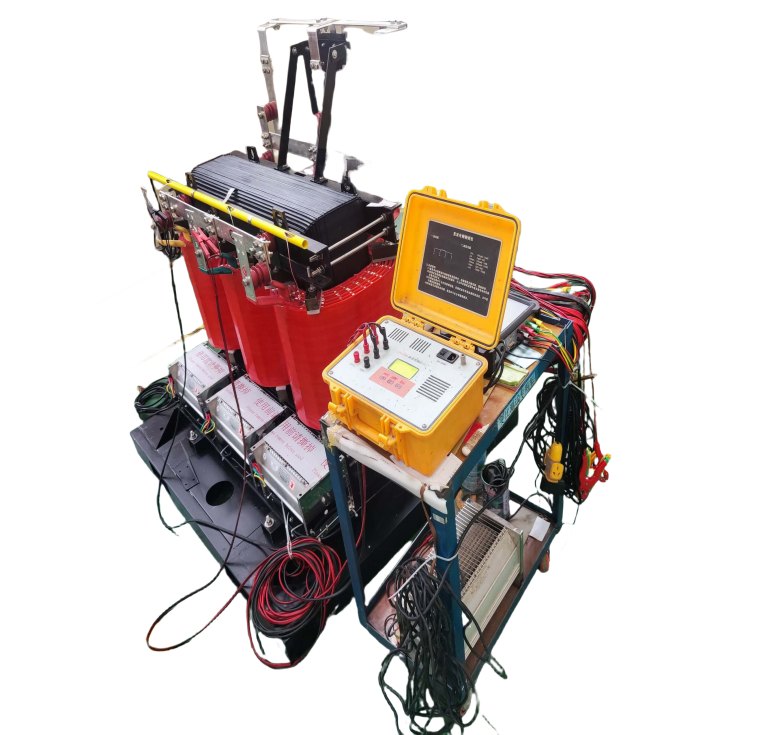
Routine Test - DC Insulation Resistance Test
Purpose of Testing
The purpose of DC insulation resistance testing is to measure the insulation resistance of a device by applying a DC voltage, thereby evaluating the health of the insulation material and the voltage withstand capability of the electrical device. This test helps detect potential insulation aging, moisture or damage, preventing electrical failures in the device.
Testing Equipment
Insulation resistance tester (e.g. Megger, Fluke, Hioki, Klein Tools, etc.)
Voltage source (usually 500V, 1000V, 2500V, or customized according to customer requirements)
Temperature and humidity meter (used to record the ambient temperature and humidity during the test to ensure that the test conditions meet the standard requirements.)
Voltage source (usually 500V, 1000V, 2500V, or customized according to customer requirements)
Temperature and humidity meter (used to record the ambient temperature and humidity during the test to ensure that the test conditions meet the standard requirements.)
Pre-Test Preparation
Make sure the device is properly grounded and fully discharged to prevent residual charge in the device from affecting the test results.
Perform the test under suitable environmental conditions. It is recommended to have a relative humidity below 75%, no rain, and a temperature range of 20-30°C to avoid moisture or temperature fluctuations affecting the test results.
Perform the test under suitable environmental conditions. It is recommended to have a relative humidity below 75%, no rain, and a temperature range of 20-30°C to avoid moisture or temperature fluctuations affecting the test results.
Test Progress
Connect the Test Instrument:
Connect an insulation resistance tester to the high voltage terminal of the device under test and to ground.
Apply Test Voltage:
Select an appropriate test voltage based on the rated voltage of the equipment .
Connect an insulation resistance tester to the high voltage terminal of the device under test and to ground.
Apply Test Voltage:
Select an appropriate test voltage based on the rated voltage of the equipment .
Measure and Record
Start the test and record the following parameters:
Insulation resistance value (MΩ)
Applied voltage
Ambient temperature and humidity during testing
Insulation resistance value (MΩ)
Applied voltage
Ambient temperature and humidity during testing
Temperature Correction
The measured insulation resistance values are corrected to a reference temperature (usually 20°C) for accurate evaluation.
Repeat Testing (if necessary)
Measure different windings (high voltage, medium voltage, low voltage) or each bushing separately, and conduct comparative analysis to ensure the insulation status of all parts.
Evaluation Criteria (Reference)
nsulation resistance ≥ 1000 MΩ (excellent)
500 MΩ ≤ Insulation resistance < 1000 MΩ (good)
100 MΩ ≤ Insulation resistance < 500 MΩ
Insulation resistance < 100 MΩ
500 MΩ ≤ Insulation resistance < 1000 MΩ (good)
100 MΩ ≤ Insulation resistance < 500 MΩ
Insulation resistance < 100 MΩ
Test standard
IEEE C57.12.01 & IEEE C57.12.91 (Dry-Type)
*These comprehensive tests ensure that each transformer meets performance standards and operates
reliably under various conditions.
Application
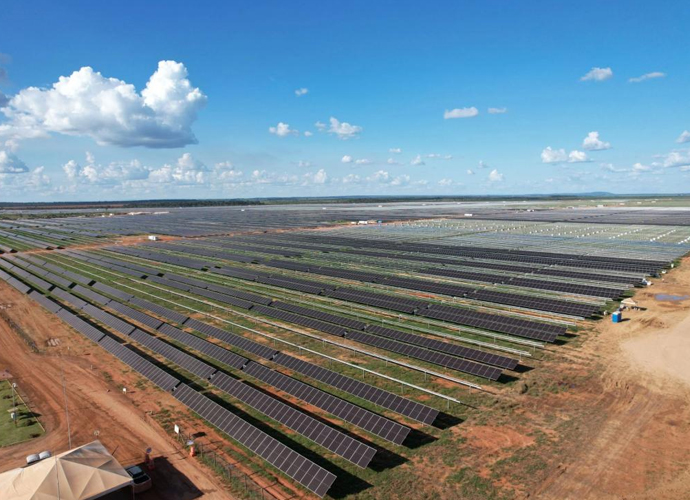
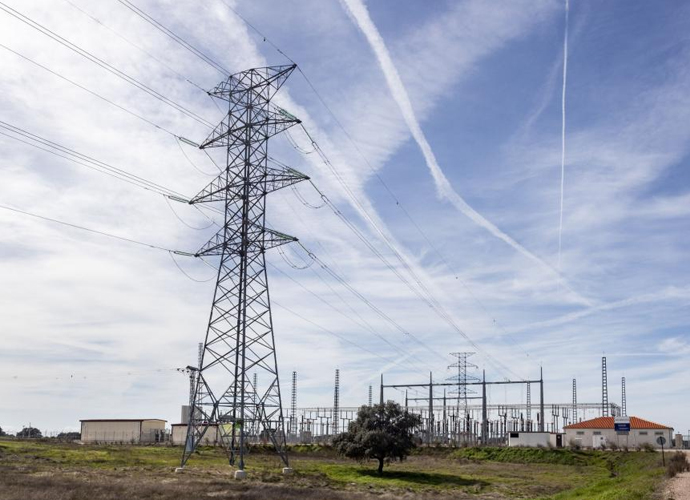
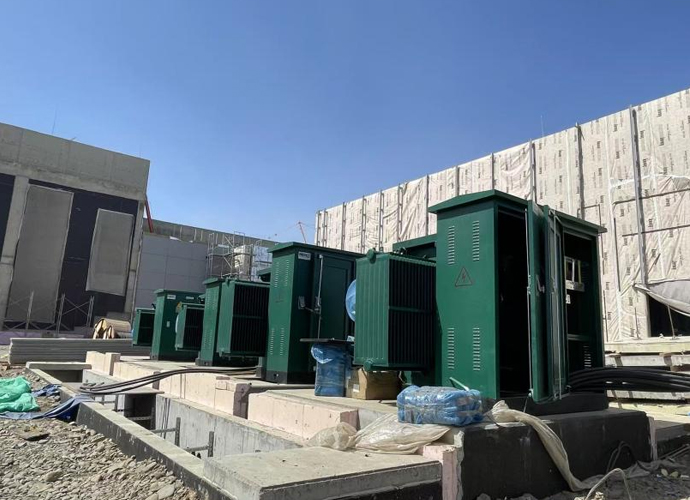
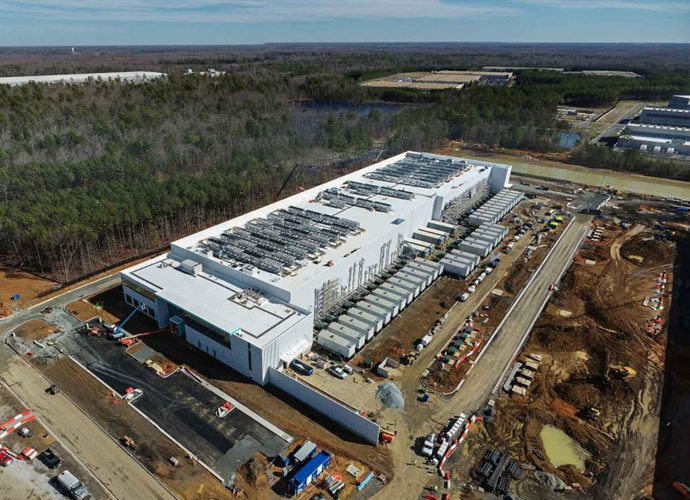
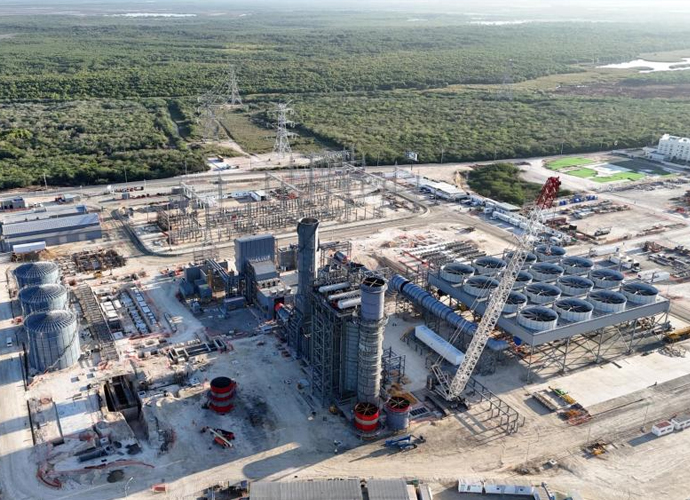
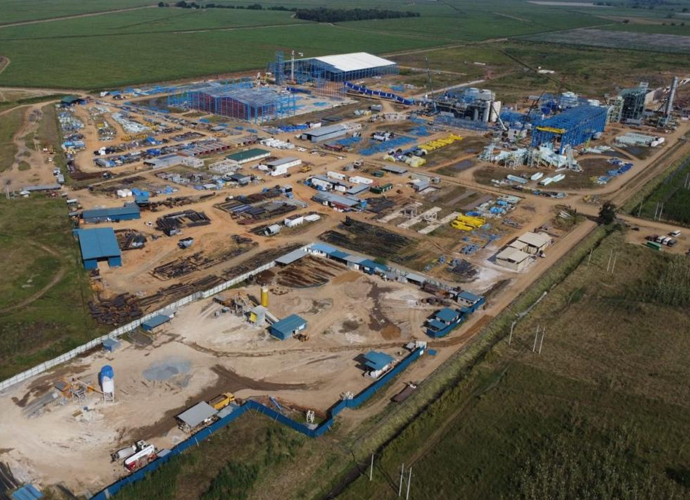
Frequently used in medium-scale industrial plants, data centers, EV charging stations, renewable energy inverter connections, telecommunication hubs, and cleanroom facilities requiring high reliability, harmonic tolerance, and zero oil-spill risk. Also supports pharmaceutical manufacturing, food & beverage processing plants, underground substations, and indoor power distribution rooms demanding low noise, minimal maintenance, and long-term operation in controlled or harsh indoor conditions.


Technical Advantages
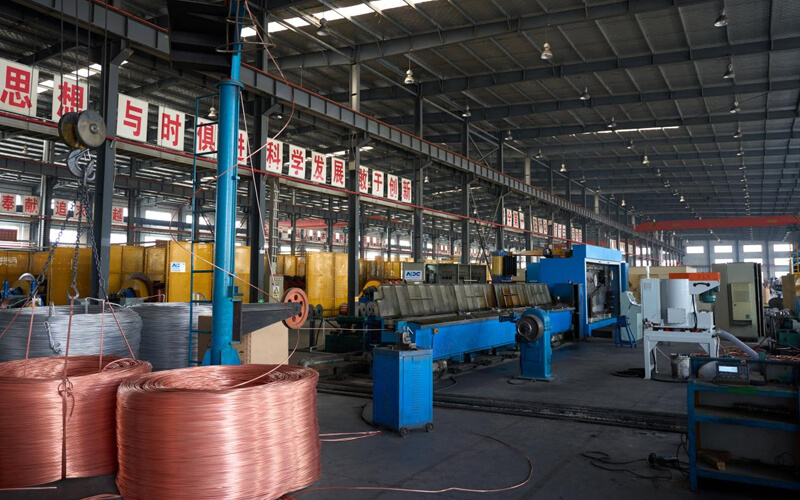
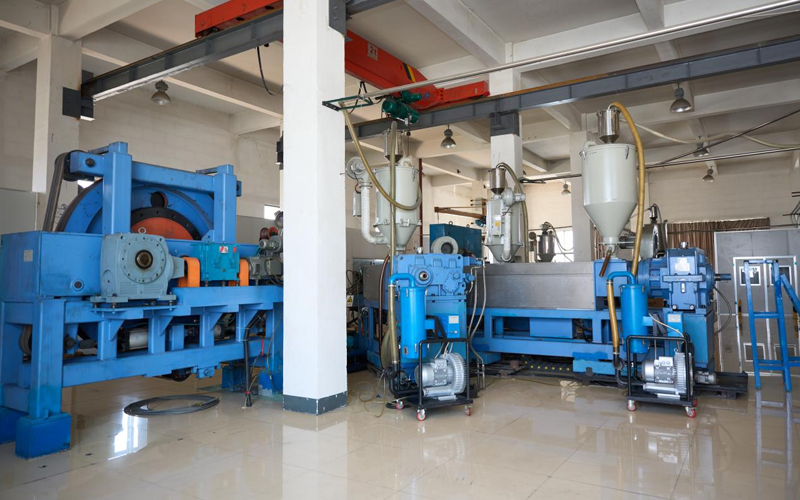
● 30+ years of manufacturing experience
● ISO and UL certified production
● Customized cable and transformer solutions
Product Packaging
Transformers Packaging (1)
Transformers Packaging (2)
Transformers Packaging (3)
Transformers Packaging (4)
Transformers Packaging (5)
Transformers Packaging (6)
Transformers Packaging (7)
Transformers Packaging (8)
Related Products
75kVA Dry Type Transformer | High Efficiency Indoor Power Transformer
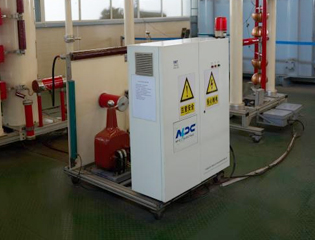
The 75kVA Dry Type Transformer is a compact, three-phase, high-efficiency indoor power transformer engineered for safe, reliable voltage transformation in commercial, institutional, and light industrial environments. Utilizing advanced cast-resin or vacuum pressure impregnated (VPI) insulation technology, it eliminates oil-related fire hazards, maintenance requirements, and environmental risks while delivering exceptional performance in confined spaces, high-rise buildings, hospitals, schools, data centers, office complexes, and renewable energy tie-in applications.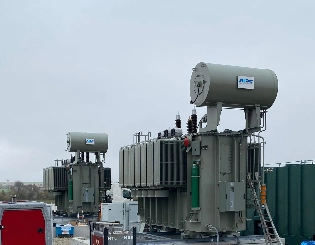
161kV 50MVA Two-Winding Power Transformer – Efficient Oil-Filled Design with OLTC
The 161kV 50MVA Two-Winding Power Transformer is engineered to deliver precise voltage control and stable power transfer in high-voltage transmission and substation networks. Featuring an oil-filled insulation system combined with an On-Load Tap Changer (OLTC), this transformer allows continuous voltage adjustment under load conditions without interrupting system operation. The electromagnetic design emphasizes low losses, high operational efficiency, and consistent performance across variable load profiles. Robust mechanical construction enhances resistance to thermal expansion and short-circuit forces, ensuring long-term reliability in demanding grid environments. Optimized oil circulation supports effective heat dissipation, contributing to extended service life and reduced maintenance requirements. This transformer is well suited for modern power systems where voltage stability, operational flexibility, and dependable energy transmission are critical.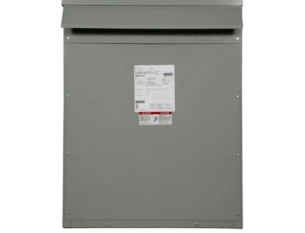
10kVA Isolation Transformer - 120V to 240V
The 10kVA Isolation Transformer – 120V to 240V is specifically engineered to provide safe voltage conversion and complete electrical isolation for critical power applications. Designed to convert a 120V input supply into a stable 240V output while maintaining galvanic separation between the primary and secondary circuits, this transformer significantly improves power quality, reduces electrical noise, and protects connected equipment from voltage disturbances, ground loops, and transient surges. Featuring a high-efficiency silicon steel core and precision-engineered copper windings, the transformer delivers stable output voltage, low operating losses, and exceptional thermal performance. The isolation design effectively suppresses electromagnetic interference (EMI) and common-mode noise, making it particularly suitable for sensitive equipment such as industrial controllers, laboratory instruments, communication systems, medical equipment, and testing devices. The robust construction ensures reliable operation under continuous load conditions while minimizing maintenance requirements. The 10kVA Isolation Transformer is available in both open-frame and enclosed configurations, offering installation flexibility across industrial facilities, commercial buildings, telecom infrastructure, manufacturing plants, and specialized power distribution systems. Its durable design, high efficiency, and superior safety performance make it a dependable solution for voltage conversion and electrical isolation applications.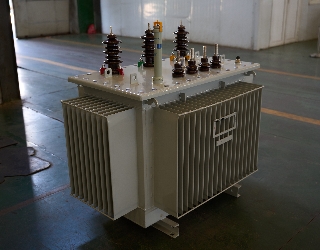
35kV Oil Immersed Transformer
NPC ELECTRIC's 35kV Oil Immersed Transformer is a premium three-phase power transformer optimized for high-voltage step-down in 50/60Hz AC systems with primary ratings of 35kV (or 33-38.5kV range). It incorporates a robust conservator or fully sealed tank design with efficient radiator cooling (ONAN standard, ONAF optional), ensuring exceptional thermal dissipation, moisture exclusion. Outdoor-rated with pollution-resistant bushings (BIL 170-200kV), Dyn11/Ynd1 vector groups, and low noise (<62dB), it provides stable 35kV to secondary voltages (e.g., 10kV/6.3kV/0.4kV) conversion, enhancing grid stability, minimizing transmission losses, and supporting demanding applications in harsh or high-altitude conditions.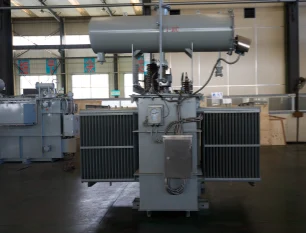
33/0.4kv 2000kVA Power Distribution Transformer
Experience superior power reliability with our 33/0.4kV 2000kVA Power Distribution Transformer, a cutting-edge solution designed for efficient medium-to-low voltage conversion in extensive electrical networks. This oil-immersed transformer incorporates high-permeability grain-oriented steel cores and optimized copper windings to deliver exceptional efficiency, low noise operation, and minimal energy losses even under full load conditions. The robust conservator-type tank filled with premium inhibited mineral oil ensures excellent cooling, high breakdown voltage, and protection against environmental factors. Engineered for long-term performance in challenging climates, it features anti-corrosion coatings, sealed bushings, and overload tolerance up to 150% for short durations. Fully compliant with IEC 60076, GB/T 1094, and other global standards, this 2000kVA distribution transformer supports sustainable energy infrastructure by reducing carbon footprint through enhanced efficiency and reliable power delivery to end users.
30kVA Dry Type Transformer
The 30kVA Dry type transformer complies with ANSI, CSA, NEMA, IEEE, IEC, GB, and DOE standards. NPC ELECTRIC manufactures dry-type transformers in strict accordance with the highest industry and international standards. The 30kVA dry-type transformer provides dependable, oil-free power transformation for indoor environments, stepping down primary voltages such as 480V Delta, 600V, 11kV, or 10kV to secondary outputs like 208Y/120V, 480Y/277V, or 400Y/230V in three-phase configurations.FAQ From Customers
-
What is a Transformer?A transformer is an electrical device used to change the voltage of alternating current (AC). It works on the principle of electromagnetic induction, converting high-voltage current into low-voltage current or low-voltage current into high-voltage current. Transformers are widely used in power transmission, distribution systems, and various electronic devices.
-
What are the main uses of a transformer?The main use of a transformer is voltage conversion. Transformers are used in power transmission systems to help transfer electricity from power plants to consumers. In addition, transformers are also used in electronic devices such as chargers, televisions, power adapters, etc., to adjust the voltage to meet the requirements of different devices.
-
Do you have UL listed?Yes, our transformer has UL listed. We have exported to America many pad mounted transformer,substation transformer and HV.
Welcome your inquiry
Honesty, Integrity, Frugality, Activeness and Passion