
OPGW Cables: What Are They and Why Power Grids Need Them
2026-07-02
1. Introduction to OPGW Cables: Defining the Dual-Purpose Solution
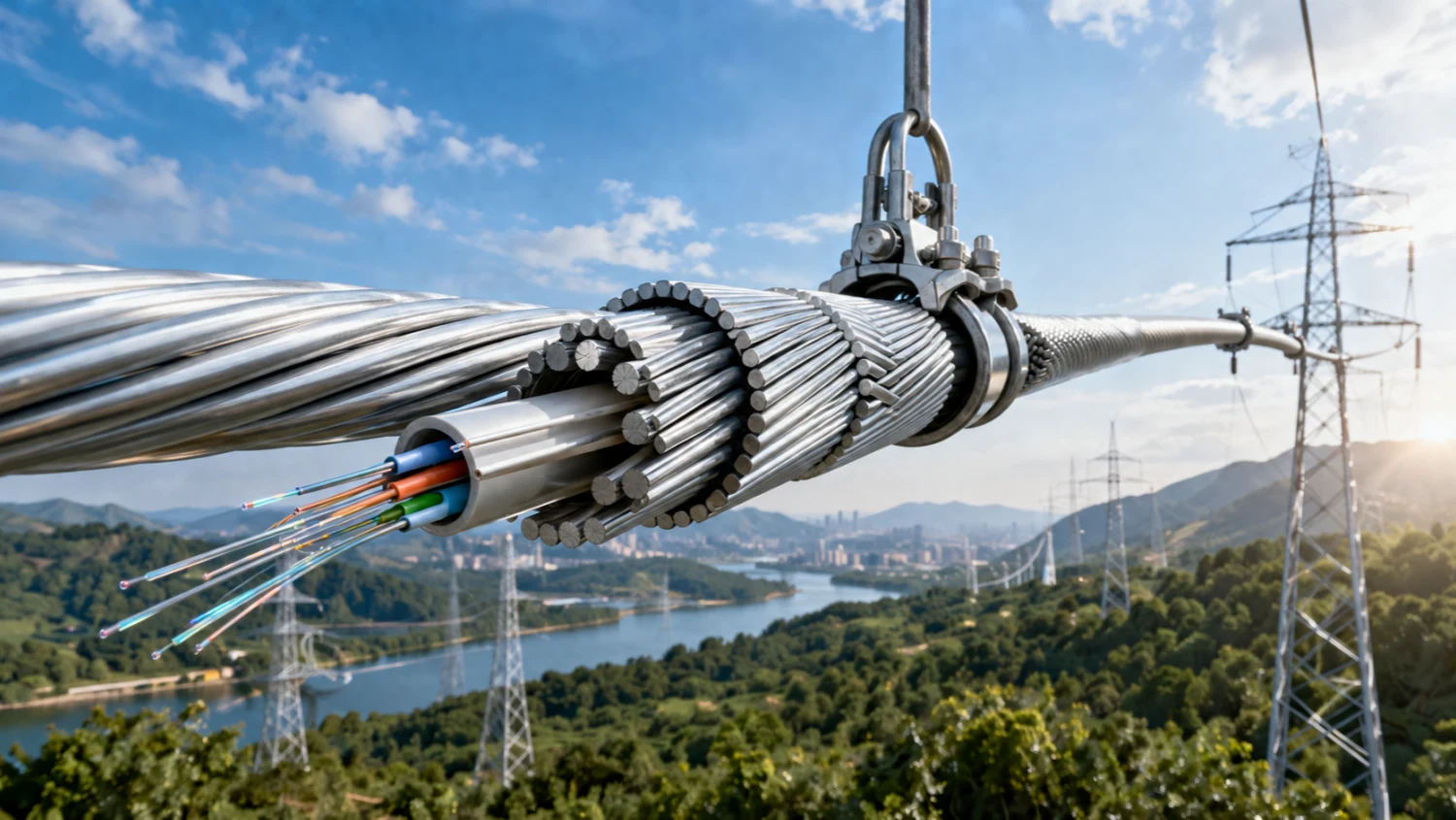
OPGW cable, short for Optical Ground Wire or Optical Fiber Composite Overhead Ground Wire, represents a sophisticated engineering solution that integrates two critical functions into a single overhead cable. At its core, an OPGW cable serves as a traditional ground wire (also known as shield wire or earth wire) while embedding high-capacity optical fibers for data transmission.
From a practical field perspective, transmission line engineers often face the challenge of balancing electrical protection with growing communication demands. Installing separate electric cable systems for grounding and fiber optic links increases costs, structural loads on towers, and maintenance complexity. OPGW resolves this by replacing conventional wires and cables with a hybrid design. The metallic outer layers handle fault currents and lightning strikes, while the inner optical unit provides low-latency, high-bandwidth communication immune to electromagnetic interference.
In modern power grids, where real-time monitoring and automation are non-negotiable, understanding what an OPGW cable is is fundamental. It is not merely an electric cable upgrade but a strategic enabler for grid resilience. Typical deployments occur on high-voltage lines from 110 kV upward, where the cable runs along the top of transmission towers, providing shielding to phase conductors below.
2. Historical Evolution and Technological Maturation
The concept of combining optical fibers with overhead ground wires emerged in the 1980s as utilities sought efficient ways to leverage existing transmission corridors for communication. Early OPGW fiber cable designs addressed limitations of separate installations, such as right-of-way constraints and signal degradation in traditional copper systems.
Over decades, standards like IEEE 1138 have driven rigorous testing for mechanical, electrical, and optical performance. Manufacturers refined constructions to handle extreme short-circuit currents, ice loading, and high winds while maintaining fiber integrity. Today, OPGW cable manufacturer innovations include higher fiber counts (up to 144 or more) and advanced materials like aluminum-clad steel (ACS) and aluminum alloy wires.
From a fieldwork viewpoint, older grids relying on pure metallic ground wires often suffer from communication gaps that delay fault location and response. The evolution to OPGW allows seamless SCADA (Supervisory Control and Data Acquisition) integration and predictive maintenance. This historical shift reflects a broader industry move toward multifunctional infrastructure, reducing capital expenditure over the asset lifecycle. Practical experience shows that well-designed OPGW systems achieve service lives exceeding 30-40 years with proper specification matching to line parameters like span length and fault levels.
3. Technical Structure and Material Composition
A typical OPGW cable features a multi-layered architecture optimized for dual performance. The central optical unit consists of one or more stainless steel or aluminum tubes housing loose-buffer tubes with optical fibers (commonly G.652D single-mode). These tubes are gel-filled for water blocking and fiber protection, allowing excess fiber length to accommodate cable elongation under tension.
Surrounding the core are concentric layers of stranded wires: inner layers often use aluminum-clad steel for high tensile strength and conductivity, while outer layers may incorporate aluminum alloy for optimized electrical performance and corrosion resistance. This design ensures the cable meets or exceeds the short-circuit current capacity and tensile strength of the ground wire it replaces.
Key specifications include:
- Fiber counts: 12 to 144+
- Diameter: Typically 10-30 mm depending on design
- Rated tensile strength (RTS): Up to several hundred kN
- Short-circuit capacity: Often 20-100+ kA²s
- Attenuation: ≤0.21 dB/km at 1550 nm for high-performance fibers
Table 1: Typical OPGW Cable Technical Specifications
|
Parameter |
Typical Value / Range |
Notes / Standards |
|
Fiber Type |
G.652D / G.655 (Single-mode) |
ITU-T compliant |
|
Fiber Count |
12 - 144 fibers |
Up to 288 in advanced designs |
|
Attenuation @ 1550 nm |
≤ 0.21 dB/km |
≤ 0.05 dB per splice |
|
Tensile Strength (RTS) |
50 - 700 kN |
Depends on line span & voltage |
|
Short-Circuit Capacity |
20 - 200+ kA²s (0.5s) |
40°C to 200°C |
|
Cable Diameter |
10 - 30 mm |
Single or multi-layer stranding |
|
Unit Weight |
400 - 1200 kg/km |
Varies with aluminum/steel ratio |
|
Operating Temperature |
-40°C to +80°C |
Installation: -10°C to +50°C |
|
Minimum Bend Radius |
15D (static) / 20D (dynamic) |
D = Cable diameter |
|
DC Resistance (20°C) |
0.08 - 0.98 Ω/km |
Optimized for fault current |
Engineers on-site must verify these parameters against line loading conditions. The metallic components provide low DC resistance for effective grounding, while the optical fibers maintain stable transmission across wide temperature ranges (-40°C to +80°C). This rigorous material science ensures minimal sag under load and superior lightning performance compared to non-conductive alternatives.
4. Key Advantages for Power Grid Reliability and Efficiency
OPGW cables deliver multifaceted benefits that directly impact operational outcomes. Electrically, they excel at dissipating lightning strikes and fault currents, protecting phase conductors and reducing outage frequency. The conductive path bonds towers to ground, enhancing overall system stability.
Optically, OPGW fiber cable enables high-speed, interference-free communication essential for protection relaying, phasor measurement units (PMUs), and wide-area monitoring. In practice, this translates to faster fault isolation—often within milliseconds—minimizing damage and improving SAIDI/SAIFI indices.
Additional advantages include:
- Cost efficiency: Single installation instead of separate ground wire and fiber runs
- Reduced tower loading compared to adding parallel cables
- Future-proof bandwidth for smart grid data, renewable integration, and even leased dark fiber revenue
- Enhanced security: Buried within the metallic structure, fibers are protected from vandalism and environmental degradation
From a maintenance crew's perspective, OPGW simplifies asset management. One cable handles both grounding tests and optical time-domain reflectometer (OTDR) checks. In high-lightning regions, the design's short-circuit rating prevents cascading failures, delivering measurable improvements in grid resilience.
5. Applications in High-Voltage Transmission Lines
OPGW cable finds primary use in overhead transmission lines where dual functionality is paramount. On new 220 kV to 765 kV+ projects, it is installed as the top shield wire, providing both lightning protection and a backbone for utility communication networks.
Practical deployments include interconnecting substations for real-time control, enabling condition monitoring of transformers and breakers, and supporting renewable energy evacuation from remote wind/solar farms. In transmission corridors, opgw cable in transmission line setups facilitates video surveillance, environmental sensors, and integration with emerging technologies like digital twins for grid simulation.
Internationally, utilities deploy it across diverse terrains—from coastal areas requiring corrosion-resistant designs to mountainous regions demanding high tensile strength. For export-oriented manufacturers, customizing OPGW to specific IEC/IEEE standards and local environmental conditions is critical for project success. The cable's ability to carry voice, data, and protection signals makes it indispensable in modern interconnected power grids.
Table 2: Key Performance Requirements for OPGW in Transmission Lines
|
Voltage Level |
Recommended Short-Circuit Capacity (kA²s) |
Typical Fiber Count |
Max Ruling Span (m) |
Primary Applications |
|
110 - 220 kV |
20 - 60 |
24 - 48 |
400 - 600 |
Substation interconnection, SCADA |
|
220 - 500 kV |
60 - 120 |
48 - 96 |
600 - 1000 |
Smart grid monitoring, PMU data |
|
≥ 500 kV (UHV) |
120 - 200+ |
72 - 144+ |
800 - 1200 |
Renewable integration, Wide-area control |
|
Key Consideration |
Fault current & lightning density |
Bandwidth needs |
Terrain & loading |
Grid modernization & digitalization |
6. Practical Installation and Maintenance Considerations
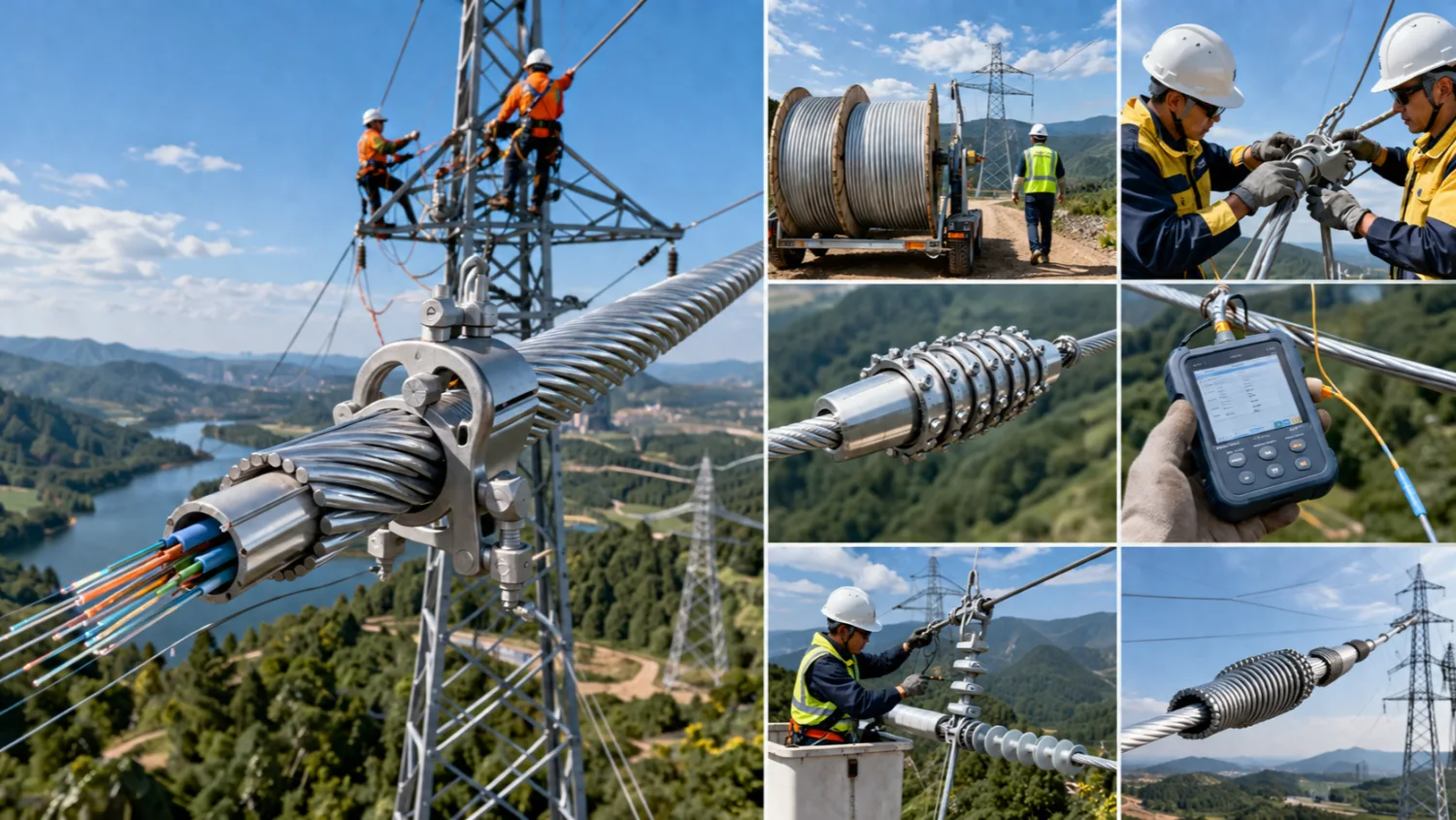
Successful OPGW deployment demands careful planning from a field execution standpoint. Installation typically requires line outages, as the cable replaces or augments existing ground wires using stringing equipment, tensioners, and pullers calibrated to the cable's weight and RTS.
Key practices include:
- Sag and tension calculations accounting for thermal expansion and ice/wind loads
- Proper grounding at each tower to maintain electrical integrity
- Splicing optical fibers in weatherproof closures with low-loss fusion splices (<0.05 dB)
- Post-installation OTDR testing to verify attenuation budgets
Maintenance involves periodic visual inspections, corrosion assessments on metallic layers, and optical performance monitoring. Unlike all-dielectric cables, OPGW requires attention to grounding continuity but offers robust mechanical protection. Crews appreciate the consolidated maintenance scope—one asset instead of multiple. Best practices emphasize matching cable specifications precisely to the line's ruling span and fault levels to avoid premature aging.
7. Comparison with Alternative Technologies (e.g., ADSS)
When evaluating OPGW cable against alternatives like ADSS (All-Dielectric Self-Supporting), practical trade-offs become clear. ADSS is lightweight, non-conductive, and suitable for live-line installation near energized conductors, making it ideal for retrofits without outages. However, it lacks inherent grounding capability, requiring a separate ground wire.
Table 3: OPGW vs ADSS Cable – Performance Comparison
|
Feature |
OPGW Cable |
ADSS Cable |
Winner / Best Use Case |
|
Primary Function |
Grounding + Communication |
Communication only |
OPGW for HV lines |
|
Construction |
Metallic (Al/Steel + Fiber) |
All-Dielectric (Aramid/FRP) |
ADSS for live-line installation |
|
Lightning / Fault Protection |
Excellent (handles high kA) |
None (requires separate ground wire) |
OPGW |
|
Typical Span Length |
200 - 1200 m |
500 - 1500+ m |
ADSS for long spans |
|
Weight |
400 - 1200 kg/km |
100 - 250 kg/km |
ADSS (lighter load on towers) |
|
Installation |
Requires outage |
Live-line possible |
ADSS for retrofits |
|
EMI Immunity |
Good (with proper grounding) |
Excellent |
ADSS |
|
Voltage Level Suitability |
≥ 110 kV (ideal for 220-765 kV) |
10 - 500 kV |
OPGW for ultra-high voltage |
|
Typical Fiber Capacity |
12 - 144+ |
12 - 288 |
Similar |
|
Lifespan |
30 - 40+ years |
20 - 30 years |
OPGW |
OPGW excels in high-voltage applications needing combined protection and communication. Its heavier construction provides better sag performance under icing and superior lightning shielding, though it demands de-energized installation and potentially tower reinforcements. Electrically, OPGW handles fault currents that ADSS cannot. For utilities prioritizing grid protection alongside data, OPGW delivers superior long-term value despite higher upfront complexity.
Other electric cable options, such as traditional ACSR ground wires, offer no communication pathway, forcing parallel fiber deployments that increase right-of-way usage and costs. OPGW's hybrid nature positions it as the optimized choice for comprehensive transmission line modernization.
8. Future Outlook: Why Power Grids Cannot Afford to Ignore OPGW
Looking ahead to 2026 and beyond, OPGW cables are pivotal for smart grid evolution, renewable integration, and grid digitalization. Rising fiber counts and embedded sensing capabilities will support AI-driven predictive maintenance and autonomous grid operations. Market growth reflects this necessity, driven by aging infrastructure replacement and expanding ultra-high-voltage networks.
From an engineering and operational viewpoint, power grids facing increasing extreme weather, cyber threats, and load variability need the reliability and bandwidth OPGW provides. Partnering with an experienced opgw cable manufacturer ensures tailored solutions meeting international standards.
In conclusion, OPGW is far more than an advanced wires and cable technology—it is a foundational element enabling resilient, intelligent power grids. Utilities investing in it today secure operational excellence and future readiness in an electrified world.
FAQ
Q1: What is an OPGW cable?
A: OPGW cable, also known as Optical Ground Wire or Optical Fiber Composite Overhead Ground Wire, is a dual-function cable that serves as both a traditional ground wire for lightning protection and a high-capacity optical fiber cable for data transmission. It is widely used in high-voltage power grids to combine electrical grounding with reliable communication.
Q2: What is the difference between OPGW cable and ADSS cable?
A: OPGW cable is a metallic hybrid design that provides grounding and fault current carrying capability, making it ideal for high-voltage transmission lines (≥110 kV). In contrast, ADSS is an all-dielectric, non-conductive cable that is lighter and suitable for live-line installation but does not replace the ground wire. OPGW is preferred when both protection and communication are required in one cable.
Q3: Why do power grids need OPGW cables?
A: Power grids need OPGW cables because they improve grid reliability by offering lightning protection, fast fault detection, and high-speed communication for smart grid applications. They reduce infrastructure costs by combining grounding and fiber optic functions, support renewable energy integration, and enable real-time monitoring essential for modern transmission lines.
Q4: What are the typical specifications of OPGW fiber cable?
A: Typical OPGW fiber cable specifications include 12 to 144 optical fibers, attenuation ≤0.21 dB/km at 1550nm, short-circuit capacity of 20–200 kA²s, and tensile strength up to 700 kN. The cable diameter ranges from 10–30 mm, with operating temperatures from -40°C to +80°C, compliant with IEEE 1138 and IEC standards.
Q5: How is OPGW cable installed on transmission lines?
A: OPGW cable installation usually requires a line outage. The process involves stringing the cable using tensioners and pullers, followed by sag-tension adjustment, fiber splicing in closures, and OTDR testing. Proper grounding at each tower is critical to maintain electrical performance and safety.
Q6: Who are the leading OPGW cable manufacturers?
A: Leading opgw cable manufacturers include Prysmian, ZTT, Fujikura, LS Cable & System, and APAR. When selecting a manufacturer, utilities should focus on compliance with international standards, custom engineering capabilities, and proven track records in high-voltage projects.

Related Articles
Related Products
SHOUOJ-mining-cable-2.webp)
(N)SHOU O/J - 0.6/1kV Mining Cable
The (N)SHOU O/J - 0.6/1kV flexible rubber-insulated cable is engineered according to VDE 0250 standards for reliable power supply in harsh environments such as underground mining, tunneling, and heavy-duty industrial sites. Its robust construction features Class 5 flexible copper conductors, durable rubber insulation, and a heavy-duty rubber outer sheath, delivering excellent mechanical strength, oil resistance, and flame retardancy. Designed for both fixed and flexible installations, the cable operates within a wide temperature range (-40°C to +80°C fixed) and withstands short-circuit temperatures up to +250°C. It is ideal for powering mobile equipment, submersible pumps, and industrial machinery in mining operations, particularly where abrasion resistance and safety are essential.
Control Cable 0.6/1 kV CVV to IEC 60502 Standard (2-30 core)
NPC Electric Control Cable 0.6/1 kV CVV to IEC 60502 Standard (2-30 core) is engineered for superior performance in demanding electrical control applications. Featuring concentric stranded copper conductors for excellent conductivity and flexibility, this cable is insulated with high-quality PVC in black, ensuring robust protection against environmental factors. Cores are identified with printed white numbers on black insulation for easy installation and maintenance. A PVC inner sheath and outer jacket provide additional mechanical strength and flame retardancy, making it suitable for indoor, outdoor, duct, and underground setups. Compliant with IEC 60502, it supports voltages up to 1 kV and operates in temperatures from -15°C to 70°C. This cable excels in control circuits, instrumentation, and auxiliary power systems, minimizing signal interference and ensuring data integrity. Available in 2 to 30 cores, it offers customization for specific project needs. Manufactured with precision, it reduces downtime and enhances system efficiency in industrial environments. Choose this CVV cable for long-lasting reliability, backed by rigorous quality testing and international standards.
Drive Isolation Transformer
The Drive Isolation Transformer is a specialized transformer engineered to provide electrical isolation, voltage transformation, harmonic mitigation, and enhanced power quality for variable frequency drives (VFDs), motor control systems, and industrial automation applications. Installed between the utility power source and drive equipment, the transformer protects sensitive drive electronics from electrical disturbances while reducing the impact of harmonics generated by inverter-based systems. This improves system reliability, extends equipment lifespan, and enhances operational stability in demanding industrial environments. Manufactured using premium-grade silicon steel cores, high-conductivity windings, and advanced insulation systems, the drive isolation transformer delivers exceptional efficiency, thermal performance, and voltage regulation. The transformer effectively isolates common-mode noise, suppresses transient voltage spikes, reduces grounding issues, and minimizes electromagnetic interference within industrial electrical networks. The Drive Isolation Transformer supports both low-voltage and medium-voltage drive systems and can be customized for harmonic reduction, phase shifting, multi-pulse drive configurations, and renewable energy applications. Its rugged construction and intelligent monitoring capabilities make it an ideal solution for modern industrial power systems requiring reliable motor control and superior electrical protection.
167kVA Completely self-protected(CSP) Single Phase Pole Mounted Transformer
167 kVA Completely Self-Protected (CSP) single-phase overhead transformers, meticulously engineered to meet international standards such as IEEE C57.12.00, IEEE C57.12.20, DOE-2016 Efficiency, CSA C2.1, and CSA C2.2. It is designed for efficient, safe, and reliable power transmission. It is mainly used for power supply in residential, commercial, and small industrial areas to ensure stable power output and long-term trouble-free operation. The transformer has built-in multiple safety protection functions, including overload protection, short circuit protection, and overvoltage protection, which can effectively prevent electrical failures and ensure the safety of the transformer under extreme working conditions. The transformer adopts advanced technology and high-quality materials, with low loss and high efficiency, which can minimize energy waste and improve power transmission efficiency.
Copper Conductor Triplex Service Drop Cable 600V
The Copper Conductor Triplex Service Drop Cable 600V delivers exceptional performance for overhead power distribution from utility poles to service entrances. It features three stranded soft copper conductors: two phase conductors (common sizes 8 AWG to 2 AWG or larger) insulated with black cross-linked polyethylene (XLPE) for outstanding weather, UV, and moisture resistance, twisted around a bare copper neutral messenger for mechanical support and reduced sag. Rated 600V phase-to-phase with conductor temperatures up to 90°C (XLPE), it provides higher ampacity than aluminum equivalents (e.g., ~85–180A depending on size) due to superior conductivity. Compliant with ASTM B-1, B-3, B-8, and ICEA S-76-474 standards, the Copper Conductor Triplex Service Drop Cable offers excellent corrosion resistance, lower voltage drop, and long-term reliability in demanding aerial installations where premium conductivity is essential.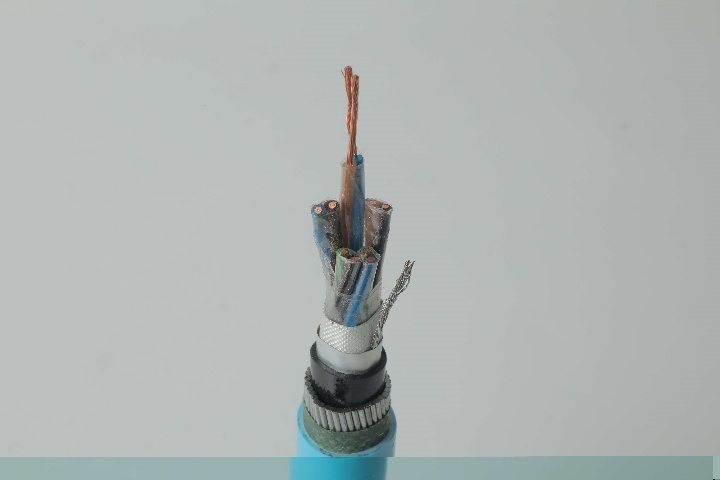
Instrumentation Cables—Mica Tapped, XLPE Insulated, Individual &Overall Screened, Wire Armoured LSZH Sheathed Cables(CU/GMT/XLPE/IOSCR/SWA/LSZH)
CU/GMT/XLPE/IOSCR/SWA/LSZH instrumentation cables are engineered for precise signal and control transmission in environments with high electrical noise and strict safety requirements. The mica tape layer protects the copper conductor during fire exposure, while XLPE insulation ensures stable electrical characteristics and heat resistance. Individual screening of each circuit, combined with an overall screen, provides superior protection against electromagnetic interference, enabling accurate and stable signal performance. Steel wire armour enhances mechanical durability and protects the cable from external damage. The LSZH sheath limits smoke emission and corrosive gases, making the cable suitable for enclosed and public installations. This robust design makes the cable ideal for complex industrial applications requiring both signal integrity and safety compliance.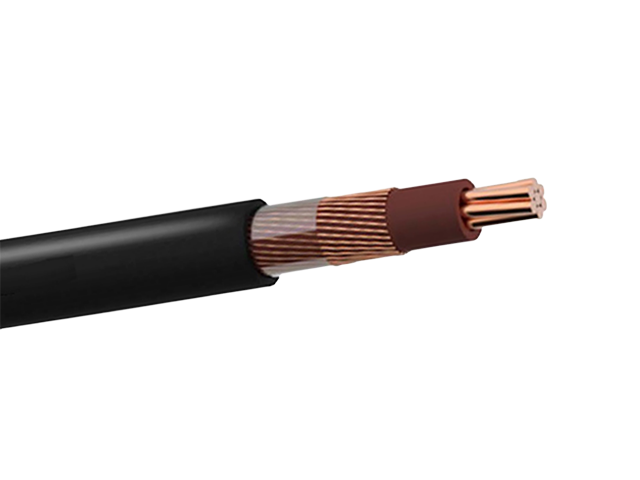
8000 Aluminum Alloy Concentric Flat LV CABLE
The 8000 Aluminum Alloy Concentric Flat LV Cable is a high-performance, low-voltage service entrance cable designed for reliable power delivery from the distribution network to the meter panel. Manufactured with compact stranded AA-8000 series aluminum alloy phase conductors and concentric neutral, it offers superior flexibility, high conductivity, and excellent mechanical strength compared to traditional aluminum cables. XLPE insulation provides outstanding electrical properties and sunlight resistance, while the flat concentric construction ensures easy installation in tight spaces. Rated 600V or below, this cable meets UL 854, ASTM B800, and related standards. The 8000 Aluminum Alloy Concentric Flat LV Cable undergoes rigorous quality testing from raw materials to finished product, guaranteeing long-term durability, low sag, and reliable performance in wet, dry, or direct burial applications.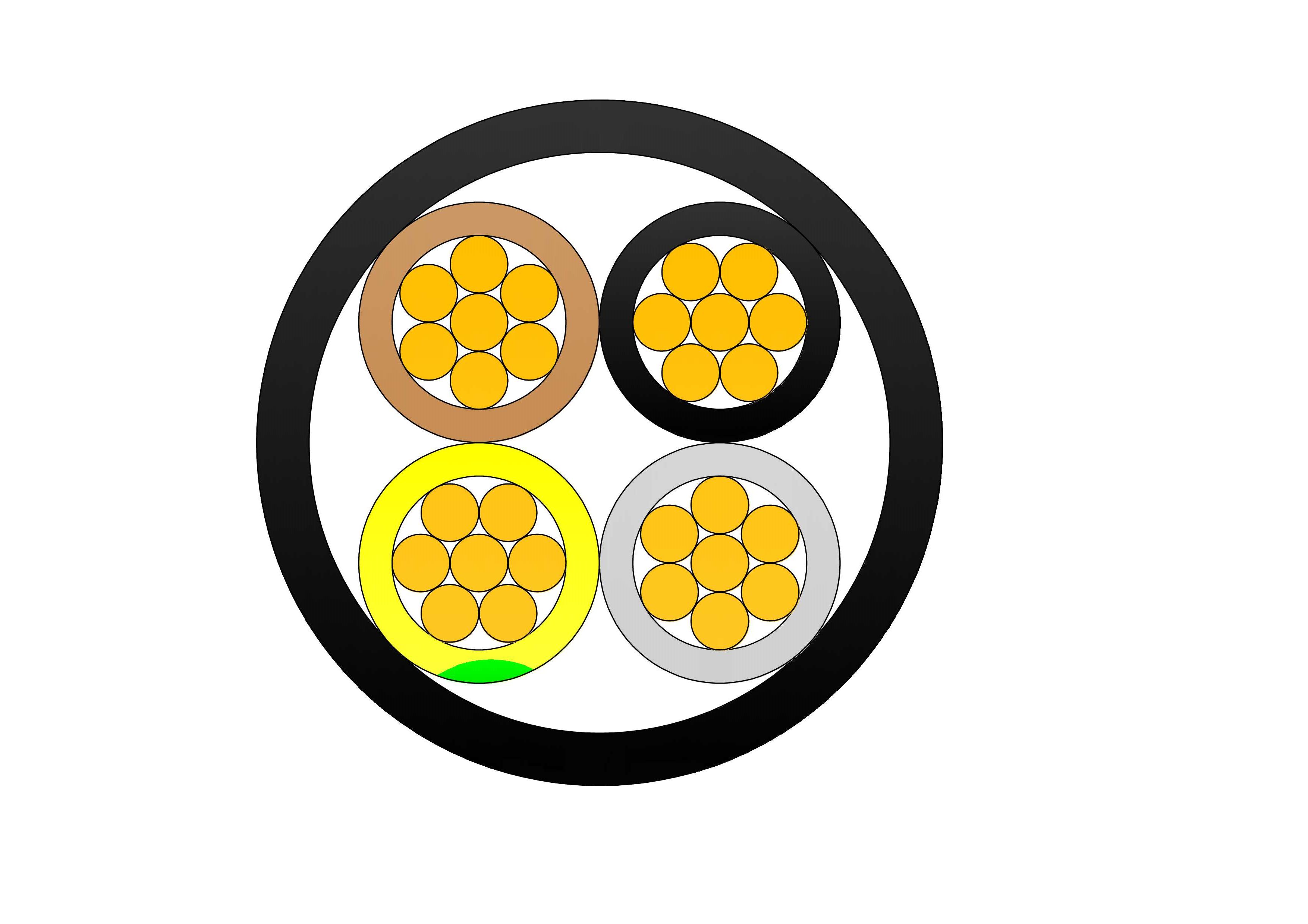
N2XY 0.6/1kV Low Voltage Power Cable
N2XY 0.6/1kV is a low-voltage power cable built to IEC/EN 60228 standards, ideal for fixed installations in dry or damp environments, including indoors, outdoors, and in concrete (excluding vibration zones), without the need for additional mechanical protection. Constructed with high-purity copper conductors, thermosetting XLPE insulation, and tough PVC jacket, it meets stringent IEC 60502-1 requirements. This cable provides low dielectric losses, excellent short-circuit tolerance, and strong resistance to environmental factors like water and abrasion. Perfect for fixed installations in wet or dry locations, including direct burial without armour when mechanical protection is not critical. Enhanced bending radius and flame-retardant properties facilitate safe, easy handling.
Three Phase Cast Resin Dry Type Transformer
The Three Phase Cast Resin Dry Type Transformer is a safe, high-efficiency indoor power transformer series designed for reliable medium-voltage to low-voltage step-down in commercial, institutional, industrial, data center, hospital, school, high-rise, and renewable energy applications. With advanced epoxy cast-resin encapsulation and full high-conductivity copper windings, it completely eliminates oil fire risks, environmental hazards, and routine maintenance while offering excellent dielectric strength, thermal performance, resistance to moisture/dust/chemicals, and very low noise levels — making it the ideal choice for fire-sensitive, noise-restricted, space-constrained, or high-reliability indoor installations. Fully compliant with IEC 60076-11, IEC 60076-1/2/3/5/20, EN 50588-1 (eco-design), IEEE C57.12.01, IEEE C57.12.91, UL 1561 (optional listing), and DOE 2016 efficiency standards.2Y-high-voltage-power-cable-2.webp)
2XS(FL)2Y HDPE High Voltage 36/60 (72.5) kV Power Cable
The 2XS(FL)2Y HDPE High Voltage 36/60 (72.5) kV Power Cable is a high-performance single-core copper conductor cable designed for medium-to-high voltage power transmission. It features XLPE insulation, extruded semi-conductive conductor and insulation screens, and semi-conductive water-swellable tapes for longitudinal water blocking. A longitudinally applied aluminium tape moisture barrier coated with PE copolymer ensures superior moisture resistance and mechanical protection. The HDPE oversheath provides outstanding abrasion, chemical, and environmental resistance, making it suitable for direct burial, underwater, outdoor, indoor, and duct installations. Manufactured in compliance with IEC 60840, this cable guarantees reliable long-term electrical performance in demanding environments such as power stations, industrial plants, and distribution networks.
2 Palomino Aluminum Conductor Quadruplex Overhead Service Drop Cable
2 Palomino Aluminum Conductor Quadruplex Overhead Service Drop Cable is designed for delivering 3-phase power from pole-mounted transformers directly to the user's service entrance. Built with three 2 AWG aluminum phase conductors and one neutral messenger (7-strand) insulated with polyethylene or XLPE and formed into a quadruplex assembly, it meets ASTM and ICEA requirements for 600V service. The tough insulation offers outstanding protection against UV rays, moisture, tree contact, and abrasion. Self-supporting messenger design ensures easy pulling and reduced sag during installation. The 2 Palomino Quadruplex Service Drop Cable supports efficient power transfer with low voltage drop and high durability in extreme temperatures. Popular for its lightweight construction and reduced installation time, it is the choice for electricians and utilities. Widely deployed in housing developments, commercial services, and temporary power setups, this cable ensures safe, long-lasting overhead connections from distribution transformers to customer service entrances worldwide.
200kVA Dry Type Transformer
200kVA Dry Type Transformer is designed for high efficiency and reliable performance in various industrial and commercial applications. With a robust and compact design, it ensures safe operation without the need for external cooling fluids. Ideal for environments where space and fire safety are critical, this transformer provides reliable power distribution while minimizing environmental impact. Built with advanced materials and precision engineering, it offers excellent durability, low maintenance, and energy savings, making it the perfect choice for demanding electrical needs.
6 Hippa Aluminum Conductor Triplex Overhead Service Drop Cable Wire
6 Hippa Aluminum Conductor Triplex Overhead Service Drop Cable Wire is engineered for safe and efficient overhead service drop connections. It features two insulated aluminum conductors stranded around a reinforced neutral messenger, providing balanced electrical performance and mechanical stability. This cable offers excellent corrosion resistance, low sag characteristics, and simplified installation. The insulation system of the 6 Hippa Aluminum Conductor Triplex Overhead Service Drop Cable Wire is designed to withstand prolonged exposure to sunlight, moisture, and temperature variations, ensuring reliable outdoor operation. A complete quality assurance program is implemented during manufacturing, covering raw material testing, process inspection, and finished product testing. Each production stage follows standardized procedures to ensure conformity with international standards and utility requirements. The 6 Hippa Aluminum Conductor Triplex Overhead Service Drop Cable Wire is a dependable choice for modern overhead power distribution systems.
4/0 Lepas Aluminum Conductor Triplex Overhead Service Drop Cable
The 4/0-4/0-4/0 Lepas Aluminum Conductor Triplex Overhead Service Drop Cable is engineered for high-performance overhead power distribution from utility poles to residential, commercial, or light industrial weatherheads. It features concentric-lay-stranded 1350-H19 aluminum conductors (#4/0 AWG, 19-strand), black cross-linked polyethylene (XLPE) insulation for superior weather, UV, and thermal resistance, and a bare neutral messenger (#4/0 AWG, typically ACSR or AAAC 6201 alloy) for mechanical support and conductivity. Rated for 600 volts phase-to-phase at conductor temperatures up to 90°C (XLPE) or 75°C (Poly), it delivers an allowable ampacity of approximately 315 amps (XLP). Compliant with ASTM B-230, B-231, B-232, B-399, and ICEA S-76-474 standards, this robust, lightweight cable ensures easy installation, excellent electrical efficiency, and long-term durability in harsh outdoor environments, including wind, ice, moisture, and temperature extremes.
25kV Concentric Neutral Underground Power Cable
The 25 kV Concentric Neutral Power Cable is a high-performance medium-voltage underground cable designed for primary distribution systems. It features a stranded conductor, semi-conducting shields, tree-retardant TR-XLPE or EPR insulation, helically applied bare copper concentric neutral wires, and a sunlight-resistant LLDPE jacket. This construction provides excellent electrical performance, superior resistance to water treeing, and robust mechanical protection suitable for direct burial or duct installations. Available in various conductor sizes and insulation levels, the cable ensures safe and efficient power delivery. Manufactured to the latest ICEA S-94-649 and AEIC CS8 standards, the 25 kV Concentric Neutral Power Cable undergoes extensive quality testing to deliver consistent low dielectric loss and long service life in demanding underground environments.Welcome your inquiry
Honesty, Integrity, Frugality, Activeness and Passion