
AWG Conductor Cable Explained: Sizes, Applications, and Selection Guide
2026-01-23
The American Wire Gauge (AWG) system is the most widely used standardized wire sizing method in North America. It provides a consistent way to classify the diameter of the wire, the cross-sectional area, and the current-carrying capacity of electrical conductors. Whether used in industrial automation, building wiring, power distribution, or electronic devices, AWG wire sizes serve as a universal reference that ensures safety, compatibility, and performance across a wide range of applications.
In electrical engineering and daily installation work, understanding how AWG sizes affect performance is crucial. The diameters and cross-sectional properties of cables directly influence electrical resistance, voltage drop, heat dissipation, and overall system efficiency. This is especially important for multi-conductor cables such as 4 AWG 4 conductor cable, 18 AWG 4 conductor shielded cable, 4 conductor 6 AWG cable, 8 AWG 4 conductor cable, 2 AWG 4 conductor cable, and 4 conductor 8 AWG cable, which are commonly used in both low-voltage and medium-power environments.
1. What Is the AWG Conductor Cable?
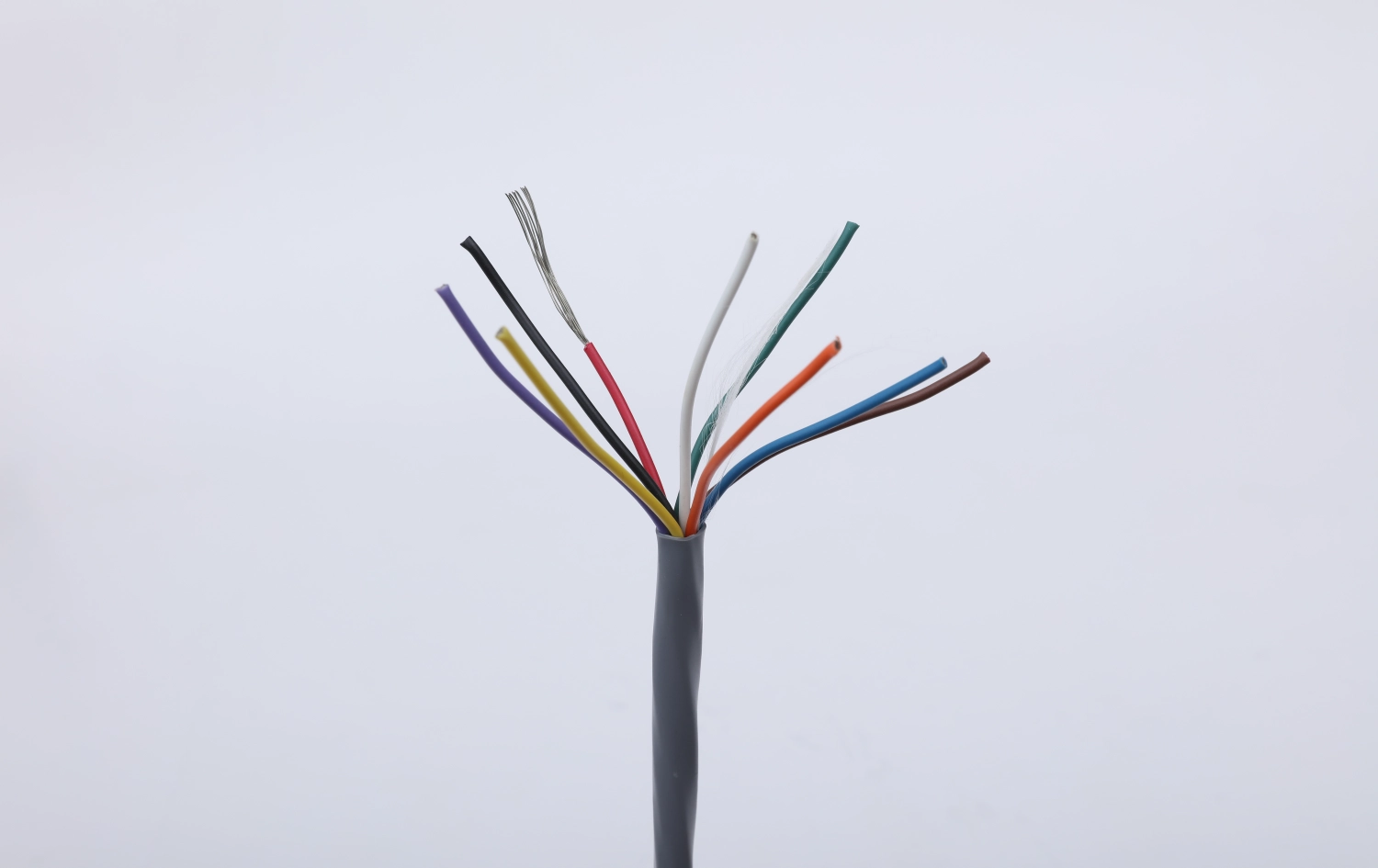
An AWG conductor cable refers to an electrical wire measured using the American Wire Gauge (AWG) system, a standardized method used to define the diameter of the wire, its cross-sectional area, and ultimately its current-carrying capability. AWG conductor cables come in a wide-ranging variety of sizes, from fine 18 AWG signal wires to heavy-duty 2 AWG and 4 AWG power conductors used in industrial and commercial installations.
In multi-conductor formats—such as 4 AWG 4 conductor cable, 18 AWG 4 conductor shielded cable, 4 conductor 6 AWG cable, 8 AWG 4 conductor cable, and 2 AWG 4 conductor cable—these wires are bundled to support more complex electrical systems, offering improved organization, reliability, and performance.
Because AWG defines the physical properties of the conductor, including diameters and cross-sectional area, it plays a critical role in determining voltage drop, heat generation, and safe operating limits. Whether used in low-voltage control circuits or high-power distribution, AWG conductor cables provide a universal, standardized wire classification system that helps engineers, installers, and electricians select the right wire size for each operating environment.
2. What Is the AWG System?
The AWG system defines wire size using gauge numbers: as the gauge number increases, the wire diameter decreases. For example:
-
2 AWG is much thicker than 18 AWG
-
Larger diameter = lower resistance = higher current capacity
The AWG system standardizes:
-
Diameter of the wire
-
Cross-sectional area
-
Weight per unit length
-
Electrical resistance
-
Current rating
Because AWG is a standardized wire measurement, engineers, manufacturers, and electricians can select the correct conductor for any operating system—from HVAC, solar energy, and electric vehicle charging, to sensitive electronics and communication systems.
3. Solid vs. Stranded Wire
AWG applies to both solid wire and stranded wire. Although the overall gauge remains the same, stranded wire is more flexible because it is composed of several smaller strands bundled together.
Differences:
| Property | Solid Wire | Stranded Wire |
| Flexibility | Low | High |
| Durability under vibration | Lower | Higher |
| Performance at high frequency | Better skin effect efficiency | Slightly lower |
| Typical application | Building wiring | Cables, machinery, robotics |
For multi-conductor cables like 4 conductor 6 AWG cable or 8 AWG 4 conductor cable, stranded construction is preferred because it allows easier routing, bending, and vibration resistance.
4. Understanding AWG Wire Sizes
Every AWG number corresponds to a specific diameter and cross-sectional area. These values determine how much current the conductor can safely handle.
Example AWG Sizes (Commonly Used in Industry)
| AWG Size | Diameter (mm) | Cross-Sectional Area (mm²) | Typical Cable Example | Common Application |
| 18 AWG | 1.02 mm | 0.82 mm² | 18 awg 4 conductor shielded cable | Signal wiring, communication, audio |
| 8 AWG | 3.26 mm | 8.37 mm² | 8 awg 4 conductor cable / 4 conductor 8 awg cable | Solar, battery, medium-power distribution |
| 6 AWG | 4.11 mm | 13.3 mm² | 4 conductor 6 awg cable | Industrial motors, automation |
| 4 AWG | 5.19 mm | 21.2 mm² | 4 awg 4 conductor cable | Power distribution, EV charging |
| 2 AWG | 6.54 mm | 33.6 mm² | 2 awg 4 conductor cable | Heavy-duty feeders, commercial power |
These sizes are essential for selecting cables such as 18 AWG 4-conductor shielded cable, which is widely used in signal and communication systems requiring noise protection.
5. Applications of AWG Conductor Cables
AWG cables are used across virtually all electrical and electronic environments. Their applications include:
A. Power Distribution
Larger sizes, such as 2 AWG 4-conductor cable and 4 AWG 4-conductor cable, are ideal for:
-
Sub-panel feeds
-
Underground or exposed power runs
-
Solar photovoltaic systems
-
EV charger installation
-
Industrial machinery
Their large cross-sectional area enables efficient high-current transfer with minimal voltage drop.
B. Industrial Controls & Automation
Cables such as 4-conductor 6 AWG cable or 4-conductor 8 AWG cable are commonly used in:
-
Motors and pump control
-
Conveyor systems
-
Robotics and automation
-
Three-phase power distribution
These cables support stable operation in demanding environments.
C. Electronics and Communication
18 AWG 4-conductor shielded cable is widely used for:
-
Audio systems
-
Security and fire alarms
-
Instrumentation signals
-
RS-485/PLC communication
-
Sensor wiring
The shielding reduces electromagnetic interference (EMI), ensuring signal integrity.
D. Residential and Commercial Wiring
AWG wires are essential in:
-
Home electrical wire installations
-
Commercial lighting
-
HVAC systems
-
Smart building systems
Because AWG is a standardized wire system, compatibility is ensured regardless of brand.
6. How to Select the Right AWG Wire Size
Choosing the correct AWG cable requires evaluating several technical factors.
1. Electrical Load (Current Requirement)
Higher loads require larger AWG sizes. Always check NEC or IEC tables for ampacity.
2. Voltage Drop
Longer cable runs increase resistance. For critical systems, voltage drop must be kept below 3%.
3. Operating System Requirements
The cable must comply with:
-
Voltage rating
-
Temperature rating
-
Environmental exposure
-
Mechanical strength
4. Installation Environment
Consider whether the system involves:
-
Underground routing
-
High vibration machinery
-
Areas with EMI
-
Outdoor UV exposure
Shielded cables, like 18 AWG 4-conductor shielded cable, are essential for noisy environments.
5. Number of Conductors
Multi-conductor cables (4-conductor, 6-conductor, etc.) streamline installation for complex control circuits.
6. Multi-Conductor AWG Cable Examples
1. 4 AWG 4 Conductor Cable
Used in heavy-load distribution, renewable energy, and marine power systems.
2. 8 AWG 4 Conductor Cable / 4 Conductor 8 AWG Cable
Suitable for medium-power circuits and industrial machine wiring.
3. 4 Conductor 6 AWG Cable
Common in motor circuits requiring balanced load distribution.
4. 2 AWG 4 Conductor Cable
For high-capacity feeder circuits and commercial electrical installations.
Each configuration supports efficient routing while maintaining AWG-based reliability.
7. Why AWG Standardization Matters
AWG ensures:
-
Universal compatibility
-
Predictable electrical performance
-
Safety and reliability
-
Simplified engineering design
-
Improved candidate experience for installers and engineers selecting cables
Because the AWG system defines the diameter of the wire and cross-sectional area, choosing the correct wire size becomes a straightforward engineering decision.
Understanding the AWG system is essential for selecting the right electrical wire for any application. Whether you are working with 4 AWG 4 conductor cable, 18 AWG 4 conductor shielded cable, 4 conductor 6 AWG cable, 8 AWG 4 conductor cable, or 2 AWG 4 conductor cable, knowing the relationship between AWG, conductor diameter, cross-sectional area, and electrical load ensures safe, reliable, and efficient operation.
AWG conductor cables remain a cornerstone of modern power distribution, automation systems, and electronic communication—providing standardized performance across the entire electrical industry.

Related Articles
Related Products
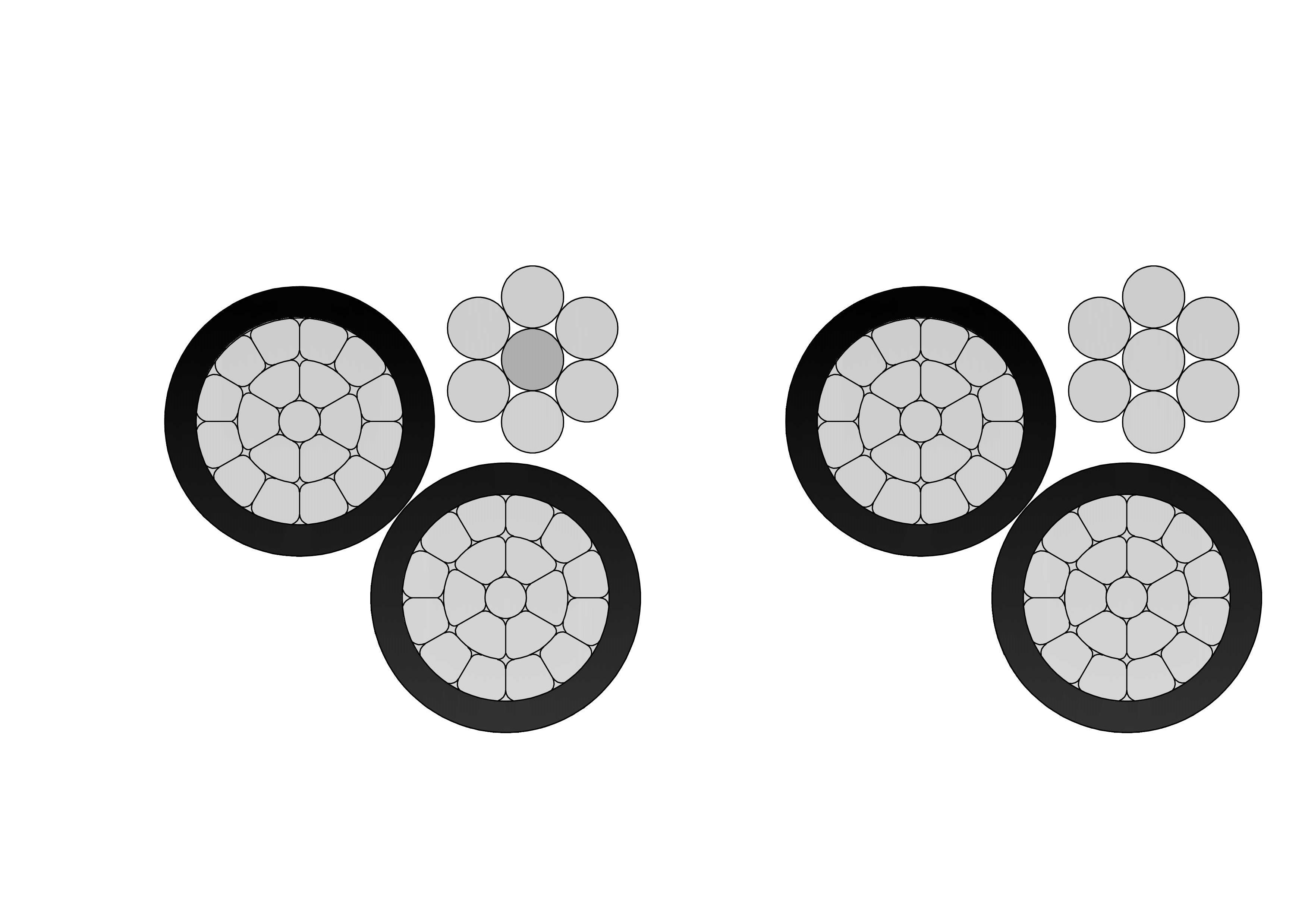
NS75/NS90 Triplex Unjacketed Overhead Neutral Supported Cable
The NS75/NS90 Triplex Unjacketed Overhead Neutral Supported Cable provides efficient overhead power delivery for Canadian utilities. It consists of two compact 1350-H19 aluminum phase conductors insulated in black sunlight-resistant PE (NS75, 75°C) or XLPE (NS90, 90°C), twisted around a bare ACSR full neutral messenger for structural support and reduced sag. Rated 600V, with NS90 offering higher ampacity due to 90°C rating, it meets CSA C22.2 No. 129 and supports single-phase service drops or secondary distribution. The unjacketed triplex design is lightweight, easy to install, and resistant to weathering, abrasion, and chemicals. Compliant with relevant standards, the NS75/NS90 Triplex ensures cost-effective, durable performance in pole-to-building or pole-to-pole aerial setups.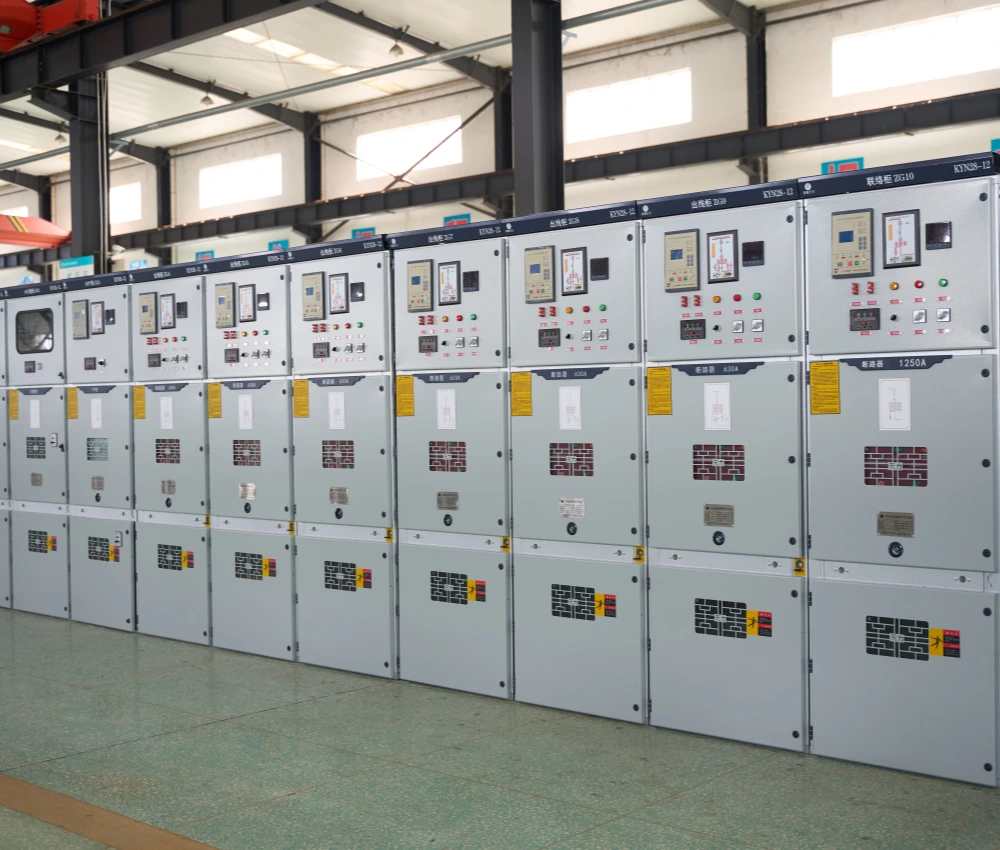
Low Voltage Withdrawable Switch Cabinet
The Low Voltage Withdrawable Switch Cabinet is a state-of-the-art power distribution solution designed for safe, flexible, and efficient low-voltage electrical systems. Featuring modular withdrawable drawers (functional units), it allows quick extraction and insertion of circuit breakers, contactors, and other components without interrupting power to the entire system. This design significantly reduces downtime during maintenance, enhances operational safety, and supports high-reliability applications in modern industrial and commercial facilities. Built with robust compartmentalized construction, high-quality busbar systems, and advanced safety interlocks, the cabinet ensures excellent short-circuit withstand capability, thermal performance, and protection against arc faults. It integrates seamlessly with intelligent monitoring systems for real-time data on current, voltage, power quality, and predictive maintenance. Ideal for motor control centers (MCC) and power control centers (PC), this withdrawable switchgear optimizes space utilization while delivering superior flexibility for future expansions or modifications.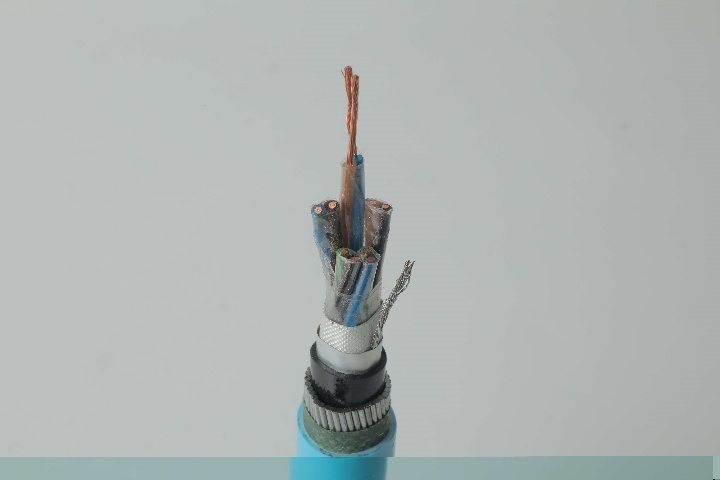
Instrumentation Cables—PVC Insulated, Overall Screened, Unarmoured PVC Sheathed Cables (CU/PVC/OSCR/PVC)
Instrumentation Cables CU/PVC/OSCR/PVC are PVC Insulated, Overall Screened, Unarmoured PVC Sheathed Cables. They are multi-conductor cables that carry and transport low-voltage electrical signals. These low-voltage signals are used to control and monitor electrical power systems. Instrumentation cables have many different industrial applications that include broadcasting, equipment control, such as drilling and pumping in the oil and gas industry, and data transfer, which includes analog and digital signals. They are manufactured according to the BS EN 50288-7 and BS EN 50288-1 standards to ensure quality. Depending on the application, instrumentation cables can be insulated with PVC or XLPE; the cables can be armoured or unarmoured. The sheathing materials can be of PVC, LSZH, or PE. The cables can have additional flame retardant or flame retardant properties, and they can be manufactured with special protections such as lead sheaths, or DRYLAM or AIRBAG technology.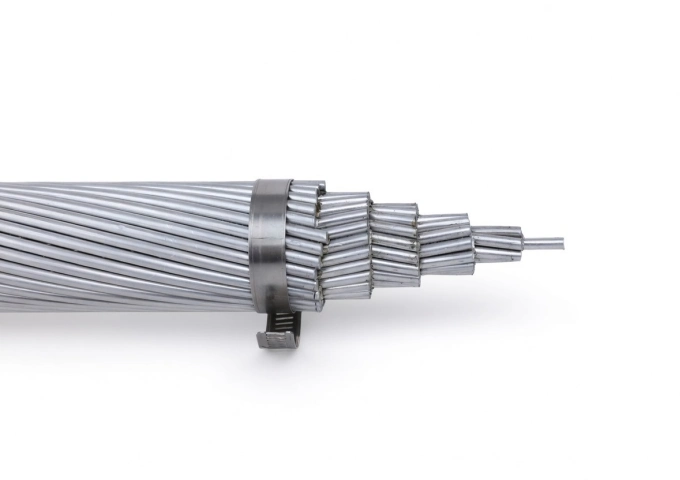
1033.5 MCM Bluebell AAC All Aluminum Bare Conductor Cable
The 1033.5 MCM Bluebell AAC Cable represents premium All Aluminum Conductor technology for overhead power applications. Built with 37 strands of high-conductivity 1350-H19 aluminum, this bare conductor delivers an optimal balance of electrical efficiency and mechanical robustness. With a 1.170-inch diameter, 17,900 lbs breaking strength, and 1033 amps ampacity, the Bluebell AAC offers low DC resistance of 0.0167 ohms per 1000 ft at 20°C and a weight of 970.3 lbs per 1000 ft. This design minimizes sag while providing excellent corrosion resistance for extended outdoor service. Manufactured to meet ASTM B-230 and B-231 standards, the 1033.5 MCM Bluebell AAC Cable undergoes extensive quality testing from raw materials through finished product. It is the ideal solution for new installations and upgrades in transmission and distribution systems that demand lightweight, high-conductivity bare aluminum conductors.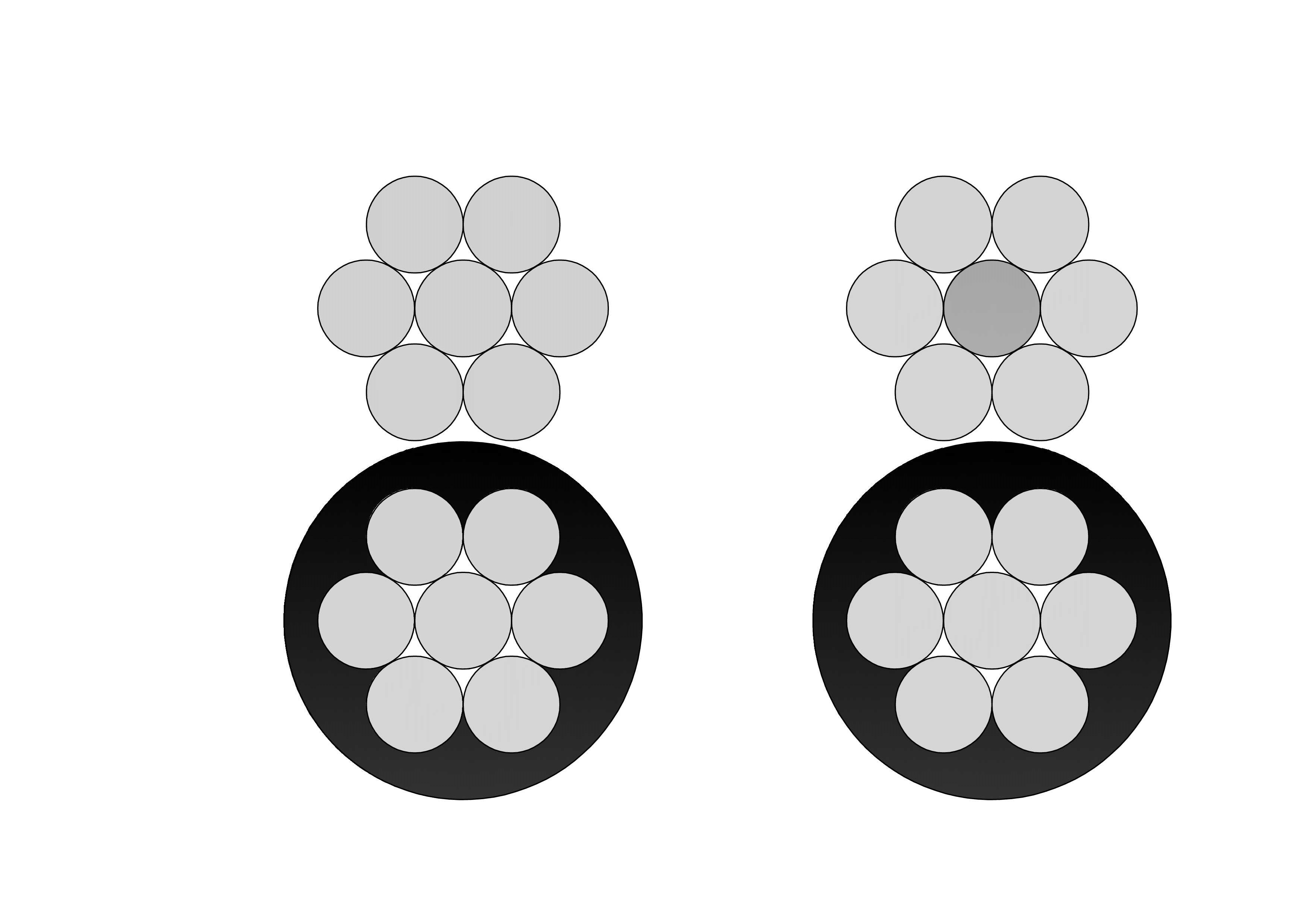
Copper Conductor Duplex Service Drop Cable 600V
The Copper Conductor Duplex Service Drop Cable 600V is a high-performance overhead cable for secondary power distribution from utility poles to service entrances. Featuring two insulated copper conductors (phase and neutral) twisted around a bare or insulated neutral messenger, it offers superior conductivity and mechanical strength. Insulation options include XLPE or PE for excellent UV, moisture, and abrasion resistance. Compliant with ASTM B-1, B-2, B-3, B-8, ICEA S-76-474, and ANSI/ICEA standards, this cable supports 600V applications with low voltage drop and high current capacity. The robust design ensures reduced sag, easy installation, and long service life in harsh weather conditions. The Copper Conductor Duplex Service Drop Cable 600V delivers minimal power losses and reliable performance for single-phase service drops. Widely used in urban, suburban, and rural electrification projects requiring premium copper overhead connections with enhanced durability and safety.
2 Solaster Aluminum Conductor Triplex Overhead Service Drop Cable
The 2 Solaster Aluminum Conductor Triplex Overhead Service Drop Cable is designed for reliable overhead electrical service connections from utility distribution lines to residential and light commercial buildings. The cable consists of two insulated aluminum phase conductors twisted around a bare aluminum neutral messenger, providing stable electrical transmission and strong mechanical support. Manufactured using high-purity aluminum and weather-resistant insulation compounds, the 2 Solaster Aluminum Conductor Triplex Overhead Service Drop Cable offers low electrical resistance, excellent corrosion resistance, and long-term durability in outdoor environments. Its lightweight construction allows for efficient handling and installation while maintaining the tensile strength required for aerial service applications. The cable is engineered to perform consistently under UV exposure, wind loading, and temperature fluctuations. Comprehensive quality control procedures and systematic testing are applied throughout production to ensure compliance with industry and utility standards.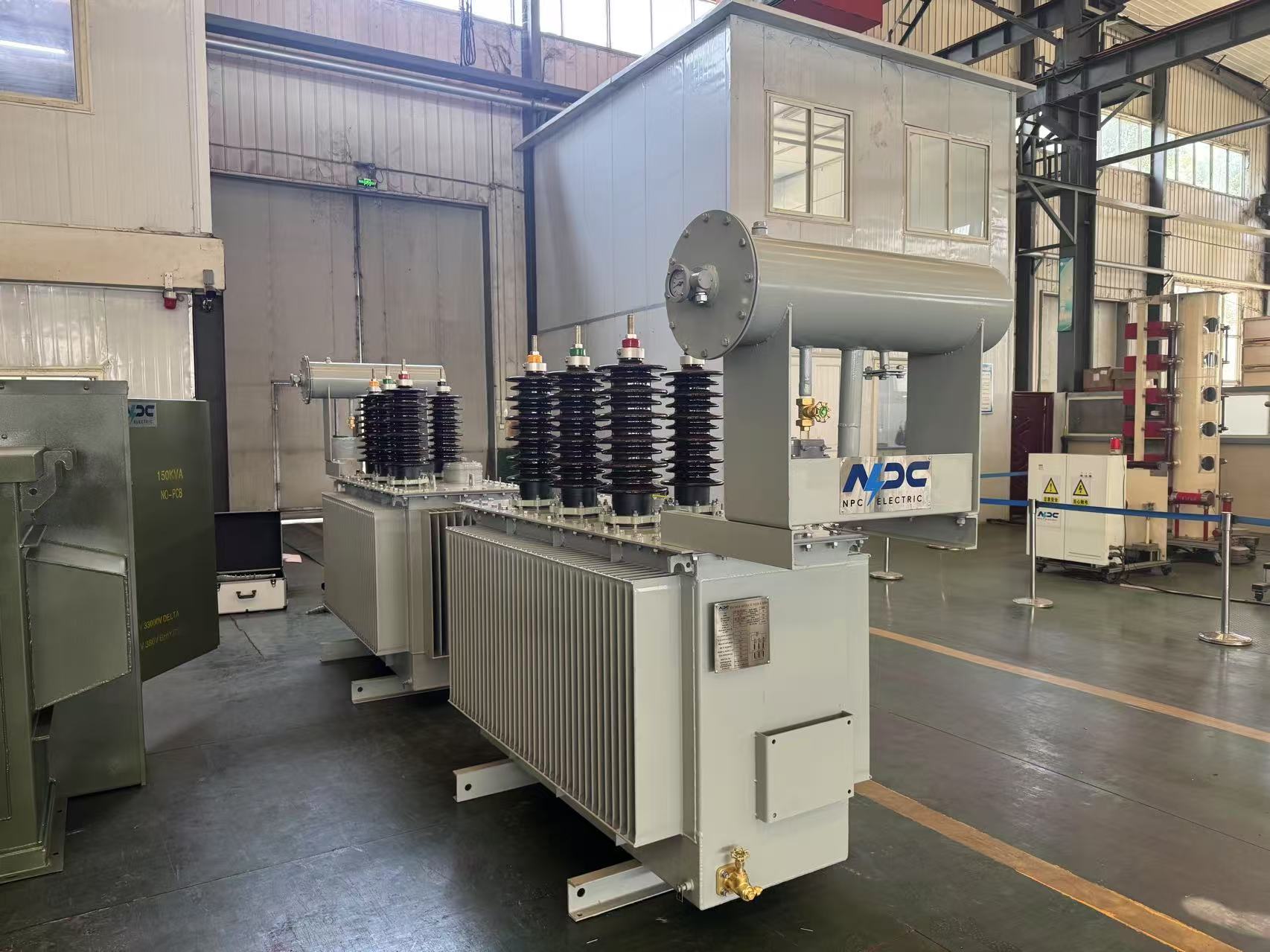
33kV 600A Neutral Zig-zag Grounding Reactor Transformer
The 33kV 600A Neutral Zig-zag Grounding Reactor Transformer is a high-performance grounding solution designed to meet the strict requirements of IEC 60076-1, IEC 60076-5, IEC 60076-20, and GB/T 1094.6 standards, with oil quality tested according to ASTM D6871. This grounding transformer is engineered to provide effective neutral grounding, enhanced system stability, and fault current limitation in medium- and high-voltage networks. With a primary voltage of 33kV and 11432.0kVA rating, the transformer supports 100A power rating for 10 seconds, making it ideal for system grounding applications in substations, industrial facilities, and renewable energy projects. The ONAN cooling method provides efficient heat dissipation for continuous operation, while the use of high-grade mineral insulating oil ensures long-term performance and compliance with international safety standards.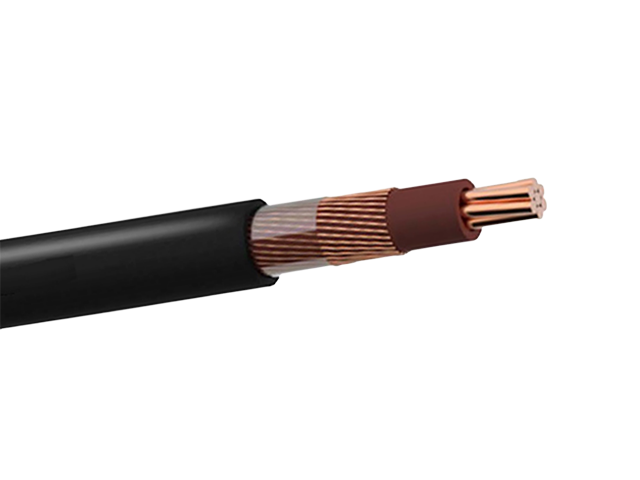
15kV Concentric Neutral Power Cable
The 15kV Concentric Neutral Power Cable is a premium medium-voltage underground distribution cable designed for reliable primary power delivery in distribution networks. It features a stranded copper or aluminum conductor, extruded semi-conducting conductor shield, TR-XLPE or EPR insulation, semi-conducting insulation shield, and helically applied bare copper concentric neutral wires, all protected by a tough sunlight-resistant LLDPE jacket. Available in 100% or 133% insulation levels with full or reduced neutral, this cable provides excellent electrical performance, moisture resistance, and mechanical protection. Suitable for direct burial or duct installations, the 15 kV Concentric Neutral Power Cable meets ICEA S-94-649, AEIC CS8, and related standards. It undergoes rigorous quality testing from raw materials to finished product, ensuring long-term reliability, low dielectric loss, and high resistance to water treeing in demanding underground environments.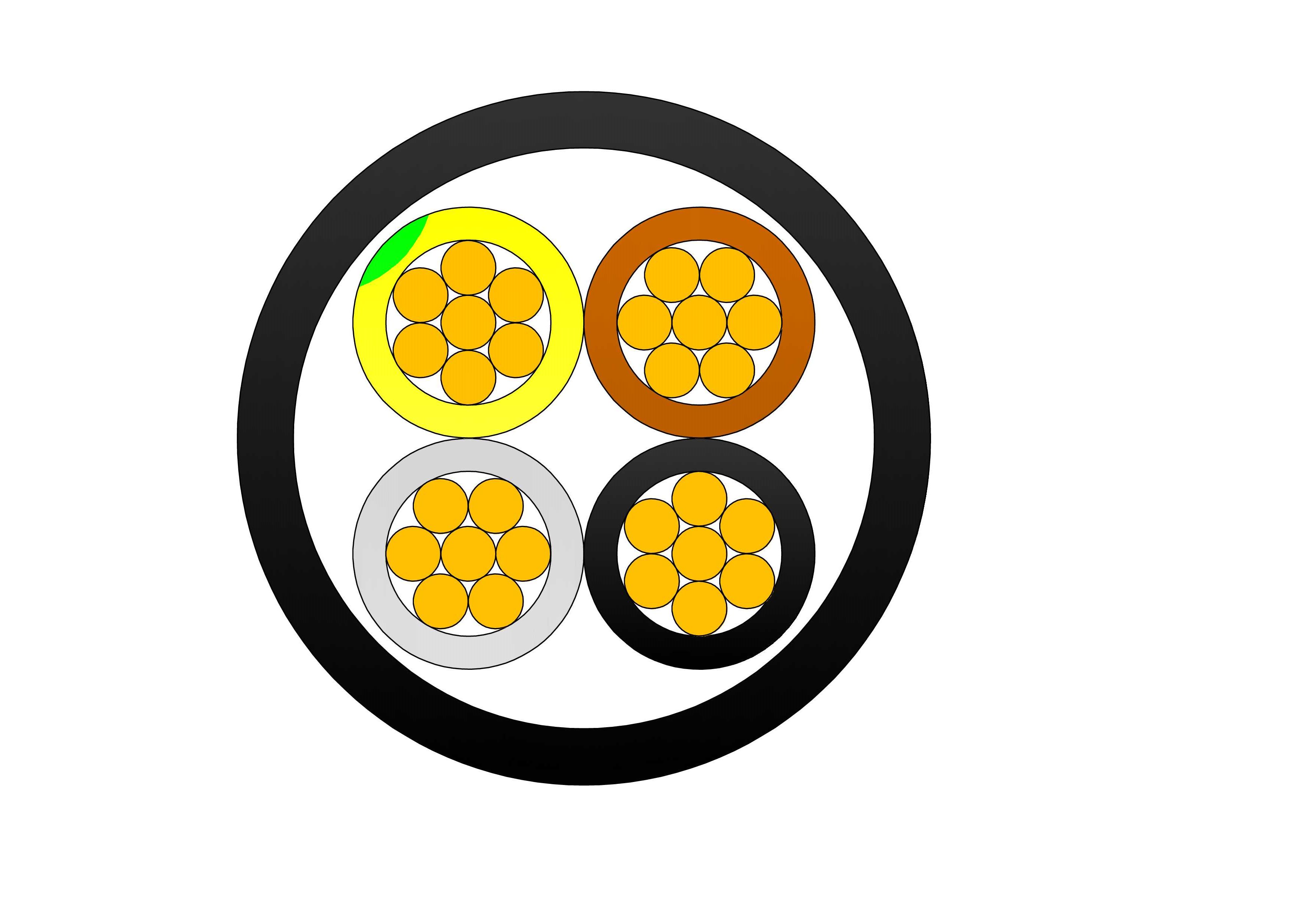
GYXTW Fiber Optic Cable
The GYXTW Fiber Optic Cable is a rugged central loose tube fiber optic cable designed for outdoor long-distance communication. It features a single central loose tube filled with water-blocking gel containing optical fibers, a corrugated steel tape armor for excellent mechanical protection, and a durable polyethylene (PE) outer sheath. Compliant with IEC 60794 and ITU-T standards, the GYXTW Fiber Optic Cable provides superior crush resistance, moisture blocking, and rodent protection. Available in single-mode and multi-mode with various fiber counts, it ensures low attenuation, high bandwidth, and reliable signal transmission. Its compact central tube design combined with steel tape armor makes it ideal for duct, aerial, and direct burial installations. The GYXTW Fiber Optic Cable is widely used in telecommunications backbone networks, FTTH, metropolitan area networks, and outdoor infrastructure projects requiring stable, secure, and durable fiber connectivity in challenging environments.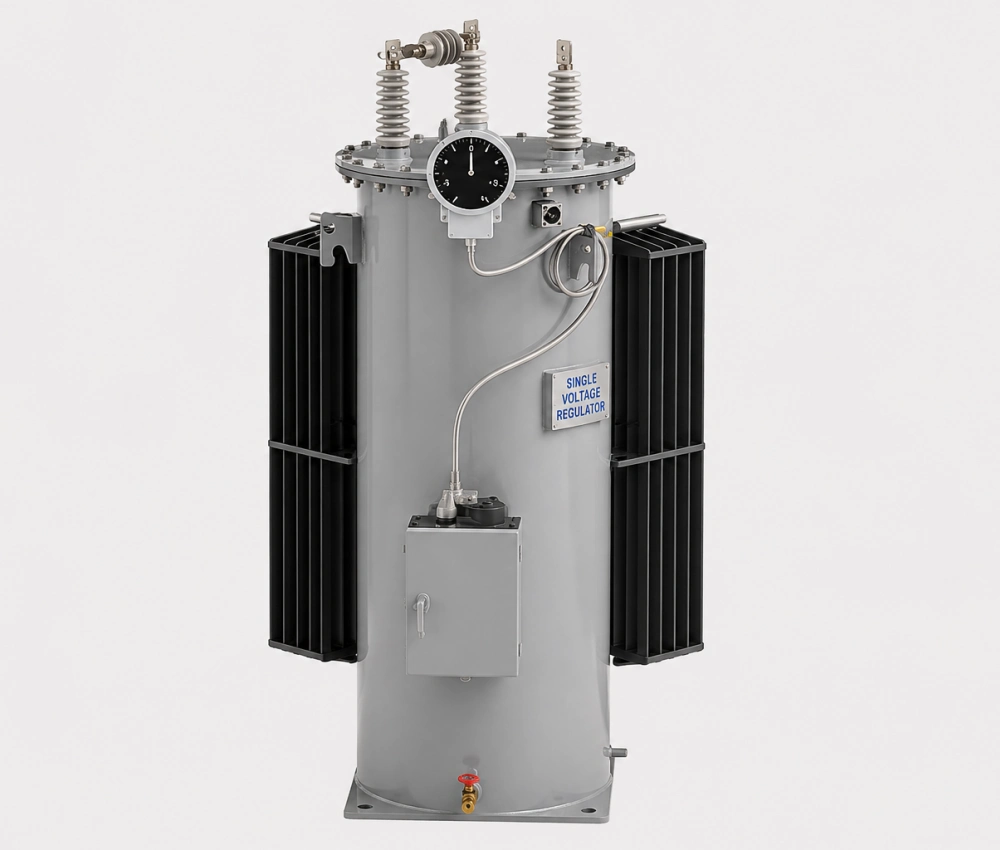
Three Phase Step Voltage Regulator - Distribution Voltage Stabilizer
The Three Phase Step Voltage Regulator is a high-reliability, automatic on-load tap changing device engineered to maintain stable voltage levels in medium-voltage distribution systems. Featuring premium copper windings, advanced low-loss silicon steel cores, and a fast-response motorized tap changer, it delivers precise voltage correction with excellent accuracy and minimal waveform distortion. The intelligent digital AVR controller continuously monitors three-phase parameters and automatically adjusts taps in real time to compensate for load variations and grid fluctuations. Designed for demanding outdoor environments, it offers robust overload capacity, low power losses, comprehensive protection systems, and remote monitoring capabilities. This regulator effectively improves voltage profile, reduces energy losses, and enhances the overall stability and efficiency of distribution networks.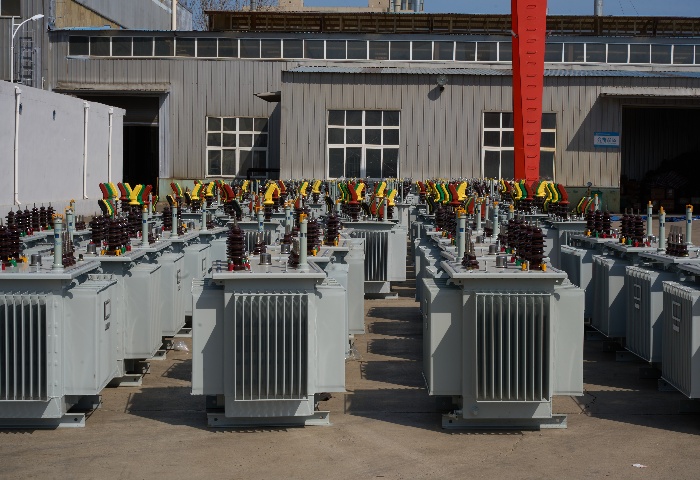
3150kVA Oil Immersed Transformer
3150kVA Oil Immersed Transformer is a high-capacity three-phase power transformer optimized for efficient voltage transformation in 50/60Hz AC medium-voltage networks, with primary ratings commonly at 11kV, 22kV, 33kV, or 35kV (adaptable to 10–38.5kV) and secondary at 0.4kV, 0.69kV, 6.3kV, 10kV, or 11kV. Employing advanced high-permeability grain-oriented silicon steel core (S13/S20 series compliant) for dramatically reduced no-load losses (typically 3200–5400W), high-purity copper windings, and premium insulating oil (IEC 60296 compliant, dielectric >60kV/2.5mm), it achieves low load losses (around 18–22kW at 75°C), strong overload capability (up to 150–180% short-duration), noise below 65dB, and efficiency exceeding 99%.This transformer minimizes operational expenses, transmission losses, and environmental impact in large-scale industrial, utility, and renewable setups.
1/0 Murex Aluminum Conductor Triplex Overhead Service Drop Cable
1/0 Murex Aluminum Conductor Triplex Overhead Service Drop Cable is engineered for secondary overhead power distribution from utility lines to residential and light commercial service entrances. The triplex construction consists of two insulated aluminum phase conductors twisted around a bare aluminum neutral messenger, providing both electrical transmission and mechanical support. The 1/0 Murex conductor size offers high current-carrying capacity, excellent tensile strength, and controlled sag performance, making it suitable for longer service drop spans and higher load requirements. Aluminum conductors ensure reduced weight, corrosion resistance, and ease of installation in outdoor environments. Manufactured in accordance with ASTM and utility standards, the 1/0 Murex Aluminum Conductor Triplex Overhead Service Drop Cable delivers consistent electrical performance, long-term durability, and reliable mechanical stability. It is widely used by utilities and contractors seeking a cost-effective and dependable overhead service drop solution.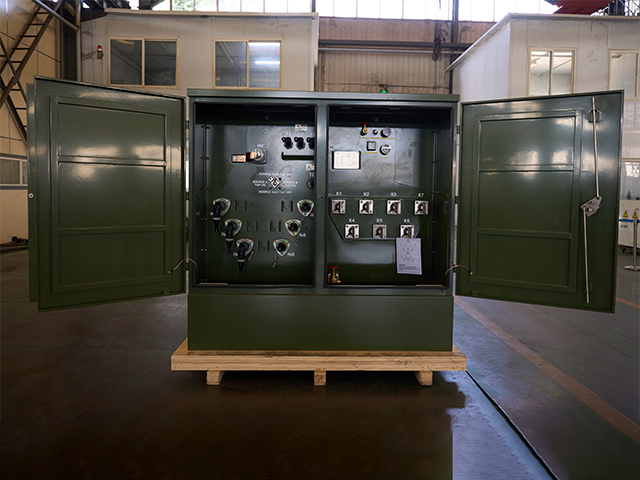
75kVA Three Phase Pad Mounted Transformer
The 75kVA pad-mounted transformer is tailored for utility customers in Canada, featuring a primary voltage of 25kV and a secondary voltage of 480/277V. It strictly adheres to local standards, including CSA C227.4 and CSA C802.1, ensuring optimal efficiency values. Notably, both the high and low-voltage windings are crafted from aluminum or copper.
6 Voluta Aluminum Conductor Triplex Overhead Service Drop Cable
The 6 Voluta Aluminum Conductor Triplex Overhead Service Drop Cable is a high-quality, cost-effective solution for overhead power delivery from utility lines to residential or commercial weatherheads. It features three 6 AWG conductors: two insulated phase conductors of concentric or 7-strand 1350-H19 aluminum, covered in black cross-linked polyethylene (XLPE) or polyethylene (PE) insulation, twisted around a bare 6 AWG ACSR (6/1 strand) full-size neutral messenger for superior mechanical support and reduced sag. Rated 600V (phase-to-phase), with ampacity up to 85A (XLPE at 90°C) or 70A (PE at 75°C), this cable offers excellent weather resistance, corrosion protection, and lightweight design. Compliant with ASTM B-230, B-231, B-232, and ICEA S-76-474 standards, the 6 Voluta ensures safe, reliable performance in aerial service drop installations.
4/5 Cores SWA Armoured Cable
The 4/5 Cores SWA Armoured Cable is engineered for demanding power distribution applications where durability, safety, and mechanical protection are critical. Manufactured with premium copper or aluminum conductors, advanced XLPE insulation, galvanized steel wire armour, and a weather-resistant PVC outer sheath, the cable provides exceptional reliability in harsh operating environments. Its steel wire armour offers excellent protection against impact, tensile loads, crushing forces, and accidental mechanical damage. This makes the cable ideal for underground installations, cable trenches, and direct burial applications. The XLPE insulation delivers superior dielectric performance, low transmission losses, and thermal resistance up to 90°C continuous operation. The PVC outer sheath provides excellent resistance against moisture, chemicals, oils, abrasion, and UV radiation. Complying with IEC and BS standards, the cable is suitable for utility networks, industrial facilities, renewable energy projects, transportation infrastructure, and commercial developments. The 4/5 Cores SWA Armoured Cable offers an economical and dependable solution for modern power distribution systems.Welcome your inquiry
Honesty, Integrity, Frugality, Activeness and Passion