
1/0 Aluminum Cable Ampacity Guide: 120A–135A Ratings, NEC Table 310.16 Specs & Buying Tips
2026-03-25
Selecting the correct cable size is critical for electrical system safety, compliance, and long-term performance. Among commonly specified conductors, 1/0 aluminum cable is widely used in commercial buildings, industrial facilities, and utility distribution due to its cost efficiency and acceptable electrical performance when properly applied.
What Is 1/0 Aluminum Cable?
1/0 aluminum cable (also written as 1/0 AWG aluminum) is an electrical conductor made of aluminum alloy, sized according to the American Wire Gauge (AWG) system. It is commonly used for:
- Service entrance conductors
- Feeder cables in commercial buildings
- Industrial power distribution
- Utility secondary connections
Compared with copper, aluminum conductors are lighter, lower-cost, and widely accepted by electrical codes when installed correctly.
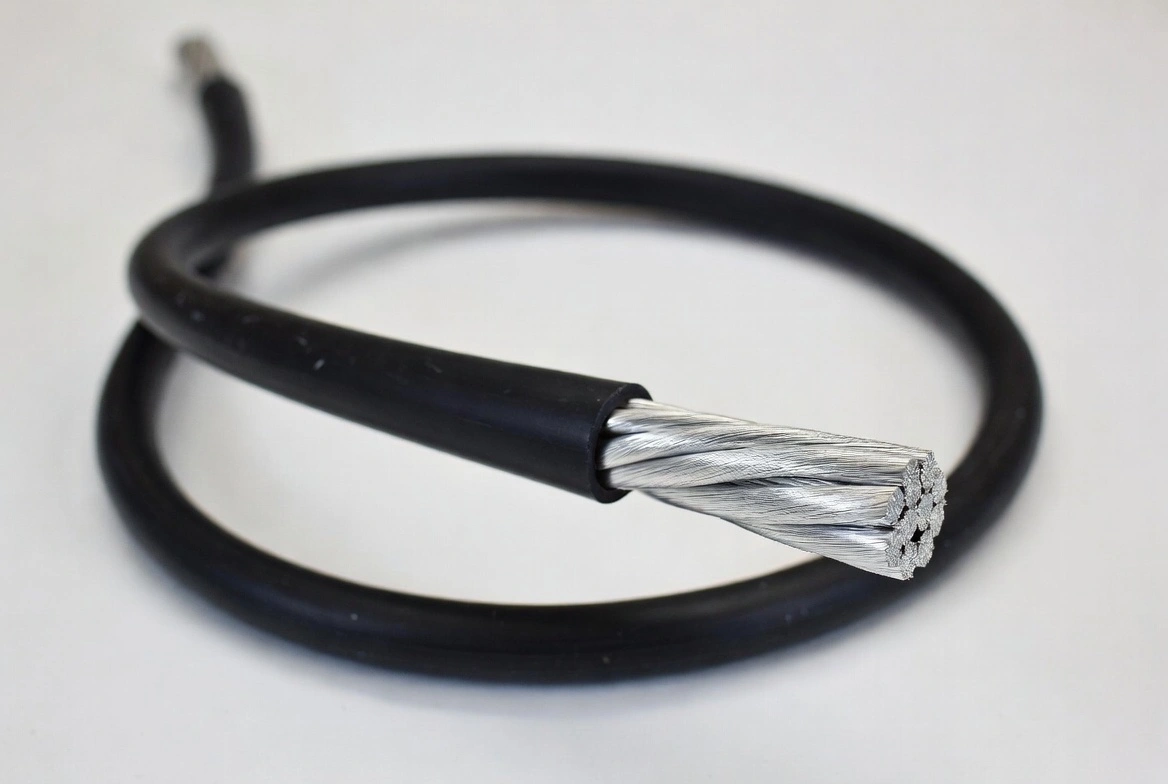
NEC Table 310.16: Ampacity of 1/0 Aluminum Cable
The National Electrical Code (NEC) defines allowable ampacity values for conductors based on insulation type, temperature rating, and installation method.
Standard Ampacity Ratings (NEC Table 310.16)
|
Insulation Temperature Rating |
Ampacity (1/0 Aluminum) |
|
60°C (140°F) |
120 A |
|
75°C (167°F) |
135 A |
|
90°C (194°F) |
150 A* |
*Note: The 90°C rating is often limited by terminal temperature ratings, which are typically 75°C for most equipment.
In real-world projects, most 1/0 aluminum cable installations are limited to 120A–135A, not the maximum theoretical value.
Practical Load Calculation Example Using 1/0 Aluminum Cable
To translate NEC ampacity tables into real engineering decisions, consider the following field-based load calculation example, typical of commercial or light industrial power distribution projects.
Example Scenario
- Application: Commercial building feeder
- Supply Voltage: 480V, 3-phase
- Load Type: Continuous load (HVAC + lighting)
- Calculated Load Current: 108 A
- Installation: In conduit, 75 °C-rated terminals
- Conductor: 1/0 aluminum cable
Step 1: Apply Continuous Load Rule (NEC 210 & 215)
For continuous loads, conductors must be sized at 125% of the load:
108A×1.25=135A
Step 2: Verify Against NEC Table 310.16
- 1/0 aluminum cable at 75°C = 135A
- Result: Meets minimum ampacity requirement
Step 3: Evaluate Derating Factors
Assuming:
- Ambient temperature ≤ 30°C
- No excessive conduit fill
- Three current-carrying conductors
No additional derating applies.
Engineering Conclusion
1/0 aluminum cable is acceptable, but with no design margin.
In EPC practice, many engineers would upsize to 2/0 aluminum to improve reliability, reduce energy losses, and allow future load growth.
This example demonstrates why ampacity selection is not only code-based but risk-based, especially in commercial and industrial electrical systems.
Why Ampacity Is Limited in Practice
While NEC Table 310 provides baseline values, actual allowable current depends on multiple job-site factors:
1. Terminal Temperature Limits
Most breakers, lugs, and transformers are rated 75°C, meaning the 90°C conductor rating cannot be fully utilized.
2. Ambient Temperature
High ambient temperatures require ampacity derating per NEC correction factors.
3. Conduit Fill and Bundling
Multiple current-carrying conductors in a conduit reduce heat dissipation, lowering allowable ampacity.
4. Continuous Load Rules
For continuous loads, the NEC requires conductors to be sized at 125% of the load, reducing usable current.
Typical Applications of 1/0 Aluminum Cable
From a practical engineering standpoint, 1/0 aluminum cable is commonly specified for:
- 120–135 amp feeder circuits
- Commercial panel feeders
- HVAC equipment feeds
- Small industrial machinery
- Service entrance conductors (per utility standards)
It is not recommended for applications requiring compact routing or very high short-circuit withstand without proper engineering review.
Aluminum vs Copper: Real-World Comparison
|
Parameter |
1/0 Aluminum Cable |
Copper Cable (Equivalent) |
|
Electrical Conductivity |
~61% of copper |
100% |
|
Weight |
~50% lighter |
Heavier |
|
Cost |
Significantly lower |
Higher |
|
Termination Care |
Requires anti-oxidation |
Less sensitive |
|
Typical Use |
Feeders, utilities |
Compact or critical loads |
From a cost-performance perspective, aluminum remains a preferred option for long feeder runs and large-scale electrical systems.
1/0 Aluminum vs 2/0 Aluminum vs Copper Alternatives
The table below provides a practical comparison frequently used by engineers and procurement teams when selecting feeder conductors.
|
Parameter |
1/0 Aluminum Cable |
2/0 Aluminum Cable |
1/0 Copper Cable |
|
NEC Ampacity @ 75°C |
135 A |
150 A |
170 A |
|
Typical Continuous Load Capacity |
~108 A |
~120 A |
~136 A |
|
Electrical Conductivity |
~61% of copper |
~61% of copper |
100% |
|
Cable Diameter |
Larger |
Larger |
Smaller |
|
Weight |
Light |
Moderate |
Heavy |
|
Material Cost |
Low |
Moderate |
High |
|
Installation Labor |
Moderate |
Moderate |
Easier |
|
Voltage Drop Performance |
Acceptable |
Improved |
Excellent |
|
Typical Applications |
Feeders, service entrance |
Main feeders, load growth |
Compact panels, critical loads |
Key Engineering Insight
- 1/0 aluminum cable is best for cost-sensitive feeder circuits with stable loads.
- 2/0 aluminum cable provides a safety margin, lower voltage drop, and better thermal performance.
- Copper conductors are preferred where space constraints, high efficiency, or critical reliability dominate over cost.
Installation Best Practices for 1/0 Aluminum Cable
To ensure safe and code-compliant operation:
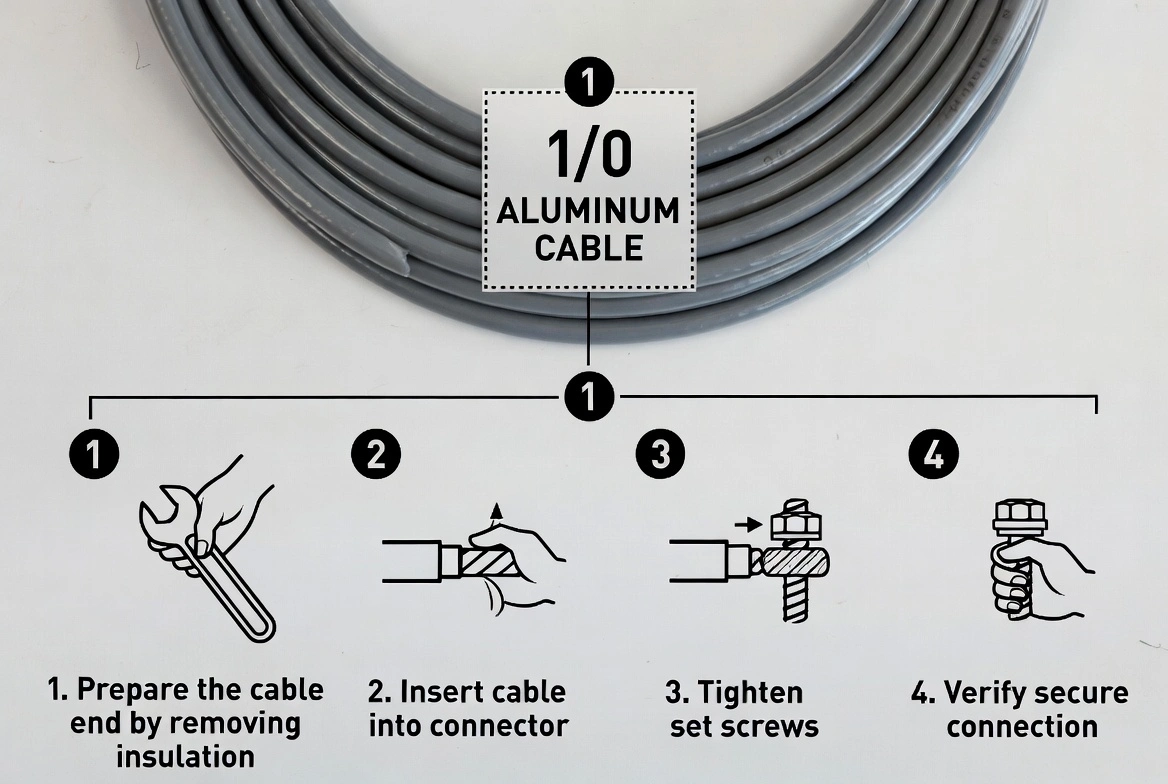
- Use AL-rated lugs and terminals
- Apply an anti-oxidation compound at terminations
- Torque connections to manufacturer specifications
- Avoid sharp bends and mechanical stress
- Follow NEC derating rules strictly
Poor installation—not material choice—is the most common cause of aluminum conductor failures.
Engineering Recommendation: When to Upsize from 1/0 Aluminum
From real-world EPC and utility experience, upsizing is recommended when:
- Continuous loads exceed 80% of conductor ampacity
- Future expansion is likely within 3–5 years
- Long feeder runs increase voltage drop
- High ambient temperatures are expected
- Critical electrical systems require redundancy
In these cases, 2/0 aluminum cable often delivers a better lifecycle cost balance than operating 1/0 aluminum at its limit.
Final Takeaway for Engineers and Procurement Teams
While 1/0 aluminum cable is code-compliant at 120A–135A, optimal conductor selection should consider:
- Load growth
- Thermal margins
- Voltage drop
- Installation environment
- Total installed cost, not just material price
Working with an experienced cables manufacturer ensures correct conductor sizing, compliance with NEC Table 310, and reduced long-term operational risk.
Buying Tips: How to Source Quality 1/0 Aluminum Cable
When working with a cable manufacturer or supplier, procurement teams should verify:
- Compliance with NEC, UL, and ASTM standards
- Insulation type (XHHW-2, THHN/THWN-2, etc.)
- Conductor stranding class
- Mill test reports and traceability
- Consistent aluminum alloy grade (AA-8000 series)
Reliable wires and cables suppliers will provide full technical documentation and application guidance.
Key Takeaways for Engineers and Buyers
- 1/0 aluminum cable ampacity typically ranges from 120A to 135A in real installations
- NEC Table 310.16 provides baseline values, but terminals and environment control final ratings
- Aluminum conductors are cost-effective and code-compliant when properly installed
- Correct specification and sourcing from a qualified cables manufacturer is critical
Need Project-Specific Cable Selection Support?
For EPC contractors, utilities, and industrial projects, selecting the right aluminum cable size requires load calculations, derating analysis, and compliance checks. Working with an experienced cable supplier can significantly reduce risk and lifecycle cost.
If you need technical datasheets, pricing, or bulk supply options for 1/0 aluminum cable, consult a professional manufacturer or engineering-focused distributor early in the design phase.

Related Articles
Related Products
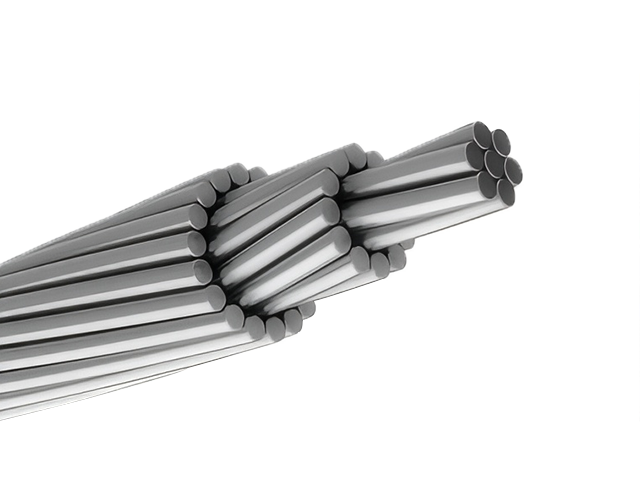
397.5 MCM CHICKADEE ACSR Conductor Cable
The ACSR Chickadee is a compact yet high-performance aluminium conductor steel reinforced cable, engineered for efficient energy transmission in overhead power systems. Constructed with hard-drawn 1350-H19 aluminium wires helically stranded around a galvanized steel core, this conductor is optimized to provide excellent electrical conductivity along with the mechanical strength needed for long-span and high-load applications. Compliant with ASTM B232 standards, the Chickadee conductor is suitable for primary and secondary bare cable use in transmission and distribution networks. The galvanized steel core, treated with Class A or B coating, ensures long-term corrosion resistance, even in aggressive outdoor environments. Ideal for compact power line installations or regions with light-to-moderate mechanical stress, Chickadee offers a reliable and cost-effective solution without compromising performance or safety.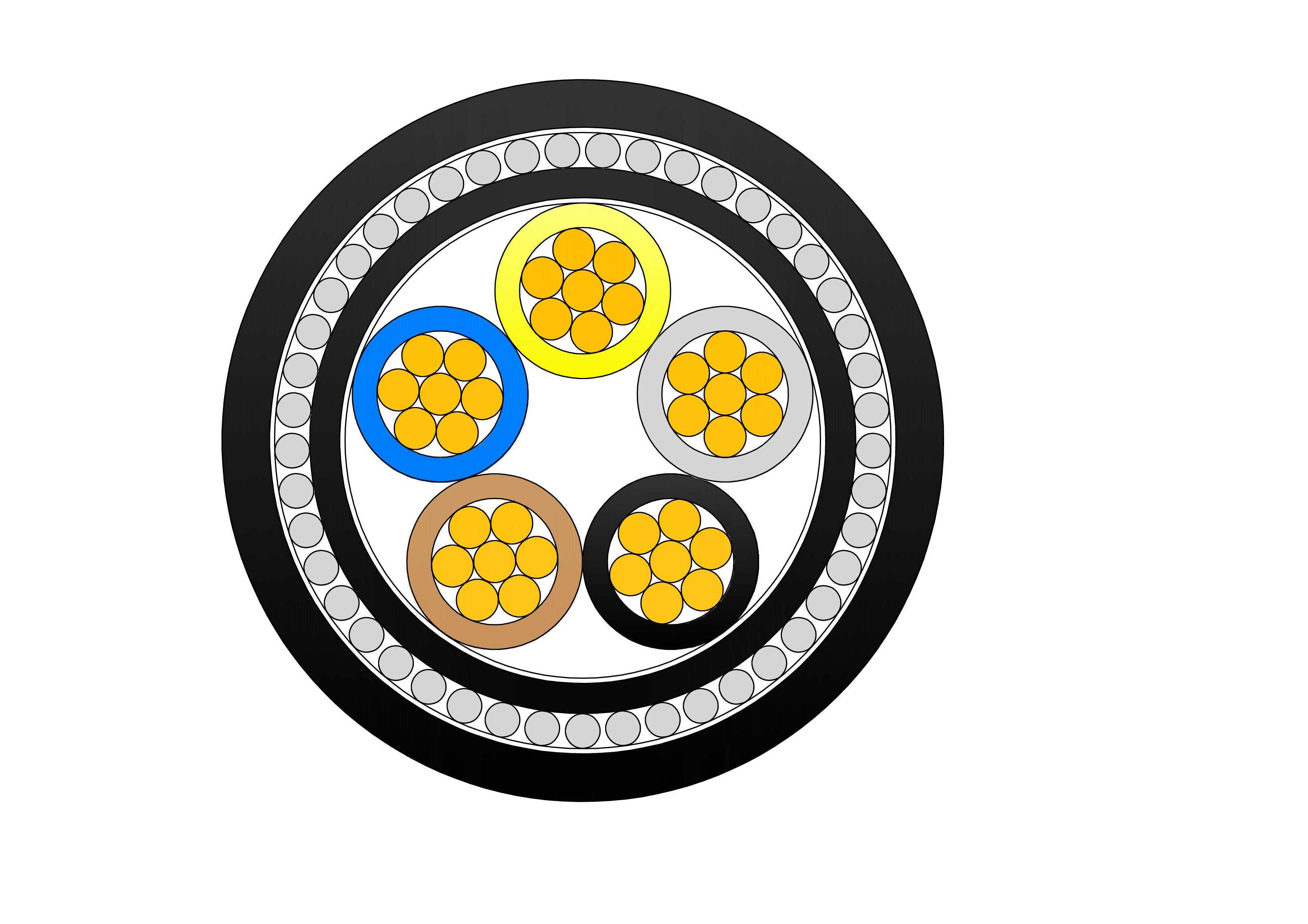
NYRY 0.6/1kV Low Voltage Power Cable
NYRY 0.6/1kV are low voltage power cables designed according to BS 5467 standard, suitable for fixed installation in indoor, outdoor, underground, cable ducts or concrete (not subject to vibration) environments, with steel wire armouring for mechanical protection. The cable features stranded copper conductors insulated with high-quality PVC, ensuring dependable electrical performance and thermal resistance under normal operating conditions. The metallic concentric conductor layer provides effective grounding and enhanced fault current capability, while the robust PVC outer sheath offers protection against moisture, abrasion, and external mechanical stress. Rated at 0.6/1kV and manufactured in accordance with relevant IEC standards, the NYRY cable is suitable for fixed installation both indoors and outdoors. Its construction supports long service life, consistent power delivery, and safe operation in demanding environments.-AL-medium-voltage-power-cable-2.jpg)
RHZ1-2OL(S)-AL Medium Voltage Power Cable(8.7/15kV, 12/20kV, 18/30kV Specifications)
NPC Electric RHZ1-2OL(S)-AL Medium Voltage Power Cable (8.7/15kV, 12/20kV, 18/30kV) combines economy with special fire safety for demanding medium voltage networks. Built with aluminium conductors, thermosetting XLPE insulation, metallic screen, and specially formulated LSZH sheath with superior fire-retardant characteristics (S), it meets UNE 21123-4 and higher CPR classifications. The special LSZH sheath drastically reduces smoke and eliminates corrosive gases in fires. Lightweight aluminium minimizes costs and installation effort. Excellent partial discharge resistance, low tan delta, and thermal endurance ensure efficiency and longevity. Suitable for direct burial, ducts, or indoor use in high-risk areas, the RHZ1-2OL(S)-AL Medium Voltage Power Cable is favored for metro systems, data centers, public venues, and infrastructure demanding reliable medium voltage cabling with advanced fire protection, environmental compliance, and enhanced life-safety in populated or confined spaces.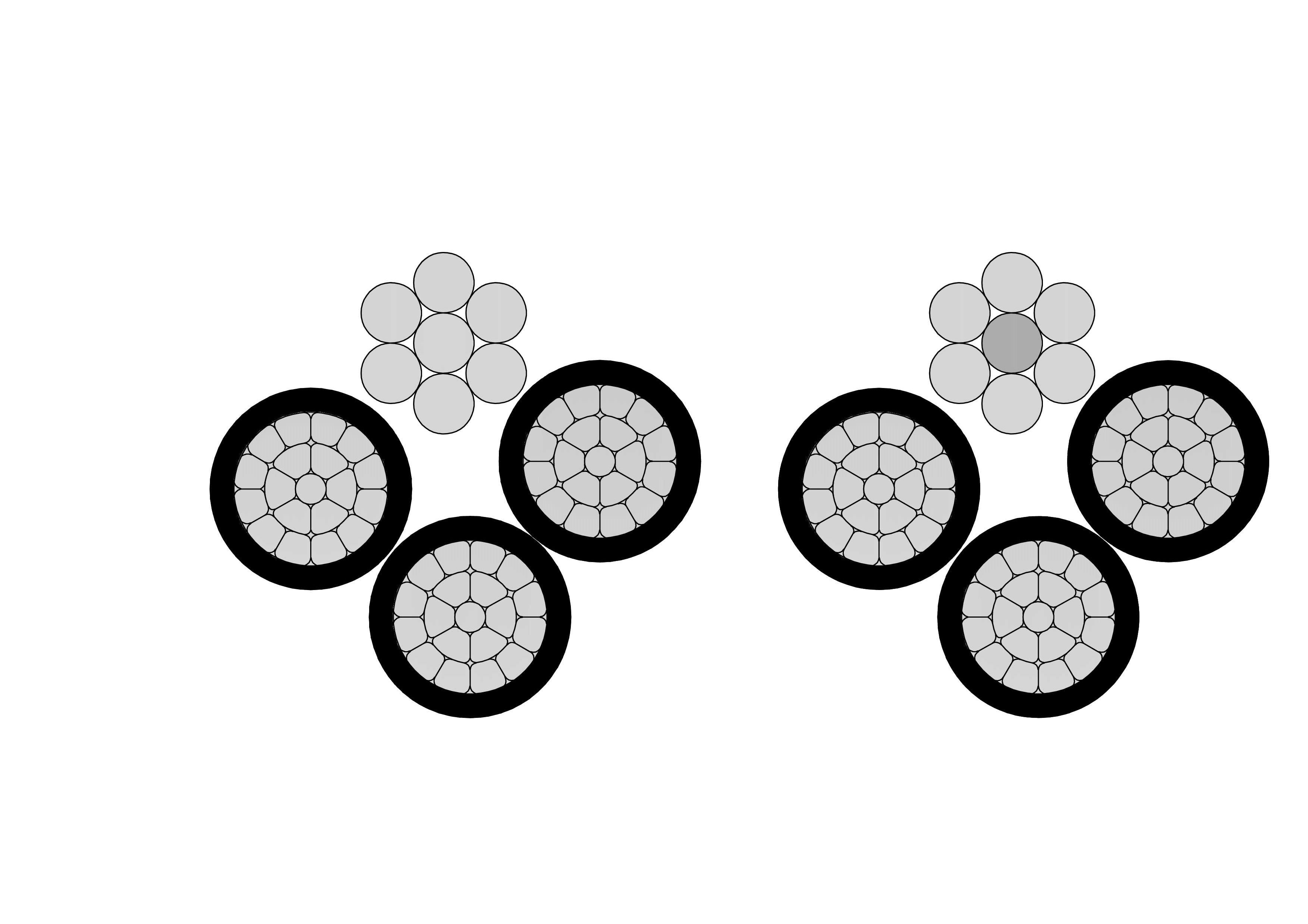
2 Palomino Aluminum Conductor Quadruplex Overhead Service Drop Cable
2 Palomino Aluminum Conductor Quadruplex Overhead Service Drop Cable is designed for delivering 3-phase power from pole-mounted transformers directly to the user's service entrance. Built with three 2 AWG aluminum phase conductors and one neutral messenger (7-strand) insulated with polyethylene or XLPE and formed into a quadruplex assembly, it meets ASTM and ICEA requirements for 600V service. The tough insulation offers outstanding protection against UV rays, moisture, tree contact, and abrasion. Self-supporting messenger design ensures easy pulling and reduced sag during installation. The 2 Palomino Quadruplex Service Drop Cable supports efficient power transfer with low voltage drop and high durability in extreme temperatures. Popular for its lightweight construction and reduced installation time, it is the choice for electricians and utilities. Widely deployed in housing developments, commercial services, and temporary power setups, this cable ensures safe, long-lasting overhead connections from distribution transformers to customer service entrances worldwide.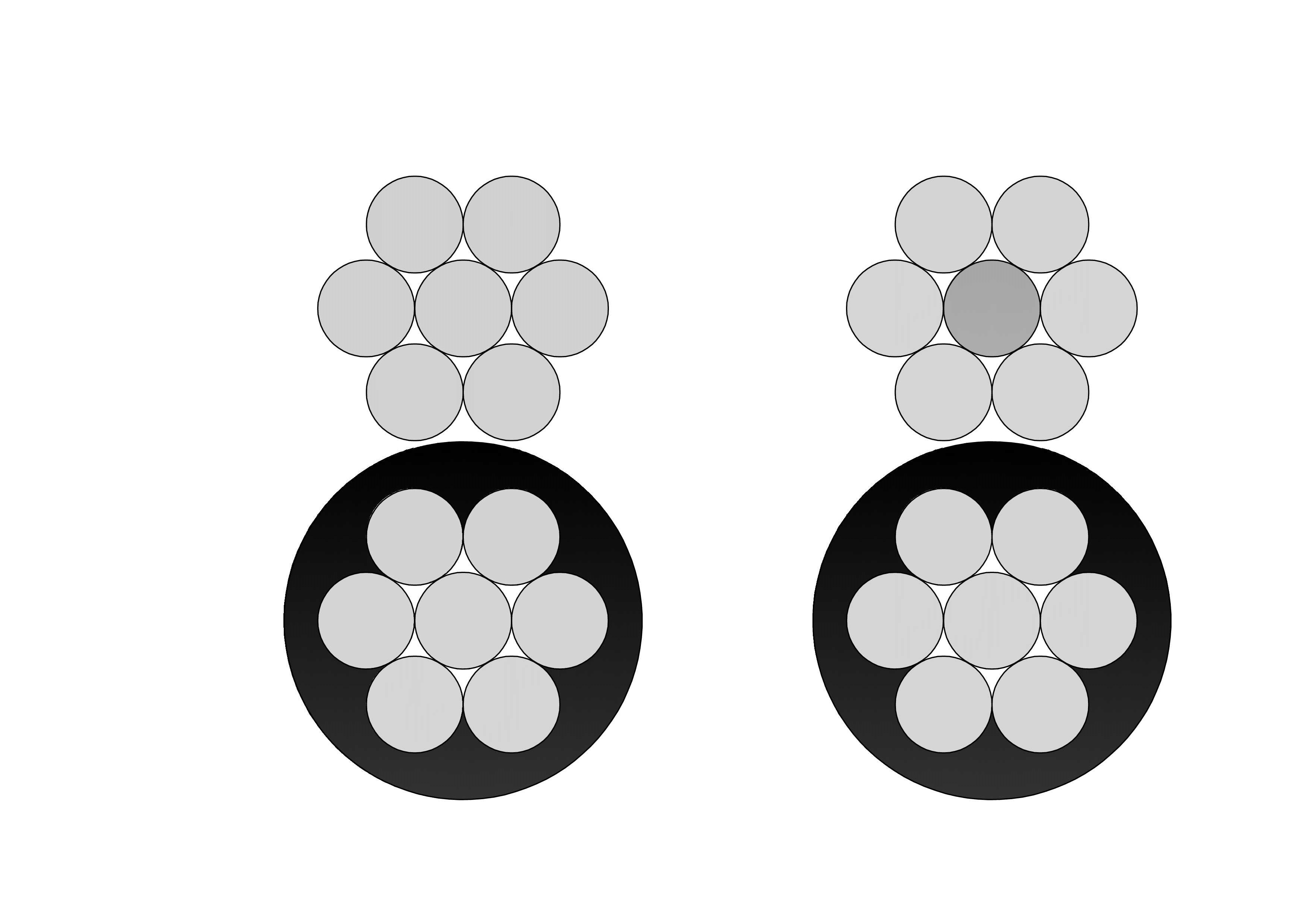
6 Collie Aluminum Conductor Duplex Overhead Service Drop Cable
The 6 Collie Aluminum Conductor Duplex Overhead Service Drop Cable is engineered for efficient and dependable power delivery in overhead secondary distribution systems. Featuring stranded aluminum conductors, the duplex configuration provides both electrical conductivity and mechanical support for service drop installations. The No. 6 Collie size is ideal for short-span service drops, delivering stable load capacity with controlled sag under varying environmental conditions. Aluminum construction reduces cable weight, simplifies handling, and enhances corrosion resistance for long-term outdoor use. Produced under strict quality management systems, the 6 Collie Aluminum Conductor Duplex Overhead Service Drop Cable meets ASTM and utility requirements, making it a trusted solution for modern overhead service connections requiring safety, durability, and consistent electrical performance.
Quadruplex Service Drop Cable
NPC Electric Quadruplex Service Drop Cable offers efficient overhead three-phase service with neutral support. Comprising three-phase conductors (aluminum) insulated with XLPE or PE and helically twisted around a strong neutral messenger (ACSR, AAC, or covered aluminum), it meets ASTM, ICEA, and international standards. The messenger provides full self-support, allowing longer spans and reduced infrastructure costs. Premium insulation resists sunlight, moisture, and mechanical abrasion for decades of outdoor service. Lightweight and flexible, it simplifies installation with low sag. The Quadruplex Service Drop Cable ensures minimal losses, high mechanical endurance, and excellent weather performance up to 600V. Flame-retardant options enhance safety. Perfect for reliable power delivery in urban developments, commercial areas, street lighting, and temporary sites requiring safe, cost-effective aerial bundled solutions.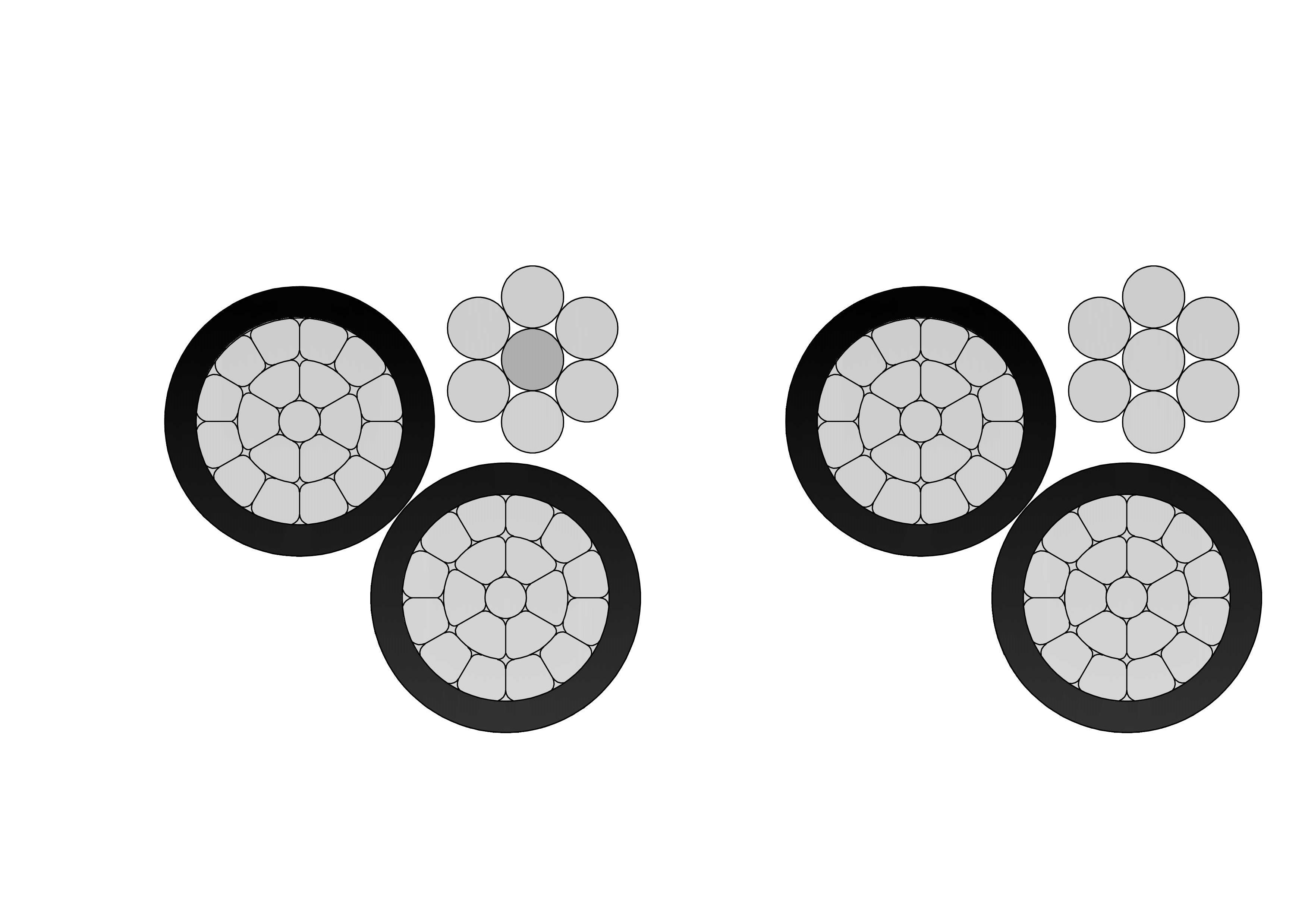
2/0 Nassa Aluminum Conductor Triplex Overhead Service Drop Cable
The 2/0 Nassa Aluminum Conductor Triplex Overhead Service Drop Cable is designed for reliable overhead electrical service connections between utility distribution lines and end users. The cable structure includes two insulated aluminum phase conductors twisted around a bare aluminum neutral messenger, providing excellent electrical performance and mechanical strength. Manufactured with high-purity aluminum and durable, weather-resistant insulation, the 2/0 Nassa Aluminum Conductor Triplex Overhead Service Drop Cable offers low electrical resistance, corrosion resistance, and long-term stability in outdoor environments. Its lightweight design allows for efficient installation while maintaining the tensile strength required for aerial applications. The cable is engineered to perform under UV exposure, wind load, and temperature variations. Comprehensive quality control and systematic testing are applied throughout production to ensure compliance with industry standards and dependable service performance.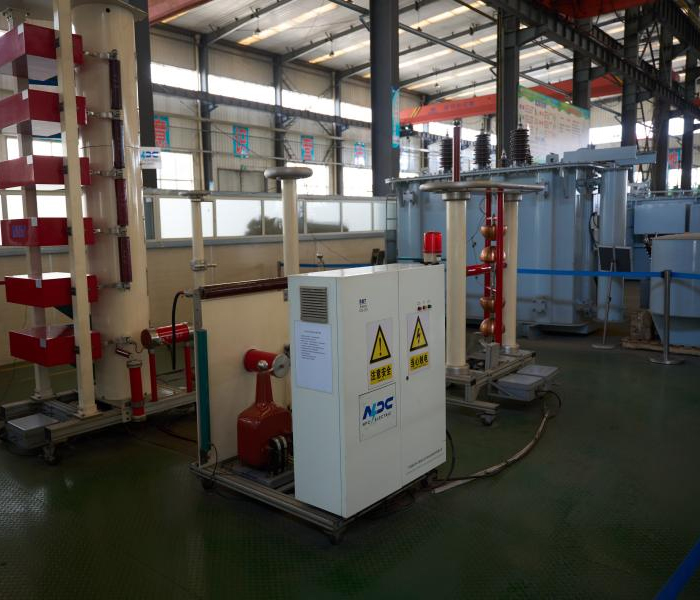
3000kVA Dry Type Transformer
3000kVA Dry Type Transformer is a high-performance, reliable power solution designed to meet the needs of large industrial and commercial facilities. With a 3000kVA capacity, it utilizes advanced dry-type insulation, ensuring exceptional safety, minimal maintenance, and extended durability. Built for demanding environments, this transformer provides stable, efficient, and low-noise operation while minimizing environmental impact. The NPC ELECTRIC 3000kVA Dry Type Transformer is the ideal choice for ensuring reliable and efficient power distribution in large-scale applications. Core features include three-phase design, primary voltages 208V–600V (e.g., 480V Delta, 600V Delta), secondary voltages such as 208Y/120V, 480Y/277V, or custom, aluminum or copper windings, 150°C rise (standard) or 115°C/80°C with 220°C insulation class, ±2×2.5% primary taps, NEMA 1 ventilated enclosure (NEMA 3R/encapsulated options), natural convection cooling (AN), electrostatic shielding, and low sound levels per NEMA.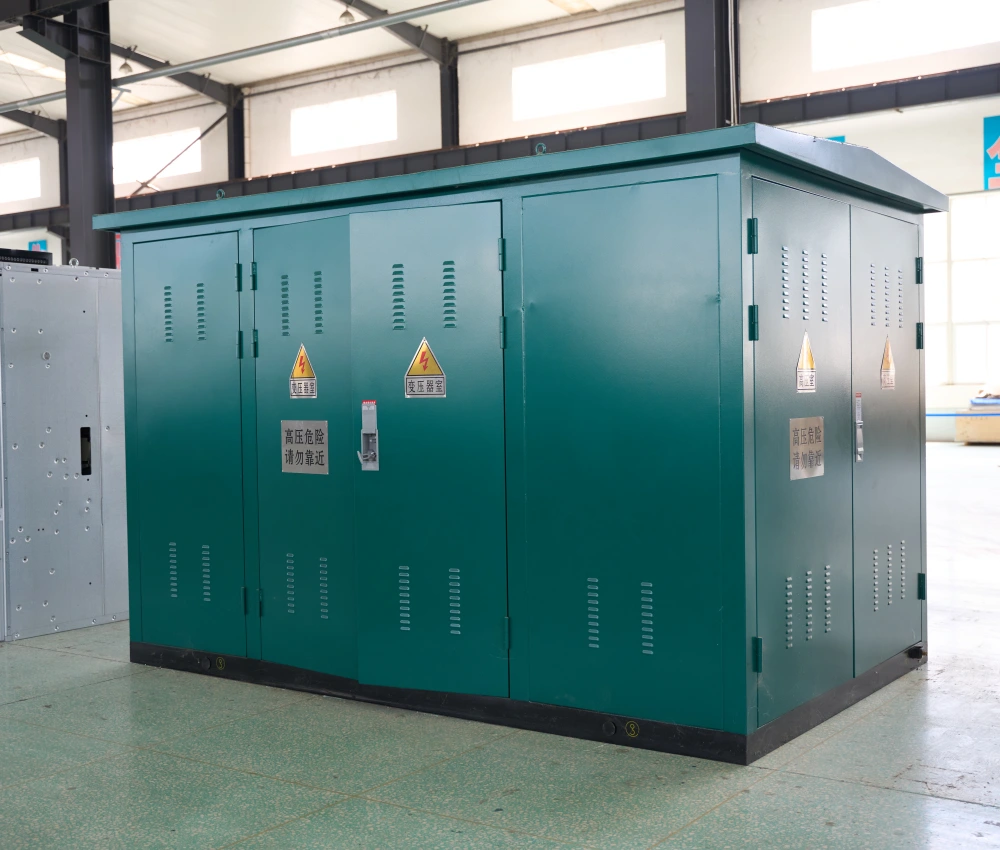
22kV 1000kVA Prefabricated Compact Substation
The 22kV 1000kVA Prefabricated Compact Substation is a modern integrated power distribution solution designed for medium-voltage electrical networks requiring high operational reliability, compact installation, and efficient energy transformation. The system integrates 22kV medium-voltage switchgear, a 1000kVA distribution transformer, low-voltage distribution equipment, and intelligent control devices into a single modular enclosure, significantly reducing installation complexity and project construction time. Manufactured using high-strength corrosion-resistant materials and advanced electrical insulation technology, the compact substation is engineered for stable outdoor operation under demanding environmental conditions. Its optimized structural layout improves heat dissipation efficiency, maintenance accessibility, and operational safety while minimizing installation footprint for urban infrastructure and industrial applications. The 22kV 1000kVA compact transformer substation is widely suitable for renewable energy systems, industrial production facilities, mining operations, commercial complexes, municipal distribution networks, and smart-grid infrastructure projects. With intelligent communication capability and flexible configuration options, the substation delivers reliable, energy-efficient, and scalable medium-voltage power distribution performance.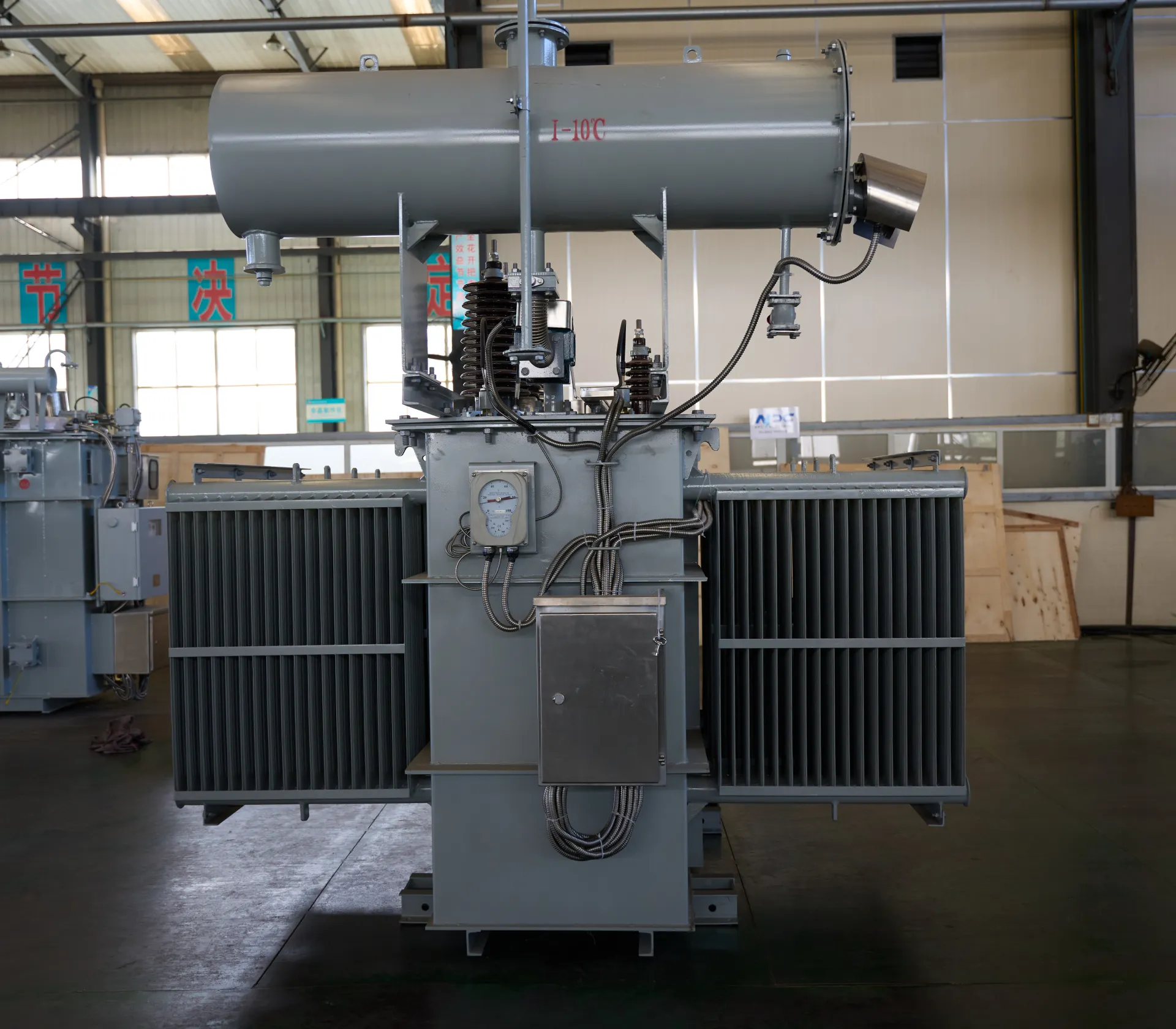
37kV 10000kVA(10MVA) Three Phase Duplex Winding Oil Immersed Power Transformer
The 37kV 10000kVA (10MVA) Three Phase Duplex Winding Oil Immersed Power Transformer is designed for high-reliability medium-voltage distribution and industrial applications. Featuring 99.95% electrolytic copper duplex windings, advanced ONAN/ONAF cooling, and ±8×1.25% on-load tap changer (optional), it delivers ultra-low no-load and load losses (S11/S13 series). Fully compliant with IEC 60076, GB/T 1094, and ANSI/IEEE standards, it withstands 170–200 kV lightning impulse and PD <10 pC. Corrugated tank or detachable radiator design ensures excellent heat dissipation and mechanical strength. Standard voltages 37±8×1.25%/11kV, 37/6.3kV or custom. Vacuum oil processing and nitrogen sealing guarantee 30+ years service life with minimal maintenance. Trusted by utilities, EPCs, and heavy industries worldwide.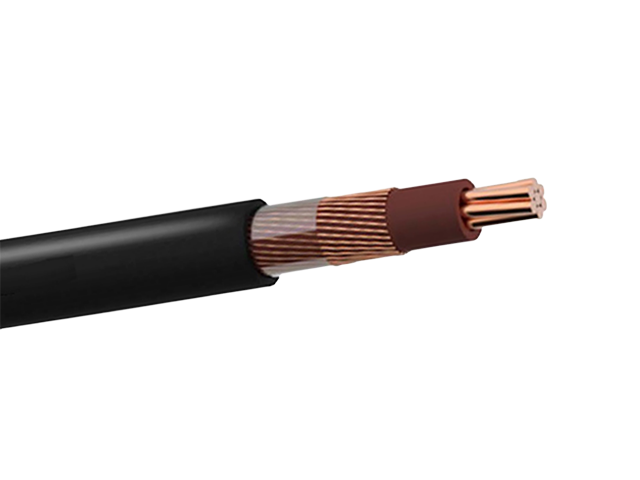
Aerial Concentric Service Cable 600/1000V - Copper & Aluminum LV Overhead Cable
The Aerial Concentric Service Cable is specially designed for overhead low-voltage service connections. It consists of stranded copper or AA8000 aluminum alloy phase conductors with XLPE insulation, concentrically arranged neutral conductors, and a durable UV-stabilized black polyethylene sheath. The concentric round construction offers balanced electrical performance, high mechanical strength, and easy handling during installation. With excellent conductivity and weather resistance, this cable is suitable for long-term aerial exposure in residential, rural, and light commercial networks. The Aerial Concentric Service Cable meets international performance standards and undergoes extensive quality testing to ensure consistent performance, safety, and long service life for overhead LV applications.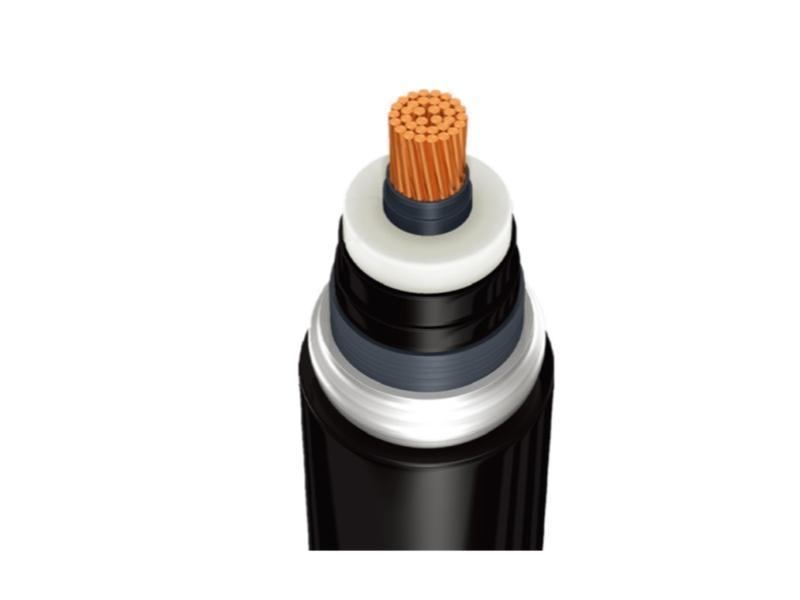
High Voltage Power Cable
NPC Electric High Voltage Power Cable is engineered for reliable transmission of electricity at voltages from 35kV to 500kV. Featuring copper or aluminum conductors, cross-linked polyethylene (XLPE) insulation, metallic screening, and a robust outer sheath, this cable minimizes losses and ensures long-term performance in demanding environments. Designed to meet international standards like IEC 60840 and IEC 62067, it offers excellent electrical properties, mechanical strength, and resistance to moisture, chemicals, and thermal stress. Whether for underground burial, submarine applications, or overhead lines, our High Voltage Power Cable delivers superior efficiency and safety. With low dielectric losses and high breakdown strength, it supports modern power grids, renewable energy integration, and industrial power distribution. Choose our cables for minimal maintenance, extended service life, and compliance with global safety norms.
2/0 Triton Aluminum Conductor Triplex Overhead Service Drop Cable
The 2/0 Triton Aluminum Conductor Triplex Overhead Service Drop Cable is engineered for reliable overhead electrical service from utility distribution lines to residential and commercial buildings. The cable consists of two insulated aluminum phase conductors twisted around a bare aluminum neutral messenger, providing balanced electrical performance and strong mechanical support. Manufactured from high-purity aluminum and weather-resistant insulation compounds, the 2/0 Triton Aluminum Conductor Triplex Overhead Service Drop Cable delivers low electrical resistance, excellent corrosion resistance, and long-term durability in outdoor environments. Its lightweight construction simplifies handling and installation while maintaining the tensile strength required for aerial service. The cable is designed to perform under UV exposure, wind loading, and temperature variation. Comprehensive quality control and systematic testing are applied throughout production to ensure compliance with utility standards and dependable field performance.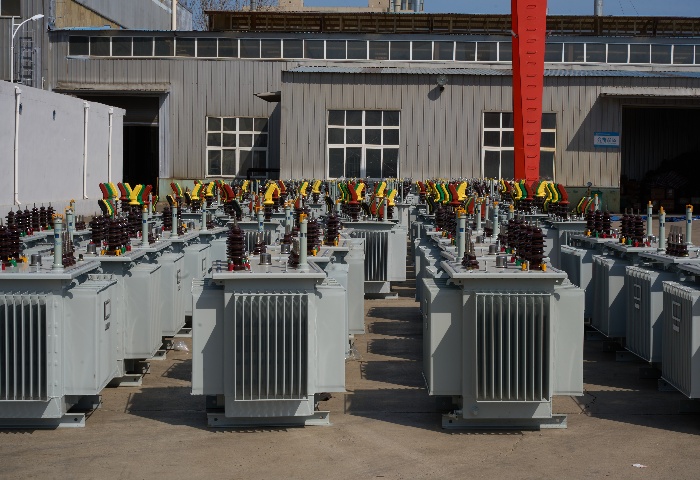
150kVA Oil Immersed Transformer
NPC ELECTRIC's 150kVA Oil Immersed Transformer is a compact and efficient power distribution solution designed for low to medium load applications. Utilizing a traditional oil-immersed insulation system, the transformer delivers stable dielectric performance and effective heat dissipation, ensuring reliable operation under continuous service conditions. The optimized core and winding structure reduces energy loss while maintaining consistent voltage output, making it suitable for decentralized power networks. With low operating noise and dependable overload capability, the transformer supports stable power supply for residential, commercial, and light industrial users. Its compact footprint and proven oil-filled technology make it an economical and practical choice for localized power distribution systems.
1250kVA Dry Type Transformer
NPC ELECTRIC 1250kVA Dry-Type Transformer delivers reliable, oil-free power distribution with a compact and efficient design. Featuring advanced insulation and cooling systems, it ensures safe, low-maintenance operation, making it ideal for industrial and commercial applications. It provides environmentally friendly, cost-effective performance with a 1250kVA capacity. Compliant with DOE amended energy conservation standards (finalized April 2024, mandatory compliance from April 23, 2029, with a 20% reduction in losses for three-phase low-voltage dry-type units), ANSI/IEEE C57.12.01, NEMA ST-20, UL 1561, and CSA requirements, this low-voltage (≤600V) transformer provides outstanding efficiency, minimized thermal losses, significant energy savings, and enhanced fire safety without insulating fluids.Welcome your inquiry
Honesty, Integrity, Frugality, Activeness and Passion