
2 AWG vs 2/0 AWG Wire: Key Differences, Applications, and Electrical Performance Explained
2025-12-08
In power systems, correctly selecting the conductor gauge is crucial for ensuring the system's safety, performance, and efficiency. Wire gauge determines the conductor's current-carrying capacity, i.e., the maximum current it can handle, thus directly affecting power transmission capability. For example, common 2 AWG and 2/0 AWG (pronounced "two zero") conductors may appear similar in appearance and application, but there are significant differences between them. 2 AWG conductors have a relatively small gauge and are suitable for lower current household distribution and small commercial facilities, typically used for 100-150 amp loads. 2/0 AWG conductors, on the other hand, have a larger gauge and are suitable for industrial equipment or large commercial buildings requiring higher currents, typically carrying 175-200 amps. Choosing the appropriate conductor gauge can effectively reduce voltage drop, improve power transmission efficiency, and prevent safety hazards such as fires caused by overload. Following standards such as the National Electrical Code (NEC) ensures that installation meets safety requirements, preventing electrical faults and equipment damage. A thorough understanding of the characteristics and uses of various conductors is essential in electrical design.
1. Understanding AWG Wire Sizing
The American Wire Gauge (AWG) system defines wire sizes inversely — the smaller the AWG number, the larger the conductor diameter.
However, once the numbers reach zero, notation changes to “0” or “aught”, and the size increases with each additional zero.
For instance:
- 2 AWG wire is smaller than 1 AWG wire.
- 2/0 AWG wire is larger than both 1 AWG and 1/0 AWG.
This increase in conductor size allows for higher current-carrying capacity (ampacity) and lower resistance, which is vital for long-distance or high-load power transmission.
2. Physical and Electrical Characteristics
The table below highlights the key technical parameters that distinguish 2 AWG from 2/0 AWG conductors.
|
Property |
2 AWG Wire |
2/0 AWG Wire |
|
Diameter (Copper) |
~0.257 inch (6.54 mm) |
~0.365 inch (9.27 mm) |
|
Cross-sectional Area |
33.6 mm² |
67.4 mm² |
|
Typical Ampacity (Copper, 75°C) |
115–130 A |
175–195 A |
|
Typical Ampacity (Aluminum, 75°C) |
90–100 A |
135–150 A |
|
Resistance (Ω/km, Copper) |
~0.52 |
~0.32 |
|
Common Voltage Rating |
600 V – 2 kV |
600 V – 2 kV |
|
Weight (Copper) |
~0.63 kg/m |
~1.08 kg/m |
|
Applications |
Residential feeders, EV chargers |
Industrial panels, subpanels, main feeders |
These numbers clearly show that 2/0 AWG wire has roughly twice the cross-sectional area and significantly higher ampacity than 2 AWG, making it more suitable for heavy-duty applications.
3. Material Comparison: Copper vs. Aluminum Conductors
Both copper and aluminum are widely used as conductor materials. Each has unique advantages depending on application, cost, and environmental conditions.
|
Conductor Type |
Advantages |
Disadvantages |
|
2/0 AWG Copper Wire |
High conductivity, excellent durability, minimal oxidation, smaller size for the same ampacity |
Higher cost, heavier, more rigid |
|
2/0 AWG Aluminum Wire |
Lightweight, cost-effective, easy to install, corrosion-resistant when coated |
Higher resistance, larger size needed, lower mechanical strength |
In practical engineering terms, 2/0 AWG copper wire is ideal for high-reliability installations such as data centers or hospitals, while 2/0 AWG aluminum wire is preferred in utility-scale power distribution where cost and weight are major factors.
4. Engineering Applications
The choice between 2 AWG and 2/0 AWG wire depends on voltage, current, and installation environment.
Residential and Commercial Systems
- 2 AWG wire is often used for 100–150 amp service panels, electric vehicle charging stations, or long branch circuits.
- 2/0 AWG wire is typically required for 200–250 amp main service feeders or for connecting large subpanels in multi-unit buildings.
Industrial Power Distribution
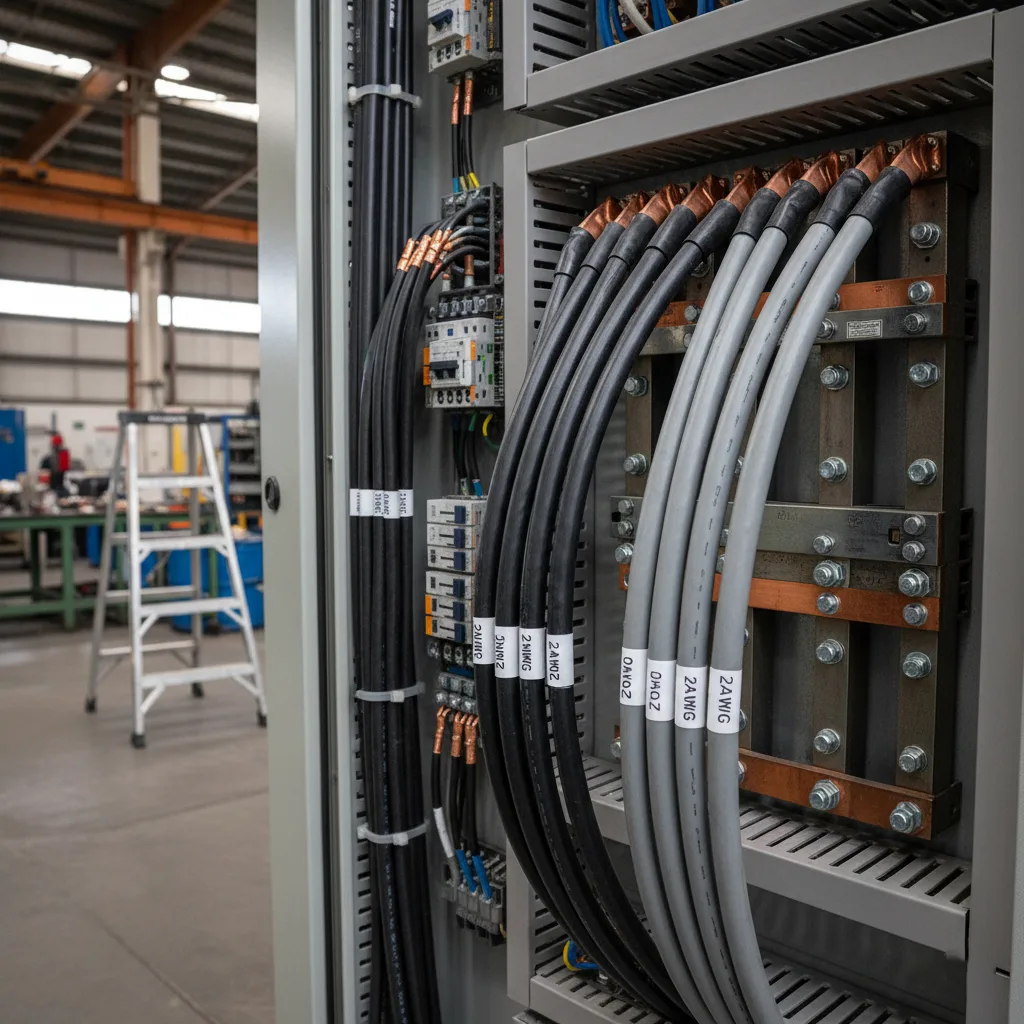
- In industrial or manufacturing environments, 2/0 AWG copper wire ensures stable power flow to large motors, transformers, and switchgear.
- 2/0 AWG aluminum wire is widely used for overhead feeders and bus duct connections, where weight reduction is crucial.
Renewable Energy Systems
- For solar or wind installations, 2/0 AWG wires provide better efficiency over long distances between inverters and power distribution centers, minimizing voltage drop and power loss.
5. Engineering and Safety Considerations
When choosing between wire sizes, engineers must consider several critical parameters:
- Ampacity (Current-Carrying Capacity) – Always refer to NEC Table 310.16 for allowable ampacity under different temperature and insulation ratings.
- Voltage Drop – Excessive voltage drop can cause equipment malfunction or energy waste; thicker wires like 2/0 AWG reduce losses.
- Thermal Management – Larger conductors dissipate heat more efficiently, improving long-term reliability.
- Conduit Fill and Flexibility – Larger wires require more installation space and may demand special fittings or bending allowances.
- Cost vs. Performance – Copper has better conductivity, but 2/0 AWG aluminum offers significant cost savings (up to 40%) for large-scale installations.
6. Summary Table: 2 AWG vs 2/0 AWG Overview
|
Parameter |
2 AWG |
2/0 AWG |
|
Relative Size |
Smaller |
Larger |
|
Ampacity (Cu) |
115–130 A |
175–195 A |
|
Material Options |
Copper / Aluminum |
Copper / Aluminum |
|
Typical Use |
Residential / Light Commercial |
Industrial / Utility |
|
Cost |
Lower |
Higher |
|
Weight & Flexibility |
Easier to handle |
Heavier, less flexible |
7. Conclusion
Choosing between 2 AWG and 2/0 AWG wires ultimately depends on electrical load, distance, and installation type.
For medium-load residential and commercial systems, 2 AWG copper wire offers a balance between performance and cost.
However, for high-load or long-distance power transmission, 2/0 AWG copper or aluminum wire provides superior ampacity, lower voltage drop, and enhanced safety margins.
By considering factors like ampacity, material, and environmental exposure, electrical engineers and installers can select the most efficient and reliable conductor for their specific project.

Related Articles
Related Products
90kV Three-Phase Oil-Immersed Power Transformer
The 90kV Three-Phase Oil-Immersed Power Transformer for High-Voltage Distribution is engineered to deliver reliable and efficient performance across utility grids, industrial substations, and high-voltage transmission systems. Designed with high-grade silicon steel cores and 100% copper windings, the transformer ensures low losses, strong short-circuit resistance, and stable thermal performance. Its oil-immersed cooling structure provides superior heat dissipation, supporting continuous and heavy-duty operation. The robust tank, high-performance insulation system, and outdoor-ready protection structure enable safe operation in harsh climate conditions. Compliant with IEC, IEEE, and GB standards, the transformer offers excellent voltage stability, long service life, and high operational reliability. It is widely used in power utilities, infrastructure projects, renewable energy integration, and industrial distribution networks requiring dependable high-voltage transformation.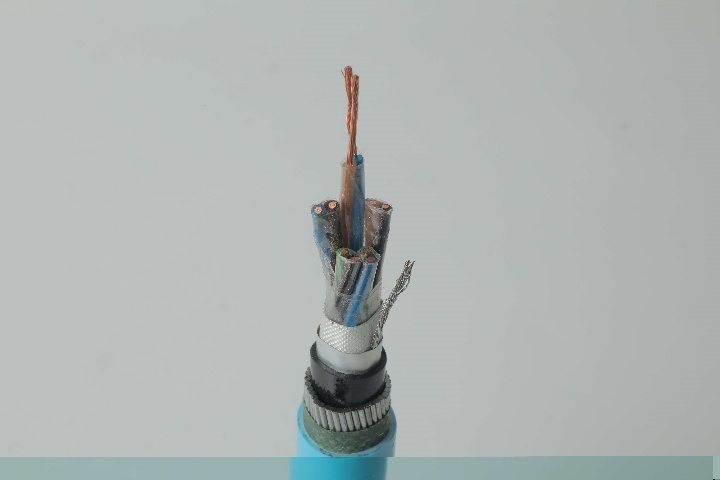
Instrumentation Cables—XLPE Insulated,Individual & Overall Screened,Lead Sheathed,Wire Armoured PVC Sheathed Cables(CU/XLPE/IOSCR/LEAD/SWA/PVC)
Instrumentation Cables are multi-conductor cables that carry and transport low-voltage electrical signals. These low-voltage signals are used to control and monitor electrical power systems. Instrumentation cables have many different industrial applications that include broadcasting, equipment control, such as drilling and pumping in the oil and gas industry, and data transfer, which includes analog and digital signals. They are manufactured according to the BS EN 50288-7 and BS EN 50288-1 standards to ensure quality. Depending on the application, instrumentation cables can be insulated with PVC or XLPE; the cables can be armoured or unarmoured. The sheathing materials can be of PVC, LSZH, or PE. The cables can have additional flame retardant or flame retardant properties, and they can be manufactured with special protections such as lead sheaths, or DRYLAM or AIRBAG technology.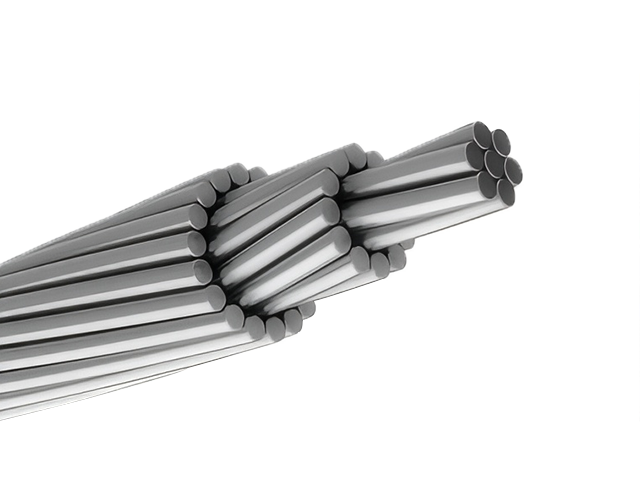
Penguin ACSR Conductor Cable
The ACSR Penguin is an Aluminium Conductor Steel Reinforced (ACSR) designed with a robust steel core surrounded by layers of high-conductivity aluminium wires, adhering to ASTM B232 standards. It features a stranded steel core surrounded by layers of aluminum conductors, combining excellent tensile strength with efficient current-carrying capability. The steel core provides superior load-bearing capacity, while the aluminum strands ensure low electrical resistance and reduced line losses. This balanced construction allows the Penguin ACSR Conductor Cable to withstand long spans, high wind loads, and varying environmental conditions. Manufactured in accordance with relevant ASTM and IEC standards, it offers stable performance, ease of installation, and long service life. The conductor is widely adopted in overhead transmission lines where durability, economy, and mechanical reliability are critical.H-medium-voltage-power-cable-2.jpg)
N2XS(F)H Medium Voltage Power Cable (6/10kV, 12/20kV, 18/30kV)
The N2XS(F)H Medium Voltage Power Cable is engineered for medium voltage power distribution systems operating at 6/10kV, 12/20kV, and 18/30kV, where electrical reliability and fire safety are essential. The cable combines a copper conductor with XLPE insulation and a longitudinally corrugated aluminum sheath that delivers excellent moisture protection and mechanical strength. The LSZH outer sheath minimizes toxic gas release and smoke generation during fire exposure, supporting safer evacuation and equipment protection. Designed and manufactured in compliance with IEC standards, N2XS(F)H cables provide low dielectric losses, high thermal stability, and dependable long-term operation. The metallic sheath enhances grounding and fault current performance, making the cable suitable for critical infrastructure and underground installations.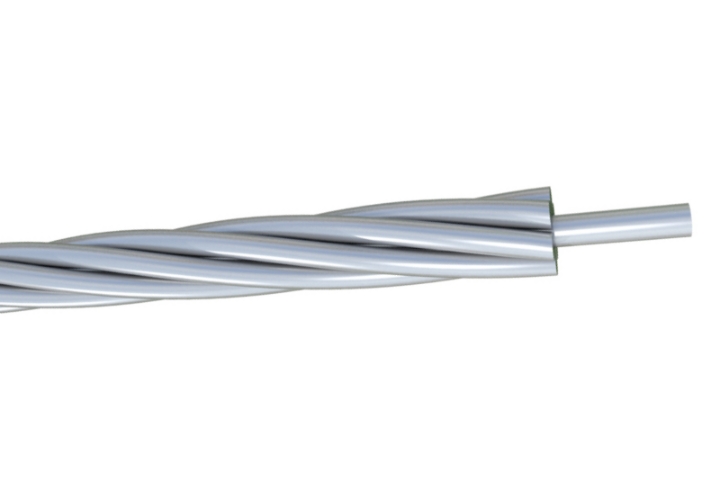
8 Gauge Galvanized Steel Conductor Wire
The 8 Gauge Galvanized Steel Conductor Wire is engineered for demanding utility applications, delivering reliable high-strength performance with outstanding corrosion resistance. Produced with heavy hot-dip galvanizing, this 8 AWG wire features a uniform zinc coating that effectively protects against rust in challenging environments. It performs exceptionally well as overhead ground wire, static wire, or guy wire for pole guying in power transmission and distribution systems. Meeting ASTM A475 requirements, the 8 Gauge Galvanized Steel Conductor Wire provides excellent tensile strength and long service life with minimal maintenance. Rigorous quality testing throughout production ensures consistent mechanical properties and coating integrity, making it a cost-effective and dependable solution for shielding and structural support in overhead lines.
266.8 MCM Waxwing ACSR Conductor Cable
The Waxwing ACSR Conductor Cable is engineered for demanding overhead transmission, with 266.8 MCM size and 18/1 stranding configuration. High-purity aluminum (1350-H19) surrounds a galvanized steel core, offering a DC resistance of 0.0643 Ω/MFT and ampacity up to 340A. Adhering to ASTM B230 for aluminum and B232 for assembly, it provides excellent corrosion resistance and mechanical integrity for spans up to 300m. The steel core minimizes sag under heavy loads, while aluminum ensures high conductivity (61.5% IACS) and lightweight design for easier installation. Suitable for distribution voltages up to 138kV, the Waxwing ACSR Conductor Cable reduces line losses and withstands extreme weather, including ice loads up to 1/2 inch. Its economical profile makes it a staple for utility expansions, renewable connections, and grid modernization, delivering consistent power with high weather tolerance and minimal maintenance in global overhead networks.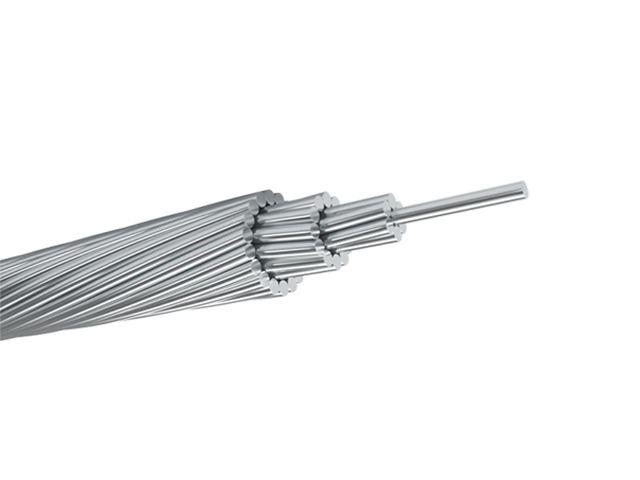
BUTTE AAAC Conductor Cable
BUTTE AAAC (All Aluminum Alloy Conductor) cables comply with ASTM B399 standards and offer high strength, good conductivity, and corrosion resistance. Named "Butte" for its 400 mm² nominal area with 37-strand configuration, it offers superior conductivity (53% IACS) and tensile strength (295 MPa min) compared to ACSR. Made from heat-treated aluminum-magnesium-silicon alloy (6201-T81), this cable provides excellent corrosion resistance, low weight, and reduced sag for longer spans. Compliant with ASTM B398, B399, IEC 61089, and BS EN 50182 standards, it supports voltages up to 33kV with ampacity up to 800A at 75°C. The homogeneous alloy construction eliminates bimetallic corrosion and ensures uniform mechanical properties. The Butte AAAC Conductor Cable minimizes line losses, withstands harsh weather, and requires minimal maintenance. Ideal for rural electrification, urban upgrades, and renewable energy integrations, it delivers reliable, cost-effective power in overhead lines worldwide, outperforming traditional conductors in corrosive or coastal environments.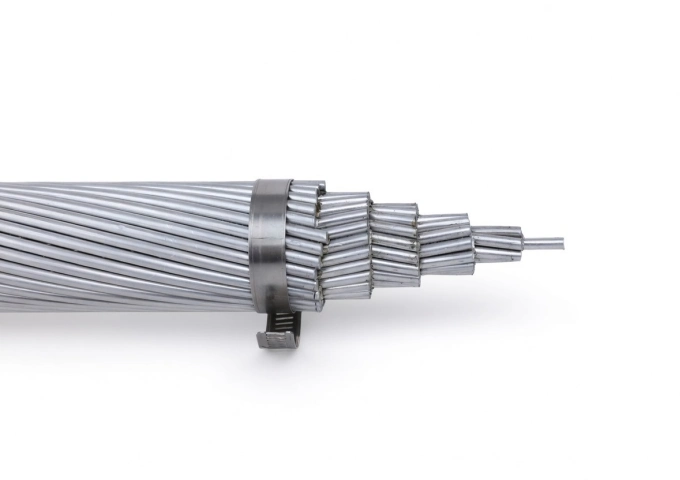
4/0 AWG OXLIP AAC Cable
The 4/0 AWG OXLIP AAC Cable is a premium All Aluminum Conductor designed for efficient overhead power transmission and distribution lines. Manufactured with seven strands of high-purity 1350-H19 aluminum wire in a concentric lay configuration, this bare conductor delivers outstanding electrical performance with low DC resistance of 0.0817 ohms per 1000 ft at 20°C. Featuring an overall diameter of 0.522 inches and a rated breaking strength of 3,830 lbs, the OXLIP AAC provides a robust ampacity of 383 amps while maintaining a lightweight profile of 198.6 lbs per 1000 ft. Its excellent strength-to-weight ratio minimizes sag and reduces structural loading. Fully compliant with ASTM B-230 and B-231 standards, the 4/0 AWG OXLIP AAC Cable offers superior corrosion resistance for long-term durability in harsh outdoor environments, making it an ideal choice for utility networks seeking cost-effective, high-reliability bare aluminum conductors.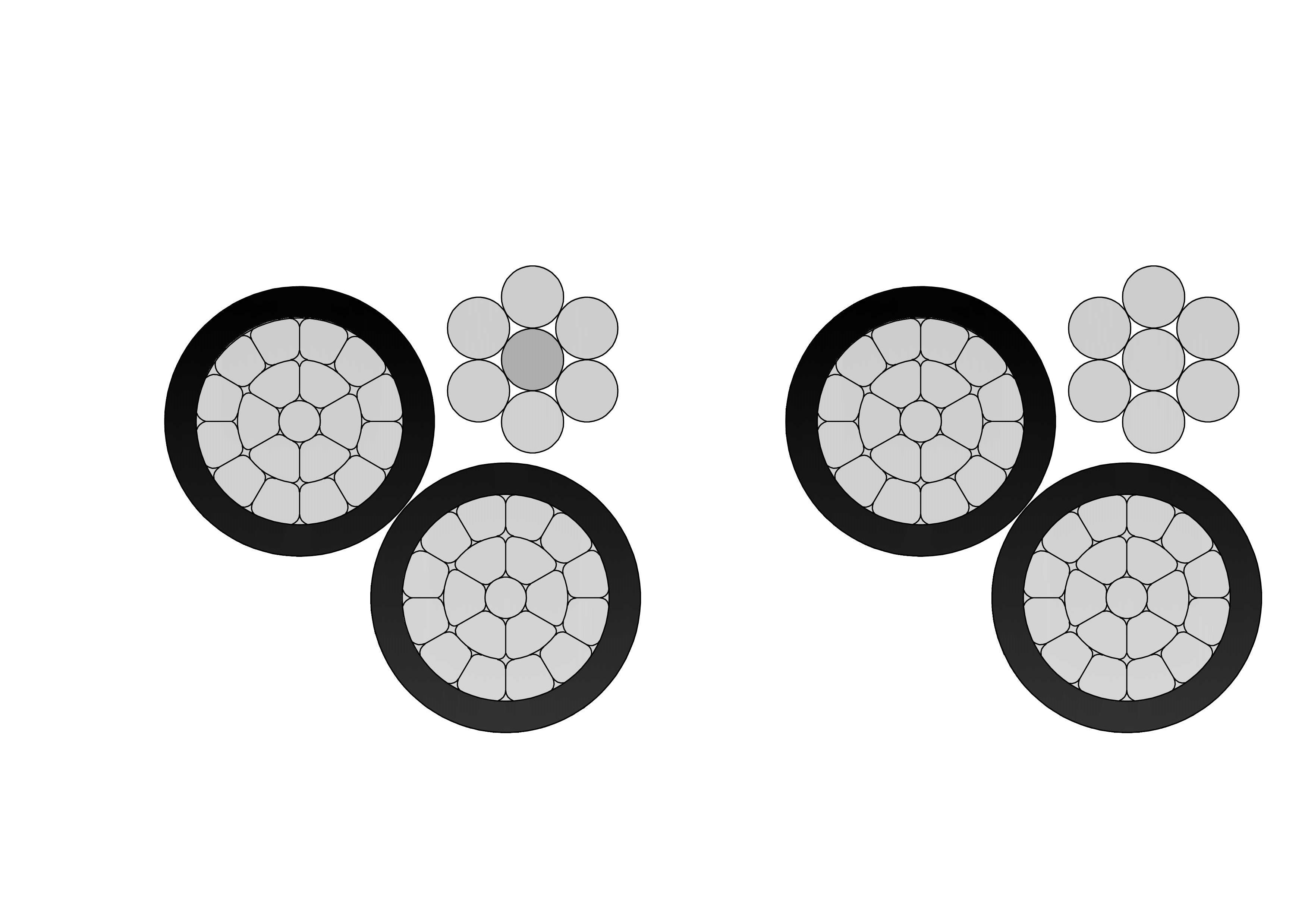
6 Minex Aluminum Conductor Triplex Overhead Service Drop Cable
The 6 Minex Aluminum Conductor Triplex Overhead Service Drop Cable is engineered for reliable overhead power distribution from utility lines to service entrances. The cable structure consists of two insulated aluminum phase conductors twisted around a reinforced neutral messenger, delivering stable electrical performance and strong mechanical support. Manufactured from high-purity aluminum and weather-resistant insulation materials, the 6 Minex Aluminum Conductor Triplex Overhead Service Drop Cable offers excellent conductivity, low weight, and ease of installation. The insulation system is designed to withstand UV radiation, moisture, temperature fluctuations, and environmental aging, ensuring dependable long-term outdoor performance. A comprehensive quality control system is applied throughout production. The 6 Minex Aluminum Conductor Triplex Overhead Service Drop Cable undergoes systematic raw material testing, continuous process inspection, and rigorous finished product testing. Each stage follows standardized procedures to ensure compliance with international standards and utility specifications. This cable is an ideal solution for residential, commercial, and light industrial overhead service drop applications requiring safety, durability, and consistent quality.
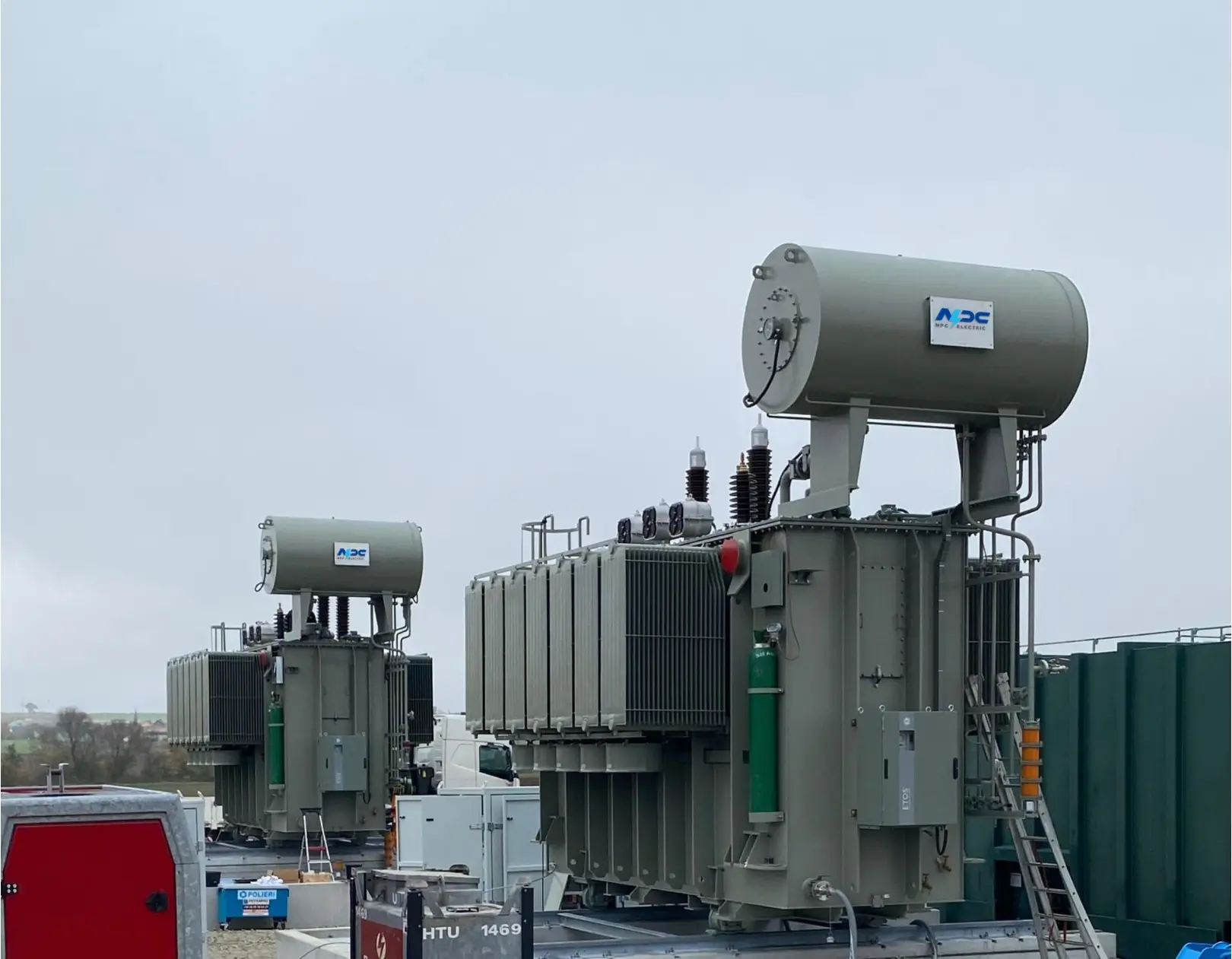
380kV Oil-Immersed Power Transformer
NPC Electric 380kV Oil-Immersed Power Transformer is engineered for the most demanding extra-high voltage (EHV) transmission networks, providing a robust link between power generation and regional distribution. Utilizing a multi-step core stacking method with high-grade, laser-scribed silicon steel, this unit minimizes eddy current losses and vibration. The internal active part is submerged in high-dielectric-strength mineral oil, which serves both as a superior insulator and a high-efficiency coolant. Designed with a vacuum-proof, reinforced corrugated or radiator-type tank, it ensures hermetic integrity under extreme thermal cycling. With advanced electrostatic shielding and a focus on mechanical stability, this transformer offers unparalleled reliability for national grid backbones, ensuring continuous power flow with minimal maintenance requirements even in harsh environmental conditions.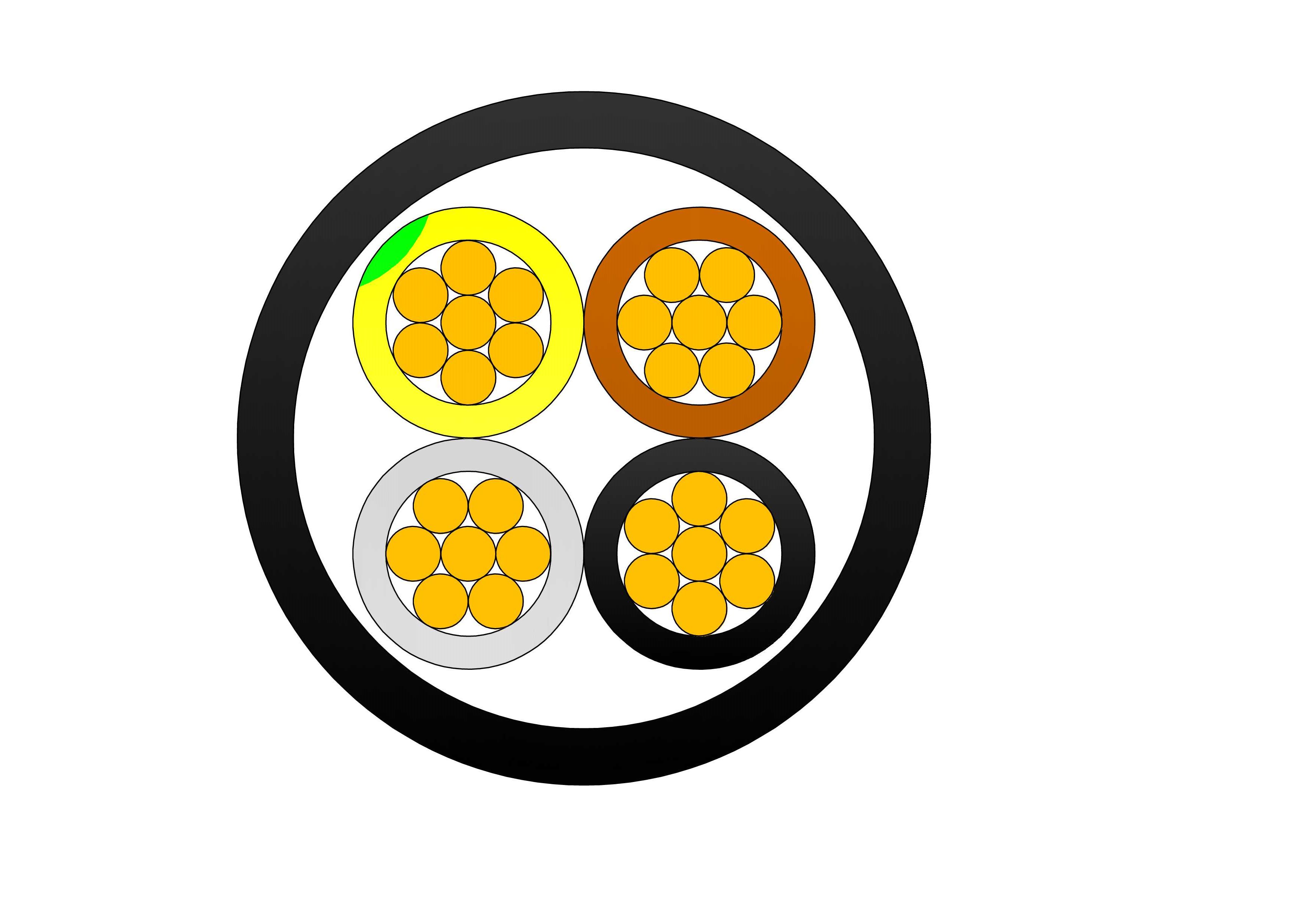
Medium Voltage Armored Power Cable XLPE Insulated Distribution Cable
The Medium Voltage Armored Power Cable is engineered for reliable power transmission and distribution in utility, industrial, and infrastructure applications. Manufactured with high-conductivity copper or aluminum conductors, advanced XLPE insulation, metallic screens, galvanized steel wire or steel tape armour, and a durable outer sheath, the cable delivers excellent electrical performance and superior mechanical protection. Designed for medium voltage networks ranging from 3.6/6kV to 26/35kV, the cable provides outstanding dielectric strength, low insulation losses, and high thermal stability. The armouring layer protects the cable against impact, compression, tensile stress, and accidental mechanical damage, making it suitable for underground and direct burial installations. The outer sheath offers excellent resistance to moisture, chemicals, UV radiation, and environmental exposure. Manufactured according to IEC 60502-2 and international standards, the cable is widely used in substations, renewable energy projects, industrial facilities, power plants, and utility distribution systems. The Medium Voltage Armored Power Cable ensures long-term reliability, operational safety, and efficient power transmission under demanding service conditions.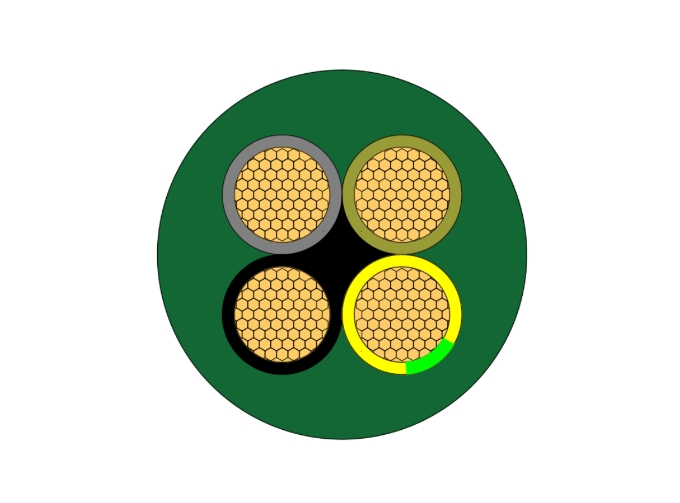
RZ1-K(AS) XLPE LSZH Flexible Cable
RZ1-K(AS) XLPE LSZH Flexible Cable is a single Core flame retardant LSZH flexible power cable suitable for instllation outdoor and indoor. The "(AS)" suffix denotes advanced fire-retardant properties, minimizing smoke and toxic gases during fires. Excellent bend radius and resistance to mechanical stress, oils, and chemicals ensure easy routing and durability.
170kV 4–40MVA Oil-Immersed High-Voltage Power Transformer
The 170kV 4–40MVA oil-immersed high-voltage power transformer is designed to support flexible capacity requirements across modern transmission and substation systems. Its wide MVA range allows a single platform to adapt to diverse grid configurations, from regional substations to industrial power interfaces. The transformer utilizes a refined oil-paper insulation system to ensure strong dielectric performance and long-term operational stability under high electrical stress. Advanced magnetic circuit optimization minimizes losses while maintaining excellent voltage regulation. The mechanical structure is engineered to withstand thermal cycling, short-circuit forces, and continuous operation under variable load conditions. With a focus on reliability, efficiency, and service life, this transformer is well suited for utility-scale projects that demand dependable high-voltage energy transfer with adaptable power ratings.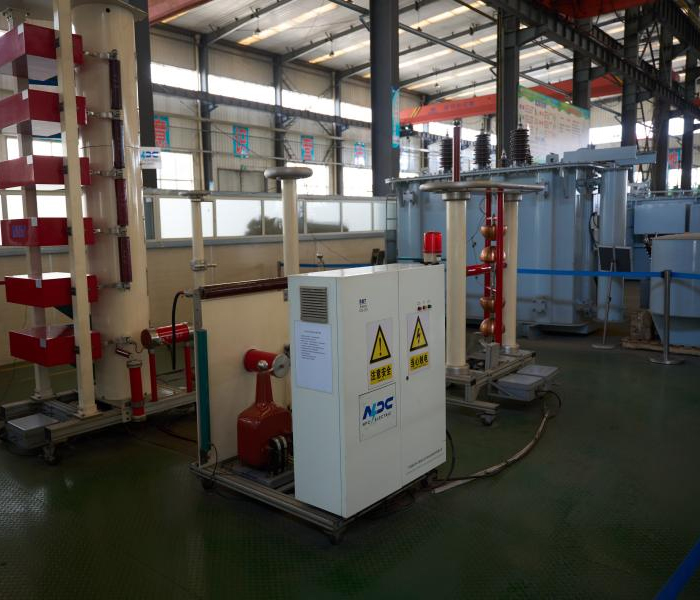
1000kVA Dry Type Transformer
NPC ELECTRIC 1000kVA Dry-Type Transformer offers efficient, oil-free power distribution with a compact design. Equipped with advanced insulation and cooling systems, it ensures safe and reliable operation with minimal maintenance. Ideal for industrial and commercial applications, it provides environmentally friendly and cost-effective performance. Standard features include three-phase configuration, primary voltages 208V–600V (e.g., 480V Delta, 600V Delta), secondary voltages such as 208Y/120V, 480Y/277V, or custom, aluminum or copper windings, 150°C rise (standard) or 115°C/80°C with 220°C insulation class, ±2×2.5% primary taps, NEMA 1 ventilated enclosure (NEMA 3R/encapsulated options), natural convection cooling (AN), electrostatic shielding, and NEMA-compliant low sound levels.
1033.5 MCM ORTOLAN ACSR Conductor Cable
The Ortolan ACSR Conductor Cable is a high-capacity overhead conductor designed for efficient power transmission. Named "Ortolan" for its 1033.5 MCM size with 45/7 stranding (45 aluminum wires around 7 steel cores), it combines lightweight aluminum for conductivity with a galvanized steel core for tensile strength. Compliant with ASTM B230, B232, and ICEA standards, this cable offers a breaking load of approximately 32,300 lbs and a current rating up to 1000 amps at 75°C in overhead applications. The aluminum 1350-H19 provides excellent corrosion resistance and low electrical resistance (0.0166 Ω/1000ft at 20°C), while the steel enhances sag control over long spans. Suitable for voltages up to 230kV in distribution lines, the Ortolan ACSR Conductor Cable minimizes line losses and withstands harsh weather, including wind and ice loading. Its cost-effective design makes it popular for utility upgrades and rural electrification, ensuring reliable power delivery with minimal maintenance in overhead transmission and distribution systems worldwide.Welcome your inquiry
Honesty, Integrity, Frugality, Activeness and Passion