Single Phase to Three Phase Transformer: Complete Guide – Types, Working, Applications & Benefits
2026-03-12
In many regions—especially rural areas, small workshops, or emerging markets—single-phase power remains the standard electrical supply due to lower infrastructure costs. However, modern industrial applications, heavy machinery, motors, pumps, compressors, and renewable energy integration (such as solar inverters or wind systems) demand three-phase power for smoother operation, higher efficiency, and balanced power delivery.
A single-phase to three-phase transformer (often combined with specialized connections or used in converter setups) enables this transition without requiring utility upgrades. Unlike simple phase converters (static or rotary), transformer-based solutions focus on voltage transformation while achieving phase conversion through clever winding configurations, offering superior performance and reliability in demanding environments.
Why Convert Single Phase to Three Phase Power?
Three-phase systems provide consistent torque, reduce vibration, and improve motor efficiency compared to single phase. Benefits include:
- Higher power delivery capacity with smaller conductors.
- Reduced energy costs through lower I²R losses.
- Smoother operation for inductive loads, extending equipment life.
- Better support for variable frequency drives (VFDs) and modern automation.
- Easier renewable energy integration, as many inverters output three-phase.
For facilities with only single-phase power, conversion lowers operational costs while enabling industrial-grade equipment.
How a Single-Phase to Three-Phase Transformer Works
Traditional transformers transfer energy via electromagnetic induction between primary and secondary windings. A single-phase unit has one primary and one secondary coil set.
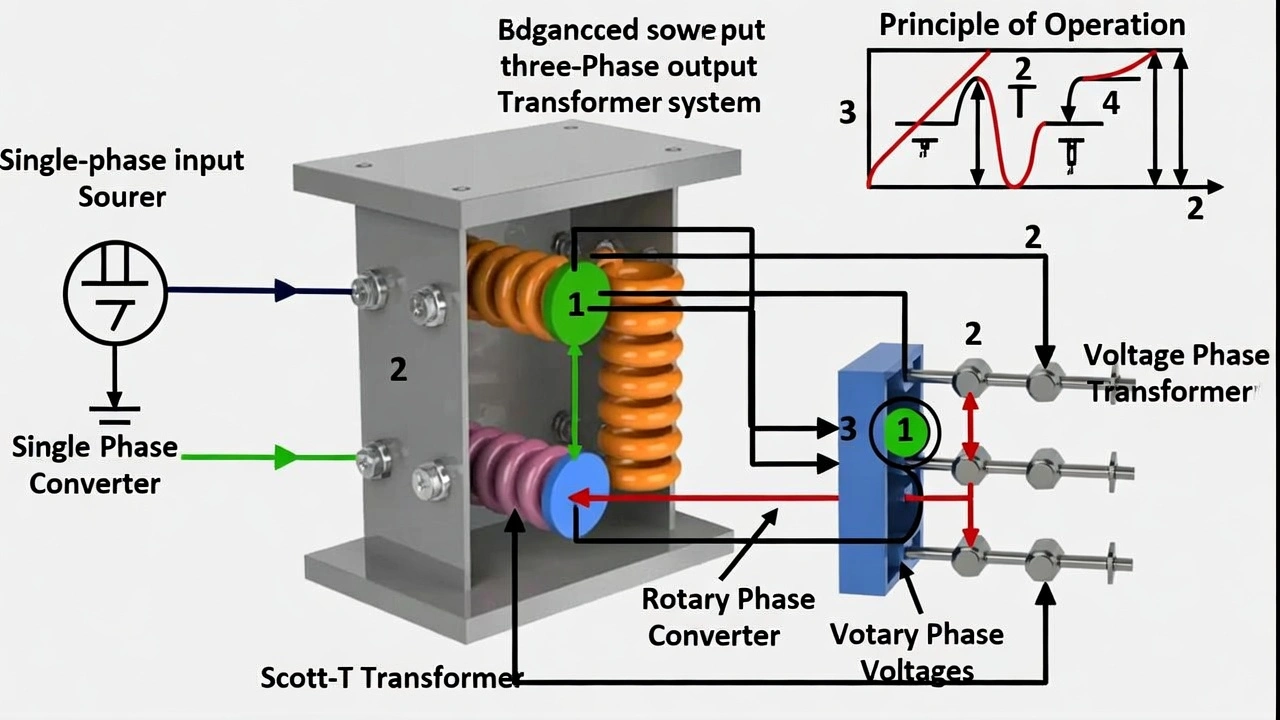
True phase conversion requires generating additional phases. Pure transformer solutions use special connections with multiple single-phase units:
- Scott-T (Scott Connection) — Uses two single-phase transformers to convert three-phase to two phase or vice versa, but adapted configurations can approximate single to three phase in reverse setups or hybrid systems.
- Open Delta (V-V Connection) — Employs two single-phase transformers for three phase output (from a three phase input normally), but reverse engineering applies in limited cases.
- Bank of Three Single Phase Transformers — Connected in delta or wye on the secondary to produce balanced three phase from stepped-up single phase input (often with phase-shifting capacitors or inductors for better balance).
In practice, many commercial "single to three phase transformers" integrate phase-shifting networks or function as step-up units feeding rotary converters, but pure transformer designs rely on:
- Primary: Single-phase input.
- Secondary: Multiple windings phased to produce 120° displacement.
- Core: Laminated silicon steel for minimal losses.
Note: Pure transformers alone cannot perfectly convert single to balanced three-phase without additional components (e.g., capacitors for phase shift). For balanced output, hybrid systems or rotary phase converters are often paired.
Types of Single-Phase to Three-Phase Solutions
|
Type |
Description |
Power Balance |
Efficiency |
Cost |
Best For |
|
Static Phase Converter + Transformer |
Capacitor-based start; transformer for voltage match |
Partial |
Moderate |
Low |
Light loads, simple motors |
|
Rotary Phase Converter + Transformer |
Idler motor generates third phase; transformer steps voltage |
Excellent |
High |
Medium |
Workshops, multiple machines |
|
Scott-T Connection (2 transformers) |
Specialized for phase shift; true transformer-based |
Good |
High |
Medium-High |
Precision or legacy systems |
|
Open Delta Bank (2-3 transformers) |
Uses 2-3 units in delta config for three phase output |
Moderate-Good |
High |
Medium |
Backup/redundancy setups |
|
Custom Three Phase Transformer Bank |
Three single phase units in wye/delta for near-balanced output |
Excellent |
Very High |
High |
Industrial, high reliability |
|
VFD/Static Inverter Transformer |
Electronic conversion; transformer for isolation/voltage |
Perfect |
Very High |
High |
Modern variable speed applications |
Design Considerations from a Practical Perspective
Modern designs prioritize efficiency, cooling, and safety:
- Core Material: High-grade silicon steel reduces hysteresis/eddy current losses.
- Windings: Copper for low resistance; multiple secondary taps for flexibility.
- Insulation: Class F/H for high-temperature operation.
- Cooling: ONAN (Oil Natural Air Natural) or dry-type for indoor use.
- Power Rating: Oversize 20-30% for starting surges.
- Voltage Ratio: Common step-up (e.g., 240V single to 415V three-phase).
Key formula for capacity in open delta: Rated power = √3 × (individual transformer kVA) × 0.577 (approx. 57.7% of full delta).
Applications in Industrial and Commercial Settings
- Workshops/garages running lathes, mills, or welders on rural single-phase grids.
- Agricultural operations (irrigation pumps, grain dryers).
- Small manufacturing with CNC machines or compressors.
- Renewable energy integration — Solar farms or EV chargers needing three-phase.
- Remote sites where utility three-phase extension is cost-prohibitive.
These solutions reduce energy costs by enabling efficient three-phase motors (up to 15-20% savings vs single-phase equivalents).
Advantages and Limitations
Advantages:
- Provides balanced power for sensitive equipment.
- Lowering energy losses and operational costs.
- High performance and reliability with no moving parts (pure transformer).
- Scalable for various power rating needs.
Limitations:
- Not as plug-and-play as rotary converters.
- Higher upfront cost for custom banks.
- May require derating in open configurations.
Comparison: Transformer-Based vs Converter-Based Solutions
|
Aspect |
Transformer-Based (e.g., Scott/Open Delta) |
Rotary/Static Converter |
|
Moving Parts |
None |
Yes (rotary) |
|
Maintenance |
Minimal |
Higher |
|
Power Quality |
Excellent (with proper design) |
Good to Excellent |
|
Cost (initial) |
Higher |
Lower |
|
Efficiency |
95-98% |
85-95% |
|
Suitability for Continuous Duty |
High |
High (rotary) |
A single-phase to three-phase transformer—whether through Scott connection, open delta banks, or hybrid setups—offers a scientific, reliable method to upgrade electrical systems. From an actual work viewpoint, it excels in scenarios demanding long-term efficiency, minimal maintenance, and integration with modern power distribution needs.
Evaluate your load (kW/hp), duty cycle, and budget. Consult certified electrical engineers for site-specific designs to ensure compliance, safety, and optimal power delivery.
For quotes or custom solutions in international markets, contact reputable manufacturers specializing in export-grade units.

Related Articles

Related Products
6 Collie Aluminum Conductor Duplex Overhead Service Drop Cable
The 6 Collie Aluminum Conductor Duplex Overhead Service Drop Cable is engineered for efficient and dependable power delivery in overhead secondary distribution systems. Featuring stranded aluminum conductors, the duplex configuration provides both electrical conductivity and mechanical support for service drop installations. The No. 6 Collie size is ideal for short-span service drops, delivering stable load capacity with controlled sag under varying environmental conditions. Aluminum construction reduces cable weight, simplifies handling, and enhances corrosion resistance for long-term outdoor use. Produced under strict quality management systems, the 6 Collie Aluminum Conductor Duplex Overhead Service Drop Cable meets ASTM and utility requirements, making it a trusted solution for modern overhead service connections requiring safety, durability, and consistent electrical performance.
750kVA Oil Immersed Transformer
NPC ELECTRIC's 750kVA oil-immersed transformer uses advanced oil-immersed cooling technology to provide efficient and stable power conversion. The transformer complies with international standards such as the International Electrotechnical Commission (IEC) and ISO 9001, ensuring the high quality and safety of the product. Its sturdy structure and excellent overload resistance are widely used in industrial, commercial, and power network fields.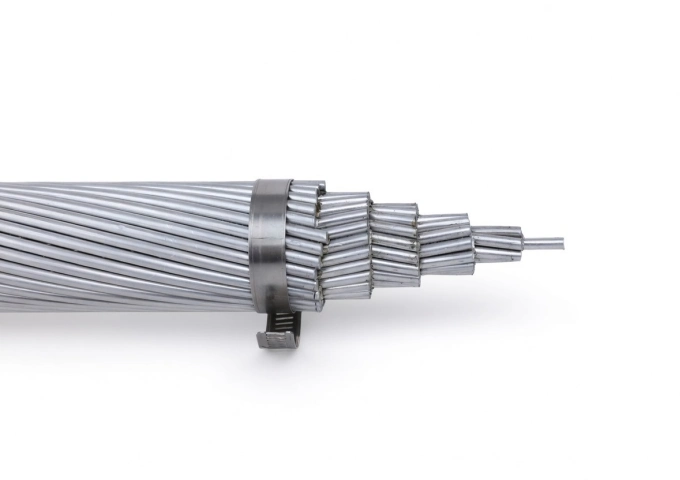
2 AWG IRIS AAC Cable
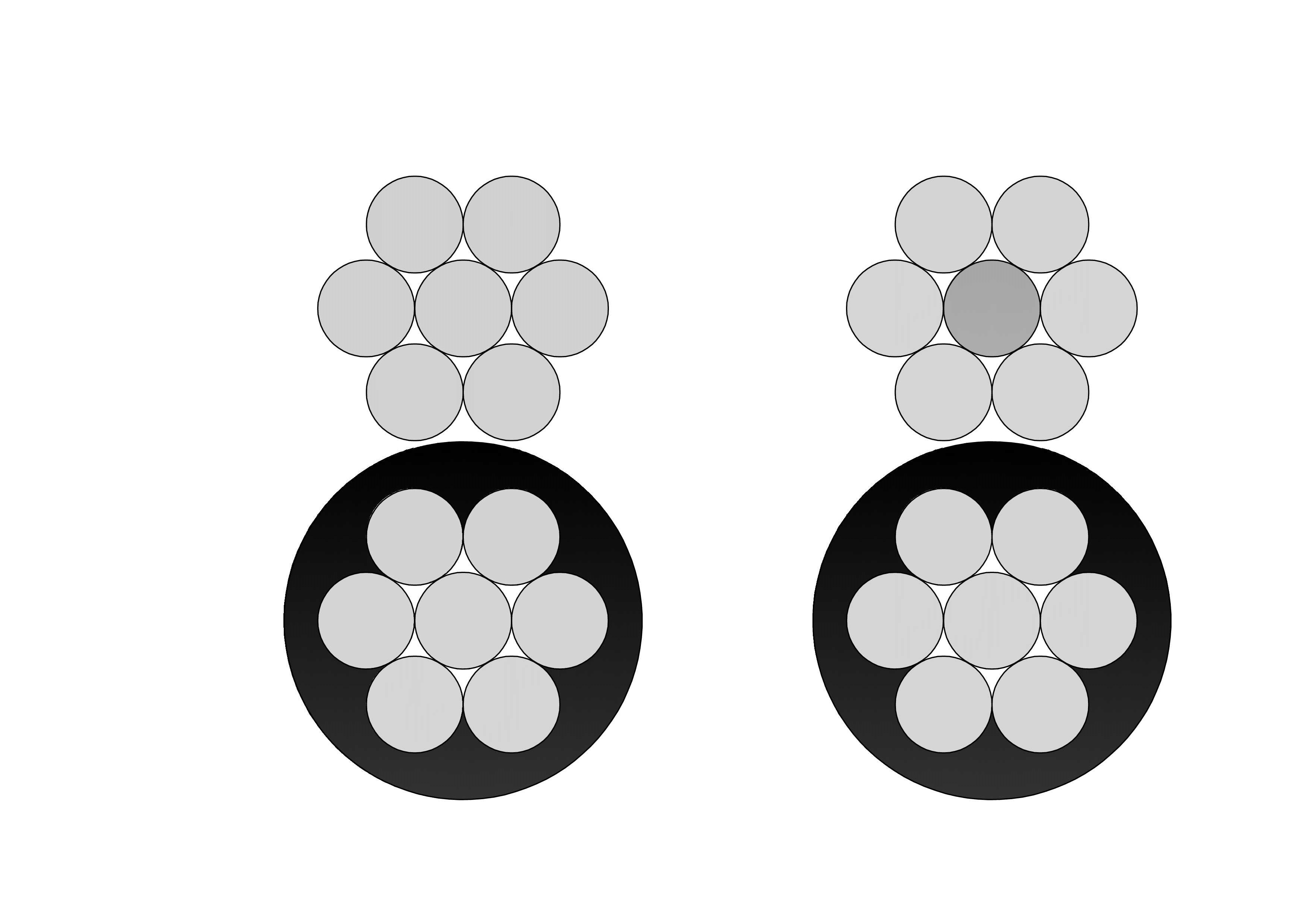
The 2 AWG IRIS AAC Cable is a premium All Aluminum Conductor designed for efficient overhead power transmission and distribution. Manufactured with high-purity 1350-H19 aluminum wires in a 7-strand concentric lay configuration, this bare conductor offers excellent electrical conductivity and lightweight performance. Ideal for urban and rural utility networks, the IRIS AAC delivers superior current-carrying capacity up to 185 amps while maintaining low sag and high reliability in various weather conditions. Its corrosion-resistant properties ensure long service life with minimal maintenance. Rigorously tested from raw materials to finished product, the 2 AWG IRIS AAC Cable meets or exceeds ASTM B-230 and B-231 standards, providing optimal strength-to-weight ratio and low DC resistance of 0.260 ohms per 1000ft. Choose this dependable solution for cost-effective power delivery in overhead lines on poles and towers.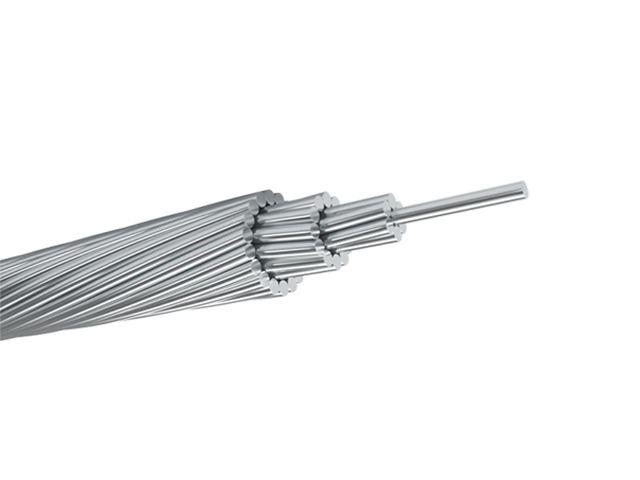
AAAC Panther Conductor Cable
AAAC PANTHER Conductor is a premium-grade All Aluminum Alloy Conductor engineered for reliable performance in overhead distribution and sub-transmission lines. Compliant with ASTM B399, IEC 61089, and BS EN 50182 standards, this conductor is manufactured using high-strength 6201-T81 aluminum alloy, offering excellent conductivity, enhanced tensile strength, and superior corrosion resistance. Compared with traditional AAC conductors, the Panther-size AAAC conductor provides higher tensile strength and reduced sag, making it suitable for longer spans and higher mechanical loading conditions. Its all-aluminum alloy construction eliminates steel reinforcement, effectively preventing galvanic corrosion and improving long-term reliability, especially in coastal, humid, and industrial environments. Produced in accordance with IEC and ASTM standards, the AAAC Panther Conductor Cable ensures uniform strand geometry, stable resistance values, and consistent performance throughout its service life. It is widely selected by utilities seeking lower maintenance costs, improved line efficiency, and enhanced durability for modern overhead power networks.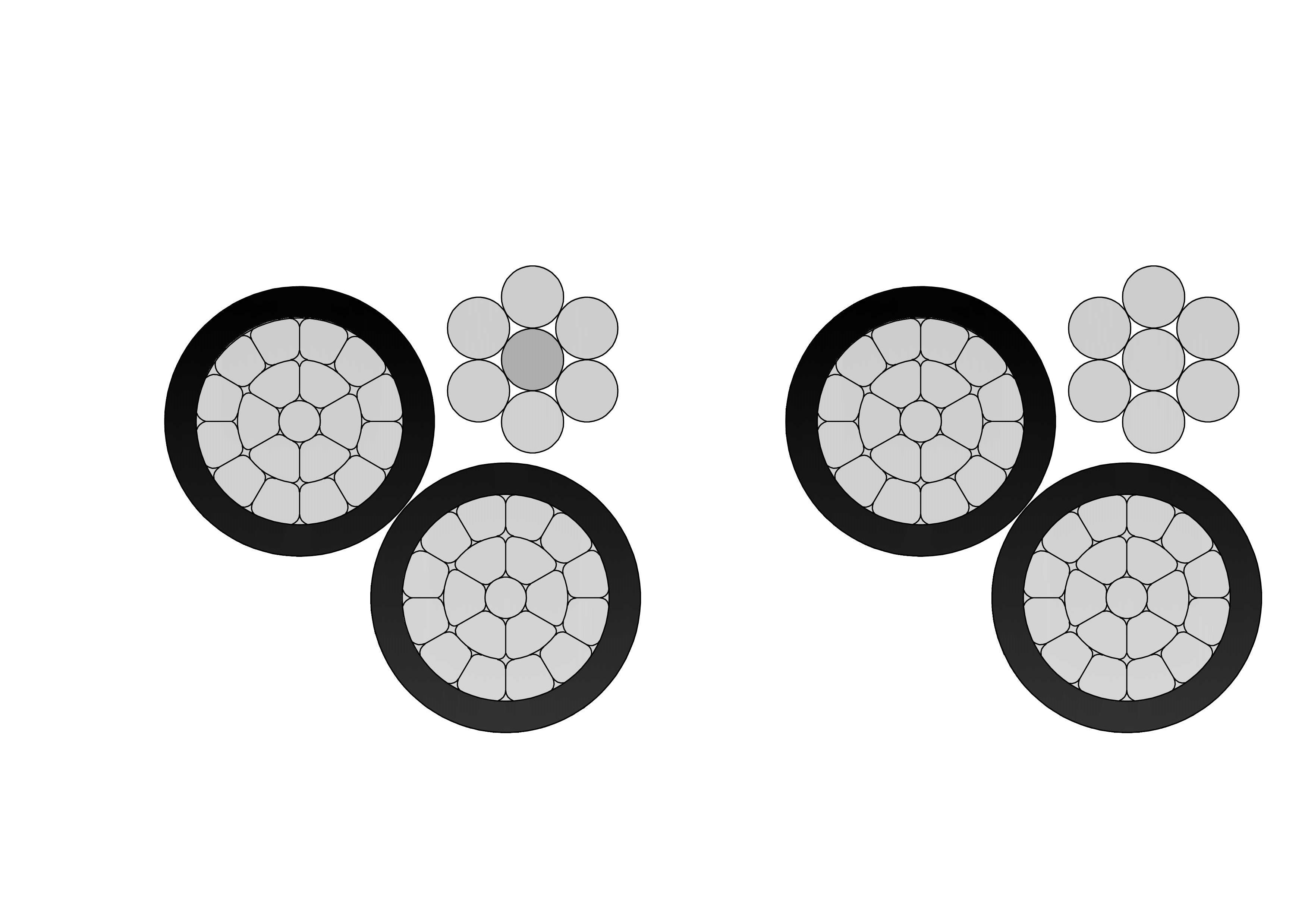
3/0 Fulgar Aluminum Conductor Triplex Overhead Service Drop Cable
3/0 Fulgar Aluminum Conductor Triplex Overhead Service Drop Cable is engineered for high-capacity overhead electrical service connections in utility distribution systems. The cable consists of two insulated aluminum phase conductors twisted around a bare aluminum neutral messenger, ensuring stable electrical transmission and strong mechanical support. Manufactured using high-purity aluminum and weather-resistant insulation compounds, the 3/0 Fulgar Aluminum Conductor Triplex Overhead Service Drop Cable delivers low electrical resistance, excellent corrosion resistance, and reliable long-term performance in outdoor environments. Its optimized conductor design allows efficient installation while maintaining the tensile strength required for aerial service applications. The cable is designed to withstand UV exposure, wind loading, and temperature fluctuations. Comprehensive quality control procedures and systematic testing are applied throughout the manufacturing process to ensure compliance with industry and utility standards and dependable field operation.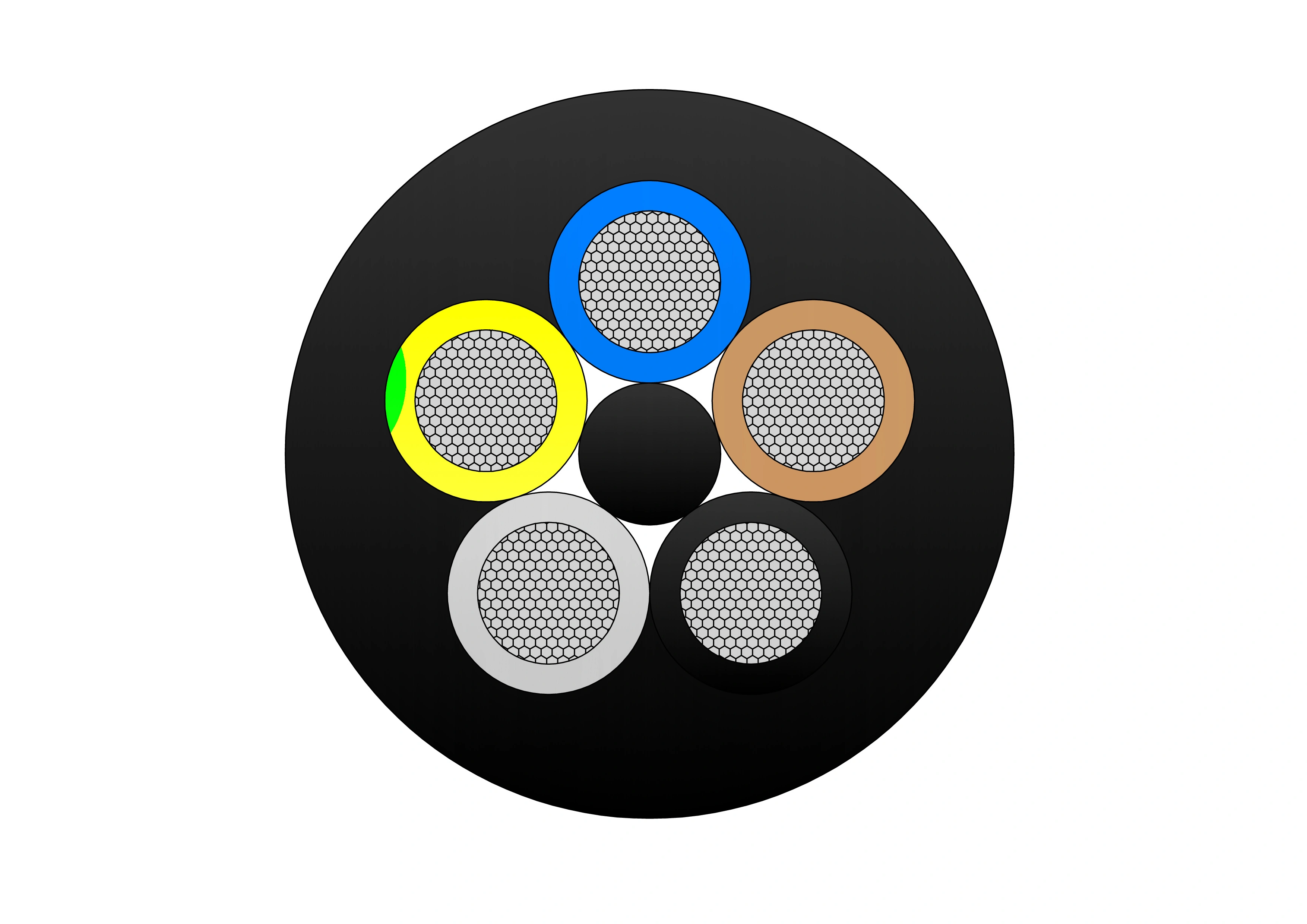
(N)TSCGEWOU 3.6/6kV, 6/10kV, 8.7/15kV and 12/20kV Submersible Cable
The (N)TSCGEWOU 3.6/6kV, 6/10kV, 8.7/15kV and 12/20kV Submersible Cable is a robust, flexible medium-voltage cable optimized for full submersion in mining and industrial water environments. It comprises class 5 tinned copper conductors for corrosion resistance, semi-conductive screens, EPR insulation for reliable dielectric and thermal properties (90°C rating), copper braid screen for shielding, control/monitoring conductors, and a high-performance watertight rubber outer sheath incorporating water-blocking elements to resist high hydrostatic pressure and prevent longitudinal/transverse water ingress. Compliant with DIN VDE 0250 and IEC standards, it provides excellent mechanical strength, flame retardancy, oil/chemical resistance, and flexibility for dynamic submersible use. The (N)TSCGEWOU Submersible is ideal for reliable power delivery to submersible pumps, dredgers, and underwater equipment in flooded mines, tunnels, and offshore applications.
50kVA Dry Type Transformer
NPC ELECTRIC 50kVA dry-type transformer is an efficient, safe and environmentally friendly power transformer. It adopts dry insulation structure and does not require oil immersion cooling. It is suitable for various small and medium-sized power systems. It is widely used in industries, commercial buildings and power distribution, providing users with stable and reliable power supply. Standard features include three-phase or single-phase configurations, aluminum or copper windings, 150°C or 115°C temperature rise with 220°C insulation class, ±2×2.5% primary taps for voltage adjustment, NEMA 1 or 3R enclosures (ventilated with louvers or encapsulated for dust/moisture protection), natural self-cooling (AN), electrostatic shielding options, and low sound levels per NEMA standards.
4 Whelk Triplex Aluminum Conductor Triplex Overhead Service Drop Cable
4-4-4 Whelk Aluminum Conductor Triplex Overhead Service Drop Cable provides efficient overhead power transmission for utility-to-consumer connections. Constructed with solid or stranded 1350-H19 aluminum phase conductors (#4 AWG), black XLPE insulation for enhanced thermal, abrasion, and environmental protection, plus a bare ACSR neutral messenger (#4 AWG, 6/1), it ensures efficient conductivity, corrosion resistance, and structural support. Rated 600V phase-to-phase up to 90°C (XLPE), with ≈115A ampacity, it complies with ASTM B-230/B-231/B-232/B-399 and ICEA S-76-474. Its balanced, lightweight design simplifies installation while offering robust long-term performance against harsh outdoor elements like extreme temperatures, moisture, UV exposure, and mechanical stress in residential and light commercial applications.
Type 275 Flexible Overall Semi-conductive Rubber Screened Mining Cable
The Type 275 Flexible Overall Semi-conductive Rubber Screened Mining Cable is a 1.1kV, medium-voltage cable designed for coal mining and heavy-duty industrial applications. It features tinned annealed copper conductors, EPR insulation, and a semi-conductive thermosetting compound screen for enhanced electrical performance. The cable is reinforced with polyamide yarn braid and protected by a heavy-duty CSP sheath, offering oil resistance, flame retardancy, and mechanical durability. Its robust construction ensures reliable power delivery to shuttle cars, electric pumps, and other mining equipment. Compliant with AS/NZS 2802 and stringent mining standards, it supports very high tensile loads, frequent flexing, tight bending radii, and reliable operation in wet, dusty, and hazardous mine environments.
Type 240 Flexible Copper Screened Mining Cable With Three Pilots
The Type 240 Flexible Copper Screened Mining Cable with Three Pilots is a medium-voltage, rubber-insulated cable designed for mining machinery feeder applications and longwall supply. It features tinned annealed copper conductors, EPR insulation, and a tinned copper/polyamide braid screen for superior electrical and mechanical performance. The three interstitial pilot cores provide additional monitoring or control functions, making it suitable for complex mining and industrial systems. With its HD-PCP extra heavy-duty outer sheath, the cable offers oil resistance, flame retardancy, and high durability for harsh environments. Compliant with AS/NZS 2802 and related standards, it ensures reliable operation under extreme mechanical and electrical stress. Constructed with high-conductivity copper conductors, durable insulation, and a robust outer sheath, the cable offers excellent resistance to abrasion, vibration, oil, moisture, and harsh mining conditions. Its flexible design supports continuous movement and reduces installation stress.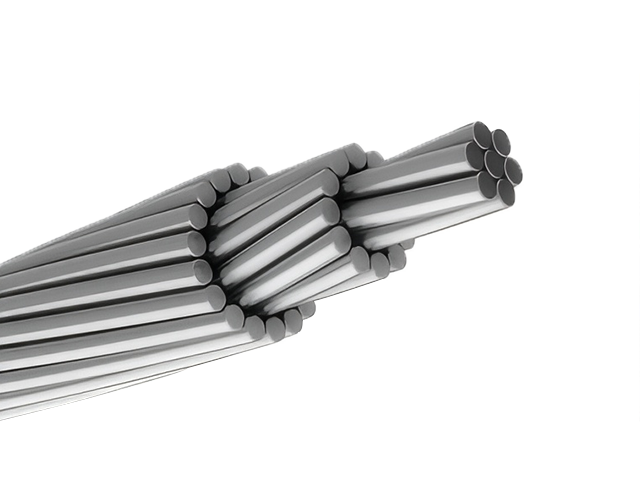
Quail ACSR Conductor Cable
Introducing the Quail ACSR Conductor Cable, a versatile 2/0 AWG overhead conductor with 6/1 stranding configuration. Composed of EC grade aluminum wires surrounding a galvanized steel core, it achieves a rated strength of 4,030 lbs and ampacity up to 250A at 75°C. Adhering to ASTM B230 for aluminum and B232 for assembly, this cable excels in corrosion resistance and mechanical endurance for spans up to 250m. The steel core enhances tensile strength to control sag under loads, while aluminum provides high conductivity (61.5% IACS) and a lightweight design for easier installation. Suitable for distribution voltages up to 138kV, the Quail ACSR Conductor Cable reduces line losses and withstands extreme weather, including ice loads up to 1/2 inch. Its economic profile makes it a staple for utility expansions, renewable integrations, and grid modernization, delivering consistent power with high weather tolerance and minimal maintenance in global overhead networks.SHOUOJ-mining-cable-2.webp)
(N)SHOU O/J - 0.6/1kV Mining Cable
The (N)SHOU O/J - 0.6/1kV flexible rubber-insulated cable is engineered according to VDE 0250 standards for reliable power supply in harsh environments such as underground mining, tunneling, and heavy-duty industrial sites. Its robust construction features Class 5 flexible copper conductors, durable rubber insulation, and a heavy-duty rubber outer sheath, delivering excellent mechanical strength, oil resistance, and flame retardancy. Designed for both fixed and flexible installations, the cable operates within a wide temperature range (-40°C to +80°C fixed) and withstands short-circuit temperatures up to +250°C. It is ideal for powering mobile equipment, submersible pumps, and industrial machinery in mining operations, particularly where abrasion resistance and safety are essential.
715.5 MCM Violet AAC Cable
The 715.5 MCM Violet AAC Cable is a high-performance All Aluminum Conductor designed for demanding overhead power transmission and distribution lines. Manufactured with 37 strands of premium 1350-H19 aluminum wire in a concentric lay configuration, this bare conductor provides excellent electrical conductivity with a low DC resistance of 0.024 ohms per 1000 ft at 20°C. Featuring an overall diameter of 0.974 inches and a rated breaking strength of 12,800 lbs, the Violet AAC delivers a robust ampacity of 823 amps while weighing only 671.7 lbs per 1000 ft. Its optimized strength-to-weight ratio minimizes sag and structural loading. Fully compliant with ASTM B-230 and B-231 standards, the 715.5 MCM Violet AAC Cable offers outstanding corrosion resistance for long-term durability in harsh outdoor environments, making it the preferred choice for utility networks requiring cost-effective, high-reliability bare aluminum conductors.
2500kVA Dry Type Transformer
The NPC ELECTRIC 2500kVA Dry Type Transformer is a high-capacity, reliable power solution designed for large industrial and commercial applications. With a power rating of 2500kVA, it features advanced dry-type insulation technology, offering superior safety, low maintenance, and long-term performance. Engineered to operate efficiently in demanding environments, this transformer delivers stable, noise-free power while minimizing environmental impact.
NS75/NS90 Duplex Unjacketed Overhead Neutral Supported Cable
Our NS75/NS90 Duplex Unjacketed Overhead Neutral Supported Cable provides economical self-supporting overhead distribution. Consisting of an XLPE-insulated aluminum phase conductor (75 mm² or 95 mm²) supported by a bare ACSR or AAAC neutral messenger without an overall jacket, it meets AS/NZS 3560 and utility requirements. The design reduces material costs while delivering high tracking resistance and mechanical strength for spans up to 100m. Excellent UV and moisture performance ensures longevity in exposed conditions. The NS75/NS90 Duplex Unjacketed Overhead Neutral Supported Cable offers low installation effort, minimal sag, and reliable power delivery for 600/1000V networks. Widely favored in Australia and New Zealand for residential, commercial, and rural service drops requiring lightweight, neutral-supported overhead cables with proven compliance and durability in diverse climates.Welcome your inquiry
Honesty, Integrity, Frugality, Activeness and Passion