
Renewable Energy Transformer: Types, Applications & Selection
2026-05-19
The global transition toward renewable energy systems has significantly transformed the electrical power industry. Governments, utilities, and private investors are rapidly expanding solar farms, wind power stations, battery storage systems, and smart grid infrastructure to reduce carbon emissions and improve energy sustainability. At the center of this transformation lies one critical component: the renewable energy transformer.
Renewable energy transformers are specialized power transformers designed to support renewable power generation, voltage transformation, grid integration, and long-distance transmission. Whether in utility-scale solar farms, offshore wind projects, or distributed clean energy systems, transformers play a fundamental role in transferring electrical energy safely and efficiently across modern electrical networks.
Unlike conventional grid transformers, renewable energy transformer systems must handle:
- Variable load conditions
- Bidirectional power flow
- Harmonic distortion
- Rapid voltage fluctuations
- Renewable intermittency
- Smart monitoring requirements
Modern renewable power infrastructure, therefore, requires advanced transformer technologies with improved energy efficiency, thermal performance, insulation systems, and digital monitoring capabilities.
1. What Is a Renewable Energy Transformer?
A renewable energy transformer is a transformer specifically designed to support renewable energy systems, such as:
- Solar power plants
- Wind farms
- Battery energy storage systems
- Hybrid renewable microgrids
Its primary function is voltage transformation and power transmission between renewable generation equipment and the electrical grid.
How Renewable Energy Transformers Work
Like all power transformers, renewable energy transformer systems operate using electromagnetic induction.
When alternating current flows through the primary winding, it creates a magnetic field inside the transformer core. This magnetic flux induces voltage in the secondary winding and transfers electrical energy between circuits.
Why Renewable Energy Transformers Are Different
Renewable power systems create unique operational conditions.
Unlike traditional centralized generation systems, renewable energy sources often experience:
- Variable output
- Rapid load fluctuations
- Harmonic distortion from inverter systems
- Bidirectional energy flow
Therefore, renewable transformers require enhanced thermal management and intelligent monitoring systems.
2. Main Types of Renewable Energy Transformers
Different renewable energy applications require different transformer configurations.
Comparison of Renewable Energy Transformer Types
|
Transformer Type |
Main Application |
Cooling Method |
Voltage Range |
Main Advantages |
|
Solar Transformer |
Utility-scale solar farms |
Oil or dry type |
400 V – 35 kV |
High efficiency and inverter compatibility |
|
Wind Turbine Transformer |
Wind turbine systems |
Oil immersed |
690 V – 35 kV |
Compact design and vibration resistance |
|
Wind Power Step-Up Transformer |
Wind farm substations |
Oil immersed |
35 kV – 220 kV |
Long-distance transmission capability |
|
Pad Mounted Transformer |
Renewable distribution systems |
Oil immersed |
11 kV – 35 kV |
Safe outdoor installation |
|
Dry Type Transformer |
Indoor renewable facilities |
Air cooled |
400 V – 35 kV |
Low fire risk and low maintenance |
|
Distribution Transformer |
Local renewable distribution |
Oil or dry type |
400 V – 33 kV |
Stable local power delivery |
|
Power Transformer |
Renewable transmission grid |
Oil immersed |
110 kV – 765 kV |
High-capacity power transmission |
Solar Transformer
A Solar Transformer is commonly used in photovoltaic power plants.
Functions include:
- Stepping up the voltage from inverters
- Connecting solar farms to distribution grids
- Supporting long-distance transmission
Modern solar transformers often integrate:
- Harmonic filtering
- Smart monitoring
- Compact modular designs
Wind Turbine Transformer
Wind Turbine Transformer systems are installed inside or near wind turbines.
These transformers increase the voltage generated by turbines before transmission to substations.
Key requirements include:
- Vibration resistance
- Compact size
- High reliability
- Environmental durability
Wind Power Step-Up Transformers
Wind Power Step-Up Transformers increase medium voltage generated by wind turbines into high voltage suitable for grid transmission.
These transformers are essential for offshore and utility-scale wind farms.
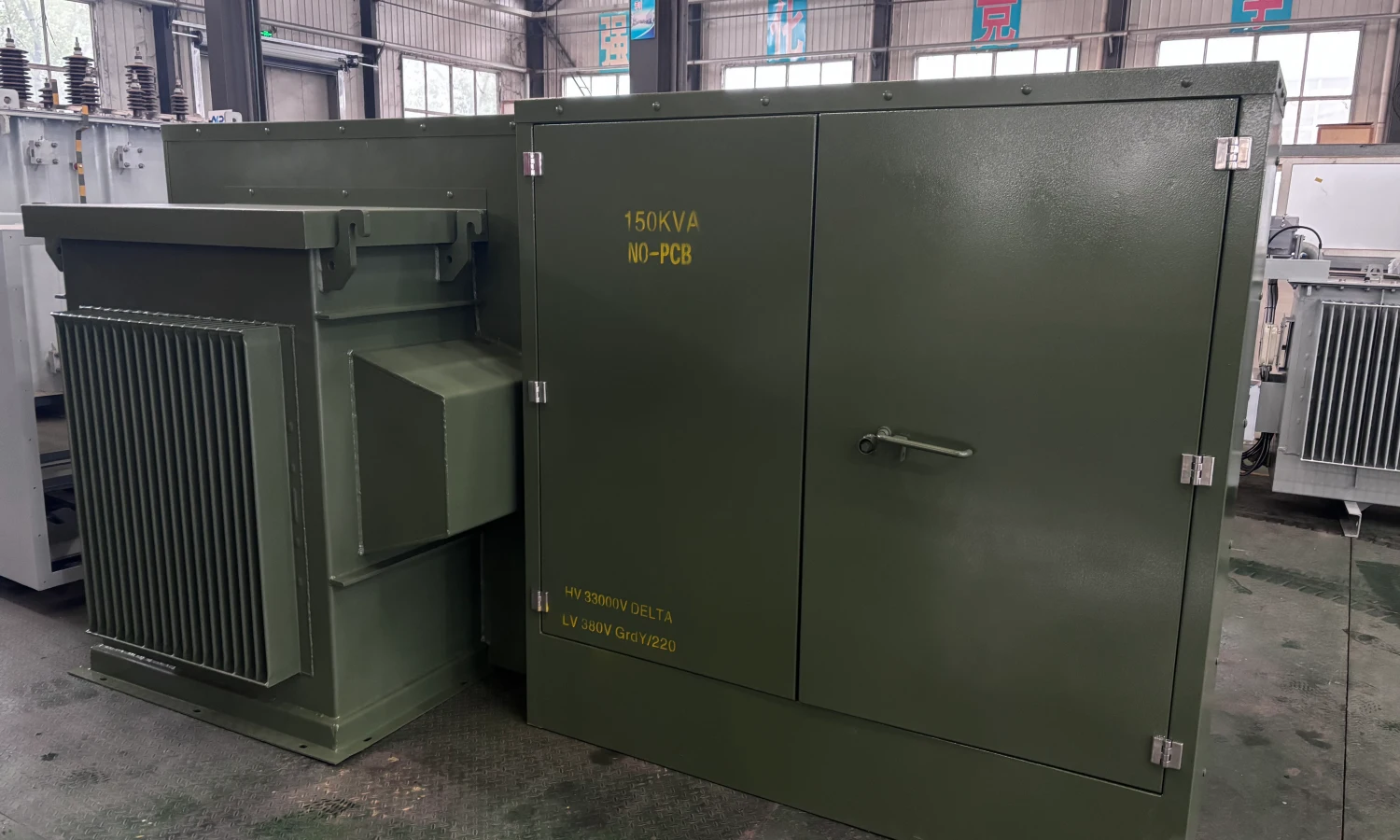
Pad Mounted Transformer
Pad-mounted transformer systems are widely used in renewable distribution networks.
Advantages include:
- Compact installation
- Improved public safety
- Easy underground integration
They are commonly used in solar farms and battery storage systems.
Dry Type Transformer
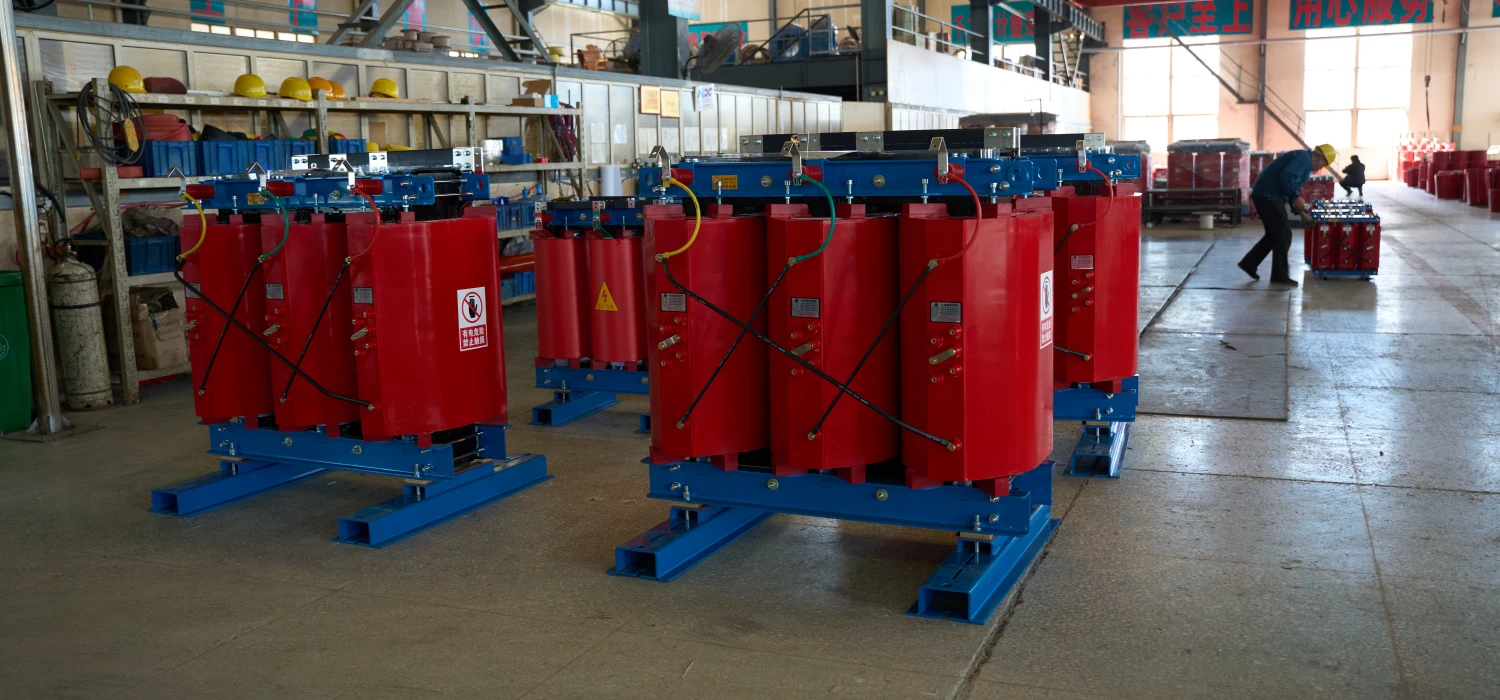
Dry-type transformer systems use air cooling rather than oil insulation.
Applications include:
- Commercial renewable facilities
- Indoor substations
- Urban renewable infrastructure
Dry-type transformers offer:
- Lower fire risk
- Reduced maintenance
- Environmentally friendly operation
3. Role of Power Transformers in Renewable Energy Systems
Power transformers play a critical role in renewable grid infrastructure.
Voltage Transformation
Renewable generators typically produce medium voltage electricity.
Transformers are required for:
- Stepping up the voltage
- Grid interconnection
- Long-distance transmission
Without transformers, renewable power could not be transmitted efficiently over large distances.
Grid Stability
Renewable power generation can fluctuate rapidly.
Power transformers are essential for stabilizing voltage levels and maintaining grid reliability.
Table: Typical Voltage Levels in Renewable Energy Systems
|
Renewable System Stage |
Typical Voltage Level |
Transformer Function |
|
Solar Panel Output |
600 V – 1500 V |
Inverter connection |
|
Wind Turbine Output |
690 V – 3.3 kV |
Local voltage collection |
|
Collection Network |
11 kV – 35 kV |
Renewable distribution |
|
Transmission Grid |
110 kV – 500 kV |
Long-distance transmission |
|
Local Distribution |
400 V – 11 kV |
End-user supply |
Renewable Energy Integration
Modern renewable substations use transformers to integrate:
- Solar farms
- Wind farms
- Battery systems
- Smart grid networks
into centralized electrical systems.
Transmission Efficiency
Higher voltage reduces transmission current and minimizes energy loss.
This is critical for:
- Offshore wind projects
- Desert solar farms
- Cross-border renewable interconnections
4. Transformer Design Requirements for Renewable Applications
Renewable applications require specialized transformer engineering.
Key Design Requirements for Renewable Energy Transformers
|
Design Factor |
Engineering Requirement |
Importance in Renewable Systems |
|
Harmonic Resistance |
Withstand inverter harmonics |
Protect transformer insulation |
|
Thermal Performance |
Dynamic heat dissipation |
Handle fluctuating renewable loads |
|
Energy Efficiency |
Reduce operational losses |
Improve project economics |
|
Corrosion Protection |
Resist harsh environments |
Essential for offshore and desert projects |
|
Compact Modular Design |
Simplify installation |
Faster deployment |
|
Smart Monitoring |
Real-time diagnostics |
Improve reliability |
|
Voltage Stability |
Maintain stable output |
Support grid integration |
|
Insulation Strength |
Handle transient overvoltage |
Improve operational safety |
Harmonic Resistance
Solar inverters and wind converters create harmonic distortion.
Transformers must withstand:
- Nonlinear electrical loads
- High-frequency harmonics
- Rapid voltage changes
Thermal Performance
Variable renewable generation creates dynamic heating conditions.
Advanced cooling systems improve:
- Transformer lifespan
- Operational reliability
- Overload capability
Environmental Protection
Renewable installations often operate in harsh environments such as:
- Offshore wind farms
- Desert solar plants
- Remote mountain regions
Transformers require enhanced corrosion resistance and weather protection.
Compact Modular Designs
Modern renewable projects increasingly use modular designs to simplify:
- Transportation
- Installation
- Grid expansion
5. Dry Type Transformer vs Oil-Immersed Transformer in Renewable Projects
Choosing between dry-type transformers and oil-filled transformers depends on project requirements.
Dry Type Transformer vs Oil-Immersed Transformer for Renewable Projects
|
Parameter |
Dry Type Transformer |
Oil-Immersed Transformer |
|
Cooling Medium |
Air |
Transformer oil |
|
Fire Safety |
Excellent |
Moderate |
|
Environmental Risk |
Low |
Possible oil leakage |
|
Maintenance Requirement |
Low |
Moderate |
|
Power Capacity |
Medium |
Very high |
|
Thermal Performance |
Moderate |
Excellent |
|
Installation Location |
Indoor and urban areas |
Outdoor substations |
|
Renewable Applications |
Commercial solar systems |
Utility-scale wind and solar farms |
|
Initial Cost |
Higher |
Lower |
|
Lifespan Under Heavy Load |
Moderate |
Excellent |
Dry Type Transformers
Advantages:
- Lower environmental risk
- Fire-resistant operation
- Reduced maintenance
- Better indoor suitability
Limitations:
- Lower overload capacity
- Higher upfront cost
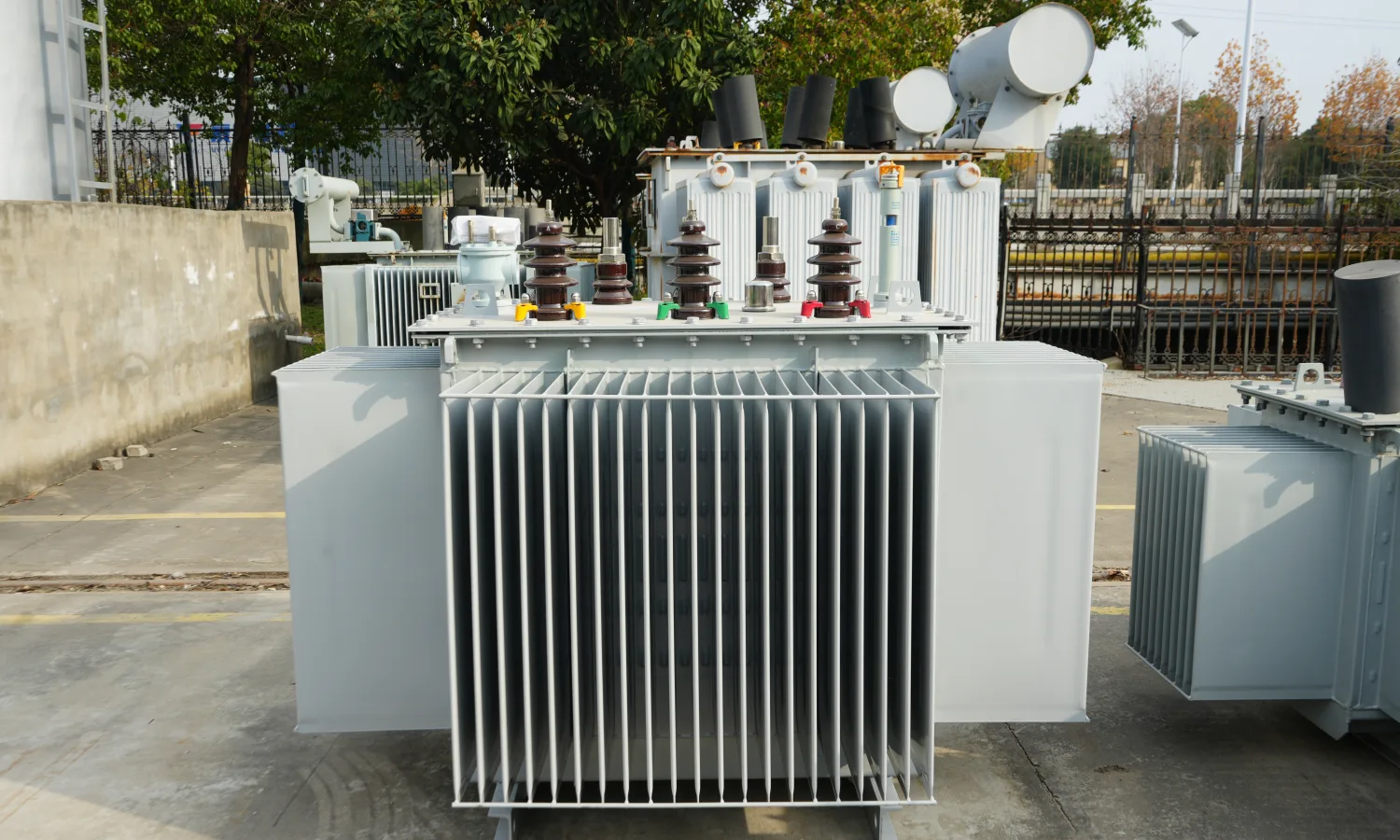
Oil-Immersed Transformers
Advantages:
- Higher power capacity
- Better thermal performance
- Longer overload endurance
Limitations:
- Oil leakage risk
- Higher maintenance requirements
Which Is Better?
For indoor renewable installations and urban projects, dry-type transformer systems are often preferred.
For utility-scale wind farms and high-capacity transmission systems, oil-immersed power transformers remain the dominant solution.
6. Renewable Energy Transformer Applications
Renewable transformers are used across multiple industries.
Utility-Scale Solar Farms
Large solar farms require transformers for:
- Inverter output connection
- Voltage stepping
- Grid synchronization
Offshore Wind Farms
Offshore wind installations use:
- Wind turbine transformer systems
- Offshore substations
- High-voltage export transformers
Battery Energy Storage Systems
Battery storage facilities use transformers to regulate charging and discharging power flows.
Smart Grids
Modern smart grids rely on intelligent transformers for:
- Digital monitoring
- Load balancing
- Bidirectional energy flow
Microgrids
Renewable microgrids use compact transformers for localized power distribution and grid independence.
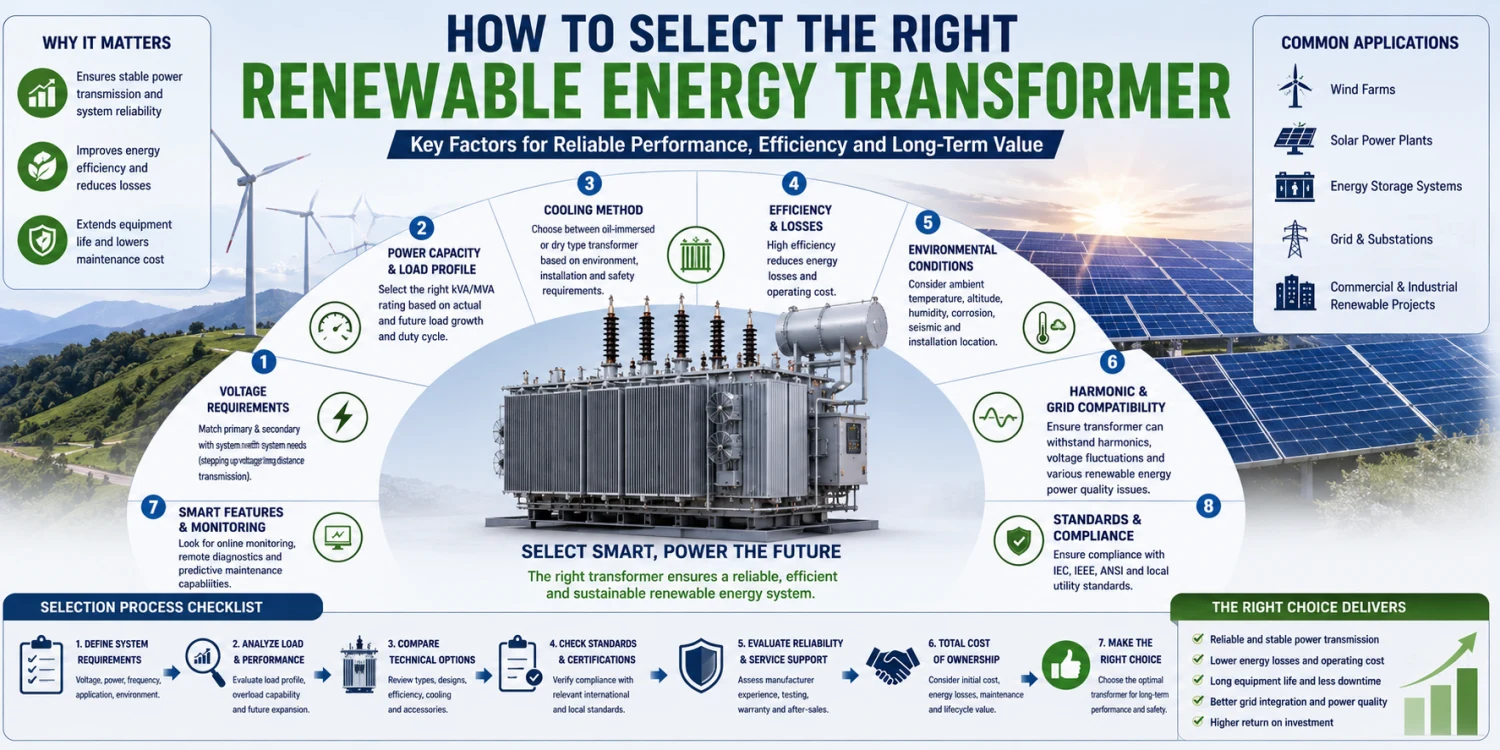
7. How to Select the Right Renewable Energy Transformer
Transformer selection directly affects renewable project reliability and efficiency.
Voltage Rating
The transformer must match:
- Generation voltage
- Grid voltage
- Transmission requirements
Cooling Method
Selection depends on:
- Installation environment
- Fire safety requirements
- Load profile
Efficiency Requirements
Higher transformer efficiency reduces:
- Operational cost
- Energy loss
- Carbon emissions
Environmental Conditions
Engineers should evaluate:
- Ambient temperature
- Humidity
- Salt exposure
- Dust conditions
especially for offshore and desert projects.
Smart Monitoring Features
Modern renewable projects increasingly require:
- IoT sensors
- Remote diagnostics
- Predictive maintenance
- Real-time monitoring
8. Future Trends in Renewable Energy Transformer Technology
The renewable transformer market continues to evolve rapidly.
Digital Transformation in Renewable Energy
Digital transformation in renewable energy is driving intelligent transformer systems with:
- AI-based diagnostics
- Cloud monitoring
- Predictive analytics
Eco-Friendly Insulation Materials
Manufacturers increasingly use:
- Biodegradable ester fluids
- Low-emission insulation systems
- Sustainable materials
Higher Voltage Renewable Networks
Future renewable systems will require:
- Higher voltage transmission
- Larger offshore substations
- Ultra-high-voltage renewable interconnections
Smarter Grid Integration
Future renewable transformers will support:
- Autonomous grid balancing
- Real-time load optimization
- Advanced power electronics integration
FAQ Questions and Answers
1. What is a renewable energy transformer?
A renewable energy transformer is a specialized transformer used in renewable energy systems such as solar farms, wind power plants, battery storage systems, and smart grids. It performs voltage transformation, transfers electrical energy, and supports grid integration for renewable power generation.
2. Why are transformers essential in renewable energy systems?
Power transformers are essential because renewable energy sources typically generate electricity at medium voltage levels that must be stepped up for long-distance transmission and grid connection. Transformers also help stabilize voltage and improve transmission efficiency.
3. What is the difference between a solar transformer and a wind turbine transformer?
A Solar Transformer is mainly used in photovoltaic systems to connect solar inverters to the electrical grid, while a Wind Turbine Transformer is installed inside or near wind turbines to increase the voltage generated by the turbine before transmission.
4. When should dry-type transformers be used in renewable projects?
Dry-type transformers are ideal for indoor renewable installations, commercial buildings, urban substations, and environmentally sensitive areas because they offer low fire risk, reduced maintenance, and environmentally friendly operation.
5. What factors should be considered when selecting a renewable energy transformer?
Important selection factors include voltage rating, cooling method, harmonic resistance, energy efficiency, environmental conditions, smart monitoring capability, insulation performance, and long-distance transmission requirements.
6. How does digital transformation improve renewable energy transformers?
Digital transformation in renewable energy improves transformer performance through real-time monitoring, predictive maintenance, AI diagnostics, remote communication systems, and smart grid integration technologies.
Conclusion
Renewable energy transformers are essential components of modern clean energy infrastructure. From solar transformer systems and wind turbine transformer applications to dry-type transformer installations and pad-mounted transformer networks, these technologies enable efficient voltage transformation, power transmission, and renewable grid integration.
As renewable energy systems continue expanding worldwide, transformers must support increasingly complex operational requirements, including variable generation, harmonic distortion, long-distance transmission, and smart grid connectivity. Proper transformer selection, therefore, requires careful evaluation of voltage levels, cooling methods, environmental conditions, efficiency requirements, and digital monitoring capabilities.
With continued innovation in smart monitoring, energy efficiency, modular designs, and environmentally friendly insulation technologies, renewable energy transformers will remain central to the future development of global sustainable power systems.

Related Articles
Related Products
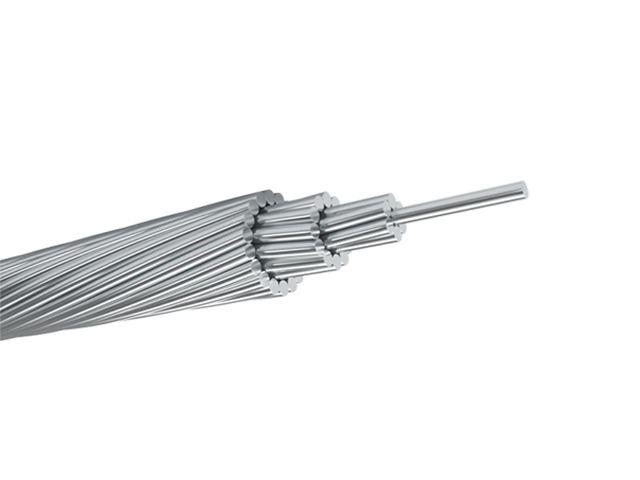
AZUSA AAAC Conductor Cable
AZUSA AAAC (All Aluminum Alloy Conductor) cables comply with ASTM B399 standards and are characterized by high strength, excellent conductivity, and superior corrosion resistance. Meeting ASTM B398, B399, IEC 61089, and BS EN 50182 standards, this cable handles ampacity up to 900A at 75°C and voltages up to 33kV. The all-alloy construction avoids bimetallic corrosion, providing better resistance in harsh conditions than ACSR. Reduced weight minimizes sag and installation expenses, supporting longer spans. The Azusa AAAC Conductor Cable delivers low electrical losses, high mechanical endurance, and excellent weather tolerance. Flame-retardant variants available. Perfect for urban grids, renewable projects, and coastal setups, it provides cost-effective, low-maintenance power delivery in overhead applications globally, excelling in reliability and lifespan over conventional conductors.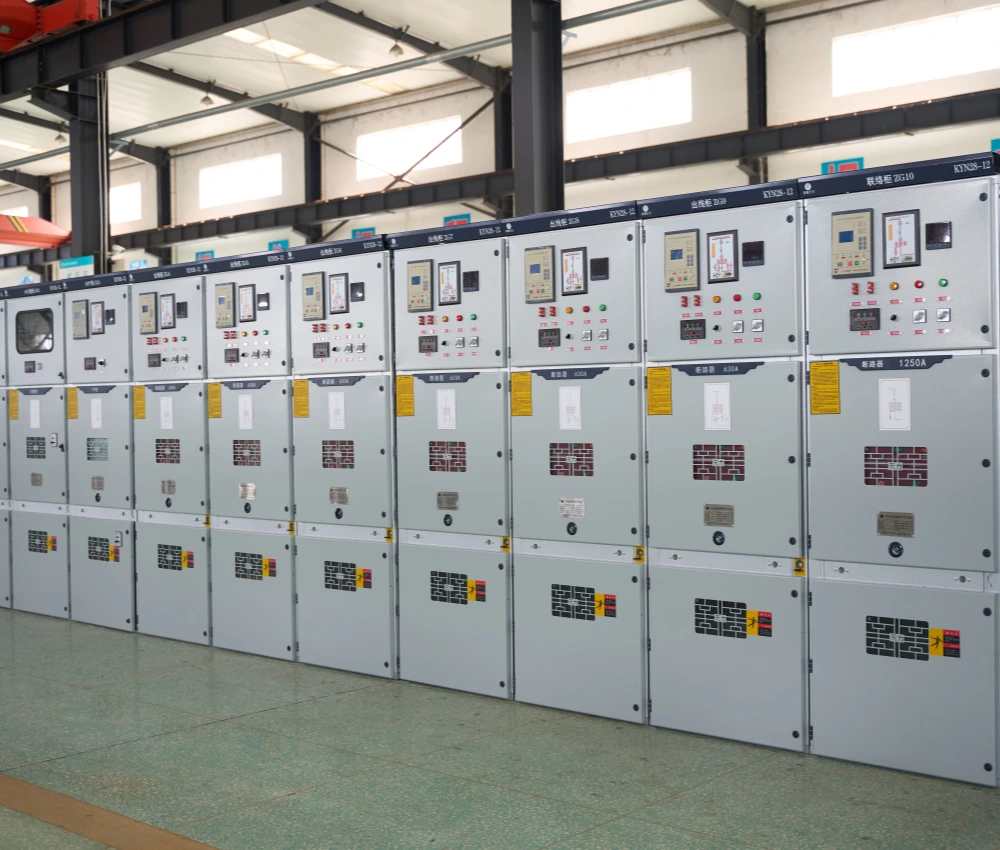
Armored Metal Enclosed Switchgear
The Armored Metal Enclosed Switchgear is a high-performance medium-voltage electrical distribution and protection system designed for industrial power networks, utility substations, renewable energy facilities, transportation infrastructure, and smart-grid applications. The switchgear adopts a fully compartmentalized armored metal enclosure structure integrating vacuum circuit breakers, disconnect switches, protection relays, current transformers, voltage transformers, and intelligent control systems into a compact modular cabinet assembly. This design significantly improves operational safety, electrical reliability, and maintenance efficiency for modern medium-voltage power distribution systems. Manufactured using precision-engineered insulated structures and reinforced metal-clad compartments, the armored metal enclosed switchgear provides outstanding dielectric strength, internal arc resistance, and mechanical durability under demanding operating conditions. Independent compartments for busbars, breaker units, cable chambers, and low-voltage control sections effectively isolate electrical faults and minimize fault propagation risks while improving maintenance accessibility and operational security. The Armored Metal Enclosed Switchgear supports intelligent automation systems, remote monitoring interfaces, and advanced communication protocols for digital substations and smart-grid infrastructure. With scalable configuration capabilities and flexible protection architectures, the switchgear delivers stable medium-voltage switching, fault isolation, and electrical distribution performance for industrial automation systems, utility networks, renewable energy integration projects, and mission-critical electrical facilities.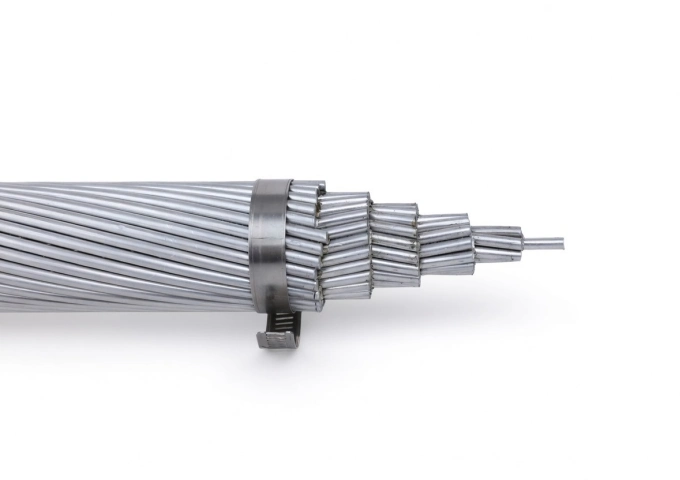
500 MCM Zinnia AAC Cable
The 500 MCM Zinnia AAC Cable represents premium All Aluminum Conductor technology for overhead power applications. Built with 19 strands of high-conductivity 1350-H19 aluminum, this bare conductor delivers an optimal balance of electrical efficiency and mechanical robustness. With a 0.811-inch diameter, 8,760 lbs breaking strength, and 658 amps ampacity, the Zinnia AAC offers low DC resistance of 0.0346 ohms per 1000 ft at 20°C and a weight of 469.4 lbs per 1000 ft. This design minimizes sag while providing excellent corrosion resistance for extended outdoor service. Manufactured to meet ASTM B-230 and B-231 standards, the 500 MCM Zinnia AAC Cable undergoes extensive quality testing from raw materials through finished product. It is the ideal solution for new installations and upgrades in transmission and distribution systems that demand lightweight, high-conductivity bare aluminum conductors.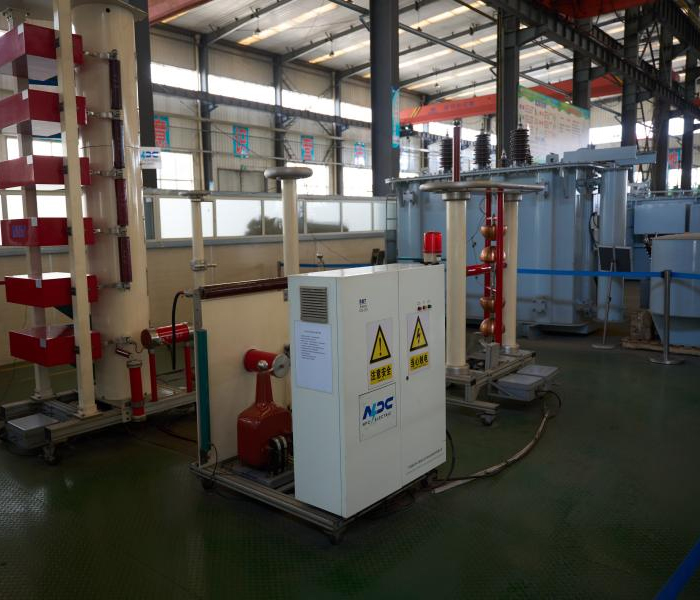
13.8kV 1600kVA Cast Resin Dry Type Transformer
Introducing the robust 13.8kV 1600kVA Cast Resin Dry Type Transformer, a high-capacity, oil-free power solution engineered for safe, reliable indoor medium-voltage distribution in industrial and utility applications. This three-phase cast resin transformer utilizes premium low-loss grain-oriented silicon steel cores and high-conductivity copper (or optional aluminum) windings fully encapsulated in epoxy resin under vacuum pressure, delivering exceptional energy efficiency (often exceeding 98-99% per DOE/IEEE standards), significantly reduced no-load and load losses, and superior partial discharge performance (<10pC). Compliant with IEC 60076-11, IEEE/ANSI, and DOE efficiency requirements, this transformer steps down 13.8kV primary (with ±2×2.5% off-circuit taps standard) to common secondary voltages like 0.4kV, 0.48kV, or 0.66kV (Dyn11 vector group typical), making it ideal for sustainable, high-power indoor substations and facilities.
954 MCM Magnolia AAC Cable
The 954 MCM Magnolia AAC Cable is a high-performance All Aluminum Conductor designed for demanding overhead power transmission and distribution lines. Manufactured with 37 strands of premium 1350-H19 aluminum wire in a concentric lay configuration, this bare conductor provides excellent electrical conductivity with a low DC resistance of 0.0181 ohms per 1000 ft at 20°C. Featuring an overall diameter of 1.124 inches and a rated breaking strength of 16,400 lbs, the Magnolia AAC delivers a robust ampacity of 982 amps while weighing only 895.6 lbs per 1000 ft. Its optimized strength-to-weight ratio minimizes sag and structural loading. Fully compliant with ASTM B-230 and B-231 standards, the 954 MCM Magnolia AAC Cable offers outstanding corrosion resistance for long-term durability in harsh outdoor environments, making it the preferred choice for utility networks requiring cost-effective, high-reliability bare aluminum conductors.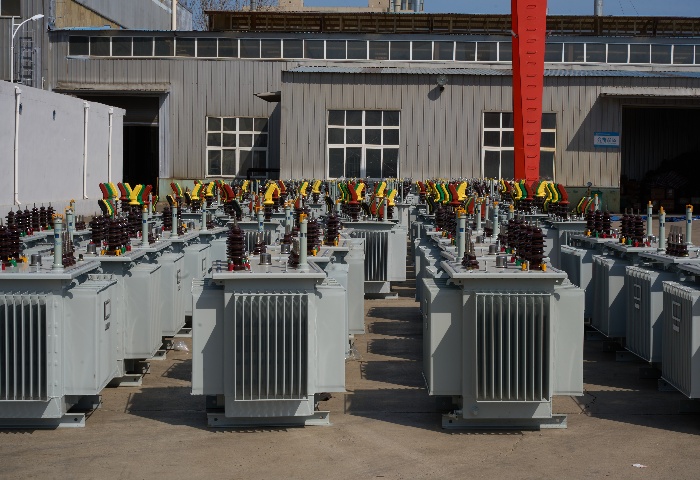
750kVA Oil Immersed Transformer
NPC ELECTRIC's 750kVA oil-immersed transformer uses advanced oil-immersed cooling technology to provide efficient and stable power conversion. The transformer complies with international standards such as the International Electrotechnical Commission (IEC) and ISO 9001, ensuring the high quality and safety of the product. Its sturdy structure and excellent overload resistance are widely used in industrial, commercial, and power network fields.
300kVA Oil Immersed Transformer
In the field of power transmission and distribution, NPC ELECTRIC 300kVA oil-immersed transformer stands out with its excellent performance, providing reliable power support for various power consumption scenarios. The transformer is carefully wound with high-quality silicon steel sheets and electromagnetic wires, with extremely low no-load loss and load loss, which greatly improves the efficiency of power conversion and effectively reduces electricity costs. It is widely used in industrial plants, commercial centers, residential communities, infrastructure construction, and other fields to meet the power needs of different scenarios.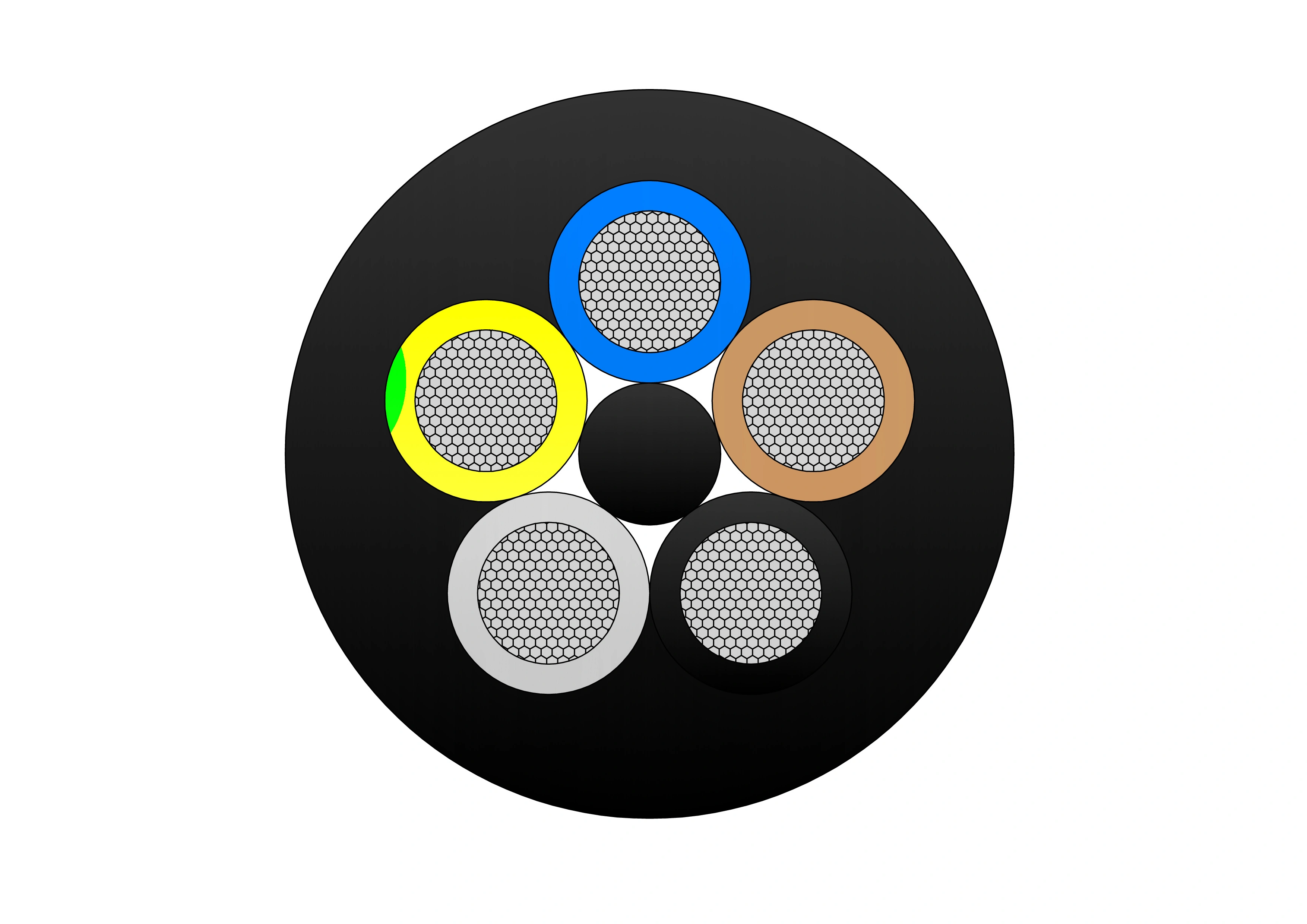
(N)TSCGEWOU 3.6/6kV, 6/10kV, 8.7/15kV and 12/20kV FO Cable
The (N)TSCGEWOU 3.6/6kV, 6/10kV, 8.7/15kV and 12/20kV FO Cable is a flexible, heavy-duty medium-voltage trailing/reeling cable with integrated fiber optic (FO) elements for combined power and high-speed data transmission in mining and tunneling. It features class 5 finely stranded tinned copper phase conductors for flexibility and corrosion resistance, semi-conductive screens, EPR insulation for superior dielectric strength and 90°C rating, copper braid screen for EMI protection and grounding, control conductors, monitoring conductor (ÜL), central or distributed multimode/single-mode fiber optic cores (protected in gel-filled tubes for water resistance and mechanical protection), and a tough rubber outer sheath resistant to oil, flame, abrasion, and mechanical stress. Compliant with DIN VDE 0250 and relevant IEC standards, it supports high tensile loads, fast reeling speeds, and tight bending radii while enabling real-time monitoring and communication. The (N)TSCGEWOU FO ensures safe, reliable MV power and data delivery to mobile equipment like shearers, tunnel boring machines, and smart conveyors in harsh underground environments.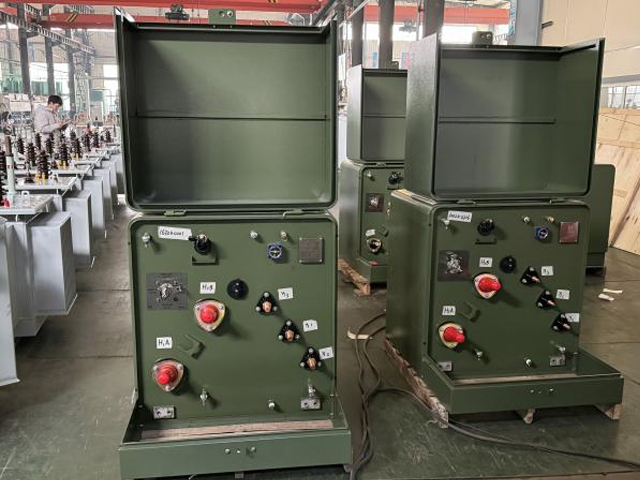
33kV Single Phase Pole Mounted Transformer
Designed for medium-voltage overhead systems, the 33kV single phase pole mounted transformer efficiently steps down primary voltages of 33kV (or 34.5kV variants) to secondary levels such as 230V, 240V, or 415V, serving substantial single-phase loads in extended networks. Constructed with advanced grain-oriented silicon steel cores and precision windings, it achieves minimal no-load and load losses while fully complying with IEC 60076 and IEEE C57 requirements. The oil-immersed tank with ONAN cooling maintains a 65°C temperature rise, supporting reliable performance during peak demands and harsh weather exposure. High insulation levels, including 150-200kV BIL on the HV side, combined with pressure relief valves, HV bushings with arcing horns, and optional surge arresters, provide exceptional protection against lightning and overvoltages. This transformer offers quiet operation, strong overload capacity, and extended service life, making it essential for utilities optimizing power access in remote or growing areas.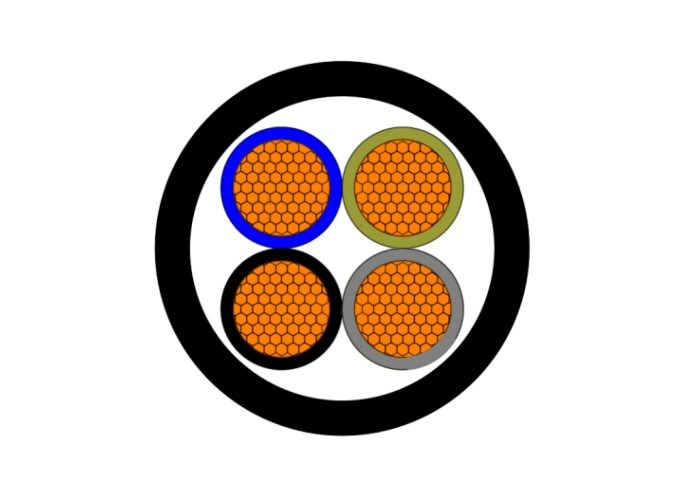
N2XH IEC 60502-1 XLPE LSZH 0.6/1kV Cable
The N2XH IEC 60502-1 XLPE LSZH 0.6/1kV Cable is designed for safe and reliable low voltage power distribution in buildings and infrastructure where fire safety is a critical requirement. Manufactured with high-quality copper conductors and XLPE insulation, the cable provides excellent electrical performance, thermal stability, and long service life. The LSZH (Low Smoke Zero Halogen) outer sheath significantly reduces smoke density and eliminates corrosive gas emission in the event of fire, helping to protect people, equipment, and structures. Rated at 0.6/1kV and produced in accordance with IEC 60502-1, this cable meets international standards for electrical safety and fire performance. Its robust construction supports fixed installation in indoor environments where high safety, reliability, and environmental protection are essential.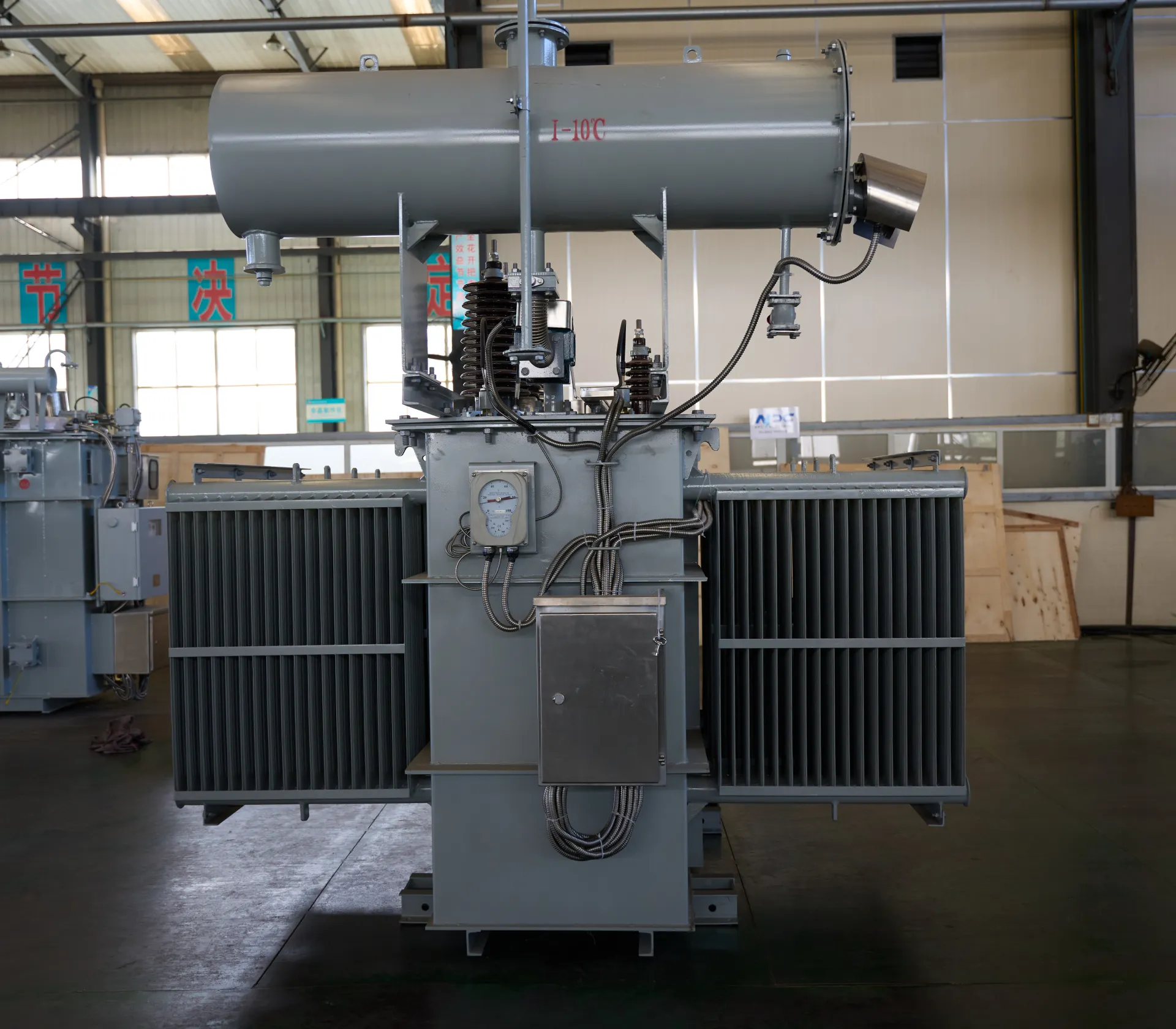
33kV Three-Phase Oil-Immersed Step-Up Power Transformer
The 33kV Three-Phase Oil-Immersed Step-Up Power Transformer is engineered for reliable voltage elevation in medium- and high-voltage distribution networks. Designed with high-grade silicon-steel cores, copper windings, and an efficient oil-immersed cooling system, this transformer delivers stable power transmission with low losses and strong short-circuit endurance. Its robust insulation, sealed tank structure, and advanced protection devices ensure long-term performance in demanding industrial and substation environments. Widely used in renewable energy plants, utility networks, industrial facilities, and rural power upgrades, the 33kV step-up transformer provides secure, efficient, and continuous operation. It supports both on-load and off-load tap changers, offering precise voltage regulation and adaptability to varying grid conditions, making it a dependable choice for modern power distribution systems.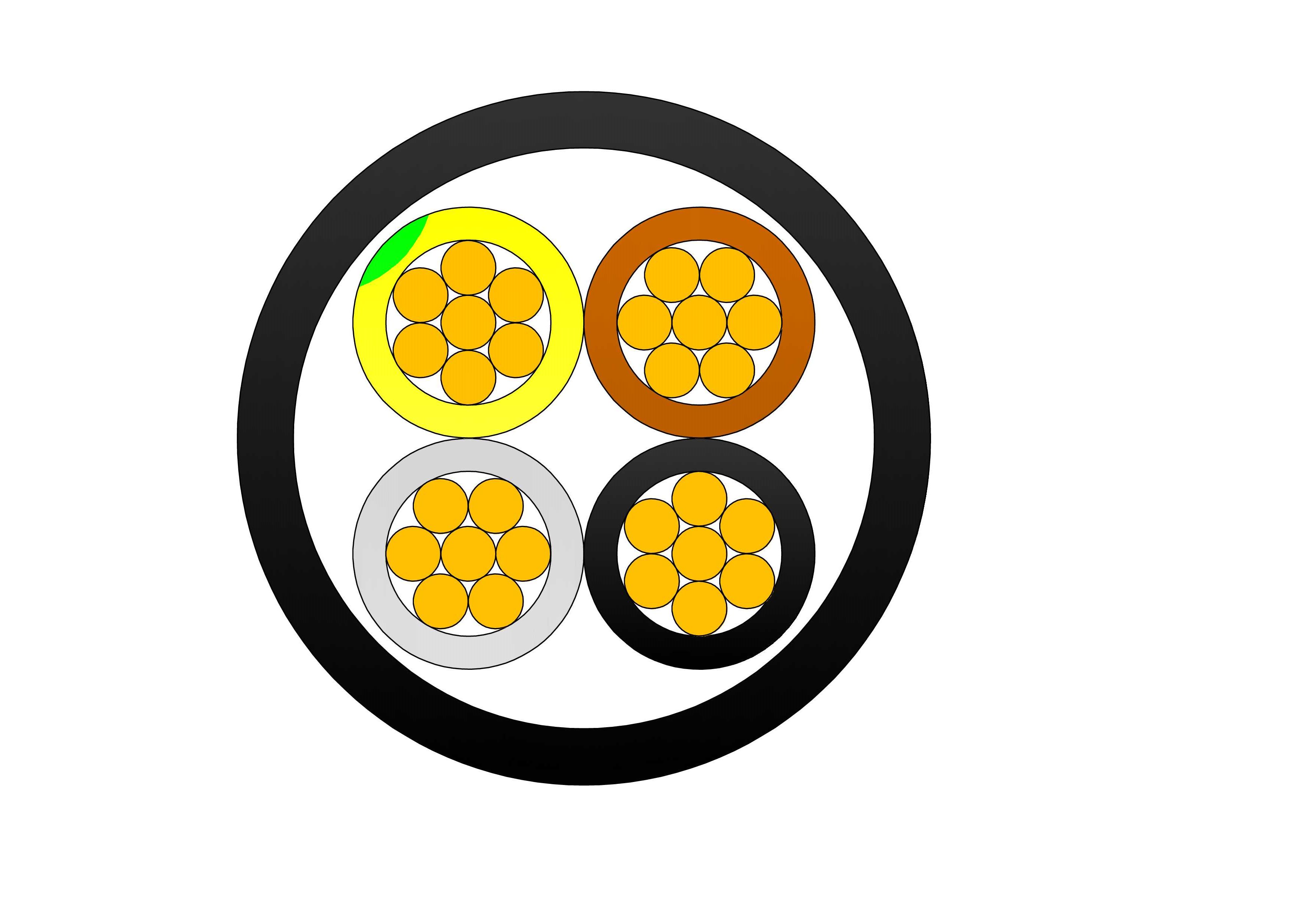
GYTY53 Fiber Optic Cable
The GYTY53 Fiber Optic Cable is a high-strength double steel tape armored loose tube fiber optic cable designed for demanding outdoor and underground installations. It features a central strength member, multiple PBT loose tubes filled with water-blocking gel containing optical fibers, double corrugated steel tape armor for maximum mechanical protection, and a durable polyethylene (PE) outer sheath. Compliant with IEC 60794 and ITU-T standards, the GYTY53 Fiber Optic Cable offers excellent crush resistance, rodent protection, and moisture blocking. Available in single-mode and multi-mode configurations with various fiber counts, it ensures low attenuation, high bandwidth, and reliable signal transmission over long distances. Its robust double armor construction makes it ideal for direct burial, harsh environments, and areas with high external mechanical stress. The GYTY53 Fiber Optic Cable is widely used in backbone networks, metropolitan area networks, railway and highway communications, and infrastructure projects requiring secure and durable fiber connectivity.
15KV Oil Immersed Substation Transformer
NPC ELECTRIC's 15kV Oil Immersed Substation Transformer is designed for medium-voltage substations that require dependable power transformation, high insulation reliability, and long-term operational stability. By adopting a mature oil-immersed insulation system, the transformer ensures excellent dielectric performance. This 15kV oil immersed substation transformer features a sealed tank structure that effectively protects internal components from moisture, dust, and external contamination. With low noise operation and reliable voltage regulation performance, the transformer is well suited for modern substations serving industrial, commercial, and infrastructure power distribution networks.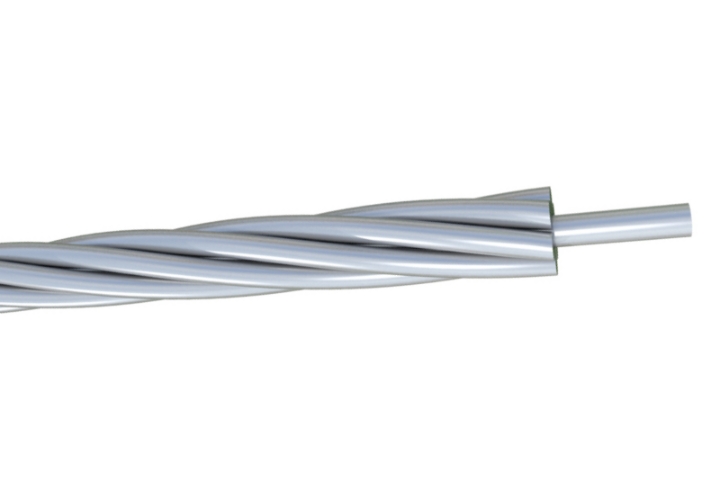
Galvanized Steel Conductor
The Galvanized Steel Conductor Cable Guard Wire offers robust mechanical protection for overhead power systems. Constructed from premium high-tensile steel wires with Class A or B hot-dip galvanization, it delivers exceptional resistance to rust, abrasion, and environmental stress. Meeting standards like ASTM A475 and BS EN 50189, this guard wire provides high breaking strength and flexibility for spanning long distances. Installed as an overhead shield, it prevents damage to conductors from external impacts, reducing downtime and maintenance costs. The uniform zinc layer ensures decades of service life even in coastal or polluted areas. Select our Galvanized Steel Conductor Cable Guard Wire for reliable overhead line guarding in electric utilities, telecommunications, and infrastructure projects worldwide.
Indoor Box-Type Fixed Metal-Enclosed Switchgear
The Indoor Box-Type Fixed Metal-Enclosed Switchgear is a high-performance medium-voltage electrical distribution and protection system specifically engineered for industrial facilities, utility substations, commercial infrastructure, renewable energy projects, and intelligent power distribution networks. The switchgear adopts a fully enclosed metal-clad structure integrating vacuum circuit breakers, disconnect switches, protection relays, current transformers, voltage transformers, and intelligent control systems within a compact fixed cabinet configuration. This design provides reliable medium-voltage power distribution while significantly improving operational safety and equipment stability. Designed according to international medium-voltage distribution standards, the indoor box-type switchgear delivers outstanding insulation performance, mechanical durability, and thermal stability under continuous operating conditions. The compartmentalized cabinet structure effectively separates busbar chambers, breaker compartments, cable chambers, and low-voltage control sections to reduce electrical fault propagation risks and simplify maintenance procedures. The fixed structure design improves installation stability and ensures dependable long-term operational performance for mission-critical electrical systems. The Indoor Box-Type Fixed Metal-Enclosed Switchgear supports intelligent monitoring systems, digital protection devices, remote communication interfaces, and smart-grid automation technologies for modern electrical distribution environments. With flexible configuration capabilities and scalable electrical protection architectures, the switchgear provides stable medium-voltage switching, fault isolation, and electrical control performance for industrial automation systems, utility networks, transportation infrastructure, and commercial power systems.Welcome your inquiry
Honesty, Integrity, Frugality, Activeness and Passion