Single Phase vs Three Phase Electric Power: Which Is Better for Your Home or Business?
2026-05-07
Electric power systems are the foundation of modern residential, commercial, and industrial infrastructure. Whether supplying electricity to homes, commercial buildings, industrial facilities, or electric vehicle charging stations, electrical distribution systems must deliver stable, efficient, and reliable power.
The two most common forms of alternating current (AC) power distribution are single-phase power and three-phase power. Although both systems perform the same basic function of transmitting electric power, they differ significantly in wiring configuration, efficiency, power capacity, load balancing, installation cost, and application suitability.
For homeowners, selecting between single-phase electric power and three-phase electrical power often depends on energy consumption requirements and future expansion plans. For commercial and industrial operations, choosing the correct power system directly impacts operational efficiency, equipment reliability, energy losses, and infrastructure costs.
1. What is single-phase electric power?
Single-phase power is the most common electrical distribution system used in residential applications.
In a single-phase system, electrical power is delivered using:
- One live conductor
- One neutral wire
The voltage waveform alternates continuously between positive and negative cycles, creating an AC power supply suitable for most household appliances and light commercial loads.
Single-phase electric power systems are widely used for:
- Homes
- Small offices
- Retail shops
- Residential air conditioning
- Lighting systems
- Small electric vehicle chargers
Because the system uses only one alternating voltage waveform, the power delivery fluctuates continuously during each cycle.
Characteristics of Single-Phase Systems
Single-phase systems are generally:
- Simpler to install
- Lower cost
- Suitable for lighter loads
- Easier to maintain
However, they are less efficient for high-power applications because the voltage drops to zero twice during every AC cycle.
This intermittent power delivery limits the system’s ability to support large motors and heavy industrial equipment.
2. What is Three-Phase Electric Power?
Three-phase power uses three alternating voltage waveforms operating 120 degrees apart from each other.
A three-phase electrical power system typically includes:
- Three live conductors
- Optional neutral wire
Because the voltage phases overlap continuously, three-phase electric power delivers smoother and more constant power output compared with single-phase systems.
Three-phase power is widely used in:
- Commercial buildings
- Industrial facilities
- Manufacturing plants
- Data centers
- HVAC systems
- Electric vehicle fast charging infrastructure
- Large pumps and compressors
Modern commercial and industrial infrastructure heavily depends on three-phase electrical power because of its superior efficiency and power-handling capability.
Why Three-Phase Power Is More Efficient
In three-phase systems, power delivery remains nearly constant throughout the AC cycle.
Benefits include:
- Reduced energy losses
- Better motor performance
- Higher transmission efficiency
- Lower conductor size requirements
- Improved voltage stability
Large electrical motors especially require three-phase power because it produces a naturally rotating magnetic field.
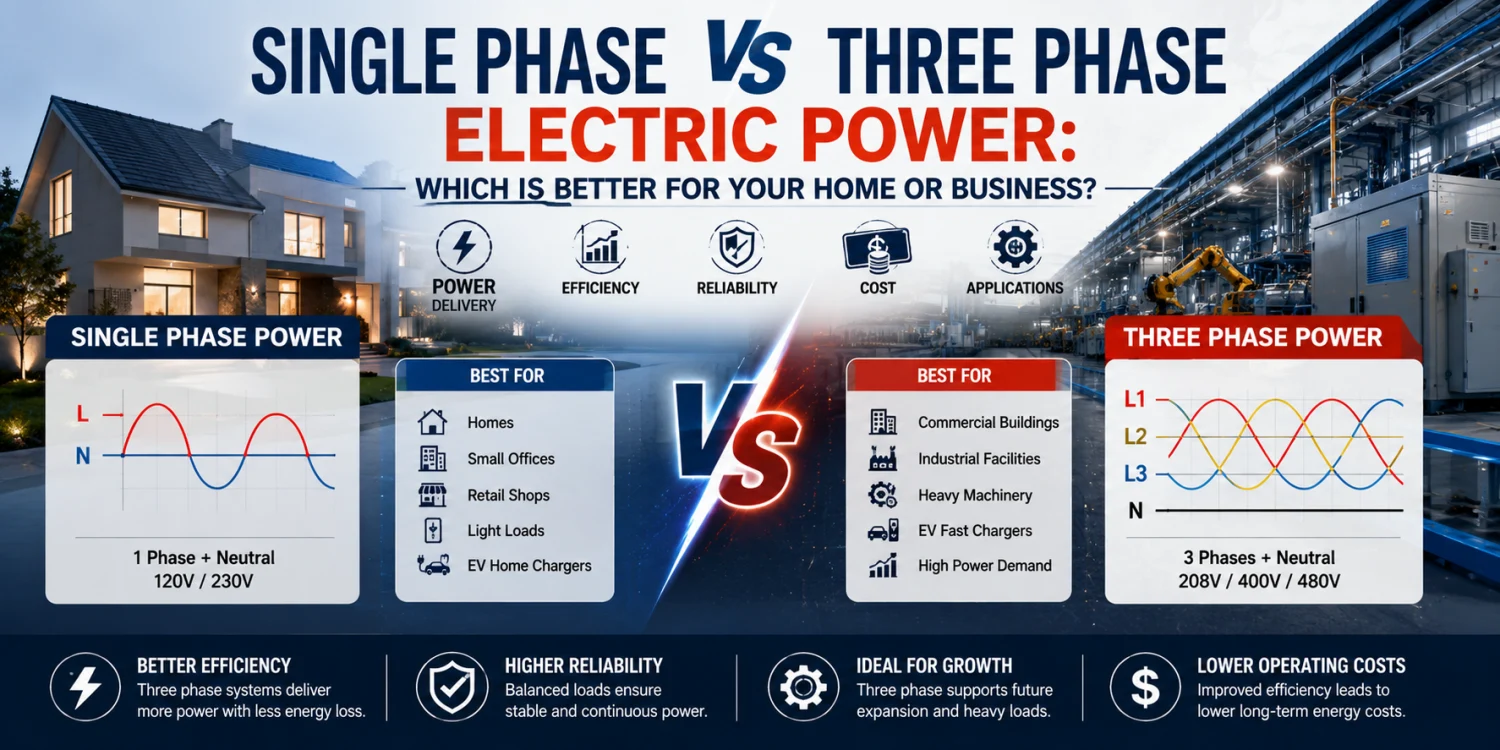
3. Main Differences Between Single-Phase and Three-Phase Power
Although both systems distribute alternating current electricity, their operational behavior differs substantially.
|
Parameter |
Single-Phase Power |
Three-Phase Power |
|
Number of Conductors |
1 phase + neutral wire |
3 phase conductors + optional neutral |
|
Voltage Stability |
Moderate |
Very stable |
|
Power Delivery |
Pulsating |
Continuous |
|
Typical Voltage Levels |
120V / 230V |
208V / 400V / 480V |
|
Transmission Efficiency |
Lower |
Higher |
|
Power Capacity |
Limited |
High |
|
Motor Starting Capability |
Weak |
Excellent |
|
Energy Loss |
Higher |
Lower |
|
Installation Complexity |
Simple |
More complex |
|
Infrastructure Cost |
Lower |
Higher |
|
Typical Applications |
Homes and small offices |
Commercial and industrial facilities |
|
Suitable for EV Fast Charging |
Limited |
Yes |
Three-phase electrical power systems are significantly better suited for high-load and continuous-duty applications.
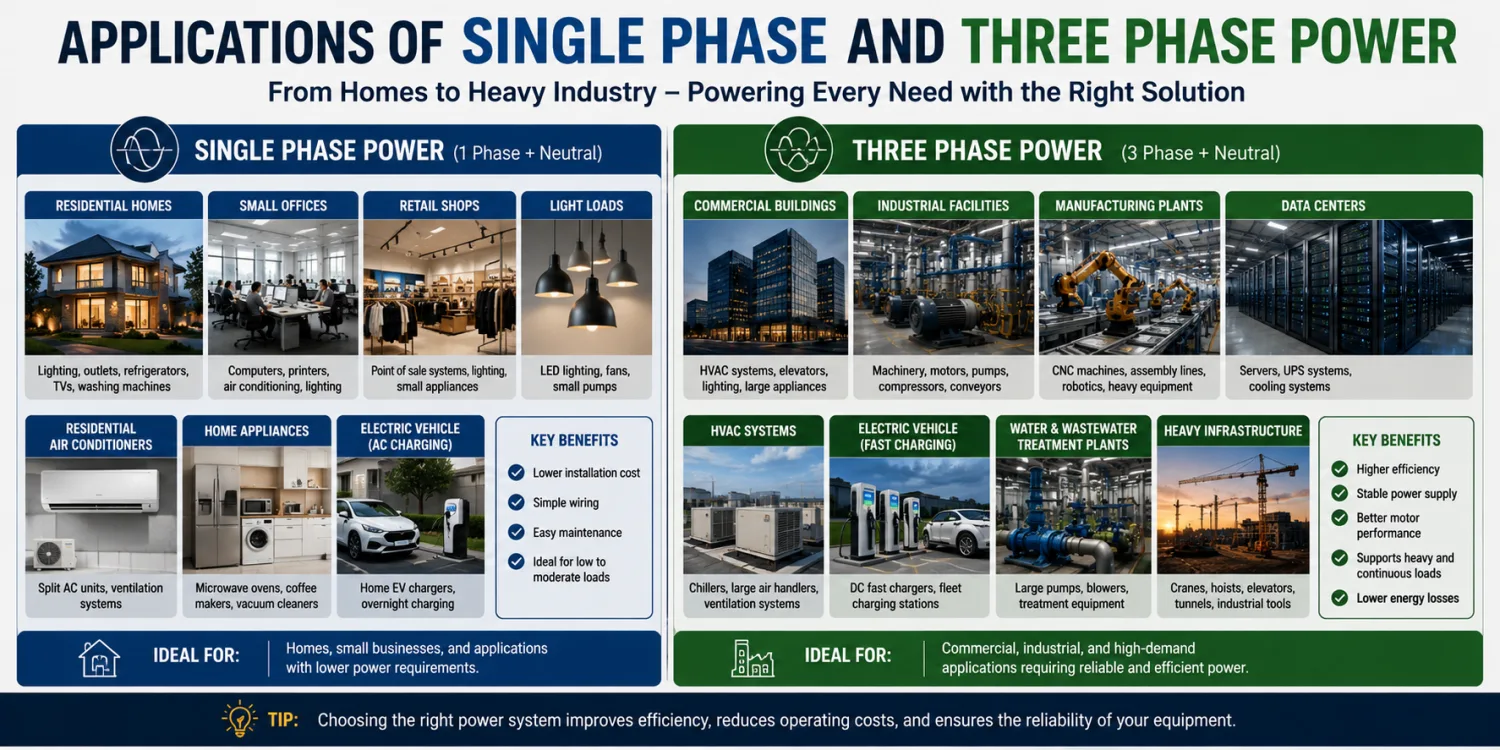
4. Applications of Single-Phase and Three-Phase Power
Residential Applications
Most residential properties use single-phase power because household loads are relatively small.
Common residential applications include:
- Lighting
- Refrigerators
- Televisions
- Washing machines
- Residential HVAC systems
Small electric vehicle charging systems also commonly use single-phase systems.
Commercial Buildings
Commercial buildings often require three-phase power because of larger electrical loads.
Examples include:
- Elevators
- Large HVAC systems
- Commercial kitchens
- Office data systems
- Lighting networks
Three-phase systems improve energy efficiency and reduce operational costs.
Table: Common Applications of Single-Phase and Three-Phase Electrical Systems
|
Application |
Recommended Power System |
Engineering Reason |
|
Residential Homes |
Single-phase power |
Lower load demand |
|
Small Retail Shops |
Single-phase power |
Simple electrical infrastructure |
|
Commercial Buildings |
Three-phase power |
Higher equipment load |
|
Industrial Facilities |
Three-phase power |
Continuous heavy-duty operation |
|
HVAC Systems |
Three phase power |
Better motor efficiency |
|
Electric Vehicle Fast Chargers |
Three-phase power |
High charging capacity |
|
Residential EV Chargers |
Single-phase power |
Moderate charging demand |
|
Data Centers |
Three phase power |
Stable power distribution |
|
Agricultural Pumps |
Three phase power |
Large motor requirements |
|
Small Office Equipment |
Single phase systems |
Cost-effective solution |
Industrial Facilities
Industrial facilities almost always require three-phase electrical power.
Heavy industrial equipment such as:
- Compressors
- Conveyor systems
- Pumps
- CNC machines
- Industrial motors
cannot operate efficiently on single-phase power systems.
Three-phase systems also reduce conductor heating and improve equipment reliability.
Electric Vehicle Infrastructure
Fast-charging systems for electric vehicles increasingly require three-phase power because of higher charging capacity.
Three-phase charging stations significantly reduce charging time compared with single-phase systems.
5. Understanding Wiring and Neutral Configuration
The wiring structure of electrical systems directly affects safety, efficiency, and installation complexity.
Single Phase Wiring
Single-phase systems typically use:
- One-phase conductor
- One neutral wire
- One grounding conductor
This configuration is relatively simple and inexpensive.
Three-Phase Wiring
Three-phase systems may use:
- Three-phase conductors
- One neutral wire
- Grounding conductors
Two common configurations include: Three-phase Three-phase Three-phase
- Wye (Star) connection
- Delta connection
Wye systems provide access to both line voltage and phase voltage, while delta systems are often used for heavy industrial loads.
Table: Three-Phase Wiring Configurations
|
Configuration Type |
Structure |
Main Advantages |
Typical Applications |
|
Wye (Star) Connection |
Neutral wire included |
Stable phase voltage |
Commercial buildings |
|
Delta Connection |
No neutral wire |
High motor efficiency |
Industrial facilities |
|
Open Delta |
Two transformers |
Lower installation cost |
Backup systems |
|
High Leg Delta |
Mixed voltage supply |
Supports lighting and motors |
Small industrial systems |
Role of the Neutral Wire
The neutral wire stabilizes voltage and provides a return path for unbalanced loads.
In three-phase systems, balanced loads may significantly reduce neutral current.
6. Three-Phase Electrical Power Calculation Basics
Understanding three-phase electrical power calculation is essential for system design and equipment sizing.
Single-Phase Power Formula
Single-phase power is calculated as:
P = V × I × PF
Where:
- P = Power
- V = Voltage
- I = Current
- PF = Power Factor
Three-Phase Power Formula
Three-phase power is calculated as:
P = √3 × V × I × PF
Because of the √3 multiplier, three-phase systems transmit more power using the same conductor current.
This is one reason why commercial and industrial power systems favor three-phase distribution.
7. Advantages and Disadvantages of Each System
Advantages of Single-Phase Power
Benefits
- Lower installation cost
- Simpler wiring
- Easier maintenance
- Suitable for homes
Limitations
- Lower efficiency
- Limited motor performance
- Voltage fluctuations under heavy loads
Advantages of Three-Phase Power
Benefits
- Higher efficiency
- Stable power delivery
- Better motor performance
- Lower transmission losses
- Higher load capacity
Limitations
- Higher installation cost
- More complex protection systems
- Larger infrastructure requirements
8. How to Choose Between Single-Phase and Three-Phase Power
Table: Key Factors for Selecting Single-Phase or Three-Phase Electrical Power
|
Selection Factor |
Single Phase Power |
Three Phase Power |
|
Initial Installation Budget |
Lower |
Higher |
|
Electrical Load Requirement |
Light loads |
Heavy loads |
|
Equipment Type |
Household appliances |
Industrial motors |
|
Future Expansion Needs |
Limited |
Excellent scalability |
|
Energy Efficiency |
Moderate |
High |
|
Voltage Stability |
Moderate |
Excellent |
|
Motor Performance |
Basic |
Superior |
|
Maintenance Complexity |
Low |
Medium to High |
|
Commercial Suitability |
Small businesses |
Large commercial operations |
|
Industrial Suitability |
Not recommended |
Highly recommended |
Selecting the correct electric power system depends on operational requirements.
Choose Single Phase Power If:
- The property is residential
- Power demand is relatively low
- Equipment loads are small
- The budget is limited
Choose Three Phase Power If:
- The facility uses large motors
- Equipment operates continuously
- The site supports industrial production
- Fast EV charging is required
- Future expansion is expected
Commercial buildings and industrial facilities almost always benefit from three-phase systems because of improved efficiency and scalability.
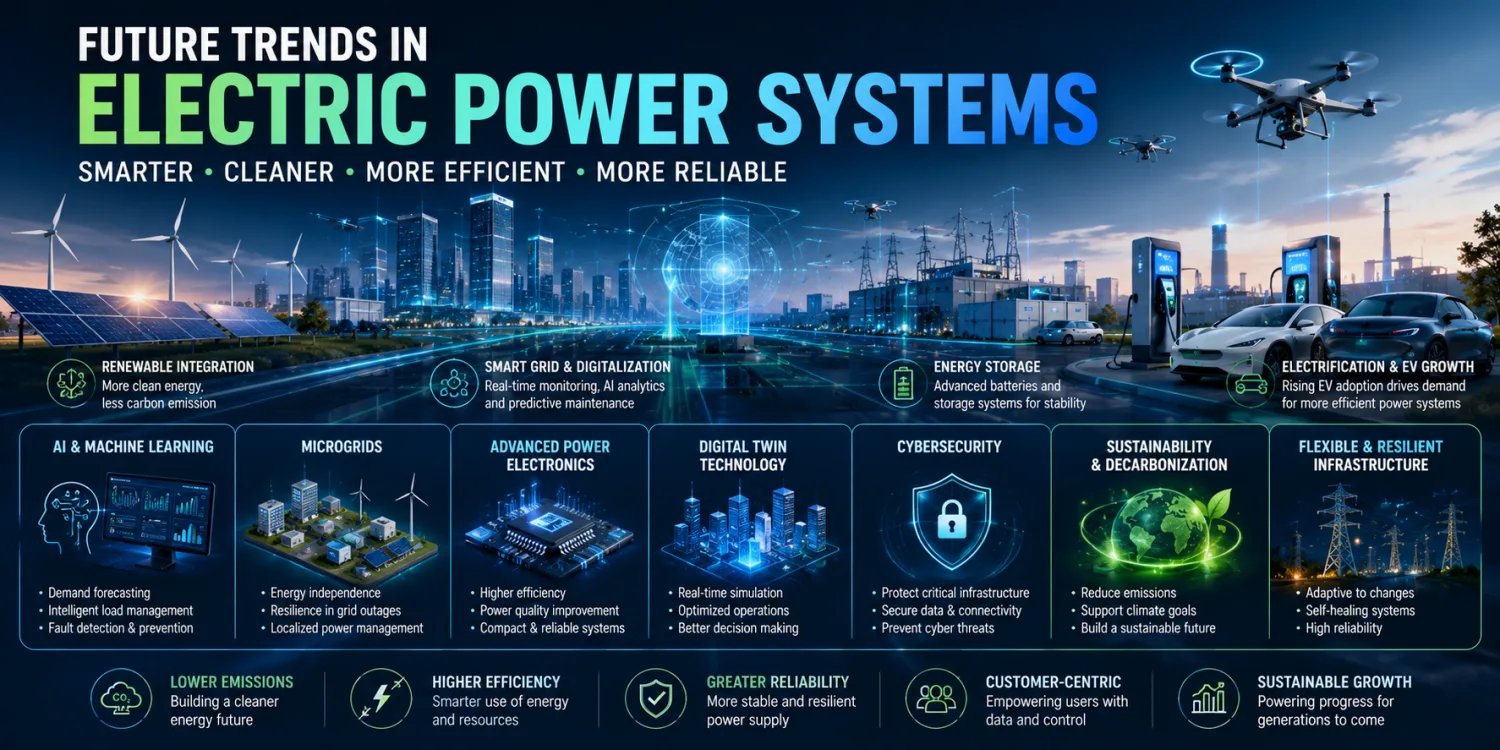
9. Future Trends in Electric Power Systems
The transition toward electrification and smart infrastructure is reshaping electrical distribution systems.
Smart Power Monitoring
Modern systems increasingly use:
- Smart meters
- Real-time monitoring
- AI-based energy optimization
Electric Vehicle Expansion
Growing EV adoption is increasing demand for three-phase charging infrastructure.
Renewable Energy Integration
Solar systems, battery storage, and microgrids are changing how residential and commercial power systems operate.
Intelligent Circuit Protection
Modern circuit breakers increasingly integrate:
- Remote diagnostics
- Predictive maintenance
- Arc fault protection
10. FAQ: Single Phase vs Three Phase Electric Power
1. What is the main difference between single-phase and three-phase power?
The main difference is the number of alternating current waveforms used for power transmission. Single-phase power uses one AC waveform, while three-phase power uses three waveforms operating 120 degrees apart, resulting in smoother and more efficient power delivery.
2. Why is three-phase power more efficient than single-phase power?
Three-phase electrical power provides continuous energy transfer with reduced voltage fluctuations. This improves motor performance, lowers transmission losses, increases energy efficiency, and allows higher power capacity using smaller conductors compared with single phase systems.
3. Where is single-phase power commonly used?
Single-phase electric power is commonly used in residential homes, small offices, retail shops, lighting systems, household appliances, and small electric vehicle charging applications where electrical loads are relatively low.
4. Why do industrial facilities require three-phase power?
Industrial facilities require three-phase power because heavy equipment such as pumps, compressors, conveyor systems, and industrial motors operate more efficiently with stable and continuous three phase electrical power. It also supports larger electrical loads and continuous operation.
5. What is the role of the neutral wire in electrical systems?
The neutral wire provides a return path for electrical current and helps stabilize voltage levels in electrical distribution systems. In three-phase systems, the neutral wire also supports unbalanced loads and improves operational safety.
6. How is three-phase electrical power calculated?
Three-phase electrical power is calculated using the formula:
P = √3 × V × I × PF
Where P represents power, V is voltage, I is current, and PF is the power factor. This formula demonstrates why three phase systems can transmit more power efficiently than single phase systems.
Conclusion
Both single phase power and three-phase power play essential roles in modern electrical infrastructure. Single phase electric power remains the preferred solution for residential applications because of its simplicity and lower installation cost. In contrast, three phase electrical power provides superior efficiency, stability, and power capacity for commercial buildings, industrial facilities, and modern electric vehicle infrastructure.
Choosing between single phase vs three phase systems requires careful evaluation of electrical load requirements, operational continuity, future scalability, and infrastructure budget. As global electrification accelerates and energy demand continues growing, efficient power distribution systems will remain critical for homes, businesses, and industrial operations worldwide.

Related Articles


Related Products
GYTA53 Fiber Optic Cable
The GYTA53 Fiber Optic Cable is a high-strength outdoor communication cable specifically designed for direct burial applications and harsh installation environments. The cable features a stranded loose tube structure, central strength member, water-blocking system, aluminum polyethylene laminated tape (APL), corrugated steel tape armor (PSP), and double polyethylene outer jackets for maximum mechanical protection. Optical fibers are housed within gel-filled loose tubes that provide excellent moisture resistance and protection against external stress. The combination of aluminum tape and steel tape armor significantly enhances crush resistance, impact resistance, rodent protection, and moisture barrier performance. The dual PE sheath structure further improves environmental durability and long-term reliability. Manufactured according to IEC 60794 and ITU-T standards, the GYTA53 Fiber Optic Cable offers low attenuation, stable transmission performance, and excellent protection in underground installations. It is widely used in long-distance telecommunications networks, backbone communication systems, utility networks, and infrastructure projects requiring direct burial deployment.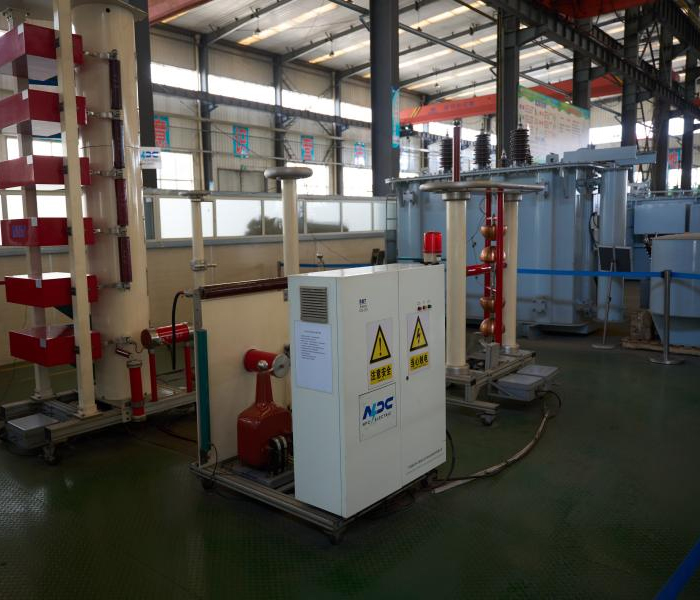
Step Up Dry Type Transformer Copper Winding High Overload Capacity
The Step Up Dry Type Transformer Copper Winding High Overload Capacity is a robust, oil-free power solution designed to increase (step up) voltage from lower primary levels to higher secondary outputs for efficient power transmission in indoor applications. This three-phase cast resin dry type transformer features premium high-conductivity copper windings fully encapsulated in epoxy resin under vacuum pressure, paired with low-loss grain-oriented silicon steel cores to achieve superior energy efficiency (typically 98%+), minimal no-load and load losses, and excellent partial discharge performance (<10pC). Compliant with IEC 60076-11, IEEE/ANSI, and relevant efficiency standards, this transformer commonly steps up voltages such as 0.4kV/480V primary to 6.6kV, 11kV, 13.8kV, 22kV, or 35kV secondary (Dyn11 or custom vector group), with capacities from 100kVA to several MVA, making it ideal for renewable energy systems, generator step-up, industrial processes, and utility indoor substations prioritizing safety, sustainability, and overload resilience.2Y-high-voltage-power-cable-2.webp)
A2XS(FL)2Y HDPE High Voltage 64/110 (123) kV Power Cable
The A2XS(FL)2Y HDPE High Voltage 64/110 (123) kV Power Cable is a single-core aluminium conductor cable with XLPE insulation and HDPE sheath, designed in compliance with IEC 60840 standards. It offers excellent electrical performance, water resistance, and mechanical protection for high-voltage power transmission. Suitable for installation underground, underwater, outdoors, indoors, and in cable ducts, it ensures long-term reliability in power stations, industrial facilities, and distribution networks. The A2XS(FL)2Y HDPE is ideal for major HV transmission grids, underground/submarine lines, river crossings, offshore wind connections, and large-scale renewable energy projects where water ingress protection, efficiency, and long-term reliability are critical.
2/3 Cores Copper Cable CU/XLPE/PVC 0.6/1kV
The 2/3 Cores Copper Cable CU/XLPE/PVC 0.6/1kV is designed for reliable low-voltage power distribution in industrial, commercial, and infrastructure applications. Manufactured with high-conductivity annealed copper conductors, premium XLPE insulation, and a durable PVC sheath, the cable provides excellent electrical performance, thermal stability, and mechanical protection. The XLPE insulation allows continuous operating temperatures up to 90°C while maintaining superior dielectric strength and low insulation losses. The PVC outer sheath offers excellent resistance to moisture, abrasion, chemicals, and environmental influences, ensuring long service life in demanding installation conditions. Available in 2-core and 3-core configurations, this cable is ideal for power supply circuits, machinery connections, distribution systems, construction projects, and utility networks. Manufactured according to IEC 60502-1 and other international standards, it ensures safe and efficient power transmission. With customizable conductor sizes, sheath colors, and packaging options, the 2/3 Cores Copper Cable CU/XLPE/PVC 0.6/1kV provides a cost-effective and dependable solution for modern electrical installations worldwide.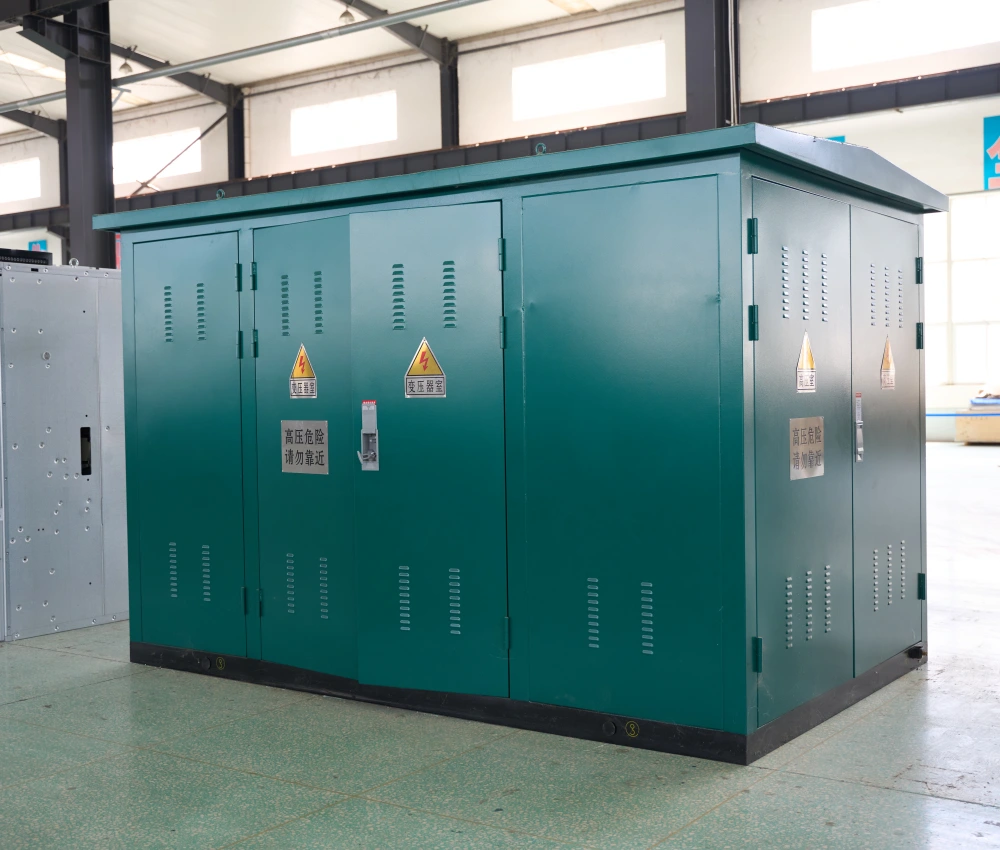
Prefabricated Substation
The Prefabricated Substation is a fully integrated, factory-built power distribution solution that combines high-voltage switchgear, transformer, low-voltage switchgear, protection systems, metering, and auxiliary equipment into a compact, modular enclosure. Designed for rapid deployment, it significantly reduces on-site civil works, installation time, and overall project costs. Built with premium materials and advanced manufacturing techniques, these substations deliver exceptional reliability, safety, and efficiency in a weatherproof, aesthetically pleasing package. Available in both skid-mounted and containerized configurations, they support a wide range of voltages and capacities while incorporating intelligent monitoring and remote control capabilities for modern smart grid applications.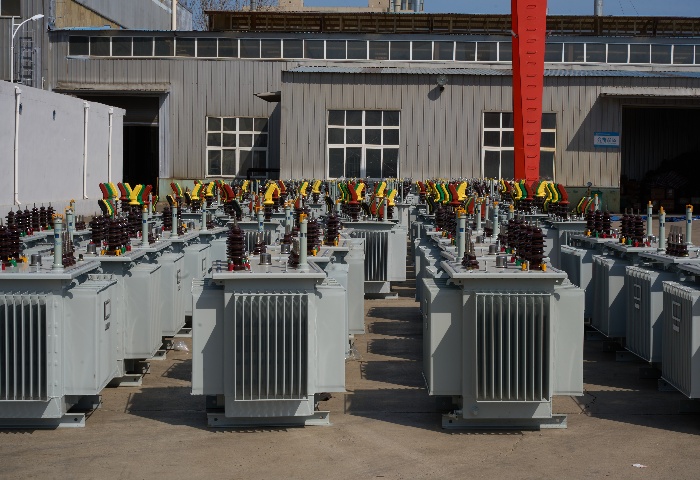
600kVA Oil Immersed Transformer
The 600kVA Oil Immersed Transformer is a robust three-phase distribution transformer designed for reliable medium-voltage power step-down in 50/60Hz AC networks, commonly with primary voltages of 11kV or 33kV. Utilizing premium grain-oriented silicon steel core (S11/S13 series) to achieve reduced no-load losses, copper or aluminum windings, and high-quality mineral oil , it minimizes load losses while providing ONAN cooling for substantial overload tolerance (up to 140% short-term). Compact design with Dyn11 vector group, BIL ratings, and pole/ground-mount flexibility ensures dependable performance, minimal energy dissipation, and seamless integration in modern distribution systems.
4/5 Cores Copper Cable CU/XLPE/PVC 0.6/1kV
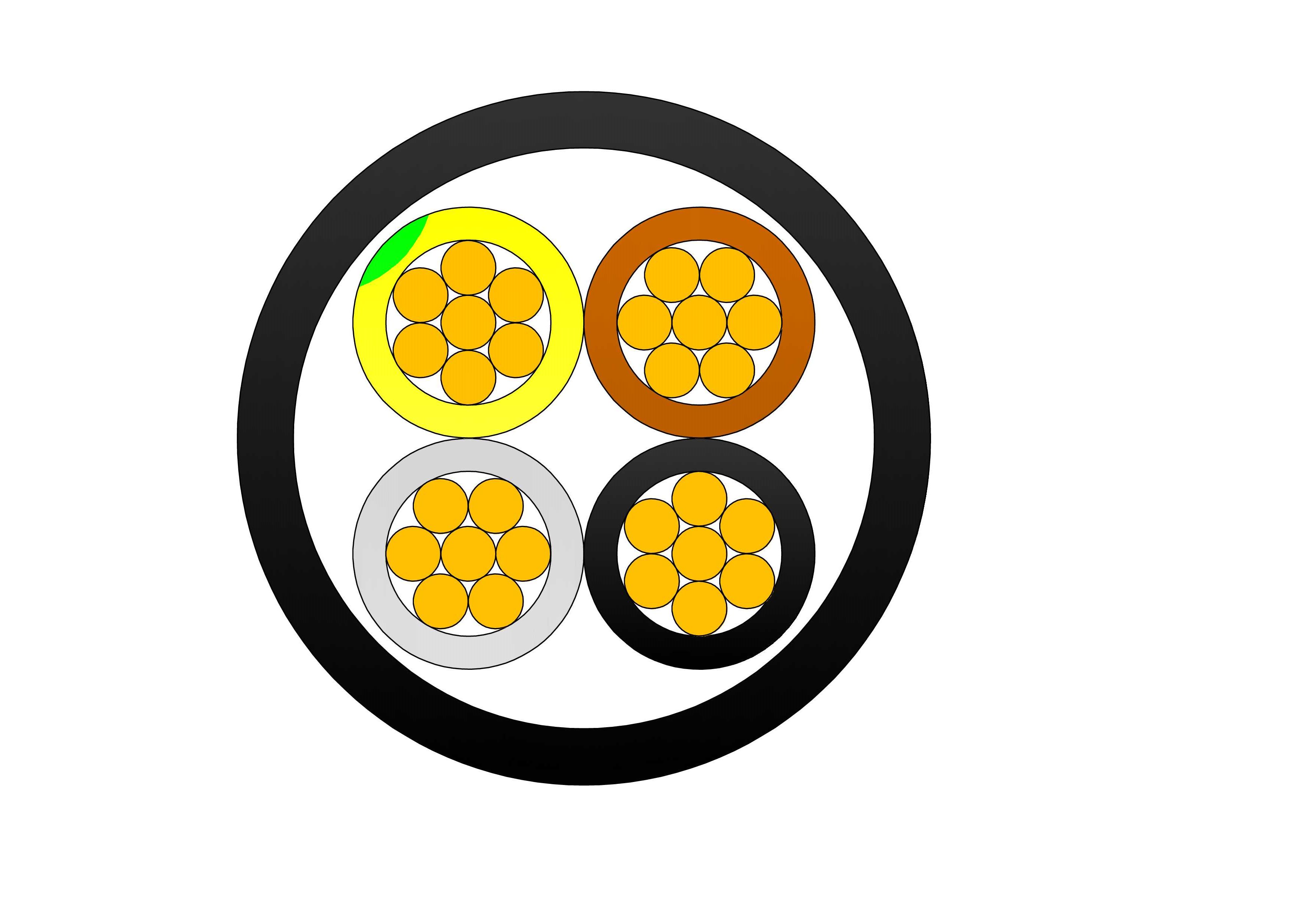
The 4/5 Cores Copper Cable CU/XLPE/PVC 0.6/1kV is engineered for reliable low-voltage power distribution in industrial, commercial, and infrastructure applications. Constructed with high-conductivity stranded copper conductors, premium XLPE insulation, and a durable PVC outer sheath, the cable provides excellent electrical performance, thermal stability, and mechanical protection. The XLPE insulation enables continuous conductor operating temperatures up to 90°C while maintaining outstanding dielectric strength and insulation reliability. The PVC sheath protects against moisture, abrasion, oils, chemicals, and environmental stresses, ensuring long service life in demanding installations. Available in both 4-core and 5-core configurations, the cable is ideal for three-phase power distribution systems, industrial machinery, commercial buildings, utility projects, and electrical networks. Manufactured according to IEC 60502-1 standards, it guarantees safety, efficiency, and dependable performance. Custom conductor sizes, sheath colors, and packaging options are available to meet project-specific requirements. The 4/5 Cores Copper Cable CU/XLPE/PVC 0.6/1kV is a trusted solution for modern electrical infrastructure.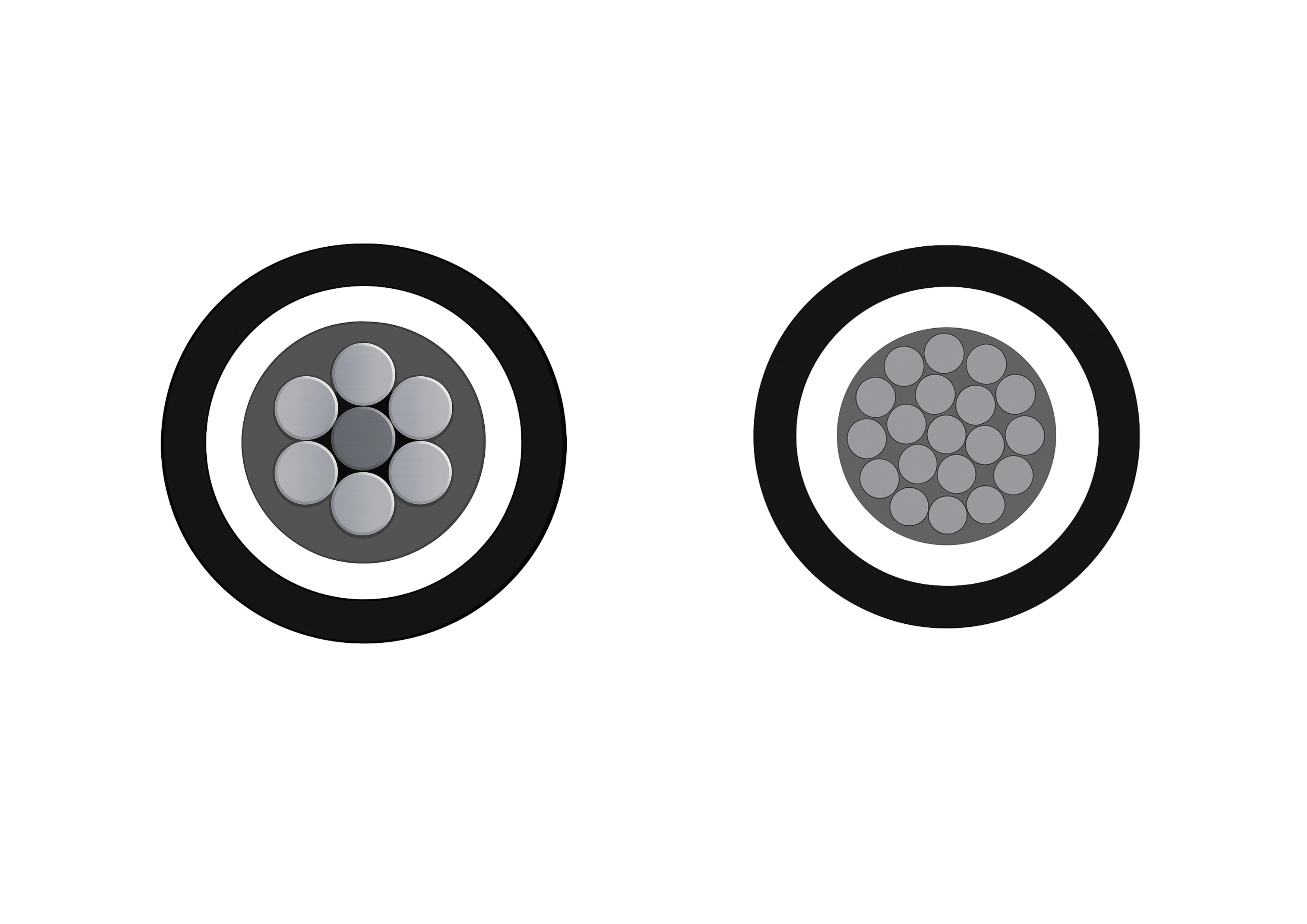
XLPE-HDPE Tree Cable Aluminum 25kV 1x120mm²
The XLPE-HDPE Tree Cable Aluminum 25kV 1x120mm² is designed for medium-voltage overhead distribution systems requiring very high current capacity. Perfect for long-distance transmission lines in rural, coastal, or high-load industrial areas, this cable combines superior durability, environmental resistance, and reliable electrical performance to ensure stable power delivery with minimal energy loss and maintenance. The inner insulation uses cross-linked polyethylene (XLPE), rated for continuous conductor operation at 90°C, fully compliant with ICEA S-121-733 standards. The robust outer jacket is made from high-density polyethylene (HDPE), providing excellent resistance to weathering, ultraviolet radiation, mechanical abrasion, and electrical sparking up to 2.75kV. Standard gray cables feature ASTM B230 markings and sequential metering, while blue cables with spark resistance over 5kV are recommended for harsher environmental conditions. With its ultra high current capacity, robust construction, and environmental resilience, the XLPE-HDPE 25kV tree cable 1x120mm² delivers reliable, long-term power distribution for demanding overhead network applications, ensuring efficiency, safety, and minimal maintenance.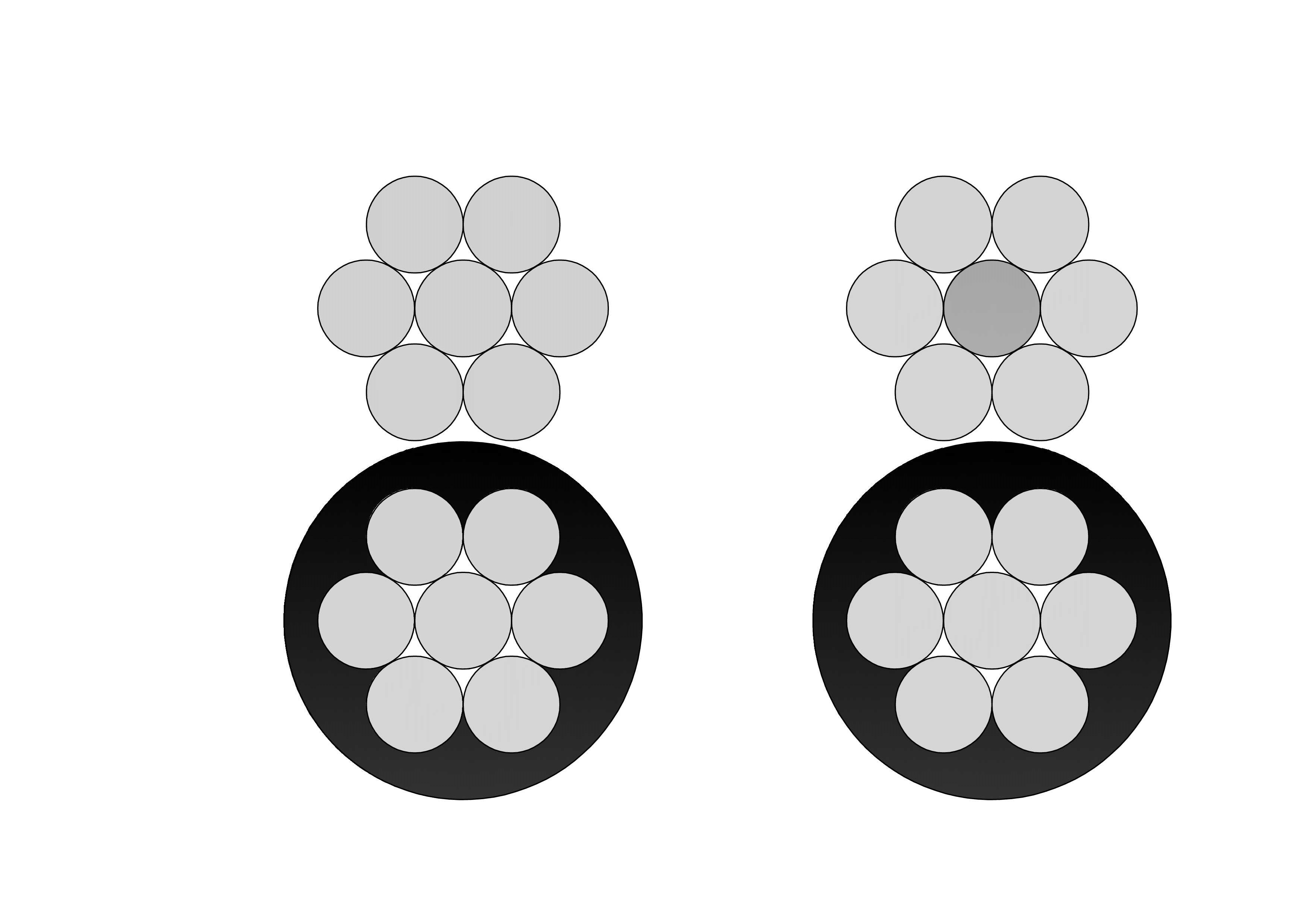
4 Whippet Aluminum Conductor Duplex Overhead Service Drop Cable
The 4 Whippet Duplex Service Drop Cable is a durable overhead cable for secondary power distribution to residential service entrances. Featuring two 4 AWG aluminum conductors (phase and neutral, 7-strand) insulated with XLPE or PE and assembled in duplex configuration, it provides excellent weather resistance and mechanical strength. Compliant with ASTM B-230, B-231, ICEA S-76-474, and ANSI/ICEA standards, this cable supports 600V applications with high UV, moisture, and abrasion protection. The self-supporting design simplifies installation with reduced sag over spans up to 100 feet. The 4 Whippet Duplex Service Drop Cable ensures low power losses, reliable performance in harsh outdoor conditions, and long service life. Lightweight and flexible, it is widely used for single-phase service drops in urban, suburban, and rural areas requiring safe, cost-effective aerial connections from utility poles to homes.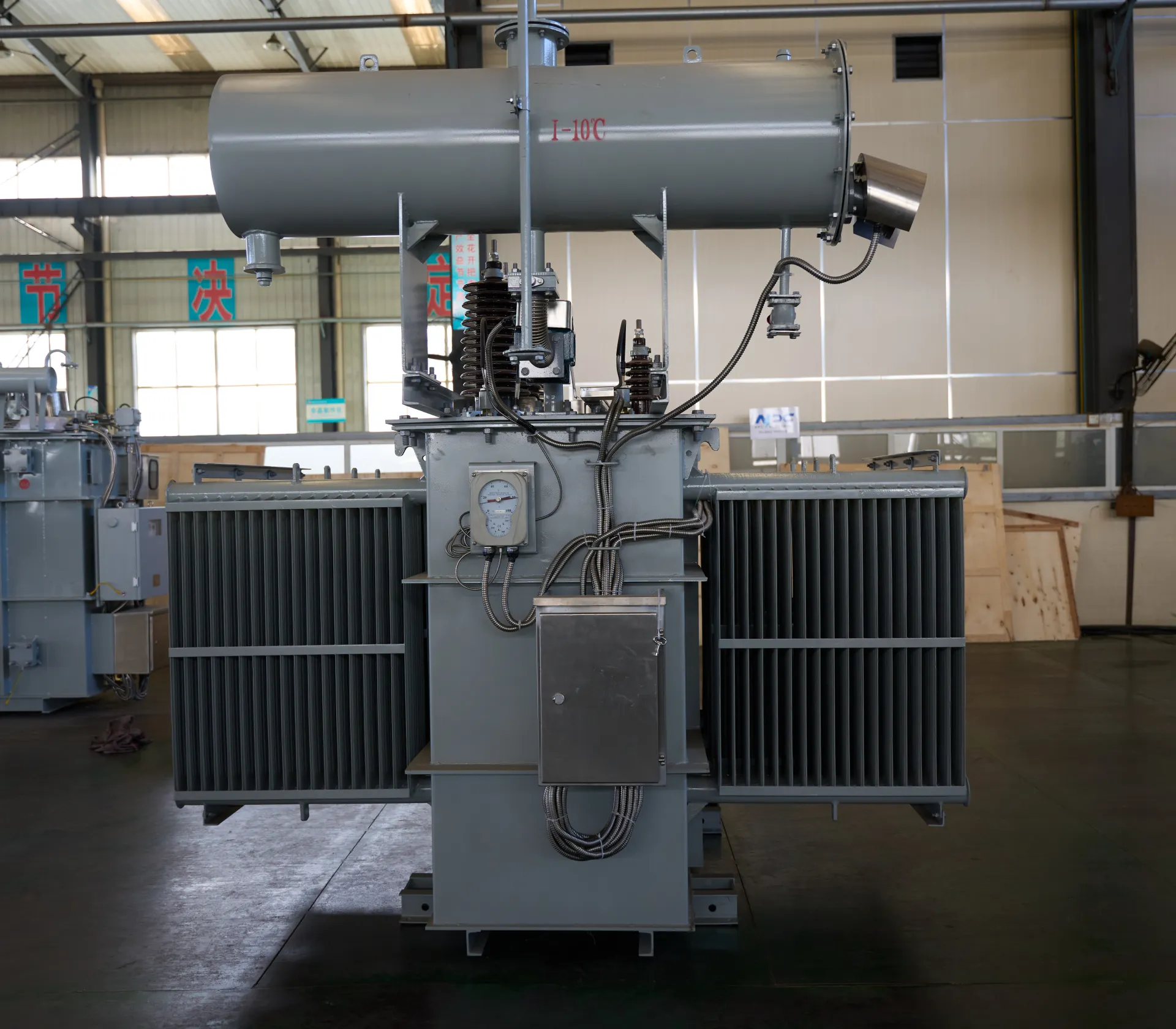
42MVA 220kV Three Phase Oil Filled Transformer for Substation
The 42MVA 220kV Three Phase Oil Filled Transformer is specifically engineered for high-voltage transmission substations and utility grid applications. Featuring 99.9% electrolytic copper windings, advanced ONAN/ONAF cooling, and ±8×1.25% on-load tap changer, it ensures ultra-low no-load and load losses (SZ13 series available). Fully compliant with IEC 60076, GB/T 6451, and ANSI/IEEE standards, it successfully passes 460 kV lightning impulse, PD level below 10 pC, and induced test at 1.5Um/√3. Robust corrugated tank and conservator design provide excellent thermal and mechanical performance in extreme climates. Ideal for 220/33kV, 220/11kV, or 220/6.6kV step-down configurations. Vacuum oil processing and nitrogen blanketing guarantee long-term reliability and 35+ year service life. Trusted by national grids worldwide. Contact us for datasheet, pricing, and customization options.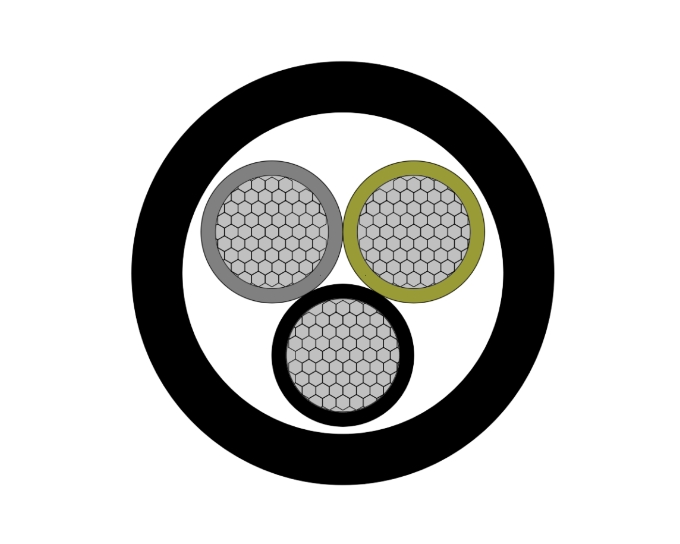
NA2XH Cables
NA2XH Cables is a low-voltage, halogen-free power cable with an aluminum conductor, XLPE (cross-linked polyethylene) insulation, and an LSZH (Low Smoke Zero Halogen) outer sheath. It is designed according to IEC 60502-1 and rated for 3.6kV applications. Lightweight aluminum reduces installation and material costs while maintaining excellent electrical performance and thermal stability. Resistant to moisture and mechanical stress, NA2XH Cables are suitable for indoor, outdoor, and direct burial applications.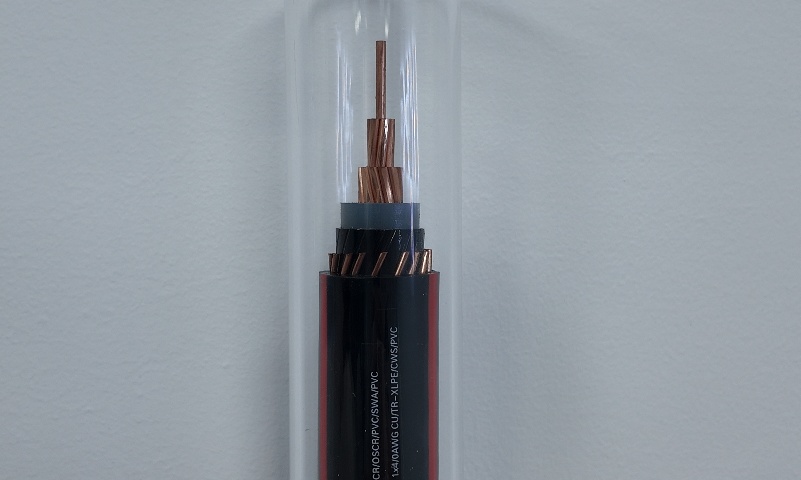
Aluminum URD Cable
The Aluminum URD Cable is a practical and economical 600V underground residential distribution cable engineered for service entrance and secondary power delivery. It utilizes stranded AA8000 aluminum alloy conductors with XLPE insulation and a concentrically stranded aluminum alloy neutral, all encased in a durable black polyethylene sheath. This design offers excellent flexibility, high conductivity, and superior moisture resistance, making it suitable for direct burial or conduit installations. Lightweight and corrosion-resistant, the Aluminum URD Cable provides a cost-effective alternative to copper while maintaining strong mechanical performance and long service life. Manufactured to UL 854 and ICEA standards, it undergoes extensive quality testing to ensure consistent performance in underground environments.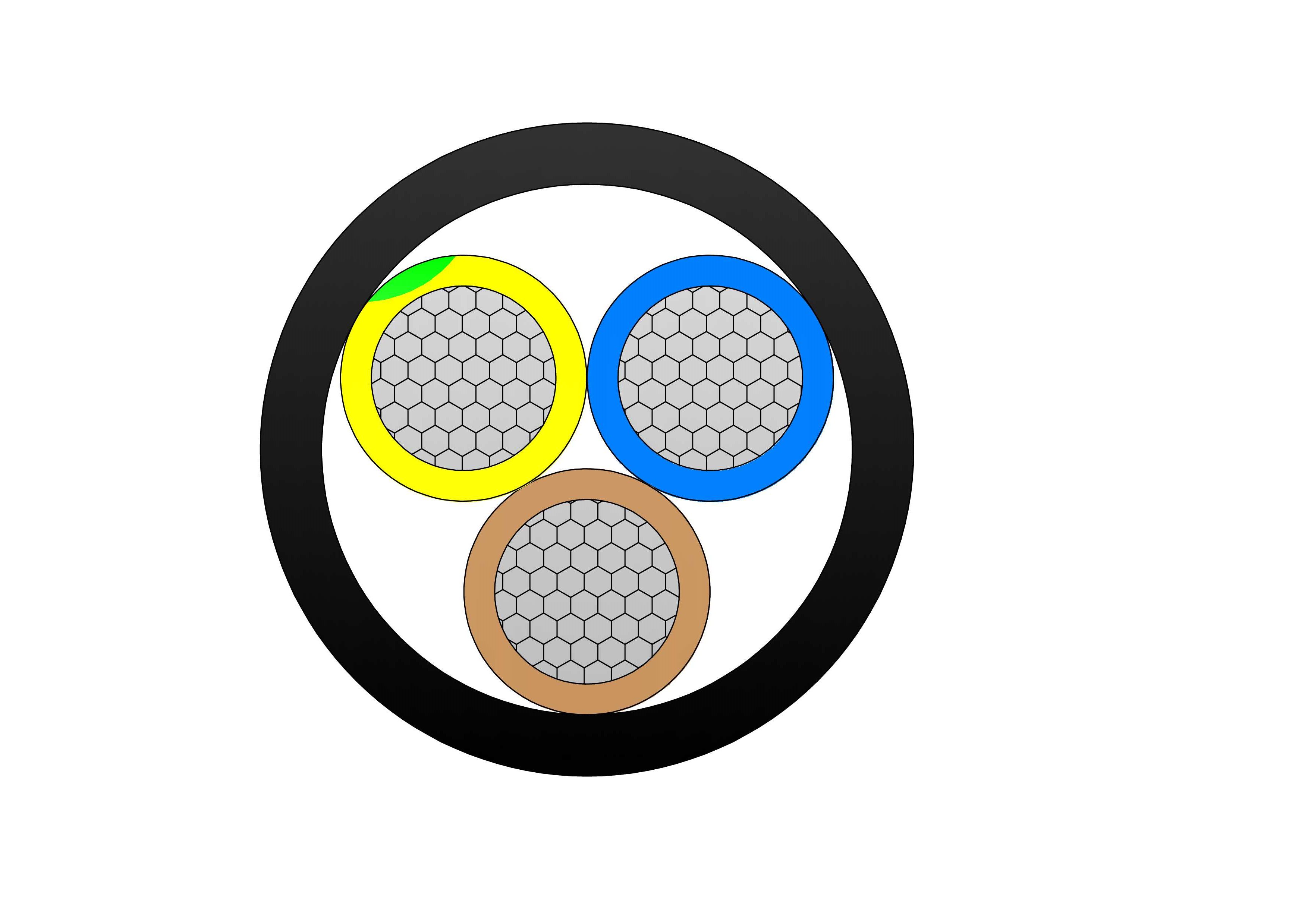
NA2XY 0.6/1 (1.2)kV Low Voltage Power Cable
NA2XY 0.6/1 (1.2)kV is a low-voltage power cable manufactured according to IEC 60502-1, suitable for fixed installation in indoor and outdoor environments, including underground and concrete installations where mechanical stress is minimal. This lightweight cable offers excellent electrical performance, high thermal stability, and superior resistance to moisture, chemicals, and mechanical stress. Suitable for direct burial, ducts, trays, or indoor fixed installations where no additional armour is required. With low dielectric losses and good current-carrying capacity, it minimizes energy waste. Flame-retardant and environmentally robust, the NA2XY 0.6/1 (1.2)kV Low Voltage Power Cable provides long service life and low maintenance costs. Widely used in industrial plants, commercial buildings, residential networks, and infrastructure projects needing reliable, cost-saving low-voltage aluminium cabling solutions worldwide.
500kVA Three Phase Pad Mounted Transformer
The 500kVA three-phase pad transformer is an efficient and sturdy power equipment designed for commercial, industrial and distribution systems. It has a compact design and a protective casing that meets NEMA 3R or higher standards. It is suitable for various outdoor environments and can effectively resist external factors such as weather, dust and moisture. It can meet the power needs of different regions and has a variety of optional functions, such as load regulation and temperature control systems, to further improve its operating efficiency and safety. The built-in protection device can effectively prevent overload, short circuit and other faults to ensure the safe and reliable operation of the power system.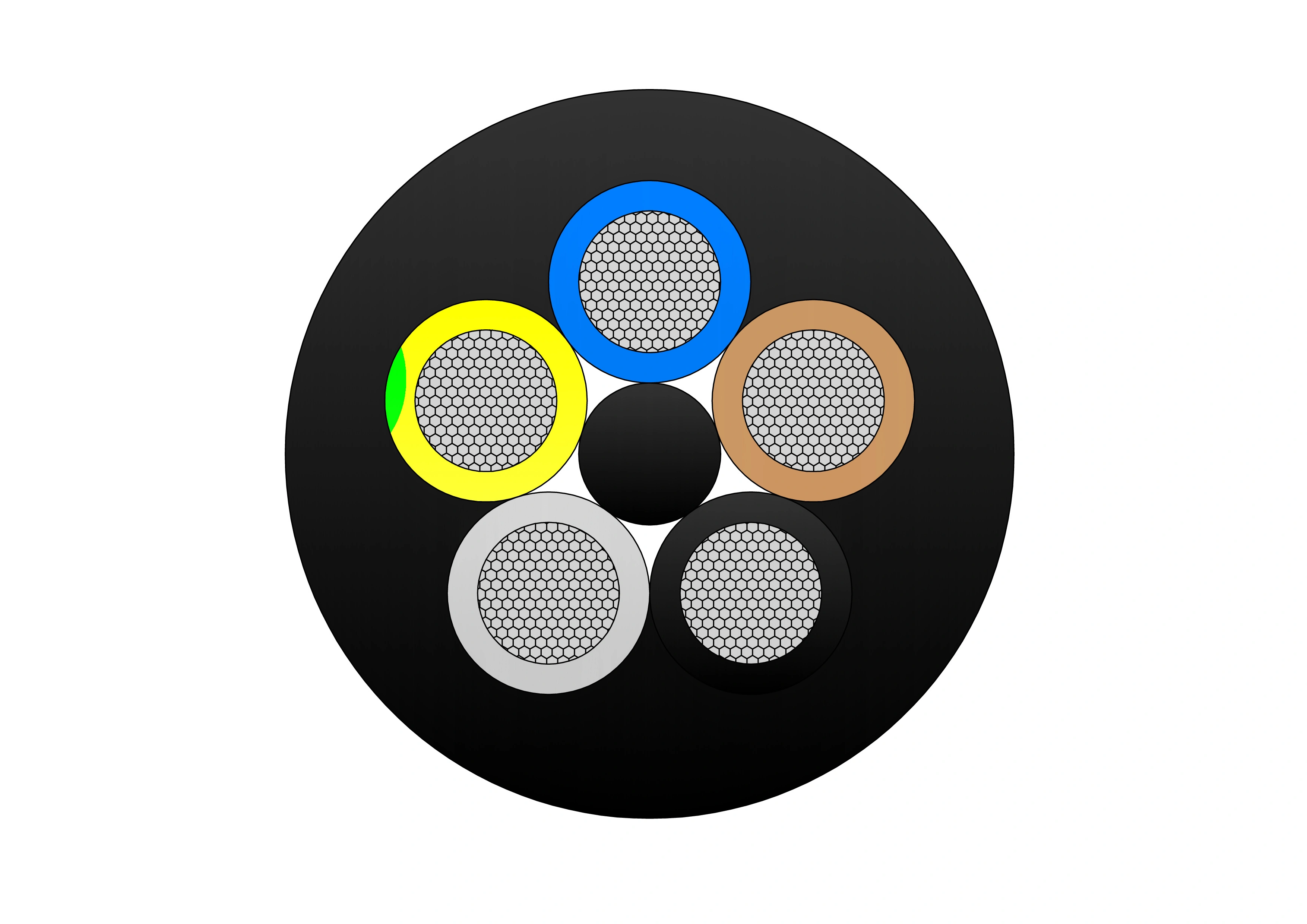
(N)TSCGECEWOU 1.8/3kV, 3.6/6kV and 6/10kV ATB (Ground Check Conductor)
The (N)TSCGECEWOU 1.8/3kV, 3.6/6kV and 6/10kV ATB (Ground Check Conductor) Cable is a flexible medium-voltage trailing/reeling cable with anti-torsion braid (ATB) and integrated ground check conductor for enhanced safety monitoring in mining applications. It features class 5 finely stranded tinned copper phase conductors for flexibility and corrosion resistance, semi-conductive screens, EPR insulation for high dielectric strength and 90°C rating, copper braid screen for EMI/grounding, control conductors, dedicated ground check conductor (for continuity/fault detection), anti-torsion polyester braid to minimize twisting under dynamic loads, and a tough rubber outer sheath resistant to oil, flame, abrasion, and mechanical stress. Compliant with DIN VDE 0250, it supports high tensile forces, fast reeling, and tight bends while providing reliable ground monitoring. The (N)TSCGECEWOU ATB GCC ensures safe, dependable MV power to heavy mobile equipment like draglines, shovels, and drills in opencast/underground mining.Welcome your inquiry
Honesty, Integrity, Frugality, Activeness and Passion