Low Voltage vs Medium Voltage Transformers: Key Differences Explained
2026-08-17
1. Understanding Transformer Voltage Classification
Transformers are essential electrical devices that transfer energy between circuits by electromagnetic induction. They play a critical role in modern power systems by adjusting voltage levels to ensure electricity can be transmitted, distributed, and used safely.
From industrial facilities and commercial buildings to renewable energy projects and utility grids, different transformer types are selected according to voltage requirements, load characteristics, and operational conditions.
Among the most common categories are low voltage transformer and medium voltage transformer systems. Although both perform the same fundamental function of voltage conversion, their designs, applications, insulation requirements, and engineering considerations are significantly different.
A low voltage transformer is generally used for final power distribution and equipment supply, while a medium voltage transformer operates within primary distribution networks to transfer electrical energy over larger areas.
2. What Is a Low Voltage Transformer?
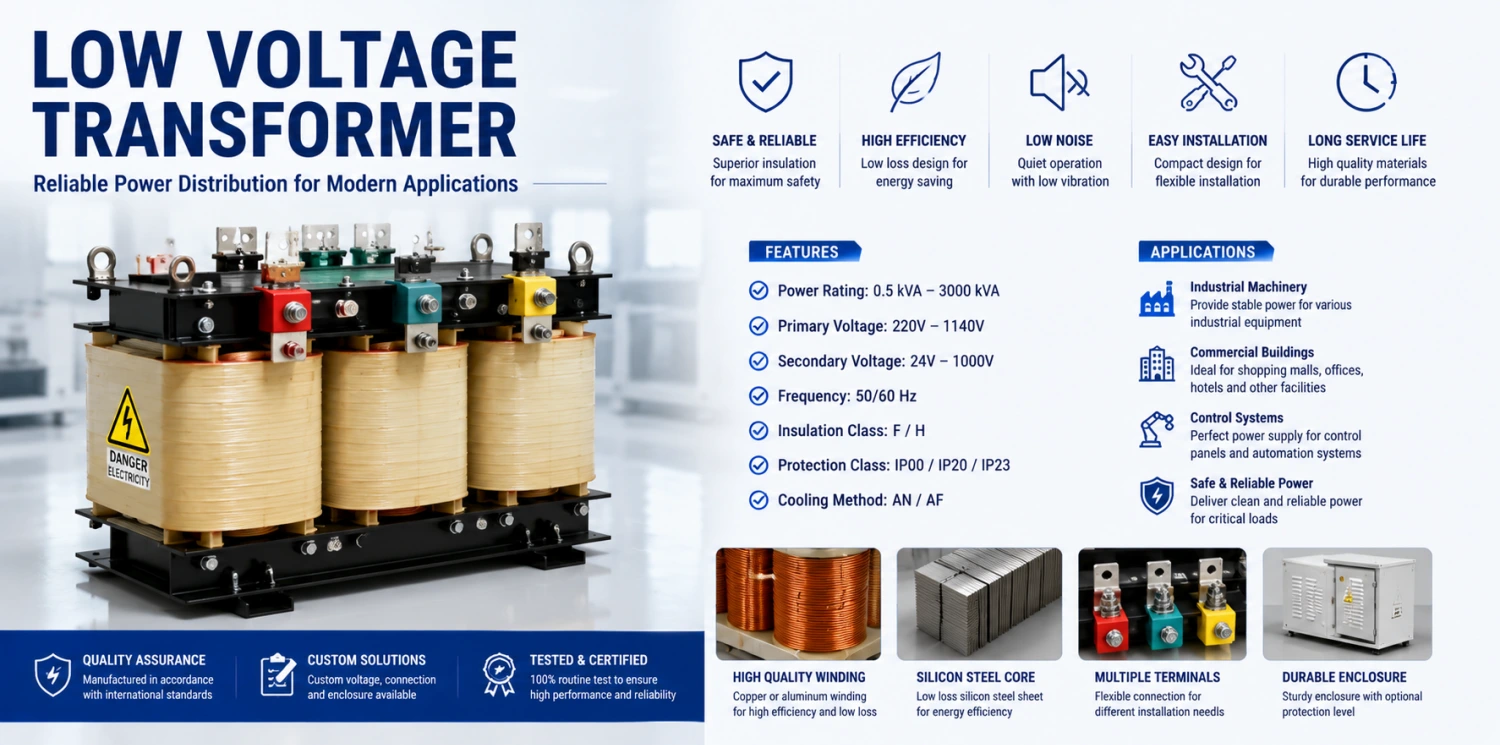
A low voltage transformer is designed to convert electrical energy within low voltage ranges, typically below 1 kV on the secondary side according to international electrical standards.
These transformers are commonly installed close to end-use equipment where electricity needs to be delivered at safe operating levels.
Typical applications include:
- Commercial buildings
- Residential complexes
- Industrial control systems
- Lighting systems
- Machinery power supply
- Data centers
The primary purpose of a low voltage transformer is to provide stable and safe power for electrical equipment.
Main Features of Low Voltage Transformers
A high-quality low voltage transformer usually includes:
- Compact design
- High efficiency
- Reliable insulation
- Easy installation
- Low maintenance requirements
Modern projects increasingly use smart low voltage transformer technologies equipped with monitoring systems that measure:
- Temperature
- Load conditions
- Energy consumption
- Operating status
These functions help improve energy management and predictive maintenance.
3. What Is a Medium Voltage Transformer?
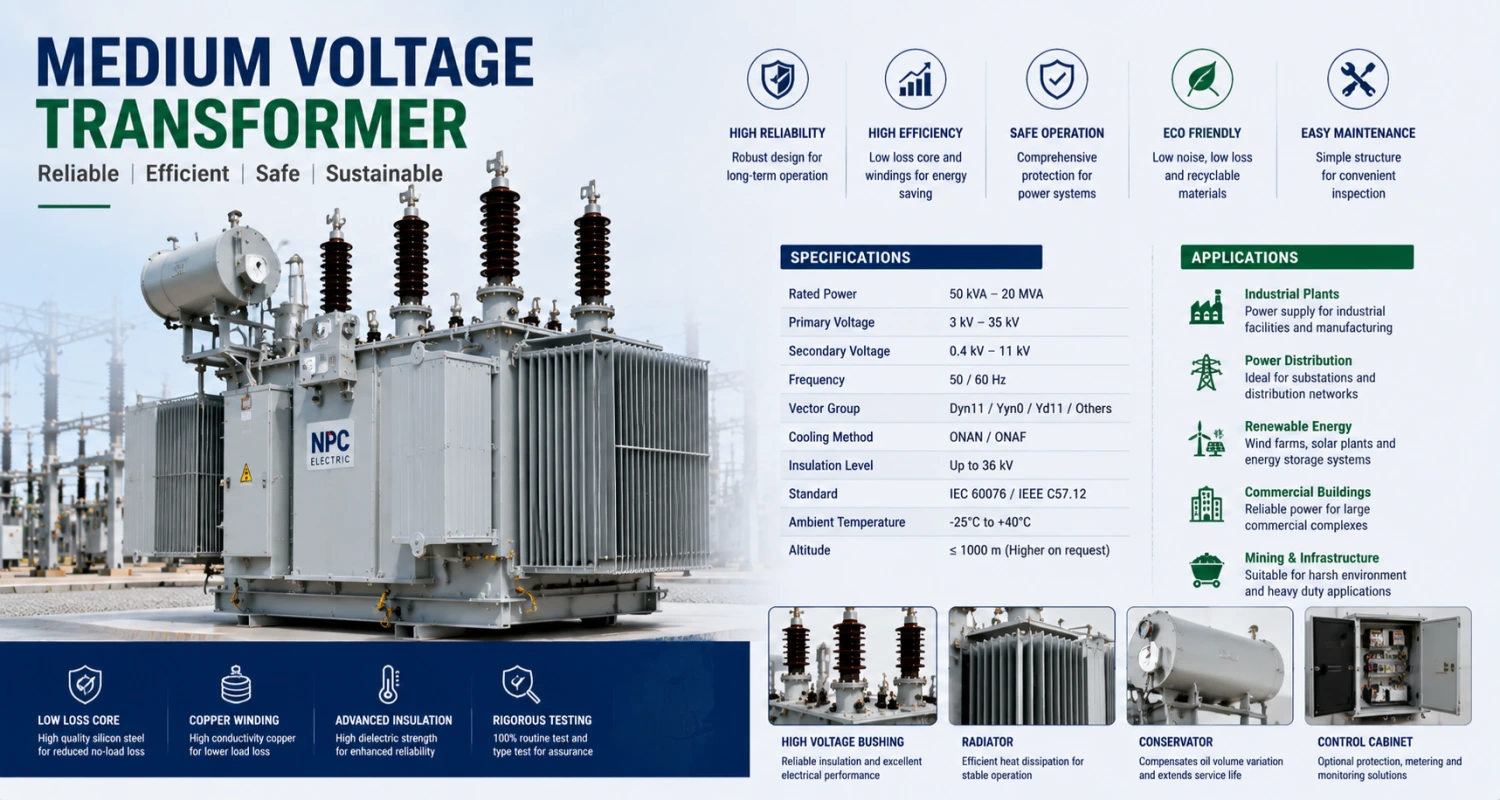
A medium voltage transformer is designed for electrical distribution systems operating above low voltage levels, commonly from several kilovolts up to approximately 35 kV depending on regional standards.
Medium voltage transformers serve as a connection point between transmission networks and low voltage distribution systems.
They are widely used in:
- Industrial plants
- Power substations
- Renewable energy facilities
- Mining operations
- Infrastructure projects
- Utility distribution networks
A medium voltage transformer must withstand higher electrical stresses compared with low voltage equipment.
Therefore, its design requires:
- Stronger insulation systems
- Higher mechanical strength
- Advanced protection systems
- More complex testing procedures
Many medium voltage transformer manufacturers develop customized solutions based on project requirements, including voltage ratios, cooling methods, and installation environments.
4. Key Differences Between Low Voltage and Medium Voltage Transformers
Although both transformers use electromagnetic induction, their engineering characteristics differ significantly.
Voltage Level
The primary difference is the operating voltage range.
Low voltage transformers are designed for final distribution, while medium voltage transformers handle higher electrical energy transfer.
Higher voltage operation requires more advanced insulation and safety considerations.
Application Environment
Low voltage transformers are typically installed near electrical loads.
Examples:
- Factory equipment
- Building electrical panels
- Control circuits
Medium voltage transformers are installed upstream in distribution systems.
Examples:
- Substations
- Industrial power networks
- Utility infrastructure
Construction Requirements
Medium voltage transformers require:
- Larger insulation distances
- Higher dielectric strength
- More robust components
Low voltage transformers usually focus on:
- Compact size
- Cost efficiency
- Flexible installation
Technical Comparison of Low Voltage and Medium Voltage Transformers
|
Parameter |
Low Voltage Transformer |
Medium Voltage Transformer |
|
Voltage Level |
≤1 kV |
1 kV–35 kV |
|
Main Function |
Final power distribution |
Primary distribution transformation |
|
Typical Applications |
Buildings, machines, control systems |
Industrial plants, substations, utility networks |
|
Installation Position |
Near electrical loads |
Distribution stations and power facilities |
|
Transformer Capacity |
Small to medium capacity |
Medium to large capacity |
|
Insulation Requirement |
Standard insulation |
Advanced insulation system |
|
Winding Design |
Compact winding structure |
Reinforced winding and insulation |
|
Protection System |
Basic protection |
Advanced relay and protection systems |
|
Cooling Method |
Air cooling / dry cooling |
Oil cooling or dry type cooling |
|
Maintenance Complexity |
Low |
Medium to high |
|
Typical Service Life |
20–30 years |
25–40 years |
Engineering Insight
Low voltage transformers focus on safe and efficient power delivery to end users, while medium voltage transformers are designed for reliable energy transfer within electrical distribution networks.
5. Technical Comparison Between Low Voltage and Medium Voltage Transformers
|
Parameter |
Low Voltage Transformer |
Medium Voltage Transformer |
|
Voltage Range |
Below 1 kV |
Approx. 1 kV–35 kV |
|
Main Application |
End-user power supply |
Distribution networks |
|
Installation Location |
Near electrical loads |
Substations and industrial areas |
|
Insulation Requirement |
Standard insulation |
Enhanced insulation system |
|
Size |
Compact |
Larger structure |
|
Cooling Methods |
Air cooling commonly used |
Oil or dry type cooling |
|
Protection Level |
Basic protection |
Advanced protection |
|
Maintenance Requirement |
Low |
Higher due to complexity |
|
Typical Users |
Buildings, factories |
Utilities, industrial facilities |
This comparison helps engineers select the appropriate transformer according to system requirements.
6. Transformer Types and Design Considerations
Selecting the correct transformer requires evaluating several technical factors.
Dry Type Transformers
Medium voltage dry type transformers are increasingly popular in locations where safety and environmental protection are important.
Advantages include:
- No transformer oil
- Reduced fire risk
- Lower environmental concerns
- Suitable for indoor installation
They are widely used in:
- Hospitals
- Commercial buildings
- Underground facilities
- Renewable energy projects
Oil Immersed Transformers
Oil-filled transformers remain common in outdoor and utility applications.
Benefits include:
- Excellent cooling performance
- High efficiency
- Long operational life
They are often selected for large-scale distribution systems.
Transformer Selection Guide for Different Applications
|
Transformer Type |
Voltage Range |
Cooling Method |
Main Applications |
Key Advantages |
|
Low Voltage Transformer |
≤1 kV |
Air Cooling |
Buildings, factories, control systems |
Compact and easy installation |
|
Medium Voltage Dry Type Transformer |
1–35 kV |
Natural/Forced Air |
Hospitals, commercial buildings, renewable projects |
Safe, fire-resistant, environmentally friendly |
|
Oil Immersed Distribution Transformer |
6–35 kV |
Transformer Oil |
Outdoor distribution networks |
High efficiency and excellent cooling |
|
Above distribution voltage levels |
Oil Cooling |
Substations, transmission systems |
High capacity power transfer |
|
|
Smart Low Voltage Transformer |
≤1 kV |
Intelligent cooling monitoring |
Smart buildings, energy systems |
Real-time monitoring and control |
Engineering Insight
Transformer selection depends not only on voltage level but also on installation environment, safety requirements, efficiency targets, and future expansion needs.
Power Transformers
A power transformer is generally associated with higher capacity applications, including transmission and large-scale electrical infrastructure.
Although the term is sometimes used broadly, power transformers usually refer to equipment designed for transferring significant electrical power between voltage levels.
7. How to Choose the Right Transformer for Your Project
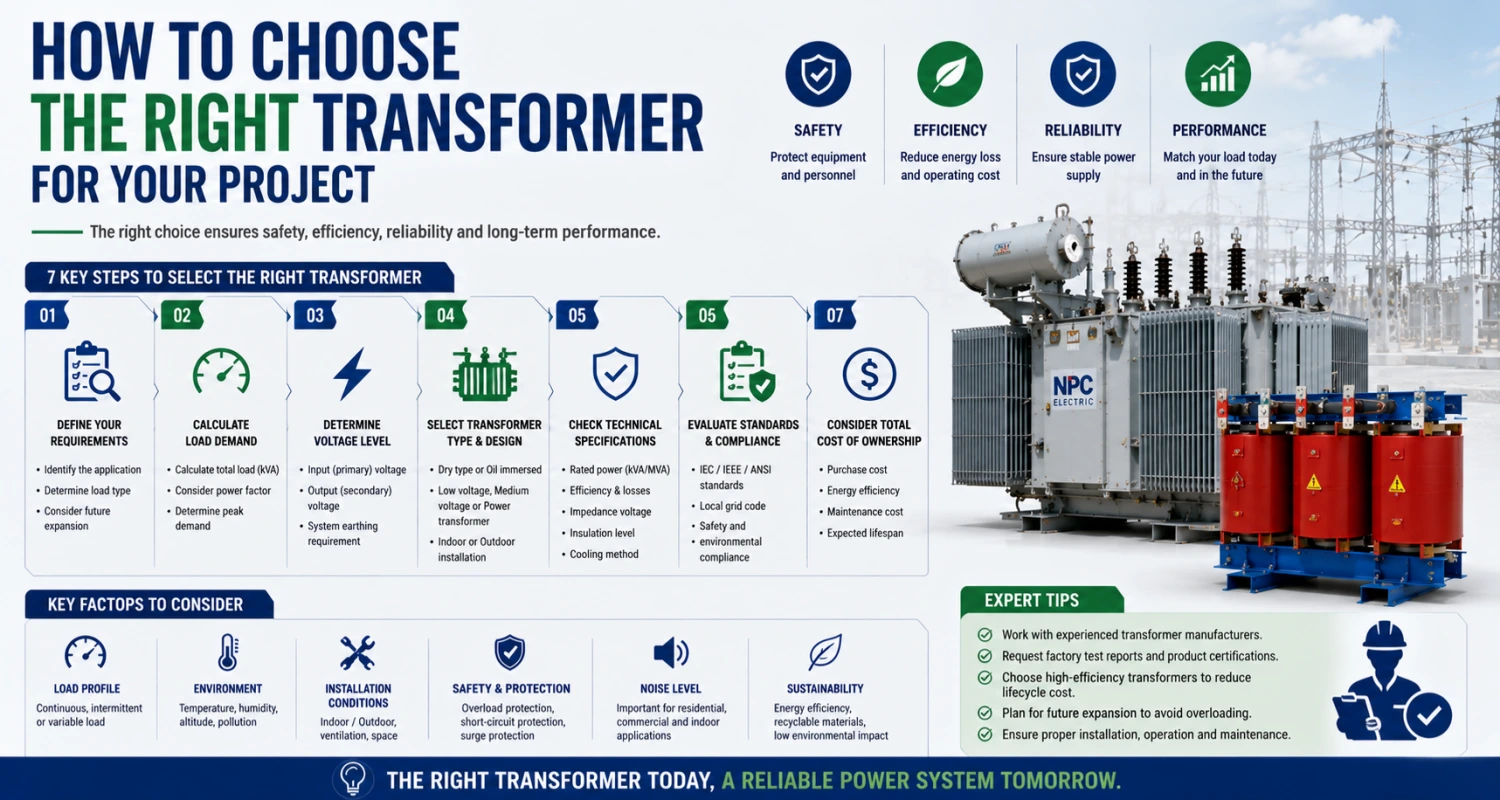
Choosing between a low voltage transformer and a medium voltage transformer requires detailed system analysis.
Engineers should evaluate:
Load Requirements
Determine:
- Total connected load
- Peak demand
- Future expansion plans
Oversized transformers increase investment costs, while undersized transformers may cause overheating and reduced reliability.
Voltage Requirements
The transformer must match:
- Input voltage
- Output voltage
- Frequency
- System configuration
Efficiency
Transformer efficiency directly affects operational costs.
High-efficiency transformers reduce:
- Energy losses
- Operating expenses
- Carbon emissions
Environmental Conditions
Consider:
- Indoor or outdoor installation
- Temperature range
- Humidity
- Dust exposure
For specialized applications, smart monitoring systems may be recommended.
Key Transformer Performance Parameters
|
Parameter |
Description |
Engineering Importance |
|
Rated Capacity (kVA/MVA) |
Maximum power handling capability |
Determines load capacity |
|
Primary Voltage |
Input voltage level |
Must match grid supply |
|
Secondary Voltage |
Output voltage level |
Matches equipment requirements |
|
Frequency |
Operating frequency (50/60 Hz) |
Ensures system compatibility |
|
No-load Loss |
Core energy loss without load |
Affects energy efficiency |
|
Load Loss |
Copper loss during operation |
Impacts operating cost |
|
Efficiency |
Energy conversion performance |
Reduces power waste |
|
Short Circuit Impedance |
Voltage drop during fault |
Determines protection design |
|
Temperature Rise |
Heat generated during operation |
Ensures insulation reliability |
|
Insulation Class |
Thermal and electrical insulation level |
Determines service life |
Recommended Efficiency Values
|
Transformer Category |
Typical Efficiency |
|
Small Low Voltage Transformer |
95%–98% |
|
High Efficiency Low Voltage Transformer |
98%–99% |
|
Medium Voltage Dry Type Transformer |
97%–99% |
|
Distribution Transformer |
97.5%–99.5% |
|
Large Power Transformer |
Above 99% |
Engineering Insight
Transformer efficiency directly affects long-term operating costs. Selecting high-efficiency transformer designs can significantly reduce energy losses throughout the equipment lifecycle.
8. Future Development Trends in Transformer Technology
The transformer industry is evolving with the development of intelligent power systems and renewable energy integration.
Modern transformer solutions increasingly include:
Smart Monitoring
Smart transformers use sensors and communication systems to provide real-time information about:
- Temperature
- Load percentage
- Fault conditions
- Energy performance
This enables predictive maintenance and improves system reliability.
Digital Power Networks
As electrical grids become more automated, transformers must support:
- Remote monitoring
- Grid optimization
- Intelligent protection
Renewable Energy Applications
Solar farms, wind farms, and battery energy storage systems require advanced transformer solutions.
Medium voltage transformers are frequently used to connect renewable energy generation systems to electrical grids.
Conclusion
Low voltage transformers and medium voltage transformers serve different but equally important roles in modern electrical systems.
A low voltage transformer is ideal for supplying power directly to electrical equipment, buildings, and control systems, while a medium voltage transformer supports larger distribution networks and industrial power applications.
Understanding the differences in voltage ratings, construction methods, insulation systems, and operating environments helps engineers select the correct transformer solution.
With the development of smart grid technology, renewable energy systems, and digital monitoring, advanced transformer solutions such as smart low voltage transformers, medium voltage dry type transformers, and modern power transformers will continue to improve electrical reliability and efficiency worldwide.

Related Articles
Related Products
2MVA Solar Step-Up Pad Mounted Transformer for Solar PV
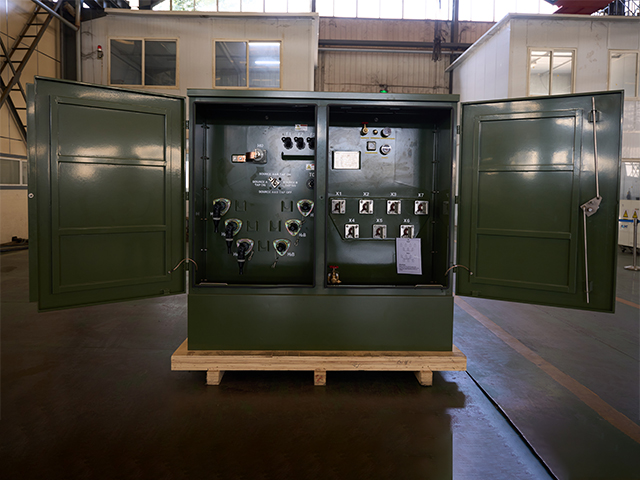
The 2MVA Solar Step-Up Pad Mounted Transformer is a purpose-built, three-phase, oil-immersed (ONAN) inverter step-up (ISU) transformer designed specifically for utility-scale solar PV farms, boosting low-voltage inverter AC outputs (typically 600V, 690V, 800V, or 480V) to medium-voltage collection levels (e.g., 12.47kV, 13.8kV, 22kV, 24.94kV, 33kV, or 34.5kV) for efficient grid tie-in. Engineered to IEEE C57.159 (DPV guide), IEEE C57.12.34 (pad-mounted compartmental-type), IEEE C57.12.00, DOE 2016 efficiency, and ANSI standards, this UL-listed unit features electrostatic shielding between windings to mitigate inverter harmonics and DC bias, K-factor up to K-19 for nonlinear loads, and reduced flux density to prevent core saturation from potential DC components.
N2XY 0.6/1kV Low Voltage Power Cable
N2XY 0.6/1kV is a low-voltage power cable built to IEC/EN 60228 standards, ideal for fixed installations in dry or damp environments, including indoors, outdoors, and in concrete (excluding vibration zones), without the need for additional mechanical protection. Constructed with high-purity copper conductors, thermosetting XLPE insulation, and tough PVC jacket, it meets stringent IEC 60502-1 requirements. This cable provides low dielectric losses, excellent short-circuit tolerance, and strong resistance to environmental factors like water and abrasion. Perfect for fixed installations in wet or dry locations, including direct burial without armour when mechanical protection is not critical. Enhanced bending radius and flame-retardant properties facilitate safe, easy handling.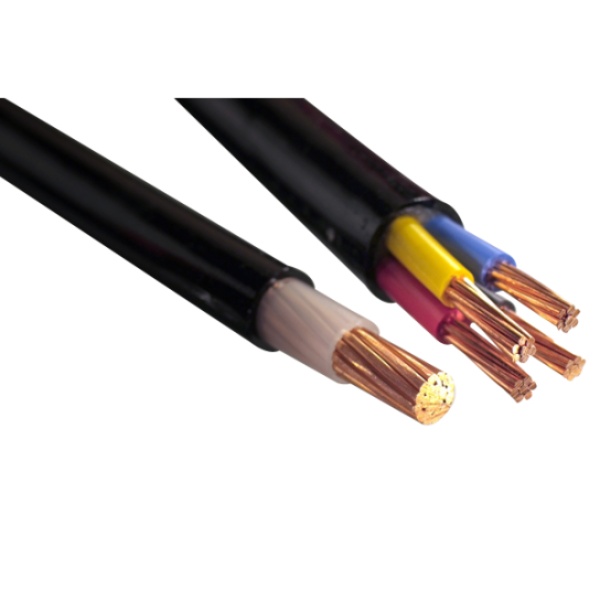
600/1000V PVC Insulated Cable to IEC 60502-1 Standard
The 600/1000V PVC Insulated Low Voltage Power Cable is designed for reliable power transmission in low-voltage electrical systems. Manufactured with high-quality copper or aluminum conductors and PVC insulation, this cable provides stable electrical performance, good flexibility, and long service life. The PVC insulation offers effective protection against moisture, abrasion, oils, and common chemicals, making the cable suitable for both indoor and outdoor installations. Rated at 600/1000 volts, the cable ensures safe and efficient power distribution under normal operating conditions. Its robust insulation structure supports consistent current flow while maintaining electrical safety. The cable is easy to install, route, and terminate, making it a practical solution for residential, commercial, and industrial power networks. With dependable insulation performance and mechanical durability, this low voltage power cable meets the demands of everyday electrical infrastructure.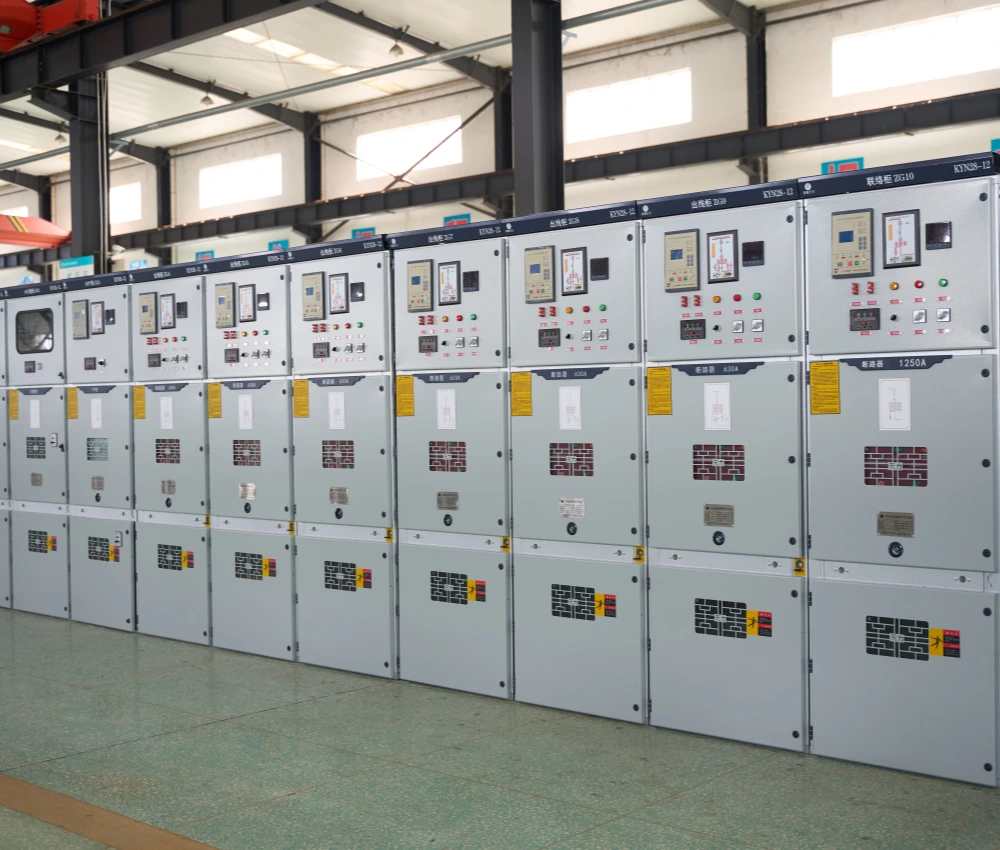
Low Voltage Distribution Cabinet
The Low Voltage Distribution Cabinet is an essential power management solution engineered for safe, reliable, and efficient electricity distribution in low-voltage systems. Designed for both indoor and outdoor applications, it organizes and protects electrical circuits while providing flexible feeder management for lighting, power outlets, motors, and auxiliary equipment. With robust construction and intelligent design, this cabinet minimizes energy losses, enhances system safety, and supports easy expansion in commercial, industrial, and infrastructure projects. Featuring high-performance circuit breakers, precision busbar systems, and comprehensive protection devices, the cabinet delivers superior short-circuit resistance, overload protection, and leakage prevention. Its modular layout allows for quick configuration changes and maintenance. Advanced options include digital metering, remote monitoring, and automatic transfer capabilities, making it ideal for modern smart grid integration. This distribution cabinet ensures stable power supply, reduces operational risks, and complies with the latest international electrical standards.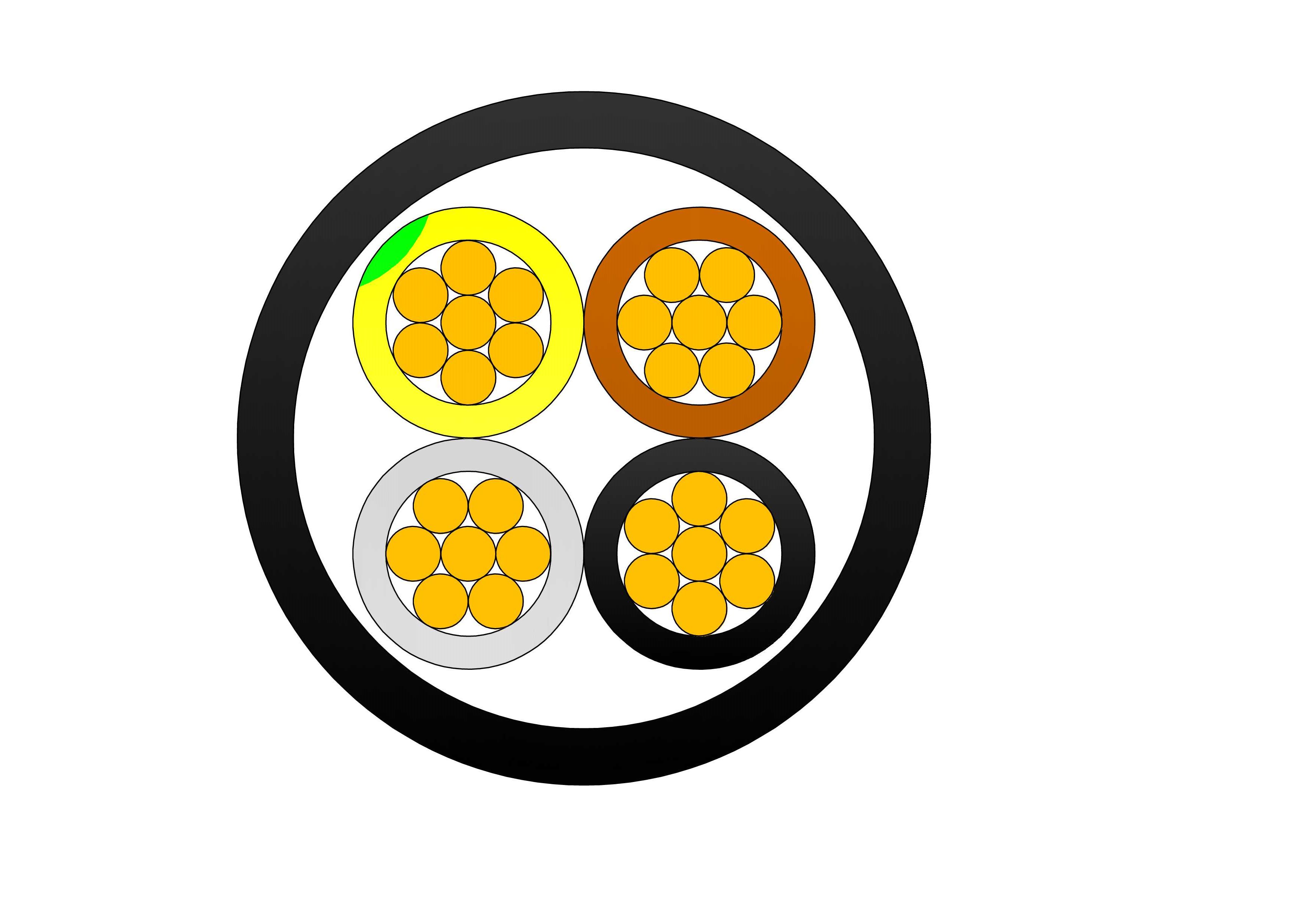
Solar Cable H1Z2Z2-K Tinned Stranded Copper
The H1Z2Z2-K Solar Cable Tinned Stranded Copper is a high-performance photovoltaic cable designed for solar power generation systems. It features tinned stranded copper conductors for superior conductivity, corrosion resistance, and flexibility, with cross-linked polyolefin (XLPO) insulation and sheath providing excellent thermal, UV, ozone, and weather resistance. Rated for 1.8 kV DC, this cable meets TÜV 2PfG 1169 and EN 50618 standards, ensuring safety and durability in harsh outdoor environments. The H1Z2Z2-K Solar Cable Tinned Stranded Copper offers low voltage drop, high current-carrying capacity, and long service life. Its halogen-free, low-smoke, and flame-retardant properties enhance safety in solar farms, rooftop PV systems, and ground-mounted installations. Lightweight and flexible, it simplifies installation while maintaining reliable performance in extreme temperatures and weather conditions.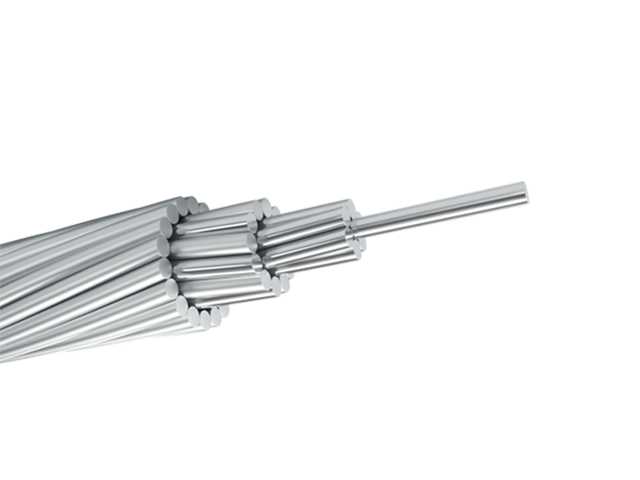
ALUMINUM CONDUCTOR ALLOY REINFORCED(ACAR)
Aluminum Conductor Alloy Reinforced (ACAR) is a high-performance overhead conductor featuring concentrically stranded 1350-H19 aluminum wires around a core of 6201 aluminum-magnesium-silicon alloy strands. This design optimizes the balance between electrical conductivity and mechanical strength, offering higher ampacity than equivalent AAAC and better strength-to-weight ratio than AAC. ACAR excels in applications requiring reduced sag and enhanced durability, with excellent corrosion resistance suitable for coastal or industrial settings. Compliant with ASTM B524, B231, and B398 standards, it supports various stranding configurations for flexibility in line design. The alloy reinforcement provides superior tensile strength (up to 30% more than pure aluminum), minimizing support structures and installation costs. Ideal for primary and secondary distribution, ACAR reduces energy losses while maintaining reliability under heavy loads or extreme weather. Its lightweight nature facilitates easier handling, and full aluminum construction ensures recyclability, aligning with sustainable power infrastructure goals. ACAR is a versatile choice for modern grids seeking efficiency and longevity.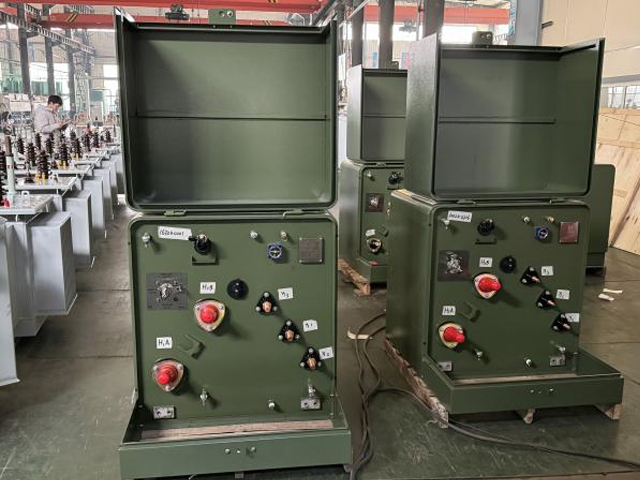
33kV Single Phase Pole Mounted Transformer
Designed for medium-voltage overhead systems, the 33kV single phase pole mounted transformer efficiently steps down primary voltages of 33kV (or 34.5kV variants) to secondary levels such as 230V, 240V, or 415V, serving substantial single-phase loads in extended networks. Constructed with advanced grain-oriented silicon steel cores and precision windings, it achieves minimal no-load and load losses while fully complying with IEC 60076 and IEEE C57 requirements. The oil-immersed tank with ONAN cooling maintains a 65°C temperature rise, supporting reliable performance during peak demands and harsh weather exposure. High insulation levels, including 150-200kV BIL on the HV side, combined with pressure relief valves, HV bushings with arcing horns, and optional surge arresters, provide exceptional protection against lightning and overvoltages. This transformer offers quiet operation, strong overload capacity, and extended service life, making it essential for utilities optimizing power access in remote or growing areas.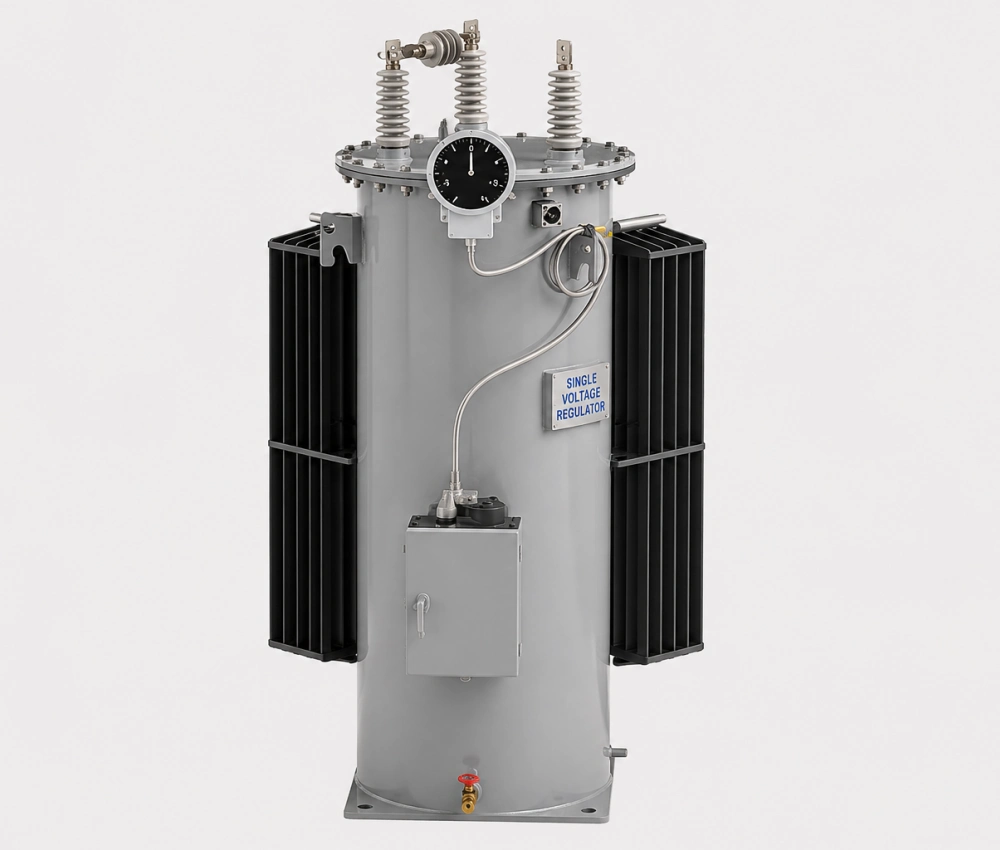
Three Phase Step Voltage Regulator - Distribution Voltage Stabilizer
The Three Phase Step Voltage Regulator is a high-reliability, automatic on-load tap changing device engineered to maintain stable voltage levels in medium-voltage distribution systems. Featuring premium copper windings, advanced low-loss silicon steel cores, and a fast-response motorized tap changer, it delivers precise voltage correction with excellent accuracy and minimal waveform distortion. The intelligent digital AVR controller continuously monitors three-phase parameters and automatically adjusts taps in real time to compensate for load variations and grid fluctuations. Designed for demanding outdoor environments, it offers robust overload capacity, low power losses, comprehensive protection systems, and remote monitoring capabilities. This regulator effectively improves voltage profile, reduces energy losses, and enhances the overall stability and efficiency of distribution networks.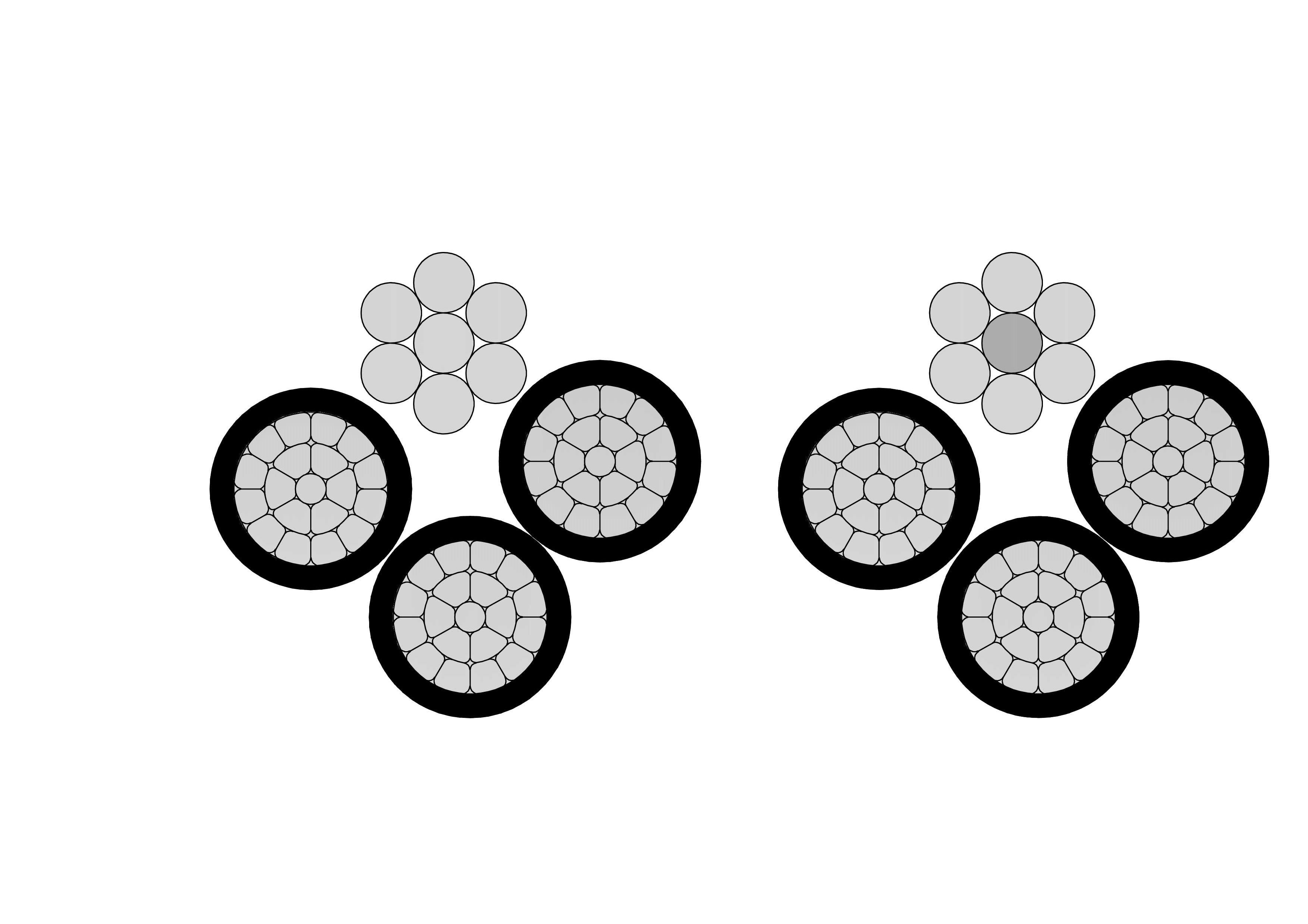
1/0 Shetland Aluminum Conductor Quadruplex Overhead Service Drop Cable
1/0 Shetland Aluminum Conductor Quadruplex Overhead Service Drop Cable is engineered to deliver three-phase electrical power from pole-mounted transformers to service entrances in residential, agricultural, and light commercial settings. Designed for overhead installation, this cable is rated for 600 volts phase-to-phase and can operate at temperatures up to 90°C with cross-linked polyethylene (XLP) insulation, or 75°C with polyethylene (PE) insulation. The cable includes three phase conductors constructed from 1350-H19 series aluminum, either stranded or compressed, and a neutral messenger made of bare AAAC (All Aluminum Alloy Conductor). Optional constructions are available with AAC or ACSR messengers, allowing adaptability for varying mechanical or electrical needs. XLP insulation offers superior durability, weather resistance, and thermal stability, making this cable ideal for challenging outdoor environments.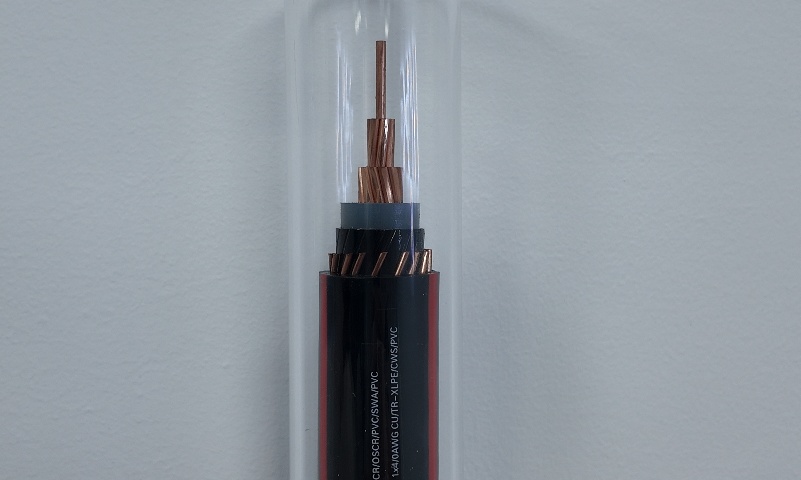
4/0 AWG Aluminum URD Cable 1/3 Neutral
The 4/0 AWG Aluminum URD Cable 1/3 Neutral is a durable and economical 600V underground residential distribution cable engineered for service entrance and secondary power delivery. It utilizes a 4/0 AWG stranded AA8000 aluminum alloy phase conductor with XLPE insulation and a 1/3 concentric aluminum alloy neutral, all protected by a rugged black polyethylene sheath. This design offers excellent flexibility, high conductivity, and superior moisture resistance, making it suitable for direct burial or conduit installations. The 1/3 neutral configuration provides a balanced and cost-effective solution for most residential applications. Manufactured to UL 854 and ICEA standards, the 4/0 AWG Aluminum URD Cable 1/3 Neutral undergoes extensive quality testing to ensure consistent performance and long service life in underground environments.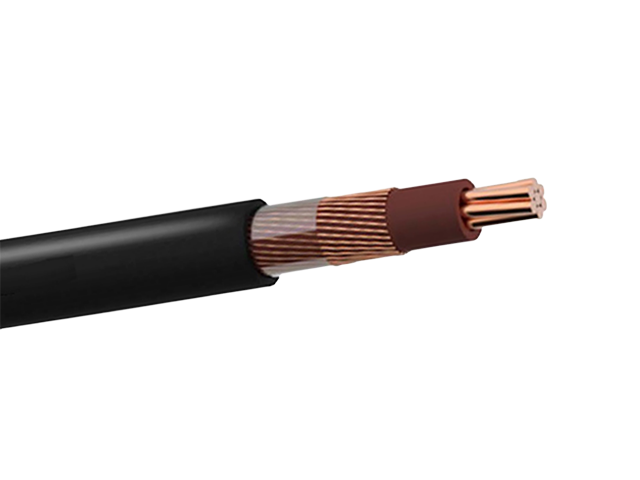
0.6/1kV Aluminum LV Concentric Service Cable with Pilot Communication Cores
The 0.6/1kV Aluminum LV Concentric Service Cable with Pilot Communication Cores is a smart-ready low-voltage cable designed for modern house service connections and secondary distribution. It features compact stranded AA8000 aluminum alloy phase conductors, XLPE insulation, a concentrically arranged aluminum alloy neutral, and two insulated pilot communication cores for remote metering, load management, or fault signaling. The entire assembly is protected by a durable black polyethylene sheath. This design combines excellent electrical performance, high mechanical strength, and communication functionality in one cable, reducing installation costs and enabling smart grid applications. Rated 0.6/1kV, the cable offers superior flexibility and corrosion resistance. It undergoes rigorous quality testing from raw materials to finished product, ensuring consistent conductivity, reliable pilot signal transmission, and long-term durability in aerial or underground environments.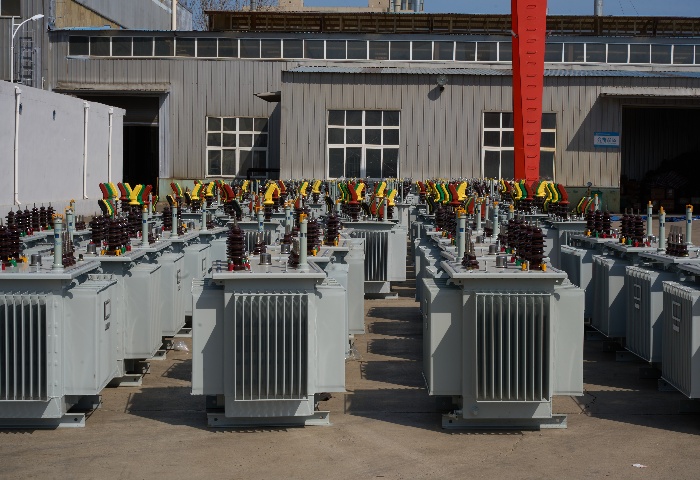
2500kVA Oil Immersed Transformer
NPC ELECTRIC's 2500kVA oil-immersed transformer is designed with international advanced technology and complies with international standards such as IEC, ANSI, and ISO. It has high efficiency, low noise, and excellent thermal stability. This transformer is widely used in power transmission and distribution systems to ensure a stable and reliable power supply. High-strength windings and robust mechanical construction enhance short-circuit withstand capability and thermal endurance. With reliable voltage regulation and low operational noise, this transformer is well-suited for industrial plants, infrastructure projects, and utility substations requiring a dependable high-capacity power supply.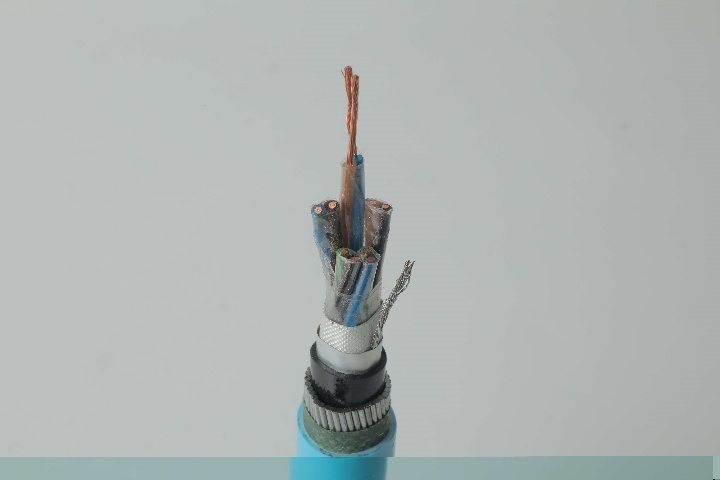
Instrumentation Cables—XLPE Insulated, Overall Screened, DRYLAM Layered, Wire Armoured PVC Sheathed Cables(CU/XLPE/OSCR/DRYLAM/SWA/PVC)
CU/XLPE/OSCR/DRYLAM/SWA/PVC instrumentation cables are engineered to deliver stable signal transmission under harsh environmental and mechanical conditions. XLPE insulated copper conductors provide excellent dielectric performance and resistance to thermal aging. The overall screen minimizes electromagnetic interference, ensuring precise signal transmission in sensitive instrumentation circuits. The DRYLAM water-blocking layer offers effective protection against moisture ingress, enhancing cable reliability in humid or buried installations. Steel wire armour improves resistance to mechanical stress and external damage, while the PVC sheath protects against abrasion, oils, and chemicals. This balanced construction combines electrical performance, water resistance, and mechanical durability for long-term industrial use.2Y-high-voltage-power-cable-2.webp)
A2XS(FL)2Y HDPE High Voltage 76/132 (145)kV Power Cable
The A2XS(FL)2Y HDPE High Voltage 76/132 (145) kV Power Cable is a single-core aluminum conductor cable with XLPE insulation and HDPE sheath, engineered for high-voltage power transmission in demanding industrial and utility applications. Built to IEC 60840 standards, it offers superior electrical performance, mechanical strength, and environmental resistance. Suitable for underground, underwater, outdoor, indoor, and duct installation, it features water-blocking tape to prevent internal water propagation, ensuring long-term reliability in power stations, industrial facilities, and distribution networks. The A2XS(FL)2Y HDPE is widely used in major UHV transmission grids, underground/submarine lines, river crossings, offshore wind connections, and large-scale renewable energy projects where water ingress protection, efficiency, and ultra-reliability are essential.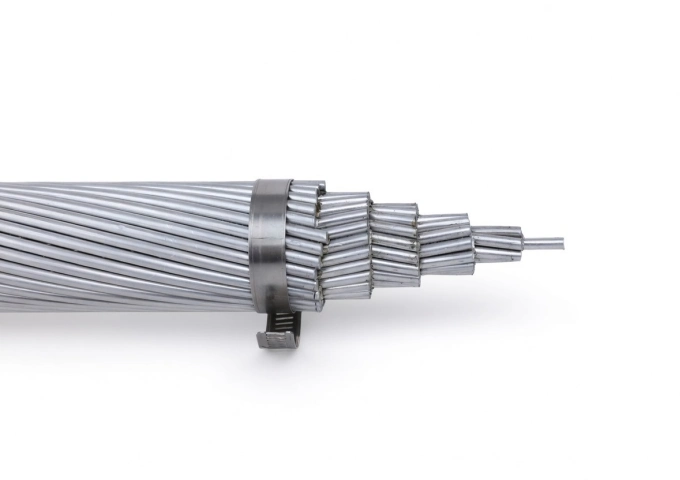
477 MCM Syringa AAC Cable
The 477 MCM Syringa AAC Cable is a high-performance All Aluminum Conductor designed for demanding overhead power transmission and distribution lines. Manufactured with 37 strands of premium 1350-H19 aluminum wire in a concentric lay configuration, this bare conductor provides excellent electrical conductivity with a low DC resistance of 0.0362 ohms per 1000 ft at 20°C. Featuring an overall diameter of 0.795 inches and a rated breaking strength of 8,690 lbs, the Syringa AAC delivers a robust ampacity of 639 amps while weighing only 447.8 lbs per 1000 ft. Its optimized strength-to-weight ratio minimizes sag and structural loading. Fully compliant with ASTM B-230 and B-231 standards, the 477 MCM Syringa AAC Cable offers outstanding corrosion resistance for long-term durability in harsh outdoor environments, making it the preferred choice for utility networks requiring cost-effective, high-reliability bare aluminum conductors.Welcome your inquiry
Honesty, Integrity, Frugality, Activeness and Passion