
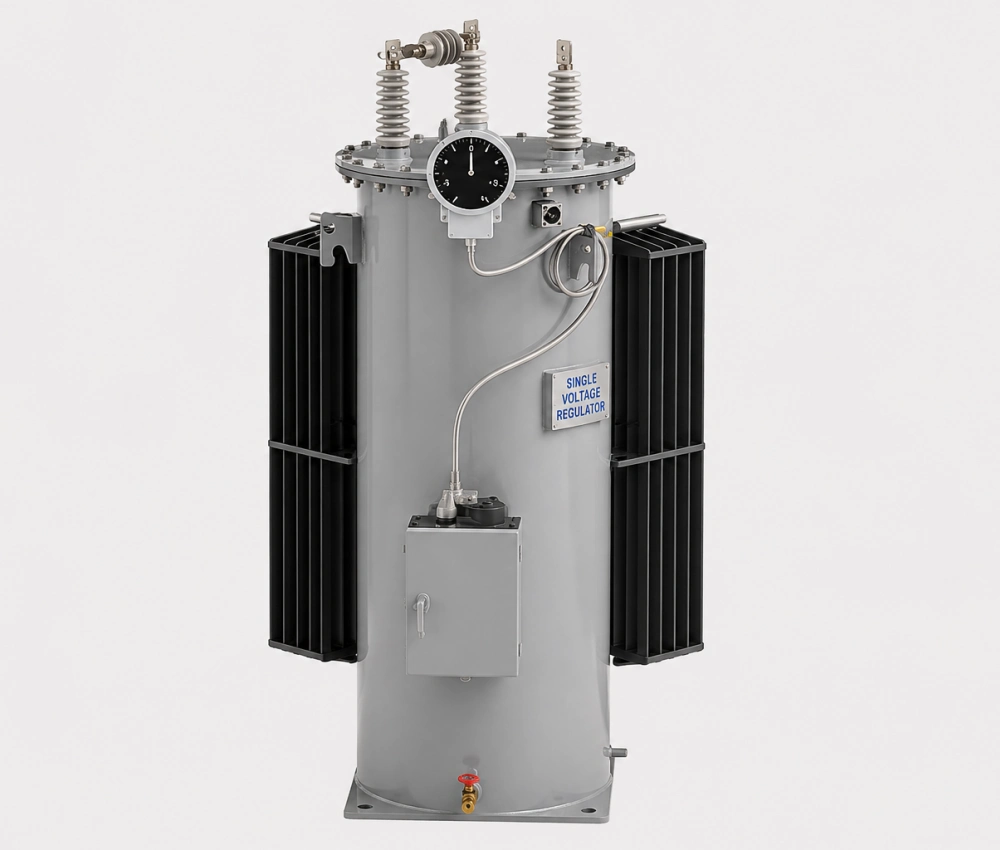
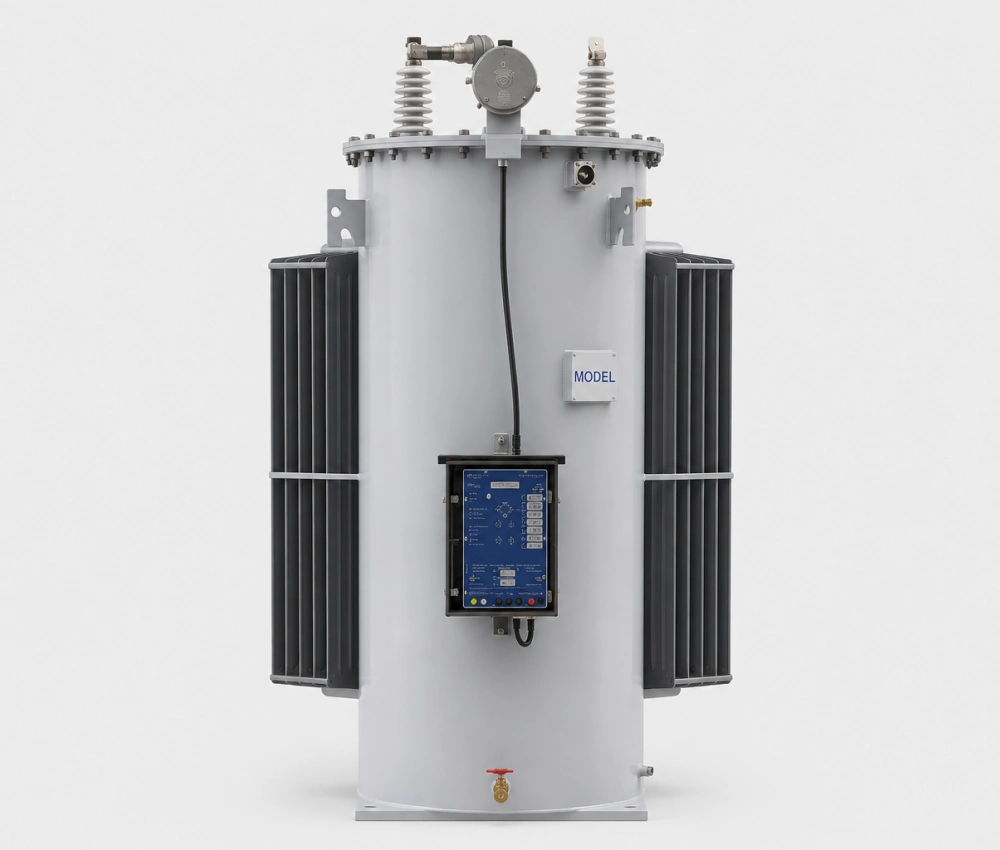
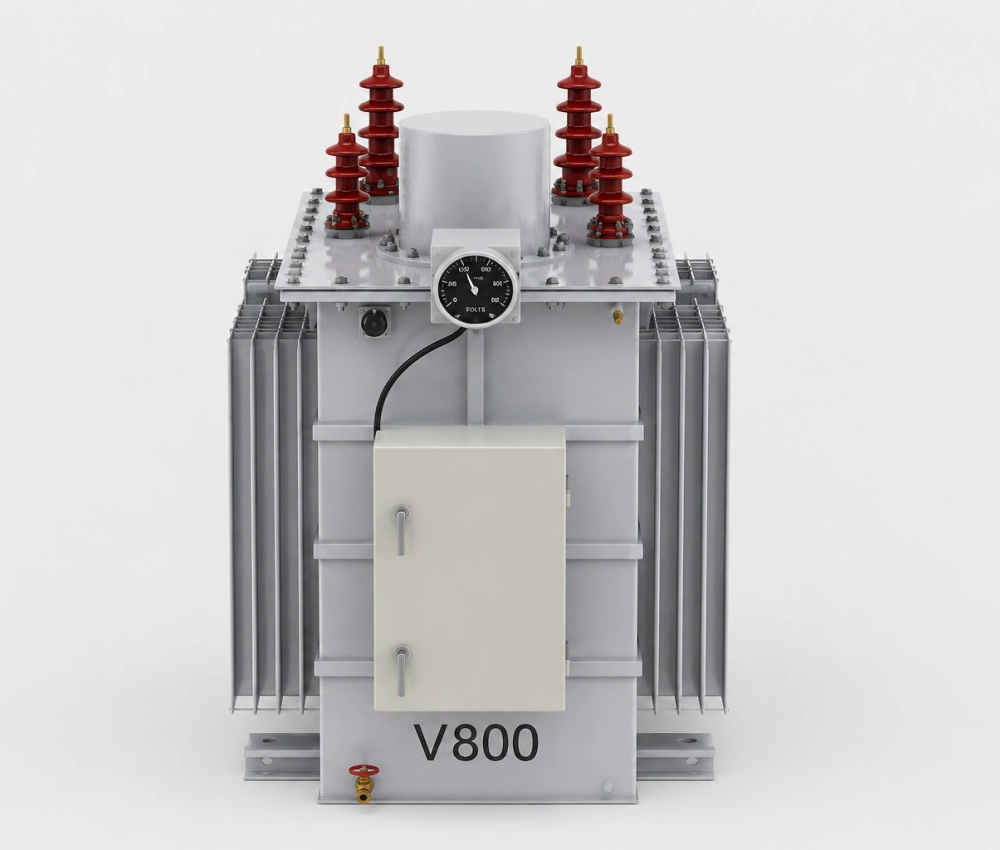
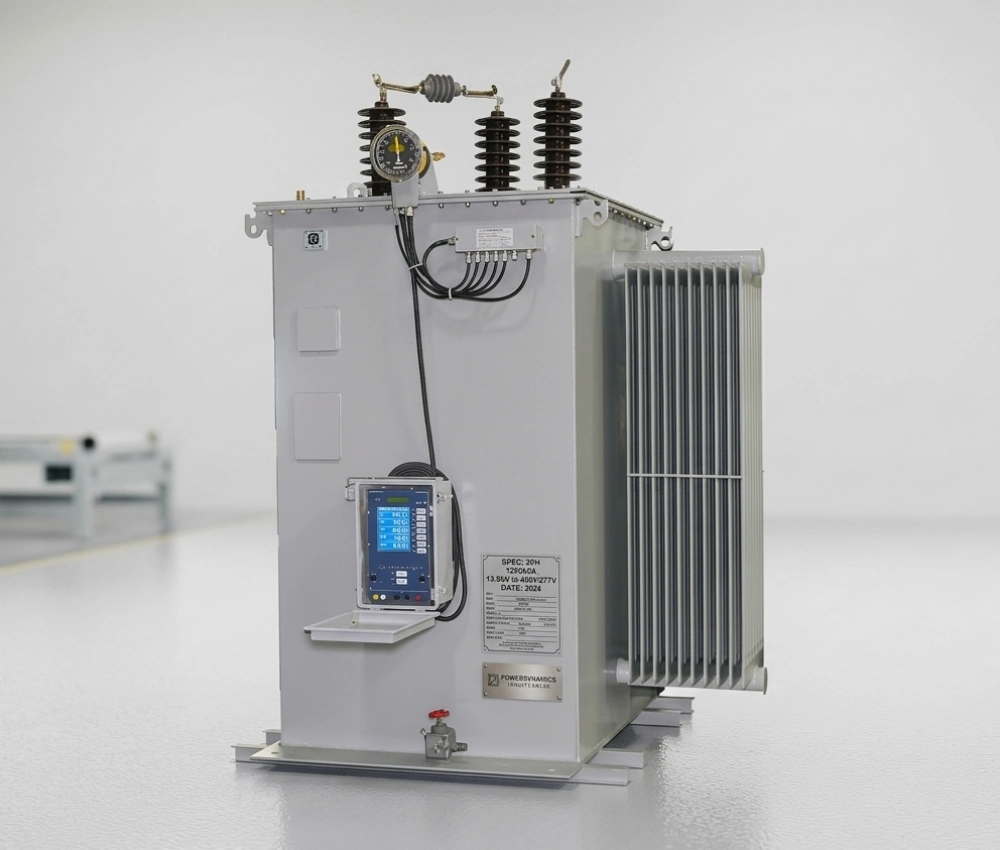
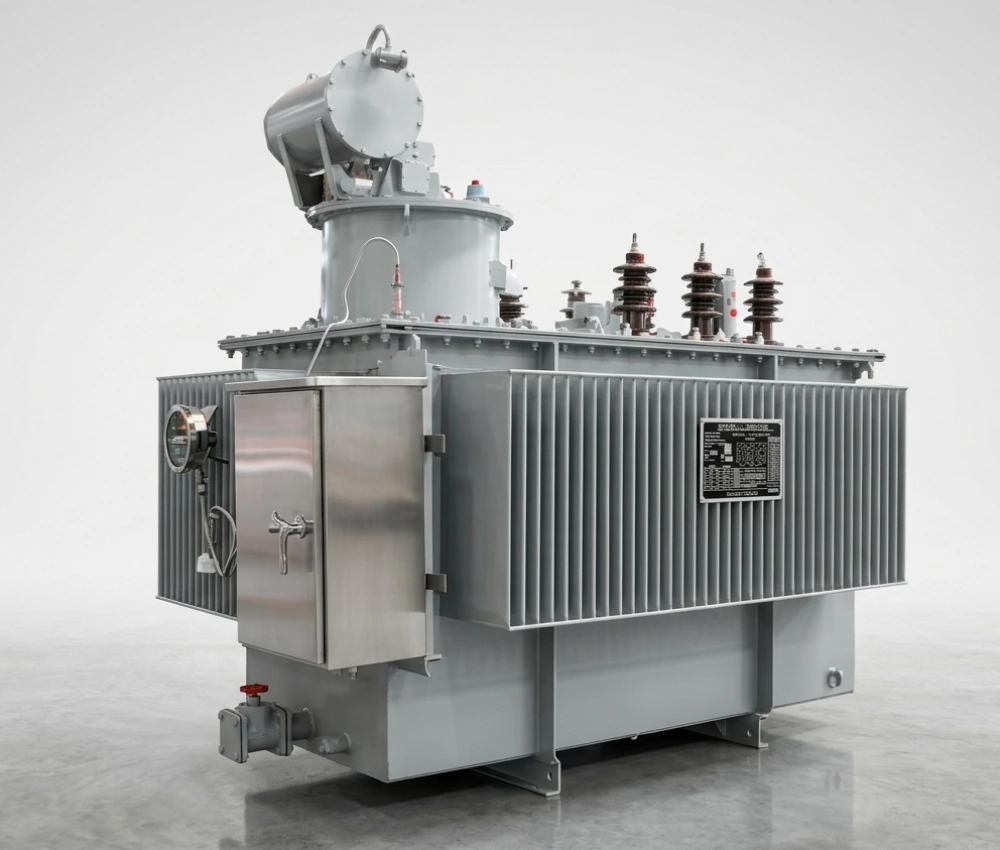
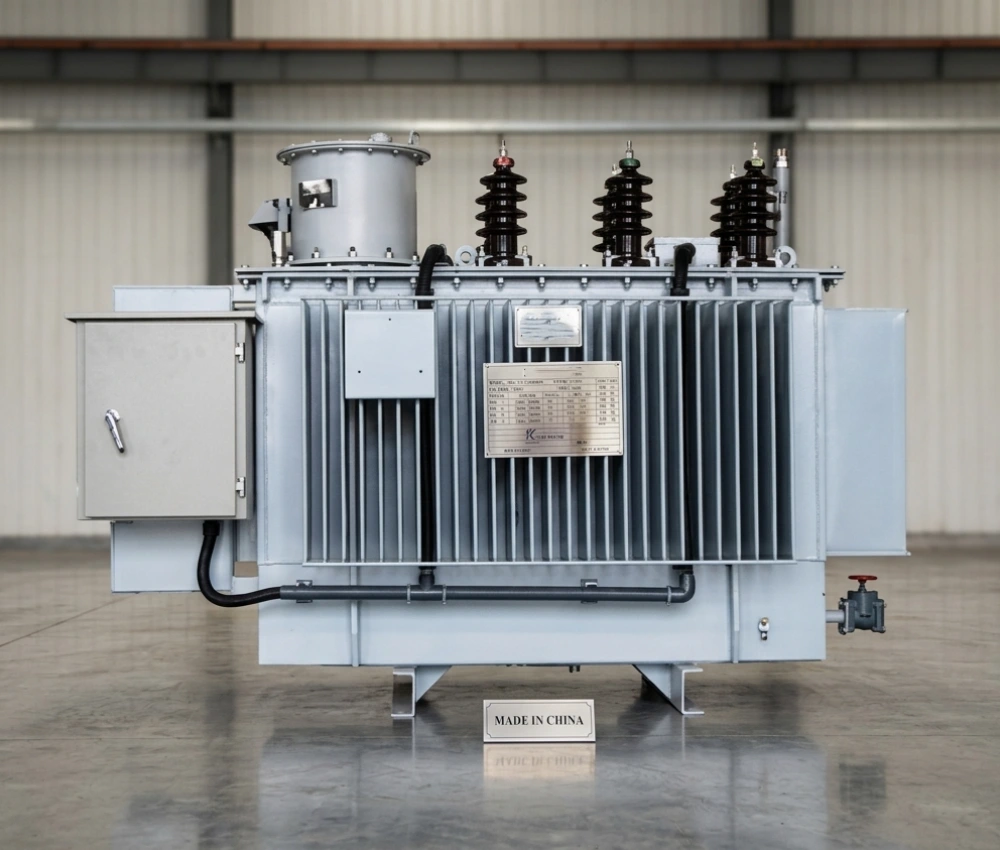


Three Phase Automatic Step Voltage Regulator
The Three Phase Automatic Step Voltage Regulator is a high-performance on-load tap changing device designed to automatically maintain stable voltage levels in medium-voltage distribution networks. Equipped with premium copper windings, low-loss silicon steel cores, and a reliable motorized on-load tap changer, it delivers fast, precise voltage correction with minimal waveform distortion. The intelligent digital controller continuously monitors three-phase voltage and load conditions, making real-time adjustments to ensure consistent output voltage despite fluctuations in supply or demand. Built for outdoor durability, it features a fully sealed oil-immersed tank with advanced corrosion protection, excellent overload capability, and comprehensive protection systems. This regulator significantly improves power quality, reduces line losses, and enhances equipment lifespan across distribution systems.
- Primary Voltage Ratings 11 kV / 22 kV / 33 kV
- Secondary Voltage Ratings --
- H.V. Tap Range --
- Type Voltage Regulator
- BIL 11kV - 200kV
- Standards IEC 60076, IEC 60137, ASTM D202
- Application residential, commercial, industrial voltage stabilization
- Power Rating --
- Certificate UL, CESI, IEEE
- Cooling Method ONAN/ ONAF
- Opeartion --
Technical Specifications
Customization Optional
Packing and Shipping
Manufacturer Test
Routine Testing
Application
Technical Specifications
Three Phase Automatic Step Voltage Regulator
Three Phase Automatic Step Voltage Regulator Parameter
| Parameter | Specification |
| Rated Capacity | 300 kVA – 2500 kVA |
| Rated Voltage | 11 kV / 22 kV / 33 kV |
| Regulation Range | ±15% ~ ±25% |
| Number of Steps | 32 steps |
| Step Voltage | 0.75% per step |
| Response Time | ≤ 1.0 second |
| Cooling Method | ONAN / ONAF |
| Ambient Temperature | -40°C to +55°C |
Customization Optional
Three Phase Automatic Step Voltage Regulator
The Three Phase Automatic Step Voltage Regulator supports extensive customization to meet the specific needs of modern distribution networks. Customers can select rated capacity from 300kVA to 2500kVA, primary voltage levels (6kV to 36kV), and regulation range up to ±30%. The control system can be configured with various protocols including IEC 61850, DNP3, Modbus, and 4G/GSM remote monitoring for full smart grid compatibility. We also offer enhanced cooling systems, stainless steel tanks for corrosive environments, and high-overload designs capable of handling 200% load for extended periods.
Additional customization includes low-noise models for urban installations, harmonic filtering modules, automatic bypass switches, programmable voltage profiles with time scheduling, and integration with renewable energy sources. Enclosure options range from compact pole-mounted to substation pad-mounted designs with advanced animal protection and seismic reinforcement. These flexible features allow utilities and project developers to optimize voltage stability, reduce energy losses, and improve overall system reliability according to their exact operational requirements.
Packing and Shipping
Three Phase Automatic Step Voltage Regulator
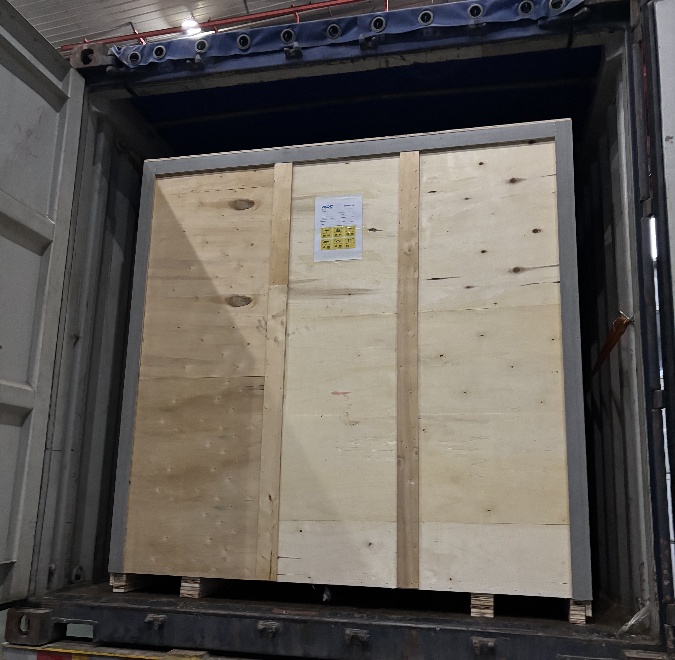
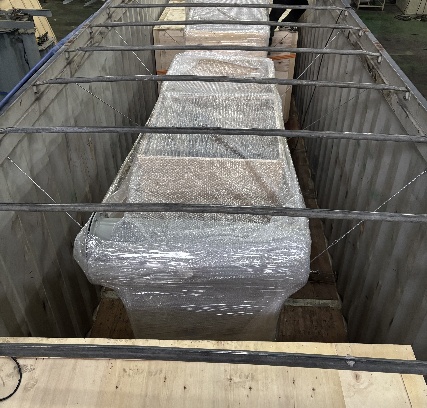
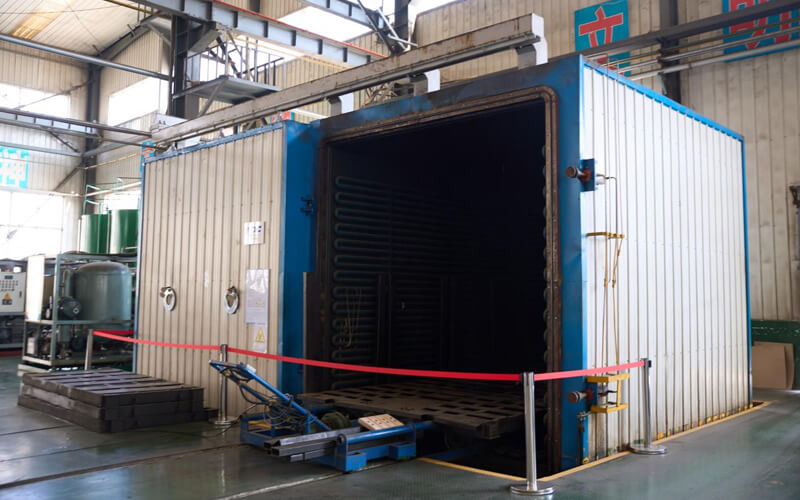
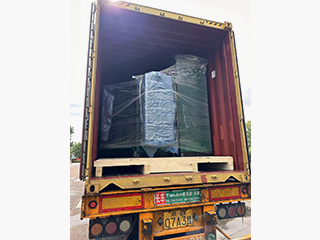
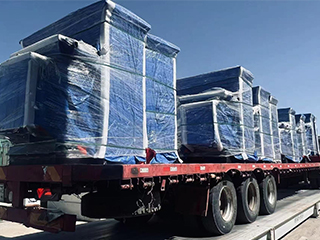
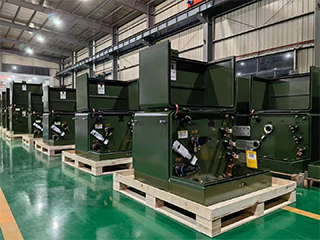
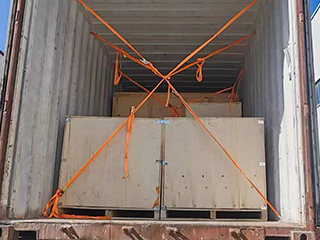
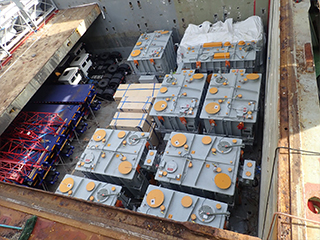
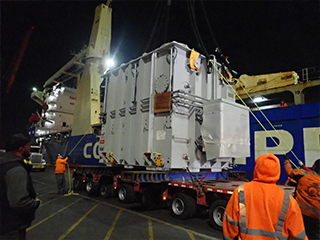
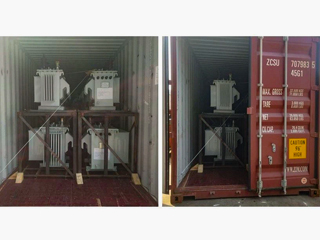
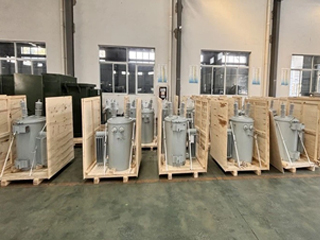
The Three Phase Automatic Step Voltage Regulator is packaged using heavy-duty materials to ensure maximum protection during transportation. The unit is securely mounted on a reinforced steel skid with anti-vibration rubber pads and multiple high-strength strapping bands. All bushings, radiators, and the control cabinet are protected with custom wooden frames and high-density foam inserts. The entire regulator is wrapped in multi-layer waterproof and anti-static film with sufficient desiccant packets. A robust, ISPM 15 fumigated wooden crate or steel-reinforced frame provides complete enclosure, equipped with shock indicators and tilt sensors for full transit monitoring.
We provide reliable and flexible shipping solutions tailored to different project requirements. For international orders, sea freight in 20ft or 40ft flat-rack or open-top containers with professional lashing and blocking ensures safe delivery, typically taking 25–60 days. Air freight services are available for urgent components or emergency replacements. Domestic and regional shipments are handled by specialized heavy transport vehicles equipped with hydraulic cranes and GPS tracking.
Full export documentation is prepared in advance, including commercial invoices, detailed packing lists, certificates of origin, factory test reports, and installation manuals to facilitate smooth customs clearance. We adopt sustainable packing practices by using recyclable materials and optimizing container space. Customers receive a secure online tracking portal with real-time GPS updates and proactive communication from our logistics team.
Upon arrival at the site, we offer optional professional supervision for unloading, oil level verification, and initial inspection. For large projects, consolidated multi-unit shipments and phased delivery scheduling are available to minimize on-site storage and coordination efforts. This careful packing and shipping process guarantees that every Three Phase Automatic Step Voltage Regulator arrives in excellent condition, ready for efficient installation and commissioning.
We provide reliable and flexible shipping solutions tailored to different project requirements. For international orders, sea freight in 20ft or 40ft flat-rack or open-top containers with professional lashing and blocking ensures safe delivery, typically taking 25–60 days. Air freight services are available for urgent components or emergency replacements. Domestic and regional shipments are handled by specialized heavy transport vehicles equipped with hydraulic cranes and GPS tracking.
Full export documentation is prepared in advance, including commercial invoices, detailed packing lists, certificates of origin, factory test reports, and installation manuals to facilitate smooth customs clearance. We adopt sustainable packing practices by using recyclable materials and optimizing container space. Customers receive a secure online tracking portal with real-time GPS updates and proactive communication from our logistics team.
Upon arrival at the site, we offer optional professional supervision for unloading, oil level verification, and initial inspection. For large projects, consolidated multi-unit shipments and phased delivery scheduling are available to minimize on-site storage and coordination efforts. This careful packing and shipping process guarantees that every Three Phase Automatic Step Voltage Regulator arrives in excellent condition, ready for efficient installation and commissioning.
32
32 years of industry experience
Manufacturer Test
Three Phase Automatic Step Voltage Regulator
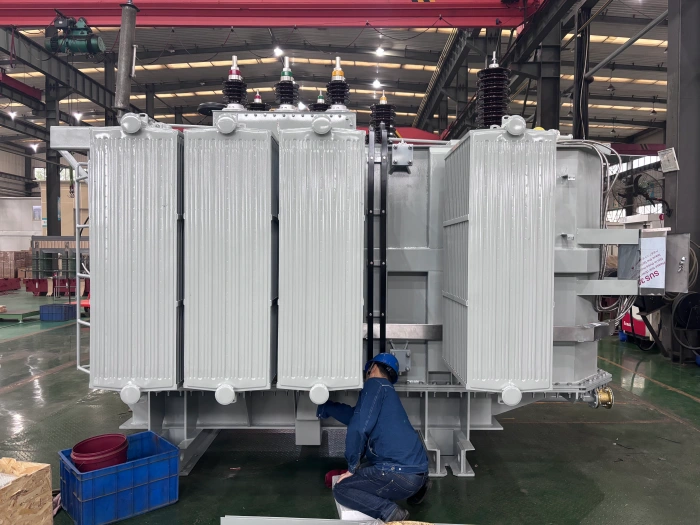
Progress Test
Mid-to-late stage progress testing involves partial discharge measurement and power frequency withstand testing on the assembled active part. Oil processing, degassing, and vacuum filling are strictly monitored for optimal dielectric strength. The automatic regulation algorithm is simulated under wide input voltage and load variations to confirm regulation accuracy and response time. Thermal performance is evaluated through heat-run testing at rated and overload conditions. Final pre-painting vibration, mechanical strength, and sealing integrity tests confirm durability for outdoor use. Comprehensive data logging, thermal imaging, and inspection records provide complete quality assurance before final acceptance. Copper winding resistance, insulation resistance, and dielectric withstand tests are conducted before core-coil assembly. The motorized on-load tap changer mechanism undergoes extensive mechanical endurance cycling (over 20,000 operations) to verify smooth and reliable switching.
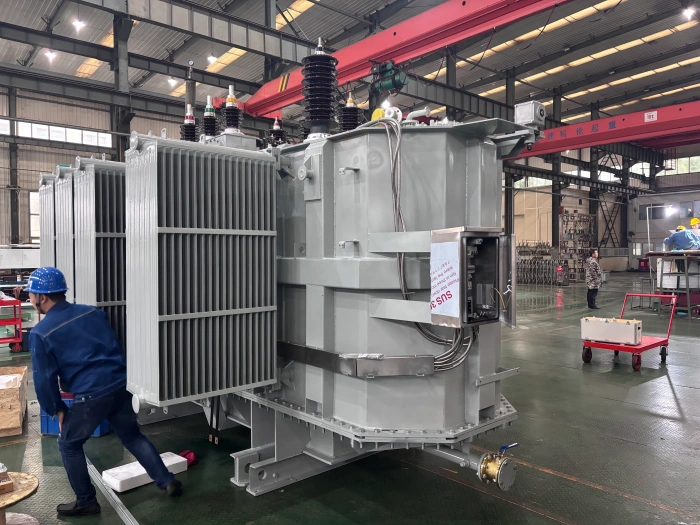
Design Tests
All transformer will be test after finished the production, test items as below:
♦ Insulation Power Factor
♦ Ratio, Polarity, and Phase Relation
♦ Winding Resistance
♦ Impulse Tests
♦ On load Loss Test
♦ No Load Loss Test
♦ Transformer Turns Ratio/TTR (All Tap Voltages)
♦ Impedance Voltage & Load Loss (Rated Voltage)
♦ Polarity, 1-Ph / Phase Relation, 3-Ph (Rated Voltage)
♦ Excitation & No-Load Loss (Rated Voltage)
♦ Applied Voltage
♦ Induced Voltage
♦ Lightning Impulse
♦ Insulation Resistance (Rated Voltage)
♦ Temperature Rise
♦ Dielectric Withstand (Hipot)
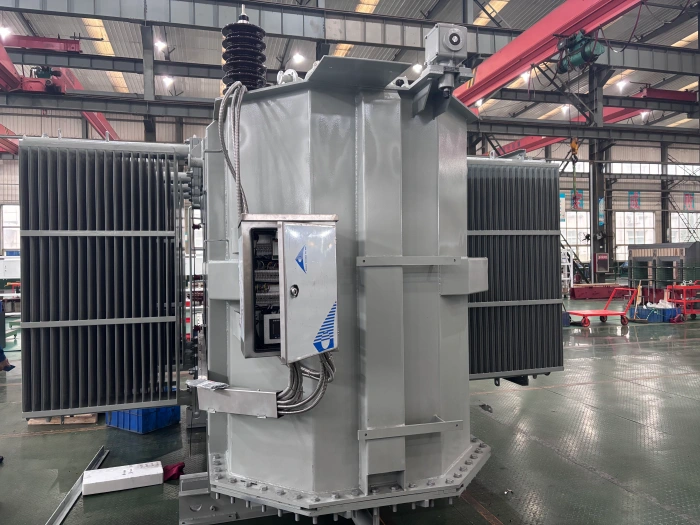
Factory Acceptance Test
Advanced FAT includes extended heat-run testing at 100% and 150% rated load to verify temperature rise and cooling effectiveness. On-load tap changer endurance cycling under load confirms long-term mechanical and electrical reliability. Harmonic distortion, power factor, and regulation response time are measured under various load types. Noise level measurement, tank sealing integrity, and auxiliary device functionality are verified according to standards. Final comprehensive inspection covers paint quality, nameplate information, accessories, and overall workmanship. Complete test reports with calibration certificates, oscillographic records, and customer witness signatures (if required) are provided, fully certifying the regulator’s performance and readiness for distribution network deployment. No-load loss and excitation current measurements confirm core efficiency. Full-range automatic regulation tests verify output voltage stability and step precision under different load conditions.
Routine Test - Impulse Tests
Purpose of Testing
The purpose of Impulse Tests is to verify the insulation strength of electrical equipment when it is subjected to lightning strikes or switching overvoltages. By applying high-energy impulse voltages, it is possible to detect potential defects in the insulation system.
Testing Equipment
Impulse voltage generator (e.g. Haefely, Hipotronics, Tettex, etc.)
Voltage divider (used to measure impulse voltage waveform, resistor divider or capacitor divider)
Oscilloscope (used to record impulse waveform, common brands such as Tektronix, Keysight)
Voltage divider (used to measure impulse voltage waveform, resistor divider or capacitor divider)
Oscilloscope (used to record impulse waveform, common brands such as Tektronix, Keysight)
Pre-Test Preparation
Please test under suitable environmental conditions: relative humidity less than 65%, no rain or condensation (recommended temperature: 15-30°C).
Calibrate and check the impulse voltage generator, measurement system, and control system to ensure that the instruments and equipment are in good condition and meet the test standards.
Calibrate and check the impulse voltage generator, measurement system, and control system to ensure that the instruments and equipment are in good condition and meet the test standards.
Test Progress
Connect the Test Instrument:
Connect the impulse voltage generator correctly to each winding terminal (high voltage terminal, ground terminal) of the device under test, and ensure that all test instruments are well grounded.
Apply Test Voltage:
Select the appropriate impulse voltage waveform and amplitude according to the rated voltage of the equipment
Connect the impulse voltage generator correctly to each winding terminal (high voltage terminal, ground terminal) of the device under test, and ensure that all test instruments are well grounded.
Apply Test Voltage:
Select the appropriate impulse voltage waveform and amplitude according to the rated voltage of the equipment
Measure and Record
Collect and record the impact waveform, including:
Front Time
Time to Half-Value
Peak Voltage
Distortion
Ambient temperature and humidity (especially when the test environment needs to be corrected)
Front Time
Time to Half-Value
Peak Voltage
Distortion
Ambient temperature and humidity (especially when the test environment needs to be corrected)
Waveform Correction
Check whether the impulse voltage waveform meets the specification requirements (wave head time 1.2μs ±30%, half-peak time 50μs ±20%).
If the waveform deviation is too large, adjust the impulse generator parameters and reapply the test.
If the waveform deviation is too large, adjust the impulse generator parameters and reapply the test.
Repeat Testing (if necessary)
Impact tests are performed for different phases and windings (HV/MV/LV).
In special cases, inter-winding impact, voltage-to-ground impact or coil corner impact are performed (according to the test plan).
In special cases, inter-winding impact, voltage-to-ground impact or coil corner impact are performed (according to the test plan).
Evaluation Criteria (Reference)
No internal insulation breakdown or flashover (detected by observing waveform continuity and audibly).
Waveforms are stable and meet standard specifications.
Waveform variations between repeated tests are minimal (usually good waveform overlap with no noticeable abnormal excursions).
Waveforms are stable and meet standard specifications.
Waveform variations between repeated tests are minimal (usually good waveform overlap with no noticeable abnormal excursions).
*These comprehensive tests ensure that each transformer meets performance standards and operates
reliably under various conditions.
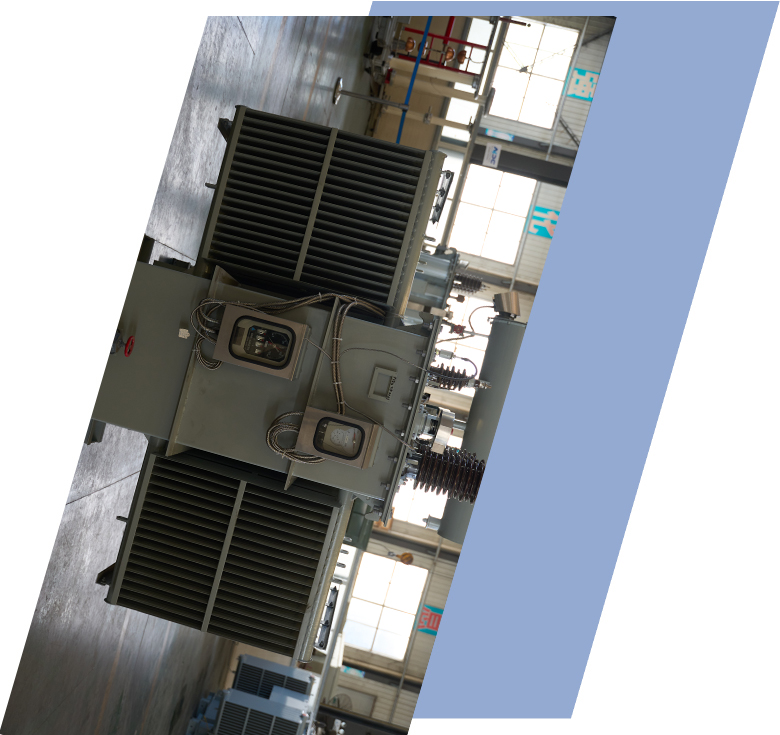
Application
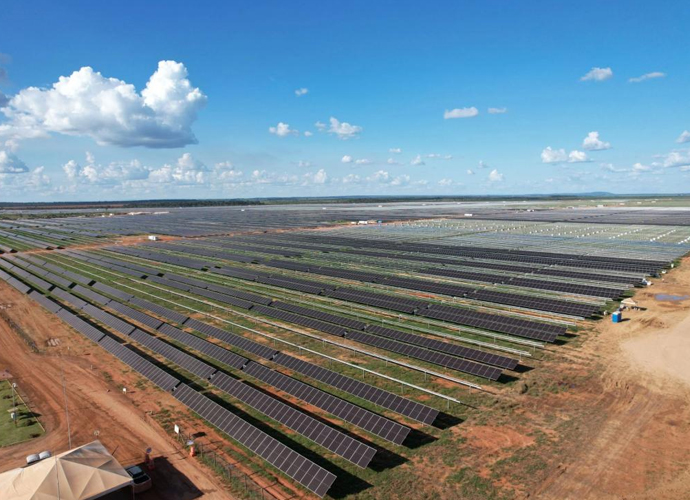
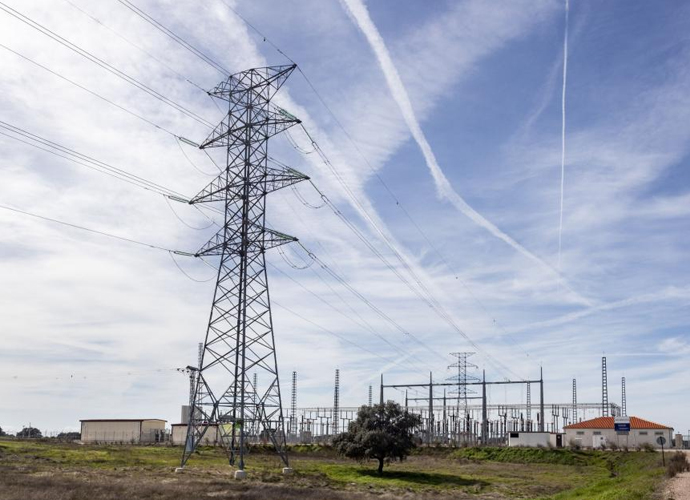
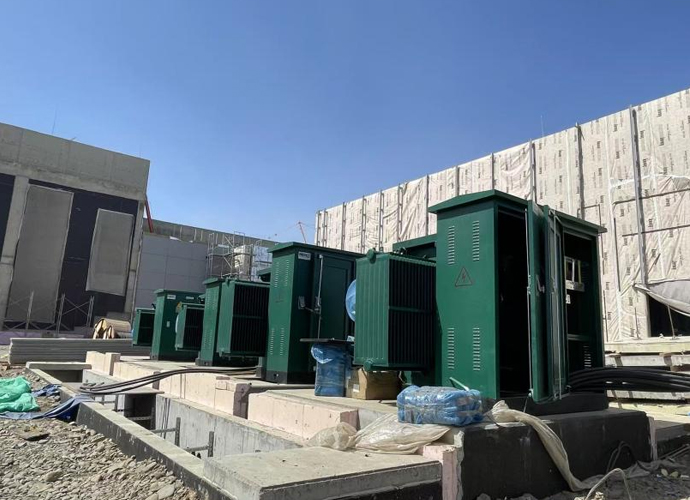
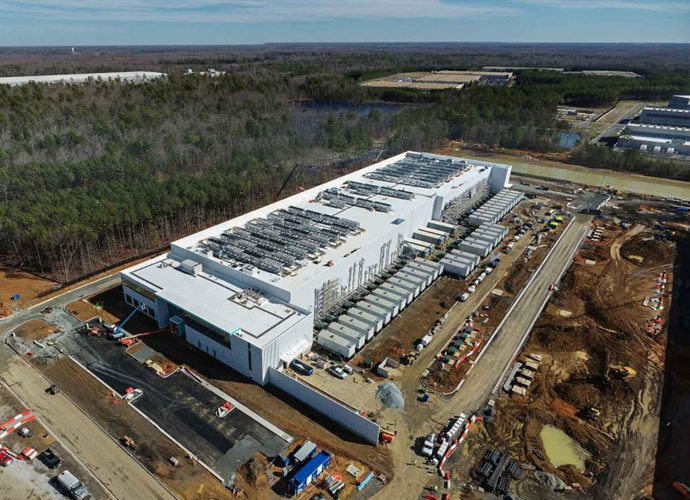
Extensively used in utility distribution networks, renewable energy integration points, and mixed residential-industrial areas, providing reliable three-phase automatic voltage regulation to improve power quality, reduce losses, and enhance overall system efficiency.


Technical Advantages
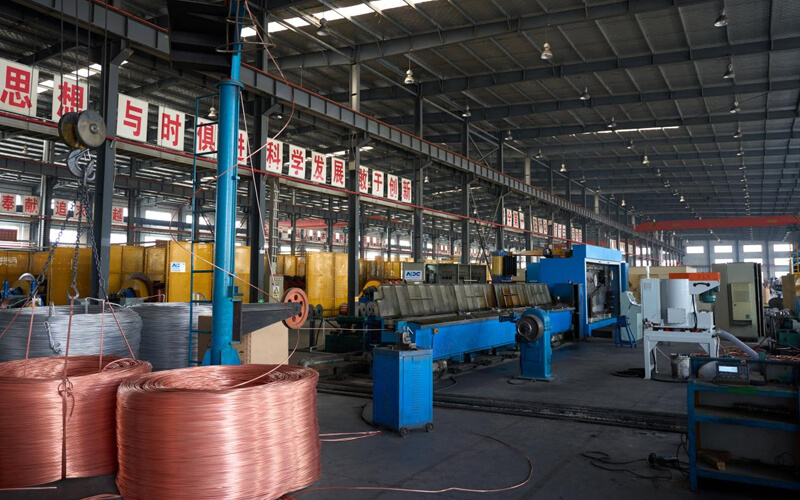
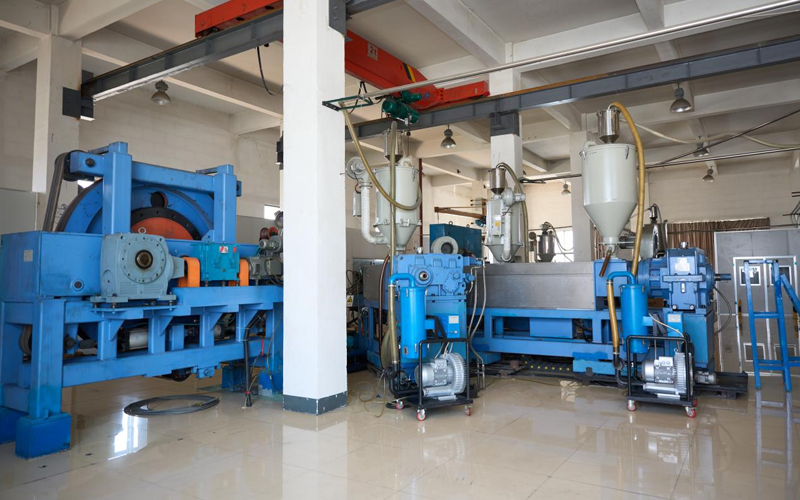
● 30+ years of manufacturing experience
● ISO and UL certified production
● Customized cable and transformer solutions
Product Packaging
Transformers Packaging (1)
Transformers Packaging (2)
Transformers Packaging (3)
Transformers Packaging (4)
Transformers Packaging (5)
Transformers Packaging (6)
Transformers Packaging (7)
Transformers Packaging (8)
Related Products
320 kV High Voltage Power Transformer
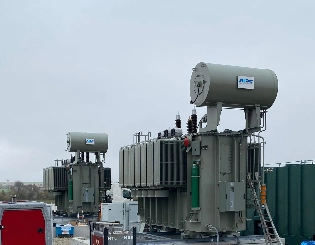
NPC Electric 320 kV High Voltage Power Transformer is engineered for ultra-high-voltage transmission networks where reliability, efficiency, and operational safety are critical. Designed to handle extreme electrical stress, this transformer supports stable power transfer across long-distance transmission lines and major grid interconnection points. Its oil-immersed insulation system provides superior dielectric strength and efficient heat dissipation, ensuring consistent performance under continuous high-load conditions. Advanced core optimization reduces magnetic losses, while precision winding design enhances voltage regulation and system stability. The transformer structure is built to withstand thermal expansion, mechanical forces, and short-circuit events, making it suitable for demanding grid environments. With long service life, low maintenance requirements, and high operational efficiency, the 320 kV power transformer is an ideal solution for modern high-voltage substations and large-scale energy infrastructure projects.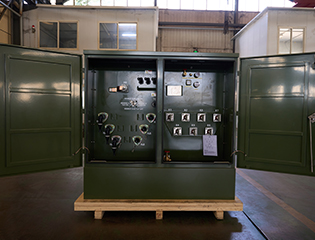
167kVA Three Phase Pad Mounted Transformer
The 167kVA three phase pad mounted transformer delivers robust and efficient power distribution for medium-voltage applications. Built to exceed ANSI C57.12.34, IEEE, and DOE efficiency standards, this compartmental-type unit features a durable, tamper-resistant steel enclosure with dead-front or live-front high-voltage bushings, radial or loop feed configurations, and a 65°C average winding rise for optimal thermal performance. Primary voltages range from 4160V to 34500V (with common options like 12470GrdY/7200 or 13800V), while secondary voltages include 208Y/120V, 480Y/277V, or custom low-voltage setups.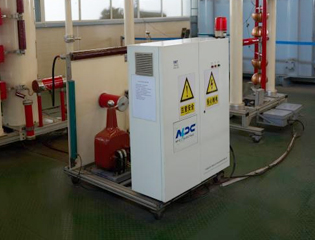
630kVA Dry Type Transformer
NPC ELECTRIC 630kVA Dry-Type Transformer is a compact, oil-free solution for reliable power distribution. With advanced insulation and cooling systems, it ensures safe, low-maintenance operation, making it ideal for industrial and commercial applications. Offering 630kVA capacity, it delivers efficient, environmentally friendly, and cost-effective performance. Compliant with DOE amended energy conservation standards (finalized 2024, mandatory from April 23, 2029, with 20% loss reduction for three-phase low-voltage dry-type units), ANSI/IEEE C57.12.01, NEMA ST-20, UL 1561, and CSA standards, this low-voltage (≤600V) transformer minimizes no-load losses, runs cooler, and prioritizes fire safety without oils or fluids.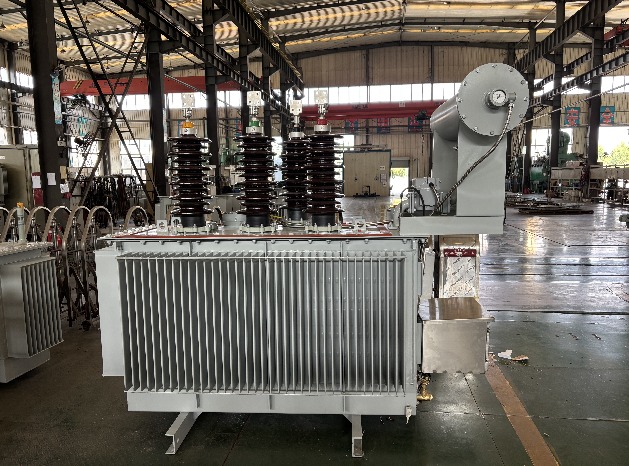
11kV 1500kVA Zigzag Wiring Earthing Transformer with NGR High Impedance
11kV 1500kVA Zigzag Wiring Earthing Transformer with NGR (High Impedance) is designed to provide a reliable artificial neutral point for medium-voltage power systems where controlled earth fault current is required. Utilizing a zigzag winding configuration, the transformer offers low zero-sequence impedance while maintaining balanced operation during normal conditions. The integrated high-impedance Neutral Grounding Resistor (NGR) effectively limits ground fault current, reducing thermal and mechanical stress on network equipment. This transformer is engineered for stable performance, high fault withstand capability, and long operational life. The robust insulation system and reinforced windings ensure safe operation under fault conditions, while the optimized core design minimizes losses.
Step Up Dry Type Transformer Copper Winding High Overload Capacity
The Step Up Dry Type Transformer Copper Winding High Overload Capacity is a robust, oil-free power solution designed to increase (step up) voltage from lower primary levels to higher secondary outputs for efficient power transmission in indoor applications. This three-phase cast resin dry type transformer features premium high-conductivity copper windings fully encapsulated in epoxy resin under vacuum pressure, paired with low-loss grain-oriented silicon steel cores to achieve superior energy efficiency (typically 98%+), minimal no-load and load losses, and excellent partial discharge performance (<10pC). Compliant with IEC 60076-11, IEEE/ANSI, and relevant efficiency standards, this transformer commonly steps up voltages such as 0.4kV/480V primary to 6.6kV, 11kV, 13.8kV, 22kV, or 35kV secondary (Dyn11 or custom vector group), with capacities from 100kVA to several MVA, making it ideal for renewable energy systems, generator step-up, industrial processes, and utility indoor substations prioritizing safety, sustainability, and overload resilience.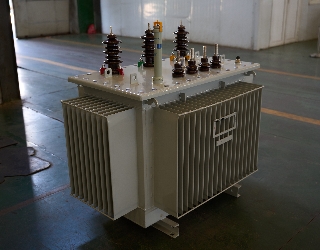
10.5KV Oil Immersed Substation Transformer
The 10.5kV Oil Immersed Substation Transformer is specifically designed for medium-voltage power substations requiring stable voltage conversion and reliable long-term operation. Utilizing a proven oil-immersed insulation system, the transformer provides excellent dielectric strength and efficient heat dissipation, ensuring dependable performance under continuous load conditions. High-quality winding materials and precise manufacturing processes enhance mechanical strength and short-circuit resistance. With low operating noise and strong thermal stability, the transformer is well-suited for modern substations serving industrial, commercial, and infrastructure power distribution systems.FAQ From Customers
-
What is a Transformer?A transformer is an electrical device used to change the voltage of alternating current (AC). It works on the principle of electromagnetic induction, converting high-voltage current into low-voltage current or low-voltage current into high-voltage current. Transformers are widely used in power transmission, distribution systems, and various electronic devices.
-
What are the main uses of a transformer?The main use of a transformer is voltage conversion. Transformers are used in power transmission systems to help transfer electricity from power plants to consumers. In addition, transformers are also used in electronic devices such as chargers, televisions, power adapters, etc., to adjust the voltage to meet the requirements of different devices.
-
Do you have UL listed?Yes, our transformer has UL listed. We have exported to America many pad mounted transformer,substation transformer and HV.
Welcome your inquiry
Honesty, Integrity, Frugality, Activeness and Passion